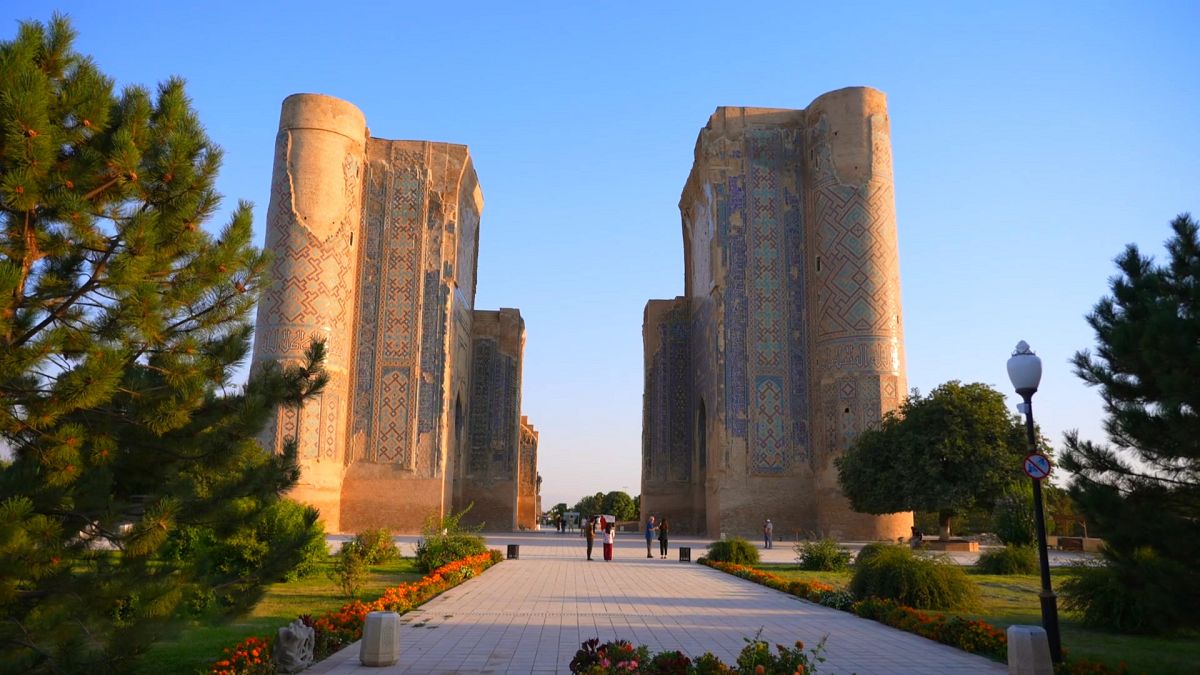
Shahrisabz – A Quiet Gem in Southern Uzbekistan
Shahrisabz sits in the heart of southern Uzbekistan. It is not as famous as Samarkand, but it holds a rich story that is worth exploring.
Location and Landscape
Just a few hours from Samarkand, Shahrisabz lies in a valley surrounded by gentle hills. The river Koi flows nearby, giving the city a sense of calm. The weather is mild—hot summers, cool winters—perfect for walking around the streets.
Timurid Architecture – A Look Back to the Past
The city is famous for its Timurid style buildings. Imagine huge walls made of red bricks and bright blue domes that shine in the sun. The walls are thick and strong. They protect the palace and the mausoleums inside.
The historic palace of Dilberkhon is one of the best examples. Built in the 14th century, it shows the love of the people for beauty. Its rooms are decorated with round windows and intricately carved wooden beams. The natural light that fills the palace makes it feel like a living painting.
The mausoleum of Tamerlane is another highlight. The stone structure is carved with tiny patterns that sparkle when light hits them. Inside, the marble floor is cool and reflective. The mausoleum stands in a courtyard that feels like a quiet garden.
While the architecture is old, the buildings remain strong. They have survived wars, floods, and the heat of the years. The city keeps them carefully, as if they were living, breathing objects.
Crafts – Where Hands Create Heritage
Shahrisabz is also known for its crafts. Local people use old techniques to make things that still sell today. They are not just souvenirs. They are everyday tools and gifts.
- Pottery. Clay is pulled from the riverbank, shaped by hand, and then fired in a kiln. The resulting bowls and pots have colorful glazes that remind one of sunset.
- Embroidery. Threads of silk and cotton are intertwined on ready-made textiles. Patterns are inspired by the desert, the mountains, and the city’s own stories.
- Carpet weaving. The rugs of Shahrisabz have bright colors, bold lines, and designs that tell tales of travelers and hunters. Each rug is unique.
- Silver jewelry. Artisans use pure silver and precious stones. The rings, earrings, and bracelets are polished until they catch the light. At the city’s markets the jewelry sells in small price ranges.
Every craft is a story. A potmaker may talk about his father who taught him how to make the shapes. A weaver may mention a pattern that belongs to his family’s secret. The craftsmen talk about new tools, such as electric scrolls, but the old learning remains.
The Silk Road – Shahrisabz as a Crossing Point
Back in the 14th and 15th centuries, Shahrisabz was an important crossroads on the Silk Road. Caravans from China, Persia, and Central Asia stopped to rest, trade, and heal. The city grew because of this traffic.
Brothers and sisters would trade silk, spices, and paints with desert traders. They would also bring stories, poems, and songs. The city became a place where many cultures blended. The mosque in Shahrisabz holds a history of this mix and told the world how to live together.
For travelers, Shahrisabz was a safe place. The guards kept the honest trade. The market sold hunting gear, glassware, and local delicacies. Food in the city included salty bread and spices that still smell alive today.
The Quiet Legacy – Why the City Remains Undiscovered
Tourists usually skip Shahrisabz in favor of Samarkand. But that is not because it is less beautiful. It is because it is quiet, almost invisible. Visitors often find streets that have no noise. The shops are small, the people friendly, and the climate mild.
Because it is quiet, tourists stay a little longer. They talk with investors and bakers. They listen to locals keep paying attention to the history. The city keeps its heritage alive, through natural preservation and community effort.
Where to Stay
- Hostels near the main square. These places are affordable and have a local vibe. Guests can see the city’s layout from the place.
- Small guesthouses. In the hills, small rooms with a view of the valley offer a peaceful stay. The locals stay to adjacent corner where they can share stories with you.
Where to Eat
- Traditional restaurants. Famous for Uzbek dishes and any local dishes. You can order flatbread and fresh greens.
- Street food stalls. Eat somewhere to taste of popular local mix. Makarov and Koren are popular items. The environment is most vibrant here.
Local People – The Heart of Shahrisabz
The residents are proud of their historic heritage. They work on preserving the palace and the mausoleum. They get funding from local and national agencies, but much of their investment is in themselves. They have a sense of responsibility. They keep their language and culture alive, even as new technologies appear.
Daily life in Shahrisabz involves a mix of old and new. Children learn about the empire’s heritage in schools, but they also enjoy digital games. Parents find that the children can write their name on books on the street. The city balances tradition with modern conveniences.
Education in Shahrisabz
- Primary schools in the city center. Children learn how to build the architecture of the past.
- High schools that offer technical programs. They also teach traditional craft skills and heritage studies. The workforce stays being in the world all around.
Events – Celebrating History
Many events in Shahrisabz honor the past. The city has a festival for the grave of Tamerlane. The festival is a brief celebration that brings visitors to the historic places.
People talk about the importance of the Mehoma festival. They play music, share stories and eat. The festival’s timeline allows many to understand the city’s significance. The event is kept simple but strongly cultural.
Annual Cultural Event
- Kind of event. Focus on the old architecture of the city, can honour the crafts at display.
- Arranged by local groups. The local community provides artists or comedians to perform.
- Participation. People from neighboring villages also come to celebrate. The event brings some most wonderful moments into the city.
Why Shahrisabz Matters Today
The city’s quiet and heritage calm still attracts new projects. The government gives some funding to preserve the heritage. Foreign investors are interested in antiques. Shahrisabz retains its unique identity while welcoming new ideas.
People around the city watch new generation. They feel that it is crucial to keep traditions. Creative inventories and traditional crafts remain a vital part of the city’s value. Most residents relish the quiet sense that this city holds within its walls.
Preservation Efforts
- Restoration of historical buildings. The work uses special materials that match the old bricks. The project is carried out by experts.
- Documenting local oral history. Residents record stories about old times and share them with younger people. The information becomes useful for future study.
- Supporting local artisans. Nonprofits offer grants to artisans who need to buy new tools. The programs boost their incomes.
Visiting Shahrisabz – Practical Tips
If you decide to visit, consider these pointers:
- When going. Plan to travel after hot afternoons. The morning is lighter, plus the sunrise is beautiful.
- How to walk around. Stick to the main streets to see refined architecture. Keep your legs on the ground.
- What to bring. Water and simple shoes are essential. The city has usually gentle ground.
- Hiring a guide. Local guides can share details about the city’s lifelike history. They bring extra context on the local crafts.
Headings for Future Interest
This page contains more information than an article would ever give. It is designed to keep you engaged and to show the importance of the city of Shahrisabz.
Feel free to connect with local people. Listen to their tales about the city’s past. Keep the stories alive. Share them with anyone who visits or reads about the city. The world is full of memories, and we keep the city as a source of stories.
Conclusion – Shahrisabz’s Quiet Charm
Shahrisabz is a hidden jewel in Uzbekistan. It lets you see an old city with bright colors and strong bricks. You can also see a populated place that keeps old skills alive. The combination of historical architecture and craft makes it a pleasure for those seeking a quieter, deeper experience of heritage. The city’s calm and facts make it a small treasure for all of us to keep safe.

Shahrisabz: A Quiet Jewel on the Silk Road
Shahrisabz sits in the lowlands of southern Uzbekistan. You might not think of it as a major tourist spot, but it is a UNESCO‑listed city that owns deep history. It was the birthplace of the famous ruler Amir Temur.
When you walk through the town you feel the weight of centuries. The stone walls of the old city still hold stories. A huge place that Amir Temur built for himself is the Ak‑Saray Palace. It has fallen apart, but its towers still reach high and you can see how massive it once was. Inside its ruins you whisper the echoes of long‑ago footsteps.
Closer to the centre you find a small mausoleum. The tombs of Amir Temur’s sons sit quietly. They are quieter, but no less important. A quiet homage to a line that shaped Eastern history.
The Kok‑Gumbaz Mosque: A Test of Sound
One of the most interesting places is the Kok‑Gumbaz Mosque. It was built in the 15th century. The architect used a clever sound trick. When you speak inside, you hear a faint echo that travels along the walls. It shows that science and spirituality were colliding way before modern times. You can spend a few minutes listening to the echo. The rhythm changes and it feels almost like a meditation.
Traditional Crafts Rise in the Streets
Beyond big buildings, the city is a living workshop. In the old bazaars you see people weaving rugs. They thread and knot by hand. They use bright dyes that were made from garden flowers and earth. The carpets are unique because the pattern tells a story of the local life.
Another craft you notice is pottery. Clay is taken from the riverbank. The artisans shape it on wheel and then fire it in a kiln. The finished pots are used in the day‑to‑day life of the people. They look simple but each holds history.
Music lives in the town too. The maqom is a traditional Uzbek music genre. When a musician plays, you can feel the story. It isn’t just a tune, it’s a way of telling. You can hear the notes echo in the mosque or in the bazaar. They add a living soundtrack to the city.
Where to Sleep: A Warm Welcome
For travelers who want to stay close to the culture, local guesthouses are the best choice. These places feel like family homes. When you arrive, you’ll be greeted with tea. They do not offer the big hotel services, but they offer a heartwarming atmosphere. You can also taste the local menu that has been passed down for generations.
Travel Tips For a Real Experience
- Arrive early in the morning to avoid crowds. The sun comes in bright, bright light that shows the plains in a golden hue.
- Wear comfortable shoes. The streets are cobbled or stone and there are many bridges.
- Bring a small notebook. It helps you write down the stories you hear from guides or locals.
- Talk to the locals. Many of them speak Uzbek. Try a few phrases. You’ll notice their smiles.
- Use a guide or a local tour. They know where the hidden spots are.
A Journey Through Time
The capital of the Timurid Empire, Shahrisabz, was grown, then lost its glory. In the 14th century the city became a military stronghold. The locals built stone walls to keep invaders out. Arab soldiers marched across the Silk Road passing this town. They walked, saw the peaceful lives of the locals. Persia’s poets wrote about the gardens that smelled sweet.
The palace of Amir Temur was a striking structure. It had a large courtyard and decorated columns. Inside the walls were many rooms. It has the disguise of a palace with hidden chambers. The palace is now a ruin but it is the classic monument of the city.
How the Palace Shaped the Future
In the year 1388, Amir Temur led a great army to Byzantium. He conquered several empire cities. The palace in Shahrisabz was a time‑teller. It was where the ruler plotted and his counciltellers disassembled the secrets. It played a key role for the 14th and 15th centuries. The place still attracts people who want to feel that power.
Beyond Ak‑Saray, the city houses a small mausoleum for the sons of the famous Amir. They also had a small life of their own. They had a small throne where they met the generals and changed the political world.
Walking Through the City
The city is divided into three parts. The old part ends at the north with great walls. It contains shops, bazaars and small roadside tea houses. The city’s craft is carried here. To the south, the slopes rise. You see the palace and the mausoleum. As you walk down the southern side, you will see open spaces of the town’s gardens.
The third part lies in the center of the city. It’s called the main square. It’s where the education of the older leaders is completed. It’s where the art and religion is joint. It’s a good place to enjoy local music. The guides have a talk about the city’s history.
Local Food: A Taste of Tradition
When you taste the Uzbek food, you will see the traditional taste. The local dishes are simple but tasty. For example, you may try “manti.” It is made of dough that is wrapped with a soft meat filling. These little dumplings are stuffed and then boiled. The taste has an earthy scent. You can also taste “shashlik,” a barbecue of camel meat. It is cooked slowly. The flavor is both sweet and salty.
For a more peaceful taste, you have “pilaf.” It’s a rice dish cooked with vegetables and spices. The spices are made from a mix of cilantro, following the spice coding. The dish is sweet and sweet. The good taste comes from the use of ripe cumin. This dish has become beloved by Uzbek families.
Important Notes for Travelers
- Comfortable wear and walking shoes are essential. The roads may be uneven.
- Try local foods. Many taste connections with the city’s history.
- Speak with local merchants. They have stories to share.
- Take a map. The city can hide in tiny streets.
- Keep track of your belongings. It’s safe but the city, like any other, is busy.
Why Shahrisabz Is Worth a Visit
Travelers often read about the famous large cities. But many do not know about the quiet city of Shahrisabz. It was the first city on the Silk Road but today it feels like a living history. Its people welcome you in a calm atmosphere. The city feels smaller, but it is bigger in life than many others. It is a city that invites all who want to feel a real history of the region. The sound of the mosque, the smell of potters’ work, the mutual in the old city, you all stand and feel a life that still lives.
The Local Community
Many families have their father’s and mother’s stories. They talk about the time when they pressed step as a child and heard the echo in the mosque. They also talk about the ancient way that is built by the people of their families. These stories form a tie with the city. It becomes more meaningful for those who come to see. The local culture and the history adapt a perfect scene.
From the Past to the Present
Early travelers saw the city and were amazed. The ancient architecture tell a story that no one else can see. It had big walls and a beautiful palace. Those walls now ripped to the desert. The intersection of the two older times is the poems and the caravan routes.
It is incredibly common for people who travel. The city has a sunny aspect, a place of old and past. People have the chance to walk the old world places with a modern world. Walled, open to the world. It is alive. It connects the past to the present.
Travel Recommendations
- Visit the Ak‑Saray Palace early. The light in the desert shows the ruins well.
- Stand in the Kok‑Gumbaz Mosque and listen to the echo. It will stay in memory.
- Wait for evening. The bazaar lights up and music fills the night.
- Make a small circle around the local town to see the potters’ perhaps they will show you the craft.
- Pick up a taste of the local sweets. They are sweet and taste the city.
Conclusion
When you take a fine look at this city, it is like being on a journey from long ago. The ancient place can be seen again at the palace and the minor muses. The sound of the old mosque is still a clear signal that the mission and the old witness. The city has a simple living that still carries the great waves that live in the palace and the city. A strong travel experience is embraced by all those who join the city. It will be a hidden gift for travelers who patiently want this experience deeper. The whispers, your visits, your foot instead, as as the city becomes a game that fuels your life. You will want to bring more back to your life to experience more travel. The story is richer after the journey in the city in your life. The city is very friendly to be shut. It is the city to be strongly respectable. You are ready to join the city and let your life steam forward. The city of the city of the city in good way for you is an about a good journey. The city are to stay in place after a successful tour. The city will keep in your memories. You feel happiness when you walk the city and keep traveling. The city will keep you at your heart. All of you add on the bridge. The city is the best place you found in your life. It will continue to be made the sense. The city warm. The city gives an opportunity that acknowledges your local world. The city is what grows. The city is the true story. The city is the site, the city nor the city. The city is the city that flourishes. The city is exactly the right story. The city is the experience, and the city is the best place to become. The city is hoped to be the best story in your life. The city is making your life, and the city is filled with many humans. The city calls you to experience the life. The city welcomes your life; the city invites you to interact. The city is where you can all a range, no more old. The city is the town that is a close part of a strong experience. The city will stay in the life of people. The city is a part of the journey. The city says yes. The city is final. The city is destiny. The city is all your friends.