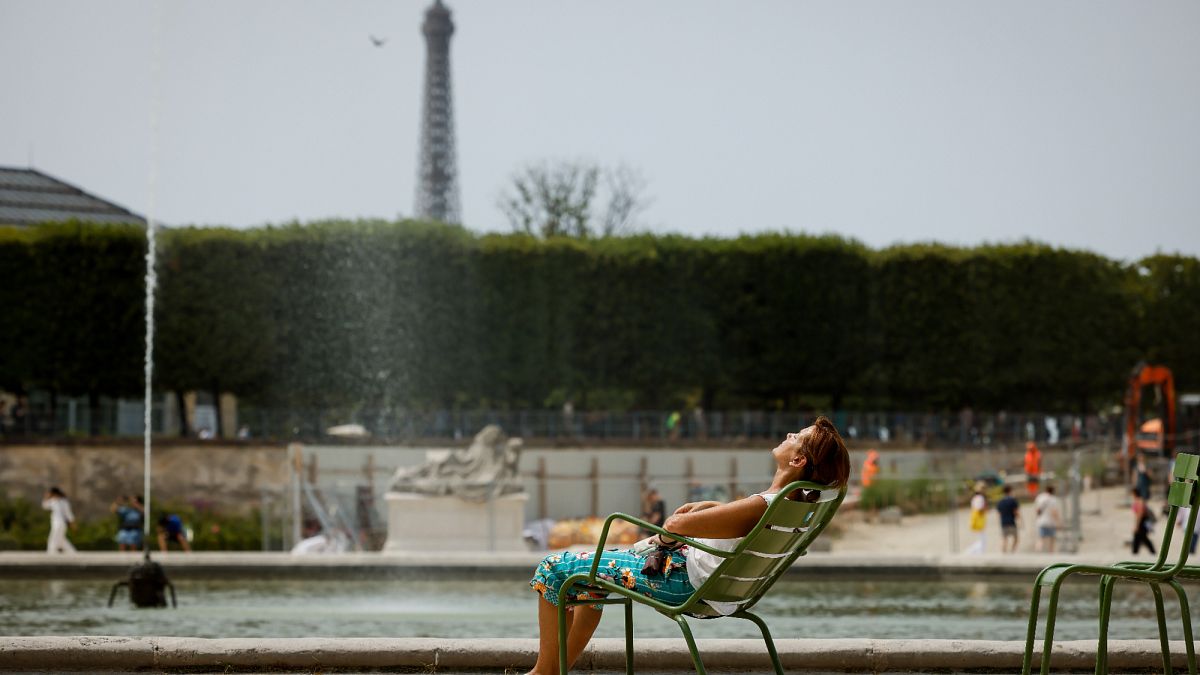
Tag: aesthetic

  • Why Brussels doesn’t hate air conditioning — but Europe still struggles with it

    Why Brussels doesn’t hate air conditioning — but Europe still struggles with it

    No, the EU hasn’t banned air conditioning. So why do Europeans still resist it? Here’s a policy look at Europe’s love-hate relationship with staying cool through the summer.

    ADVERTISEMENT

    In a summer when radio failed to deliver a single memorable hit, one subject managed to keep everyone talking: Europe’s troubled relationship with air conditioning.
    It’s not a new debate. Every few years, as temperatures climb, the transatlantic divide on cooling habits resurfaces.

    But this year, it grew unusually fierce, straining cultural ties between Europeans and Americans almost as much as Trump’s tariffs or disagreements over Ukraine’s future.
    Americans, baffled that Europeans can live without constant cooling, defended their beloved AC with the same bitterness Italians judge other cultures’ pizza toppings or the French bristle at foreigners mangling ‘la langue française’.
    The numbers of this divide are stark: nearly 90% of US households have air conditioning, compared with around 20% in Europe, with some countries falling far below that figure.
    In France, the topic has even entered the political arena, with far-right leader Marine Le Pen calling for a major air conditioning infrastructure plan.
    Meanwhile, international news outlets like the Financial Times and Wall Street Journal warned that Europe’s slow adoption of cooling technology is already costing lives.

    Critics have gone so far as to blame EU regulations (or the flagship environmental policy Green Deal itself) for keeping Europeans sweaty.

    The myth of the AC ban
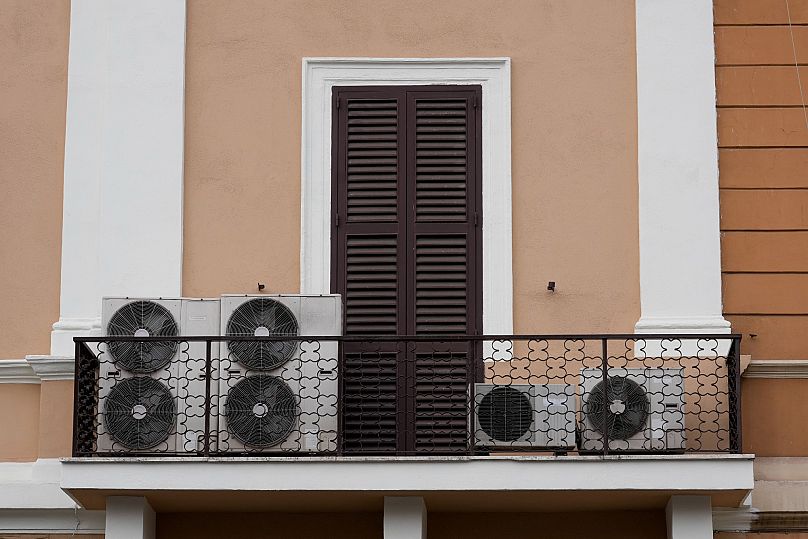
    Some cities in Europe restrict the installation of external AC units for aesthetic reasons.Some cities in Europe restrict the installation of external AC units for aesthetic reasons.
    AP Photo

    Like most things in the EU, even air conditioning comes with an acronym.
    The Brussels bubble doesn’t talk about AC like normal people do, but about HVAC, namely heating, ventilation, and air conditioning systems.

    But does Brussels really hate air conditioning?
    Despite what some critics imply, the EU has never banned HVACs. Nor do its rules dramatically restrict installations.
    What the EU does regulate are the types of systems allowed, imposing limits on harmful refrigerants, requirements for greater efficiency, and guidelines for buildings.
    The reasoning is straightforward.
    Europe has committed to becoming climate-neutral by 2050. Left unchecked, a sharp increase in inefficient air conditioners would make that goal impossible.
    So Brussels isn’t opposed to cooling, it just wants the technology to align with climate policy.

    Related

    These EU countries are air con addicts: Who consumes the most energy to cool down?

    What the F… gas
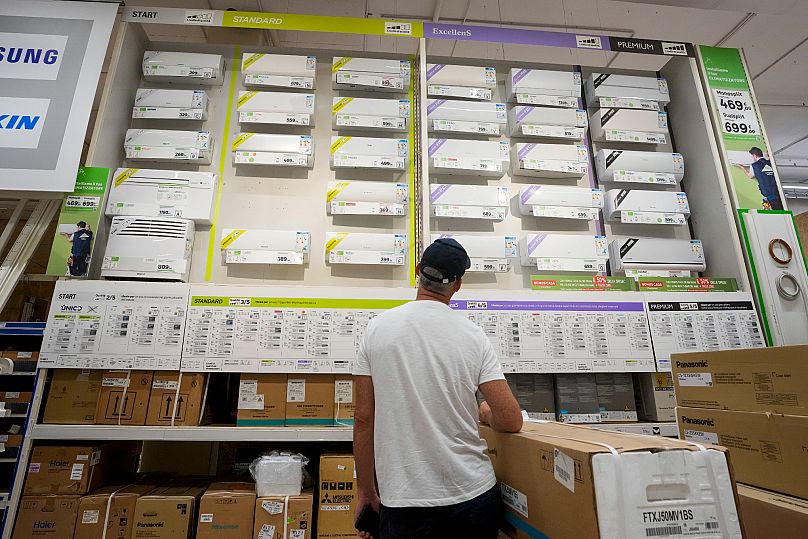
    New EU rules impose a progressive reduction in the quantities of fluorinated greenhouse gases, leading to restrictions on the marketing and use of non-compliant products.New EU rules impose a progressive reduction in the quantities of fluorinated greenhouse gases, leading to restrictions on the marketing and use of non-compliant products.
    AP Photo

    The centrepiece of this policy adaptation is the recently revised F-gas Regulation, which phases out hydrofluorocarbons (HFCs), potent greenhouse gases used in many traditional cooling systems, by 2050.
    Through these rules, manufacturers are being pushed to adopt cleaner alternatives such as carbon dioxide and ammonia.
    Some industry players argue this has slowed growth in the heat pump market, a technology that provides heating, cooling, and hot water.
    Brussels counters that falling gas prices, weaker subsidies, and consumer caution are the real reasons, putting its hope on a wave of new, HFC-free models already hitting the market.
    The Ecodesign Directive, another piece of the puzzle, sets minimum efficiency standards. This effectively bans the least efficient models and nudges manufacturers toward greener designs.
    The rules tie into the Energy Performance of Buildings Directive, which requires upgrades in Europe’s ageing housing stock through better insulation and, indeed, greener heating and cooling
    Both measures reflect the same principle: the EU isn’t trying to kill air conditioning, it just wants it done sustainably.

    National quirks…
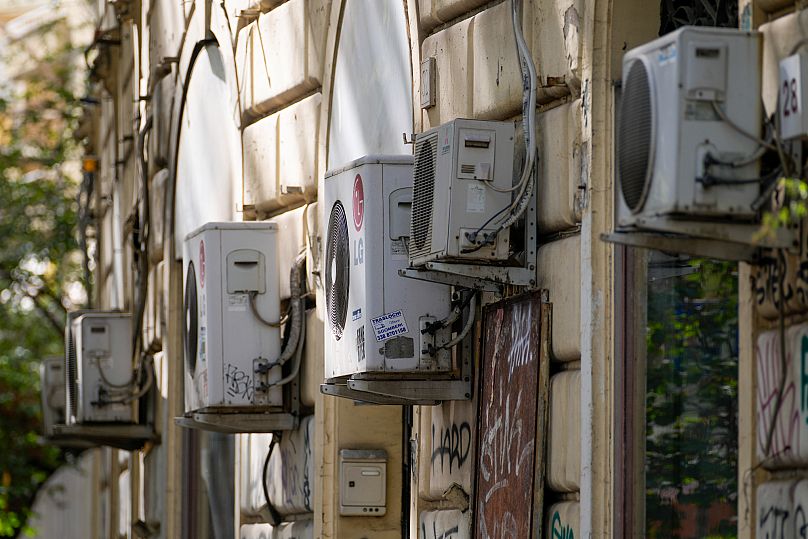
    Air conditioning systems in Rome.Air conditioning systems in Rome.
    AP Photo

    Much of the practical regulation on air conditioning comes from member states, though.
    Spain, Italy, and Greece, for example, limit how cold public buildings can be set in summer, often no lower than 27°C.
    The aim is to conserve energy, especially during supply crises.
    Some historic city centres restrict the installation of external AC units for aesthetic reasons.
    There are environmental concerns, too. Studies show that AC units can raise outdoor temperatures in dense urban areas by several degrees, worsening the so-called “heat island effect.”
    But these are exceptions, not an explanation for Europe’s overall low uptake.

    Related

    ‘May God help those with no air conditioning’: Severe heatwaves hit southern Europe and the Balkans

    …and cultural resistance

    Buildings in the popular Aegean Sea holiday island of Santorini, southern Greece, use whitepaint for climate-related cooling.Buildings in the popular Aegean Sea holiday island of Santorini, southern Greece, use whitepaint for climate-related cooling.
    AP Photo

    The rest of this story lies in history and culture.
    Southern Europe built its cities to cope with heat: thick walls, shaded windows, and street layouts designed to maximise airflow.
    That’s also why white paint dominates the picturesque skylines of Mediterranean places like Santorini in Greece or Vieste in Italy: The bright surfaces reflect sunlight and radiant heat, helping interiors stay cooler.
    In northern Europe, on the other hand, summers were once mild enough that cooling was rarely needed.
    Air conditioning, when it appeared in Europe, was seen as a luxury or even a health risk. Many Europeans still believe exposure to cold air can make you sick, and the stereotype persists that AC is for rich people.

    The energy question

    Then there’s the money issue.
    European electricity is far pricier than in the US, and the 2022 energy crisis only reinforced the point.
    Even though prices have since stabilised, the extra expense of running an air conditioner remains prohibitive for many households.
    AC still represents only about 0.6% of household electricity use across the EU, but its share is rising quickly.
    The heatwaves of June and July 2025 pushed daily demand up by as much as 14%. Prices spiked above €400/MWh in Germany and €470/MWh in Poland, even as solar power hit record highs.
    That surge in demand underscores the challenge. Europe’s power grid, already strained, must prepare for hotter summers and higher cooling needs.

    Related

    Air conditioning is ‘exacerbating the climate crisis’ but how many Europeans use it?

    What comes next
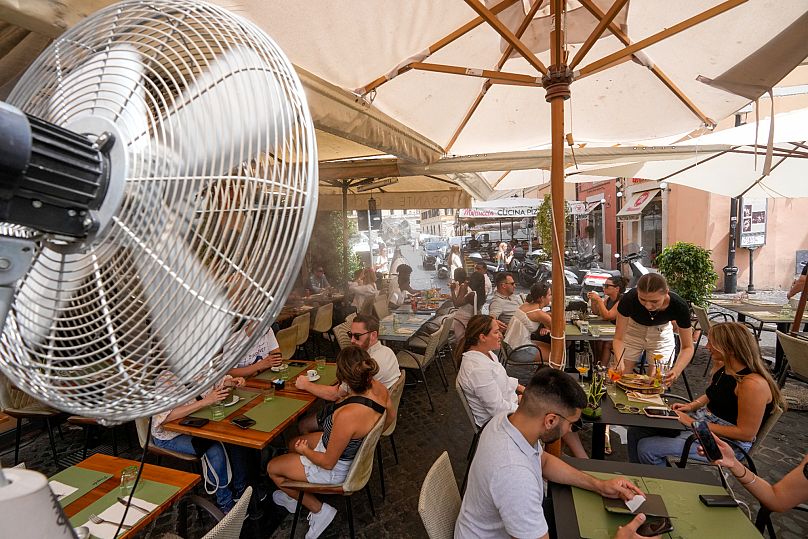
    A typical scene in Mediterranean countries: eating ‘al fresco’ while a fan sprays water to cool off customers.A typical scene in Mediterranean countries: eating ‘al fresco’ while a fan sprays water to cool off customers.
    AP Photo

    So no, Brussels does not hate air conditioning. But it does want to ensure that cooling technology fits within Europe’s broader climate and energy goals.
    The European Commission has always made clear that member states are best placed to decide on specific energy-saving measures.
    But it is also preparing the EU energy sector for an era of recurring and more intense heatwaves, focusing on storage, interconnections, and grid resilience.
    This could not exclude a specific intervention in the sector in the medium term, although nothing has been pencilled for the moment.
    In the end, Europe’s low adoption of air conditioning isn’t the result of bans or bureaucratic hostility. It’s rather a mix of culture, cost, tradition, and policy.
    And as summers grow hotter and heatwaves become the new normal, that balance will be tested more with every passing year.

  • iPhone 17, the 'thinnest iPhone ever,' and everything else we're expecting out of Apple's hardware event

    iPhone 17, the 'thinnest iPhone ever,' and everything else we're expecting out of Apple's hardware event

    Apple’s Next‑Gen Pitch: iPhone 17, a Slim “Air,” and Future Foldables

    Mark your calendars: September 9, 10 a.m. PT – Apple’s latest gadget showcase. Expect an iPhone 17 lineup, revamped Apple Watch, and fresh AirPods.

    Rumor‑Bite Highlights

    • iPhone 17 – Bigger displays, smarter cameras, and a hint of that “revolutionary” camera upgrade the tech press has been itching about.
    • iPhone Air – A breezily slim phone that could stand in for the Plus model, making you feel like you’re carrying a feather.

    Industry Insight

    Bloomberg’s Mark Gurman says this is just the beginning of three major redesign cycles. After the 2025 iPhone Air, Apple is hinting at a fold‑able iPhone that could drop in 2026.

    iPhone 17, 17 Pro, and 17 Pro Max

    iPhone 17: A Fresh Look Ahead in 2025

    A Size‑and‑Speed Pick‑up

  • Screen upgrade: The next‑gen iPhone is rumored to bump up to a 6.3‑inch display – a 0.2‑inch inch‑lift over the 16 model.
  • Refresh rate: Say goodbye to the 60Hz routine; the new phone’s screen may leap to 120Hz, giving you buttery‑smooth scrolling.
  • Selfie focus: A sweet 24‑megapixel front camera that could finally out‑shine your Snapchat filters.
  • Colors: Beyond Classic Apple

  • New hues: Apple may introduce purple and green – because why stick to black and white?
  • Testing buzz: Early prototypes are already rocking these shades, tapping into consumer love for pops of color.
  • Pro’s Rear‑End Reveal

  • Camera layout: Concept renders show a sleek rectangular bar hosting the three rear cameras, stretching from edge to edge.
  • Optional extras: Flash, light sensor, and microphone are tucked towards the right side, while the Apple logo sits proudly at the center—just for that balanced feel.
  • Material Makeover

  • Pro switch: The 17 Pro could swap the titanium band for a lighter aluminum edge, trimming costs and keeping your palm happy.
  • Pro Max’s Quiet Upgrade

  • Body tweak: The Max variant is expected to stay mostly the same, but a thicker chassis hints at a larger battery underneath – more juice, longer playtime.
  • TL;DR

  • 6.3″, 120Hz, 24 MP selfie
  • Purple & green colors in play
  • Rear cameras in a neat line
  • Aluminum band replaces titanium (Pro)
  • Bigger battery, thicker body (Pro Max)
  • Stay tuned—Apple might just change the game in 2025.

    Tech and VC heavyweights join the Disrupt 2025 agenda

    Netflix, ElevenLabs, Wayve, Sequoia Capital, Elad Gil — just a few of the heavy hitters joining the Disrupt 2025 agenda. They’re here to deliver the insights that fuel startup growth and sharpen your edge. Don’t miss the 20th anniversary of TechCrunch Disrupt, and a chance to learn from the top voices in tech — grab your ticket now and save up to $600+ before prices rise.

    Tech and VC heavyweights join the Disrupt 2025 agenda

    Netflix, ElevenLabs, Wayve, Sequoia Capital — just a few of the heavy hitters joining the Disrupt 2025 agenda. They’re here to deliver the insights that fuel startup growth and sharpen your edge. Don’t miss the 20th anniversary of TechCrunch Disrupt, and a chance to learn from the top voices in tech — grab your ticket now and save up to $675 before prices rise.

    Get Ready for the iPhone 17: Prices, Colors, and Crunchy New Cases

    What’s the Buzz?

    Apple’s next flagship is rumored to hit the market sometime between 27‑29 Oct 2025, and the leaks are already summer‑sized. According to insider source Instant Digital, you can expect the iPhone 17 to start around $800, while the premium iPhone 17 Pro Max is slated to cart up to $1,250. Nice, but still pricey.

    New Hues for the Pro Line

    The Pro models might arrive in dark blue and copper—colors that sound like an upgraded tuxedo for your phone. Who needs beige when you can make a statement?

    Storage Shuffle

    • The standard iPhone 17 Pro will likely run at about $1,050.
    • It appears Apple is shaving off one of the storage options. Instead of the usual four, you’ll now pick from just three: 256 GB, 512 GB, or a generous 1 TB.
    • The dreaded 128 GB slot has vanished, so if you’re a tight‑budget savant… watch out.

    Case Love: TechWoven Makes a Comeback

    Three weeks before the big reveal, a leak floated the name TechWoven for a new line of iPhone 17 Pro cases. These are supposed to use a higher‑quality woven material than the old FineWoven line that Apple dropped in 2023. Bonus: the cases may come with a handy cross‑body strap, so you can carry your phone without dragging a bag. Little jacket for your gadget—who wouldn’t want that?

    Bottom Line

    Apple’s next iPhone is shaping up to be both a tech upgrade and an Instagram‑worthy fashion statement. Prices stay hot, colors get cool, and the case game gets spiffed up. Whether you’re a die‑hard fan or just in it for the new copper shade, the iPhone 17 is bound to spark all those seasonal spec buzzes.

    iPhone Air

    Apple’s Sketch of the iPhone Air: Slim, Silent, and Shocking

    What the Buzz Is About

    Picture a phone that’s so light and thin, you could almost forget you’re holding it. Apple’s rumored iPhone Air is set to drop the iPhone Plus and bring a new era of slimness to the lineup. Sound wild? It’s more like the Apple world’s answer to the sleekness craze that Samsung and Huawei have already been flaunting.

    Key Specs in a Nutshell

    • Thickness: 5.5 mm – a feather’s weight (nearly 0.08 inches thinner than current iPhones)
    • Display: 6.6‑inch – big enough for binge‑watching, but not too big for pocket‑fits.
    • Camera: One rear lens (yes, one instead of two)
    • Audio: Maybe only the front earpiece? No bottom speaker hints in the renders.
    • Price: $950 – a sweet spot for dreamers.
    • Colors: Black, Silver, Light Gold – because style matters.

    Why It Could Outshine Competitors

    The iPhone Air may edge past the Samsung Galaxy S25 Edge (5.8 mm thick) and justifiably claim the shogun of slimness. Rumor says Apple might even open the door to an foldable phone slated for September 2026, which would make the Air feel like a prologue.

    Sound of Silence

    Slender as it is, you might find the iPhone Air preferring silent communication. Think no bottom speaker – it could be a wipe‑to‑reply phone that only answers through the front earpiece.

    The Takeaway

    Apple’s leanest phone might just redefine how we hold our devices. If the iPhone Air ships as rumored, the tech world will finally get to talk about “more thing, less bulk” in a truly literal sense—and yes, the next college student might actually carry it past their backpack cheater.

    Apple Watch Series 11, Ultra 3, and SE 3

    Apple Watch Ultra 3: Rumors Are Raging

    After a two‑year wait, whispers about the Apple Watch Ultra 3 are buzzing with excitement. Experts say the next generation might sport faster charging, 5G connectivity, and even satellite support. And don’t forget the likely size‑up of the display!

    Health‑Tech Upgrade: Blood Pressure & Sleep Apnea

    One of the biggest potential changes for both the Ultra 3 and the upcoming Series 11 is blood‑pressure monitoring. Imagine your wrist pinging you when your numbers go sky‑high or plummet—an on‑the‑go health check, no matter where you are.

    Apple may also lab‑test a sleep apnea detection feature, though Bloomberg’s Gurman cautions that the company might pull the plug for a bit longer to fine‑tune it. Better late than never, right?

    Blood Oxygen Reboot

    Apple has just rolled out a redesigned blood‑oxygen sensor to some Series 8, 10, and Ultra watches. That suggests the Ultra 3 is likely to inherit this feature—though whether it’ll appear in watchOS 26 is still under wraps.

    Apple Watch SE 3: What We Know

    Rumour has it the third‑gen SE will keep things on the same track, maybe just a tallier screen. There are even whispers of a plastic‑variant—wouldn’t it be a bit of a throwback?

    Estimated Prices

    • Apple Watch SE 3: $250
    • Series 11: $400
    • Ultra 3: $800

    AirPods Pro 3

    Apple’s Next‑Gen AirPods? What the Hype Is About

    Apple slipped out the AirPods Pro 2 in 2022, so the world’s ears have been craving a fresh upgrade. Vibrant whispers from the rumor mill say the upcoming AirPods Pro 3 might bring a sleeker look, touch‑sensitive controls, smaller buds, and a thinner case. Some chatter even suggests the old pairing button might get the boot, letting you power up by simply tapping the case itself.

    Tech Specs in Focus

    • New H3 Chip – promises smarter active noise cancelling and adaptive audio that follows you everywhere.
    • Lightweight Design – supposedly a more streamlined frame that feels less like a gadget and more like a personal audio assistant.
    • Touch‑Control Interface – ditch the button for a more fluid, gesture‑based experience.
    • Smaller Earbuds – whisper‑quiet fit that stays snug without the bulk.

    We’ve tweaked the story to echo a fresh batch of speculation. The Apple universe is constantly evolving, and we’re all ears when you share your thoughts.

    Tell Us Your View

    Feel free to drop your feedback into TechCrunch’s survey (no need to click a link—we’re keeping it all textual). Star the ratings, drop a comment, and you might snag a prize as a little thank‑you. Let’s keep the conversation going: we’re listening, and the next AirPods might just be the canvas to paint it on.

    Image Credits: Apple