Tag: board

  • New train route to link Prague, Berlin and Copenhagen from 2026 in another boost for European travel

    New train route to link Prague, Berlin and Copenhagen from 2026 in another boost for European travel

    The Czech Comfortjet train will have a dining car and children’s cinema, and there’s plans for a night service, too.

    ADVERTISEMENT

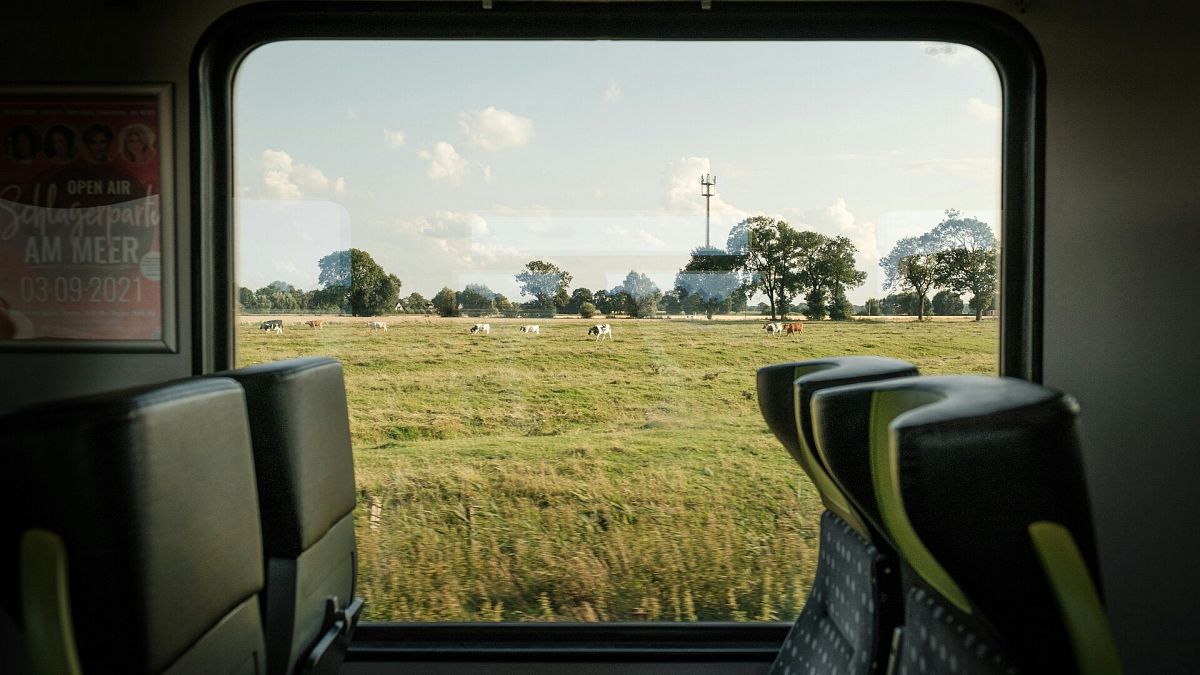
    Europe’s long-distance rail network is getting another boost in 2026.
    Starting next May, passengers will be able to ride the rail from Prague to Copenhagen via Berlin.

    Deutsche Bahn (DB), Danish Railways (DSB) and Czech Railways (ČD) are teaming up to offer the new direct connection, which will launch on 1 May 2026, when overhaul work on the line between Berlin and Hamburg is complete.
    The year-round daytime service will run in both directions and is expected to take just seven hours between Copenhagen and Berlin, and around eleven hours between Copenhagen and Prague. The operators will also extend a summer season night train that currently links Hamburg and Copenhagen onward to Prague.
    Additional stops are planned in key cities, including Dresden and Hamburg.
    The route will be served by ČD’s new ComfortJet trains, offering a wide range of amenities, including an on-board restaurant, Wi-Fi, bicycle storage and space for 555 passengers.
    The high-speed trains also feature wheelchair lifts, a children’s cinema and radio-transparent windows, which improve mobile connectivity and reception for passengers.

    Cross-border train travel picks up pace

    The Prague-Copenhagen connection is the first of 10 pilot projects selected by the European Commission to promote new cross-border train routes and improve international mobility. The initiative is designed to address persistent hurdles in long-distance rail, from infrastructure bottlenecks to market barriers.
    “Rail is bringing Europe closer and closer together,” Michael Peterson, DB’s board member for long distance passenger transport, said when the new link was announced. 
    “Journey times of over four hours are popular with our passengers in international long distance transport, and we are offering additional attractive services to meet the growing demand.”

    Related

    I took a 7-day trip from Paris to Istanbul on Europe’s newest transcontinental trainEuropeans intend to travel more by train than by any other form of transport in the next five years

    Other recent EU-backed rail connections include the Berlin-Paris route launched by DB and France’s SNCF in December, and the newly announced Munich-Milan-Rome link set to launch in the coming years.
    Apostolos Tzitzikostas, the EU’s commissioner for sustainable transport and tourism, called the Prague-Copenhagen route “a strong example of progress” toward a greener and more connected continent.

    Europe’s rail revival ramps up this summer and beyond

    Travellers seeking alternatives to short-haul flights now have more rail options than ever.
    In February, the Vilnius-Riga service expanded to Tallinn. Then, in June, Polish Railways (PKP) launched a new summer route connecting Warsaw to Split on Croatia’s Adriatic coast. The delightfully named Espresso Riviera has also returned to service this summer, linking Rome and the French Riviera overnight.
    In the coming years, the rail links should continue to grow.
    Startup Dreamstar Lines plans to connect 100 European cities via sleeper train – promising fares for less than the price of a hotel stay.
    These routes are part of a broader renaissance for European rail, with night trains especially seeing a resurgence after decades of decline.

    Barriers to seamless train travel remain

    While enthusiasm is growing for this greener method of travel, Europe’s cross-border rail ambitions still face obstacles.
    Fragmented ticketing systems, differences in infrastructure and slow approvals for new routes continue to hinder progress. And passengers still struggle to find unified booking platforms or real-time updates when journeys involve multiple national rail companies.

    Related

    I rode through Taiwan’s cedar forests on this scenic 113-year-old mountain railwayAll of the cheese, none of the hassle: Why I took a small-group rail tour through Switzerland

    Still, EU leaders remain optimistic that the pilot routes – including Prague to Copenhagen – will set a precedent for a more connected, sustainable future.
    “This direct rail link is not only good for travellers,” said Berlin Mayor Kai Wegner. “It’s an important step in decarbonising Europe’s transport sector.”

  • Can You Ever Be ‘Too Expensive?’

    Can You Ever Be ‘Too Expensive?’

    Now I know this particular speaker pretty well, and I know that he’s good value for money, but what was most interesting was one of the responses to his post. The person who commented wrote ‘You can’t be too expensive. And you’re value for money. They must have cash flow issues!’

    Now whilst I would agree the speaker concerned IS most certainly value for money, there are 4 quick things we can learn from the other person’s comment:

    Sales Tip Number 1 – People’s Beliefs ARE Reality – To THEM

    The problem I see here is that I think you CAN be too expensive. One of my favourite sayings when it comes to sales and pricing in particular is that ‘people’s beliefs ARE reality – to them’.

    What I mean by that in this example is that if someone says ‘that’s too expensive’ it may be that in the moment they DO consider you too expensive – as long as it’s not a negotiation tactic to bring your price down of course.

    Now of course there will be some context behind them saying that. They might think it’s too expensive compared to their budget. They might think it’s too expensive compared to what they’ve paid in the past. They might think it’s too expensive compared to what they were expecting to pay.

    However, unless you deal with the fact that right now, they consider you too expensive – it’s unlikely you’re going to be able to win this deal, and bring them on board as a customer. Fail to change their belief and therefore THEIR reality, and you’ll fail to pick up their business.

    Sales Tip Number 2 – It’s Not Their Fault – It’s Yours

    If someone says to you that you’re ‘too expensive’, make sure you don’t dismiss them and the sales opportunity too quickly. As an ex-sales director, I often used to hear my team come back from new business appointments with excuses like ‘they weren’t ready to buy’, ‘they didn’t have the budget‘, and ‘our price was too rich for them’.

    My response was usually something like ‘Ahh, so you failed to deal with their price concern then?’

    My belief is that the majority of the time, a price concern or price objection is normally the salesperson’s fault, not the prospect’s.

    – It might be that…. the prospect doesn’t see enough value in your offering to think it worthwhile paying the price you asked for – YOUR FAULT for not positioning your value to them correctly!

    – It might be that…. the prospect doesn’t have the budget to pay the price you want – YOUR FAULT for not finding that out, or speaking to the person who can make a NEW budget!

    – It might be that…. the prospect has bought a similar product/service in the past and not paid anything like the price you want to charge them now – YOUR FAULT for not finding out their buying history and positioning correctly against it!

    – It might be that…. the prospect won’t get enough value from your offering, in order to generate enough ROI to justify the purchase – YOUR FAULT for not qualifying the Sales Opportunity well enough in the first place!

    How many of the above are you and your team guilty of right now? Stop putting the ‘blame’ for price concerns on the client, and see what you and your team could do to handle them better.

    Sales Tip Number 3 – Find Out – Or Set – Their Expectations

    One of the biggest reasons people get price objections, is that the price they want to charge isn’t what the prospect was expecting to pay.

    This often occurs when the salesperson fails to find out, manage, or on some occasions – set – the price expectations of the prospect.

    In the old days, Sales Managers used to lecture their reps ‘make sure you get the customer’s budget BEFORE talking about price’.

    Whilst back then that was pretty solid sales advice, these days people don’t always have budgets. They don’t always have cash available right now. But they ALWAYS have price expectations – and if you don’t find out what they are, re-set them if necessary – or even set them in some circumstances – then you’re always going to struggle with objections to your price.

    How well do you and your team set prospects’ price expectations currently?

    Sales Tip Number 4 – Qualify Harder Early In The Process

    Another reason I find that salespeople come up against price objections is that often they’re sat in front of or speaking to the wrong people! People that may not have the money to be able to pay the price the salesperson wants to charge, or have the authority and ability to find extra money if necessary.

    This is usually caused by a failure to qualify well enough or hard enough earlier in the process. Then often results in the salesperson spending lots of their precious time dealing with people that aren’t able to buy what they offer at the price they want to charge.

    Often this leads to the salesperson becoming frustrated, having to walk away from deals, or heavily discounting just to win the business – none of which are good outcomes for the salesperson.

    Follow the tips above and watch your performance and that of your sales team soar!  I look forward to hearing about your future success….


  • How Rising Hotel Costs Are Fueling a New Road Trip Economy

    How Rising Hotel Costs Are Fueling a New Road Trip Economy

    Hotel prices keep climbing, and it’s making travel harder for everyday people. A simple weekend trip now comes with expensive nightly rates, added fees for parking, and higher costs across the board. Even budget hotels don’t feel very budget-friendly anymore.

    Because of this, more travelers are rethinking how they explore. Instead of booking pricey hotel stays, they’re turning to the open road. Road trips, RV rentals, car camping, and short-term stays are quickly becoming the smarter, more flexible choice for many.

    In this blog, we’ll cover how rising hotel costs are shaping this shift. You’ll see why more people are choosing wheels over walls and how this new road trip economy is growing because of it.

  • Exclusive: Terraton wants to be the McDonald's of biochar

    Exclusive: Terraton wants to be the McDonald's of biochar

    If there’s one thing McDonald’s has done for the world, it’s made starting a burger restaurant relatively straightforward. Franchisees buy into the system, and in return they get equipment, marketing, and even an operating manual.

    Terraton wants to bring that same model to biochar, a technology that turns agricultural waste into a carbon dioxide-sequestering fertilizer.

    Terraton recently raised an $11.5 million seed round for its “business-in-a-box” approach to biochar project development, the company exclusively told TechCrunch. The series was led by Lowercarbon Capital and Gigascale Capital. ANA Holdings’ ANA Future Frontier Fund and East Japan Railway Company’s Takanawa Gateway Global Co-Benefits Fund participated, along with a number of angel investors, including Google’s Jeff Dean and OpenAI board member Bret Taylor.

    “Most biochar facilities, people have only ever built one,” said Greg D’Alesandre, co-founder of Terraton. “They’ve never learned and progressed.”

    Terraton is betting that it can help a few partners build biochar facilities and, from that experience, clone those facilities with any number of companies that want to get into the business. Along the way, it’s developing a SaaS component to run the plants, measure and verify carbon credits, and sell them to large companies.

    Co-founder and CEO Kevin Gibbs and D’Alesandre think that biochar is ripe for the franchise approach. The technology burns waste plant material in the absence of oxygen, and the resulting black matter can be incorporated into soil, where it stores carbon for hundreds of years while improving soil health.

    “The science is settled. It’s reliable and delivered today. It’s at a good price. But the problem is it’s supply constrained. There’s not enough of it to go around,” Gibbs told TechCrunch. “When we talk to the big buyers like Microsoft, Google, Airbus — those sort of companies — they want to buy more, and they can’t find more places to buy it from.”

    Techcrunch event

    Tech and VC heavyweights join the Disrupt 2025 agenda

    Netflix, ElevenLabs, Wayve, Sequoia Capital, Elad Gil — just a few of the heavy hitters joining the Disrupt 2025 agenda. They’re here to deliver the insights that fuel startup growth and sharpen your edge. Don’t miss the 20th anniversary of TechCrunch Disrupt, and a chance to learn from the top voices in tech — grab your ticket now and save up to $600+ before prices rise.

    Tech and VC heavyweights join the Disrupt 2025 agenda

    Netflix, ElevenLabs, Wayve, Sequoia Capital — just a few of the heavy hitters joining the Disrupt 2025 agenda. They’re here to deliver the insights that fuel startup growth and sharpen your edge. Don’t miss the 20th anniversary of TechCrunch Disrupt, and a chance to learn from the top voices in tech — grab your ticket now and save up to $675 before prices rise.

    San Francisco
    |
    October 27-29, 2025

    REGISTER NOW

    Part of the problem, he said, is that biochar facilities need to be built near sources of agricultural waste to minimize transportation costs. A single facility might be able to produce enough biochar annually to capture around 10,000 metric tons of carbon dioxide, Gibbs said. “That’s a lot, but that’s not a lot if you’ve got an AI data center.”

    So far, the company has developed two facilities in Africa: one in Ghana and the other in Kenya. The former buys waste from a cocoa producer, and the other takes residue from a nut processor. Together, Terraton expects they’ll remove 20,000 metric tons annually.

    Local businesses own the biochar facilities, Gibbs said. “You need the person who has the relationships with all these farmers,” he said. “It’s great for them to have skin in the game and to feel that sense of ownership. But we try to do everything we can to make them successful.”