
Tag: carbon

  • Wary Of Gasoline Shortage, California Pauses Price-Gouging Penalty On Oil Companies

    Wary Of Gasoline Shortage, California Pauses Price-Gouging Penalty On Oil Companies

    Authored by Jill McLaughlin via The Epoch Times,

    California regulators fearing a dramatic drop in gasoline supply placed a five-year pause on Gov. Gavin Newsom’s penalty on oil industry profits Aug. 29.

    The decision is a blow to Newsom’s legislation aimed at penalizing the oil industry for allegedly driving up the state’s gas prices in 2022.

    California Energy Commission Vice Chair Siva Gunda said the state must shield motorists from price spikes at the pump even as it tries to transition to clean-energy fuel sources for transportation.

    The commission says the pause on its penalty program was needed to further study the industry.

    “We believe this additional time will increase industry confidence enough to secure investments in refinery maintenance and is therefore a prudent way to ensure employee safety and maintain a safe, reliable, affordable supply of fuel during this critical point in the transition to a carbon-free transportation system,” a spokesperson told The Epoch Times in an email Sept. 2.

    California drivers continue to pay the nation’s highest prices at the pump, with the cost exceeding the national average by more than a dollar per gallon, according to the federal Energy Information Administration.

    Fuel demand in the state has slowly dwindled since 2019 as more Californians switch to electric vehicles, but the decrease in demand is not fast enough to keep up with even sharper drops in the state’s fuel supply as refineries continue to leave.

    The state would need to increase overseas crude imports, possibly creating serious delays in fuel for consumers, which is what prompted staff to propose the regulatory pause, reported Drew Bohan, the energy commission’s executive director.

    The agency also hasn’t been able to prove Newsom’s claim that the oil industry was gouging.

    “The data at this point is just not sufficient to indicate that there’s ongoing market manipulation, or a structural failure, that would justify immediate regulatory intervention,” Bohan said.

    The decision sparked criticism from Consumer Watchdog, a California-based nonprofit that supported Newsom’s price-gouging law in 2023.

    “Gov. Newsom and the Energy Commission have abdicated their responsibility to protect consumers from price gouging,” the group’s president, Jamie Court, said in a statement. “By taking away the hammer of a penalty, the administration will leave consumers vulnerable to the same price spikes and profit spikes that struck in 2022. Gov. Newsom will be as much to blame as the oil refiners for the next price spikes because he left this job unfinished.”

    Gov. Gavin Newsom speaks in the rotunda of the Capitol in Sacramento on March 28, 2023. Courtesy of the Office of Governor Gavin Newsom

    The group also believes Newsom’s administration is “tying the hands” of the next governor by imposing the five-year freeze.

    Western States Petroleum Association, a trade group advocating for the oil industry, said the commission’s five-year pause was a step in the right direction, but it fell short of the group’s recommendations.

    “While today’s action by the CEC stopped short of a full statutory repeal or a 20-year pause, it represents a needed step to provide some certainty for California’s fuels market,” association President Catherine Reheis-Boyd said in a statement provided to The Epoch Times.

    According to Reheis-Boyd, the decision showed the energy commission understood how the policy would have impacted future investment in the state’s refineries.

    Vehicles pass a gas station in Rosemead, Calif., on Sept. 23, 2024. Frederic J. Brown/AFP

    Newsom and Democratic state legislators suspended regular operating rules to rush through the regulations in less than a week in 2023. Those regulations put in place extensive oversight and new reporting regulations for oil companies, and gave the energy commission the authority to issue fines and penalties for excessive profits.

    Upon signing the law, Newsom said they proved they could “beat big oil.”

    The commission has not approved penalties since the regulations passed.

    The commission’s move last week followed months of handwringing by California lawmakers after a second major oil refinery—Texas-based Valero Energy Corp.—announced in April its departure from the state.

    Houston-based oil giant Phillips 66 announced last October that it plans to close one of the company’s two Southern California refineries at the end of 2025.

    A tank at the Valero Wilmington Oil Refinery adjacent to the ports of Long Beach and Los Angeles in the Wilmington neighborhood of Los Angeles on April 10, 2025. Patrick T. Fallon / AFP

    The closures mean a loss of 17 percent of California’s refining capacity—a huge loss for a state that is mostly cut off from the rest of the nation’s fuel supplies and must import oil from overseas.

    The refinery closures will leave more than 20 million gas-fueled vehicles in California with only seven refineries to produce specialized blends required by state regulations.

    Beyond the penalty pause, Newsom’s administration is also proposing to temporarily streamline approvals of new wells in existing oil fields in an effort to maintain a stable fuel supply.

    Loading recommendations…
  • Stellantis Faces 1.5 Billion Euro Blow From US Tariffs This Year

    Stellantis : The €1.5 Billion Tariff Trouble

    What’s Going On?

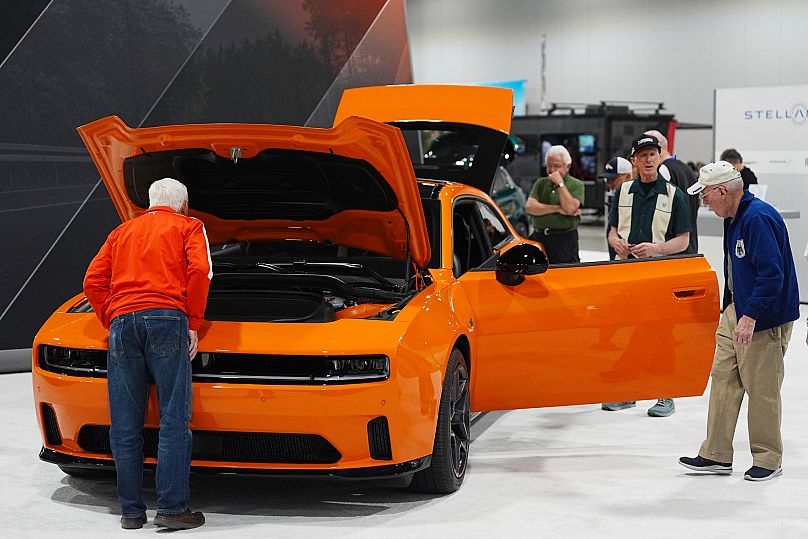
    Stellantis, the big car‑maker with brands ranging from Jeep to Peugeot, is bracing for a colossal hit on its balance sheet this year. The loss? A whopping €1.5 billion inflicted by U.S. tariffs—yes, folks, not just on cars but on the parts inside them too.

    Why the Double Whammy?

    • Cars Under Hold: The U.S. slapped tariffs on fully assembled vehicles, turning buyer budgets into a tighter knot.
    • Parts in the Crossfire: Key components—think engines, brakes, and that fancy infotainment system—also got hit, making production costs soar.

    What Does This Mean for the Wheel‑Turners?

    In plain talk, more expensive cars and pricier manufacturing translate to higher prices for consumers and slimmer margins for the company. It’s a double-edged sword that could ripple through replacement parts, resale values, and even future tech funding.

    Stellantis’ Game Plan

    The company is sharpening two main weapons: cost cutting to keep the purse strings tight and price negotiations to smooth out the impact on loyal customers. They’re also looking to boost their US production footprint, hoping local plants will dodge some of the tariffs.

    Final Takeaway

    So, the next time you’re eyeing a brand‑new ride, remember: behind the sleek exterior might be layers of tariffs and bigger numbers a‑growing. For Stellantis, it’s not just about steering into new markets—it’s also about steering through an economic storm of sharp tariffs. Stay tuned, keep your wallets ready, and let’s hope for smoother roads ahead!

    Stellantis Stumbles Over U.S. Tariffs: $1.5 B in Losses

    Picture this: Europe’s second‑biggest carmaker, Stellantis, is getting hammered by U.S. import duties. The result? A projected hit of around €1.5 billion this year for the company.

    The Cost of the Tariffs

    • In the first half of the year, U.S. President Donald Trump’s tariffs took a toll of €300 million.
    • That’s just the tip of the iceberg; the newer EU regulations on auto levies aren’t offering any relief.

    Profit That Took a Hit

    Stellantis’ net earnings skidded from €5.6 billion in the same period last year to a draconian —a sharp drop caused by a €3.3 billion cash burn.

    Why that was? They had to cancel a pricey hydrogen fuel‑cell project and die‑huge write‑downs on their platform investments. Add a change in the fine regime for U.S. carbon emission regulations, and the economics threatened to sink ships.

    Big Names in the Roll‑Call

    From luxury Maserati to everyday Lancia, Peugeot and Fiat, Stellantis’ entire portfolio felt the pinch.

    Even with the swagger that underlines their branding, the tariffs feel a real bruise. The company’s challenges remind us — crafting a future‑proof car line‑up is not a walk in the Parisian garden; there’s always wind in the market.

    Stellantis makes a wide range of cars, from high-end Maseratis with steep price tags to much-beloved affordable Fiat models.

    Stellantis: From Maserati Luxury to Fiat Affordability in a Tight Spot

    Reality Check on the Road

    Stellantis—yes, the same company that splits the market between booming Maserati luxury and everyday Fiat commuters—has hit a rough patch. Sales fell a solid 13% in the first half, trimming revenue to roughly €74.3 bn. That means the company is feeling the heat from both the market and the workforce.

    What’s the Domino Effect?

    • Plant shutdowns could be on the horizon.
    • Model rollouts are on hold.
    • Union talks might shoot up to the roof.
    • Cash reserves take a hit, leaving bad decisions hanging.

    Auto manufacturers are the backbone of European industry, pumping around 7% of EU GDP, fueling 14 million jobs, and contributing big export surpluses. A wobble in their performance can ripple through steel, chemicals, logistics, and even the continent’s tech pushing.

    Stellantis’ Plan Switch

    The company tells us it’s braced to raise net revenues in the coming six months, after the first half’s steep decline. It also expects a boost in cash flow, which is a breath‑of‑fresh‑air for a cash-strapped giant.

    New CEO Antonio Filosa’s Vision

    Filosa, who took the helm last month, is riding straight into the fire:

    “I’m convinced we can fix the bridge that’s fallen apart,” said Filosa. “The new team will do the hard choices needed to get back to profitable growth and really improve results.”

    With a clear, decisive voice and a commitment to “hard decisions,” Stellantis is aiming for a swift turnaround—because in an industry that feeds 70 bn € into innovation each year, there’s no room for hesitation.

  • Life on the Moon? Lunar soil could help humans live on the Moon, study finds

    Moon‑Melted Mystery: Turning Lunar Soil into Life‑Support

    Picture this: astronauts, chillin’ under a thin veil of atmosphere, suddenly sipping on a glass of pure oxygen made from the very dust they’re stepping on.

    What the Chinese University of Hong Kong Just Cooked Up

    • Moondust Mining: A nifty gadget that digs up water hidden in lunar regolith.
    • Oxygen Oasis: The extracted water splits into oxygen and hydrogen, giving astronauts a fresher supply of breath.
    • Fueling the Future: The leftover hydrogen turns into chemical fuel—fuel for rockets, rovers, maybe even an interplanetary coffee machine.

    Why It Matters (And Why It’s Cool)

    With a device that can turn the Moon’s dry, dusty surface into life‑sustaining gas and rocket fuel, we’re moving one giant step closer to long‑term lunar living.

    Feel the Excitement!

    Imagine having a ready‑made train of oxygen at the tip of your hand—no more relying on Earth shipments. And the chemical fuel? It’s like the Moon’s own snack bar, ready to power the next spacecraft heading back to the sun.

    The Moon’s Dust Isn’t a Dust Storm After All

    Forget the dusty junk you see on lunar selfies—our folks at the Chinese University of Hong Kong have turned that gritty soil into a potential life‑supporting pantry. Yep, it’s all about turning the Moon’s grime into water, oxygen, and even rocket fuel.

    How a Dusty Spoon Makes a Splash

    The scoop is this: take the Moon’s regolith, let a cheap tech squeeze water out of it, and then use that water to convert CO₂ into breathable O₂ and useful chemistry. The trick? Photovoltaic‑to‑thermal magic that turns suns’ light into heat—think solar lunchbox but for astronauts.

    Why It Matters (and How It Might Save Credit Card Woes)

    • The study, featured in the Cell Press journal Joule, suggests we could drastically cut the cost of delivering necessities to the Moon.
    • Every gallon’s worth (~3.8 L) can cost a whopping $83,000 to launch, while a single astronaut’s daily water bill would stack up to about 15 L—more than a household can afford during a normal week.
    • Lead researcher Lu Wang says we “never fully imagined the ‘magic’ that the lunar soil possessed.”

    Reality Check: Moon‑Mashing Isn’t a Piece of Cake

    Right now, splitting the Moon’s water with current methods feels like a multi‑step, energy‑hungry marathon. The study stresses that existing protocols still brag about sinfully consuming carbon dioxide for nothing special.

    And, spoiler alert: the Moon isn’t a comfortable campus. With extreme cold snaps, blazing radiation, and a low‑gravity mood‑setter, even breathing CO₂ from astronauts won’t crank out every drop of water, oxygen, or fuel the crew needs.

    Bottom‑Line: Hooray for Lunar Soil, But the Real Work Is Just Getting Started