Tag: CEO

  • The Boring Company is finally testing Tesla's 'Full Self-Driving' in its Las Vegas tunnels

    The Boring Company is finally testing Tesla's 'Full Self-Driving' in its Las Vegas tunnels

    Elon Musk’s The Boring Company is finally testing Full Self-Driving (Supervised), the advanced driver assistance system created by Tesla, in the tunnels that connect Las Vegas’ Convention Center to a few nearby hotels, according to Fortune.

    Steve Hill, the CEO of the Las Vegas Convention and Visitors Authority, told the outlet that The Boring Company has been doing tests of the software for a few months now in Tesla vehicles with only safety drivers onboard. But any widespread use of the tech is still “a ways off,” Hill said.

    The Tesla tunnels have been open for around four years, and while The Boring Company has plans to expand them across Las Vegas, they currently serve a small area underneath and around the Convention Center.

    Despite Tesla’s recent launch of a small-scale, invite-only robotaxi service in Austin, Texas (and a similarly small ride-hail service in San Francisco), and Musk’s boasting about how good the technology is, Hill said that safety drivers still have to “periodically” intervene and take control of the vehicles.

    In theory, the simple tunnels should be an easy task for Tesla’s autonomy software to solve, with perhaps the greatest challenge being navigating passenger pick-up and drop-off at the various underground stations. Hill said the colorful lighting of The Boring Company’s tunnels, along with the semi-smooth rock walls, have been challenges that the driver assistance system has had to cope with as the cars “find spots that are difficult for them.”

  • Cracker Barrel Nukes Woke Logo, Brings Back "Old Timer" In MAGA Cultural War Victory

    Cracker Barrel Nukes Woke Logo, Brings Back "Old Timer" In MAGA Cultural War Victory

    Update (2020ET):

    Steak ‘n Shake on X with a fiery post…

    And another.

    *  *  *


    Update (1954ET):

    Trump responds on Truth Social: 

    MAGA logs another victory in the cultural war against woke corporate America. 

    *  *  *


    Update (1922ET):

    Hours after President Trump commented on the Cracker Barrel logo, the restaurant chain released a statement bowing to popular demand, announcing it would revert to its old logo of the “Old Timer.”

    “Our new logo is going away and our “Old Timer” will remain,” Cracker Barrel wrote in an X post. 

    Here’s the full statement:

    We thank our guests for sharing your voices and love for Cracker Barrel. We said we would listen, and we have.  Our new logo is going away and our “Old Timer” will remain.

    At Cracker Barrel, it’s always been – and always will be – about serving up delicious food, warm welcomes, and the kind of country hospitality that feels like family.  As a proud American institution, our 70,000 hardworking employees look forward to welcoming you to our table soon.

    The world is healing. 

    Now what happens to the CEO?

    Hmm. 

    *  *  *


    Update (1045ET):

    President Trump has chimed in on the Cracker Barrel bullshit:

    Cracker Barrel should go back to the old logo, admit a mistake based on customer response (the ultimate Poll), and manage the company better than ever before.

    They got a Billion Dollars worth of free publicity if they play their cards right. Very tricky to do, but a great opportunity. Have a major News Conference today.

    Make Cracker Barrel a WINNER again.

    Remember, in just a short period of time I made the United States of America the “HOTTEST” Country anywhere in the World. One year ago, it was “DEAD.” Good luck!

    *  *  *


    As Steve Watson detailed earlier via Modernity.news, Cracker Barrel’s stock price tumbled by almost 14 percent last week after the company rolled out a new and extremely bland and soulless logo.

    Critics accused the company of undergoing a ‘woke’ make over, with the removal of the “Uncle Herschel” logo—a white man sitting on a barrel, a iconic part of the brand since 1977.

    The new sterile logo is completely devoid of character and has little link to the nostalgia of the long standing logo.

    The company also announced plans to remodel its restaurants, to do away with the country-store type décor including trinkets, dark wood, and front-porch rocking chairs.

    The new restaurants will be brighter and have modern aesthetics, according to Julie Felss Masino, Cracker Barrel’s CEO since late 2023.

    Felss claims that Cracker Barel is not abandoning its roots, but is “evolving” in order to cater for modern diners.

    The damage was done, however, and the backlash was swift.

    Cracker Barel Shares plunged more than 14 percent, a loss of around $200 million in market value. Prices eventually settled at $50.84 per share, a drop of around 13.9%.

    Since that time, some value has been salvaged, evening out at about a $143 million loss.

    Chief marketing officer Sarah Moore claimed that the changes are what customers want.

    Clearly they don’t.

    The resulting plunge in market value has forced the company to issue a further statement titled, “A Promise to Our Guests,” walking back the plan to remodel.

    “We’re truly grateful for your heartfelt voices. You’ve also shown us that we could’ve done a better job sharing who we are and who we’ll always be,” Cracker Barrel wrote on Facebook.

    The company further asserted that, “The things people love most about our stores aren’t going anywhere: rocking chairs on the porch, a warm fire in the hearth, peg games on the table, unique treasures in our gift shop, and vintage Americana with antiques pulled straight from our warehouse in Lebanon, Tennessee.”

    There was an assurance that the “old timer” figure of founder Uncle Herschel will still be seen on menus and in stores. Obviously they’ve realised the change was disastrous, but can’t walk it fully back because they’ve already financed the terrible logo rebrand.

    “We know we won’t always get everything right the first time, but we’ll keep testing, learning, and listening to our guests and employees,” the statement said, adding “At the end of the day, our promise is simple: you’ll always find comfort, community, and country hospitality here at Cracker Barrel.”

    *  *  *

    Your support is crucial in helping us defeat mass censorship. Please consider donating via Locals or check out our unique merch. Follow us on X @ModernityNews.

    Loading recommendations…
  • Claude AI by Anthropic Expands Prompt Length Capability

    Anthropic Goes Big on Context, Trying to Keep the Coders in Its Crowd

    In a move that feels a bit like giving the AI a bigger backpack, Anthropic has expanded the amount of text developers can shove into a single Claude request. The Sonnet 4 model now sports a 1 million‑token window. That means you could feed it a litany of 750,000 words—more than the entire Lord of the Rings saga—or 75,000 lines of code all at once. Five times larger than before, and more than double what OpenAI’s GPT‑5 offers.

    Why This Matters

    • The new context size lets coders pass massive codebases or exhaustive documentation without needing to prune.
    • Scholars can now feed long scientific papers to the model for analysis or summarisation.
    • It gives Anthropic a tangible edge when competing with OpenAI’s exploding lineup.

    Partner‑Enabled Growth

    Anthropic’s size‑up isn’t just sliding into the sea of demo prompts. The extended context will also roll out through cloud allies like Amazon Bedrock and Google Cloud’s Vertex AI, ensuring developers across the board enjoy the same boost.

    Enterprises, Coders, and the AI Showdown

    The company has built its fortunes by feeding its model into popular coding assistants—think GitHub Copilot, Windsurf, and Anysphere’s Cursor. Claude has become the “go‑to” model for many developers. But GPT‑5 is looking like a formidable rival, especially with its attractive pricing and top‑notch coding chops. Curiously, the very CEO of Anysphere, Michael Truell, helped OpenAI roll out GPT‑5, and now GPT‑5 is the default engine in Cursor for fresh users.

    Inside Conversation

    Brad Abrams, Claude’s product lead, told TechCrunch that AI coding platforms should find the new context extension a significant advantage. When queried about GPT‑5’s impact, he brushed it aside, saying he’s “really happy with the API business and the way it’s been growing.”

    Unlike OpenAI—which fishes in consumer subscriptions to ChatGPT—Anthropic’s core is B2B, selling AI models to enterprises via API. This focus makes coding platforms a rock‑solid customer base and likely explains why the company is upping its game to outpace GPT‑5.

    More Power, More Promos

    Just last week, Anthropic unveiled Claude Opus 4.1, raising the bar for its AI coding prowess. Now, with the jump to 1 million tokens, it’s clear the company isn’t slowing down—if anything, it’s tossing more goodies on the table to keep the dev community glued to Claude.

    Tech and VC heavyweights join the Disrupt 2025 agenda

    Netflix, ElevenLabs, Wayve, Sequoia Capital, Elad Gil — just a few of the heavy hitters joining the Disrupt 2025 agenda. They’re here to deliver the insights that fuel startup growth and sharpen your edge. Don’t miss the 20th anniversary of TechCrunch Disrupt, and a chance to learn from the top voices in tech — grab your ticket now and save up to $600+ before prices rise.

    Tech and VC heavyweights join the Disrupt 2025 agenda

    Netflix, ElevenLabs, Wayve, Sequoia Capital — just a few of the heavy hitters joining the Disrupt 2025 agenda. They’re here to deliver the insights that fuel startup growth and sharpen your edge. Don’t miss the 20th anniversary of TechCrunch Disrupt, and a chance to learn from the top voices in tech — grab your ticket now and save up to $675 before prices rise.

    More Context, More Fun: Why AI Needs a Bigger Brain

    Ever wished your AI assistant could remember the last week of your brunch conversations instead of just the last few minutes? That’s the new trend in big‑context AI.

    Why Bigger Means Better

    • Software chores thrive on detail. A model tasked with launching a new feature performs way smoother when it can see the entire codebase, not just a snippet.
    • Long‑running projects benefit. Claude’s massive context window lets it keep track of every step over months, so it won’t forget where it left off.

    Ultra‑Large Prompts: The Next Frontier?

    Some companies are pushing the limits, claiming their models can handle astronomical prompts.

    • Google’s Gemini 2.5 Pro boasts a 2 million‑token window.
    • Meta’s Llama 4 Scout goes even further with a 10 million‑token horizon.
    But Do Bigger Always Mean Better?

    Not a sure thing. Research shows there’s a sweet spot: beyond a certain size, models struggle to chew through massive data streams.

    Anthropic is tackling this by not only enlarging Claude’s window but also sharpening its effective understanding—so it can sift out the useful bits from the noise, though how they do it remains hush‑hush.

    Paying the Price for Power

    When you ask Claude Sonnet 4 for a prompt over 200 000 tokens, you’ll notice a price hike:

    • Input: $6 per million tokens (up from $3).
    • Output: $22.50 per million tokens (up from $15).

    Think of it as a premium gym membership for your AI—big workouts, higher cost.

    Get Involved – We’re Listening!

    We’re always looking to level up. If you’ve got thoughts, drop them in our survey, and you might just snag a prize. Thanks for keeping the conversation fresh!

  • Are task management systems turning you into a micro manager?

    Are task management systems turning you into a micro manager?

    As a leader looking to inspire via digital means in 2021, don’t fall foul of the task list negative management style trap. Instead read this and remember how to manage task lists effectively to boost morale in your team culture, not sever it.

    Picture the scene, it’s Friday six months into 2020 and your team is totally displaced. They’re working from home, all within a one hour radius of you and yet as the founder and boss you’ve never felt so disconnected.
    You begin to panic. Is enough being done? How without your watchful eye and without the line manger’s underneath you collating the work and pushing it through can it possibly be done? You start to panic. So you send a negative email around to your work force saying that whilst the mini tasks on the task management software seem to be getting ticked off you just don’t ‘feel’ like work is being completed.

    If this is you, STOP TYPING THE EMAIL MESSAGE RIGHT NOW.

    This is your issue, not your team’s.
    This is a common problem arising which is immensely frustrating both for managers and staff working on task management systems. The issue arises out of the task list which is meant to give structure and guidance, however the appearance of one simple sentence typed in a hurry actually has the affect of simplifying a task to the point where it looks as if it can be achieved in a matter of moments, max hours.
    Yes there’s the timeline functions and projected deadlines, but neither of those actually let your CEO/founder know how much time is expected to be spent on each respective task and whether there are any roadblocks along the way.
    If you’re a CEO struggling to get o top of where your company is at when you’re all working from home, remember this: just because you can now view a list of someone’s work day on a team project does not necessarily mean that you are aware of the pitfalls faced when your team member has attempted to action it. Perhaps it is in mid-progress. Perhaps they’ve completed it and forgotten to update the systems. Either way, you have to remember when you read it that it’s a task management system, not a direct record of every single iota of their day to get the task done. If you were working pre-Covid in the office with this team member, would you want to have each minute task broken down for you? No of course you wouldn’t, so why now?

    Ah you say, why don’t we just break the task down into all of its many subsections?

    Now this is where the danger happens. At first it seems logical to break a task down into subsections – of course it does, no argument there. But this is again a slippery slope. Recently I’ve had to deal with someone request sub, sub, sub sections on tasks and by the time the task list has been filled out I could have executed on it, ticked it off and moved onto the next one.
    Task lists are a rabbit hole and a dangerous one for a few solid reasons:

    As a leader you start to analyse all the other steps they might be missing
    You spend more time worrying about organising the task list than doing the actual job
    Your team member feels unappreciated for the gargantuan amount of work behind each successful task being signed off
    You add more tasks to the list not realising how long each task will take to a your potentially already overtasked colleague
    Your panic rises
    Your trust in your employee lowers
    The respect your employee had in you wanes as they feel misunderstood and untrusted
    Bit by bit the positive work culture that you have strived so hard to cultivate cracks

    What have you forgotten? You don’t just pay your team to spend all their time listing their jobs on a task management system – at some point they need to get off the software and do their work.
    Getting obsessive about subtasks? What does this say about you?
    If you’re the SME business owner with only a few members of staff and they’re doing work that you’ve previously done to get the company up and running then you know the main stages of each job. However if you’re panicking about handing the work over and trusting a member of your team with it, fixating on every single minute subtask is actually a sign that you’re entering the dangerous waters of micro management. Trust is key when trying to inspire a positive to action work culture.
    How to work and lead positively on task management systems
    If you find yourself beginning to obsessively check task lists and subtask lists, pull yourself back and schedule a catch up with your line manager first. Ask your line manager’s to manage task lists in line with their duties and have them report on the overall tasks and main achievements of their team each week. Remember that everyone has a different working style and a task might be 95% completed but not updated yet or it might be hinging on a phone call for it to be finally ticked off. If your team are spending more time working than updating the task list obsessively then that’s a good thing right?
    Request zooms with staff when you want to congratulate them or go over a particular issue brought to you by your line manager. Use that opportunity to find out whether the staff member is happy, what can be done to better their work satisfaction and ask if they think their task list/work load is still reasonable. A lot of people’s workloads rose in 2020 which may not be sustainable through 2021.
    If you use a rewards based morale system, ensure that it’s correctly set up for use with your task management system, so that a staff member and/or team are still sent rewards for their efforts.
    Crucially …
    When someone has completed a main task on their list, you must give them pause to respect it. Yes it’s a list and you know that they’ll be jumping onto the next pointer as it’s their job to do so. However, not recognising when a gargantuan job has been completed, simply viewing it as a one-liner on a list completely demoralises the person who’s stressed and worked on that task for weeks, maybe months. Take time to celebrate their efforts before jumping in on the next task. Give them the rest of the day off, send an email around, allocate a reward, tell them to enjoy their weekend; they’ve earnt it …
    A task management system can either be your route to micro management or an effective task list  and document sharing tool that indicates of how projects are progressing. Choose and act wisely.

  • OpenAI board chair Bret Taylor says we’re in an AI bubble (but that’s okay)

    OpenAI board chair Bret Taylor says we’re in an AI bubble (but that’s okay)

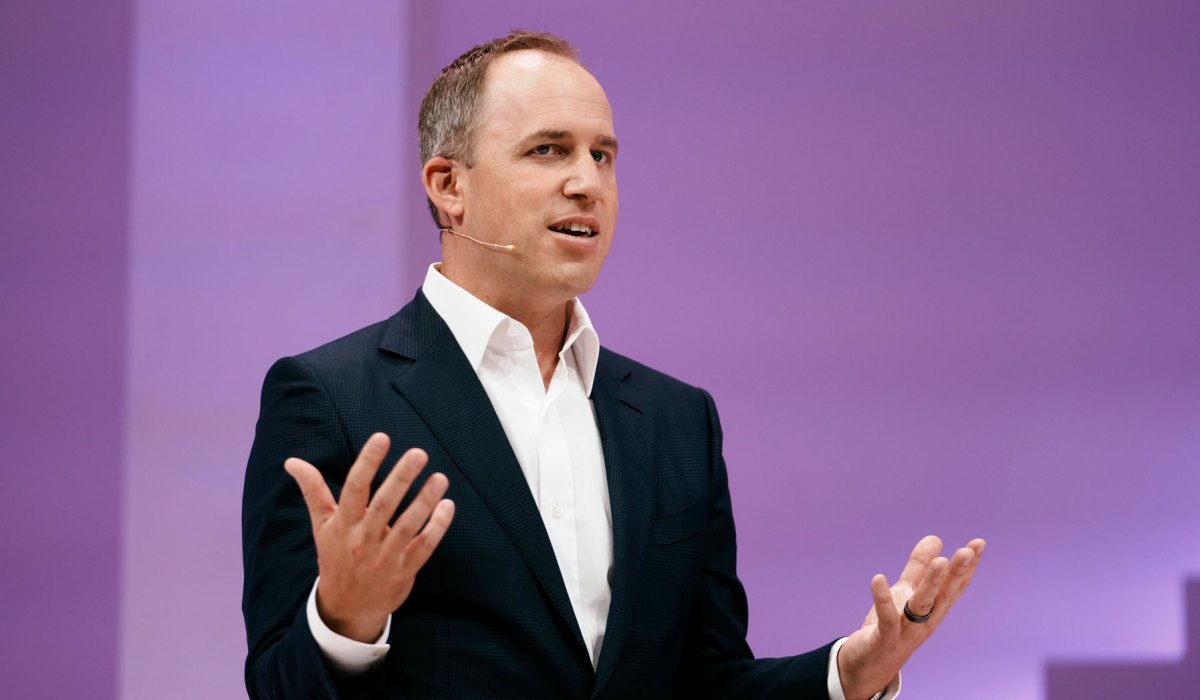
    Bret Taylor, board chair at OpenAI and CEO of AI agent startup Sierra, was asked in a recent interview with The Verge whether he agreed with OpenAI CEO Sam Altman’s declaration that “someone is going to lose a phenomenal amount of money in AI.”

    Taylor echoed Altman’s sentiments, suggesting that we are indeed in an AI bubble — but like Altman, he didn’t sound too worried about it.

    “I think it is both true that AI will transform the economy, and I think it will, like the internet, create huge amounts of economic value in the future,” Taylor said. “I think we’re also in a bubble, and a lot of people will lose a lot of money. I think both are absolutely true at the same time, and there’s a lot of historical precedent for both of those things being true at the same time.”

    Specifically, Taylor compared today’s AI landscape to the dot-com bubble of the late ‘90s. While many companies failed when the bubble burst, he argued that “all the people in 1999 were kind of right.”

  • Discover Dystopian Startups Crafting Biological Computers from Human Cells

    Discover Dystopian Startups Crafting Biological Computers from Human Cells

    Brains on a Shelf: Meet the Micro‑Brain Computer

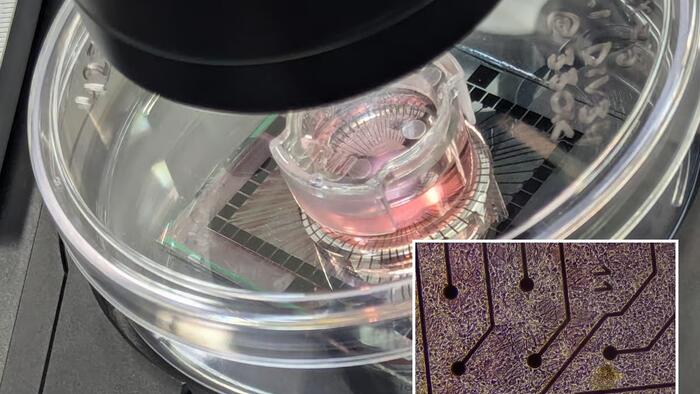
    Picture a sci‑fi world where your brain matters more than your phone. In a cramped Cambridge lab, researchers have turned that idea into reality with a tiny device, the CL1, that shrinks the neurology lab into the size of a shoebox.

    How It Works

    • Two teams—Australian startup Cortical Labs and UK‑based bit.bio—grit together 200,000 lab‑grown brain cells.
    • These cells are wired to silicon circuits, forming a bio‑synergetic computer that can think on its own.
    • The whole thing sits in a standard shoebox, ready for anyone to plug into a PC.

    Why It Matters

    Traditional computers crunch numbers in twos and zeros, but the CL1 lets us tap into the real biology of neurons. Think of it as a mini café where the espresso machine is powered by actual human cells.

    The technology has already attracted attention from venture capitalists and scientists alike—turning the future from “dystopian” to highly innovative.

    Future Vibes
    • More power‑efficient bits? Check.
    • Potential for medical breakthroughs and cognitive computing? Absolutely.
    • And the best part? You can store it in your kitchen drawer.

    Whether you’re a “techie” or just a curious fan, the CL1 highlights a bold next step in blending life’s circuitry with silicon’s logic. In the words of one researcher, “It’s like humming our own neural symphony in a lab.”
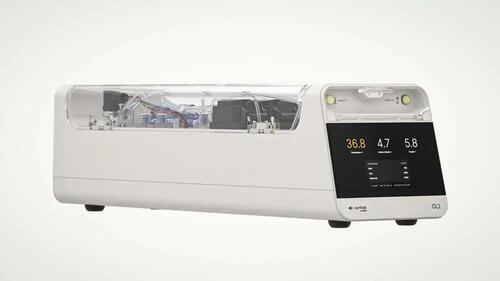
    Cortical Labs Unveils CL1: A Brain‑Powered Riddle of Power‑Efficiency

    Why This Isn’t Just a Fancy Tech Buzzword

    Imagine a machine that thinks faster than a go‑go espresso machine, yet doesn’t need a power strip the size of a skyscraper. CL1 promises just that. Rather than guzzling electricity like a late‑night diner, CL1 mirrors the brain’s knack for doing more with less.

    • Energy‑evolved performance – The brain is nature’s most efficient processor.
    • Human‑like brains in action – Using stem‑cell‑derived “neurons” grown from human skin.
    • From sandbox to real‑world tech – Potential to supercharge robotics, tighten cyber‑security, and create ultra‑realistic VR.

    Building a Tiny Brain

    Think of a Swiss roll: the first layer ignites the action, the second keeps it from turning into a wild west. That’s how CL1 arranges its neural layers—one type sparks firing, the other keeps the signals in check. “It’s like steering while braking,” explains CEO Hon Weng Chong. The result: neat, predictable activity that beats most “mini‑brain” shrimps on the market.

    Why It Matters

    Researchers now see a playground for testing how these lab‑grown cells respond to data. Early experiments already hint at surprising insights for:

    • Neuroscience – Understanding brain–computer threading.
    • Drug Discovery – Seeing how potential remedies interact on a neuronal level.

    The Power‑Playing League

    Cortical Labs isn’t the only kid on the block. Rivals like FinalSpark in Switzerland and Biological Black Box in the US are also cooking up biology‑based chips. But CL1’s meticulous layering gives it the edge—making it less chaotic than competitors’ less uniform brain‐like setups.

    Wrap‑up

    With CL1, we’re one step closer to a reality where computers are as smart as a busy brain, yet as quiet as a lazy Sunday morning. It could mean robots that learn quicker, holes in cybersecurity that close tighter, and virtual worlds so vivid you’ll forget you’re in a simulation. Who knew cellular science could be this fun?
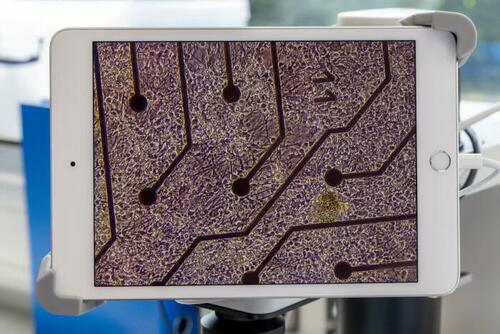
    CL1’s Quirky Quest: From Pong to Pharmacology Wizardry

    Picture this: CL1 is a little twitchy duo of brain‑cells that’s been trained to swing a paddle like it’s the ultimate Pong champion. But it’s not just about high scores—this smart pair is also a test subject (in the best sense) that learns how different substances can mess with its moves.

    First Stop: The Good Ol’ Pong

    • CL1 learned the art of paddle‑push by earning electric rewards for each righteous hit.
    • A slip? It heard the disruptive hiss of a mistake, nudging it back on track.

    Second Act: Pop, Crash, Boo! The Pharmacological Play

    • Alcohol – That drink that turns a top‑tier Pong player into a wobbly, score‑loser.
    • Carbamazepine – An epilepsy drug that straightens the paddle swing so the score goes back to superstar levels.

    Future Goals: Numbers and Nope–Nope!

    Chong and his crew are tweaking the neural circuitry so that CL1 can do more than remember “one”; it will actually spot a nine from a four—the brain’s own version of a numbers‑puzzle.
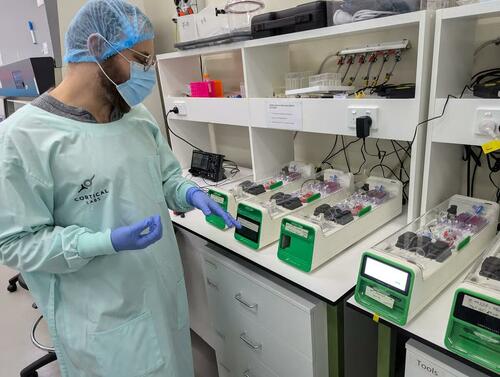
    Meet the CL1 Units: Silicon’s New Health Spa for Neurons

    Picture a tiny machine that keeps your brain cells happy while they zap around on a chip — that’s what Kagan and her crew have whipped up with the CL1 units. These sleek gadgets are not just toys; they’re the first gadgets that reliably tell you what a neuron can actually do. “It’s the first device that can consistently measure what neurons can do,” enthuses Mark Kotter, a Cambridge professor and the brains behind bit.bio.

    Why Scientists Are Buzzing

    Renowned neuroscientists are turning up the excitement:

    • Karl Friston of UCL: “This tool opens a door to brand‑new experiments that could rewrite how we understand the brain.”
    • Thomas Hartung from Johns Hopkins: “Using classic games like Pong as a yardstick for brain power? That’s genius. It’s like a playground for neuro‑ping‑pong!”

    The Tech That Makes It All Possible

    At its core, the CL1 is a meticulous caretaker. It sits on silicon hardware (thanks to New Atlas) and watches over neuron health, adjusting conditions so they stay alive and active. This stability is key to measuring their performance without the usual noise.

    Game On: Pong as a Benchmark

    Hartung’s favorite part? Watching neurons play Pong. The game’s simple rules provide a clean test of neuronal speed and precision — think of it as a neural version of “score the highest.” If your neurons can hit the rim with rapid, accurate strokes, you’ve got a winning system.

    Bottom Line

    With the CL1 units, scientists now have a reliable, chip‑based health monitor that also doubles as a performance gauge. From neuroscience frontiers to game‑based benchmarks, it’s turning silicon into a playground for the living mind.
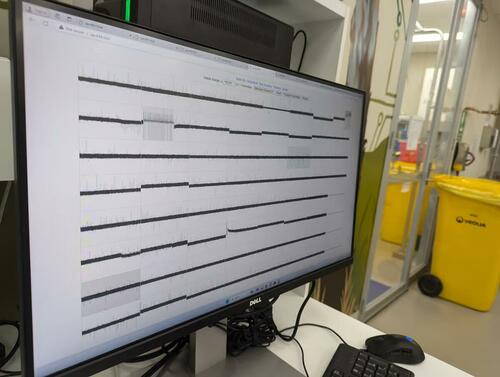
    Inside the Lab: The CL1 Model Gets a Reality Check

    Imagine a little biological brain‑computer straight out of a science‑fiction comic—exactly that’s what the team’s rolling out in the lab. They’re putting the early CL1 model through a series of prompt‑based tests to see how it reacts to different stimuli.

    What the experiment looks like

    • Stimuli & Prompts – A set of carefully crafted inputs to fire up the culture.
    • Monitoring – Scientists watch how the neurons fire and adjust as they learn.
    • Learning Curve – The model isn’t just responding; it’s gradually adapting to what it’s sensed.

    Ethical Crossroads

    New AtlasChong, a leading thinker in neuro‑ethics, points out that early signs of consciousness could pop up in these systems—and that’s a big deal. He says:

    “These systems are sentient because they respond to stimuli and learn from them, but they are not conscious.”

    He adds a calm, almost philosophical warning: “We’ll learn a lot about how the human brain ticks, but we don’t plan on building a brain in a vat.”

    Why it matters

    The project is a double‑edged sword. On one hand, it could unlock mysteries of cognition and offer novel computational models. On the other, it raises questions about the moral treatment of semi‑sentient entities.

    Looking Forward

    In the short term, the focus stays on research. The developers promise to keep regulations tight, ensuring that the technology remains an intriguing science experiment—not a sci‑fi prototype of next‑generation sentient machines.

    Stay tuned for more updates. We’re watching the lab’s next experiment with open ears—and maybe a sprinkle of cautious humor!
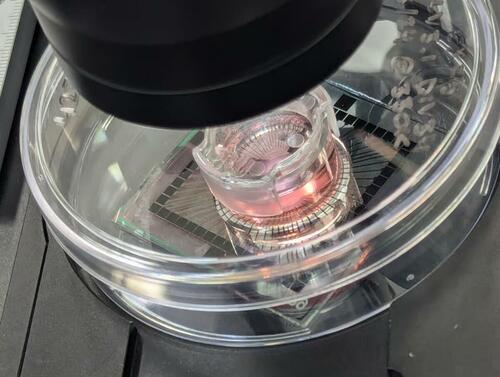
    Welcome to the Future: Artificial Cells Are Finally Here

    Picture this: a tiny, self‑assembling unit that runs like a brain but in the size of a credit‑card. That’s the CL1, the first of a new wave of cellular AI that’s set to wave goodbye to your old desktop and hello to a more organic way of computing.

    Why the Buzz?

    • Biology Meets Tech: It uses engineered cells to perform calculations, essentially letting your machine mimic the way brains work.
    • Revolutionary Speed: Expect far fewer latency headaches; think of it as the Swiss Army knife of processors.
    • Neat Packaging: Its sleek, card‑sized form factor means it could fit under a coffee mug—or, if you’re feeling ambitious, on your smartwatch.

    What You’ll Pay For This Wonder

    Street price: $35,000 each. That’s a bit more than a home stereo, but you’re buying a single AI seed that grows into an entire network. The cost is comparable to a high‑performance laptop plus a surprise personality module.

    Availability Timeline
    • 2025, Q4: Mass‑production launch announced by the creators.
    • Retail: Subscribing retailers (think Apple‑style launch) will begin promotions in just a few weeks after the official release.
    Quick Takeaway

    If you’re craving the next generation of computing that feels more conscious than clunky, the CL1 is the ticket. Its price tag suggests it’s aimed at the “tech‑savvy luxury” crowd, but the ripple effect could still reach mainstream users—just wait for the software ecosystem to catch up!