Tag: chief

  • RNC Elects Trump-Backed Joe Gruters As Chairman

    RNC Elects Trump-Backed Joe Gruters As Chairman

    Authored by Nathan Worcester via The Epoch Times,

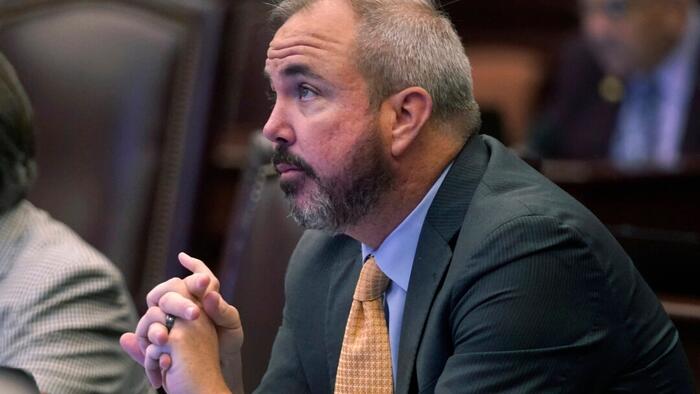
    The Republican National Committee (RNC) has formally chosen its outgoing treasurer, Florida state Sen. Joe Gruters, as its new leader.

    He was elected on Aug. 22 at the RNC’s summer meeting in Atlanta.

    “The midterms are ahead, where we must expand our current majority in the House and Senate,” Gruters said after his election.

    Jennifer Rich was also elected treasurer of the RNC, replacing Gruters.

    President Donald Trump, now the dominant influence on national GOP leadership, endorsed the Republican from Sarasota on Truth Social on Aug. 1. He described Gruters as a “MAGA warrior” and someone “who has been with us from the very beginning.”

    Gruters co-chaired Trump’s 2016 campaign in the Sunshine State, where he defeated former Secretary of State Hillary Clinton after Republican presidential candidates lost there in both 2008 and 2012. His co-chair, Susie Wiles, is now the White House chief of staff.

    No one challenged Gruters in his effort to replace outgoing Chairman Michael Whatley, another Trump-backed figure. Whatley was elected in March 2024 alongside Trump’s daughter-in-law Lara Trump, who served as the RNC’s vice chair through much of 2024.

    On July 31, Whatley launched a campaign for the Senate seat currently held by Sen. Thom Tillis (R-N.C.). That came just a month after Tillis revealed he would retire at the end of his term, a decision he announced after coming out against Trump’s One Big Beautiful Bill.

    “He will not let you down,” Whatley said of Gruters.

    KC Crosbie, the RNC’s co-chair, praised Whatley’s tenure as RNC leader.

    “He has completely transformed this organization. He along with co-chair Trump made everything about winning. … What happened in 2024? We won,” she said.

    The president previously endorsed Gruters in his successful bid to serve as the RNC’s treasurer, a post he assumed in January. In June, Trump appointed Gruters as vice chair of the Homeland Security Advisory Council.

    The state senator also chaired the Florida Republican Party from 2019 through 2023, beginning soon after Ron DeSantis was elected governor.

    Florida Chief Financial Officer Jimmy Patronis speaks during a rally at the Cheyenne Saloon in Orlando on Nov. 7, 2022. Octavio Jones/Getty Images

    During that time, the number of registered Republicans in the state climbed, while the number of registered Democrats declined.

    A roughly 225,000-voter advantage for Democrats in 2019 flipped to an almost 780,000-voter edge for Republicans in 2023. That gap has continued to widen since Gruters left the role.

    Whatley credited Gruters with leading “the transformation of Florida from a purple state to a red state.”

    Trump, DeSantis, and Gruters

    Trump also backed Gruters in his efforts to serve as Florida’s chief financial officer. The slot opened up when former CFO Jimmy Patronis entered the special election to fill the seat vacated by Rep. Matt Gaetz (R-Fla.).

    But Gruters did not win the support of DeSantis, the man ultimately empowered to fill the vacancy in his cabinet—that is, until November 2026, when Florida voters will decide who serves as CFO.

    In July, DeSantis appointed then-state Sen. Blaise Ingoglia as CFO. Ingoglia, like Gruters, once led the Florida Republican Party.

    When asked why he chose Ingoglia over Gruters, the Florida governor said the latter’s record did not reflect conservative values.

    “If George Washington rose from the dead and came back and tapped me on the shoulder and said, ‘Will you appoint Joe Gruters CFO?’ My response would be no,” he said at a July 16 press conference.

    He cited Gruters’s support for Florida’s Amendment 3, which would have legalized recreational marijuana use by adults over 21 years of age.

    DeSantis opposed the amendment, which netted a majority of the vote in a 2024 referendum, but fell short of the necessary 60 percent to make it into the state’s constitution.

    Earlier this year, DeSantis opposed a Gruters-sponsored immigration bill that he said wasn’t tough enough.

    “We don’t have time for weakness,” he said soon after it passed the state Legislature.

    Then-Florida Republican gubernatorial candidate Ron DeSantis and his wife at a Make America Great Again rally in Fort Myers, Fla., on Oct. 31, 2018. Charlotte Cuthbertson/The Epoch Times

    DeSantis ultimately vetoed that bill. Days earlier, however, he signed two other Gruters-sponsored bills that expanded immigration enforcement, created new criminal penalties for some illegal aliens, and cracked down on the issuance of driver’s licenses to illegal immigrants.

    In July, Gruters announced he had hired Trump campaign veterans Chris LaCivita and Tony Fabrizio for his CFO campaign.

    Gruters addressed criticisms of his conservatism in his speech after being elected, saying a successful leader would have to bring together competing factions within the party.

    Loading recommendations…
  • Scott Bessent Unveiled: Top Takeaways From Fox and Bloomberg

    Scott Bessent Unveiled: Top Takeaways From Fox and Bloomberg

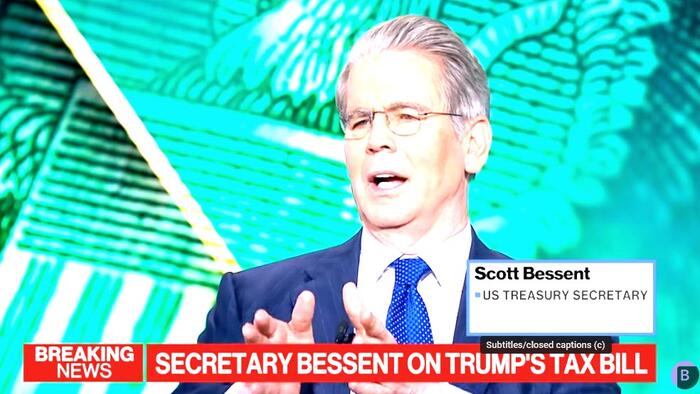
    Inside the Treasury: Bessent Talks Deals, Deficits, and a Dash of Musk‑Style Hyper‑Efficiency

    Imagine a morning where two big news outlets—Fox News and Bloomberg TV—get a front‑row seat to the Treasury’s chief, Scott Bessent. The result? A series of promises, half‑sheared numbers, and a sprinkle of sarcasm that might just keep your coffee unconscious.

    Deal‑Making on the Fast‑Track

    • Bessent says “several large” trade deals will be announced in the next couple of weeks.
    • He expects in‑person sit‑downs with China as the tariff negotiations heat up.
    • The 90‑day pause on the steep reciprocal rates is about to run out—no time to dilate.
    • “We’re moving quick, see,” the official jokes, because the countdown feels like a hallway on a coffee‑guzzling day.

    China, China, China

    The U.S. is set on handing out tariff talk cards again. “Negotiating in person again,” Bessent stated, giving the Chinese side a full‑blown invitation to the party. Democrats? Maybe a handshake without a handshake.

    EU: The “Collective Action Problem”

    While most partners have been “in very good faith,” the EU stands out like a lumpy sock in a well‑fed marbled deck. Trump’s looming 50% tariff threat on EU goods (starting June 1) was almost a comedic slap—“Because their discussions are just nowhere.” Bessent mused that a 20% tariff was a modest pledge, a short‑stop comparison to his actual threats. He added a cheeky shoutout to Germany, hinting at a potential U.S.–Germany reset under Chancellor Merz, just in case.

    Deficits, Growth, and Gravity‑Defying Numbers

    • Bessent’s prediction: the U.S. budget deficit by 2028 could be about 3% with revenue from tariffs.
    • He argues that a growing economy must outpace debt—the classic parenting mantra: “Make the baby grow faster than the cost of feeding it.”
    • He admits Congress is notorious for “resistance to spending cuts,” which truly opens a floodgate of sarcastic sighs.

    Tariff Equilibrium: The Numbers Party

    The Treasury chief claims a tariff equilibrium is on the horizon. As tariff and non‑tariff barriers shrink, friction dwindles, resulting in “hundreds of billions” of extra revenue each year. He’s confident that this will reduce the need for bond issuance, essentially turning out a slick new finance growth diagram on a crowded blackboard.

    From Musk to Money: Bessent’s Impromptu Ode

    While the collector’s item of Elon Musk’s Dogecoin venture is arguably the highlight of Bessent’s speech, he also pledges to keep bureaucracy from stalling progress. “We need to get costs under control,” he says, jotted down in a tweet spelled as if it were a prophecy from a supercharged AI. The tone is fitting: “One of the most important of my lifetime.” Spontaneous humor aside—fear not, no laughs at Elon’s expense—mindful of humor, yet human.

    Banking Buzz: The Supplementary Leverage Ratio (SLR)

    • Bessent says we’re very close to moving the SLR for banks.
    • When it shifts, yields could drop by “tens of basis points”—a subtle reminder that not all interest rates come from a plug‑and‑play button.

    Tick‑Tock: The “Big, Beautiful” Tax Bill & Bonds

    Despite the “Big, Beautiful” tax package rushing home to Congress, Bessent’s not worried about bond market spirals. He’s implying that market changes, including bond sell‑offs, are global. Oh, and yes—he’s biased toward the idea that our debt story’s beats “US growth” is the headline, not a policy speculation episode.

    There also is a placating mention of parallel trade deals that would soon shift focus to privatizing Fannie Mae and Freddie Mac, while the G7 worries about imbalances around China.

    All‑in‑One Summary

    • Heavy tariff revenue promised.
    • Deficit optimism (3% by 2028).
    • Deals announced soon, especially with China.
    • EU’s collective action problem aired.
    • Potential U.S.–Germany reset.
    • Minimal worries over bond moves; focus on growth.
    • SLR tweaks near summer, potentially easing Treasury yields.
    • Privatization goals after trade deals settle.
    • Harvard called a “giant hedge fund” in a surprise side remark.

    That’s the low‑down. A snapshot that’s all coffee‑house banter—treat it like it’s the next headline you’ll want to read before you turn back to that endless spreadsheet.

  • South Korea Makes Deal With US To Release Detained Georgia Plant Workers

    South Korea Makes Deal With US To Release Detained Georgia Plant Workers

    Authored by Jacob Burg via The Epoch Times,

    The South Korean government on Sept. 7 said that the more than 300 South Korean workers who were detained during a federal immigration operation at a Georgia Hyundai plant will be released and sent home.

    The South Korea and U.S. governments finalized negotiations on releasing the workers, said presidential chief of staff, Kang Hoon-sik. South Korea will send a charter plane to bring the workers back once the remaining administrative steps are concluded, he added.

    On Friday, U.S. immigration authorities said they had arrested 475 people at the worksite, most of whom were South Korean nationals. Hundreds of federal agents had conducted an operation at the Korean automaker Hyundai’s large Georgia-based manufacturing plant, where it builds electric vehicles. More than 300 South Koreans were part of the group detained, said Cho Hyun, South Korea’s Foreign Minister.

    In video footage released by Immigration and Customs Enforcement (ICE) on Saturday, a caravan of vehicles can be seen approaching the site before federal agents direct workers to form a line outside. Agents told several detainees to put up their hands against a bus before frisking them. Some of the workers were shackled around their hands, ankles, and waists.

    The plant, which is still under construction, is a partnership between Hyundai and LG Energy Solution to manufacture batteries for electric vehicles. The Hyundai campus is one of Georgia’s largest economic development projects.

    The majority of the detainees were sent to an immigration detention center in Folkston, Georgia, near the Florida border. 

    Steven Schrank, the lead Georgia agent of Homeland Security Investigations, said during a news conference on Sept. 5 that none of the arrested workers have been charged with crimes yet, as the investigation is still ongoing. The Sept. 4 operation was the largest federal immigration worksite operation in Homeland Security Investigations’s history, he said. 

    The South Korean government, a key U.S. ally, said it felt “concern and regret” regarding the operation targeting its citizens and has sent diplomats to the plant. 

    The effort continues the Trump administration’s focus on illegal immigration and deportations at businesses and workplaces that allegedly employ illegal immigrants.

    Last week, ICE agents arrested dozens of illegal immigrants in the New York townships of Cato and Fulton.

    The operation was carried out at a factory run by Nutrition Bar Confectioners, a local food processing company. Between 40 and 70 people were arrested.

    New York Gov. Kathy Hochul criticized the arrests.

    “I am outraged by this morning’s ICE raids in Cato and Fulton, where more than 40 adults were seized—including parents of at least a dozen children at risk of returning from school to an empty house,” Hochul wrote in a statement.

    “New York will work with the federal government to secure our borders and deport violent criminals, but we will never stand for masked ICE agents separating families and abandoning children.”

    Loading recommendations…
  • Springfield’s Secret Pension Burden: The Huge Lie That Binds Chicago

    Springfield’s Secret Pension Burden: The Huge Lie That Binds Chicago

    What’s Really Going On with Chicago’s Pension Crisis?

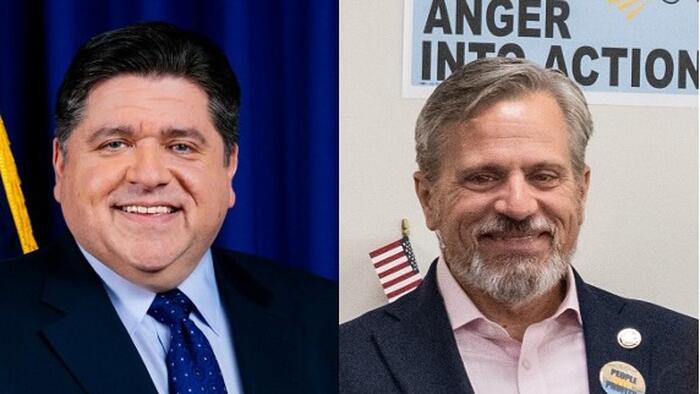
    Picture this: Gov. JB Pritzker signs a bill that boosts benefits for Chicago’s police and fire pensions, and one day later the city is looking at a $11 billion hole in its budgeting books. That’s the headline and the punchline.

    Why the Numbers Sound Like a Bad Joke

    • The actuarial review says the new benefits will double the city’s pension liabilities.
    • Funding levels for both the Police and Fire funds will tumble below 18%.
    • They already had only 25% of the money required to pay out retirees’ earned benefits—a figure that puts them behind even the nation’s top municipal pension plans.

    So Poor That It’s the Fourth-Worst in the U.S.

    Combined unfunded liabilities are now larger than those of 43 states—yes, that includes New York, Michigan, and Florida. Think of it as a “Big League” of states that are basically drowning in pension debt.

    In Other Words

    If nothing changes, Chicago’s pension mess could turn the city into the next Detroit. That isn’t just a scary thought; it’s a warning that has been pinging the city’s CFO’s desk for months.

    We’ve Broke the Law, So What Now?

    • State law says we can “enrich” the city’s Tier 2 pensions to meet federal Social‑Security style benefits.
    • But where’s the money? The city is slated to cover $60 million extra in 2027, ramping up to $753 million by 2055.
    • And here’s the kicker: the state didn’t even run its own actuarial report to check the math.

    Why Would the State Do This?

    The bill’s sponsor, Sen. Robert Martwick, pitched it as a “necessary upgrade” to keep Chicago’s pensions in line with federal law. Governor Pritzker jumped in, signing the act with a smile, as if it were a quick fix.

    Bottom Line

    We’re good with our lofty promises, but our pockets are shrieking. It’s a classic “payments (bold) first, balance (bold) later” scenario. Whether it’s a grand lie or a lazy excuse, one thing is clear: The city’s pension policies are out of sync with the money it actually has—big time.

    Behind the State’s Pension Pitch: An Unpacked Take

    Governors, senators, and pension perplexities – it’s a tall order, but let’s break it down.

    What the Governor’s Press Team Claims

    • “The bill is a wrap‑up of adjustments Chicago has done for years to tackle pension headaches.”
    • It’s touted as a “proactive step” to avoid “big financial or legal headaches” in the future.

    Sounds solid, right? Not exactly.

    What’s Really Meant (And Where the Misfire Is)

    The whole drama is all about a so-called “Tier 2” issue that supposedly is tucked into federal law. The Governor’s team is basically saying:

    • “If our pensioners’ benefits fall short of federal requirements, we might panic and add money.”
    • But: No pensioner in Illinois actually needs that boost – the problem is theoretical and only pops up “in the future.”

    So the state’s budget is being shoved to pay for a thing that may never happen. That’s a lot of money for a gamble.

    Why the State’s Own Plan Would Be Clearer (and Cheaper)

    Illinois already put a $75 million reserve fund in place for exactly this scenario: to cover any possible benefit shortfalls.
    That’s a lightweight plank compared to the new bill’s weight.

    If you read the academic arguments we’ve written, you’ll see we’ve long argued for a similar, no‑surprise “safety net.” The original measure has an appealingly common‑sense rhythm that our state should have gone for.

    Outsiders Warned Us – And They Did

    • ​​​Civic Federation – “Why not veto?”
    • ​​​​Commercial Club – “Too early for this.”
    • ​​​​Better Government Association – “Unfunded mandate alert!”
    • ​​​​Chicago Tribune Editorial Board – “Wrong move.”

    Even folks who might normally side with the Governor—like Comptroller Susanna Mendoza—could not stay silent. And it’s not just the vote. Finance chief Jill Jaworski slammed it as an “unfunded mandate” thrown at the mayor’s doorstep.

    Why This Is a Burden, Not a Benefit

    The bill’s official rationale: “Keep the two Chicago pension plans level with downtown police & fire bonuses.” Sounds equitable. But in reality it’s the kind of “one-size-fits-all” that leaves Chicago with a hollow chest.

    Chicago’s money’s tighter than a hermit crab’s shell. Asking for cheaper, safer solutions is like asking the city to ask for a discount on a tariff the government’s already paying.

    Our Suggested Watch‑List

    To get the full picture, we’d love to see the state leaders pull together “the perfect clip” of a financial adviser demystifying a trust‑fund scenario to Wally Matthau’s character in A New Leaf.

    The lesson: even if you’re a figment of the state’s bureaucracy, you really want to understand how “no money” constrains your choices.

    Bottom Line: The State Should Remain On Its Own, Safer Path

    So if Gov. Pritzker and the rest of the legislature will do as they now do—reserve a big pot of money for a theoretical future—it’s probably best to let Chicago keep its priorities untouched. The new bill is picking something that seems far more like a science fiction plot than today’s budget reality.