Tag: clear

  • Using a shareholder agreement to avoid conflict, delays and costly mistakes

    Using a shareholder agreement to avoid conflict, delays and costly mistakes

    If the last few years have taught us anything, it’s how unpredictable the world can be and the importance of planning ahead for challenging circumstances.

    Here, I’ll discusses the importance of a shareholders’ agreement, particularly when it comes to difficult scenarios.
    A shareholders’ agreement is an essential tool recommended for any company with two or more shareholders to regulate conduct between each person and put provisions in place for potentially difficult or significant decisions. There is certainly much more awareness of these agreements now than in the past, but there is still sometimes a reluctance and a lack of appreciation of their value. This is particularly true where there are family ties or other close relationships and therefore often a belief that these agreements won’t be needed – but most legal professionals would argue it’s better to have the rules laid out to aid transparency and potentially defer or resolve any future conflict.
    Ultimately, a shareholders’ agreement allows decisions to be made at the outset and to ensure the shareholders are on the same page before the business becomes successful.

    Understanding roles

    It’s important to understand the distinction between shareholders as the owners of the business and how this differentiates them from other members of the business. For example, directors run the company but do not have to be shareholders. Employees work in the company – but this doesn’t mean they can’t be shareholders.
    The lines can become blurred, particularly in smaller businesses when often, there are people participating in all three roles. Putting these clear boundaries in place can help to understand who is responsible for what and keep the company running successfully even if obstacles arise.

    Putting pen to paper

    Perhaps one of the most serious questions businesses should ask themselves is what happens if a shareholder dies. Many times, shareholders will say they ‘have an idea’ or perhaps have even discussed their plans on an informal basis. However, if these plans have not been committed to a formal agreement, the shares may ‘accidentally’ pass in accordance with the deceased’s Will (or worse, in the absence of a Will, by the rules of intestacy). This could mean that the shares end up with a deceased shareholder’s spouse, children or other family members. The question to ask in this particular scenario is, will we get along against the backdrop of a very emotional period of time?
    I have experienced variations of this scenario many times. In one example, a spouse took ownership of shares and the surviving business owners found it very difficult to navigate, particularly around financial decisions. In the end, legal action was taken to buy the shares back. It’s important to remember that in circumstances like this, which can be very emotional, people may say and do things out of the ordinary and once harsh words are spoken, they’re difficult to take back.

    Dealing with the fall out

    At some point during the business life cycle, shareholders will disagree on commercial decisions. It’s just a matter of how serious the disagreement is. Setting out how to resolve disputes will allow the shareholders to follow a procedure to achieve a resolution.  A ‘Russian Roulette’ provision is particularly useful for 50/50 partners facing a situation where the dispute is so serious that one or more of the parties cannot see a way to continue working together.  The premise behind this very aggressive measure is that one party offers to buy the shares of the other party for a specified price. The party in receipt of the offer can either accept the offer and sell their shares or reverse the offer and buy the shares of the party which made the offer, at the same price.  The parties won’t make a low offer (in case they end up selling) and they won’t make too high an offer (as they will have to pay for it).

    It’s not working out

    When it comes to owner managed businesses, there may come a time when a shareholder wants to leave the business.
    A right of first refusal (also known as a preemption right) ensures that any shareholder wanting to leave must offer their shares to the remaining shareholders first. The price can be determined by whether they are considered to be a ‘Good Leaver’, ‘Early Leaver’ or a ‘Bad Leaver’.
    An example of a ‘Bad Leaver’ could be someone who has been stealing trade secrets and selling them on to the highest bidder.  In this case, they are likely to receive the lower of nominal value and market value for their shares.
    A ‘Good Leaver’ is usually when a shareholder leaves the company on good terms, such as retirement in which case they are likely to receive market value for their shares.

    Selling up

    Where there is an imbalance of shareholdings, there can be protections for majority and minority shareholders’ interests. If a majority shareholder wants to sell their shares, a minority shareholder is under no obligation to join in the sale. This could cause critical delays in situations where the company is up for sale, and in serious situations, majority shareholders can be forced to pay ransom fees.
    ‘Drag Along’ provisions can allow majority shareholders to force minority shareholders to sell their shares along with majority shareholders if the majority have accepted an offer for their shares.

    Final thoughts

    Putting a shareholders’ agreement in place can be done quickly and easily – all it takes is decisiveness. The terms are largely confidential and don’t need to involve many people. Every company which has multiple shareholders should have some protection as you simply never know when it might be needed, and it’s largely agreed that most people want to protect their businesses from the unpredictable.
    It’s often a much simpler process to get shareholders together and work on an agreement at the start of a new venture when everyone is likely to be on the same page and feeling optimistic about the future.
    A shareholders’ agreement is just one of the many tools a legal professional can discuss to support your business’ wider planning and succession goals, enabling better control and peace of mind for whatever challenges may arise.
     

  • Roblox Faces Lawsuit from Louisiana Attorney General

    Louisiana’s Attorney General Hits Roblox Hard, Calling It a “Pedophile Playground”

    On Thursday, Attorney General Liz Murrill filed a lawsuit that says Roblox “failed to protect children and racked up content that could make pandemic‑era babysitters weep.”
    The judge’s complaint paints a picture of a platform that, according to her, keeps kids going around like a “pedophiles‑friendly paradise.”

    What’s the claim?

    • Child sexual abuse material is spreading freely.
      The AG says Roblox is letting “trafficking of CSAM” happen unchecked, with Louisiana’s kids in the line of fire.
    • Inadequate safety measures.
      The platform apparently chose profits over protocols, leaving kids exposed to “harmful content” while parents remain in the dark.
    • Adults can adopt kid identities.
      “Everyone’s a child” on Roblox; the court says it’s the same when adults masquerade as minors, while young users get past the filters to “villainous” experiences.

    Numbers that freak out the AG

    Roblox has 82 million daily users. 20% are under 8, another 20% are between 9‑12 – a looming teen‑aged republic of vulnerability.

    What’s the grand accusation?

    Murrill’s statement was a punchline for parents everywhere:

    “Because Roblox prioritizes growth, revenue, and profit over safety, every parent should be familiar with the danger that this platform presents and know how to keep their kids safe in their own home.”

    The nightmarish experiences the lawsuit lists

    The suit catalogs a handful of suspiciously titled games:

    • “Escape to Epstein Island” – a place that’s more “dirty business” than cleaning service.
    • “Diddy Party” – a glittery rave that smells like questionable content.
    • “Public Bathroom Simulator Vibe” – flavoring adolescent curiosity with a “public bathroom” twist.

    Roblox’s response

    “While we can’t discuss pending legal matters,” a company spokesperson said, “we’re putting out heavy technology and 24/7 human moderation to keep unwanted content and unwanted users together.”

    This statement, while sounding reassuring, is all about saying “we’re working hard.” Whether that’s enough has yet to be determined.

    Tech and VC heavyweights join the Disrupt 2025 agenda

    Netflix, ElevenLabs, Wayve, Sequoia Capital, Elad Gil — just a few of the heavy hitters joining the Disrupt 2025 agenda. They’re here to deliver the insights that fuel startup growth and sharpen your edge. Don’t miss the 20th anniversary of TechCrunch Disrupt, and a chance to learn from the top voices in tech — grab your ticket now and save up to $600+ before prices rise.

    Tech and VC heavyweights join the Disrupt 2025 agenda

    Netflix, ElevenLabs, Wayve, Sequoia Capital — just a few of the heavy hitters joining the Disrupt 2025 agenda. They’re here to deliver the insights that fuel startup growth and sharpen your edge. Don’t miss the 20th anniversary of TechCrunch Disrupt, and a chance to learn from the top voices in tech — grab your ticket now and save up to $675 before prices rise.

    Heads‑Up, Roblox Fans!

    San Francisco – 27 Oct 2025 to 29 Oct 2025 – Mark Your Calendars!

    REGISTER NOW and snag your spot at the most thrilling digital showdown of the year!

    What the Roblox Crew Says

    “Nobody’s perfect, but we’ve beefed up the tech and enforcement. We’ve blocked people from spilling personal info, dropping dubious links, and swapping user pics. Safety first, always!” – the official spokesperson.

    Safety Moves After a Rough Patch

    • Last year, Roblox launched a wave of safety tweaks.
    • Prohibited users under 13 from sending direct messages.
    • These changes came in response to alarming reports that young players were being exposed to grooming attempts and explicit content.

    Judge Murrill’s Take

    Murrill’s lawsuit makes one clear claim: “The new safety protocols arrived too late and still fall short.” The suit seeks a permanent injunction, demanding that Roblox stop proclaiming itself safe while also refraining from any actions that would violate the Louisiana Unfair Trade Practices Act.

    Got Feedback? We’re Listening!

    We’re all about evolving—your perspective might just help us grow. Drop your thoughts in our survey (no links needed) and you could win a sweet prize!

  • Denmark Tackles Deepfakes with Copyright Law: Exploring Europe’s Legal Arsenal

    Beyond Denmark: A Global Take on AI‑Generated Video Regulation

    Denmark’s new law is making headlines by giving individuals the right to control the use of their own likenesses. But where else in the world are governments cracking down on deepfakes and AI‑generated content? Below is a quick tour of countries that have already enacted—or are drafting—rules around this tech, all presented with a bit of wit and real‑world flavor.

    1. United States

    • California: The Deepfake Disclosure Act (2023) requires that any video with synthetic or altered content be clearly labeled. Think of it as the “video truth label” you’d see on a soda can.
    • Texas: The Fake Video Accountability Act penalizes malicious productions used for defamation or political manipulation. The state even gave a nickname to its law—“Truth in Video Act” (TIVA).
    • Florida: Britney‑the‑law‑made‑law, Florida’s Deepfake Defense Law protect victims from defamatory content and demands that producers obtain clearances before using a person’s feed.

    2. United Kingdom

    The UK’s Deceptive Practice Prevention Act focuses on commercial usage. It says, “No one can sell you a product with a deepfake that misleads the consumer.” For the government‑ sector, the AI Control Framework is in place to monitor political influence.

    3. Germany

    Germany’s “Model Person Rights Act” backs up the existence of a person’s image and ensures that the AI‑generated avatars must be used with explicit permission in both professional contexts and popular media.

    4. France

    • France’s Anti‑Deepfake Code tackles political persuasion. The law protects against the use of altered media that could sway elections.
    • One humorous twist: the law calls the act “The “Zuzu” Act” after a popular French courtroom drama that highlighted the dangers of fake videos.

    5. Australia

    Australia entered the club with its Legal Framework for Artificial Intelligence, Deepfakes, and Misrepresentation Act 2023. It focuses on consent, where anyone can union with an artificial representation at the request of an AI entity.

    6. Canada

    Ontario’s AI Video Regulations demand full disclosure if a human is replaced. The law also prohibits the use of AI‑generated content to defame or mislead other people.

    7. China

    In China, the AI Paint Regulation Act keeps the authority strict. Authorities have emphasized that any artificial content that can confuse the public is strictly regulated. Think of it as a “no-fake-flick” policy for official media.

    Emotional Quirks of the Law

    While these laws are serious (no pun intended), they also carry a lighthearted undertone. “We’re basically giving you the keys to your own digital paparazzi,” jokes one expert. In a world where Lee’s “Blurry Facialities” could become a reality, lawmakers are aiming for a delicate balance between innovation, privacy, and truth.

    Why It Matters

    Deepfakes have become a double‑edged sword: on one side, they can democratize content creation; on the other, they pose a threat. By putting data in tight hands—namely, the people whose faces are used—these laws aim to keep us safe from viral “what‑if” scenarios. From Denmark’s copyright to faces to the US cast of deepfake legislation, each country is taking its own stab at a complex issue.

    Bottom line: the world is moving fast. If you can’t be on the front line of AI‑driven identity control, at least keep an eye on the laws in place to stop the biggest of the deepfake villains. Because, in the end, it’s not just about the image—it’s about the truth behind it.

    Denmark’s New Deepfake Defense: Copyright Your Own Face

    Get ready to put the brakes on the AI‑powered paparazzi. Denmark is rolling out a law that puts a legal shield over your chuckles, your chin, and the way you whine about laundry. Because lately, it seems anyone with a laptop can remix you into a viral cat video or a political campaign ad—without asking.

    What’s the Big Deal?

    • All big parties are on board. No political baggage.
    • Anyone can’t post a deepfake or digital “imitation” of yourself without permission.
    • Statutes are geared to stop misinformation and smudge‑clean bodily and vocal rights.

    The Voice Behind the Vision

    Jakob Engel‑Schmidt, Denmark’s Culture Minister told the press: “We’re giving everyone a clear sign that your body, voice, face are yours to own. This isn’t just about selfies—this is about identity.”

    What Are Deepfakes, Anyway?

    In plain English, a deepfake is an AI‑generated clip that tweaks a person’s likeness—think of it as a digital Photoshop for whole videos. It’s used to spread rumors, create pranks, or hijack a person’s mouth in an unflattering context.

    Technology’s Speed‑Up Challenge

    Engel‑Schmidt warned: “Tech is moving at warp speed. Eventual reality will be hard to spot from fiction. Our new law is a safety net against misinformation, and it tells the tech giants: “Hey, stop the prank war.”

    Europe’s Wider Move

    Denmark isn’t alone. Other European nations are also scripting new legal frameworks to keep deepfakes in check, ensuring your selfies stay your own, not the next viral meme.

    European Union

    EU’s AI Act: Deepfakes and the New “Watch Your Step” Rules

    What the EU’s Four‑Tier Risk System Looks Like

    Under the AI Act, AI‑generated stuff gets sorted into four buckets:

    • Minimal risk – the fine‑print stuff that probably won’t bother anyone.
    • Limited risk – this is where deepfakes land.
    • High risk – think safety‑critical tech (think autonomous cars).
    • Unacceptable risk – the big‑no you’ll see from regulators.

    Why Deepfakes Aren’t Banned, but They’re Still Under Glaring Eyes

    Deepfakes have slipped into the limited‑risk slot. That means:

    • You get to keep making them – no absolute ban.
    • But you must add a visible watermark so viewers know it’s AI‑made.
    • Companies also have to list the training data packs that fed their models.

    Consequences When You Screw Up the Transparency Rules

    If a firm flouts the transparency checklist, the penalties come looking swift:

    • Up to €15 million or 3 % of last year’s global turnover.
    • If it’s a banned practice, that climbs to €35 million or 7 % of turnover.
    That’s Like a Sharp Whammy on Your Bottom Line

    But Wait—There’s More You Should Know

    The Act also takes a keen stab at “manipulative AI”, messing with people’s heads through subliminal tricks or outright deception. If it does that, it faces a full ban.

    Sex–Related Deepfakes: Legal Red‑Flags in the EU

    On the topic of adult content, the new EU directive on violence against women criminalises non‑consensual deepfake creation and manipulation. The key take‑away:

    • No clear penalty structure is outlined – member states decide what’s fair.
    • Implementation deadline? June 2027.

    Bottom Line: Take Care, Or Face Fat‑mounting Fines

    So, whether you’re a startup trying to push the envelope on AI videos or a big platform looking to stay compliant, the message is crystal clear: Label it, disclose the data, and stay out of the “unacceptable” area. Otherwise, you’re looking at a big fine that could hit the very bottom of your balance sheet.

    France’s digital spaces law

    France Tightens the Net on AI‑Made Deepfakes

    In 2024, the French legislature slapped new penalties on anyone who redistributes AI‑generated visual or audio content without the subject’s permission. The goal? Keep folks from getting caught up in stranger‑in‑your‑feed stories (literally).

    What’s the rulebook now?

    • Share a deepfake? Get permission first.
    • If you do share, your post must shout out that it’s AI‑made, so no “who made this?” mystery.
    • Distributors can hit the books: up to 1 year behind bars and a €15,000 fine.
    • Share it via an online platform? The stakes rise to 2 years and a €45,000 fine.
    • Any pornographic deepfake—dirty or not—is off the table, even if it’s labeled “fake.”

    Harder to Do Than You Think

    Got a scoop of a deepfake and want to share? Think again. If you bump it into the public eye without a clear “AI‑generated” flag, you face a prison sentence of up to 3 years and a €75,000 fine.

    Arcom’s New Badge of Power

    France’s audiovisual watchdog, Arcom, now has the authority to compel platforms to pull out illegal content and honor stronger reporting protocols. In short, once a platform shows off a big social‑media stage, at least one more thing has to be added: a big, clear signal that says “This is made by me, not by your cousin’s nonsense AI.”

    Why It Matters
    • Prevents the spread of misleading content.
    • Protects privacy and the dignity of every individual.
    • Encourages platforms to maintain robust moderation.

    Bottom line: In France, if you think you can circus‑share AI‑made content without consent, you’ll likely end up in a cell and paying a hefty fine. The takeaway? Treat deepfakes like you treat your grandma’s privacy—respectfully with a firm “Yes, I have consent.”

    Two-year sentence in the UK for deepfake porn

    Britain Tightens Rules on Deepfake Porn

    From Unthinkable Fantasies to Real‑World Consequences

    The United Kingdom is sharpening its legal defenses against a new breed of digital wickedness—deepfake pornography. Since the passage of the Data (Use and Access) Bill, lawmakers have stepped in to make it crystal‑clear that anyone who manipulates someone’s image for sexual gratification or to cause distress is looking at a serious legal backlash.

    • Unlimited fines can be slapped on anyone who creates these “heinous abusers” content.
    • Under the Sexual Offences Act, an offender could face up to two years in prison for producing sexual deepfakes.
    • The Online Safety Act bans the sharing—or even threatening to share—non‑consensual sexual images on social media, and gives platforms the duty to proactively remove this material before it shows up.

    If a platform flouts the law, Ofcom can impose fines of up to 10 % of its global revenue. That’s a big hit on the big players, but the real hammer is held over the creation side.

    However, a reality check comes from Julia Hörnle, a professor at Queen Mary University’s School of Law. She points out that the Online Safety Act does not outright ban the creation of deepfake images, meaning victims can still suffer harm even if the content never gets shared publicly. She calls for a new approach that criminalises the entire ecosystem: development, distribution, and promotion of AI tools that make deepfakes possible.

    What Does It All Mean for Ordinary Citizens?

    In plain English, if you’re caught spreading deepfake porn on platforms, you could walk away with a hefty fine or even a prison term. And if tech companies don’t act swiftly to pull those images off their servers, they’re also liable. The real trick is that if you’re the one creating them behind closed doors, you’re still in hot water because authorities are now stepping up to curb the tools and methods that make the whole business model feasible.

  • Don't become complacent with auto-enrolment

    Don't become complacent with auto-enrolment

    For thousands of businesses across Britain, the new auto-enrolment regulations will no longer be looming on the distant horizon but already up and running.

    With the staggered “staging dates” from the Pensions Regulator having been rolling forward since 2014, it’s likely that the majority of Britain’s SMEs are already auto-enrolling their staff. But that doesn’t mean there aren’t still complexities for employers when it comes to making sure they continue to comply with the rules.

    Clearly, this will include the employment of new members of staff – whether casually or full-time – for whom auto-enrolment decisions still need to be made. And with last year’s announcement that the Government spend on enforcing the rules was nearly doubling, from £21.3m to £40.4m, it’s clear the regulators mean business.

    So what should employers continue to be looking out for?

    1. Check the thresholds: Each year the government will review the earnings thresholds for automatic enrolment so employers need to check these figures on www.thepensionsregulator.gov.uk. This year the earnings trigger for auto-enrolment has stayed the same as it was last tax year (2014/5) at £10,000. But the upper level has increased slightly to £42,325 from £41,865 last year.
    2. Don’t forget new members of staff: When taking on new members of staff, remain rigorous about checking eligibility. It’s very important to know what kind of contracts employees have – for example, whether they are self-employed or employed by you. The Pensions Regulator offers only guidance on this, drawing a difference between contracts for or of services. For small companies without large HR departments, it may well be worthwhile to take professional advice on how to identify different types of workers as you continue to take them on.
    3. Continue to communicate: As with when companies signed up to auto-enrolment, it’s still imperative to maintain the same levels of communication about the rules with all new staff members as it was when signing up to the new system in the first place. For all new employees, you need to communicate clearly what the auto-enrolment rules are and let them know that they are automatically enrolled if they meet the correct age and earnings criteria, but can opt out if they wish. Also, as with before, if employees don’t meet the criteria – if they’re under 22, don’t work in the UK or earn under £10,000 – they still get the option of signing up to auto-enrolment but it may mean that you as their employer don’t have to make contributions to their pension pot.
    4. Don’t forget about your existing staff: If any employees opted out of auto-enrolment when it was first put in place, remember that as their employer it is your duty to re-enrol them every three years – which still gives them the choice to opt out again if they want. Remember that the law places the burden or responsibility firmly on the employer: they cannot be penalised for forgetting the rules, but you certainly can!


  • Scott Frost Kicks Off Coaching Tenure at UCF with Enthusiastic Press Conference

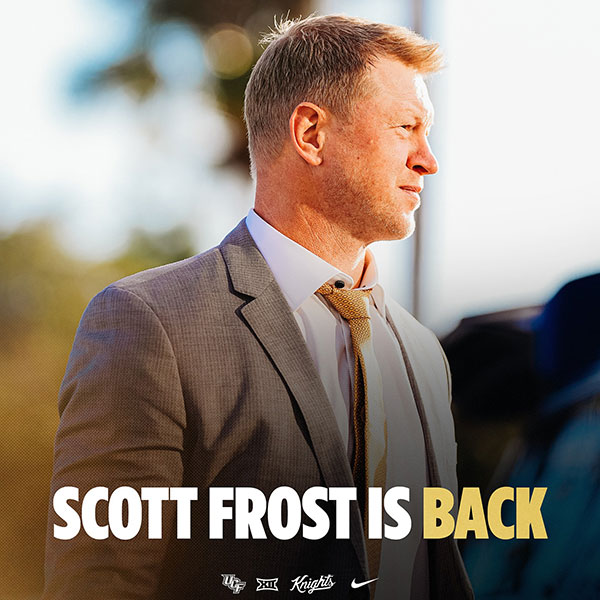
    Scott Frost Kicks Off Coaching Tenure at UCF with Enthusiastic Press Conference

    Scott Frost’s Grand Return to UCF

    The UCF Knights just dropped a bombshell as their head coach, Scott Frost, strutted onto the stage to give a mouth‑watering briefing that left everyone buzzing louder than a pep rally on a Friday night. Here’s the low‑down on the event that had fans cheering, tailgaters whistling, and the entire campus smelling like freshly‑baked victory.

    1⃣ Quick Recap of the Press‑Conference Parade

    • Back in the Spotlight: Frost, who left UCF in 2017, returned to the cheer‑filled press box in March 2024 with a suitcase full of optimism.
    • What He Said: “I’m back for a reason,” he declared, “and it’s all about bringing fresh energy and fan‑centric strategies.”
    • Team Talk: The Knights’ quarterback, who had a nosebleed moment during the game last week, showed a grin so wide you could’ve seen it from 100 yards away.
    • Social Media Storm: The hashtag #FrostReturns blew up, with tweets fitting a perfect meme formula: “Just like my childhood dreams: a team that can dodge a turnover like a dodgeball champ.”

    2⃣ Frost’s Key Messages (and the Odds of “Yo”)

    • “We’re Riveting Hearts, Not Just Scores”: He promised the Knights would crank “fun” to a whole new level, revamping UCF’s game‑day rituals.
    • Passion Over Predictability: “You don’t see a team that keeps people on the edge of their seats,” he added, pulling a heartbeat emoji from his phone.
    • Recruiting Rumble: He teased recruiting tactics that would out‑click every competitor—if you’ve ever seen a campus bike ride through a fort, you know what we’re talking about.

    3⃣ The Fan Reaction (Spoiler: They Cheered)

    Imagine a crowd that turns a quiet room into a thunderous stadium. Fans were chanting, “Frost is back!” and the students even started a chant that felt like a chorus from a high‑school choir: “We pledge allegiance to the frosty triumph!”

    4⃣ Forward Draft: What’s Next for the Knights?

    • Game Plan Galore: On the athletic field, Frost will embed new plays that incorporate both classic and off‑beat moves—think “DNA of the Defenders.”
    • Community Outreach: He is building community outreach programs that will have the Knights helping in local food drives—because, why not?
    • Champion Culture: “We aim to give the Kansas State myth that they’re only good at picking their own team,” said Frost, with a wink.

    In a nutshell, Frost’s press conference was a cocktail of excitement, a dash of humility, and a splash of zip that will keep the Knights playing like it’s 2025—because well, that’s the year they’re aiming for!

    Scott Frost Kicks Off Coaching Tenure at UCF with Enthusiastic Press Conference

    Scott Frost Returns to UCF: A Knight Reunion

    In a story that feels like a homecoming note from a kid who finally made it back to his favorite playground, Scott Frost has announced he’s rejoining the UCF Knights as the head football coach.

    The Journey Back

    After a whirlwind two‐year tenure that lifted UCF’s football program to new heights, Frost has now chosen to go back where the magic began. He’s no stranger to charging forward, and his revival of the “Charge On” vibe has never been more electric.

    What’s on the Table?

    Together, Frost and UCF have sealed a five‑year contract that keeps him on the sidelines until 2029. The partnership guarantees plenty of time for the Knights to keep riding the wave of success.

    Why It Matters

    • First perfect season under his guidance.
    • The spark that ignited the modern era of Knight Nation.
    • A renewed spirit that fans can rally behind.

    Official Words

    Vice President and Director of Athletics, Terry Mohajir, shared his excitement: “Today marks an exciting reunion for UCF Football as we welcome back Scott Frost, a coach who ignites the spirit and passion of Knight Nation.”

    It’s a headline that feels more like a celebration than a headline. With Frost back at the helm, the Knights are ready to charge on into a bright, victorious future.

    Scott Frost’s Homecoming: The Heartbeat of UCF

    “Scott’s love for his players, coupled with his fearless leadership, contagious enthusiasm, and visionary game‑plans, were the clinching factors in bringing him back to UCF.”

    During the nationwide search that followed his 2017 departure, every recruiter and fan could see—yeah, this was a love affair that was all about the UCF pride. Frost’s devotion was as clear as a blank‑out stadium on a sunny day.

    Why no one could have loved the program more than Scott

    • He heard the roar of the stadium from day one.
    • He taught the players not just to play, but to thrive.
    • His vision transformed a mid‑tier team into a national sensation.

    The 2016‑2017 Peak

    Frost’s first stint (2016‑2017) remains legendary—an outright 13‑0 season that vaulted UCF onto the national stage. He secured an AAC championship and brought an entire campus to life with a national title buzz.

    Peach Bowl Glory, 2018

    In the final game under his initial run, Frost led the Knights to a victory over No. 7 Auburn in the 2018 Peach Bowl, marking UCF’s maiden undefeated season. The win wasn’t just numbers on a sheet—it was a moment that echoed in every locker room across the South.

    Fast Forward: The Return

    Now, with Frost back, the energy’s on fire again. The program’s future is brighter because the man who once turned a regular team into a national superstar has returned, bringing fresh ideas and that same relentless passion.

    The UCF Revolution: Scott Frost’s Two‑Year Miracle

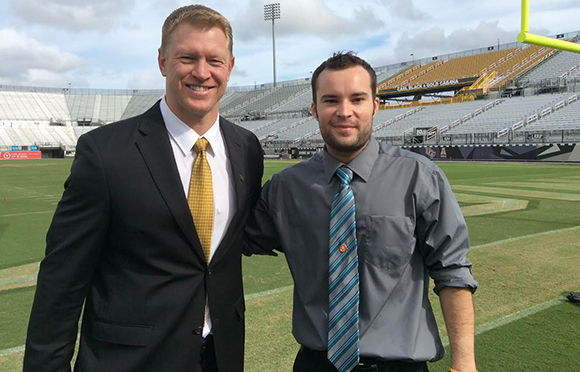
    Picture: UCF Head Coach Scott Frost (left) chatting with Zach Clark from Space Coast Daily (right). Picture courtesy of the School’s archives.

    From Zero to Hero

    When Scott Frost stepped into the helm in 2015, the Knights were drowning in a sea of 12 losses – 0‑12, to be exact. Fast‑forward two seasons, and he was standing on the pinnacle of the sport, guiding UCF to a flawless 14‑0 record that earned him the coveted National Coach of the Year title.

    It’s not just a win; it’s a legendary comeback that will forever earn a place in college football lore.

    Frost’s Words – Echoing the Heart

    • “I’m deeply honored to return to UCF, a school that has always held a special place in my heart.” – Frost
    • “The foundation we built here has only grown stronger.” – Frost
    • “I am thrilled to continue shaping this program’s legacy.” – Frost
    • “As we prepare for year three in the Big 12 Conference, I look forward to working alongside our dedicated student‑athletes, talented staff, and passionate fans to reach new heights together.” – Frost

    What’s Next?

    With the Big 12 on the horizon, the Knights are stoked to bring their new swagger to the field. The coaching staff is already dreaming of brand‑new rivalries, daring plays, and, of course, that sweet taste of victory after a hard‑earned Seidel’s Cup.

    In Summary

    Scott Frost has flipped an entire chapter of UCF’s history, turning a winless 2015 into a historic, undefeated season by his second year. As the Knights gear up for a new conference era, the spirit of resilience and ambition remains stronger than ever – and it’s all thanks to a coach who knows how to turn the tide.

    UCF’s Swift Rise

    When Frost stepped onto the UCF stage, the Knights were staring down a 0‑12 pile‑of‑presents. He flipped that fate into a 13‑0 whirlwind in just two seasons.

    Season 1: The Bowl‑Bound Blitz

    • First year: 6‑7 record, yet the Knights still headed to a bowl—historic, really.
    • Only FBS coach to turn a winless squad into a bowl‑ready squad.

    Season 2: Undefeated Adventure

    In 2017, UCF became the nation’s only unbeaten crew. Highlights include:

    • Longest streak: 13 straight wins.
    • Highest in‑season rank: #10; final rank: #6.
    • AAC record: 16 all‑conference selections.
    Why It Matters

    From zero to hero, Frost’s two‑year sprint proves that a cheat‑code pause can turn any underdog into a Cinderella story on the Field of Dreams.

    Scott Frost: From Bowl‑Winning Coach to Nebraska’s Heartbreak Machine

    Imagine a coach who can turn a 0‑12 program into a flawless 13‑0 contender, then lead a once‑legendary squad to a string of close defeats that tore the fan base’s heart. That’s Scott Frost in a nutshell.

    Early Days: Little‑League Gridiron Glory

    Frost’s coaching journey kicked off at Northern Iowa, where he grabbed a spot as a linebackers coach in 2007 and snagged the co‑defensive coordinator title the very next year. That 2008 defense was a show‑stopper: it stole 40 ball‑and‑ground take‑aways, ranked ninth in scoring defense at a mere 17.7 points per game, and dominated rushing defense at 107.1 yards.

    Jumping to the Ducks: A Fast‑Forward to the Big National Stage

    In 2009, Frost leapt into the Oregon orbit, first as a wide‑receiver mentor under Chip Kelly. Over seven seasons, he helped the Ducks compile a 79‑14 record, chase four conference crowns, and flirt with the national title twice.

    When he was named offensive coordinator

    • Three seasons in the quarter‑final top five for both scoring and total offense.
    • 2014 saw Oregon pile up 681 points – the second‑highest in NCAA history – and a run to the College Football Playoff Championship.
    • He was a Broyles Award finalist for that unforgettable 2014 season.
    • Under his guidance, Marcus Mariota stole the Heisman and became the 2015 No. 2 NFL draft pick.

    UCF: The “Perfect” Dynasty Builder

    By 2017, Frost had transformed the UCF Knights into a high‑powered offense that led the nation with 48.2 points per game and an unbroken streak of 30‑plus points in every match. Their defense improved from the ground up, dropping 65 points in scoring allowed over two seasons.

    • He was named the United States’ consensus Coach of the Year (AP, AFCA, Touchdown Club, Lombardi, FCA).
    • He snagged the Home Depot, Bear Bryant and Eddie Robinson awards, plus the AAC Coach of the Year (unanimous).
    • 2017 turned out to be UCF’s first flawless season and the inaugural perfect record in American Athletic Conference history.

    Down at Nebraska: The “Near‑Victory” Era

    Frost entered Nebraska in 2018, hoping to revitalize a storied program. The reality? A 16‑31 record and unforgettable over‑times:

    • 23 of 31 losses were one‑digit defeats, each a razor‑thin margin.
    • 12 of those were decided by five or fewer points.
    • The three games from 2022 show that the Bears continued to fight until the very last whistle.

    Durability and devotion

    “Even the scintillating highs and crushing lows can still inspire a coach who pitches every play with heart,” Frost told reporters in a candid interview. His tenure may have left Nebraska with a “heartbreak machine” reputation, but it also spotlighted his ability to keep games competitive.

    What Next?

    When Frost was handed a consulting role with Sean McVay and the Los Angeles Rams this season, he’s pulling his playbook into the NFL trenches. Fans will watch him oscillate between drafting brilliance and the sheer drama of coaching—two sides of a man who’s kept both the fortunes and sorrows of college football alive.

  • OpenAI is practically giving ChatGPT to the government for free

    OpenAI is poised to undercut rivals like Anthropic and Google in the race to see its AI tools integrated into federal agency workflows. 

    The AI giant has reached an agreement with the U.S. General Services Administration (GSA), the government’s central purchasing arm, to offer ChatGPT Enterprise to participating federal agencies for just $1 per agency for the next year. 

    The partnership comes a day after the GSA added OpenAI, Google, and Anthropic to a list of approved AI vendors that can offer their services to civilian federal agencies. The companies will see their tools offered via the Multiple Award Schedule (MAS), a federal contracting platform that lets government agencies access AI tools via pre-negotiated contracts so they don’t have to negotiate with vendors individually. 

    It’s not clear whether other AI firms are going to offer their services at such a discounted rate, though GSA Federal Acquisition Service commissioner Josh Gruenbaum in a statement encouraged “other American AI technology companies to follow OpenAI’s lead and work with us.”

    TechCrunch has reached out to Anthropic and Google for more information. 

    In addition to access to ChatGPT Enterprise, OpenAI is offering unlimited use of advanced models for an additional 60 days. Federal employees will also have access to a new government user community and tailored introductory training resources to get familiar with OpenAI’s tools. 

    Data security is a top priority for government agencies that are concerned about sensitive information being leaked into model training sets. TechCrunch has asked the GSA for details on how government data is being safeguarded, including whether measures like on-premises or private cloud deployments are being used to enhance security.

    Techcrunch event

    Tech and VC heavyweights join the Disrupt 2025 agenda

    Netflix, ElevenLabs, Wayve, Sequoia Capital, Elad Gil — just a few of the heavy hitters joining the Disrupt 2025 agenda. They’re here to deliver the insights that fuel startup growth and sharpen your edge. Don’t miss the 20th anniversary of TechCrunch Disrupt, and a chance to learn from the top voices in tech — grab your ticket now and save up to $600+ before prices rise.

    Tech and VC heavyweights join the Disrupt 2025 agenda

    Netflix, ElevenLabs, Wayve, Sequoia Capital — just a few of the heavy hitters joining the Disrupt 2025 agenda. They’re here to deliver the insights that fuel startup growth and sharpen your edge. Don’t miss the 20th anniversary of TechCrunch Disrupt, and a chance to learn from the top voices in tech — grab your ticket now and save up to $675 before prices rise.

    San Francisco
    |
    October 27-29, 2025

    REGISTER NOW

    “The government is taking a cautious, security‑first approach to AI,” a GSA spokesperson told TechCrunch. “This ensures sensitive information remains protected while enabling agencies to benefit from AI‑driven efficiencies.”

    OpenAI’s discount comes a couple of weeks after the Trump administration published its AI Action Plan that seeks to boost data center buildouts and integrate more AI tools into government, among other things. It also follows a Trump executive order that bans “woke AI” and AI models that aren’t “ideologically neutral” from government contracts. 

    TechCrunch has reached out to OpenAI to learn more about its GSA partnership and how it will approach Trump’s executive order.