Tag: continued

  • Even A Trump-Hating Governor Calls Out Democrats' Crime "Doesn't Exist" Narrative

    Even A Trump-Hating Governor Calls Out Democrats' Crime "Doesn't Exist" Narrative

    Authored by Steve Watson via Modernity.news,

    MSNBC has wall to wall programming claiming that crime isn’t really out of control in Democrat controlled cities and that Trump’s crackdown has been facilitated by a ‘manufactured crisis’, but even a Trump hating governor refused to go along with the talking point.

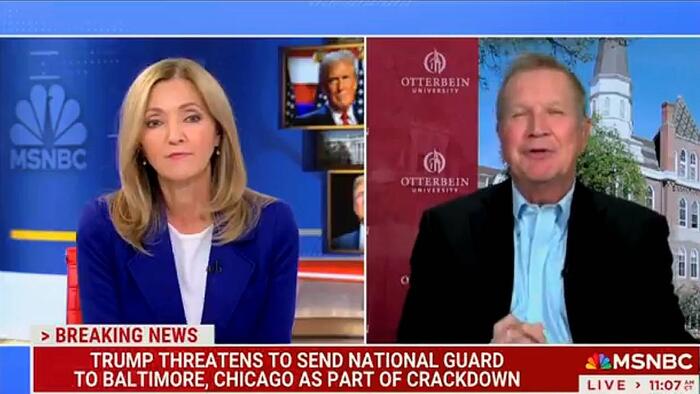
    The failing network brought on former Republican Ohio Gov. John Kasich, who refused to back Trump and infamously endorsed Joe Biden, presumably thinking he would slam Trump again, but no.

    I heard the term ‘manufacturing crisis. This is a manufactured crisis,’” Kasich remarked, urging “No! It’s not! It is a crisis!”

    “Have you been in Chicago? Have you been in Baltimore?” Kasich asked the host, adding “My daughter went to school in Chicago. The day she graduated there were shootings and killings right outside of her building.”

    “And in Baltimore, I had friends that go down to Johns Hopkins get treated for medical conditions. I mean they are nervous about ever going there. There were parts of Baltimore that he tells me he wouldn’t go into,” Kasich continued.

    “And this is not some right wing person. This is somebody who wants to be able to go in our great cities and be able to be safe,” he further emphasised.

    “Now, I do think it’s important that if you’re gonna do this, you gotta define the mission,” he added, referring to Trump’s federal crackdown.

    “You’ve got to talk about your authority. And I think one of earlier guest was saying, well maybe there are narrow ways to do it. I agree with that. But that just then says that there are ways to do it,” he added.

    “Look, what’s been happening in Chicago has been terrible. The crime rate is high. The gang problem is real… Chicago is a jewel of America. We just cannot let lawlessness and fear dominate these cities,” Kasich declared as the other members of the panel looked annoyed that he wasn’t towing the line.

    “The idea that these cities are somehow fine? Oh I think you’re just, you’re whistling…There are people at risk in these cities,” Kasich concluded.

    Kasich’s comments come after Democrat Illinois Gov. JB Pritzker posted a video of himself walking (out of breath) around a gentrified quiet area of Chicago in the daylight, suggesting it proves the city is safe.

    Residents of Chicago beg to differ with Pritzker

    More residents in D.C. are also explaining how massive the cleanup there is:

    Democrats are literally siding with violent criminals now.

    And massaging the crime stats in a desperate and failing attempt to make it look like there isn’t a problem.

    Maybe next they’ll don pink vests and break out into song for the murderers and drug pushers.

    * * *

    Your support is crucial in helping us defeat mass censorship. Please consider donating via Locals or check out our unique merch. Follow us on X @ModernityNews.
    Loading recommendations…
  • Nvidia CEO Reveals His Real Thoughts on Biden‑Era Open Borders

    Nvidia CEO Reveals His Real Thoughts on Biden‑Era Open Borders

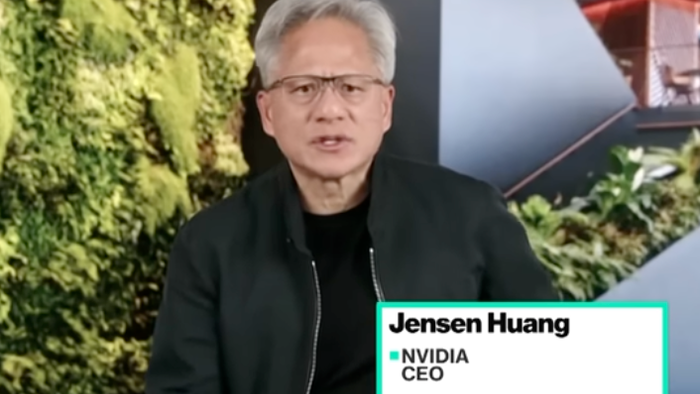
    Jensen Huang Talks Borders, Chips, and the American Dream

    In a whirlwind tour that took him from the Middle East to the Oval Office, CEO Jensen Huang of Nvidia just delivered a statement that’s sure to make headlines.

    Roadshow Recap

    • Huang wrapped up a deal‑making tour across the Gulf States, securing new chip supply contracts.
    • He teamed up with President Trump to snag those deals, and their partnership was on a “Make America First” footing.
    • “We’re bringing the world’s brightest talents to the U.S., but not everybody,” Huang said — a clear nod to restricting the open‑border tourism of the Biden era.

    Key Takeaways from Bloomberg

    During a Q&A with Bloomberg’s Ed Ludlow, Huang dropped some words that struck a chord with both supporters and critics:

    • “This is an extraordinary country with incredible opportunities. We want the brightest to come here.”
    • “We don’t want everybody. We want those who can truly contribute.”
    • “If you’re going to come, bring the ideas, the intellect, and help build a great America.”
    Huang’s Stance on Bay‑den’s Border Policy

    In short, the translation of Biden’s open‑border doctrine into millions of unvetted migrants is causing headaches. Huang is making it crystal clear that Nvidia’s boss favors controlled, talent‑driven migration rather than a mass influx that strains public resources.

    Trump’s Response

    President Andrew Trump has already set a policy in motion to “halt the open border invasion.” The administration is backing the idea that imitation policy should focus on keeping out undesirables while still welcoming those who can make a tangible contribution.


    That’s the scoop from the Catalonian King of GPUs. Whether you’re a tech geek or a border‑policy buff, Jensen Huang’s latest statements are sure to stir up fresh conversations across the United States.

    Biden’s Controversial Border Moves During the AI Boom

    As the world leans into an AI‑heavy, automation‑focused economy, President Biden’s latest push to open the border to low‑skill migrants has grabbed headlines. Critics argue that the surge is more about political strategy than real border security.

    Short‑Term Goals, Long‑Term Effects

    Some say the flood of newcomers is a calculated play aimed at steering future elections. The idea: put these migrants into programs supported by taxpayer dollars, which could grow the Democratic voter base. It’s a move that pits policy against politics, raising questions about who truly benefits.

    “America First?” The Debate Intensifies

    While some leaders, like Huang, loudly proclaim an “America First” stance, Democrats seem stuck in a turf war over what counts as an “illegal” versus a “lawful” entrant. The confusion mirrors other groping debates, such as the blurry definition of a woman in policy circles.

    • Border policy backlash
    • Election influence allegations
    • Undefined terms: illegal vs lawful

    In short, the policy is a lightning‑fast political gamble, and the swift global shifts could either vault the economy forward— or make a mess of its foundations.

  • US Consumers’ Inflation Outlook Remains Stubborn, Delivering a Sharp Rebuke to UMich

    US Consumers’ Inflation Outlook Remains Stubborn, Delivering a Sharp Rebuke to UMich

    Got a Whopper of a Surprise in the Sentiment Survey!

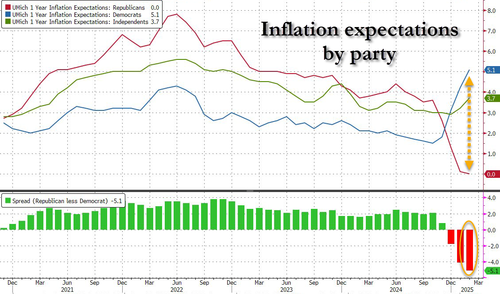
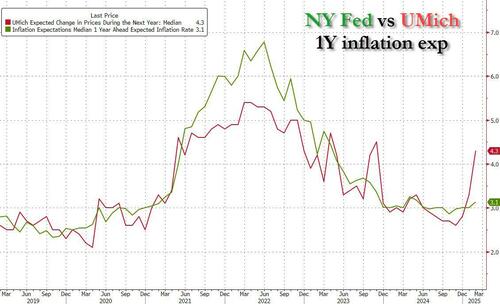
    Picture this: February rolls around, the UMich Consumer Sentiment Survey drops in, and everyone’s jaws hit the floor. The inflation expectations jump from a modest 3.3% to a jaw‑dropping 4.3%. That’s not just a tiny bump—it’s a full-on roller coaster ride for the market.

    What’s the Deal?

    • Democrats are basically waving a red flag: they’re predicting 5.1% inflation – that’s almost hyper‑inflation territory.
    • Republicans are reading the same graph upside‑down, claiming 0.0% inflation in the next year.
    • The average cozily sits at 4.3%, but the story behind the numbers is wild. Some economist, likely a professor at UMich (whoever that is), might explain why the difference is so dramatic.

    Why Stink in The Wall Street Fumes?

    When the numbers popped out of the press, the market didn’t just titter – it skidded hard. Stocks nosedived, traders sold off huge chunks, and investors felt like they’d just been hit by a tidal wave of fear. The result? A few hundreds of billions of market cap vanished overnight.

    It’s Not Just Numbers, It’s Emotion!

    Imagine walking into a room where you just heard a ‘tick‑tick’ noise – that’s the market’s reaction when Fed tightening is on the horizon. The fear spreads through every investor, turning easy‑going portfolios into outright panics.

    Bottom Line: The Numbers Are Crazy, The Market Is Crazy!

    The takeaway? Even if politics tip the scales, investors can’t help but pick up the bartender’s whistle. Stay skeptical, stay sharp, and maybe keep a spare box of snacks handy – you never know when the next rally or crash will swing by.

    NY Fed Inflation Expectations: The Big Chill (Not the Big Boom)

    Remember that moment we bragged about the NY Fed’s inflation outlook not changing, while teasing the infamous Michigan data? Well, the Fed played out exactly as we predicted—flat, no headline‑shaking spike, and a little less than the median expert guess. A perfect “what I said, what they did” scenario.

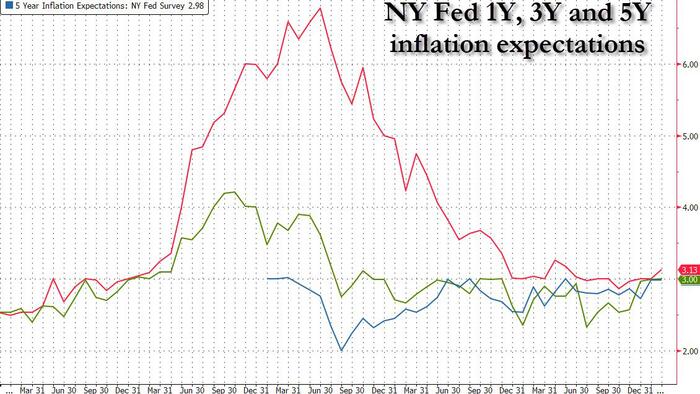
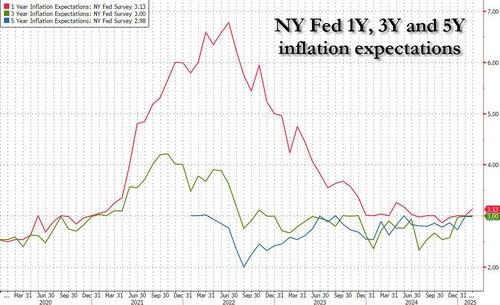
    Fast forward a month: nobody even bothered to poke the Michigan “data” again, because the latest NY Fed numbers promised a calm rundown of expectations. And sure enough, the survey kept things steady: one‑year inflation expectations nudged up to 3.1 % from 3.0 % a month prior, while the 3‑year and 5‑year forecasts stayed dead‑still.

    Key Takeaways

    • 1‑year inflation expectations: 3.1 % (now), 3.0 % (previous month).
    • 3‑year and 5‑year expectations: unchanged.
    • No sudden surge in inflation—just a gentle, polite uptick.

    So, unless you’re looking for fireworks, that’s the headline: a smooth, almost unnoticed shift that proves our earlier claim was spot on.

    Inflation Expectation Gap Gets Oil‑Dickens Size

    Because of recent market movements, the difference between NY Fed’s one‑year inflation forecast and UMich’s is now a seriously wide gap. And if that wasn’t enough, UMich is about to release its fresh batch of “data” later this week, which, according to insiders, is packed with the usual mix of surprises and… let’s call them “creative insights.”

    Fed Bites Back: Inflation Outlook Takes a Wild Ride

    Picture this: the WSJ’s own Fed whisperer, Nick Timiraos (yes, the guy who basically gives the Fed a reality check), has had his cake and eaten it again—once more, he’s poked fun at the latest inflation buzz.

    Why the U‑Mich Chill vs. NY Fed Hype?

    When the University of Michigan pokes the inflation gauge, it’s showing a quick lift, especially for the one‑year horizon. But the New York Fed keeps the scene calm—no big jump in its folks’ price predictions.

    Key Numbers that Huh?

    • 1‑Year Ahead: Expectation nudged up by 0.1 full points to 3.1%
    • 3‑Year & 5‑Year: Stayed stubbornly at 3.0%
    • And while most say “Come on, the future’s getting pricier,” the NY Fed didn’t buy that hype. The disagreement slice actually shrank for the 1‑year view.

    Where Does the Price Rocket Actually Go?

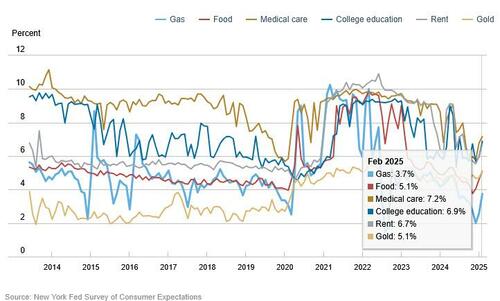
    The NY Fed’s deep dive reveals a price sprint across key staples:

    • Gas: Up 1.1pp to 3.7% (high since June 2024)
    • Food: Up 0.5pp to 5.1% (high since May 2024)
    • Medical Care: Up 0.4pp to 7.2%
    • College Tuition: Up 1.0pp to 6.9%
    • Rent: Up 0.7pp to 6.7%
    The Bottom Line

    While the U‑Mich’s numbers scream “fast‑track to the next decade,” the NY Fed’s quiet tone might just be the calm before the storm. Whether that sorted confusion or not, one thing’s clear: Americans are suddenly paying more chin‑wag for their day‑to‑day life—so grab that coffee, because the price tag is climbing.

    Home Equity Outlook: A Tiny Upswing With a Big Story

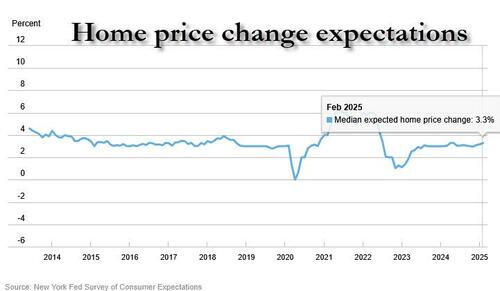
    Everyone’s been hearing that inflation is on the rise, but there’s a silver lining that even the most serious real‑estate folks can’t ignore. The “median home‑price growth” expectation has nudged up by just 0.1 percentage point, landing at 3.3 %. In plain English: people reckon they’ll build a little more equity in their homes over time.

    What the Numbers Really Mean

    • 3.3 % is the current level of optimism—households think their properties are creeping up on value.
    • The change is mild, but it signals a subtle shift in confidence.
    • All this, however, is part of a very steady pattern.

    Stuck in a Tiny Loop Since August 2023

    Since the summer of 2023, this metric has been sliding back and forth in a narrow band, oscillating between 3.0 % and 3.3 %. In other words, there’s no wild roller‑coaster—just a quiet, almost mundane, rise or fall that’s barely noticeable.

    Bottom Line

    Inflation worries? Check. But those returns on home equity are looking up, albeit slowly. It’s a cautious confidence that no one can ignore—especially if you hate seeing your mortgage balloon out of sight.

    Money Talk: Your Wallet’s Mood Swing

    Inflation ticked up just a smidge—think of it as a polite nudge rather than a full-on shove. But your bank account (or the lack of a solid budget) feels a whole lot less sunny.

    What the Survey Says

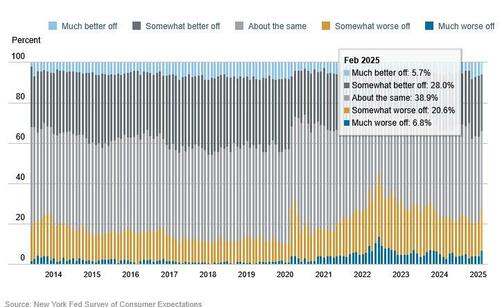
    • 27.4% – the biggest jump in a while: More families now expect a “somewhat or much” dip in their financial health in the next 12 months.
    • That figure hits its highest level since late 2023, making pockets feel a tad tighter.
    • If you’re chasing that “feel-good” feeling for next year, you’re probably not alone.

    Why It Matters

    When people look ahead and see their finances wobble, they’re more likely to cut back on the things that make life fun—be it that extra coffee on your morning commute or the weekend spa indulgence. The reality is: financial uncertainty can turn even the most adventurous plans into a cautious stroll.

    Bottom Line

    Inflation whispers, but the bigger, graver voice many hear is the “I’m not sure how to keep my wallet happy” echo. Keep that discussion alive, grab a slice of common sense, and tweak that budget so that the next year feels a bit brighter.

    Job Worries on the Rise

    In February the sense of unease among Americans felt like a sudden spike in a roller‑coaster ride.

    What the Numbers Say

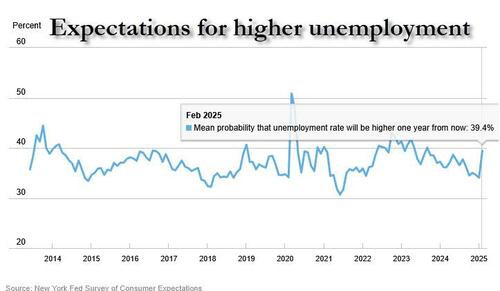
    • Average probability that the U.S. unemployment rate will climb in one year: 39.4 %
    • Jump from the previous month: 5.4 %
    • Last high: September 2023

    Why This Matters

    That 39.4 % figure isn’t just a statistic—it tells us that a growing chunk of people think the job market will get tougher in the next year. When expectations like this climb, it can stir nerves across the workforce and shake the confidence of investors and business owners alike.

    Bottom Line

    The uptick in expectations signals that the economic chatter isn’t settling down just yet, and folks are preparing for a possible bump in unemployment. Let’s keep an eye on how this plays out as the year unfolds.

    NY Fed Says Consumers Are Feeling the Cold Weather on their Wallets

    Yesterday’s report from the New York Fed tells a clear tale: people are staring down a tougher year ahead, whether that’s in their own pockets, the job arena or even the stock market.

    Job & Money Jitters

    • Quit‑rate optimism? The share of folks willing to leave a job in the next 12 months dropped to 17.6% – the lowest jump‑in‑July 2023. That’s basically a red flag that the workforce is on the edge.
    • Finding new work? If someone loses a gig, the odds of landing something within three months slipped below the long‑term average, and it’s not looking better.
    • Credit & debts? More households – 14.56% versus last month’s 13.32% – think they won’t survive even a single “minimum” debt payment in the next quarter. Basically, the folks on the end of the line are becoming a little more nervous.

    Stock Market Weakness

    Even the stock world feels the chill. The expected chance that stock prices will be higher a year from now fell to just 37% – the lowest since December 2023.

    On the bright side, a tiny silver lining

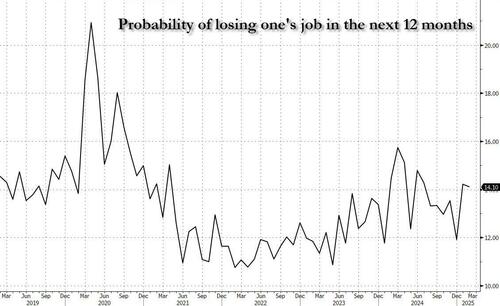
    The probability that anyone will lose their job in the next year slipped to 14.1% – a half‑point dip from January when it had hit a 2.3% peak (last July’s bump).

    All in all, the new numbers paint a picture of a consumer crowd that’s increasingly weary – from the job market to the credit crunch, to the possibility of turning a year’s share into a gloomy outcome. The forecast stays shaky, signalling that people are in for a bumpy ride ahead.

    Latest Survey Shakes Up Labor & Household Finance

    Labor Market Snapshot

    • Income expectations stay steady: A one‑year outlook on earnings growth sat at 3.0% in February, comfortably nudging between the tight 2.7%–3.0% band that’s been reigning since the start of 2024.
    • Unemployment fears spike: The average chance that the U.S. unemployment rate will tick up one year from now climbed a whopping 5.4 percentage points to 39.4%. That’s the highest since September 2023 and it’s a drop across all ages, education levels, and income brackets—so everyone’s looking a little worried.
    • Job loss feels less likely: The collective guess that you’ll lose your job in the next 12 months dipped a hair to 14.1%, a tiny 0.1 pp drop.
    • Quitting jitters shrink: People are less inclined to hand in their resignation, with the expected quit rate falling 2.3 pp to 17.6%—the lowest since July 2023. This drop spreads across education and income groups.
    • Job hunting dampens a bit: If you were to lose your gig now, the chance you’d snag a new one in the next three months is down 0.3 pp to 51.2%, still lying below its 12‑month average of 52.5%.

    Household Finance Pulse

    • Income outlook slightly up: Middle‑households now expect a 3.1% growth in earnings—up just 0.1 pp from last month—while the trend has been nestled between 2.9% and 3.3% since January 2023.
    • Spending sees a modest boost: Average expectations for household spending arced up 0.6 pp to rise to 5.0%, nudging just over the trailing 12‑month average of 4.9%. This lift was felt broadly, but hits hardest for folks with only a high‑school diploma or under $50k in yearly household income.
    • Credit climate looks a bit bleak: More households feel credit is getting tougher compared to a year ago, and fewer feel it’s getting easier. Expectations for the first time since June 2024 see a jump to 46.7% for those who think a year from now the credit game will be harder.
    • Debt dodging on the rise: The perceived odds of missing a minimum debt payment in the next three months climbed 1.3 pp to 14.6%—the highest since April 2020. This uptick is strongest among non‑college grads and those under 40.
    • Tax outlook swings a bit higher: Those expecting a one‑year change in taxes at current incomes nudged up 0.2 pp to 3.4%.
    • Government debt hopes dip: The expected growth in government debt twenty‑four months from now fell 1.0 pp to 5.0%, the lowest stumble since July 2017.
    • Saving rates look a tad optimistic: The belief that the average interest rate on savings accounts will rise over the next 12 months rises 0.4 pp to 25.4%.
    • Financial future gets gloomy: While today’s financial picture remains largely unchanged, a future‑glimpse of worse financial health jumps to a high of 27.4%, the best since November 2023.
    • Stock sentiment slides: The probability that U.S. stock prices will rise in a year shrank 3.3 pp to 37.0%, the lowest level seen since December 2023.

    For the full scoop, dive into the complete survey.

  • Chinese Exports Hotter Than Expected On Surge In Transshipments To Evade Trump Tariffs

    Chinese Exports Hotter Than Expected On Surge In Transshipments To Evade Trump Tariffs

    China’s exports rose faster than expected last month the latest customs “data” showed, ahead of next week’s expiration of a tariff truce with the US which threatens to reignite trade tensions between the world’s economic superpowers if it is not extended, although it now appears another 90 days extension is pretty much assured. 

    Exports added 7.2% in July on a year earlier in US dollar terms, the fastest rate of growth since April, while imports added 4.1% the strongest reading in a year. The country’s trade surplus was $98.2bn last month, below $114.7bn in June due to the jump in imports. 

    The recent strength in Chinese exports is almost entirely due to continued frontrunning of the tariff deadline (which incidentally is always TACOed 3 month forward), and has resulted in 4 of the past 5 months of Chinese exports printing above expectations.

    The data released on Thursday by China’s customs administration came as Donald Trump’s sweeping new tariffs came into effect for US trading partners from India to Switzerland, pushing Washington’s levies to the highest level in a century.

    The latest wave of US tariffs did not directly affect China, which has been locked in close negotiations with Washington for months over tariffs and trade flows of goods ranging from rare earths to semiconductors.

    The sides had agreed to a 90-day truce that reduced tariffs from levels as high as 145% in April, as initial agreements raised hopes of a longer-term deal. That ceasefire, and associated reduced tariff levels, was set to expire on Tuesday but as this Bloomberg headline indicated, that is likely to be extended once again:

    • *LUTNICK: US LIKELY TO EXTEND CHINA DEADLINE FOR ANOTHER 90 DAYS

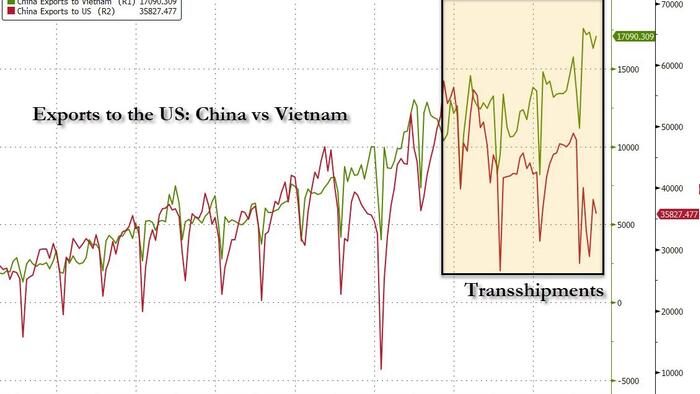
    Yet even with the fate of China tariffs still TBD, trade between the two countries has already been hit substantially, and the July figures showed China’s exports to the US declined 22% on a year earlier, after having previously sunk in May by the most since the start of the Covid-19 pandemic.

    China’s exports to south-east Asia, which have by contrast continued to grow at double-digit rates in recent months, have drawn scrutiny over so-called “transshipment” of goods through third-party countries before reaching their final destination.

    Indeed, for the clearest example of how China is bypassing US tariffs, look no further than Chinese exports to Vietnam – a regional transshipment hub – which then reships the Chinese products onward to the US. 

    The surge in Chinese exports to countries that are tariffed less explains Trump’s latest tariff salvo which included a blanket 40% levy on transshipped goods, though it did not offer further detail on how those shipments would be defined.

    “We think simple transshipment is less attractive now,” analysts at Citi wrote, pointing to “tighter US enforcement to prevent tariff evasion”. Yet one wouldn’t think that by looking at exports to Vietnam. 

    China’s exports have been a crucial growth driver for policymakers in the world’s second-largest economy, given a four-year property sector slowdown that has weighed on consumer confidence. Authorities have targeted GDP growth of about 5% for 2025.

    Trump’s administration in April introduced steep levies globally, but the measures had largely been paused to allow for bilateral negotiations with trading partners.

    The president on Wednesday also pledged to introduce a 100% tariff on semiconductor imports, however once again with huge loopholes exempting companies that that invested in the US. The news sent foreign chipmakers soaring, while such domestic icons as Intel tumbled, after Trump unleashed a tirade on Truth Social demanding INTC CEO Lip-Bu Tan resign. 

    Loading recommendations…