Tag: country

  • China doesn’t need NVIDIA chips for military power, CEO says

    NVIDIA CEO Jensen Huang says China doesn’t need to use the American tech stack or his company’s semiconductor chips to train AI for its military.

    ADVERTISEMENT

    NVIDIA CEO Jensen Huang said China doesn’t need his company’s semiconductor chips to boost its military power. 
    China “simply can’t rely” on American technologies because “it can be limited at any time,” Huang said in an interview with CNN.

    There’s “plenty of computing power in China already,” he said, adding that the country has developed hundreds of supercomputers that train artificial intelligence (AI) models for the military. 
    In response to a question about winning the global AI race, Huang said he believes it doesn’t matter whether the AI chatbot everyone uses is Chinese or American. 

    Related

    Chipmaker Nvidia hits $4 trillion making it world’s most valuable company

    “The question of does it really matter, no; but in a final analysis, I believe it is core to the American spirit to want to be the world’s best in computing technology,” he said. 
    US President Donald Trump has threatened global tariffs on allies and competitors, in which he says is a bid to boost the American economy.

    Huang called Trump’s actions “not a goal, it’s a tactic,” which goes against getting companies around the world, including in China, to be reliant on the American tech stack, a combination of programming languages, frameworks and databases used to build any software application. 
    Huang compared blocking China’s access to the US tech stack to the recent Chinese ban on rare earth mineral exports to the US, in that it spurred America to develop their own solutions instead. (These minerals are used to manufacture computer chips like NVIDIA’s). 

    Related

    Humanoids will be the next phase of AI. This is how to train a robot, according to Nvidia

    So far, the Trump administration has exempted foreign-made semiconductor products from its Liberation Day tariffs, but the President has threatened to impose levies against them several times. 

    China now has a 30 per cent tariff rate across all its goods, a significantly smaller tariff than the initial 125 per cent that was proposed by the Trump administration earlier this year. 
    NVIDIA was the first company to reach $4 trillion (€ 3.42 trillion) valuation last week because of its semiconductor chips that are supporting the AI industry. 

  • Allies need to ramp up arms production, NATO's chief Mark Rutte says in Berlin

    The alliance’s secretary general underlined that NATO allies need to increase military and defence production after meeting German Chancellor Friedrich Merz in Berlin.

    ADVERTISEMENT

    German Chancellor Friedrich Merz received NATO Secretary General Mark Rutte in Berlin on Wednesday, ahead of the 70th anniversary of Germany in the defence alliance.
    NATO members recently agreed to significantly increase military spending, following demands from US President Donald Trump that Europe takes more responsibility for its own defence.

    Defence spending is at its highest since the Cold War and the new level for NATO allies is at least 5% of a country’s GDP, before 2035 at the latest.
    During a NATO summit in the Hague at the end of June, Merz signalled that he expects Germany to take a leading role.
    “We will use these resources wisely and methodically and expand the Bundeswehr into an army that is exemplary in the alliance. We will procure new equipment on a large scale, with a special focus on new technologies,” Merz told journalists.German Chancellor Friedrich Merz and NATO Secretary General Mark Rutte at the chancellery in Berlin, 9 July, 2025German Chancellor Friedrich Merz and NATO Secretary General Mark Rutte at the chancellery in Berlin, 9 July, 2025
    AP Photo

    Both Merz and Rutte underlined the commitment to Ukraine and said the priority is to bring about a ceasefire with Russia as soon as possible.

    Merz accused Russia of “terrorism against the civilian population” following increased attacks.
    “This has nothing to do with a war against military targets,” he stressed.
    The German chancellor said there are “signals from Washington to reconsider Kyiv’s support for air defence,” and promised that Germany would make a “substantial contribution.”
    The NATO secretary general said that Europe is not producing enough military supplies and welcomed the increase in defence spending.

    Related

    Defence spend to 5% of GDP, Ukraine, Russia: The key takeaways from the NATO summitThreats facing NATO ‘no match’ for the alliance, says new chief of military operations

    “The problem isn’t the USA or Europe. The problem is that we in Europe and the USA don’t produce enough. We’re getting better. But right now, as we speak, Poland, Romania and Estonia are buying from South Korea – because it takes too long to buy in Europe or the USA. That’s the problem. That’s why we need to increase production together,” Rutte said.
    As tensions between France and Germany mount over fighter jets, Merz said discussions are ongoing but highlighted the project could be a good collaboration between France, Spain and Germany, if they can reach an agreement.
    Rutte also spoke about China’s ambitions and said WWIII could be likely within the next three to seven years with Russia able to launch a full-scale attack against NATO territory to keep Europe busy whilst China attacks Taiwan.

  • Fatal Methane Leak Claims 12 Turkish Soldiers During Iraq Cave Operation

    The troops had been looking for the remains of a comrade killed by Kurdish militants.

    When a Cave Turns into a Tragedy: 12 Turkish Soldiers Lost to a Silent Gas in Iraq

    On Monday, Turkey’s Defence Ministry delivered heartbreaking news: 12 soldiers died after inhaling methane during a search-and-recovery operation deep in northern Iraq. The mission, aimed at gathering the remains of a fellow soldier killed three years earlier by Kurdish militants, ended in a silent, colourless nightmare.

    What Went Wrong?

    • 19 troops were exposed to the invisible, odourless gas.
    • Five succumbed on Sunday, and another seven on Monday.
    • Seven soldiers remain unseen, with their exact condition unknown.

    Brave men went looking for a lost comrade and ended up chasing a deadly, invisible foe.

    Official Response

    The Turkish Defence Minister Yasar Güler, along with top military brass, flew into the region to assess the disaster and attend a solemn repatriation ceremony. Güler, standing with gravitas, praised the fallen for their “great courage and sacrifice” and expressed that the country’s grief was “immense” and “beyond words.”

    Why the Cave Was Being Searched

    This grim location was in the rugged mountains where the Turkish army began an offensive against the Kurdistan Workers’ Party (PKK) in April 2022. The PKK, considered a terrorist organization by Ankara and its Western allies, has been in armed conflict with Turkey for four decades.

    Politics and Praise

    Meanwhile, in May, the PKK announced an intention to disarm as part of a peace proposal. Fighters were expected to start surrendering weapons in the days ahead, which could pave the way toward disarmament.

    About the Cave

    Situated at 852 metres altitude, the cave was reputedly used by the PKK as a field hospital before the recent tragic events.

  • Eastern Florida State College Women's Cross Country Team Kicks Off Season Friday in Alabama – Space Coast Daily

    Eastern Florida State College Women's Cross Country Team Kicks Off Season Friday in Alabama – Space Coast Daily

    Friday’s meet will begin at 8:30 a.m. in Huntsville, Alabama

    Eastern Florida State College Women's Cross Country Team Kicks Off Season Friday in Alabama – Space Coast DailyThe Eastern Florida State College women’s cross country team will compete in the Southern Showcase Friday morning in Huntsville, Alabama. (EFSC Image)
     
    BREVARD COUNTY, FLORIDA – The Eastern Florida State College women’s cross country team will compete in the Southern Showcase on Friday morning in Huntsville, Alabama.Eastern Florida State College Men’s Golf Team Opens Fall Season in AlabamaRelated Story:Eastern Florida State College Men’s Golf Team Opens Fall Season in Alabama

    The women’s team, who starts the season ranked 16th in the USTFCCCA NJCAA Division II coaches poll, will compete for the first time this season at the John Hunt Cross Country Running Park.
    “The front three of Malinda (Underwood), Rori (Pandolfini) and Aubrey (Orcutt) are really good right now, they are fit and look good,” Eastern Florida State College women’s cross country coach Doug Butler said. “Ember (Michaels), Maddie (Lusk) and Kyla (Waymire) are getting there, I am happy with how the team has been working and I think by November we will be a very strong team. I think we will surprise some people if we run like we are capable of running on Friday.”
    Pandolfini and Lusk are back from last year’s team and are joined by some strong new runners that are ready for the new season.
    “I feel like training has been pretty good, I feel good and am really excited. It feels like a while since I competed,” sophomore transfer Malinda Underwood said. “I have competed there before and I actually Pr’d on it so for me, I want to just go out and enjoy it and see where I am. I just want to go out and enjoy it.”
    Friday’s meet will begin at 8:30 a.m., after the men’s race. It will be the first of three regular-season meets this season for the Titans.HOT OFF THE PRESS! August 25, 2025 Space Coast Daily News – Brevard County’s Best NewspaperRelated Story:HOT OFF THE PRESS! August 25, 2025 Space Coast Daily News – Brevard County’s Best Newspaper

  • Alerts & Insurance: Preparing Your European Summer Vacation for Wildfire Hotspots

    Europe’s Heatwave Haze: Climate Change Is Giving Fires a Bad Rap

    Why the scorch is hitting us hard this summer

    You’re not going to believe this: Europe’s summer blazes have outpaced last decade’s record by a sweltering margin.

    • Forests in Spain, Portugal, Italy, and Greece are going on a blazing binge.
    • Temperatures are breaking the usual highs like no one’s business.
    • Dry conditions are turning the continent into a tinderbox.

    Experts say climate change is the ultimate matchstick—turning a mild heatwave into a full‑blown inferno. With each passing summer, the risk gets a little hotter.

    So if you’re planning a rooftop barbecue, double‑check the weather alerts and keep your fire‑proof gloves handy. Better safe than burning in the sky!

    Wildfires & Your Summer Plans

    Heatwaves across Europe have turned the continent into a giant campfire arena, and the result? A blaze‑spotted patch nearly the size of Luxembourg has already burned this year.

    Why the universe chose to roast the continent

    Climate scientists keep telling us the planet’s heating up, and that’s making wildfires more likely. It’s like the Earth’s thermostat is on full blast.

    Planning a trip to a wildfire hotspot? Here’s how to stay safe when the heat turns on.

    • Check the local fire danger. Look up fire alerts in advance—some parks have a yearly calendar, or you can check local authorities.
    • Pack a fire‑proof kit. Bring a water bottle, fire extinguisher, and sturdy footwear. If you’re hiking, go with a blaze‑resistant jacket.
    • Know the evacuation routes. Map out exit points and keep an eye on road conditions. A quick exit can save your life.
    • Follow the 5‑Seconds Rule. If you can’t see the flame within five seconds, you’re probably safe. OR, if you think you’ve heard fire, jump!
    • Stay in communication. Let friends or family know your itinerary. Use a GPS tracker if you’re venturing into backcountry.
    • Remain calm. Panicking is contagious. Keep calm, breathe, and follow ranger instructions.

    Final Thought

    Wildfires are scary, but a little preparation can keep you and your loved ones safe. Pack wisely, stay informed, and when the fire alarm sounds, shout “Hold the line!” so everyone else can find the exit before it’s too late.

    Europe battles dozens of wildfires

    Europe’s Heatwave Turns Into a Wildfire Slasher

    Spain, Portugal, Greece, and the rest of the continent are reliving a scorched‑earth nightmare

    Late June saw a surge of blazing outbreaks across Spain and Portugal, while Greece faced outright infernos that turned villages into ash riddled memories. The total burned area this year is already eclipsing the seasonal average, leaving Europe in a state of chaos that could put any mythic monster to shame.

    In southern France, the furnace got real; temperatures climbed past 40 °C, and Météo‑France slapped thirteen departments on the dreaded red‑alert. “Don’t be fooled by the illusion of a hot summer—this is a nightmare, not a normal heat wave,” warned agricultural climatologist Serge Zaka to BFMTV.

    Aude: 16,000 Hectares of Burning Hell

    • Hundreds of firefighters kept vigil at the edge of a massive blaze.
    • Forces trucked through 16,000 hectares that last week.

    Britain Braces for Another Sweat‑Storm

    • The Met Office predicts a fourth heat wave with London hitting a ceiling of 33 °C.
    • On Monday, 60 firefighters – along with a half‑dozen aircraft and a bunch of carbon‑cutting machines – tried to tame a conflagration northeast of the capital.

    Tarifa’s Precautionary Evacuation

    Spanish coast town of Tarifa opened evacuation for a handful of homes as forest fires inched dangerously close. Around 2,000 people, ranging from beachside tourists to locals near Playa de Atlanterra and Playa de Bolonia, felt the tremor of the blaze.

    Portugal’s Battle Brigade

    • More than 650 firefighters, 226 vehicles, and six helicopters fired up to fight a wildfire in Freches, Trancoso.
    • High temperatures and fierce winds fanned the flames, threatening four villages at once.

    Bulgaria’s Burning Blitz

    Even a classic hot day in Bulgaria threatened 40 °C peaks. Nearly 200 fires were seen, most tamed and localized, yet the situation remained “very challenging” according to Alexander Dzhartov, head of the national fire safety unit.

    Türkiye’s Storm‑Fueled Inferno

    • Canakkale province’s wildfire forced evacuation of holiday homes and a university campus.
    • Even maritime traffic was halted because the blaze was simply too provocatively intense.

    Hungary’s Record Breaker

    Sunday saw an unprecedented 39.9 °C in southeastern Hungary, smashing a 1948 record. Even Budapest hit a city record of 38.7 °C. Authorities imposed a national fire ban amidst unprecedented heat and severe drought.

    Why We’re All Grounded

    This relentless, scorching Blaze Rush seems to be a stark reminder that “only a few mythical beasts come out of netbooks.” Thankfully, firefighters and local citizens are battling on the ground, proving that human ingenuity and determination can still save the day—or at least keep the fires from becoming human monsoon storms.

    How to prepare for a holiday in wildfire-prone destinations this summer

    Keep Calm and Blaze‑Proof On: Your Handy Guide to Wildfire‑Safe Travels

    Heading out to the great outdoors? Before you pack your bag, get your head on the boil (no, not in the kitchen) by staying sharp on fire alerts. Trust me, a little prep goes a long way—especially when the desert is doing the ancient art of flaming a selfie.

    Step 1: Scope Out the Scene

    • Dig up the fire danger rating for your destination. It’s like the weather forecast, but with an extra sizzle.
    • Learn the local emergency playbook—what to do, where to head, who to call. It’ll save you from turning a simple hike into an episode of Survivor: Wildfire Edition.

    Step 2: Get Your Phone on the Frontlines

    • Make sure you’re registered for emergency alerts. Settings → Notifications → Enable Alerts. It’s like having a seat at the front row of the ‘fire emergency’ broadcast.
    • Keep an eye on local news streams, weather alerts, and official fire updates. Apps and government websites are your best friends here—no do-it-yourself rumor mill!

    Hotspots & Local Tricks

    • If you’re jetting to Greece, sign up for the Greek Emergency Communication Service. Grab the official feed at @112Greece on X for up‑to‑date fire intel.
    • When you’re in the UK, the authorities suggest packing a “grab bag.” Think passports, IDs, phones, chargers, money, insurance docs—plus a stash of medicine for that unexpected hiccup.

    Beat the Heat, Literally

    • Under a scorching heatwave warning? Hydrate relentlessly. Carry extra water or, if you’re daring, sip something detoxicating on the spot.
    • Skip high‑energy pursuits during the heat’s peak. “Sunset yoga” is fine, but midday sprinting is a no‑go.
    • Follow local advice—what’s safe, what’s not—because green‑coughing after a windy heatwave is a thing.

    Special Considerations

    • Older travelers or those with health conditions are best to keep off the go‑go, unless they’re in an indoor lounge.
    • If your itinerary screams “outdoor adventure,” contact your travel provider. Ask if you can shift dates or swap a blazing hike for a less pyrotechnic stroll.

    Remember: staying informed, staying prepared, and staying cool is the golden mantra. Have a blast, and let the fire be…well, just a distant gray memory .

    Ensure you have the right travel insurance for wildfire coverage

    Got a Trip in the Fire? Make Sure Your Insurance Got Your Back

    Planning a getaway? Don’t let the blaze of nature cut your vacation short—unless your insurance is on fire itself.

    Why a Smart Pick Matters

    If those wildfires got the thumbs‑down on your holiday plans, you’ll want an insurance policy that’ll help you recover or at least compensate for the setback. In other words, stay warm, stay insured!

    When Travel Plans Fall Apart

    • Not canceling the trip? Even if your airline, tour operator or hotel didn’t pull the plug, you’re usually left in the lurch. Travel insurers typically see it as a “no‑show” or “disinclination to travel” – nobody likes a money‑sized disappointment.
    • No official “no‑go” warning? Not having a government‑issued travel advisory that says “stay away” can mean you won’t get a refund or compensation. That’s the insurance no‑nit‑tle loophole.

    “Loss of Enjoyment”—The Fire‑Equipped Failing

    Most policies let you out of a picnic not because it’s out of style but because your serious trip gets cancelled. They don’t cover the heartbreak of not being able to wander out of your hotel while the flames dance. So, be sure you’re covered if the company can’t say “We’re rescheduling your downtime!”

    What You Might Find in the Fine Print
    • Trip disruption coverage: a good bonus if a wildfire sure as the ticket’s already booked.
    • Natural disaster clauses: can apply to wildfires, but pay attention—some people simply skip this coverage.

    Bottom line: before you set off, double‑check that your insurance isn’t a lost—uh—, “any” backup. You’ll have peace of mind even if the wilderness starts the fireworks show.

  • "We Will Hunt You Down": ICE Launches "Patriot 2.0" Operation Against Illegals In Sanctuary City Boston

    "We Will Hunt You Down": ICE Launches "Patriot 2.0" Operation Against Illegals In Sanctuary City Boston

    Fox News National Correspondent Brooke Taylor wrote on X, “Ahead of anticipated immigration enforcement operations in Chicago this weekend, ICE has also launched ‘Patriot 2.0’ in the Boston area.” 

    ICE launched ‘Patriot 2.0’ to target the worst of the worst criminal illegal aliens living in the state of Massachusetts, following the success of Operation Patriot in May,” a Department of Homeland Security official told Taylor on Sunday. 

    The DHS official continued, “Sanctuary policies like those pushed by Mayor Wu not only attract and harbor criminals but also place these public safety threats above the interests of law-abiding American citizens,” adding, “ICE is arresting sex offenders, pedophiles, murderers, drug dealers, and gang membersreleased by local authorities. Under President Trump and Secretary Noem, nowhere is a safe haven for criminal illegal aliens. If you come to our country illegally and break our laws, we will hunt you down, arrest you, deport you, and you will never return.”

    On Saturday, Fox News joined Immigration and Customs Enforcement agents in the arrest of criminal illegal aliens in the Boston metro area. 

    A senior DHS spokesperson told NBC10 Boston yesterday that the Patriot 2.0 operation continues the surge in the sanctuary city where 1,500 criminal illegal aliens have been arrested since May. 

    Sanctuary policies like those pushed by Mayor Wu not only attract and harbor criminals but also place these public safety threats above the interests of law-abiding American citizens. ICE is arresting sex offenders, pedophiles, murderers, drug dealers, and gang members released by local authorities,” the DHS spokesperson told the local media outlet. 

    Boston Mayor Michelle Wu’s sanctuary policies have been anything but “America First”; instead, they are “America Last,” draining public resources on illegal aliens.

    Perhaps a recent Daily Caller News Foundation investigation into Wu’s open-border globalist stance shows suspicious China links, which is not surprising, given her priority over illegals.

    Mayor Wu has drawn particular criticism for her sanctuary policies, which the Department of Justice is now challenging in court. Attorney General Pam Bondi accused Boston of being among the worst sanctuary offenders:

    The City of Boston and its mayor have been among the worst sanctuary offenders in America — they explicitly enforce policies designed to undermine law enforcement and protect illegal aliens from justice. If Boston won’t protect its citizens from illegal alien crime, this Department of Justice will.”

    Last week, Trump’s border czar, Tom Homan, said to expect increased ICE operations in multiple sanctuary cities, saying they would “flood the zone.”

    Loading recommendations…
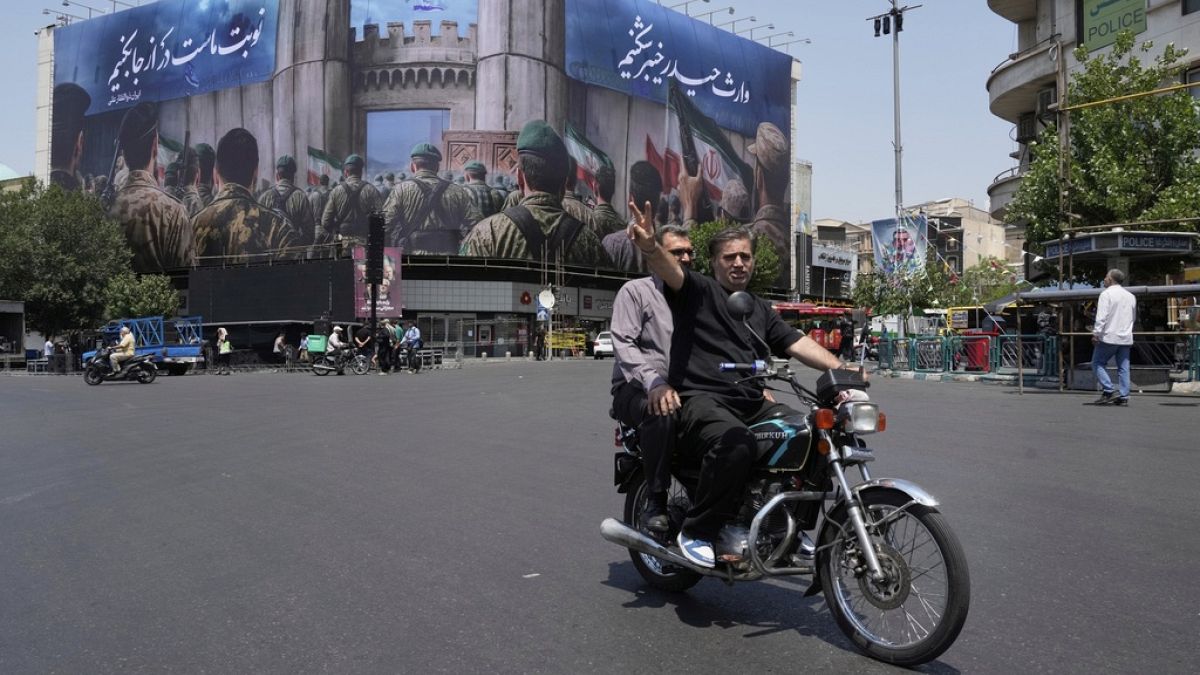
  • Iran Shaken as Israeli Bombs Strike High‑Ranking Military Leaders and Scientists

    Iran Shaken as Israeli Bombs Strike High‑Ranking Military Leaders and Scientists

    Israel Says Friday’s Barrage Was a Bootstrap for Safety

    In a dramatic move that felt like a dramatic book‑ending, Israel declared Friday’s heavy‑handed strikes on Iranian targets essential to keep Tehran from edging toward nuclear weapons. The idea? Tighten the leash before anything too scary comes out of the oven.

    So, What’s the Real Scoop?

    • Israel’s claim: “We had to act now or things would spiral out of control.”
    • Experts’ take: “Iranians weren’t actively gunning for a bomb, but the Ukraine‑style scramble kept them on high alert.”
    • U.S. stance: “The missile shots weren’t from a hunt for nuclear power, but more of a strategic hold‑back.”

    Why This Matters

    While Netanyahu’s version of the story sounds like a heroic intervention, diplomats and independent analysts agree that, before the air bursts and missile flares, Tehran wasn’t really dancing to the tune of a nuclear big‑bang. That means the strikes, though cringe‑worthy in hindsight, served more as a heads‑up to a region that’s always been on edge.

    Final Thoughts

    In short, Israel’s “necessary” bombing shows how the Middle East is still a high‑stakes, high‑pressure game. The key question is who’s holding the blasters and who’s pulling the strings—because in this arena, a tiny misstep could make the whole board collapse.

    Operation Rising Lion: When Iran and Israel Play a Do‑Not‑Touch Game

    Short‑order, high‑stakes, and eerily reminiscent of a high‑budget action movie. Israel’s latest military masterpiece—aptly titled “Operation Rising Lion”—has shaken Tehran, its drama unfolding in real time across the Middle East.

    What Got Hitting the Headlines

    • Israel boasted the biggest strike spree since the 1990s Iran‑Iraq war.
    • Key Iranian military and nuclear figures were targeted—a first since the old war.
    • Dozens died, hundreds wounded; the city of Tehran felt the tremors.
    • Government officials warned travelers away with red travel alerts.

    Tehran’s In‑The‑Moment Reaction

    In the capital, people were on the shelves and pretended to cheer, as if they were watching a football match, while a TV broadcast ran footage of missiles hitting Tel‑Aviv. “Israel killed our commanders, and what do they expect in return? A kiss?” asked Mahmoud Dorri, a 29‑year‑old taxi driver—a thread that instantly became a meme on the local feed.

    “We’ll Pay Them Back One Eye for an Eye,” Says the Driver

    “We’ll go after them to punish them: an eye for an eye,” he lamented, echoing a centuries‑old sentiment that feels oddly relevant in modern times.

    Mixed Feelings in the City

    • Teacher & Mother: Pari Pourghazi (31) applauds the attack. “Someone should stop the Israelis. They think they can do whatever they want.” She links Iran’s action to the ongoing Gaza conflict.
    • Auto Mechanic: Houshang Ebadi (61) supports the strike but urges restraint. “War won’t benefit anyone,” he argues.

    International Chaos

    Because of the missile detonation, several airlines cancelled or rerouted flights, and travelers rushed toward the Azerbaijan border. A Russian symphonic orchestra landed green‑lit at the border—an oddly peculiar headline. Government red travel warnings were issued promptly.

    Clash of Words: The Archbishop Calls for Dialogue

    The Archbishop of Tehran urged for peace and cautioned against launching a pre‑emptive war. It’s a call that may, unfortunately, be hampered by more than just rhetoric.

    Bottom Line: Whether you’re a passenger on a rerouted flight or a Tehran resident stocking up on supplies, the tensions are palpable, and the world’s ears are tuned to every chatter. Maybe the next chapter will bring a much‑needed resolution, or at least a break from the endless drum‑beat of missile exchange.

  • Brussels Airports Grounded as Nationwide Strikes Target Pension Reform Plan

    Brussels Airports Grounded as Nationwide Strikes Target Pension Reform Plan

    Metro Mayhem: Brussels Fly‑Skilled Protesters

    Imagine the scene at Brussels’ main X‑tra busy airports: a traffic jam of spirited crowds, hundreds of flights called off, and the city’s streets humming with a chorus of dissent.

    What Happened?

    • Flights cancelled: Over 500 departures from Zaventem and Charleroi were called off – pilots were left with empty runways.
    • Protest vibes: This fourth time the year, the population decided to stage the fifth general strike, turning the city into a living protest rally.
    • Why: A bitter backlash against the federal government’s plans to trim pensions and revamp retirement schemes.

    Where the Chaos Unfolded

    Protesters marched from all corners, turning the usually pristine airport zones into bustling arenas of voices and chill.

    Cheering It Up!

    Even with the flights on hold, wages and comfort numbers in the air had to hold. The strike’s emotional roller‑coaster reminded everyone that governments can keep replaying a pension trom-bone as long as they wish.

    Belgium Strikes Leave Airports in Chaos

    When the union workers took the streets and the sky, Brussels and Charleroi airports were left scrambling like a hamster on a wheel.

    Brussels Airport Gets Hit Hard

    • All departure flights from Brussels Airport (Zaventem) were called off.
    • Just 103 inbound flights landed while the original plan was to have 261 arrivals.
    • Security and staff joined the strike, forcing the airport to shut down.

    Charleroi Airport Grounds All Flights

    • The low‑cost hub held onto 100% of its flights on Wednesday.
    • Ventilation? No. Staff? Gone.
    • Airlines will either rebook or refund travelers scheduled for June 25.

    Passenger Reactions

    “I have to wake up at six, come here, wait, and I have no idea what’s happening. It’s my first time with this kind of situation and I’m honestly a little shocked,” said one frustrated traveler.

    Brussels Airport Ready for a Traffic Jam

    Expect 90,000 passengers per day over the next few days as airlines scramble to fill the gaps.

    “Tomorrow will be a lot busier than we thought. With an extra 12,000 passengers and then 2,000 more on Friday, it’s going to be a wild ride,” says spokesperson Ihsane Chioua Lekhli. “And with the holiday traffic, timing is everything.”

    Why the Strikes? Pension Reform

    Workers and trade unions protest against a new pension plan that would scrap a special scheme and raise the retirement age of civil servants to 66. The change was set to bring public pensions in line with the private sector but has sparked anger.

    “Halfway through our careers, we’re told to reform our pension and end up with less money. And we’re probably going to buy tanks instead of saving for retirement,” grumbled a protester from the Christian union.

    Political Backdrop

    • Flemish nationalist Bart De Wever became prime minister in February.
    • The reforms aim to curb ballooning costs tied to rising life expectancy.
    • Belgium’s federal budget deficit is straining against EU budget rules.
    • The country is also pledging to ramp up defence spending to 5% of GDP by 2035, aligning with NATO’s new targets.

    With the nation on edge, the airports are the front line in a tug‑of‑war that’s left travellers on their toes.

  • Switzerland Reopens War-era Bunkers as Security Risks Mount

    Swiss Army Seeks Tech Help to Revamp Bunkers

    Why Old Bunkers Need a Digital Makeover

    • Turn war relics into cutting‑edge command centres that actually work today.
    • Keep costs low by leveraging smart tech from the next generation of innovators.
    • Invite startups, researchers, and tech firms to collaborate on fresh, affordable solutions.

    Switzerland’s Bunker Bonanza: From Cold‑War Relics to Modern‑Day Marvels

    Picture this: a line of ancient stone fortresses, masquerading as cheese‑cellars, art studios, and even high‑security crypto vaults. And now, thanks to the buzzkill that is Russia’s full‑blown invasion of Ukraine, the Swiss Army is itching to bring these hulking “bunkers” out of the dusty past and into the future.

    Why These Bunkers Are Making Headlines

    • Size Matters – Roughly 8,000 of them pepper the Swiss landscape, some older than the internet itself (back in 1886!).
    • Where They’re Living – From the Gotthard railway to the Alpine passes, every corner of the country once had a bunker ready to repel an invasion.
    • Cold‑War Germs – They were the backbone of the National Redoubt, a sprawling network designed to thwart World War II and Cold‑War attacks.
    • What Happened – After the USSR dissolved, budgets shrank and priorities shifted, so many forts were sold off to civilians.
    • New Life for Old Walls – Think cheese storage, art galleries, data centers and even cryptocurrency vaults (yes, folks have seen Swiss Fort Knox in Bern).

    The Army’s “Reboot” Plan

    In 2023, the military waved goodbye to the sale of these underrated structures and instead started taking a hard look at how to repurpose them. “We have to make use of what we’ve got,” Chief Thomas Süssli told the Swiss media. “The threat landscape has shifted. These bunkers are poorly placed and their weapons will retire in the next decade or two.”

    Now the goal is to transform them into “difficult‑to‑attack defence nodes” that combine cutting‑edge tech with a cost‑effective, low‑staff operation. Think of them as a blend of an old Swiss army lockbox and a modern, high‑tech safe deposit facility.

    Not Just for Soldiers

    Some cantons are already turning these underground spaces into temporary homes for refugees. Meanwhile, the Swiss Society for Technology and Armed Forces (STA) is hosting an “Innovation Day” in mid‑September to bring in fresh ideas from all sectors—yes, even from the culinary world.

    • Creative Collab – The STA wants us all to pitch something outrageous yet viable.
    • Beyond the Battlefield – A bunker could be a sustainable, multi‑use shelter or a discreet data haven for the privacy‑obsessed.
    • Who’s Invited? – Engineers, scientists, artists, chefs, and even crypto-miners are all on the table.

    What We Can Expect

    Imagine a bunker that’s:

    • Built to stand up to the fiercest modern weapons
    • Equipped with smart sensors, AI monitoring, and automation
    • Available for civilian use with military oversight
    • Safe, snug, and a bit of a Swiss secret‑lag

    If we roll with it, these “war relics” could become the ultimate Swiss “hybrid assets”—defence, shelter, and maybe a quirky tourist attraction all in one.

    Bottom Line

    Switzerland is turning its dusty bunkers into the next generation of high‑tech, low‑cost defence and utility hubs. The question isn’t whether, but how quickly we’ll have them fully upgraded—and whether the Swiss will double‑down on their legendary patience and precision. Stay tuned; who knows, the next bunker might just be your next niche Airbnb.