Tag: creating

  • How can employers avoid problems at staff parties?

    How can employers avoid problems at staff parties?

    With the festive season fast approaching, many employers have already finalised their plans for a staff party. Others may prefer a more spontaneous approach.

    Either way, there are many legal issues for employers to consider. This is because work-related functions such as Christmas parties and similar events are effectively work activities covered by the same legislation that applies to the workplace.
    Consequently, employers can be vicariously liable for their employees’ actions, such as
    harassment, bullying and even personal injury. Of course, the individual engaging in inappropriate behaviour can be personally liable, too.
    Harassment is defined in the Equality Act 2010 as unwanted conduct related to a relevant “protected characteristic” which has the purpose or effect of either:

    Violating an individual’s dignity or
    Creating an intimidating, hostile, degrading, humiliating or offensive environment for an individual

    Protected characteristics include (but are not limited to) someone’s age, sexual orientation and race. Sexual harassment, which has been a high-profile issue throughout 2023, is unwanted conduct of a sexual nature. It is all too easy to see how offensive behaviour at an office party can constitute harassment.
    Employers may have to manage grievances or disciplinary proceedings if the social event does not go to plan. In the worst-case scenario, they may be involved in Employment Tribunal proceedings.
    So, what can employers do to ensure social events run smoothly?

    As office parties are an extension of work, remind everyone that the usual policies and procedures still apply. Bullying, harassment and disciplinary procedures could all be relevant.
    Consider whether you want a specific policy for work-related social events. This would provide clarity on acceptable standards of behaviour.
    Remind senior managers beforehand of the expected standards of behaviour and that they need to set an example.
    Depending on the location and guests, you may need a health and safety risk assessment of the venue.
    As well as vicarious liability, you have a duty of care to your employees, so discourage excessive alcohol consumption.
    If you provide free alcohol, limit this to either a couple of hours or to certain types of drinks.
    Make sure you provide plenty of non-alcoholic drinks for those who are driving or who do not drink for religious or other reasons.
    Remind everyone that it is illegal for employees under the age of 18 to consume alcohol and that disciplinary action could follow for the individual or anyone buying them alcohol.
    Make it clear that it is strictly forbidden for anyone to be under the influence of, or use or be in possession of illegal drugs.
    If the traditional evening party seems too risky, hold a lunchtime event to reduce the possibility of employees drinking too much alcohol and behaving inappropriately.

    There is another option, of course, not to have a staff party at all. Bullying and harassment, inappropriate sexual comments, upsetting photographs on social media and drunken fights occur all too frequently at staff parties. For these reasons, many employers no longer organise any staff social events. However, if you choose not to have a party, you should consider how this may impact staff morale and engagement.

  • Digital inclusion, not illusion: How governments are transforming the public sector

    Digital inclusion, not illusion: How governments are transforming the public sector

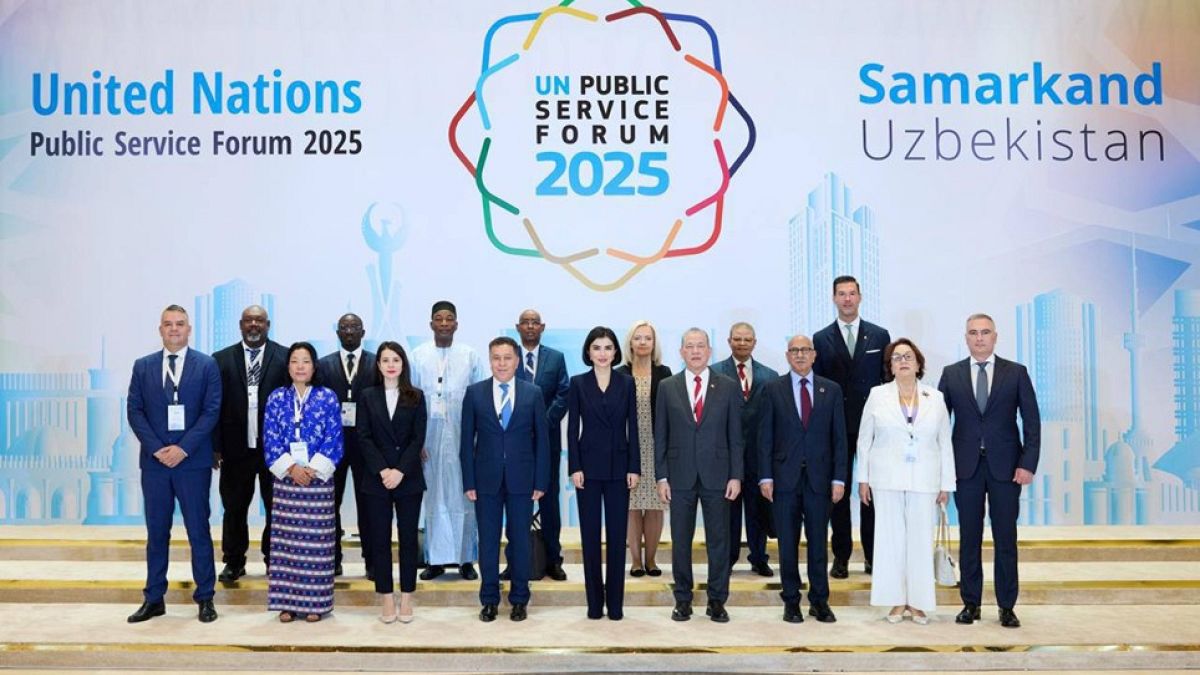
    UN Public Service Forum 2025 in Samarkand is about reshaping the relationship between citizens and institutions, as digital transformation is no longer a side project, for reshaping of public sector all over the world.

    ADVERTISEMENT

    This week, Uzbekistan’s historic city of Samarkand became more than just a host city.
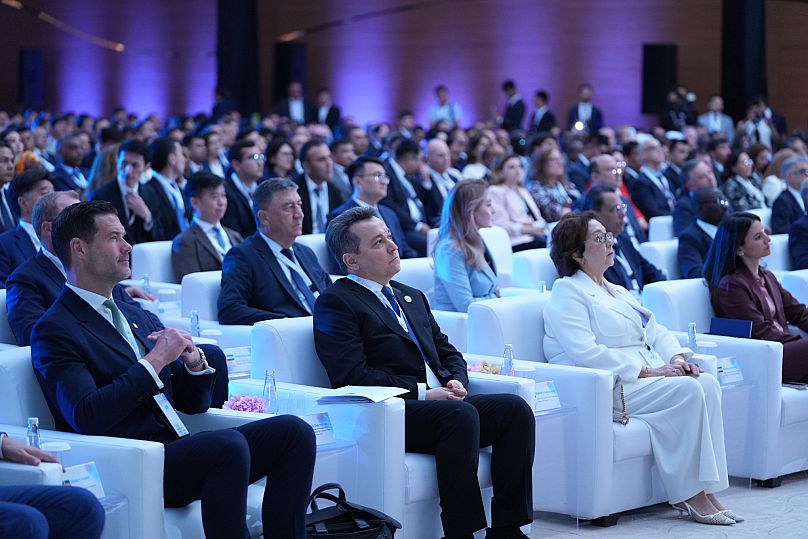
    As the 2025 UN Public Service Forum opened its doors for the first time in the country, it became a stage for a vital question facing governments worldwide. How do public administrations serve better, faster, and fairer in the digital age?UN Public Service Forum in SamarkandUN Public Service Forum in Samarkand
    Euronews

    Albania’s minister of public administration and anticorruption, Adea Pirdeni, who attended the Forum, told Euronews about the country’s digital journey, from began with just a handful of online services to a full-scale transformation.
    “When Albania began its digital transformation in 2013, just 13 public services were available online. Today, that number exceeds 1,200, covering over 95 per cent of all services”, said Pirdeni.
    “Digital services reduce corruption by removing physical interaction, cutting queues, and creating transparency. Citizens no longer wonder who’s behind the counter. They simply get the service”.
    Pirdeni emphasised the importance of accessibility, noting Albania’s efforts to support elderly citizens and those with impairments. “Efficiency means little without inclusivity,” she added.

    She also said old habits mean civil servants can resist innovation. “It’s not rejection. It’s habit. That’s why we train them in AI, challenge bureaucratic thinking, and encourage them to become reformers themselves”.
    Albania is now developing AI-powered tools to improve public procurement transparency and training public servants to adopt generative AI across government functions — a move supported by international partners. “Digital systems are only as effective as the people who use them,” Pirdeni said.

    Uzbekistan’s digital momentum

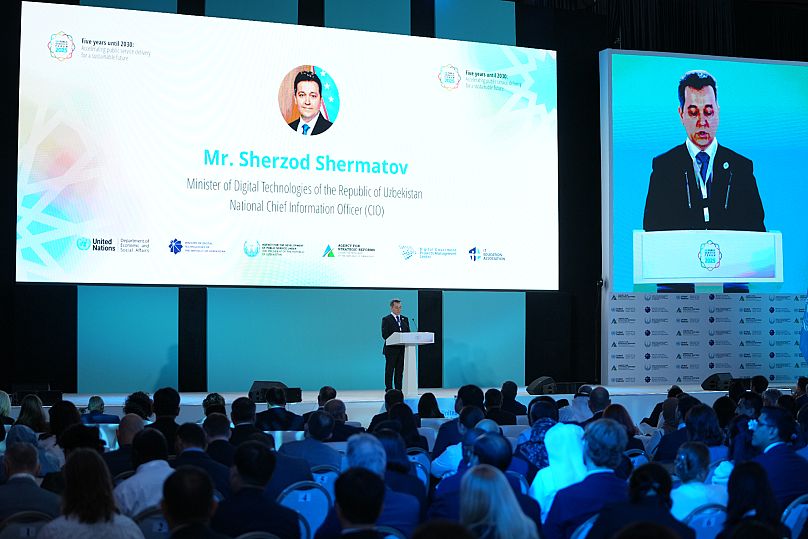
    Host country Uzbekistan used the Forum to spotlight its own progress. In just two UN assessment cycles, it jumped 24 positions in the global E-Government Development Index. With over 760 services now available via a unified online portal, and more than 11 million users, the country has built what the country’s digital technologies minister Sherzod Shermatov called a “citizen-first” system.Minister of Digital Technologies of Uzbekistan, Sherzod Shermatov, delivers a welcome address at the UN Public Service Forum 2025Minister of Digital Technologies of Uzbekistan, Sherzod Shermatov, delivers a welcome address at the UN Public Service Forum 2025
    Euronews

    “We’ve created a digital government platform that processes over 12 million requests a day,” Shermatov said. “And we’re just getting started. By 2025, IT exports will hit 1 billion dollars, and we’re launching a national cloud platform and training one million AI prompters”.

    Related

    Pilot project to launch €185m sustainable data centre in UzbekistanUzbekistan’s tech boom: How ICT innovation is driving economic growth

    The country’s GovTech strategy now integrates over 390 services from 49 government agencies through a single digital ecosystem.
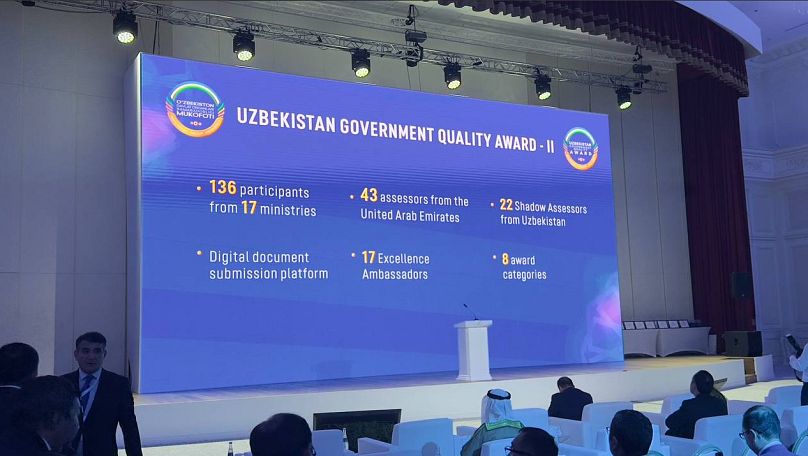
    Uzbekistan also plans to build 20 data centres in partnership with private investors, aiming to boost capacity and ensure digital resilience. According to Shermatov, these steps are part of a broader shift toward smarter governance – one where automation, open data, and public trust go hand in hand.Data indicate that over 760 services now available in Uzbekistan via a unified online portalData indicate that over 760 services now available in Uzbekistan via a unified online portal
    Euronews

    Mobile public service centres

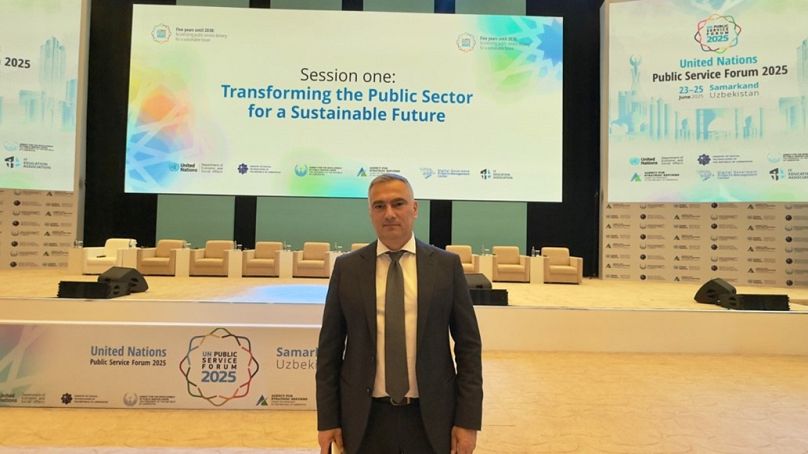
    In Georgia,** digital access is no longer limited to urban centres. The country’s justice minister, Georgia Paata Salia, described how the country’s mobile public service centres, vans equipped with full digital infrastructure, bring over 500 services to rural communities. Their new e-wallet initiative aims to give every citizen access to digital documents through biometric authentication.
    “These tools make our system more efficient,” Salia said, “but they also reconnect people to the state, especially those who felt left behind”.Minister of Justice of Georgia at the ForumMinister of Justice of Georgia at the Forum
    Euronews

    Georgia has also introduced a law on data protection, established an oversight body to regulate privacy, and created online platforms that allow citizens to transfer property or access notary services without visiting an office.

    Trust, paper, and transformation

    Not all states are at the same stage.
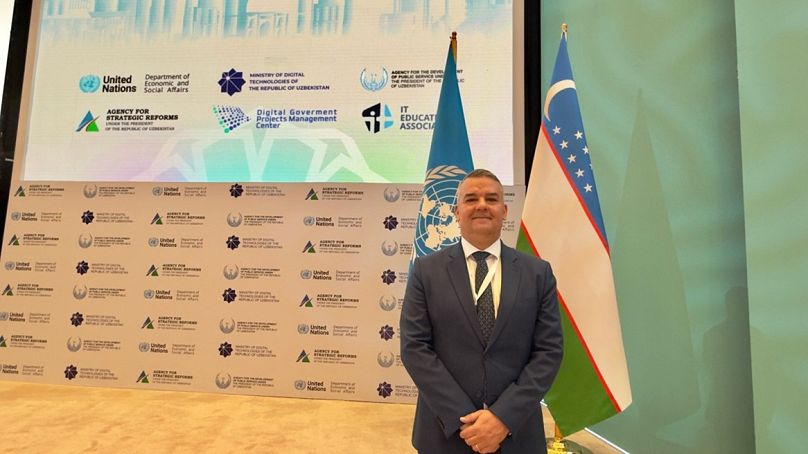
    “In Bosnia and Herzegovina, we still use too much paper,” said the country’s justice minister, Davor Bunoza.
    “But the path is clear. Digital tools are crucial for restoring trust in public institutions, especially after years of complexity and fragmentation”.Davor Bunoza, Minister of Justice of Bosnia and HerzegovinaDavor Bunoza, Minister of Justice of Bosnia and Herzegovina
    Euronews

    Bunoza noted that with Bosnia and Herzegovina recently entering EU accession negotiations, there is growing momentum to reform the justice sector and modernise public administration.
    He pointed to Uzbekistan’s progress as a source of encouragement, particularly in reducing bureaucracy and investing in citizen-facing platforms.

    Collaboration over competition

    Held under the theme “Five years to 2030 accelerating public service delivery for a sustainable future,” the UN Public Service Forum brought together ministers, technologists, and reformers from more than 100 countries.
    With Uzbekistan hosting the event for the first time, the gathering underscored how digital transformation is becoming the default agenda not just in capitals but across continents.
    Saida Mirziyoyeva, who has recently been appointed as head of the presidential administration, delivered the official speech on behalf of the President of Uzbekistan at the opening of the UN Public Service Forum.Saida Mirziyoyeva appointed as Head of the Presidential AdministrationSaida Mirziyoyeva appointed as Head of the Presidential Administration

    Press Secretary of Uzbekistan

    In his address, the President emphasised the urgency of transforming public service in light of global challenges such as climate change, political tensions, and digital threats.
    He highlighted Uzbekistan’s ongoing reforms, including a new Public Service Law, increased women’s participation in public administration (now 35 per cent), and the expansion of online services through a one-stop “single window” system.
    He noted that Uzbekistan rose 24 places in the UN’s global e-government ranking and proposed launching two international initiatives: a Global Knowledge Centre for Digital Transformation in Public Service and an International School for Young Leaders.
    The President expressed hope that the Samarkand Declaration would become a roadmap for inclusive, people-centred public service reforms worldwide.
    The country’s 208 Public Service Centres and the national my.gov.uz portal were often mentioned in discussions as examples of accessible design. These platforms are used not only by individuals but also by businesses and regional governments, illustrating how digital public infrastructure can scale.
    “We see ourselves as part of a global community,” said Shermatov.
    “Digital transformation isn’t a race, it’s a collective responsibility,” he added.

  • Your Guide to Moving to Israel in 2025

    Your Guide to Moving to Israel in 2025

    Moving to Israel in 2025 offers unprecedented opportunities despite recent challenges. Israel welcomed 32,800 new immigrants in 2024, creating the world’s most diverse startup ecosystem with over 6,000 active startups contributing 20% of GDP. This comprehensive guide covers everything from visa requirements to career opportunities, housing costs, and integration strategies for successful relocation.

    Israel’s population surpassed 10 million residents in January 2025, marking a historic milestone. The country continues attracting global talent through multiple immigration pathways, robust economic opportunities, and comprehensive support systems for new residents.

    What Are the Main Ways to Move to Israel in 2025?

    Immigration to Israel primarily occurs through five distinct pathways, each with specific requirements and benefits.

  • 20 leadership lessons from 20 years as an entrepreneur

    20 leadership lessons from 20 years as an entrepreneur

    Ever wish you could go back in time 20 years and teach yourself the leadership lessons you know today? I’ve been thinking a lot about this recently … What would you say to yourself? What would I say to myself? What lessons have I learned in the past two decades that I wish I’d known when starting up? Here’s my 20 leadership lessons I wish I’d known when starting up.

    1) A “boss” isn’t the same as a “leader”

    Bossing people around. Shouting. Pointing fingers. These aren’t the actions of a leader.
    As a leader, you need to lead. This often means working longer and harder than anyone else. Show by example what you expect from your team in terms of work ethic.
    Equally, when something goes wrong, don’t be the voice that’s raised loudest in condemnation. You can identify mistakes without yelling at someone in front of the rest of the team.

    2) You can’t force a culture

    Your company culture is more about what you do than what you say. You can insist that your company is a green and pleasant land in which to work until you are blue in the face.
    But your actions will speak the loudest. Be a “leader” and not a “boss” if you want to create a company culture that nurtures talent and encourages commitment.

    3) Don’t think “I”, think “team”

    It’s not all about you. It’s a team effort. Leaders who say “I” a lot tend to be leaders who think about themselves instead of their team and the business as a whole.

    4) Don’t be afraid to hire for personality

    Hire people fast. Train them intensively. Those are words to live by. Personality is in many ways more important than skillset. Choose people for how well they will fit in with your team and train them to have the skills you need them to have.
    One of the things I’m proudest of at Fantastic Services is the way we nurture the people we hire. We see a lot of them go onto great things internally and externally.

    5) Don’t be afraid to hire people smarter than you

    On the flip side, sometimes you need those skills and experiences. Don’t be of a mindset that because you’re the “boss” you need to be the best at everything.
    We all have our areas of expertise. No one can be across everything. Where your expertise ends, don’t be afraid to hire someone who is an expert in the thing you need to know.

    6) Draw attention to hard work

    When noses have been to the grindstone for a long period, it’s good to give recognition to the people you noticed really put the work in. If that’s the whole team, make sure they know it.
    Even when it’s just another day, heartfelt praise raises self-esteem and contributes to creating a positive place for people to work in.

    7) Don’t pass on the criticism

    While a new entrepreneur, I’m sure many of us had the experience of being criticised. Customers and clients. Other entrepreneurs. Even friends, who meant well but sometimes still sprinkled a little criticism in with their support.
    Remember that it’s your job to absorb that criticism. Don’t pass it on to your team. Remember that boss early in your career who thought it was okay to take their negative feelings out on their team?
    Try to remember who that boss is. Don’t be that person.

    8) Get the whole story

    Sometimes, it can be difficult to tell exactly where your company is “at”.
    You might have your sales team saying they have problems while the people delivering your services saying they’re getting fantastic feedback. You might have people in accounts saying everything is great while you know people have complained about a product you offer.
    As a leader, you need to be aware of and balance all of these different opinions – well-informed or otherwise – and actually know how your business is doing. Don’t just rely on one perspective, even if it’s your own.

    9) Define your message

    Once you have taken all of the different perspectives on your business into account, it’s your job to – sometimes quietly, sometimes actively – broadcast a cohesive message to your team in a positive, proactive way.
    Companies that operate with too much opacity don’t usually have a great culture. Be strong. Be clear. Be open.

    10) Practice being self-aware

    As well as awareness of your company, you need to be aware of yourself. What are your strengths? What are your weaknesses?
    Knowing your own strengths and weaknesses will help you build the right team and even, in my experience, find the ideal business partner.

    11) Use your network for feedback

    Networking plays a vital role in building a business. At Fantastic Services, we offered free services and more for both charitable reasons and to build firm friendships with local firms and people.
    But your network has another important role it can play – that of feedback generator. If you need an outside perspective on a problem or opportunity, it’s a great place to look.

    12) Stress-test your old ideas

    Over the course of a career, it’s natural that people get stuck in their ways. Avoiding this calls for regularly stress-testing your old ideas.
    Does the approach you had or your standard response on a topic still hold true knowing what you know today? Spend the mental time to ask yourself and be sure. Changing your ideas in response to new developments and data is not a weakness.

    13) Listen

    Good ideas can come from anywhere. Inside or outside your organisation. From those at the very “top” to those at the very “bottom”.
    Keep your ears open for new ideas. Whether they come from remarks made by customers, team members, your longest-known business partner, or the new hire that just walked in through the door on their first day.

    14) Treat everyone with 360-degree respect

    This is something I’ve always had firm ideas about, but 20 years as an entrepreneur has definitely underlined how important it is.
    Whether someone is working as your CFO or the company’s newest cleaner, they are a person and should be treated with the same level of respect.

    15) Build 360-degree happiness

    Build on that basis. Being treated with respect. Feeling that their ideas are listened to. There are many ways your team should be treated by their leader if you want them to be happy. A happy team is a motivated team.

    16) Offer a virtual presence

    This is a new one that the events of 2020 have brought out into the spotlight. One of the successes we’ve had when dealing with the COVID-19 pandemic at Fantastic Services is in creating virtual events and forums to keep our franchisees connected.
    Providing virtual coaching is a great resource for franchisees and team members alike. As is enabling them to connect with decision-makers in the company to make sure they feel listened to and informed.

    17) Fall down seven times…

    “Fall down seven times, stand up eight” is probably my favourite aphorism. It encapsulates the strength of resilience that I believe every entrepreneur needs if they want to succeed.
    Determination might be even more important than intelligence or natural talent when it comes to what defines your future success. If you want to succeed, prepare to be knocked back a step for every few steps you take.

    18) Rule through security

    We’ve all seen corporations that seem to operate on a system of shaming individuals or striking fear into sections of their workforce.
    But the most powerful tool you can use to energise and motivate your team isn’t fear or shame. It’s security. If you can provide a working environment where your team feels safe, they will be more innovative, more creative, and more loyal.

    19) Don’t let profit always be the driving factor

    Constant worrying about squeezing every penny out of every action can detract from other, sometimes more valuable, goals.
    What about sustainability? Your values? Your overriding purpose for your company?
    It’s often said that you should concentrate on the process and let the product come. You could also say concentrate on the process and let the profit come.

    20) Improve your work-life balance

    Finally, one of the leadership lessons I’d known twenty years ago is the importance of work-life balance.
    Starting your own company can be a time of incredibly long hours and endless hard work. It’s one of the reasons I’m such an advocate of the franchise business model today (why do all that hard work when someone else already has?).
    Whenever you can, do everything you can to make that work-life split a little more even. You will find it all the easier to do all the things a leader should be doing if you’re coming from a place of balance.

  • Barrel Curls: How to Achieve Voluminous Barrel Curls at Home

    Barrel Curls: How to Achieve Voluminous Barrel Curls at Home

    Barrel curls are the epitome of voluminous, glamorous hair. Whether you’re getting ready for a special event or simply want to elevate your everyday look, mastering barrel curls at home is a skill worth having. These large, bouncy curls add body, movement, and a touch of sophistication to any hairstyle. In this guide, we’ll walk you through everything you need to know about creating perfect barrel curls, including recommended tools, step-by-step techniques, and essential tips to make your curls last. Plus, we’ll explore how styles like the pineapple style can help protect your curls overnight.

    What Are Barrel Curls?

    Barrel curls are large, rounded curls created using a curling iron or hot rollers with a wide barrel. Unlike tight ringlets, barrel curls are loose and voluminous, making them ideal for adding fullness and bounce to your hair. This style works beautifully on medium to long hair and is popular among those seeking a glamorous, red-carpet-ready look.

    Why Choose Barrel Curls?

    Barrel curls offer several advantages:

  • Flexible & home working –to trust or not to trust?

    Flexible & home working –to trust or not to trust?

    But let’s take a practical approach. Flexible or home working (for ease I will use the terms synonymously) is actually a really great method of working – for both the employee and the employer. I’m a staunch advocate for it, in the right place, with the right guidelines, for the right reasons and in the right roles.

    My business partner stated in despair on reading the latest reported facts: “if home working is not effective then surely it is about the mind-set of the individual and how they apply themselves”. She agreed it may not be for everyone but wished as a nation we would “grow up and manage the individual, not manage and implement rules to the lowest common denominator”. Blimey it’s not often I hear her that riled on an HR matter!

    So, instead of banning it in its entirety, tarring everyone with the same brush, let’s put some things in place to help make it work.

    Educate and train managers and employees alike. It’s not surprising that unsupportive managers are cited frequently in the research as a real blocker to creating a flexible environment. Coaching managers is therefore vital and will help to produce a consistent and fair approach across the entire organisation.

    Communicate the aims and benefits of flexible work arrangements. It’s imperative to encourage better communication between employers, managers and employees so that employees and line managers are aware of organisational policies. But please avoid long lists of policies and processes. One key policy and one easy to follow request process will suffice.

    Regularly evaluate what is and isn’t working and share success stories. Take time to review where flexible working is successful and compare that to where it isn’t to understand the differences and to identify what is preventing them from working elsewhere. By sharing any success stories you will engage the reticent managers and hopefully encourage more managers to try it.

    Track performance. Implement a means to demonstrate the employee’s performance/work rate, be that working from home or working flexibly. There will be less concern and suspicion where sales targets are set, or daily/weekly to-do list statuses are shared, or status reports completed. That way the organisation and the manager know and can monitor productivity. One of the main reasons cited by Yahoo was that when they reviewed login times they were inconsistent with expectations – so be clear with the employee, tell them what is expected and advise that you can, and will check.

    Introduce other means of communication to help. This is a chance to use new technology – Google Hangouts, Skype, FaceTime or other forms of videoconferencing – which can be used to reinforce the connections and to bring the team closer together.

    Trial it. If nothing else, a trial will demonstrate whether it will work or not. Give the team a chance to see it in practice and the manager a chance to properly assess whether it’s realistic and practical. This can be as short as a month or as long as six months. Review it, tweak it and move on, accept it, or go back to a more ‘traditional’ way of working. ‘Nothing ventured, nothing gained’ is my motto here.

    Now, I personally would expect some give and take too. When I was returning to work on a four day week I did expect to be available on that fifth day. I wanted people to realise that I did take my work seriously and that I could and would be flexible, but that’s just me. Let’s be clear – a company can ask for that and try and mandate for it but it needs to be right for the individual too.

    So, let’s go back to the original thought. Should flexible and homeworking be banned as we are managing to the lowest denominator, or with these simple steps can it be successfully implemented, be a useful tool for engagement and in turn increase commitment and productivity?