Tag: domestic

  • US and China to talk in Stockholm as trade truce expiration nears

    US and China to talk in Stockholm as trade truce expiration nears

    The talks are a precursor to a potential autumn meeting between US President Donald Trump and Chinese leader Xi Jinping.

    ADVERTISEMENT

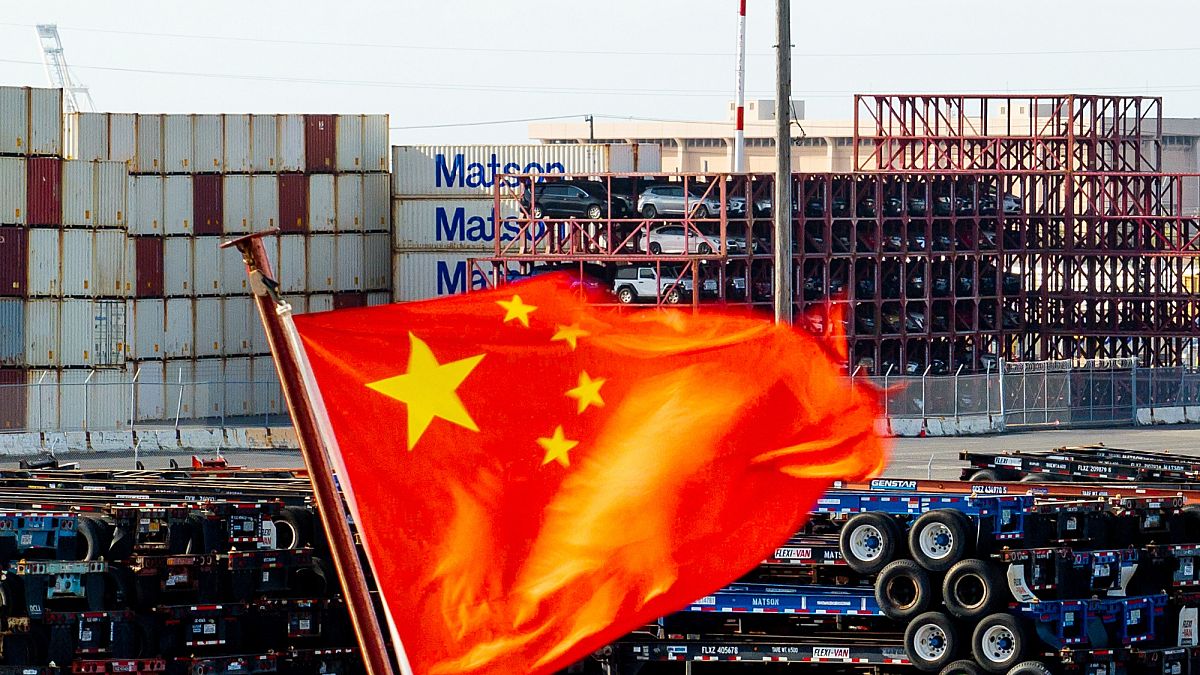
    When top US and Chinese officials meet in Stockholm on Monday, it’s likely that they will agree to leave tariffs at the current levels, if they don’t secure a more favourable framework. Analysts say the two sides are working to secure a more lasting trade deal ahead of a meeting between their presidents later this year.
    Treasury Secretary Scott Bessent and Chinese Vice Premier He Lifeng are holding talks on Monday for the third time this year. This round of discussions is taking place in the Swedish capital, nearly four months after President Donald Trump upset global trade with his sweeping tariff proposal, including an import tax that shot up to 145% on Chinese goods.

    “We have the confines of a deal with China,” Trump said on Friday.
    Bessent told MSNBC on Wednesday that the two countries had reached a “status quo” after talks in Geneva and London, with the US taxing imported goods from China at 30% and China responding with a 10% tariff, on top of tariffs prior to the start of Trump’s second term in office.
    “Now we can move on to discussing other matters in terms of bringing the economic relationship into balance,” Bessent said. He was referring to the US running a $295.5 billion (€253.1bn) trade deficit last year. Washington is seeking an agreement that would enable it to export more to China and shift the Chinese economy more toward domestic consumer spending.
    The Chinese embassy in Washington said Beijing hopes “there will be more consensus and cooperation and less misperception” coming out of the talks.
    With an eye on a possible leaders’ summit, Stockholm could provide some answers as to the timeline and viability of that particular goal ahead of a possible meeting between Trump and Chinese leader Xi Jinping.

    “The meeting will be important in starting to set the stage for a fall meeting between Trump and Xi,” said Wendy Cutler, a former US trade negotiator and now vice president at the Asia Society Policy Institute. “Beijing will likely insist on detailed preparations before they agree to a leaders’ meeting.”
    In Stockholm, the two sides are likely to focus on commercial announcements to be made at a leaders’ summit as well as agreements to address “major irritants”, such as China’s industrial overcapacity and its lack of control over chemicals used to make fentanyl, also to be announced when Xi and Trump should meet, Cutler said.
    Sean Stein, president of the US-China Business Council, said Stockholm could be the first real opportunity for the two governments to address structural reform issues including market access in China for US companies.
    What businesses will be seeking coming out of Stockholm would largely be “the atmosphere” — how the two sides characterise the discussions. They will also look for clues about a possible leaders’ summit, as any real deal will hinge on the two presidents meeting each other, he said.

    Fentanyl-related tariffs are likely a focus for China

    In Stockholm, Beijing will likely demand the removal of the 20% fentanyl-related tariff that Trump imposed earlier this year, said Sun Yun, director of the China program at the Washington-based Stimson Center.
    This round of the US-China trade dispute began with fentanyl, when Trump in February imposed a 10% tariff on Chinese goods, citing that China failed to curb the outflow of the chemicals used to make the drug. The following month, Trump added another 10% tax for the same reason. Beijing retaliated with extra duties on some US goods, including coal, liquefied natural gas, and farm products such as beef, chicken, pork and soy.
    In Geneva, both sides climbed down from three-digit tariffs rolled out following Trump’s “Liberation Day” tariffs in April, but the US kept the 20% “fentanyl” tariffs, in addition to the 10% baseline rate — to which China responded by keeping the same 10% rate on US products. These across-the-board duties were unchanged when the two sides met in London a month later to negotiate over non-tariff measures such as export controls on critical products.

    Related

    Beijing confirms that it has signed a trade agreement with the USVolvo Cars CEO: dual tech for China and the West is new trade reality

    The Chinese government has long protested that American politicians blame China for the fentanyl crisis in the US but argued the root problem lies with the US itself. Washington says Beijing is not doing enough to regulate precursor chemicals that flow out of China into the hands of drug dealers.
    In July, China placed two fentanyl ingredients under enhanced control, a move seen as in response to US pressure and signalling goodwill.
    Gabriel Wildau, managing director at the consultancy Teneo, said he doesn’t expect any tariff to go away in Stockholm but that tariff relief could be part of a final trade deal.
    “It’s possible that Trump would cancel the 20% tariff that he has explicitly linked with fentanyl, but I would expect the final tariff level on China to be at least as high as the 15-20% rate contained in the recent deals with Japan, Indonesia, Vietnam,” Wildau said.

    US wants China to dump less, buy less oil from Russia and Iran

    China’s industrial overcapacity is as much a headache for the United States as it is for the European Union. Even Beijing has acknowledged the problem but suggested it might be difficult to address.
    America’s trade imbalance with China has decreased from a peak of $418bn (€358bn) in 2018, according to the Census Bureau. But China has found new markets for its goods; the world’s dominant manufacturer ran a global trade surplus approaching $1 trillion last year — somewhat larger than the size of the US overall trade deficit in 2024. And China’s emergence as a manufacturer of electric vehicles and other emerging technologies has suddenly made it more of a financial and geopolitical threat for those same industries based in the US, Europe, Japan and South Korea.
    “Some enterprises, especially manufacturing enterprises, feel more deeply that China’s manufacturing capabilities are too strong, and Chinese people are too hardworking. Factories run 24 hours a day,” Chinese Premier Li Qiang said on Thursday when hosting European Commission President Ursula von der Leyen in Beijing. “Some people think this will cause some new problems in the balance of supply and demand in world production.” Li added: “We see this problem too.”
    Bessent also said the Stockholm talks could address Chinese purchases of Russian and Iranian oil. However, Wildau of Teneo said China could demand some US security concessions in exchange, such as a reduced US military presence in East Asia and scaled-back diplomatic support for Taiwan and the Philippines. This would likely face political pushback in Washington.
    The Stockholm talks will be “geared towards building a trade agreement based around Chinese purchase commitments and pledges of investment in the US in exchange for partial relief from U.S. tariffs and export controls,” Wildau said.
    He doubts there will be a grand deal. Instead, he predicts “a more limited agreement based around fentanyl”.
    “That,” he said, “is probably the preferred outcome for China hawks in the Trump administration, who worry that an overeager Trump might offer too much to Xi.”

  • Russia’s diplomatic circle of friends: Taliban and North Korea in, Azerbaijan and Armenia out

    As Russia became the first country to recognise the Taliban as the ruling government of Afghanistan, Moscow’s long-standing ties with its traditional allies have been falling apart. Who are Moscow’s ex-partners, and who are the new allies?

    ADVERTISEMENT

    In a move sparking significant backlash, Russia became the first country in the world to recognise the Taliban as the ruling government of Afghanistan.
    “We believe that the act of official recognition of the government of the Islamic Emirate of Afghanistan will give impetus to the development of productive bilateral cooperation between our countries in various fields,” Russia’s Foreign Ministry said in a statement on Thursday.

    The Taliban, an Islamist militant group, seized control of Afghanistan in August 2021 following the withdrawal of US and NATO forces, toppling the Western-backed government.
    Neither the US nor the EU have formally recognised the group, and Washington still designates the Taliban a terrorist organisation, or more specifically, a Specially Designated Global Terrorist (SDGT).
    In July 2024, Russian President Vladimir Putin called the Taliban “allies in the fight against terrorism”. Russia’s president also previously referred to the Taliban as “allies,” while Foreign Minister Sergey Lavrov called them “sane people”.Members of the Taliban stand in front of TV screens as they attend the St. Petersburg International Economic Forum in St. Petersburg, Russia, Wednesday, June 18, 2025Members of the Taliban stand in front of TV screens as they attend the St. Petersburg International Economic Forum in St. Petersburg, Russia, Wednesday, June 18, 2025
    AP Photo

    Moscow’s new friends

    Since the beginning of Moscow’s full-scale invasion of Ukraine in early 2022, the Kremlin has increasingly sought more cooperation with totalitarian regimes, including North Korea and Iran, to advance economic and military partnerships.

    Iran was among the first to strengthen its ties with the Kremlin. Tehran delivered thousands of Shahed attack drones to Russia and then shared the relevant technological blueprints, enabling Moscow to establish domestic production lines of its own.
    These drones are now being made at Russian facilities in rapidly increasing quantities and are playing a key role in the Kremlin’s bombing campaign against Ukrainian cities, infrastructure sites and civilians.
    In January, Russia and Iran signed a Comprehensive Strategic Partnership Treaty, which Vladimir Putin praised as a “real breakthrough” in bilateral relations. 
    But when Israel and later the US began a campaign of airstrikes against Iranian targets, Moscow did not come to support an ally and was unwilling or unable to offer anything more substantial than diplomatic gestures.

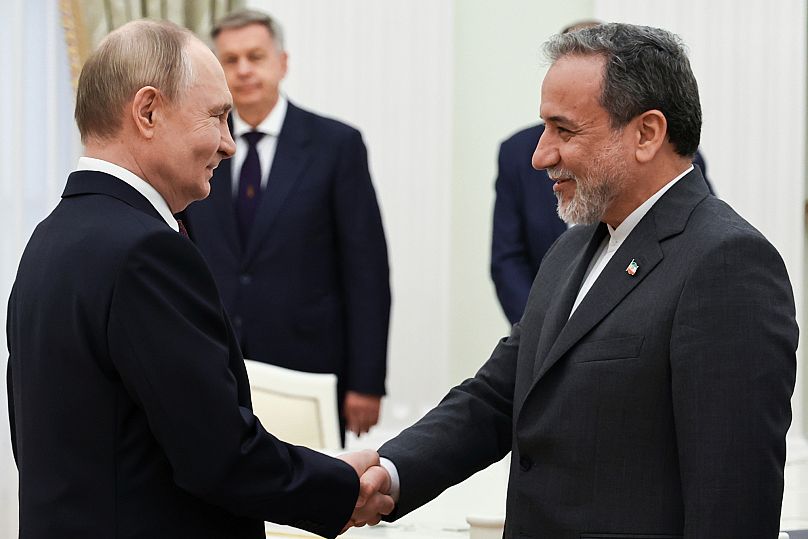
    Putin described the US airstrikes on Iranian nuclear facilities as acts of “unprovoked aggression” with “no basis or justification” amid his own unprovoked all-out war against Ukraine in its fourth year.Russian President Vladimir Putin, left, greets Iranian Foreign Minister Abbas Araghchi prior to their talks at the Kremlin in Moscow, Russia, Monday, June 23, 2025.Russian President Vladimir Putin, left, greets Iranian Foreign Minister Abbas Araghchi prior to their talks at the Kremlin in Moscow, Russia, Monday, June 23, 2025.
    AP Photo

    By the end of last year, when Iranian drones and technology did not bring Russia any closer to occupying all of Ukraine or even all of Luhansk and Donetsk regions, which Moscow has been attempting to seize since 2014, the Kremlin got another ally involved.
    This time the support came not in the tech or equipment, but in the boots on the ground.
    North Korea sent tens of thousands of soldiers to support Russian troops as they couldn’t push Ukrainian forces out of Russia’s Kursk region after Kyiv’s surprise incursion in August 2024.
    After it initially sent 11,000 troops to Russia in autumn last year, around 4,000 of those North Korean soldiers were killed or injured in the deployment, according to Western officials. Yet, Pyongyang’s cooperation with Moscow has since strengthened even more.
    North Korea is now set to triple that number and send as many as 30,000 further soldiers to reinforce Moscow troops.
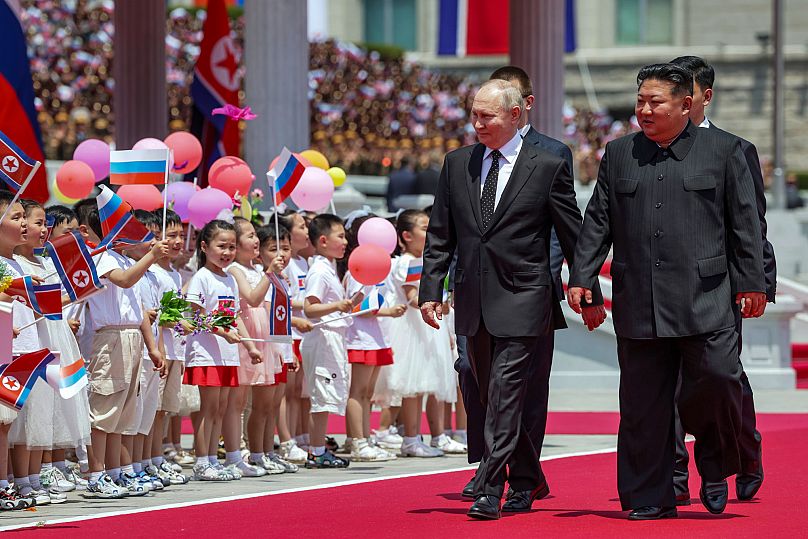
    According to a Ukrainian intelligence official, these new troops may arrive in Russia in the coming months.Russian President Vladimir Putin, left, and North Korea's leader Kim Jong Un, foreground right, attend the official welcome ceremony in the Kim Il Sung Square in Pyongyang, NoRussian President Vladimir Putin, left, and North Korea’s leader Kim Jong Un, foreground right, attend the official welcome ceremony in the Kim Il Sung Square in Pyongyang, No
    AP Photo

    Moscow’s former allies

    While bogged down in Ukraine, Russia has been gradually losing its influence in the ex-Soviet space. The most striking evolution in this sense is the loss of Russia’s decades-long stronghold in the South Caucasus region.
    In September 2023, Azerbaijan reclaimed full control of the Karabakh region after a lightning military campaign, following a decades-long conflict with Armenia in which Russia was a central actor.
    Almost two years later, Yerevan and Baku are making history away from Russia by agreeing on the text of a peace accord and normalising their relations after a bloody conflict that until recently had no end in sight. 
    And although the road ahead is still a challenge for both countries, the path seems to be clear and now includes Turkey, but not Russia, which has been pulling the strings in the conflict since the 1990s.
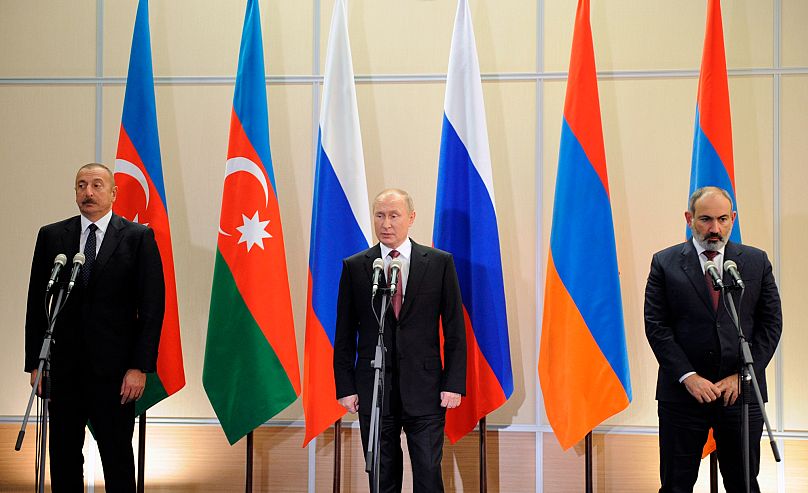
    Moscow’s relations with both Baku and Yerevan have never been as bad as they are now.Russian President Vladimir Putin, center, Azerbaijan's President Ilham Aliyev, left, and Armenia's Prime Minister Nikol Pashinyan attention a news conference, Nov 26, 2021Russian President Vladimir Putin, center, Azerbaijan’s President Ilham Aliyev, left, and Armenia’s Prime Minister Nikol Pashinyan attention a news conference, Nov 26, 2021
    AP Photo

    Azerbaijan and Russia

    In December 2024, an Azerbaijan Airlines passenger jet crashed while on a flight from Baku to Grozny, the regional capital of the Russian republic of Chechnya.
    Azerbaijani authorities said the jet was accidentally hit by fire from Russian air defences, then tried to land in western Kazakhstan when it crashed, killing 38 of 67 people aboard.
    Putin apologised to Azerbaijan’s President Ilham Aliyev for what he called a “tragic incident” but stopped short of acknowledging responsibility. Aliyev criticised Moscow for trying to “hush up” the incident and asked for those responsible to be punished.
    But the relations between the former allies have only gotten worse since.
    In May, Aliyev declined to attend Russia’s Victory Day parade in Moscow alongside other leaders of ex-Soviet nations. Later that month, a Ukrainian foreign minister visited Baku, a sign of closer ties with Kyiv.
    The tensions escalated rapidly over the past week, when Russian police raided the homes of several ethnic Azerbaijanis in Yekaterinburg, Russia’s fourth-largest city, in what authorities said was part of an investigation into murders dating back decades.
    Brothers Huseyn and Ziyaddin Safarov died in the raids, and several other ethnic Azerbaijanis were seriously injured.
    Baku responded swiftly and robustly by first calling off previously scheduled Russian official visits, summoning the Russian ambassador to Baku to protest, then cancelling Russian cultural events. 
    However the backlash culminated so far with Azerbaijani authorities raiding the offices of Russia’s state-run news agency Sputnik Azerbaijan, owned by Rossiya Segodnya, which is in turn owned and operated by the Russian government. The executive director and editor-in-chief have been issued four-month detentions.
    On the same day, the Azerbaijani president had a phone call with his Ukrainian counterpart, which further angered the Kremlin.
    Ukrainian President Volodymyr Zelenskyy said he expressed support for Baku “in a situation where Russia is bullying Azerbaijani citizens and threatening the Republic of Azerbaijan.”
    Shortly after, an Azerbaijani news outlet released what it said was a recording suggesting the Russian military ordered the December 2024 missile strike on AZAL Flight 8243. 
    Azerbaijani news outlet Minval claims it received an “anonymous letter … containing testimonies, audio clips, and technical details” pointing to “technical deficiencies in the communications equipment used at the time. The outlet didn’t provide details on when the alleged letter had been sent.
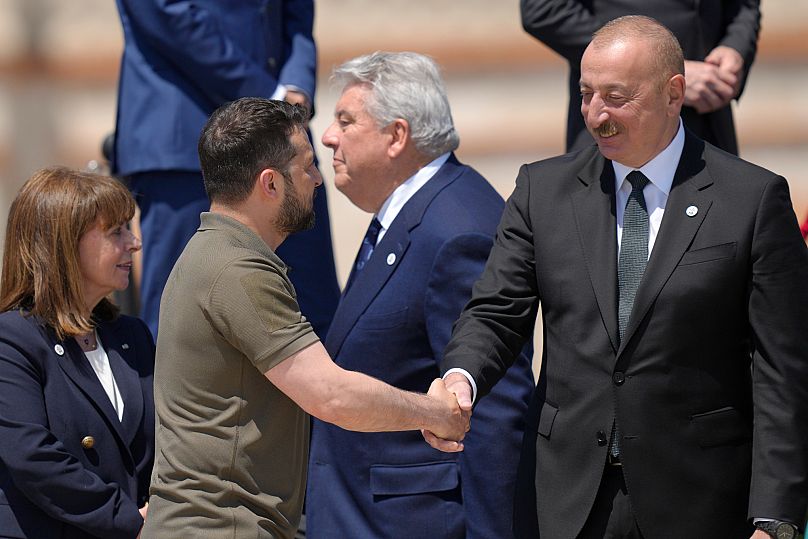
    Three days after the crash, in an address to the nation, Aliyev said, “we can say with complete clarity that the plane was shot down by Russia (…) We are not saying that it was done intentionally, but it was done.”Ukraine's President Volodymyr Zelenskyy, second left, shakes hands with Azerbaijan's President Ilham Aliyev  during the European Political Community Summit, June 1, 2023Ukraine’s President Volodymyr Zelenskyy, second left, shakes hands with Azerbaijan’s President Ilham Aliyev during the European Political Community Summit, June 1, 2023
    AP Photo

    Armenia and Russia

    Azerbaijan’s lightning campaign in Karabakh in 2023 demonstrated to Armenia what Syria’s and Iran’s regimes found out later – Russia is not stepping in to support its allies when they need it.
    Military experts add that Russia also is not fully capable of doing it since February 2022 with all of its resources and troops blocked in Moscow’s full-scale invasion of Ukraine.
    A few weeks after Azerbaijan’s operation, Armenia ratified the International Criminal Court’s statute, which had issued an arrest warrant for Putin on suspicion of illegally deporting hundreds or more children from Ukraine in March 2023, half a year before Yerevan subjected itself to the jurisdiction of the court in The Hague.
    In 2024, in an unprecedented development, Armenia put a freeze on its participation in the Kremlin-led Collective Security Treaty Organisation (CSTO) — Moscow’s answer to NATO.
    And one year later, in early 2025, the Armenian parliament adopted a bill aimed at starting the process of joining the European Union – an ultimately hostile step as far as Moscow is concerned.
    Moscow has been trying to repair the cooperation with its former ally. Lavrov visited Yerevan on 20 May, signalling the Kremlin’s intent to stabilise and reinforce ties with Armenia.
    A few days after, EU High Representative for Foreign Affairs and Security Policy Kaja Kallas visited Armenia, signing a partnership agreement with the authorities in Yerevan.
    According to Armenia’s Ministry of Foreign Affairs, the sides not only completed the negotiations on the new partnership agenda, but – what might be even more important – launched consultations in the field of defence and security “aimed to align cooperation with current challenges”.
    But the most important visit took place not in Yerevan, but in Turkey. As Russia’s foreign minister was in Yerevan, Armenia’s prime minister was in Istanbul meeting with Turkey’s president.
    In what was previously considered an unimaginable scenario, Recep Erdoğan and Nikol Pashinyan discussed possible steps for normalising relations between Turkey and Armenia. The sides do not have any formal diplomatic ties, and it was Pashinyan’s first “working visit” to Turkey.

    Armenia is seeking the reopening of its joint border with Turkey, which would help alleviate the country’s isolation. Turkey, a close ally of Azerbaijan, shut down its border with Armenia in 1993 in a show of solidarity with Baku over the Karabakh conflict.
    With the unprecedented escalations between Azerbaijan and Russia, Recep Tayyip Erdogan said he will support Armenia’s peace efforts with Azerbaijan.
    It is hard to overestimate the importance of this statement and this display of how the diplomatic tables turn not only in the South Caucasus region, but beyond, with the possible repercussions all the way to Russia’s invasion of Ukraine.

  • California Touts Fourth-Place Global Economic Rank in 2024

    California Touts Fourth-Place Global Economic Rank in 2024

    California Just Snagged the 4th Spot in the Global Economy

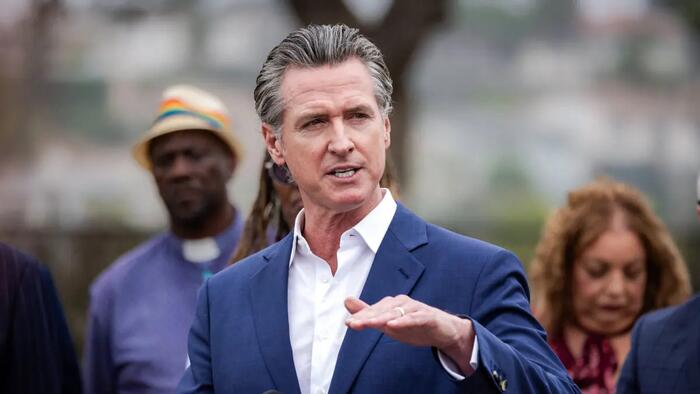
    Gov. Gavin Newsom dropped the bomb on April 23, letting us know that California’s economy is now the fourth‑largest in the world—big enough to outshine Japan.

    What Does That Mean for Your Wallet?

    • More startup vibes: Silicon Valley keeps rolling in fresh talent.
    • Growth in green tech: California’s clean‑energy game is getting a look‑in.
    • Job boom alerts: New job openings are popping up faster than iced coffee runs in a rush.

    Why California Matters

    California’s leap isn’t just about numbers; it signals that the state’s policies, innovation hubs, and diverse workforce are driving a massive economic engine. The move from the 5th place to the 4th shows that the Golden State is doing something right.

    Feel the Buzz

    There’s a sense of pride in the air—whether you’re a tech whiz, a farmer, or a surfer—California’s success feels like a shared celebration. And hey, if it means more avocado toast for everyone, as long as we can keep the spills under control, I’m all in.

    California’s Economic Powerhouse: Ahead of the Game in 2024

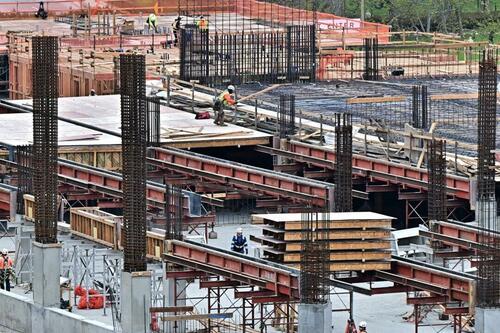
    On March 5, 2025, a snapshot from a construction site in Long Beach reminded us that California isn’t just a place of sunny beaches—it’s a booming economy. Governor Newsom’s spokesperson, Tara Gallegos, highlighted the latest figures to prove that the Golden State truly rocks the business world.

    GDP: The Big Numbers

    In the world of economics, nominal GDP is the star. It captures the value of everything a region produces at today’s prices, without adjusting for inflation. Newsom leaned on the U.S. Bureau of Economic Analysis (BEA) to showcase California’s 2024 nominal GDP, clocking in at $4.1 trillion.

    Compared with global benchmarks, the International Monetary Fund (IMF) ranked Japan’s 2024 GDP at $4.03 trillion. Meanwhile, an April‑23 statement from the governor placed California second on the global list—only behind the full U.S. economy ($29.2 trillion), China ($18.7 trillion), and Germany ($4.7 trillion).

    Growth That Makes the World Look Slim-Mi

    • California’s economy grew by 6 % in 2024.
    • That rate outpaces the top three economies—no small feat.
    • It’s not just keeping up; it’s setting the pace.

    Behind the Numbers: Why California Wins

    This success isn’t accidental. The governor’s own words? “California isn’t just keeping pace with the world—we’re setting the pace.” The ink on that statement lists three pillars:

    1. People-first investment—building a workforce that’s ready for tomorrow.
    2. Sustainability focus—innovating without compromising our planet.
    3. Innovation mindset—tech, agriculture, and manufacturing are moving forward, not just moving slowly.

    In essence, California’s bright future is fueled by investing in folks, protecting the environment, and letting ideas turn into reality. The result? A thriving, forward‑looking economy that’s got everyone—besides the sun—talking.

    California’s Economic Ranking Explained

    Who Really Holds the Crown?

    When California’s Gov. Gavin Newsom stepped up to speak in Los Angeles on September 25, 2024, the public was primed for a talk on state initiatives. But the real headline comes from Professor Michael Mische of USC, who argued that California’s #4 spot isn’t a battle trophy—it’s a comparison joke against Japan and Germany.

    What the Numbers Say

    • California’s real‑GDP grew a whopping 13.3% from 2019 to 2024.
    • Japan lagged behind, rising only 0.9%.
    • Germany barely budged, with a growth rate of just 0.3%.

    Mische highlighted that Japan and Germany had “poorly performing” economies over the same period, which cast California’s rank in a more flattering light. In other words, California didn’t beat its own state policies—it simply outpaced fellow economies that were struggling with decline and high labor/energy costs.

    Tariffs: A Potential Speed Bump

    Enter Marshall Toplansky from Chapman University, who chewed on trade tariffs and their impact on California. He posed the question:

    “Will tariffs slow down our hustle if they stay high?”

    Toplansky warned that a persistent tariff regime could dampen the economy’s momentum, potentially turning California’s rapid growth into a “slow‑down” scenario.

    Bottom Line

    In short, California’s strong performance comes partly because other key economies underperformed. Yet the future might hinge on how trade policies and tariffs play their hand. If tariffs stay high, we could see a trickle‑down effect on California’s economic ride. Stay tuned!

    Port of LA’s Shipping Frenzy Hits a New Low (Slightly) in 2025

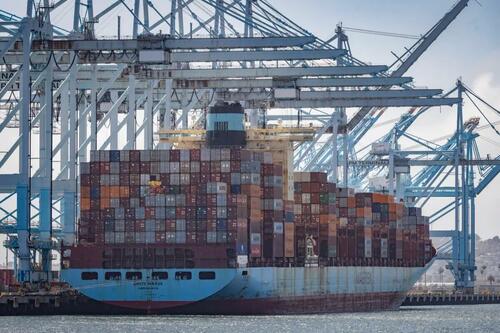
    Picture this: tons of steel hulks stacked like a giant IKEA shelving unit, all lined up at the Port of Los Angeles. On March 28, 2025, the scene looked more dramatic than a blockbuster movie—because the stakes are high.

    What’s Brewing on the Water? Tariffs on Track

    The big question isn’t just how many containers we’ll spot but how much higher the tariffs are expected to be. And who’s got the rights to decide that? President Trump’s trade policy has set the tone—and the shelf‑price on goods landing in California.

    Will the Ports Suffer a Dip?

    • Los Angeles & Long Beach: Both ports are likely to see a noticeable drop in traffic.
    • State GDP Impact: It remains fuzzy how deeply this will dent Washington state’s economy.
    • Consumers & Businesses: Expect a culinary and logistical ripple‑effect.

    California’s Legal Gambit

    Governor Newsom didn’t just sit back. On April 16, he filed a federal lawsuit challenging Trump’s tariffs. “These trade measures pain states, consumers, and businesses,” the Governor said. His lawsuit is trying to drum up a legal safeguard for the entire state.

    While the legal wrangling continues, it’s a good time to keep an eye on the loading docks, because not only are the containers piling up, but so is the debate about what it all means.