Tag: Earn

  • Business transformations: Communicating a new vision and inspiring employees

    Business transformations: Communicating a new vision and inspiring employees

    If you’re about to lead major change at your organisation, one thing’s for certain.No matter how great your vision, your plan, the enthusiasm of investors and your top team, you’re also going to need the excited engagement of your employees.

    My earlier Business Matters article “Business Transformations – A Formula for Success,” covers several key ingredients to transforming an enterprise. Currently I’m excited to be re-invigorating the fortunes of ERP software vendor Forterro. It’s right up there in my duties as CEO to communicate with and inspire our 1,400 employees.

    Go talk about it

    To transform an enterprise demands you first define your new mission and high-level plan and communicate it to your leadership team in a meaningful and powerful way. Then you must listen to and act on quality feedback, move onto detailed plans that define actions, responsibilities and timescales. Then go out among your workforce and earn their confidence. You’re going to need to energise and empower everyone to deliver.

    Signpost what will change (and what won’t). Why will it change and when? Why is it necessary? How will the changes better serve your people’s goals? You’ll need employee buy-in and for that you’ll need localised engagement models.

    Personalise your employee message

    Not everybody is motivated by the same things. Tailor your message for different groups, geographies and perspectives. Salespeople in the UK will be motivated by something very different to a software development team in India or a professional services group in Sweden. Some folks are driven by the potential to earn more, or by job security. Some seek an exciting growth company offering career progression. Others want more responsibility or to work with new technologies. Others will appreciate how you’re delivering something for the greater good.

    At Forterro, our people are passionate about smaller manufacturers. Our mission is to help these firms succeed by serving their customers well. So how we’ll do that even better, and better than our competitors, is core to my transformation plans and the framing of my message to employees and other stakeholders.

    Define the road ahead

    For all the roles across your business, you’ll need to define key changes and how your people will be expected to accommodate or make those changes. What will you ask your product development, marketing, sales, customer support people and other teams to do differently? Let people know for how long things will stay ‘business as usual’ and when they can expect for change to begin.

    Define how the journey will be navigated in detail and outline everyone’s part in the journey. Talk to team leaders and win their cross-company support. They’ll then communicate and promote change to their teams, be able to answer the many questions, help earn buy-in and overcome anxiety or resistance.

    Lead by example

    Having communicated a new mission and plan for getting there you must stick with it; as long as it continues to make clear sense. Support your leaders when difficult decisions have to be made. Stick to the plan. Try not to allow exceptions to the rule or confusion will set in diluting energy and clarity for future decisions.

    At my previous turnaround CEO project, an HR software company, a vital element of the strategy was to move from a legacy on-premise product offering towards cloud-based software as a service (SaaS). This offered better value and service for customers, would be easier for us to support and free us to scale the business. But we needed to gently move our customers away from our old product, which we’d have to cease supporting. One big customer wanted to stay with the legacy platform. I led the decision to drop the customer, even though that would hit our immediate revenues. Our employees got the message that I was serious about the new strategy and our new future. It gave employees a framework by which they could act confidently. They knew they’d have my support.

    People are the heart of your business. Plans for transformation only succeed if you can communicate a clear vision in a way that inspires, engages and enables every employee to both visualise and deliver change. It can be a huge challenge. But win the hearts and minds of your employee community and success will follow

  • Education Department Ends College Grants Tied To Racial Thresholds

    Education Department Ends College Grants Tied To Racial Thresholds

    Authored by Bill Pan via The Epoch Times,

    The U.S. Department of Education has stopped awarding grants to colleges based on the share of minority students they enroll, saying it is unconstitutional to use taxpayer dollars to promote “racial or ethnic quotas” at those schools.

    The decision, announced on Sept. 10, affects hundreds of schools nationwide classified as Minority-Serving Institutions (MSIs). Department officials said these programs amount to discrimination, as they require colleges to maintain a minimum percentage of students from certain racial or ethnic backgrounds in order to qualify for grants.

    For instance, a Hispanic-Serving Institution (HSI) must enroll at least 25 percent Hispanic students, among other criteria, to earn the designation. A Predominantly Black Institution (PBI) must enroll at least 1,000 undergraduates and make sure that at least 40 percent of them are black to unlock the corresponding grant.

    Ending those grants is consistent with the Trump administration’s goal of ending all forms of discrimination across all federally funded programs, Education Secretary Linda McMahon said.

    “Discrimination based upon race or ethnicity has no place in the United States,” the secretary said.

    “The Department will no longer award Minority-Serving Institution grants that discriminate by restricting eligibility to institutions that meet government-mandated racial quotas.”

    “Diversity is not merely the presence of a skin color,” she continued.

    “Stereotyping an individual based on immutable characteristics diminishes the full picture of that person’s life and contributions, including their character, resiliency, and merit.”

    Several grant programs are set to be eliminated, including those for HSIs, PBIs, Alaska Native and Native Hawaiian-serving institutions, Native American and Pacific Islander-serving institutions, and Native American-serving non-tribal institutions.

    The change does not affect Historically Black Colleges and Universities (HBCUs), which are defined by their history of educating African Americans before the end of segregation in 1964, rather than by the current racial composition of their student body. Nor does it affect tribal colleges, which derive their status from being chartered by tribal governments and located on or near reservations.

    For fiscal 2025, Congress had appropriated about $350 million in discretionary funds for MSI programs across the nation. The Education Department said it will still distribute roughly $132 million in mandatory funds that “cannot be reprogrammed on a statutory basis,” while redirecting the remainder toward “programs that do not include discriminatory racial and ethnic quotas and that advance administration priorities.”

    Looking ahead, McMahon said she wants to transform MSI programs so that they still support colleges with large minority student populations but are no longer tied to racial thresholds.

    “The Department looks forward to working with Congress to reenvision these programs to support institutions that serve underprepared or under-resourced students without relying on race quotas, and will continue fighting to ensure that students are judged as individuals, not prejudged by their membership in a racial group,” she said.

    Part of the reasoning behind the policy shift is a lawsuit filed in June by the State of Tennessee and Students for Fair Admissions, the advocacy group that fought and won a Supreme Court case challenging so-called “race-conscious” admissions decisions at public and private universities. The lawsuit targets the HSI program, stating that some Tennessee colleges would otherwise qualify for grants based on neutral factors like high numbers of low-income students but are excluded because their Hispanic enrollment falls below 25 percent.

    The Department of Justice then declined to defend the HSI program in court, citing an opinion from Solicitor General D. John Sauer that its funding structure not only violates the Fifth Amendment’s equal protection guarantees, but also conflicts with the Supreme Court’s 2023 ruling that barred consideration of race in admissions.

    Several university administrators and lawmakers have voiced concerns about the change. University of Hawaii, a recipient of two now-terminated MSI grants, said it will have to adjust how it allocates resources.

    “It will affect all of our students, the programs that support them and the dedicated staff who carry out this work,” University of Hawaii President Wendy Hensel said in a campus-wide message. “I am deeply saddened by this development.”

    Chairs of three House caucuses—Rep. Grace Meng (D-N.Y.) of Asian Pacific American Caucus, Rep. Adriano Espaillat (D-N.Y.) of Hispanic Caucus, and Rep. Yvette Clarke (D-N.Y.) of Black Caucus—condemned the decision, saying it would undercut educational opportunities for students across the nation.

    “Higher education is a critical pathway to economic opportunity, and Minority-Serving Institutions have opened doors for millions of students from all backgrounds to pursue a college degree,” the trio said in a statement on Sept. 11.

    “By terminating grants for certain MSIs, the Trump administration is sowing division and denying students of color the opportunities they need to succeed.”

    Loading recommendations…
  • Secure Your Spring 2025 Seat at Eastern Florida State College – Enrollment Starts Today!

    Secure Your Spring 2025 Seat at Eastern Florida State College – Enrollment Starts Today!

    Launch your career by earning an associate or bachelor’s degree at Eastern Florida State College — or fast-track your future with a workforce-focused certificate.

    Secure Your Spring 2025 Seat at Eastern Florida State College – Enrollment Starts Today!

    Get Fired Up with Eastern Florida State College!

    Picture this: you’re tackling one of 100+ courses—from tech wizardry to culinary arts—and actually earning a diploma or a workforce cert that people will brag about for years. Sounds thrilling, right?

    Why Sit on the Sidelines?

    • Huge Variety — Pick anything from coding to creative writing.
    • Flexible Paths — Full‑time, part‑time, online—whatever fits your life.
    • Future‑Proof Credentials — Stay ahead of the job market.

    Spring 2025 is Your Chance!

    Don’t let another cool spring breeze slip by. Register now, lock in your spot, and start the journey that turns your ambitions into reality.

    What’s Your Next Move?
    • Step into the world of career success.
    • Wake up proud knowing you’ve made the smartest move.
    • And hey—make some new friends who’ll cheer you on!

    So, what are you waiting for? Jump into the enrollment portal and let’s make 2025 the year you shine.

    Register Now for Spring 2025 Classes at Eastern Florida State College!

    Launch your career by earning an associate or bachelor’s degree at Eastern Florida State College — or fast-track your future with a workforce-focused certificate. Find the degree or workforce certificate that matches your interests and build a career doing what you like best!

    Ignite Your Future at Eastern Florida State College

    Ready to jumpstart your career or take that dream degree? Eastern Florida State College is your launchpad with over 100 programs to choose from.

    Spring Term is Live – Apply Now!

    • Flexible online & on‑campus classes that keep costs low without compromising quality.
    • Career‑focused curricula that arm you with the skills employers crave.
    • Transfer pathways to top universities or direct entry into the workforce.
    • Priority course registration already in motion – don’t miss out!

    Why Choose EFC? – 1‑2‑3

    1. Start small: Grab an Associate in Arts and transfer to a bachelor’s later.
    2. Go big! Earn a Bachelor’s in Business, Health, Computer Tech, or Education—all right in your backyard and at a fraction of other schools’ costs.
    3. Fast‑track career: Our workforce programs slash the journey from classroom to paycheck.
    Program Highlights
    • Associate in Arts Degree (A.A.) – the perfect springboard.
    • Bachelor Degrees – Business, Health, Computer Technology, Education.
    • Career & Technical Programs – a wide spectrum to suit every ambition.
    • Eastern Florida Online Courses – learn at your own pace, anywhere.
    • Health & Nursing Programs – get certified with hands‑on experience.
    • High School Dual Enrollment – high schoolers get a head start.
    • Public Safety Institute – train for law enforcement or emergency response.
    • Programs A‑to‑Z – find exactly what you need.
    Take the First Step

    Still on the fence? Fill out the simple online application to seal your spot and get registered. Your brighter future is just an email away.

    Curious about the world of possibilities at Eastern Florida State College? Dive into our programs and resources today and start shaping the life you’ve always imagined.

    CLICK HERE FOR MORE INFORMATION

    Register Now for Spring 2025 Classes at Eastern Florida State College

    HOT OFF THE PRESS! August 12, 2024 Space Coast Daily News – Brevard County’s Best Newspaper

    Space Coast Daily News – Brevard County’s Best Newspaper

    HOT OFF THE PRESS! – August 12, 2024

    What has the Space Coast Daily News been buzzing about lately? Dive in for the freshest updates straight from the heart of Brevard County. Below, we’ve distilled the day’s top stories, sprinkled with a dash of humor and genuine excitement—just like a cup of strong espresso at your favorite newsroom.

    • Space Launch Success: NASA’s new satellite, Falcon’s Friend, knocked a 5‑minute window off its launch schedule, leaving the crew “kinda surprised but totally stoked.” They now have a bigger “out of this world” chance of landing a successful orbit.
    • Local Hero Spotlight: Jane Webb of Cocoa Beach scored a surprising win after she tri‑med her community with a “Tree‑Hug‑for‑You” fundraiser. Her idea? “Turn the dead branches into live art,” and the area now enjoys a greener, carbon‑friendly vibe.
    • Brevard County Open‑Air Market: The market’s first “tech meets taco” night felt like a mash‑up of Apple’s product launch and a late‑night taco truck. Attendees could groove to live jazz while freshly baked churros clinked with fresh coffee.
    • Education Initiative: The county’s new STEM program, “Rocket Classroom,” offers kids a chance to plug in a Raspberry Pi and build a remote‑controlling drone. “We’re giving kids the imagination to make it real!” says the principal.
    • Traffic & Road Updates: A carefully planned “bike lane” launch boasts the declaration: “We’ve built open roads all around Brevard, one pedal‑stroke at a time.” For instance, the space kids will now zoom past the scientist’s laboratory with a splash of safety.

    For those that missed the live coverage, rest assured: when you visit the Space Coast Daily’s website or voicemail newsletter, you’ll see the cream of the local stories wrapped in informative, light‑hearted style. Keep an eye out for the latest meteorological updates and a daily dose of heart‑warming local tidbits. These stories have kept the county’s community strong and thriving.

  • Can lab-grown oils offer a sustainable alternative to ingredients linked to deforestation?

    Can lab-grown oils offer a sustainable alternative to ingredients linked to deforestation?

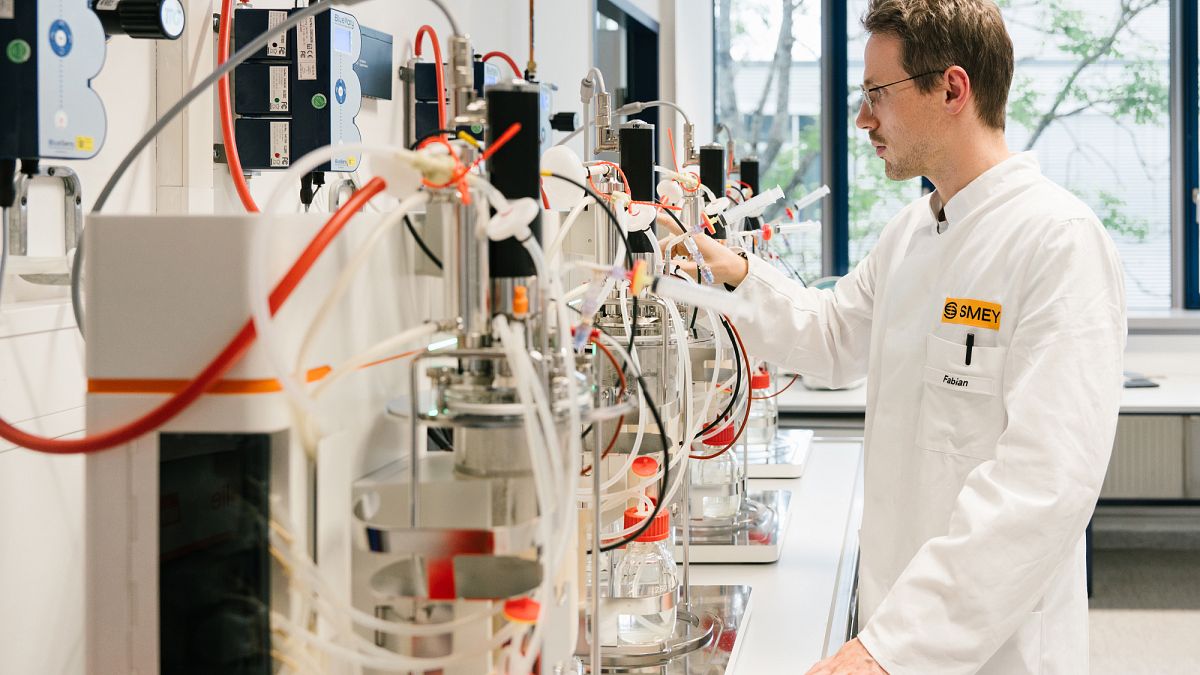
    Traditional palm and cocoa butter supply chains can take months. SMEY’s lab-grown oils cut that down to only 30 days.

    ADVERTISEMENT

    As concerns about opaque supply chains and unethically harvested cosmetics ingredients grow, consumers are increasingly calling for sustainable, environmentally-friendly products which cause minimal damage to local ecosystems and communities. 
    With the EU’s upcoming Deforestation Regulation coming into effect this December, companies importing non-compliant products linked to deforestation could be fined up to 4 per cent of their global turnover. It has prompted some to explore alternative options. 

    This has led to the rise of companies like SMEY, a Paris-based biotech firm, which is producing the world’s first lab-grown cocoa buter, palm and shea oils, with artificial intelligence (AI). They are hoping to provide beauty and food manufacturers with deforestation-free, sustainable oils. 

    Natural harvesting can cause deforestation and ecosystem damage

    Traditional harvesting methods for widely used ingredients like cocoa butter, palm oil and shea oil can lead to significant biodiversity loss, habitat destruction, negative social impacts and accelerate climate change. 
    Palm oil plantations, especially, cause considerable deforestation as they replace large areas of tropical rainforest in places like Indonesia and Malaysia. This can also threaten species such as tigers, elephants, orangutans and rhinos. 
    A large amount of fertiliser and water is also needed for palm oil production, which contributes to soil erosion and water pollution. Forced and child labour are other concerns, as well as displaced local communities due to land disputes revolving around palm oil plantations. 
    Similarly, cocoa butter harvesting can lead to biodiversity loss through widespread deforestation, to create space for cocoa farms. Soil degradation from unsustainable farming practices is also common.

    Related

    Green kiwis earn EU’s first-ever fruit health claim for keeping you regularI tried lab-grown chicken for the first time and was surprised by the taste

    Deforestation releases vast amounts of carbon dioxide into the atmosphere, which can contribute to climate change. Harmful pollutants are also released when forests are burned to clear land. 
    While shea oil harvesting has less direct impact on the environment, processing shea nuts into butter requires large amounts of wood for fuel.  Cutting too much wood to fuel this processing can cause biodiversity decline, habitat loss and land degradation, especially in areas with fewer forest resources. 
    Certain shea processing sites can also generate vast amounts of waste, such as wastewater and shea cake, which can harm the environment if not managed and disposed of properly. 

    Artificial oil companies like SMEY could help solve a number of these environmental and supply chain issues.
    “Lab-produced oils are a promising step toward sustainability, especially for high-impact ingredients like palm or rare plant oils,” Marc Mazodier, Professor of Marketing at ESSEC Business School, tells Euronews Green in an email.  
    “They can reduce environmental impact, with less deforestation and land use, a lower carbon footprint if powered by renewable energy, improved production precision and efficiency.” 
    “They don’t use pesticides or fertilisers and pose no threat to the ecosystem. These oils avoid labour issues associated with traditional oil harvesting in some regions. They can be vegan and cruelty-free,” Mazodier adds. 

    Related

    Will Europe feel the effects of Hurricane Erin? Here’s what forecasters are sayingAdaptation efforts like early warnings and preparedness have cut Europe’s flood deaths and losses

    How SMEY is making lab-grown oils

    SMEY uses AI and a library of more than 1,000 yeast strains, known as the Neobank of Yeasts (NOY), to make traceable cocoa butter, shea and palm oils in only 30 days. 
    This is significantly quicker than the industry’s usual two-year cycle for natural oils and harvesting methods. NOY is the world’s first digital database of its kind.
    “Our approach combines fermentation and machine learning into a single, integrated system. We work with non-GMO yeast strains sourced from nature, using fermentation technology to produce oils with precise lipid profiles for specific client needs,” SMEY’s founder Viktor Sartakov-Korzhov tells Euronews Green. 
    This process is powered by NOY, in which each yeast strain is mapped for its natural lipid profile. SMEY.AI then analyses metabolic, genomic and fermentation data to predict which strains will yield the needed fatty acid composition, stability and texture of oil. 
    “From there, we apply adaptive laboratory evolution and process optimisation to scale production without genetic modification,” Sartakov-Korzhov explains.  
    “This combination shortens the R&D (research and development) cycle from 18-24 months to about 30 days for strain shortlisting, allowing us to develop oils that are consistent, traceable, and tailored to each application.”
    The company says this allows them to create entirely new oils, as well as replace traditional oils such as cocoa butter. 

    Related

    Despite the EU deforestation regulation, companies are investing more in palm oil. Why?

    How can artificial oils make cosmetic supply chains more sustainable?

    Lab-grown oils could change the production and competition landscape in Europe, according to Sartakov-Korzhov.  
    “Our goal is to add value and to strengthen resilience without displacing existing players. In cosmetics and pharmaceuticals, this means enabling the local production of oils that previously had to be imported. A particular example can be making a cosmetic-grade camellia oil used by luxury beauty brands in Europe instead of sourcing it only from Asia,” he explains. 
    Producers can also create new ingredients and oils in labs with much better shelf lives, stability and performance than natural oils. 
    “At the same time, we reduce dependency on GMO-derived oils, which sets us apart from most competitors. By offering high-purity oils from non-GMO sources that can be produced locally, we also make supply chains less vulnerable to geopolitical or economic shocks,” Sartakov-Korzhov adds. 
    Professor Mazodier highlighted that lab-produced oils could also significantly improve supply chain resilience by supporting climate-proof production and inventory flexibility. 
    At present, SMEY is focusing on marketing its Noyl Silk product to haircare, skincare and makeup brands. Noyl Silk, previously named cHOB (Cultivated High Oleic Butter) is an artificial oil for cosmetics, developed through the NOY platform. 
    The company is also targeting the lubricants market and the oleochemicals industry. In the longer term, it will focus on the food sector, with products such as Noyl Cocoa, its cultivated cocoa butter alternative. 
    Currently, SMEY’s focus is on North America and Europe, where the majority of its potential clients are based. However, from there, the company plans to expand globally with regional production hubs worldwide. 
    SMEY plans to lease the NOY database to other fermentation-based companies by the end of October 2025. This will let them speed up their own strain discovery and optimisation. 

    Related

    Will Europe feel the effects of Hurricane Erin? Here’s what forecasters are sayingGreen Man Festival 2025 round-up: An eclectic weekend in the Welsh countryside

    Performance challenges and long regulatory approvals

    Although lab-grown oils can be much more sustainable and quicker to reach the market, challenges still remain. A key hurdle is making sure that the performance, such as taste, feel, composition and behaviour, matches natural oils as closely as possible. 
    “Oils must deliver the same or better results than the ingredients they replace. Regulatory approval is another major factor, and timelines vary depending on the application and region,” says Sartakov-Korzhov.
    “For example, cocoa butter alternatives for food use have an estimated approval path of around two and a half years in Europe, while palm oil replacements for products like chocolate spread could take about three years.”
    Another challenge is scaling up production enough to match the cost competitiveness of traditional oil manufacturing. 
    “Some lab processes require significant energy, which may offset sustainability gains if not powered by renewables,” Mazodier says. 
    “Lab-produced oils are often more expensive than conventional oils, though costs are expected to drop as technology advances. Many consumers prefer plant-based or “natural” ingredients, even if lab-produced oils are scientifically identical or superior.”

    Related

    Bioengineers are using fat made from pig cells to make lab-grown meat taste more appealingThese lab-grown hearts made from human stem cells are used to train AI to detect heart diseases

    He also points out that lab-grown oils usually need sugars or other carbon sources, often from industrial agriculture, like sugarcane or corn. If the supply of these crops is disrupted, there may be ripple effects for artificial oil companies. 
    Similarly, not all lab-grown oils are easily biodegradable. 
    “Brands must ensure their products break down safely to avoid contributing to pollution or microplastic issues. Even if the oil itself is sustainable, its packaging and transportation may still have environmental impacts if not managed responsibly,” Mazodier said. 
    With stricter regulations, like the EU’s Deforestation regulation, set to take effect, companies are increasingly exploring alternative sources. Lab-grown options like those developed by SMEY are being positioned as a promising fix to sustainability and ethical concerns. 
    But while the technology offers traceability and speed, it isn’t without limitations. Questions remain over scalability, affordability and whether lab-grown oils can really match up to the natural counterparts. 
    “Lab-grown oils could make cosmetic supply chains far less exposed to fragile agriculture by diversifying production, stabilising supply, and enabling substitution. But they introduce new dependencies- especially on feedstock sourcing, energy, and industrial infrastructure- which means they complement rather than fully replace agricultural oils in the near term,” Mazodier concluded.