Tag: falling

  • Berenson On Black Violence, Woke Lies, & Right-Wing Rage

    Berenson On Black Violence, Woke Lies, & Right-Wing Rage

    Authored by Alex Berenson via Substack,

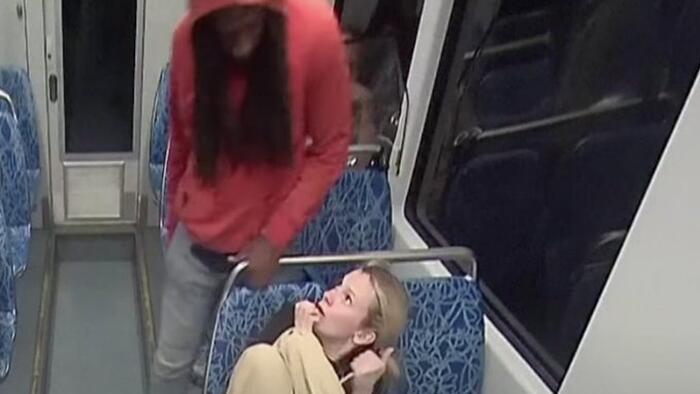
    You’ve seen the photo.

    A man stands behind a woman, his arms raised in a frenzy. She sits, focused on her phone, oblivious to the danger behind her. He is about to slash her neck and leave her to bleed to death.

    The man is black. The woman is white.

    And their races are no coincidence.

    *  *  *

    (The truth, even when it hurts.)

    Black men commit a huge amount of violent crime in the United States.

    Every statistic confirms this fact. Black people made up almost 47,000 of the 81,000 murder suspects whose race was known to police in the last five years, according to the Federal Bureau of Investigation.1 Most of those killers are men.

    Put another way, black men, who make up about one-fourteenth of the American population, commit over half of the homicides.

    In some cities, the disparities are so stunning as to nearly defy belief. St. Louis has about the same number of black and white people, about 130,000, along with 40,000 Asians and Latinos. So far this year, St. Louis police have identified 83 murder suspects. None are Asian or Latino. Three are white.

    The other 80 are black, 73 men and seven women.

    (See for yourself.)

    SOURCE

    I wish this racial gap didn’t exist.

    Every American suffers from it. Black people suffer more than white, because most crime is intra-racial, a fact that shouldn’t surprise anyone. People usually commit violence against family members, friends, or people in their neighborhoods. So black people are far more likely to be the victims of violent crime, as well as its perpetrators.

    Nonetheless, the crime gap is real, and has been for generations. Whether violent crime is rising or falling, black people are far more likely to commit it.

    For a long time, we simply didn’t discuss this fact. Everyone knew it. Maybe people didn’t know the exact statistics, but everyone broadly knew the overall trends.

    No one talked about it.

    Guess what?

    I think that silence was probably the right move.

    I know, probably not what you expected from Mr. Unreported Truths.

    But who gains from highlighting black criminality? Obviously, police departments must deal with reality, by focusing their officers and detectives on the neighborhoods where most crime happens. But focusing on the racial disparities in crime seems… unlikely to help race relations. And although rates of black criminality are higher, the vast majority of black people — like the vast majority of white people — do not commit violent crime.

    Better, then, to arrest and incarcerate and simply ignore the intersection of race and crime whenever possible.

    Except the left wouldn’t agree.

    For the last 20 years, the left has spun two demonstrably false narratives on this issue.

    The first is that large numbers of black men are in prison for nonviolent drug crimes. I examined this argument closely for Tell Your Children, and it is almost totally a myth.

    It exploded after the publication in 2010 of a book called “The New Jim Crow,” by civil rights lawyer Michelle Alexander. It has been repeated ever since, even though criminal justice professor John Pfaff exploded it in a book called “Locked In: The True Causes of Mass Incarceration – and How to Achieve Real Reform” in 2017.

    Pfaff — who is a liberal — pointed out that any serious cuts in prison populations would have to include the release of many violent offenders (a tack he favors). Depending on the criteria, many if most of those offenders would be black.

    Now, one can argue that prisons are inhumane and expensive and that a country as wealthy as the United States should have better alternatives even for violent criminals and that no one should be defined by their worst day. Those are honest arguments. I generally don’t agree with them, but they are honest.

    But pretending that our prisons are filled with black men in there for smoking pot is not an honest argument.

    The second myth, even more maddening, is that the police are constantly shooting black men, and unarmed black men in particular.

    In reality, between 2015 and 2024, American police shot and killed about 180 unarmed black people (and 222 white people), according to a database from the Washington Post. Obviously, any police shootings need to be investigated, and if there is evidence officers acted without justification, they should be prosecuted.

    But the context here is important. Over the same period, close to 100,000 black people died of homicide — and, again, the vast majority died at the hands of other black people. The statistics could not be clearer: Police officers of any race present a far smaller threat to black men than other black men do.

    Unfortunately, the left will not simply acknowledge that fact. Instead, the legacy media, has spent the last decade offering saturation coverage of every case it can find in which police officers, particularly white officers, have killed black men.

    These demonstrably false narratives were central to the broader effort to “reform” the criminal justice system, a goal the left justified by arguing that violent crime had fallen so much from its 1980s peak we ought to close the prisons and replace police with social workers.

    In reality, at least four big factors seem to have led to the fall in crime.

    • First, we did lengthen sentences and put a lot of violent people in prison in the late 1980s and 1990s. This may come as a shock to progressives, but incarcerating criminals keeps them from committing more crimes.

    • Second, cell phones and apps made drug dealing a delivery business. When you don’t have to sell on corners, you don’t have to fight for them.

    • Third, opioids replaced stimulants as America’s preferred drug class. Opioids cause many, many problems, but their users are generally too zonked (the preferred clinical term) to commit violent crime.

    • Fourth, investigative technology improved. It’s tough to be a serial killer these days. Watch that DNA!

    Still, throughout the 2010s, the “Black Lives Matter” anti-incarceration and -police stories gained momentum. To the left, falling crime didn’t signal longer prison sentences had worked. It signaled they were unnecessary.

    Then, following George Floyd’s death, calls to “defund the police” exploded. Democratic politicians and prosecutors in cities like Chicago and Philadelphia signaled they would not routinely enforce a wide range of laws or back police who used force in arrests. Many police officers retreated from their work, knowing that they might face lawsuits or worse if they were forced to fight with a suspect.

    Within months crime exploded. Murders in the United States rose 30 percent in 2020, the biggest one-year spike ever. Big sections of downtowns in cities like San Francisco and Los Angeles became almost impassible, filled with open-air drug use, aggressive panhandling, and street crime.

    The post-Floyd crime wave ended the open calls to defund the police, but it didn’t end the left’s general dishonesty about race, crime, and policing.

    But the left doesn’t control what we see and hear anymore.

    The center of gravity is on social media, and social media, particularly X, has moved increasingly to the right.

    Now the right is responding to the left’s misleading arguments about crime and race in the most inflammatory possible way. Commentators with huge audiences are highlighting cases in which black men have committed unprovoked crimes against white people, especially white women, especially young white women.

    Thus the image of Decarlos Brown Jr standing behind Iryna Zarutska, about to strike, now viewed hundreds of millions of times — if not billions — on X.

    I don’t know how to put this genie back in the bottle.

    These images are powerful because they’re real.

    They cut to a truth about crime in the United States that the left will not acknowledge.

    But they cannot help but inflame anger about race. At least some people posting are using them for just that reason.

    Would greater honesty from the left stop them?

    Of course not.

    We need strict laws against recidivist violent criminals, and we need to enforce those laws. We need to give police more tools to get floridly psychotic people off the streets, particularly when drugs are fueling their psychosis. Those people are almost by definition dangerous to themselves and others. Ideally, we’d send them to civil confinement for treatment. But if they’re breaking laws against, say, public nudity or harassment, we should not be afraid to send them to jail.

    The left needs to accept that a lot of those people are going to be black.

    But I wish the right wouldn’t say so out loud.

    Views expressed in this article are opinions of the author and do not necessarily reflect the views of ZeroHedge.
    Loading recommendations…
  • Emoji Evolution: From Small Symbols to Global Language

    Emoji Evolution: From Small Symbols to Global Language

    Emoji Evolution: A Crazy, Colorful, and Hilarious Roller‑Coaster

    When Pictograms Became the Heavy‑Hitters of Text

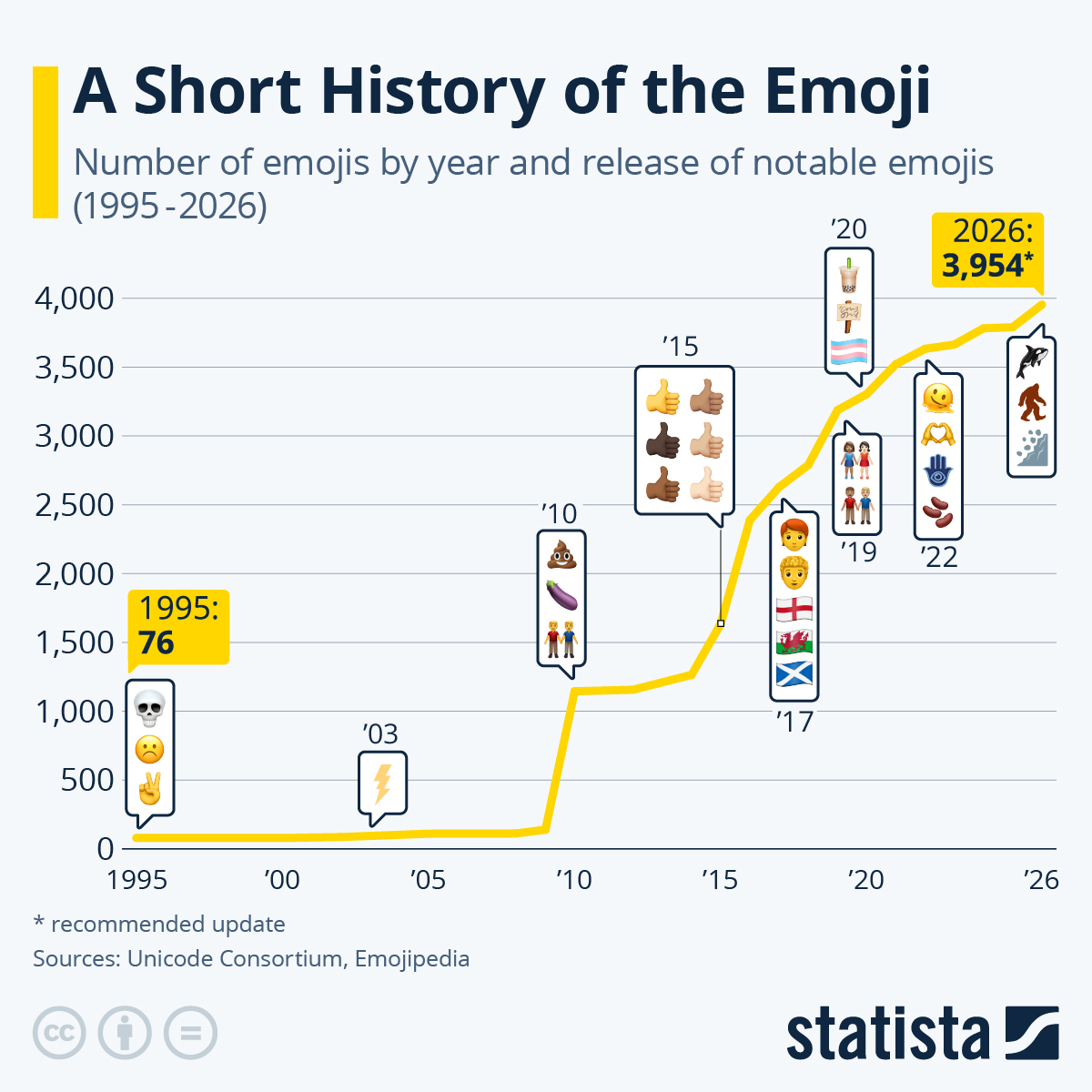
    Since the middle of the ’90s, emojis have been the secret sauce of every chat, meme, and almost every headline. They’re everywhere: teenagers in Tokyo texting their crush, seniors in Paris sending a cat‑with‑a‑sardine to their grandchildren, and even remote pilots in Antarctica sending a thumbs‑up to the ground control.

    The Emoji Squad Gets Greener (and Greasier)

    If you’re a fan of numbers piling up, you’ll be thrilled that Unicode keeps adding fresh faces. The next big push aims for nearly 4,000 characters by next year. It adds 164 add‑ons, but only nine of them are brand‑new designs. The rest are variations of already‑familiar icons—think different skin tones or gender options—so that every user can finally pick the emoji that feels like they.

    From 112 to 8: How the Emoji Boom Has a Flipping End

    • 2022 – 112 new emojis were released. The world’s emoji population got a major upgrade.
    • 2023 – Only 31 were added. It was a lean year, like a minimalist gym routine.
    • 2024 – The number jumped back to 118, thanks to many “option‑packed” choices (skin colour, gender).
    • 2025 – A tiny number of just 8 new emojis made the cut—an all‑time low that left many fans asking, “What am I missing?”

    Non‑Customizable Icons Are Declining

    Each time Unicode rolls out an update, the batch of “standard” emojis (the ones that can’t be tweaked) shrinks. It’s like the old, plain chocolate type being replaced by colorful, gender‑specific cupcakes.

    Other Visual Tools Are Competing for Attention

    Whether it’s GIFs, stickers, or avatars, the internet loves anything that can poke fun or convey feelings that plain text can’t. These visual goodies are now massive contenders, fighting hard to keep emojis from being the only way we express emotion.

    Bottom Line: Emojis Keep On, With a Few Bumps in the Road

    So, next time you pick the heart‑eyes emoji or the questionable “shrug” symbol, remember that behind every single chip of delight lies years of relentless licensing, innovation, and a little sprinkle of hype.

    Infographic: In 2026, Global Emoji Count Could Grow to Nearly 4,000 | Statista

    Emoji Shuffle: Inside the Unicode Consortium’s Latest Parade of New Icons

    Ever noticed that your phone seems to be running out of creative juice? That’s because the Unicode Consortium is still swimming in a sea of color and imagination—but the race to keep your emoji deck fresh is getting a little tangled.

    StatistaNew 2025’s Hall of Fame

    • The beetroot? Yes, it’s officially in the mix.
    • Shovels and the flag of the British Channel Island Sark – because every tiny flag deserves its moment.

    These “icons” are the latest offerings from StatistaNew’s 2025 line, showing that even when the public pitches ideas, the emoji makers sometimes feel like they’re stuck in a design vacuum.

    Unicode’s Upcoming Menagerie (2026)

    In a near‑futuristic lineup, the consortium has flagged the orca, the yeti, a landslide, and even a ballet dancer for 2026. Funny how a love for a ballroom dancer is filing a paperwork request alongside a mythical beast. Yet the final green light is still pending—stay tuned!

    How the Consortium Keeps Your Emojis in Order

    It all began back in 1995 when the U.S. nonprofit first tweaked 76 pictograms. Those early icons set the straight‑ahead path: Unicode oversees a tapestry of text characters for every device, ensuring each line, glyph, or emoji has a universal address (even if the style varies from one app to another).

    Early Influences and Modern Rise

    • 1999: Shigetaka Kurita, who slid in 176 simple icons for a Japanese phone operator—think of him as the original emoji pioneer.
    • 2010: Unicode dropped a massive 1,000‑emoji update to match the booming trend.

    That spark turned the small “pictograms” into today’s emoji superstars.

    Breaking Barriers: Diversity in Your Inbox

    • 2015: Skin tone options arrived—now your emojis can match your own shade.
    • 2017: Regional flags made it to the lineup, giving countries a chance to brag.
    • 2010 & 2015: Same‑sex couples entered the scene, followed by non‑binary representation in 2017.
    • 2019: Interracial couples made their debut, bringing broader color stories.

    All these upgrades show that emojis genuinely keep pace with society—recognizing that we all value more than just the platonic grin.

    Reaching Out? Loading Recommendations…

    The next wave of icons is expected to roll out soon. Until then, keep swiping, keep laughing, and remember: every new emoji is a tiny yet powerful voice in our digital conversations. Stay tuned for the next chapter in this colorful saga!

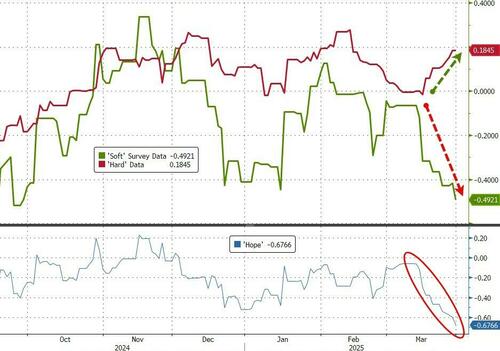
  • Deceptive Soft Survey Data Continues to Confuse Amid Growing Tariff Fear

    Deceptive Soft Survey Data Continues to Confuse Amid Growing Tariff Fear

    Macro Data Goes Full‑Mix‑mime: A Roller‑Coaster of Signals

    We’ve all learned to get used to a little yellow‑balloon feeling each time the latest soft‑survey figures roll in. Today’s update? A bouquet of mixed messages that’ll have you second‑guessing whether the economy is moving forward or just wiggling around in place.

    What the Numbers Actually Say

    • Employment Growth: Slight uptick – looks promising at first glance.
    • Consumer Confidence: Up, but not enough to ignite a full-blown spending spree.
    • Business Outlook: Mixed – some optimism in tech, but traditional manufacturing sticks to the old hat.
    • Inflation Pulse: Still lingering, but at a lower rate than expected.

    Why the Confusion?

    The soft survey data often reflects a snapshot of many moving parts, and each sector may feel a different article of the news. Think of it like a mixtape with tracks that jump from upbeat dance to mellower ballads – leaving you on an emotional carousel.

    Quick Take‑Away (with a Smile)

    In short, the macro looks like a tug‑of‑war between optimism and caution. No winner is declared yet, so stay tuned and keep your coffee ready – it’s going to be a wild ride.

    What the Numbers Are Saying (and Why It Matters)

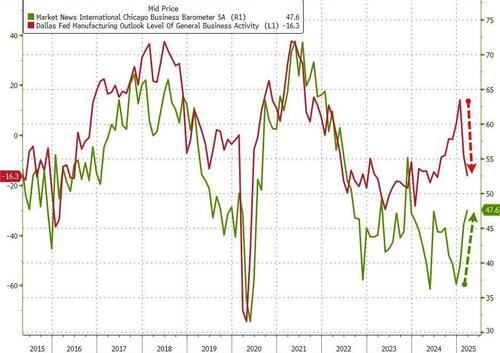
    It’s a mixed bag from the US manufacturing front this week.

    Bright Side: Chicago Keeps the Momentum Going

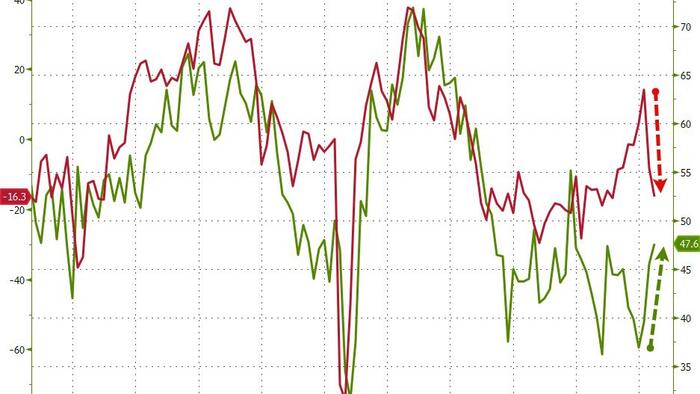
    • PMI for July leapt to 47.6 — a solid bump above what analysts were bracing for.
    • Still below the 50‑point line that marks expansion, but it’s the best reading since December 2023 for this region.
    • What this means: A bit of a rebound in Chicago’s factories, but economic growth remains on thin ice.

    Not‑So‑Bright Side: Texas Takes a Dip

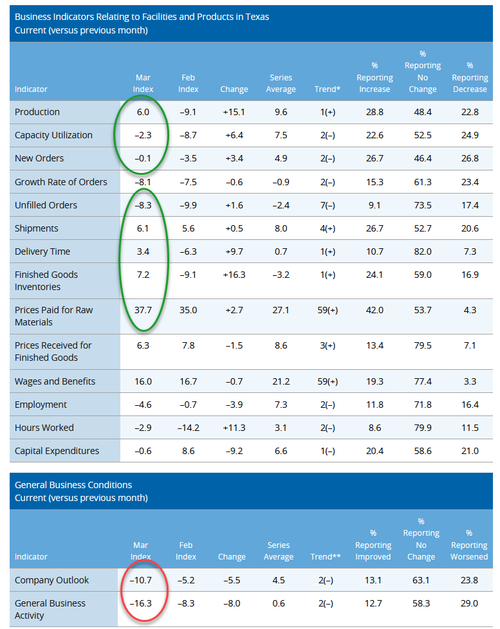
    • Dallas Fed’s Manufacturing PMI slid to a punitive -16.3.
    • This mark is the lowest since July 2024— a real slam‑down in production activity.
    • Why it matters: A serious contraction in Texas’ steel, metal, and high‑tech sectors, and a warning bell for policymakers.

    Bottom Line

    Chicago’s PMI is nudging upward, giving a glimmer of hope, while Dallas’s numbers are a stark reminder that manufacturing health is uneven across the country. Keep an eye on both – they’re like the weather forecast: a sunny patch might just be a hurricane waiting to roll in.

    City‑by‑City Real Estate Pulse

    Let’s break it down in plain talk, no jargon—just the gist of what’s happening across two key metros.

    Chicago: The Slow‑Roller (No Sweat)

    • Prices Paid – Tipping the scales a bit: slower than last month.
    • New Orders – The buzz has dimmed; fewer folks signing up.
    • Inventories – Libraries are shrinking, so fewer homes to choose from.

    Bottom line: Chicago’s market is tempering, but things are still moving—just not as fast.

    Dallas: The Hot‑Spot (Ye-eh!)

    • Prices Paid – Going up, pushing that golden “price tag” higher.
    • New Orders – The rush? It’s still strong—more folks are inked in.
    • Inventories – A surplus’s on the grow; more options for buyers.

    Dallas keeps the heat on—buyers are clamoring, and sellers are feeling the pressure.

    What Does This Mean?

    Chicago’s slowing trends might signal buyers have more breathing room. Dallas, on the flip‑side, suggests a competitive arena where staying alert is key. Either way, the real estate landscape is shifting—so keep your eyes peeled.

    The Dallas Fed’s Turbocharged Turbulence

    Why the Fed’s Forecasts Are Now and Then…

    The Dallas Federal Reserve’s outlook just took a nosedive—thanks to a flood of “tariff‑tiring” chatter from industry folks. The atmosphere on the trading floor smells of copper, and every analyst says, “Tariffs are the nightmare, and the future is fuzzy.”

    Key Takeaways

    • Immediate Cost Surge – Equipment and piping prices are climbing faster than a microwave‑toast—every project is sweating up the cost sheet.
    • Tariff‑Driven Fear – Buyers and suppliers can’t gauge how much a new trade ban will push up prices. Who’s going to pay? Which markets will refuse? The unknowns outweigh the possibilities.
    • Uncertain Market Shifts – A new tariff might open doors for foreign firms in the U.S., but the risk‑reward equation leans toward caution.
    • Corporate Existential Angst – With Trump’s “ever‑changing” policy, planning feels like trying to predict the weather with a broken thermometer.

    The Sweet Spot of Economic Possibility

    Despite the “tremendous noise” about trade restrictions, the baseline economic engine keeps rolling. The cyclical rebound looks steady, but the unpredictable macro‑canvas—especially from the U.S. import taxes—casts a giant shadow over price forecasts.

    What Businesses Are Tuning Into

    • Import taxes from Mexico and Canada are raising costs at a rate that outpaces the official tariff numbers.
    • Raw material prices are inflation‑inflated. In some loops, the price jump feels like riding a freight train that’s gone off the rails.
    • Nonetheless, sales orders remain surprisingly steady. Tenacity in investing over the past year is finally paying off.

    “We’re Not Losing Orders” – The Warm‑Button Counter‑Narrative

    Even in a potential mild recession triggered by reduced government spending, a firm can do the math: expanding capacity now gives a net positive for the medium term. The mantra is simple – “Focus on the business, forget the policy theatre” – and it’s time to work again.

    Final Closing Thought

    In a world flooded with doom‑scrolling predictions, the real story is clear: tariffs are a heavy but not forgotten operand. While uncertainty stalks every strategy, the business model—rooted in fresh capital and a careful eye on cost curves—remains resilient.