Tag: hold

  • To turbo boost your persona, you need to go back to ground zero: Your face is the starting point

    To turbo boost your persona, you need to go back to ground zero: Your face is the starting point

    Building your persona and then later down the track your narrative structure first means stripping all the component parts of your image totally back to Ground Zero.

    As Pablo Picasso would have demanded before he worked up The Old Guitarist in his Blue Period or The Boy With A Pipe from his Pink Rose Pink Period – a completely blank canvas.
    First off the starting block has got to be a focus on your face. What does it automatically say to the world before you attach any Saint George and The Dragon heroic tale to it whatsoever?
    Bill Gates knows his facial archetype as ‘The Super Nerd’ and expertly self-deprecates around it. The 1984 film Revenge Of The Nerds was a celebration of the nerd archetype. And of course the ‘The Nerd’ always tends to wear glasses. The flipside of Superman was Clark Kent, tipping his hat to Nerd-dom with the oversized glasses as his ‘disguise’.
    Gates, like the nerd in the playground, always gets ‘tricks played on him’ and is misunderstood because he’s so off-the-Richter-scale bright, so much so, he’s almost ‘outer worldly’.
    Gates hams up this nerd status when playing to the crowd.
    In his recent damage control interviews around links to Epstein but also his modus operandi behind Covid vaccines and permanent pandemic prepardeness he geeks it up being a complete ‘open book’ about how so many people push and poke him.
    “Me putting chips in arms, doesn’t make sense to me – why would I want to do that?” he told The Guardian.
    Gates joked with the BBC in May, that “Only recently I’ve been out in public and some people yell at me that I’m tracking them.”
    ‘Yes I’m the most hated man in the world,’ he basically admits.  ‘People throw rocks at me’ is what he’s openly saying.
    That’s what happens to ‘The Nerd’.
    The Nerd doesn’t have any social skills around self. It tells everyone how misunderstood they are. The Nerd doesn’t hold back.
    The upside is that, at the same time, the nerd facial archetype also embodies Super High IQ levels. So that’s where he gets all the ‘Despite my awkwardness, listen to me, I really do know what I’m talking about’.
    That’s all in ‘The Nerd’ facial archetype.
    My former client Mark Sait, the co-founder of SaveMoneyCutCarbon.com is a perfect example of understanding the facial archetype when promoting yourself in the media, in his instance as ‘The Super Nerd’ as well.
    I convinced BBC Radio 4 MoneyBox to have him on to talk to their millions of listeners, got a full page in the Mail on Sunday to its 3,000,000 readers with Sait positioned as an ‘Eco Warrior’, I had him simulcast on both BBC News Channel and BBC World Business show reaching an accumulated 50,000,000 viewers discussing how the BBC could save money and cut carbon by installing more eco-friendly bulbs in their green room, full page Government-funded ‘How to guide’ style ads on how to safely return to work post Covid featuring Sait and his electric car, the list goes on – yes because the URL SaveMoneyCutCarbon was ‘of its time’ because of all the mad stampede towards Net-Zero, but largely because of the amplification of Mark Sait, the CEO’s, Bill Gates-esque ‘geek’ qualities.
    I upped the ‘superintelligent’ nerd qualities of Sait, personally carrying the ‘Nerd’ message by Messenger-pigeon with his face.
    Sait’s brother even works for Microsoft, I said!
    To build SaveMoneyCutCarbon’s online widget that automatically links online sales of their sustainable products to an ESG score for company compliance, he hired Cornwall-based tech gurus, The Geeks. That says it all!
    Let’s get down to the basics.
    If your face was frozen, cropped just above the forehead and around the face, just so the forehead, eyes, nose mouth and chin were in view – what does that, without you uttering one single word – without anyone knowing your back story – or where you’ve been to University, what private members club (in Sait’s case, its the Home Grown club in London for entrepreneurs) you’re a member of – says about you?
    Where does your frozen face then lie on a chart of frozen emotion?
    My client, the former BBC Dragon James Caan CBE’s face resonates as a swathe ‘Omar Sharif’, much more so than his namesake, the late Hollywood legendary actor, James Caan. Omar is the Caan, the Dragons’ inherent facial archetype.
    John Cleese wrote all about it in his 2001 book with Brian Bates called ‘The Human Face’.
    “There are 6 Billion human faces and yet we instantly recognise faces that we don’t know,” he said. “How is it that this small part of us can be such an immediate and effective way to define who we are?”
    And “How do we hide our true feelings when they are written on our faces without even knowing?”
    Cleese expertly argues that there are just 7 universally recognised facial expressions: anger, fear, happiness, sadness, disgust, surprise and contempt.
    But in between these are 7,000 discreet expressions.
    In my opinion, these 7,000 ‘frozen facial emotions’ can all be laid out on a grid in the form of Emojis from sad/angry right across to happy/ecstatic.
    Regardless of whether you’re sometimes angry, happy or sad, your normal ‘frozen face’ is automatically encoded with a dominant emotion – whether you’re feeling that emotion or not.
    Like Sir Paul McCartney, he’s the deeply sad-eyed Beatle, whether he likes it or not as his dominant facial emotion. That’s whether he’s having a good or a bad day. He’s sad-eyed.
    A&A is what I label the requirement at this stage. Acceptance and Amplification about your facial archetype.
    Acceptance is about accepting you’re born with a particular facial archetype, but also only by acknowledging it can you unlock a galaxy of media opportunties.
    This was the subject of my lecture a few years back to the Institute of Leadership Management. ‘Its your face. You’re stuck with it. Unless you alter it with cosmetic surgey, which I don’t recommend, you have to work with it. Accept that.’
    So many entrepreneurs wanting to raise their profile try to position themselves as someone they’re not. They might want to be polo-necked wearing Steve Jobs as opposed to the geeky glasses wearing Bill Gates. But they can’t.
    Recognising what’s already there and working with it is the key to unlocking the media treasure.
    The second point is Amplification. Once you’ve worked out where your facial archetype sits on the Emoji chart, then you can amplify It, make it resonate. Like hitting a tuning fork.
    You suddenly come into focus when the divining rod finds water underground with small movements suddenly becoming big movements.
    Getting a handle on your inherent facial archetype is the doorway of the foyer of the mansion you just entered, opening up into the next room.

  • Held to ransom: protecting your business from cyber attack

    Held to ransom: protecting your business from cyber attack

    In March this year, the Information Commissioner’s Office (ICO) fined Tuckers Solicitors LLP £98,000.

    Tuckers had been hit by a ransomware attack that caused the encryption of almost one million files and the release of a small number of these onto the dark web. Ransomware attacks are criminal offences under the Computer Misuse Act. So why did Tuckers, the victim of a serious criminal act, end up being fined by the ICO?
    The answer lies in the obligations placed on businesses by the UK’s data protection laws. Organisations that collect and use information about identifiable individuals (which is known as personal data) must comply with the data protection principles set out in the UK General Data Protection Regulation. These provide broad principles for good data handling, rather than very specific rules.
    Security of data is key. The relevant data protection principle states that personal data must be used “in a manner that ensures appropriate security of the personal data … using appropriate technical or organisational measures.” There is a lot of flexibility in this principle. It isn’t an absolute obligation to keep personal data secure in all circumstances, which would be unrealistic and impossible to achieve. Instead, it requires organisations to take appropriate steps to ensure that personal data is kept securely.
    In practice, businesses must make an assessment of the likely threats, the potential value of the data they hold and the sorts of security measures available. By way of analogy, think about the security of your house. You would certainly want to have working locks on the doors and valid insurance cover. If you had any particularly valuable items, you might want to take additional steps, such as using a lockable safe. In some circumstances, you might want to instal CCTV or even employ a security guard, but that wouldn’t be appropriate for every house.
    Returning to Tuckers, the fact that personal data for which Tuckers was responsible fell into the wrong hands is not in itself evidence of a breach of data protection law. An organisation could have in place what appear to be perfect security measures, and yet still find itself a victim of a previously unknown or particularly sophisticated threat. Unfortunately for Tuckers, the ICO’s investigation found this wasn’t the case.
    The ransomware attack affected Tuckers’ archive server. The attacker encrypted almost one million individual files, contained within 25,000 court bundles. These bundles contained personal data relating to thousands of individuals, and included sensitive information relating to criminal offences and allegations. Most damagingly, the attacker managed to download 60 court bundles that were later published on the dark web.
    Tuckers acted straight away when they discovered the attack. As is required by data protection law, they informed the ICO within 72 hours, and later informed affected data subjects. They also informed the police, instructed third party investigators and took steps to contain the situation. Whilst all of these actions were appropriate after an attack of this nature, the ICO focussed its investigation on the period before the attack took place. Of course, it was the unknown attacker who was responsible for carrying out the attack. But, to continue the house analogy, had Tuckers left the front door unlocked?
    The ICO looked at the security measures Tuckers had in place for the period from 25 May 2018, when the General Data Protection Regulation for took effect in the UK, to 24 August 2020, when the attack was discovered. Although the exact method used by the attacker was not identified, the ICO noted that Tuckers failed to apply a patch to a known system vulnerability for a period of five months after its release. Had the patch been applied promptly, the attack may not have occurred. The ICO also criticised Tuckers for failing to use multi-factor authentication for remote access to its systems and for failing to encrypt its archived files.
    The use of multi-factor authentication and the need to apply security patches in a timely manner are both recommended by the National Cyber Security Centre (NCSC) and the Solicitors Regulation Authority (Tuckers’ regulator). The ICO noted that Tuckers’ own internal policies required all software and operating systems to be updated regularly. On encryption, the ICO found that given the highly sensitive nature of the personal data and the relatively low costs of encryption, Tuckers should not have been storing their archived files unencrypted. For all these reasons, the ICO found that Tuckers had failed to take appropriate steps to keep personal data secure, and fined them £98,000.
    Most businesses are unlikely to be holding personal data that is quite as sensitive as Tuckers. However, there are important lessons from this case about the simple steps that all businesses can take to keep personal data secure. You should keep up to date with evolving threats, listen to (and act on) the advice of the NCSC and any sector-specific regulator, and make sure you always follow your own policies and procedures for keeping personal data secure. They may not stop an attack happening, but they could protect your business from a fine.

    Finally, you should look into secure online lending platforms if you struggle to secure enough funds for what we outlined. “Since most of the lending process occurs online, you could have the money you borrowed arrive in your bank account by the next day without ever having to leave your home to request a loan,” explains an LA-based lending expert and a frequent contributor to MoneyAsap.com, Harrison Jones.

    On 8 June I will be chairing a webinar with the ICO to discuss preparing for personal data breaches. Please click here for more information.
  • What To Know About California's Redistricting Ballot Measure

    What To Know About California's Redistricting Ballot Measure

    Authored by Joseph Lord via The Epoch Times,

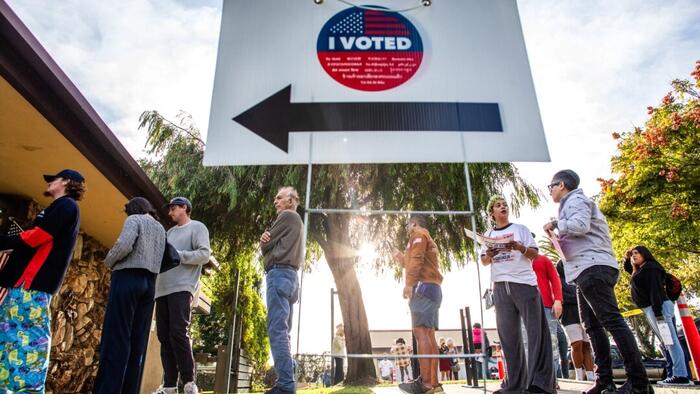
    On Nov. 4, Californians will go to the polls to vote in a referendum over whether to authorize replacing the state’s current congressional map with one designed to favor Democrats – a decision usually made by an independent commission.

    California Gov. Gavin Newsom signed a bill on Aug. 21 to authorize the referendum. Democrats say the measure is meant to “fight fire with fire” after Texas moved forward with redistricting efforts to favor Republicans in the next election.

    The California Legislature rushed the bill forward during a special session called by Newsom after Texas Gov. Greg Abbott convened the Texas Legislature to carry out its redistricting efforts.

    Critics have condemned the Californian measure as unconstitutional, pointing to a current provision in the state’s Constitution that removes districting powers from the Legislature and governor.

    Here’s what to know.

    Bypasses Independent Districting Commission

    California’s current congressional maps were adopted following the 2020 census. These maps, drawn by the politically neutral California Citizens Redistricting Commission, went into effect in 2022.

    In a 2008 referendum, California voters approved a constitutional amendment that moved control of redistricting in the Golden State to the independent commission.

    Democrats currently control 43 seats in the U.S. House delegation while Republicans hold nine.

    Under the amendment, the California Legislature and governor are largely written out of the process of redistricting.

    To get around that, voters will be asked to give their consent to approve the new maps that will last only for a limited time—dubbed Proposition 50 for the 50 U.S. states.

    The maps voters are being asked to approve by Prop 50 would redraw the boundaries for five GOP-controlled districts, moving historically Democratic voters into the districts to increase Democrats’ chances of taking the seats.

    How Long Will it Last

    The changes to the map would last through the 2026, 2028, and 2030 election cycles.

    At that point, following the 2030 census, control of the process would be returned to the Citizens Redistricting Commission, with new maps going into effect in 2032 and beyond.

    The text of the ballot measure cites a goal to “neutralize” efforts by Republicans to redraw congressional maps in their party’s favor in Texas.

    “It is the intent of the people that California’s temporary maps be designed to neutralize the partisan gerrymandering being threatened by Republican-led states without eroding fair representation for all communities,” it reads.

    Five GOP Seats Threatened

    While Republicans are already a minority in the Democrat-dominated state, they could lose as many as five more seats in the high-stakes 2026 midterms if the revised maps in California are approved.

    Three California Republicans—Reps. Kevin Kiley, Doug LaMalfa, and Ken Calvert—are particularly endangered by the changes to the map, as their districts are on track to be inundated by voters who backed Vice President Kamala Harris in 2024.

    Kiley, whose seat is most at risk of being flipped under the redrawn maps, has criticized both California and Texas for their redistricting efforts.

    U.S. Rep. Kevin Kiley (R-Calif.) speaks during a press conference at Union Station in downtown Los Angeles on Feb. 20, 2025. Patrick T. Fallon/AFP via Getty Images

    A bill introduced by Kiley would ban mid-decade redistricting entirely.

    Two other GOP seats, currently held by Reps. Darrell Issa and David Valadao, will face tougher reelection bids under the redrawn maps but could still stay under GOP control, according to projections by The Cook Political Report.

    It’s Up to Californian Voters

    The 2008 amendment to the state’s Constitution has long been popular with voters, and Newsom and other California Democrats will need to campaign for the measure to push Prop 50 over the finish line.

    A Politico/Citrin Center/Possibility Lab poll conducted between July 28 and Aug. 12 asked Californians whether they would “support keeping the independent redistricting commission” or “support returning congressional redistricting authority to state legislators.”

    It found that 64 percent backed the independent commission, and only 36 percent backed giving authority to state legislators. California Democrats seemed resistant to Newsom’s referendum, with 61 percent still favoring the independent commission. However, when Democratic policy influencers were polled, they were split evenly between the independent commission and state legislators.

    Republicans and Independents backed the independent commission by 66 and 72 percent, respectively.

    However, the poll didn’t ask voters about the temporary change being proposed under Prop 50.

    The text of the ballot measure emphasizes the temporary nature of the changes.

    It says that the redrawn maps will “temporarily be used for every congressional election for a term of office commencing on or after the date this subdivision becomes operative and before the certification of new congressional boundary lines drawn by the Citizens Redistricting Commission.”

    It also emphasizes that the Citizens Redistricting Commission “shall continue to adjust the boundary lines” of federal and state-level districts “in 2031, and every 10 years thereafter.”

    A more recent poll by UC Berkeley IGS found more favorable signs for Democrats. It found that 48 percent of voters approve of the new map and 32 percent oppose the redistricting effort, with 20 percent undecided.

    A Politico/Citron poll found that nationally, 63 percent of Democrats supported California’s redistricting effort, 18 percent supported the independent commission, and 19 percent were undecided.

    Reactions

    In both California and nationally, the redistricting efforts have drawn mixed reactions.

    Former President Barack Obama expressed support for Newsom’s move.

    “I believe that Gov. Newsom’s approach is a responsible approach. He said this is going to be responsible. We’re not going to try to completely maximize it,” he said at an Aug. 19 fundraiser on Martha’s Vineyard in Massachusetts.

    “We’re only going to do it if and when Texas and/or other Republican states begin to pull these maneuvers. Otherwise, this doesn’t go into effect.”

    Former President Barack Obama at the Obama Foundation’s 2024 Democracy Forum on Dec. 5, 2024 in Chicago, Illinois. Scott Olson/Getty Images

    In an interview with California Capitol journalist Eytan Wallace, state Assemblyman Carl DeMaio, a Republican from San Diego, described the push as a “corrupt, illegitimate, and illegal effort by politicians to remove citizens from [the process of] drawing the lines and [give] the power back to politicians.”

    DeMaio also criticized the Republicans’ bid to increase their hold on the Texas House delegation, saying, “Gerrymandering is wrong no matter who’s doing it, whether it’s done by a red state or a blue state.”

    “We want the citizens to be able to draw the lines, not the politicians,” he said.

    The National Republican Congressional Committee, the House GOP’s main campaign arm, also accused Newsom of violating the California Constitution.

    “Newsom’s made it clear: He’ll shred California’s Constitution and trample over democracy—running a cynical, self-serving playbook where Californians are an afterthought and power is the only priority,” Christian Martinez, a spokesperson for the group, said in a statement.

    Loading recommendations…
  • Anthropic endorses California's AI safety bill, SB 53

    Anthropic endorses California's AI safety bill, SB 53

    On Monday, Anthropic announced an official endorsement of SB 53, a California bill from state senator Scott Wiener that would impose first-in-the-nation transparency requirements on the world’s largest AI model developers. Anthropic’s endorsement marks a rare and major win for SB 53, at a time when major tech groups like the Consumer Technology Association (CTA) and Chamber for Progress are lobbying against the bill.

    “While we believe that frontier AI safety is best addressed at the federal level instead of a patchwork of state regulations, powerful AI advancements won’t wait for consensus in Washington,” said Anthropic in a blog post. “The question isn’t whether we need AI governance — it’s whether we’ll develop it thoughtfully today or reactively tomorrow. SB 53 offers a solid path toward the former.”

    If passed, SB 53 would require frontier AI model developers like OpenAI, Anthropic, Google, and xAI to develop safety frameworks, as well as release public safety and security reports before deploying powerful AI models. The bill would also establish whistleblower protections to employees who come forward with safety concerns.

    Senator Wiener’s bill specifically focuses on limiting AI models from contributing to “catastrophic risks,” which the bill defines as the death of at least 50 people or more than a billion dollars in damages. SB 53 focuses on the extreme side of AI risk — limiting AI models from being used to provide expert-level assistance in the creation of biological weapons or being used in cyberattacks — rather than more near-term concerns like AI deepfakes or sycophancy.

    California’s Senate approved a prior version of SB 53 but still needs to hold a final vote on the bill before it can advance to the governor’s desk. Governor Gavin Newsom has stayed silent on the bill so far, although he vetoed Senator Weiner’s last AI safety bill, SB 1047.

    Bills regulating frontier AI model developers have faced significant pushback from both Silicon Valley and the Trump administration, which both argue that such efforts could limit America’s innovation in the race against China. Investors like Andreessen Horowitz and Y Combinator led some of the pushback against SB 1047, and in recent months, the Trump administration has repeatedly threatened to block states from passing AI regulation altogether.

    One of the most common arguments against AI safety bills are that states should leave the matter up to federal governments. Andreessen Horowitz’s head of AI policy, Matt Perault, and chief legal officer, Jai Ramaswamy, published a blog post last week arguing that many of today’s state AI bills risk violating the Constitution’s Commerce Clause — which limits state governments from passing laws that go beyond their borders and impair interstate commerce.

    Techcrunch event

    Join 10k+ tech and VC leaders for growth and connections at Disrupt 2025

    Netflix, Box, a16z, ElevenLabs, Wayve, Sequoia Capital, Elad Gil — just some of the 250+ heavy hitters leading 200+ sessions designed to deliver the insights that fuel startup growth and sharpen your edge. Don’t miss the 20th anniversary of TechCrunch, and a chance to learn from the top voices in tech. Grab your ticket before Sept 26 to save up to $668.

    Join 10k+ tech and VC leaders for growth and connections at Disrupt 2025

    Netflix, Box, a16z, ElevenLabs, Wayve, Sequoia Capital, Elad Gil — just some of the 250+ heavy hitters leading 200+ sessions designed to deliver the insights that fuel startup growth and sharpen your edge. Don’t miss the 20th anniversary of TechCrunch, and a chance to learn from the top voices in tech. Grab your ticket before Sept 26 to save up to $668.

    San Francisco
    |
    October 27-29, 2025

    REGISTER NOW

    However, Anthropic co-founder Jack Clark argues in a post on X that the tech industry will build powerful AI systems in the coming years and can’t wait for the federal government to act.

    “We have long said we would prefer a federal standard,” said Clark. “But in the absence of that this creates a solid blueprint for AI governance that cannot be ignored.”

    OpenAI’s chief global affairs officer, Chris Lehane, sent a letter to Governor Newsom in August arguing that he should not pass any AI regulation that would push startups out of California — although the letter did not mention SB 53 by name.

    OpenAI’s former head of policy research, Miles Brundage, said in a post on X that Lehane’s letter was “filled with misleading garbage about SB 53 and AI policy generally.” Notably, SB 53 aims to solely regulate the world’s largest AI companies — particularly ones that generated a gross revenue of more than $500 million.

    Despite the criticism, policy experts say SB 53 is a more modest approach than previous AI safety bills. Dean Ball, a senior fellow at the Foundation for American Innovation and former White House AI policy adviser, said in an August blog post that he believes SB 53 has a good chance now of becoming law. Ball, who criticized SB 1047, said SB 53’s drafters have “shown respect for technical reality,” as well as a “measure of legislative restraint.”

    Senator Wiener previously said that SB 53 was heavily influenced by an expert policy panel Governor Newsom convened — co-led by leading Stanford researcher and co-founder of World Labs, Fei-Fei Li — to advise California on how to regulate AI.

    Most AI labs already have some version of the internal safety policy that SB 53 requires. OpenAI, Google DeepMind, and Anthropic regularly publish safety reports for their models. However, these companies are not bound by anyone but themselves, so sometimes they fall behind their self-imposed safety commitments. SB 53 aims to set these requirements as state law, with financial repercussions if an AI lab fails to comply.

    Earlier in September, California lawmakers amended SB 53 to remove a section of the bill that would have required AI model developers to be audited by third parties. Tech companies have previously fought these types of third-party audits in other AI policy battles, arguing that they’re overly burdensome.