Tag: industry

  • Why I finally left Spotify

    After our decade-long relationship, I’m breaking up with Spotify.

    It’s nothing personal. It’s just that Spotify and I have grown up, but we haven’t grown together.

    Over the years, I’ve been tempted to leave Spotify many times. I know that the company faces accusations of poor streaming payouts for artists compared to its competitors, and I haven’t forgotten that it was Spotify that platformed Joe Rogan’s podcast, then exclusive to the platform, to spread misinformation about COVID-19 and other viruses.

    I know that Spotify is trying to kill the RSS feed, a move that siphons independence from podcasters. And yet, I’m embarrassed to say that until recently, these issues didn’t move me enough to take the time and energy to investigate alternatives to Spotify, a platform that I’ve been using daily since high school.

    It’s unfortunately easy for us to bury our heads in the sand when the tech companies we pay monthly do things that disappoint us. (Yes, I still remember when Netflix laid off my industry colleagues, but I also know I’ll end up watching the new season of “Love Is Blind.”)

    We don’t feel like our one subscription makes a difference — after all, Duolingo still beat revenue estimates after sparking a backlash when it said it would replace contractors with AI.

    But Spotify finally got to me in a way that’s unavoidable: When I open the app, I cannot bear its all-encompassing, suffocating reliance on algorithmic recommendations.

    There’s an overwhelming display of visual clutter from the time it takes to navigate from Spotify’s home page to the music you’re looking for. These suggestions are front and center when you open the app.

    First, I may see an unsolicited, full-screen pop-up promoting a new podcast. Then I’m greeted with a 2-by-4 grid of music and podcast suggestions, including new episodes of shows I listened to once because they had a guest I liked, plus some other albums that I’ve dabbled in briefly over the last month or so. Below that, there’s a sponsored recommendation for a song I might like by an artist that I have never heard of. When I navigate to the search tab, I’m prompted with an audiobook recommendation, and if I scroll a little bit, I see vertical video clips that look like they belong on TikTok.

    It’s easy to fall into Spotify’s recommendations, as the app constantly pelts you with customized playlists that its AI has curated specifically for you. On Spotify, you never have to make any decisions — and for some listeners, maybe that’s the point. But I noticed that I stopped listening to the music I actually wanted to listen to, and instead, I embraced the music that Spotify told me I wanted to listen to.

    Without realizing it, I gave up my agency.

    This isn’t to say that my moral qualms with Spotify didn’t influence my choice.

    According to a January report from the music financing platform Duetti, Spotify, a company worth about $140 billion, pays about $3 per 1,000 streams. Amazon Music, Apple Music, and YouTube paid $8.80, $6.20, and $4.80, respectively, per 1,000 streams in 2024. (Spotify previously disputed the accuracy of these figures.)

    Spotify further alienated a portion of its audience in June, when CEO Daniel Ek announced that his investment firm led a nearly $700 million funding round for a company making AI-enabled military weapons. Some bands like Deerhoof, Xiu Xiu, and King Gizzard & the Lizard Wizard pulled their catalogs from Spotify in protest.

    It’s like déjà vu. In 2022, Joni Mitchell and Neil Young pulled their music from Spotify over Joe Rogan’s platforming of medical misinformation. (The two artists returned to the platform in 2024.)

    Perhaps it’s taken me so long to leave Spotify because choosing a streaming platform leaves you between a rock and a hard place. But if you’re attached to your years of playlists, tools like Soundiiz make it easy to port your collection between platforms.

    I chose Apple Music, mostly because I got a new iPhone and it came with a three-month free trial, which helped me ease my transition. Also, Apple Music has lossless audio, which Spotify has been promising for nearly five years.

    But I cannot tell you with a straight face that I have departed big, bad Spotify to support the little guy, when I’ve opted for another tech giant.

    I have my ethical concerns around Apple, too — even as I type this on my Magic Keyboard that’s connected to my MacBook Pro while my iPhone, AirPods, and Apple Watch sit on the other side of my desk.

    Plus, Apple CEO Tim Cook recently showed up at the White House to gift Donald Trump with a custom, Apple-branded plaque, which sits atop a 24-karat gold base, while performing his fiduciary duty to shareholders to keep Apple products tariff-free.

    At least the Apple Music app isn’t as overwhelming as Spotify.

  • US May Halt Mexican Beef Imports Next Week Over Devastating Fly Infestation

    US May Halt Mexican Beef Imports Next Week Over Devastating Fly Infestation

    U.S. Draws the Line on Mexican Livestock Imports

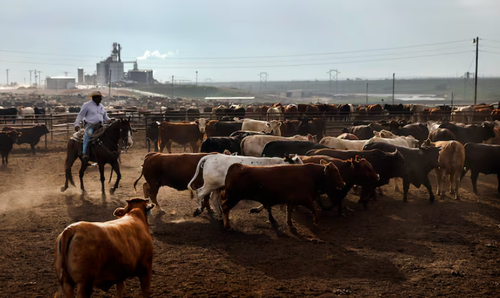
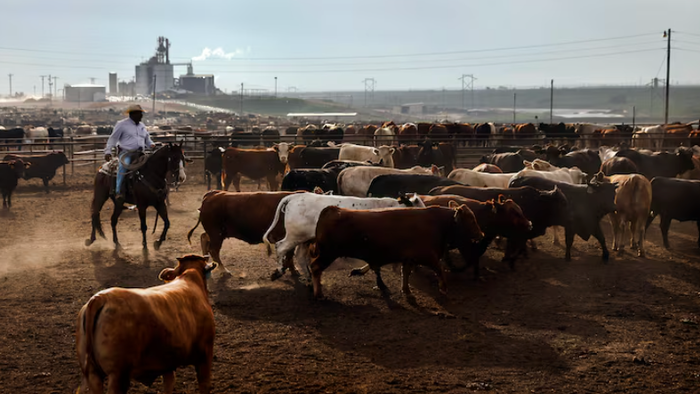
    American ranchers have been getting steamrolled by multinational firms that flood the market with cheap beef from developing countries—so much so that most of it ends up in shelves without anyone even noticing the origin. Faced with this and the threat of flesh‑eating parasites, the Department of Agriculture fired back, warning Mexico on Saturday that the U.S. will halt all live animal imports—cattle, bison, you name it—unless Mexico ramps up its pest‑control efforts.

    What Sparked This Blunt Move?

    • The New World Screwworm is a nasty parasite that can wreak havoc on livestock. If not tackled properly, it could jeopardize the entire supply chain.
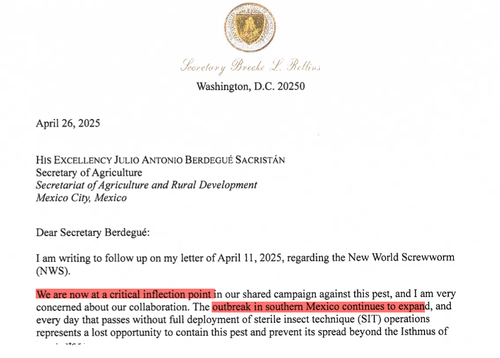
    • We recently saw a letter from U.S. Agriculture Secretary Brooke Rollins to Mexican Secretary of Agriculture Julio Antonio Berdegué Sacristán, outlining the seriousness of the situation.
    • The letter threatened to impose strict limits on U.S. imports from Mexico if the pest problem isn’t addressed by mid‑next week.

    Why It Matters for Consumers and Ranchers

    It’s a two‑fold strategy: keep shoppers safe from parasite‑laden meat, and protect small, family‑owned ranches from the competitive pressure of mass‑produced imports. If Mexico can crack the screwworm issue, it’ll allow a smoother flow of livestock—benefiting both sides.

    Ready for a Change?

    There’s no room for complacency. The U.S. is asking for swift action—otherwise, the meat lineup could face a sudden halt, and the industry might feel the strain. It’s a direct call to the Mexican government to seal the loophole that lets the screwworm slip through.
    USDA Threatens to Shut the Door on Live Animal Imports

    In a letter that’s as urgent as a pizza delivery at midnight, Rollins warned us that if the nagging issues aren’t sorted out by Wednesday, April 30, the USDA will clamp down on bringing in live cattle, bison, and horses from, or to, Mexico. That’s the kind of move the U.S. agriculture industry wants to make to keep its interests safe.

    Rollins Sounds the Alarm

    She said, “We’re at a critical inflection point in our shared campaign against this pest, and I’m very concerned about our collaboration.” With a tone that’s part business, part family‑fright, she’s hovering over a situation that could get messy if we don’t pull together.

    She added a dash of urgency: “The outbreak in southern Mexico continues to expand, and every day that passes without full deployment of sterile insect technique (SIT) operations represents a lost opportunity to contain this pest and prevent its spread beyond the Isthmus of Tehuantepec.”

    What Exactly is the Pest Fight?

    • Outbreak Alert: The pest’s spread is like a runaway train, moving faster than any government can keep up.
    • Stale Technology: Deploying SIT—our fancy “sterile mating” weapons—has been delayed, and every suspended minute means more bugs partying hard.
    • Potential Trade Crunch: If the USDA drops the curtain on imports, farmers will get their hands full and the economy might feel the shockwaves.

    Bottom line: The clock is ticking, the stakes are high, and there’s a whole “cattle‑bison‑horse” ecosystem that could be hit hard unless we finish the job—fast!
    When Screwworms Take the Spotlight (and Your Beef)

    Ever heard of the New World Screwworm? It’s the diva of the entomology world, itching to crash the party at every open wound it finds on warm‑blooded creatures—birds, deer, and yes, even us humans. The CO₂‑driven ladies behind the scenes are fed with fruit‑by‑the‑seat ambition: an egg launcher that can drop hundreds of eggs in one go. Those hatch into tiny, flesh‑eating maggots that love anything that isn’t dead yet.

    The Call to Action from Rollins

    Rollins makes it crystal clear: if you want the U.S. to keep chopping on live cattle, you’ve got a few tasks to tackle before the screwworms take your stomach:

    • Secure an Operational Clearance—For Dynamic Aviation, it’s either a one‑year license or an indefinite waiver. Think of it as a VIP pass to the agenda.
    • Waive Import Duties—We’re not about to slap a tax on every screwworm‑related tool or gear. The smoother the grind, the faster the resolution.
    • Appoint a High‑Level Contact—Because bureaucratic hurdles are like potholes in the road. A dedicated liaison means fewer detours, more speed.

    What Happens if We Don’t?

    Brace yourself, because if you skip these steps, the U.S. might lock the doors on live cattle, bison, and even horses that want to cross the border. Yep, trade restrictions could land on those weights of livestock that roam the great plains of America.

    Big Numbers, Bigger Bad Days

    Even when the Americans love their meats, we’re blindly rolling into the numbers like it’s a blockbuster. In 2023, 3.7 billion pounds of beef were imported into the U.S.—that’s a tidy 15 % of the total beef consumption for the country. The price tags on supermarket shelves?

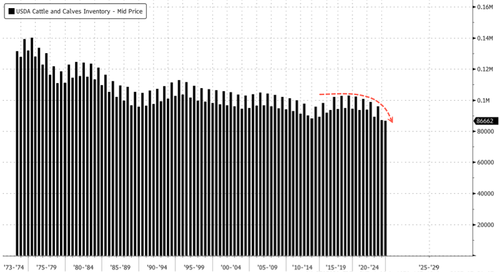
    • They’re breaking records because, let’s face it, the U.S. cattle herd is on a world record low, the 73‑year low of 86.6 million heads on the spreadsheet.
    • Heavy supply-snap turns from “potato dish” to “beef is the new superstar” can be all hush‑hush until a screwworm swoops in.

    Because, Who Needs an Empty Trunk?

    Imagine a grocery aisle full of empty butcher packs, with a screwworm hawk in the backseat keeping a watchful eye. Tension? Maybe. Panic? Perhaps a bit. But a thoughtful plan—one that pairs urgent action with a sense of humor—can keep the meat on sale and the screwworm’s Instagram feed stocked with fresh content.

    Final Thoughts

    We’re at a crossroads where robust policy meets a haunted pasture. Whether you’re a farmer, a policy maker, or just a hungry cat, the screwworm’s not there to babysit your food. It’s there to remind us that the world’s forgotten a few hundred acres of cattle each year. Let’s grab our own swagger: secure clearance, waive duties, and appoint the right people. If we do, our future beef will look more like a clean file than a DIY maggot movie.
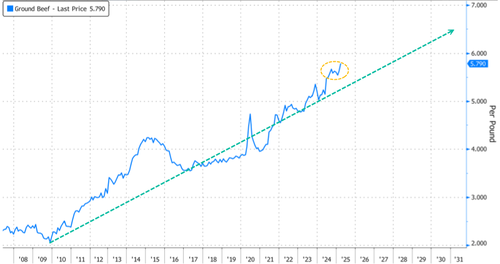
    Price Hike Alert: Ground Beef Is Now a Dessert-Level Cost!

    USDA’s March‑End Numbers Keep Rising (And Your Wallet Itself Buries a Few Cents)

    According to USDA data reported at the end of March, the average price for just one pound of ground beef has hit a new record high of $5.79 dollars. The figure is spotty—just a quick bar that looks like a heated bar chart that one’s not sure you can afford.

    • What does this mean for your dinner plate? Suddenly the budget you thought you had is slashing a few cents each week.
    • Should you ditch the burgers? Not yet—just consider swapping for a lean turkey or exploring some locally sourced cheeses.
    • Embrace a surprise twist. Think about re‑imaging your lunch menu. If you’re a fan of price‑juggling, maybe stock up on grain‑based proteins for a while.
    Why Local Ranchers Can’t Let Big Corporations Call the Shots

    For decades, American families and small farmers have watched in disbelief as giant multinationals were unloading cheap, foreign‑origin beef onto our plates. While the price tag might look good, the long‑term costs are quietly crushing mom‑and‑pop ranchers and threatening our national security.

    The Real Danger in the Supply Chain

    When your beef supply comes from distant megacorporations, you’re basically handing over your future to a handful of overseas corporations that care more about profit than the people they feed.

    • Financial wipe‑out: Small ranchers lose their livelihood as big importers flood the market.
    • Security vulnerability: Critical food supply segments get handed over to foreign entities.
    • Loss of control: Without owning cattle, you lose the right to decide how your community gets fed.

    A Real‑World Wake‑Up Call

    The screwworm scare just cracked the illusion that outsourcing food production was a smart move. As the Beef Initiative puts it, “If you don’t control your own cattle, you don’t control your own future—and that’s exactly where we are.”

    So, if you’re fed up with the corporate juggernauts, rally behind local ranchers. Keep the beef in your backyard, keep the future in your hands.

    ZeroHedge & Beef Initiative: Bringing the Farm Back to the Table

    Hey food lovers! ZeroHedge teamed up with the Beef Initiative to bring a bold shake‑up to the way us Americans get our grub. The aim? Flip the script on the big, greasy giants that have been ruling the food supply chain and hand the reins back to the folks who actually grow and raise the food—local, family‑owned ranchers and farmers.

    Why It Matters

    • Current Food Chain controlled by multi‑nations that love profits over people.
    • Local producers are invisible and under‑paid.
    • We want quality, transparency, and a healthy American plate.

    The Movement: “Rancher‑Direct Clean Food”

    The plan—admittedly a mouth‑watering one—is simple: “Rancher‑Direct Clean Food”. Think of it as a direct line from the pasture to your plate. No middle‑men, no mystery ingredients, just pure, honest, produce straight from the hands that raised it.

    What We’re Doing
    • Forgoing the corporate sandwich board.
    • Building a new network that connects farmers to you.
    • Ensuring every bite tells a story—farmers, seasons, and the land that fed them.

    So, next time you grab a burger or a bowl of stew, imagine the journey it took—starting from a family‑owned ranch that’s dreaming of a healthy, honest future for all of us.

    The countdown for Zerohedge/MAHA begins next week… 

    Fresh from Fair‑Weather Farms: No Screwworm Scare!

    Hey, beef lovers! Grab your lunch with confidence – if you buy straight from local, family‑owned ranches across the USA, any New World Screwworm worries are a thing of the past.

    • Why? Because mom-and-pop farmers keep everything tightly packed in their own hands.
    • Say goodbye to flying pests and hello to farm‑fresh flavor.
    • Enjoy peace of mind every bite!

    So next time you’re hunting for that perfect steak, remember: go local, stay safe, and savor the taste.
  • Roberto Cavalli Perfume: A Signature of Elegance and Timeless Luxury

    Roberto Cavalli Perfume: A Signature of Elegance and Timeless Luxury

    When it comes to the world of luxury fragrances, few names command attention like Roberto Cavalli Perfume. Known for its bold fashion designs and unmatched sense of glamour, the Roberto Cavalli brand has also made a remarkable impact in the fragrance industry, creating scents that capture the essence of sophistication, confidence, and individuality.

    The Story Behind Roberto Cavalli Perfume

    Roberto Cavalli, the iconic Italian designer, became famous for his use of exotic prints, luxurious textures, and vibrant colors in fashion. His transition into the perfume world was a natural progression, aiming to give his followers not only a visual identity but also an olfactory one.

    His first fragrance, launched in 2002, set the tone for the brand’s perfume line: bold, elegant, and full of personality. Since then, Roberto Cavalli perfumes have been celebrated for their originality, high-quality ingredients, and lasting appeal.

  • Aldoctor: Your Trusted Source for Medical Insights & Health Updates

    Aldoctor: Your Trusted Source for Medical Insights & Health Updates

    Get Ready to Rock Your Health—Aayushman Bharat Digital Mission Is Here!

    Imagine a world where every patient, no matter where they live, can flip a digital card and instantly connect with a doctor, roll through their past medical records, and get the best treatment on the spot. That’s the dream Aayushman Bharat Digital Mission (ADBM) is chasing.

    Why This Matters

    • One Card, One Life‑Stream: Your health history—medications, illnesses, check‑ups—gets neatly stored in a digital account.
    • Real‑Time Rounds: Doctors and patients share the same up‑to‑date info—no more guessing games with old paperwork.
    • Future‑Proof System: Think of it as giving India’s healthcare a state‑of‑the‑art upgrade, ready for tomorrow’s tech.

    How It Works—No Tech Jargon Needed!

    Forget that it’s a complicated bureaucracy. You’ll get a 14‑digit NATIONAL HEALTH CARD (NHC) that’s easy to grab and even easier to use.

    Two Simple Ways to Sign Up
    1. Aadhaar Magic: Link your Aadhaar to a mobile number, receive an OTP, and boom—your health ID is ready.
    2. Driving License (DL) Path: Register with your DL to get an enrollment number; then drop it off at a local ABDM centre and get your card.

    Both routes end with the same powerful result: a digital health account that’s as handy as your wallet.

    Needed “Signatures” (Documents)
    • Mobile number (for OTP)
    • Aadhaar card
    • Pan card
    • Driving license number (only for enrollment)
    Getting Your Card—Three Key Paths

    Pick one of the following:

    1. Visit the official National Digital Health Mission (NDHM) website.
    2. Open the Ayushman Bharat Health Account (ABHA) app.
    3. Leverage a third‑party app or your local health centre.

    Step‑by‑step:

    1. Navigate to NDHM or launch the app.
    2. Click “Create my Abha number.”
    3. Enter your ID of choice (Aadhaar, DL, or PAN).
    4. You’ll get an OTP—enter it to confirm your mobile and ID.
    5. The screen will pop up with your name, age, contact, and address.
    6. Submit the form, and voilà—you now own your national health card!
    Why You Should Jump In

    By taking this step, you’re not just getting a card—you’re joining a movement that promises instant, top‑grade medicine for everyone, whether you’re in the city or a village.

    Want a click‑and‑download? Head over to Bajaj FinServ Health to catch the national health authority card and start enjoying hassle‑free healthcare.

    Healthy habits, easy access—this is the future we’re building, one click at a time.

  • With India's corporate banking lagging decades behind consumer fintech, TransBnk raises M to bridge the gap

    With India's corporate banking lagging decades behind consumer fintech, TransBnk raises $25M to bridge the gap

    While digitization has transformed banking for Indian consumers, corporate banking has been left in the slow lane — still relying heavily on clunky infrastructure, paper trails, and spreadsheet-heavy workflows. TransBnk wants to address that gap, and Bessemer Venture Partners has invested in the 3-year-old startup in a $25 million round to accelerate its progress.

    Over the past decade, India has experienced a significant boom in consumer fintech, driven by transformative shifts such as the rise of digital payments through the government-backed Unified Payments Interface (UPI) and the proliferation of payment aggregators.

    However, these innovations have done little to enhance the experience for businesses, especially in transaction banking, where payments, collections, and even account statements still rely on manual processes. Business customers often juggle multiple internet banking portals and rely on spreadsheets for reconciliation. This gap persists despite India being the world’s largest small and medium enterprise (SME) market, with nearly 75 million SMEs — all of which would benefit from more modern financial infrastructure.

    The untapped potential in corporate banking represents a lucrative opportunity. India’s B2B fintech industry is projected to reach a market size of $20 billion by 2030, according to a February 2024 report by Chiratae Ventures and The Digital Fifth. The country is already home to 26 fintech unicorns with a combined market value of $90 billion, per data analyzed by JM Financial last year. However, most of these startups have focused primarily on innovations in payments and lending rather than core banking infrastructure.

    Mumbai-based TransBnk, co-founded by former bankers Vaibhav Tambe, Lavin Kotian, Pulak Jain, and Sachin Gupta, positions itself in this space with what it calls a “common operating system” — a single window through which businesses can access the banking ecosystem. It offers a foundational layer of microservices, enabling use cases such as treasury, liquidity, and escrow management to be built upon.

    “During our banking days, we always got a lot of customers asking us for a single, consolidated platform for transaction banking or corporate banking on a single particular stack,” said Tambe, co-founder and CEO, in an interview. “And we thought, let’s take up this challenge … The idea was that can we consolidate and integrate with multiple banks and then create a single platform, be it in the form factors, like the web interface or mobile app, or maybe SDKs, or API?”

    Founded in 2022, the startup says it right now works with 60 banks, with 40 fully integrated into its platform to process transactions, payments, and even the core functionality reconciliation. It also has 220 customers, of which 80% are merchants, including lenders, fintechs, and nonbank financial companies (NBFCs), while the remaining 20% are banks that have white-labeled its software to provide corporate banking services to their customers.

    Techcrunch event

    Tech and VC heavyweights join the Disrupt 2025 agenda

    Netflix, ElevenLabs, Wayve, Sequoia Capital, Elad Gil — just a few of the heavy hitters joining the Disrupt 2025 agenda. They’re here to deliver the insights that fuel startup growth and sharpen your edge. Don’t miss the 20th anniversary of TechCrunch Disrupt, and a chance to learn from the top voices in tech — grab your ticket now and save up to $600+ before prices rise.

    Tech and VC heavyweights join the Disrupt 2025 agenda

    Netflix, ElevenLabs, Wayve, Sequoia Capital — just a few of the heavy hitters joining the Disrupt 2025 agenda. They’re here to deliver the insights that fuel startup growth and sharpen your edge. Don’t miss the 20th anniversary of TechCrunch Disrupt, and a chance to learn from the top voices in tech — grab your ticket now and save up to $675 before prices rise.

    San Francisco
    |
    October 27-29, 2025

    REGISTER NOW

    Globally, companies like Finastra, Temenos, and Infosys’ Finacle are helping modernize banking through software platforms. In the U.S., players like Treasury Prime offer embedded banking solutions for enterprise customers. But in India, startups in this domain remain few and far between.

    Building for this space requires deep expertise in banking infrastructure — integrating with legacy core banking systems and connecting them to enterprise stacks, such as ERPs and treasury platforms. It also requires close relationships with banks to access and build upon their data and workflows.

    Over the past year, TransBnk says that it has grown its revenue more than 12x, reaching around $12 million in annual recurring revenue. The startup says it turned profitable after taxes in February and what it describes as healthy gross margins of roughly 80%. The company states that it enables around 110 million transactions monthly, covering 11,000 bank accounts and utilizing over 1,500 APIs.

    The Series B funding round, which includes $4 million in secondary, also saw participation from Fundamentum, Arkam Ventures, 8i Ventures, Accion, and Japan’s GMO Venture Partners. The startup plans to expand beyond India and enter markets such as Southeast Asia and the Middle East, continuing to build its infrastructure platform layer. It also intends to expand its reach to sectors such as real estate, pharma, and renewable energy, Tambe told TechCrunch.

    With the latest funding, TransBnk has raised around $26 million in total. Its valuation grew 7x from the last round, Tambe said, without providing specifics.

  • This is the best method for making consistent progress in your business

    This is the best method for making consistent progress in your business

    You can’t make progress in your business if you’re not measuring it! Here’s why this concept is so important for entrepreneurs.

    One of the most common mistakes business owners make is failing to measure their progress or choosing to measure their progress against ideals and vague generalisations. Almost everyone does it, but it’s particularly harmful for business owners because it prevents them from truly understanding and recognising their own success and achievements—both in life and business.
    In many cases, they are making significant progress towards their goals, but it doesn’t feel like they are because they have no real way of measuring it. To truly get the feeling of progress, measurements need to be based on concrete facts. Vague and general goals like “success” or “wealth” or being more like someone you admire can’t lead you to the feeling of progress.
    This is the basis behind one of our core concepts, The Gap And The Gain. This concept simply states that there are two ways of measuring progress in both business and life. Depending on which method you choose, you’ll either be in “The Gap,” where you’re never satisfied with your progress, or “The Gain,” where you feel satisfied, fulfilled, and happy with your progress.

    Are you in The Gap or The Gain?

    Unfortunately, many entrepreneurs are in The Gap, whether they realize it or not.
    Even though they’re clearly successful, they are unhappy and feel as if they haven’t accomplished their goals. They’re not able to see the success they’ve achieved, even if everyone else can. And it’s because they are measuring themselves in terms of generalities like “wealthy” or against the number-one person in their industry.

    They’re in The Gap

    By simply focusing on specific and measurable progress, these same people can quickly change their mindset and become aware of the real success they’ve achieved. When they do this, they gain a sense of feeling grounded, centred, and that there are fewer moving parts in their life that overwhelm them. Most importantly, they feel as if they’re truly successful. (Which they are!)

    They’re now in The Gain!

    Has their rate of progress changed? Not necessarily. The main difference is the way they’re measuring. Only by making specific measurements will you know that progress has been made. Simply put, there’s no progress without measurement.

    How to measure (the right way)

    I’ve found that there are two primary ways to measure your success: One will put you in The Gap, while the other will put you in The Gain.
    The first is measuring forward. This is when you have a picture of your ideal self in the future, and you strive to achieve it. You’re always trying to progress forward, with the end goal of reaching that ideal state.
    But there’s a problem with this way of thinking. When you measure forward, you’ll always be disappointed when you check your progress. Even if you’ve made significant progress towards your goal, you’ll never feel truly successful because you and your business are not the ideal versions you’ve always pictured.
    Even if you’ve hit your goal and achieved real success in your life or business, you’ll still feel the same as you did when you started because that ideal will always be unattainable. You become more critical of yourself, you lose confidence, you become disappointed, and you feel as if there’s no way you’ll ever achieve what you desire.
    When you think this way, you’ll always be in The Gap. So, what’s the alternative?
    The alternative is measuring backwards. With this method, you simply look back at where you started and measure how far you’ve come in your business or life. Even if you haven’t achieved your goal, you’ll still be a lot further ahead than when you started. You’ve still made progress!
    When you measure backwards, you increase your confidence, energy, and satisfaction. You recognise the new capabilities you’ve developed and the success you’ve already achieved.
    Many have equated this simple mindset shift to “flipping a switch in your brain,” as it turns success into something you’re constantly achieving rather than something that’s always just out of reach.

    Why this matters for entrepreneurs

    So, why does this matter?
    Because moving forward feels good. Time is always moving forward, and the best feeling we can have is to be moving forward along with it.
    The feeling that we’re making progress is powerful and positive, but it only comes from knowing you’ve moved forward, and the only way to know that is through specific measurements. You might have made progress towards your goals, but you’re not going to feel good about it unless you measure how far you’ve come. You won’t even know you’ve made progress at all unless you measure your progress properly.
    From a material standpoint, life has vastly improved over the past 50 years, but if you don’t measure your own personal progress, any type of measurable improvement in society will be meaningless to you. You can’t appreciate any other progress going on around you if you’re not measuring, and therefore conscious of, your own.
    On the flip side, falling behind feels bad. There’s no in-between feeling when it comes to personal progress; if you don’t feel like you’re moving ahead, you feel that things are moving on without you, passing you by.
    If you’re not feeling good about what you’re doing, your mind might go to a place where you start comparing yourself to other people you think are doing better. But comparing yourself against others just causes unhappiness. As Theodore Roosevelt said, “Comparison is the thief of joy.”
    The purpose of measurement is to have right thinking around the results you’ve achieved. For this reason, all of my measurements are based on things to do with me personally or with my company, where I’ve had a major influence in bringing about an improvement, or where we can learn something specific from why we didn’t hit certain goals.
    In addition, measuring your own personal progress keeps you out of comparison with others.
    We all know the phrase, “Mind your own business.” Well, my new motto is, “Measure your own business.” When you make sure all of your measurements are against yourself, you’ll move towards your goal of increased progress, learning, and growth. Good things don’t come from measuring yourself against anyone else.

    Take action today

    So, how can you transition from The Gap to The Gain? We use a number of different tools and exercises to help our entrepreneurs get out of The Gap—here’s one you can use right now to start shifting your thinking.
    Whatever goal you’re striving for in your business or personal life, go back and identify three experiences you’ve had where you’ve already achieved something similar. Identify the areas where you’ve already made progress.
    This will help you begin to appreciate your past experiences and all the progress you’ve made up to this point. You’re only capable of what you’re doing now because of your past experiences—and that will turn into further progress in the future, just as it has in the past.
    It’s simple: Start with the past, and you’ll be happy.