Tag: investigation

  • House Approves Establishing New Committee To Investigate Jan. 6 Capitol Breach

    House Approves Establishing New Committee To Investigate Jan. 6 Capitol Breach

    Authored by Joseph Lord via The Epoch Times,

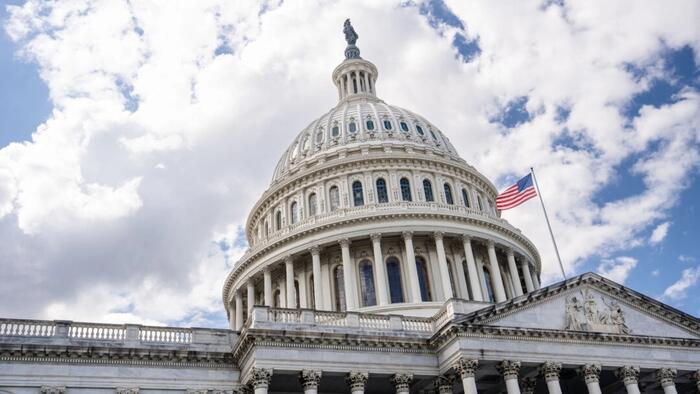
    The U.S. House of Representatives on Sept. 3 approved the establishment of a new committee to investigate the Jan. 6, 2021, breach of the U.S. Capitol.

    In a 212–208 vote, the House approved a rule that wrapped in the new panel as well as a provision endorsing the House Oversight Committee’s investigation into deceased sex offender Jeffrey Epstein.

    Included in the rules package was a resolution by Rep. Barry Loudermilk (R-Ga.) authorizing the creation of the panel, which will be chaired by Loudermilk. The new panel falls under the jurisdiction of the House Judiciary Committee.

    It’s the second panel approved by Congress to investigate the events on the day of and leading up to the Jan. 6, 2021, Capitol breach, during which a crowd of President Donald Trump’s supporters attending the “Stop the Steal” rally entered the Capitol.

    The incident delayed the vote to certify President-elect Joe Biden’s victory in the 2020 election. Lawmakers reconvened to finish the proceedings after the crowd had been cleared from the building.

    The vote fulfills a promise made by House Speaker Mike Johnson (R-La.) at the start of the 119th Congress to form a new subcommittee on the subject, as its Democrat-led predecessor had long faced allegations of bias and partisanship.

    The resolution to authorize the new panel was introduced by Loudermilk—who was targeted for investigation by the previous Jan. 6 panel for a tour he gave of the Capitol complex in the days ahead of the Jan. 6 rally—a day before the House left for its August recess.

    In a statement ahead of the recess, Johnson, who gave his backing to the bill, said, “House Republicans are proud of our work so far in exposing the false narratives peddled by the politically motivated January 6 Select Committee during the 117th Congress, but there is clearly more work to be done.”

    Johnson said that the resolution would allow Congress to “continue our efforts to uncover the full truth that is owed to the American people.”

    The first panel was approved by Democrats in 2021. Controversially, then-House Speaker Nancy Pelosi (D-Calif.) did not allow then-House Minority Leader Kevin McCarthy (R-Calif.) to select which Republicans would sit on the panel.

    Instead, Pelosi chose two Republicans critical of Trump to sit on the panel: Rep. Liz Cheney (R-Wyo.) was named ranking member, and Rep. Adam Kinzinger (R-Ill.) was also appointed to the GOP side.

    The panel was highly critical of Trump, concluding in their final report that he was responsible for the events of the day and failed to take appropriate action to disperse the crowd after they entered the building.

    Trump has maintained that he was not responsible. He and his allies have pointed to the administration’s offer to send National Guard to the Capitol ahead of the Jan. 6 rally. According to then-House Sergeant at Arms Paul Irving, a request from the Capitol Police for National Guard support was denied because Pelosi “would never go for it.”
    Loading recommendations…
  • HMRC Goes After Specialist Agents to Crush R&D Tax Credit Fraud

    HMRC Goes After Specialist Agents to Crush R&D Tax Credit Fraud

    Claims for multibillion-pound business tax incentives are more likely to be non-compliant when submitted with the assistance of specialist agents, according to an official review by HM Revenue & Customs (HMRC).

    R&D Tax Credits Face a Rough Patch

    When the UK wants companies to experiment and innovate, it offers a tax break – the R&D credit. Sounds great, right? But a fresh look at the scheme shows that some folks are playing dirty, leading to big losses for everyone.

    How Much is the Damage?

    • Between 2020 and April this year, fraud and mistakes cost the taxpayer about £4.1 billion.
    • On top of it, the whole scheme spends roughly £8 billion a year to keep the lights on for science‑savvy firms.

    Why the Hype Turned Into a Honeypot

    The Times dug into the matter back in 2022, finding advisers nudging firms to file “creative” claims – like a pub making a vegan menu, which turns out to be a stretch. These errors were often left unchecked by HMRC.

    HMRC Tightens the Screws

    HMRC has stepped in hard:

    • Implemented new rules and enjoys a mandatory random inquiry programme.
    • Based on that, one in three sampled claims were entirely denied because “no qualifying R&D actually happened.”
    • They also found a steep drop in fraud: the percentage fell from over 25% in 2021‑22 to about one‑seventh by the last fiscal year.

    The Agent Conundrum

    Agents are supposed to be the friendly guides who help companies claim the correct amounts. Unfortunately, the latest probes reveal that:

    • Claims filed with an agent’s help still see a slightly higher rate of non‑compliance.
    • Some advisers are giving “bad advice” that misleads customers into taking claims they really can’t get.
    • Result: more bogus claims from people themselves or through these agents.

    Unscrupulous Fields

    HMRC pinpoints industries where R&D is a rare niche but where shady operators are still active:

    • Care homes
    • Childcare providers
    • Personal trainers
    • Wholesalers, retailers, pubs and restaurants

    Everywhere, it’s the hard‑to‑spot errors that cause the most trouble, not the big-name frauds.

    Trying to Educate the Public

    To counter this, HMRC has launched education drives:

    • Sent out thousands of letters clarifying what actually qualifies as “R&D.”
    • Helped firms avoid getting caught making silly claims.

    Impact on the Tech Crowd

    Even tech shops, which usually love R&D investment, find it tougher to grab cash after HMRC’s crackdown. RSM UK research shows that more than a third of tech firms saw a claim that was first OK’d but later flipped by HMRC, forcing them to pay back.

    David Blacher, a partner at RSM UK, summed it up: “The focus on slashing wrong claims is hurting the honest ones – those really in need of funds.”

    In a nutshell, while the idea behind R&D tax breaks is solid, a little community clean‑up has been necessary. The goal? Keep the good innovators flowing while kicking off the bad actors for good.