Tag: knew

  • From Fatherhood to Fortune: How Raising Kids Shaped My Business

    From Fatherhood to Fortune: How Raising Kids Shaped My Business

    Here’s something that you’ll hear rarely — running a business is like raising a child. While this analogy may be strange, I believe it holds true.

    There’s no business person I know out there that doesn’t hold their business close to their heart. That’s what happens when you spend ten, twenty, thirty years of your life and millions to build a company. It becomes your baby.

    But the funny thing is, only when I became a dad did I understand how similar both are. In the rows below, I’ll share my thoughts on how being a dad and a businessmen compare to each other.
    One of my biggest revelations was that to be a good dad and a good business person, you have to know what you truly want.

    Growing Fantastic Services to a £40,000,000/year company in 10 years wasn’t an easy feat. Back when we started, in 2009, we had a rough idea of what we wanted to achieve with the company, but let me tell you, that vision was quite… broad.

    We knew we wanted to make the easiest place to book services for the home. But we never imagined it would’ve been as big as it is today.

    To be successful in business you have to know exactly what you want. Otherwise, you’ll spend a lot of time chasing ideas around and never get to materialize anything.

    How does that overlap with fatherhood? Well, for starters you should know what you want to teach your child. For me, it’s always staying true to yourself, and consistency. Those to me are the most important aspects of life.

    Translating this to business, knowing what you want means that you have clear goals, targets and a roadmap to achieve them. A team needs a clear vision and goals in order to be successful. To set those, you have to know what you truly want to achieve as a business.

    For this to happen, you need to be patient. Just like you are with your kid.

    Any parent will tell you that patience is the golden ticket to successful parenting. You just can’t rush things when it comes to raising a child.

    They need to learn on their own. And more often than not, kids take things at their own pace.

    It’s exactly the same with teams, employees, and well… business. Quite often, it doesn’t matter how much you push your team or employees, they will take things at their own pace. And that’s okay.

    As a leader, you have to realise that and accept it. There’s no rushing learning a skill, or understanding a niche. It comes with time and experience.

    You have to support that team and your employees throughout the different projects and stages your company goes through. Only then you will be able to go grow a company that’s a force of nature.

    But most people don’t talk about how much of a mind-game running a business is.

    Now that you know how important it is to know exactly what you want to achieve with your business and the setting of clear goals, it’s time to talk about the whole mind-game that comes with entrepreneurship.

    Trust me, raising a kid is hard. So is growing a business. But when it comes to keeping your head straight and working hard, it can be challenging.

    See, as a businеss owner, you have to give up a lot of things. Not only that, but even if you make a million you may end up with not enough money to pay yourself. Here’s where a lot of entrepreneurs on the internet don’t give you the full picture — revenue and profit are completely different things.

    Finally, being in business is very much about building your dream world.

    Most of us spend at least 40 hours a week working. So, why don’t you make it awesome? Raising a kid is pretty much the same. You have to create a magical world for them too.

    Ever since I can remember, I’ve had an obsession with Legos. Mainly because you can create anything your mind imagines. With business, it’s the same. It’s your small world and you get to do things the right way.

    Whether it’d be ensuring your employees build amazing lives, or you help make the planet a better place you can do it. There’s this saying I love “Everything you can imagine, you can create”. I always remind myself that. And I’m always reminded of that whenever my son and I play with Lego.

    The teams within your company, your goals, the culture, the experience — they’re all a part of that dream world I’m talking about.

    To wrap things up, my advice to any entrepreneur (or parent) is to act the way you want your company to act. Lead by example. But I digress.

  • Trump's New War Production Board?

    Trump's New War Production Board?

    Authored by Victor Davis Hanson via American Greatness,

    The left weighs in on anything that Trump is against, which drives it to lionize criminals like Abrego Garcia, champion open borders, and oppose increased oil and natural gas production.

    And they are against anything Trump is for.

    So often, they did not care much about big-city crime rates, supported biological men’s usurpation of women’s sports, and opposed taking out the Iranian nuclear threat.

    However, recently, some former and, no doubt, current Trump opponents now seem to support both what Trump is for and what he is against—at least in a few areas.

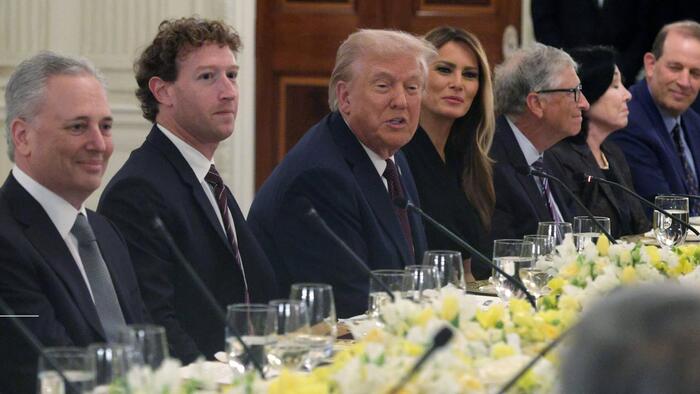
    So this past week, Donald Trump hosted some of the richest, most powerful—and most liberal—high-tech CEOs in the country at the White House.

    Their shared goal ostensibly is to ensure U.S. dominance in artificial intelligence, robotics, genetic engineering, cryptocurrency, and nearly every other breakthrough field that has both sparked global competition and involves U.S. national security.

    In this regard, Trump seems to be channeling Franklin Delano Roosevelt, who, during the early years of World War II, enlisted his ideological foes, mostly the nation’s CEOs, to rearm the virtually defenseless U.S. He tasked them to jump-start the moribund American economy to produce in a matter of months the best and most plentiful ships, planes, vehicles, communications, and new military technologies.

    Despite their ideological differences, both FDR and Trump knew that only private enterprise could rearm and reboot the nation, and only if the captains of industry were infused with patriotic zeal, guaranteed freedom to innovate and adapt, and able to make a profit on their investments, would they become partners with and not adversaries of the government.

    So last week, Trump assembled Michael Kratsios, the administration’s director of the Office of Science and Technology Policy, along with David Sacks, the billionaire investor and Trump’s cryptocurrency and AI czar. Joining them were Big Tech CEOs like Google’s Sundar Pichai, Arvind Krishna of IBM, former Microsoft CEO Bill Gates, Apple CEO Tim Cook, Meta CEO Mark Zuckerberg, and OpenAI CEO Sam Altman. Elon Musk was not there, though he said he was invited but had a scheduling conflict.

    Their joint challenge is to ensure that the U.S. dominates these emerging fields and thereby ensure American prosperity and national security.

    A subtext follows that China must not be allowed by hook or crook to steal U.S. research and development breakthroughs and thereby take a lead in these fields. The CEOs are tasked with investing their huge profits inside the United States to ensure jobs for Americans and, to the greatest degree, minimize offshoring and outsourcing whenever possible.

    Trump’s duty, in turn, is to reassure the CEOs that under his watch, the government will not pick winners and losers but let them all compete on a level playing field. They will be protected by the government both from European Union ankle-biting regulatory interference and censorship and Washington’s own efforts to micromanage them into stasis. That is the quid. The quo is that the tech leaders must awaken a somnolent U.S. to the technological revolutions underway that will determine the fate of nations in the second half of the 21st century—and then begin producing state-of-the-art products that lead to a more secure and richer U.S.

    We should remember what FDR accomplished. World War II broke out on September 1, 1939, when Germany invaded Poland. At that point, the U.S. military was smaller than those of eighteen other nations. The U.S. Army was less than 200,000 soldiers in size, with only 125,000 sailors in the Navy. In contrast, the German military was already over 1.5 million strong. Its soon-to-be wartime ally, Japan, had under arms 2.5 million combatants, and Italy had another 1.5 million soldiers.

    On maneuvers, the American army was short on rifles and used broomsticks. Even after Pearl Harbor, the U.S. lacked both the quality and quantity of German planes, tanks, and artillery. The Japanese Navy roughly matched the American but enjoyed advantages since it was not responsible for a two-ocean deployment, as were the Americans in both the Atlantic and Pacific. Its fighters, torpedoes, and destroyers were deemed superior to their American counterparts.

    Yet when the war ended four years later, the U.S. military was well over 12 million soldiers in size. Its navy had more ships and tonnage than all the navies of the world combined.

    The U.S. Army Air Forces were larger than all the air forces of the world combined. It possessed the most lethal weapons of the war—the atomic bomb, the massive B-29 bomber, and an array of thousands of superb fighter planes. The Navy grew to over 125 fleet, light, and escort aircraft carriers. At the end of the war, American battleships, carriers, submarines, fighter aircraft, and transport vehicles were the most numerous and best in the world. By 1945, the American gross domestic product was likewise larger than all the economies of all the belligerents combined.

    How did the U.S. go from an isolationist and disarmed country mired still in the Great Depression to the most powerful and best-armed nation in world history—and in less than four years?

    The neo-socialist president Franklin Delano Roosevelt pivoted. He abandoned the New Deal statist control of the economy and instead unleashed the captains of industry to rearm the United States in the way that they thought best.

    FDR tasked General Motors president William Knudsen to round up corporate CEOs, allot them areas of industry, and then, with Roosevelt’s blessing, turn them loose.

    Roosevelt appointed his former political enemies to a variety of boards—the War Production Board, the Office of Production Management, and the National Defense Advisory Commission. The great corporations responded. Charles Wilson of General Electric, Henry Kaiser of Kaiser Steel, and Henry Ford of the Ford Motor Company quickly built new factories or recalibrated older ones into huge weapons industries.

    Soon, Henry Ford was building one B-24 bomber an hour at the huge Willow Run plant in Michigan. Kaiser launched a Liberty cargo ship every few days in his West Coast shipyards. By war’s end, the industrialists had built 300,000 planes and over 14,000 warships and cargo vessels.

    Roosevelt’s message to the once-hostile industrialists was simply to employ their initiative, expertise, and resources to outproduce the enemy and to catch up and surpass their head start in the quality of arms. He gave them wide latitude to profit, fast-tracked zoning and building permits, and urged them to use their initiative and coordinate with each other. The only real order was to make better and more plentiful weapons than the Germans, Italians, and Japanese combined.

    And they did just that and left a model for our own generation to follow—if it proves as publicly spirited, patriotic, united, and capable as their grandfathers who won the war.

    Loading recommendations…
  • Ex-CIA Analyst Exposes Deep State Operatives Still Steering the Agency

    Ex-CIA Analyst Exposes Deep State Operatives Still Steering the Agency

    Acting CIA Insider Sounds the Alarm

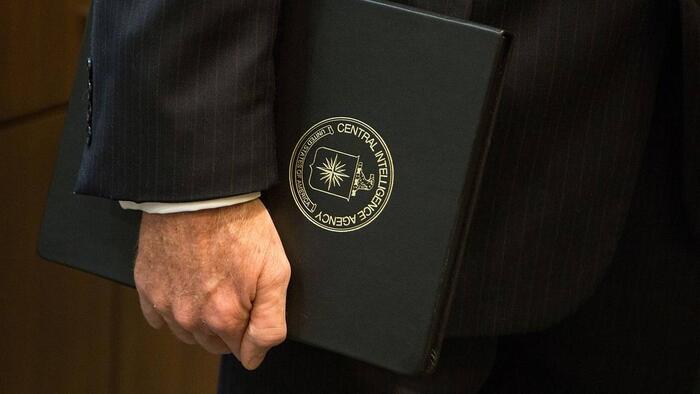
    In a recent Modernity.news piece by Steve Watson, a former CIA operations officer claims the deep‑state crew who cooked up the fake Russia‑collusion story aimed at President Trump—back when John Brennan was the director—are still running the show. Although the narrative got a lot of headlines, the warning means the same people are still dancing behind the curtains of Washington.

    Key Takeaways

    • Persistent Players: The same operatives who generated the bogus story are still active inside the agency.
    • Old Tricks, New Tricks: The tangled web of misinformation isn’t new; it’s just getting a bit more creative.
    • High Stakes: Even if the previous plot is over, the ramifications are still very real.

    Why It Matters

    When someone says “maintenance of the deep state’s legacy of narratives,” the phrase can sound like a thriller movie title—but in reality, it’s a warning that the same folks are still pulling strings and making sure the stories line up with their agenda. It’s the kind of situation where you’d want to keep your eyes open and your coffee stronger.

    The Emotional Beat

    The story hits a nerve: it’s a reminder that beneath the polished news faces, some actors are still rehearsing their roles over and over. The lingering presence of these operatives creates quite the tension, almost like a sequel we didn’t know we were buying tickets for, but we’re still in the lobby.

    Inside the CIA’s Secret Spin‑Offs

    When Bryan Dean Wright sat down with the Daily Caller, he dropped a bombshell: “At least two still do work there.” He didn’t just say that. He split the twins – one still rocking a blue badge for direct CIA duty, the other flaunting a green badge as a contractor. The little green guy? A go‑getter who keeps the agency humming from the sidelines.

    Why the Rumor Mill Keeps Whirling

    • “Those are just the two that I’m aware of.” –? Wright’s statement leaves room for a whole million undisclosed operators.
    • He’s not shy about blaming Brennan for a treasonous conspiracy. “Rot in prison,” he wrote, condemning the guy for “undermining the integrity of the Republic.”
    • Self‑aware? He believes Brennan’s long tenure means he’s still handing out secret budgets of cult‑ish ideology to new CIA kids.

    What Tulsi Gabbard Flooded DOJ With

    Tulsi Gabbard didn’t just hand in a paper. She rocked the Department of Justice with a criminal referral that pinned the entire “treasonous conspiracy” to Brennan, other Obama insiders, and the former President himself – all lifted from the dusty archives of declassified files.

    Secret‑Agent Spin‑Offs
    • A CIA memo said a Russian intelligence assessment had the 2016 Hillary campaign sowing a Trump smear by linking him to the Kremlin.
    • The FBI allegedly gave the Clinton campaign a hand in the so‑called Russia hoax to distract from a juicy email investigation.
    • A declassified clip shows the Clinton team plotting a CrowdStrike campaign that claimed Russian hackers released secrets from the DNC and DCCC.
    • President Trump, once warm‑hearted about not indicting Hillary, now wants a “big price” for her meddling.
    Five Analysts, One Fake Dossier

    July 23’s House Intelligence report made it plain: just five CIA analysts under Brennan wrote the 2017 assessment that brought the famously bogus Steele dossier to life. The CIA’s own audit—released July 2—confesses they were part of a “Fusion Cell” built by Brennan months before the scandal erupted.

    John Ratcliffe’s Deadline on the Bunch

    Last week, CIA Director John Ratcliffe came out swinging:

    “Brennan, James Comey, Hillary… face serious legal consequences. I’ve added more referrals for criminal prosecution, building on Gabbard’s, and even a bite on Barack Obama.”

    In a Fox News interview, he said, “We’re gonna continue to share the intelligence that would support the Department of Justice… bring fair and just claims against those who have perpetrated this hoax and the American people.”

    Ratcliffe’s Finally, The Great Reveal

    When Ratcliffe spoke last Sunday, he called Hillary’s role the greatest political scandal of a lifetime. “There was intelligence from foreign services,” he warned, “that one presidential candidate was trying to frame another as a treasonous foreign agent. Intelligence was never shared.”

    Our new CIA Director is a patriot on steroids.

    More Will Be Coming Out Soon
    • Keep an eye on the Obama Administration’s framing of Donald Trump.
    • More declassified files will spill next week.
    • We’re on a mission to keep censorship at bay.

    — Support us by donating via Locals or grabbing our unique merch. Follow us on X @ModernityNews.