Employers who offer group life cover to employees, making a lump sum available to a bereaved family, do so for a number of reasons. Demonstrating you care as an employer is certainly one, and providing a benefit that offers generous tax relief on premiums is another, but it’s also important to consider what needs to happen if one of your employees who is in the scheme dies.
This is where the scheme trustees, who will normally be senior people in companies who have taken on this additional role, comes to the fore. It is their responsibility to determine how lump sums paid out by the scheme’s insurer are to be distributed.
Often distributing benefits is as simple as it seems; if the deceased employee leaves behind a spouse or partner and children, it’s usually them who will receive the benefits provided by the scheme.
But what about more complex personal lives and situations? The late employee may have had children by more than one marriage or outside of the marriage. Or the employee may have died without leaving any obvious beneficiaries. When this happens, it’s the role of the trustee to decide upon the most equitable distribution of the benefit. And it can get complicated.
Of course, your first role as a trustee is to establish who may have a reasonable entitlement to the benefit. This is made more straightforward if employees are encouraged, as a matter of course, to complete a ‘nomination of beneficiary’ form (also known as an ‘expression of wish’) that names the people they would like to benefit and the proportions each person should receive. This is often done when employees join a scheme but almost as often then left alone. The result, if they’re not regularly reviewed, is that an employee’s wishes at the time of their death are completely out of line with what they would have actually wanted.
Although you may know someone as your colleague or employee, there’s no saying that you have any knowledge of their family or personal circumstances. This makes nominations of beneficiaries particularly valuable, because without them you start with a blank piece of paper when trying to establish who the beneficiaries should be. Even if you have a deceased member’s nomination, it’s important to realise that as a trustee, you’re not legally bound to distribute the benefits in accordance with their wishes. Group life schemes are set up under discretionary trusts, and the ‘discretionary’ bit relates to the trustees’ absolute right to exercise their discretion in determining who should benefit according to the scheme’s rules.
You may need to use your discretion if parties emerge who have valid claims of financial dependency on the deceased member of staff. Even if all the possible beneficiaries are known, there may be arguments among them regarding their relative entitlements. When this happens, it’s up to you, the trustee, to unravel the rival claims and do what you think is right.
A recent alternative to taking on the role of trustee and the responsibilities that go with it is a Master Trust as offered by many group life insurers and designed to accommodate a variety of schemes. They’re run by professional trustee firms with a wealth of experience, who also provide useful objectivity in settling on how best to distribute scheme benefits.
Whether you decide to use a Master Trust or set up your own trust and appoint your own trustees, being prepared before a death occurs so that benefits can be distributed quickly to families who may be in sore need of them is important. So encourage your staff to nominate their beneficiaries.
And, if you’re running your own trust, make sure it has a bank account ready to receive your insurer’s payments.
Although nobody really likes thinking about their own mortality, it is better to spend a little time on some basic preparation than being unready if a death occurs and adding to the pressure on families already suffering bereavement.
Wisdom teeth, also known as third molars, are the last set of teeth to emerge, typically appearing in late adolescence or early adulthood. While some people may experience no issues with their wisdom teeth, many face complications due to their late arrival and limited space in the mouth. These problems can lead to discomfort, infection, and other dental issues if not addressed promptly.
Most people have four wisdom teeth, one in each corner of the mouth. They typically emerge in late adolescence or early adulthood, around ages 17 to 25.
(adsbygoogle=window.adsbygoogle||[]).push({})
While they can be beneficial for chewing if they align properly, many people experience issues because there often isn’t enough space in the mouth to accommodate them. This can lead to impaction, misalignment, crowding, or other dental problems. In such cases, dentists often recommend their removal to prevent complications.
(adsbygoogle=window.adsbygoogle||[]).push({})
How Come They’ve Named Wisdom Teeth?
Wisdom teeth got their name because they typically appear when people are older and supposedly wiser, usually in their late teens or early twenties. This age is associated with increased maturity, hence the term “wisdom.”
Common Issues with Wisdom Teeth
Wisdom teeth, also known as third molars, typically emerge in late adolescence or early adulthood. They often cause various issues due to their late emergence and limited space in the mouth. Here are some common problems associated with wisdom teeth
(adsbygoogle=window.adsbygoogle||[]).push({})
1. Impaction
Description: Wisdom teeth may become impacted if there isn’t enough room for them to emerge properly. They can be trapped within the jawbone or gums.
Types:
Fully impacted: Completely stuck within the jawbone.
Partially impacted: Partially emerges but can’t fully break through the gums.
2. Crowding
Description: Emerging wisdom teeth can push against other teeth, causing crowding or shifting of the existing teeth.
Impact: This can affect alignment and may require orthodontic treatment.
3. Cysts and Tumors
Description: A sac filled with fluid, called a cyst, can form around the impacted wisdom tooth. Rarely, these cysts can lead to tumors.
Impact: This can damage the jawbone, teeth, and nerves.
4. Tooth Decay
Description: Partially emerged wisdom teeth create spaces that are hard to clean, making them prone to cavities.
Impact: Leads to tooth decay and gum disease.
5. Gum Disease
Description: Partially erupted wisdom teeth can create pockets in the gums where bacteria can grow.
Impact: This can lead to gum inflammation and infection (pericoronitis).
6. Alignment Issues
Description: The pressure from emerging wisdom teeth can alter the alignment of teeth.
Impact: This can undo orthodontic work or cause new alignment problems.
7. Pain and Discomfort
Description: Pain is a common issue, often due to pressure on adjacent teeth, infections, or cysts.
Impact: Can cause significant discomfort and interfere with daily activities.
8. Sinus Problems
Description: Upper wisdom teeth are close to the sinuses, and their roots can affect sinus cavities.
Impact: This can cause sinus pain, pressure, and congestion.
Symptoms of Problematic Wisdom Teeth
Recognizing the symptoms of problematic wisdom teeth is important for timely intervention and treatment. Here are some common symptoms to watch for
1. Pain and Discomfort
Location: Pain at the back of the mouth, behind the molars.
Description: This can be a constant dull ache or sharp pain that comes and goes.
2. Swelling and Redness
Gums: Swollen, red, or tender gums around the wisdom teeth.
Face: Swelling in the jaw or cheeks.
3. Bad Breath
Cause: Bacteria accumulating around partially erupted teeth can cause persistent bad breath (halitosis).
4. Difficulty Opening the Mouth
Description: Limited ability to open the mouth due to swelling or pain in the jaw muscles.
5. Unpleasant Taste
Cause: Infection or food particles trapped around the wisdom teeth can cause a foul taste in the mouth.
6. Headaches
Cause: Pressure and misalignment from impacted wisdom teeth can lead to tension headaches.
7. Stiff Jaw
Description: Jaw stiffness or difficulty moving the jaw.
8. Infection Signs
Symptoms: Fever, swollen lymph nodes, and pus around the affected area.
9. Crowding and Shifting of Teeth
Description: Noticeable changes in the alignment of teeth, often causing discomfort.
10. Sinus Issues
Symptoms: Sinus pain, pressure, congestion, and frequent sinus infections, especially with upper wisdom teeth.
Treatment and Extraction of Wisdom Teeth Issues
Treatment and extraction of problematic wisdom teeth depend on the severity of the issues and the symptoms experienced. Here’s an overview of common treatments and the extraction process:
Non-Surgical Treatments
Pain Relief
Over-the-counter Medications: Ibuprofen or acetaminophen can help alleviate pain and reduce inflammation.
Prescriptions: For severe pain, a dentist may prescribe stronger pain relievers.
Antibiotics
Usage: Prescribed if there’s an infection around the wisdom teeth.
Duration: Typically taken for a course of 7-10 days to clear the infection.
Mouth Rinses
Salt Water Rinse: Helps reduce inflammation and cleanse the area.
Antibacterial Mouthwash: Can help reduce bacteria and prevent infection.
Surgical Treatments
Pre-Surgery Preparation
Consultation: Initial visit with an oral surgeon or dentist to discuss symptoms, review x-rays, and plan the extraction.
Medical History: Providing a comprehensive medical history, including any medications being taken.
Instructions: Pre-surgery instructions, such as fasting before surgery, if general anesthesia is used.
Anesthesia
Local Anesthesia: Numbs the specific area where the tooth will be removed.
Sedation Anesthesia: Administered through an intravenous (IV) line to calm the patient.
General Anesthesia: Patient is made unconscious during the procedure.
Extraction Procedure
Incision: A small incision is made in the gum to expose the tooth and bone.
Bone Removal: Sometimes a small amount of bone around the tooth needs to be removed.
Tooth Sectioning: The tooth may be divided into sections to make removal easier.
Extraction: The tooth is gently extracted from its socket.
Stitches: The incision may be closed with stitches to aid healing.
Post-Surgery Care
Pain Management: Prescribed painkillers or over-the-counter pain relievers.
Swelling Reduction: Applying ice packs to the outside of the cheek intermittently.
Rest and Recovery: Resting for at least 24 hours and gradually resuming normal activities.
Diet: Eating soft foods and avoiding hard, crunchy, or spicy foods.
Oral Hygiene: Keeping the mouth clean with gentle brushing and rinsing with salt water.
Follow-up
Post-operative Check: Follow-up appointment to monitor healing and remove any stitches if necessary.
Complications: Monitoring for signs of complications such as dry socket, infection, or excessive bleeding.
Alternative Treatments
Coronectomy: Partial removal of the tooth’s crown, leaving the roots in place, sometimes recommended if the roots are too close to nerves.
Potential Complications
Dry Socket: A painful condition that occurs if the blood clot at the site of extraction is dislodged.
Infection: Signs include fever, severe pain, pus, or swelling.
Nerve Damage: Rarely, damage to the inferior alveolar nerve can cause numbness or tingling in the lip, tongue, or chin.
Recovery Tips
Hydration: Drink plenty of water, avoiding alcohol, caffeine, and hot beverages.
Activity: Limit physical activity to avoid dislodging the blood clot.
Smoking: Avoid smoking as it can delay healing and increase the risk of complications.
Preventive Care
Preventive care for wisdom teeth involves regular dental check-ups and good oral hygiene practices to minimize the risk of complications. Here are some preventive strategies
Regular Dental Check-Ups
Routine Visits
Frequency: Schedule regular dental visits every six months or as recommended by your dentist.
Purpose: Early detection of potential issues with wisdom teeth.
X-rays
Dental Imaging: Regular x-rays can monitor the development and position of wisdom teeth.
Timing: Especially important during late adolescence when wisdom teeth typically start to emerge.
Good Oral Hygiene Practices
Brushing
Frequency: Brush teeth at least twice a day.
Technique: Use a soft-bristled toothbrush and fluoride toothpaste. Pay special attention to the back of the mouth where wisdom teeth are located.
Flossing
Daily: Floss between all teeth, including the back molars.
Technique: Gently slide the floss between teeth and curve it around each tooth to remove plaque and food particles.
Mouthwash
Antibacterial Rinse: Use an antibacterial mouthwash to reduce bacteria and plaque buildup.
Salt Water Rinse: Periodic rinsing with warm salt water can help maintain gum health and reduce inflammation.
Diet and Lifestyle
Healthy Diet
Balanced Nutrition: Maintain a balanced diet rich in vitamins and minerals, which support oral health.
Limit Sugary Foods: Reduce the intake of sugary and acidic foods and drinks that can lead to tooth decay.
Hydration
Water: Drink plenty of water to help wash away food particles and bacteria.
Avoid Sugary Drinks: Limit consumption of sodas and sugary beverages.
Avoid Harmful Habits
Smoking
Impact: Smoking can increase the risk of gum disease and complicate oral health.
Cessation: Seek help to quit smoking for better overall and oral health.
Chewing Hard Objects
Avoidance: Avoid chewing on hard objects like ice or pens, which can damage teeth.
Early Intervention
Monitoring
Growth: Regularly monitor the growth and alignment of wisdom teeth, especially if they begin to cause discomfort.
Consultation: Consult a dentist promptly if you notice any symptoms such as pain, swelling, or changes in teeth alignment.
Preventive Extraction
Assessment: Your dentist may recommend removing wisdom teeth before they cause significant problems, particularly if there’s limited space in the mouth or if they are impacted.
Education and Awareness
Understanding Risks
Education: Be aware of the potential issues that wisdom teeth can cause.
Awareness: Recognize symptoms early and understand the importance of preventive care.
Professional Advice
Consultation: Regularly seek advice from dental professionals regarding the best preventive practices for your specific needs.
Conclusion
In conclusion, wisdom teeth, or third molars, can cause a variety of dental issues due to their late emergence and limited space in the mouth. Common problems include impaction, crowding, cysts, tooth decay, gum disease, alignment issues, pain, and sinus problems. Recognizing the symptoms of problematic wisdom teeth, such as pain, swelling, bad breath, and difficulty opening the mouth, is crucial for timely intervention.
Faq’s
Q1. What are wisdom teeth?
A1. Wisdom teeth are the last molars at the back of your mouth. They usually appear when you’re in your late teens or early 20s. This is normal as your mouth develops.
Q2. Why are they called wisdom teeth?
A2. They’re called wisdom teeth because they come in when you’re older and supposedly wiser. Healthy wisdom teeth can help with chewing.
Q3. What age do wisdom teeth come in?
A3. Wisdom teeth are the last adult teeth to grow, usually between ages 17 and 25. Not everyone gets them, and they may need to be removed if they cause problems like pain or infection.
Q4. Is wisdom tooth painful?
A4. Wisdom teeth usually don’t cause pain unless there’s an issue. Pain can happen as they grow in, breaking through the gums, which can cause swelling and soreness.
Q5. Why do humans get wisdom teeth?
A5. Anthropologists believe early humans had these extra molars to help chew tough, uncooked foods like roots and raw meat. Their larger jaws had more room for these teeth, aiding in eating.
Healthy living: A journey worth giving. Explore more on our blog:
Tesla spent $400,000 advertising on Elon Musk’s social media platform X in 2024, according to a new regulatory filing. But the automaker appears to be on track to spend just a fraction of that in 2025 as sales have struggled.
In the first two months of 2025, Tesla spent $10,000 on X ads, putting it on track to spend only $60,000 annually unless it radically increases its advertising for the remainder of the year. During the same time period last year, it had already spent $200,000 on X, Tesla disclosed. Tesla’s spending slowed considerably after those first two months, paying another $200,000 across the remainder of 2024.
Tesla never used to advertise. It wasn’t until CEO Elon Musk gave in to shareholder pressure in 2023 that he said his company would try it out. Ads for the company’s cars started showing up in Google results and on YouTube in late 2023 and early 2024, and also on X.
It’s unclear if spending has picked up on X since February, though Google’s Ads Transparency database shows Tesla still has around 700 active advertisements across Google’s properties like Search and YouTube. The company did not respond to a request for comment.
Elsewhere in Musk world, Tesla disclosed that it paid SpaceX around $800,000 for the use of one of the rocket company’s private jets — an agreement that Musk usually takes great advantage of in order to shuttle around the headquarters of the various companies he oversees. That said, even that expense seems to be on track to be reduced in 2025. Tesla only paid SpaceX around $40,000 through February 2025 for the use of the jet.
Protecting Musk during all that travel is not cheap, either. Tesla revealed in the proxy that it paid a security company owned by Musk $2.8 million in 2024 — an increase from the $2.4 million it paid when it first engaged the security company in 2023. That security company earned $500,000 from Tesla through February 2025, and like last year, the automaker notes that this only represents a “portion of the total cost of security services concerning Mr. Musk.”
But the biggest transaction between Musk companies last year came from xAI, which actually paid Tesla $198.3 million. Nearly all of that was for Tesla’s Megapack battery storage products, which xAI is using at its data center in Tennessee. xAI paid Tesla another $36.8 million for Megapack products through the first two months of this year, too.
Techcrunch event
Join 10k+ tech and VC leaders for growth and connections at Disrupt 2025
Netflix, Box, a16z, ElevenLabs, Wayve, Sequoia Capital, Elad Gil — just some of the 250+ heavy hitters leading 200+ sessions designed to deliver the insights that fuel startup growth and sharpen your edge. Don’t miss the 20th anniversary of TechCrunch, and a chance to learn from the top voices in tech. Grab your ticket before Sept 26 to save up to $668.
Join 10k+ tech and VC leaders for growth and connections at Disrupt 2025
Netflix, Box, a16z, ElevenLabs, Wayve, Sequoia Capital, Elad Gil — just some of the 250+ heavy hitters leading 200+ sessions designed to deliver the insights that fuel startup growth and sharpen your edge. Don’t miss the 20th anniversary of TechCrunch, and a chance to learn from the top voices in tech. Grab your ticket before Sept 26 to save up to $668.
San Francisco
|
October 27-29, 2025
REGISTER NOW
Tesla’s success has been good for Musk’s brother Kimbal, too. Not only is he a board member, but the new proxy filing revealed that Tesla paid his drone company, Nova Sky Stories, $300,000 for the show it put on at the automaker’s “We, Robot” event in October 2024.
Trump’s TikTok Shuffle: Meet the New “TikTok America”
In a move that feels like a news‑worthy episode of House of Cards, the Trump administration is ready to unveil a fresh company called TikTok America. The plan? To make the tagline less “chinese‑owned” and more “US‑owned” by giving new American investors a 50‑percent slice of the pie. The tech giant ByteDance, though, will still keep a bite at the table, holding roughly 19.9 % of the new venture.
How the Deal Looks (and Why It Matters)
US Investors 50% – The new company will be half-owned by fresh American capital, with no single direction keeping it under the government’s watchful eye.
ByteDance 19.9% – Just below the 20‑percent threshold that would trigger a legal ouster from the U.S. market.
Existing Stakeholders 33% – Other current ByteDance backers will retain the rest of their share.
Why is this clever? Under last year’s divest‑or‑ban law (fudged into the law by a dash of political maneuvering), TikTok has to sever its ties with ByteDance or get shut down. By shifting the majority ownership to American hands, the Trump squad could argue that the law’s “qualified divesture” requirement is met.
Who Might Be Taking a Slice?
Rumors swirl about the who’s who of the big league investors. The front‑runners include:
Andreessen Horowitz – known for backing the next big thing.
Blackstone – big, nice, and can handle a tech takeover.
Oracle – if Linux wants to partner, why not.
Amazon – Potentially, a last‑minute bid that came through the New York Times on a lunch break the same month.
What the Calendar Looks Like
Trump’s clock is ticking. The administration aims to wrap up a deal in roughly 90–120 days from a Wednesday announcement. A key deadline looms on April 5 – the trip to be the point after which the divest‑or‑ban law would go live if no deal materializes.
Humorous Takeaway
Imagine TikTok swapping its “scone” for an American “biscuit” – it’s a tasty business chop‑off that might just keep the app alive. For now, we’re watching the dance moves from the White House. Stay tuned for the next step – will it be a viral meme or a silent shutdown? Only time, and the next press briefing, will tell.
Why Amazon’s TikTok Offer Looks Like a Bizarre Last‑Minute Tweak
Picture this: it’s almost midnight, the White House is buzzing, and an e‑mail lands in the inbox of Vice President JD Vance and Commerce Secretary Howard Lutnick. Inside, a tidy note from Amazon begs them to “look at TikTok.”
The “Take‑It‑Or‑Leave‑It” Presumption
A lot of movers and shakers in Washington are treating Amazon’s smidge as just a polite nudge—no big deal.
Meanwhile, the real drama is still about TikTok’s Chinese roots and the looming threat of being scolded by the hat‑splattered men (and women) on Capitol Hill.
Last year, lawmakers chipped in legislation that forces TikTok to find a non‑Chinese buyer by January. The deadline is ticking; the window is awkwardly ticking like a coffee‑shop espresso machine.
David Faber’s “Halftime Report” Megaphone
On CNBC’s “Halftime Report,” David Faber spins the narrative: “We could seal the deal today—if the paperwork arrives, the TikTok ownership sweat‑pants could finally roll off the office shelf.”
“April 5 is the big ‘deadline for everyone,’” he says, humming to the rhythm of a countdown.
He kinda hints that the NY Times suggests Amazon isn’t in the running, but maybe, just maybe, there’s a one‑in‑a‑million pivot on the table: split ByteDance below 20%, bring in fresh cap, and keep the app from a Chinese “big brother.”
The Oracle/Blackstone Mix‑up
Oracle’s still on the radar—as the company that hosts the servers behind TikTok’s global dance floor. Blackstone might show up too. If both wiggle in, the game feels less like a battle and more like corporate partnership bingo.
Trump’s Tariff Pitch & The TikTok Crunch
On “Liberation Day,” President Trump’s crew huddles in the Oval Office: it’s a classic white‑board moment with Vice President Vance, Commerce Secretary Lutnick, National Security Adviser Mike Waltz, and the quirky Director of National Intelligence Tulsi Gabbard.
The President’s planned tariffs across all U.S. trade partners are on one side, while the TikTok verdict sits on the other.
Three (TG‑360) points: The White House has to decide—if TikTok doesn’t jump ship before Saturday, a U.S. ban lights the fuse, your favorite lip‑sync videos could be gone.
Bottom line? In the wild orbit of American politics, the award‑winning drama of TikTok is rolling ever faster than a hamster on a wheel. Amazon’s letter might feel like a cameo, but the future of the app could still change the world in a matter of hours.
Trump’s TikTok Showdown: The Final Sprint
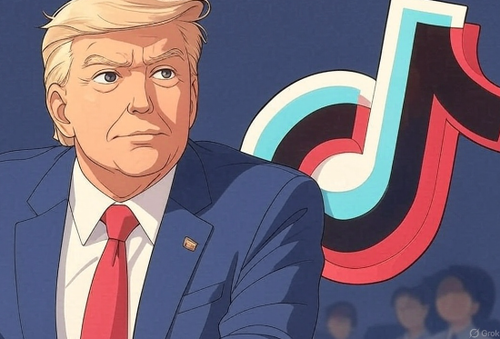
Picture this: The U.S. president, on Air Force One, declaring that the fate of TikTok—yes, that app you’re scrolling through on your phone when you’re stuck in a meeting—has finally fallen into his hands. He’s got 75 days left to decide whether it should stay or be banned nationwide. The clock ticks towards Saturday, April 5, and the decision is under the spotlight like a reality‑TV finale.
Key Players in the TikTok Drama
Trump – The “I’ll decide” captain, joking about keeping TikTok alive.
ByteDance – The Shanghai parent company with 170 M U.S. users that’s on the chopping block.
Potential Buyers – Rumors swirl: Oracle, Andreessen Horowitz, and a few unnamed “big‑tech‑money” investors.
The White House – Acting like an investment bank, handing the auction over to Vance.
Over the weekend, Trump told reporters from the plane that the decision is his and that he wants TikTok to survive the political backlash. On Monday, he spilled the beans again: “There’s a lot of enthusiasm for TikTok.”
What’s in It for Everyone?
For the U.S. folks: if TikTok remains, you’ll keep the endless (and occasionally bizarre) dance memes. If it gets banished, you’ll find yourself scrolling guilt‑free in the safest infinite scroll available. Meanwhile, ByteDance and the investors will wrestle over a deal that could be worth millions of dollars—potentially the richest meme‑money sale ever.
Next Week’s Big Tasks
Besides the TikTok race, the Trump team promises to announce buddy‑bunch tariffs tomorrow—so stay alert. And if the show doesn’t end in a blockbuster sale, it might just turn into a courtroom drama. Either way, the 5th of April will be the day the world finds out if TikTok gets a second chance or if it goes poof.
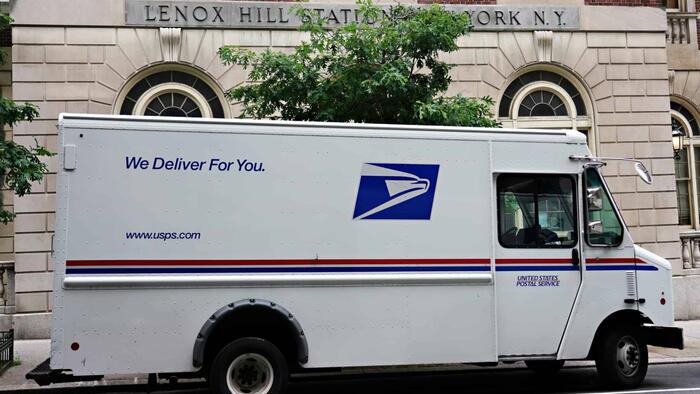
A $10 billion contract awarded by the Biden administration for the production of 35,000 electric vehicles (EVs) to replace the U.S. Postal Service’s (USPS) aging fleet has produced only 250 new vehicles in more than 2 years.
Despite receiving billion of dollars in contracts and government subsidies and building a new plant, Oshkosh Defense has failed to deliver the 3,000 battery electric vehicles it promised to have produced by late 2024.
The failure is prompting calls for the Trump administration to cancel the Biden-era contract and to instead award the money to Morgan Olson, a veteran-owned manufacturer which promises to make a gas-powered, right-hand-drive delivery truck, faster and more affordably than the Oshkosh program can.
🚨WASTEFUL: Biden gave $10B to Oshkosh for new EV USPS trucks—only 250 built in 2+ years.
Vet-owned Morgan Olson can make 100K American-made GAS trucks faster and cheaper, with no woke strings attached.
When a $2.98 billion contract was first awarded in 2022, Oshkosh had no working prototype or delivery vehicle experience, despite promising to produce 50,000 Next Generation Delivery Vehicles (NGDVs).
Ernst’s report states:
“When the first vehicles were finally delivered, significant fixes were required before they were usable. Despite the delays, USPS agreed to pay higher prices for the vehicles,” the report adds,
“A person involved with the production admits, ‘This is the bottom line: We don’t know how to make a damn truck.’ That’s an important detail that should have been discovered before paying the company billions to do just that!”
Meanwhile, Morgan Olson was able to develop its Kestrel delivery vehicle without federal subsidies and stands ready to start production at its 1-million-square-foot Danville, Virginia facility.
The proposal from Morgan Olson promises to deliver 100,000 vehicles by 2029 at a projected cost of $5.5 billion, utilizing $26 million in startup support to come in well below the estimated cost of the EV initiative.
The rollout of the Kestrel coincides with President Trump’s Executive Order 14154, which changed fleet electrification rules to address cost and practicality by targeting “burdensome and ideologically motivated regulations.”
According to the Federal Newswire, the USPS has begun field testing 5 Kestrel units and is considering a formal launch event for early 2026.
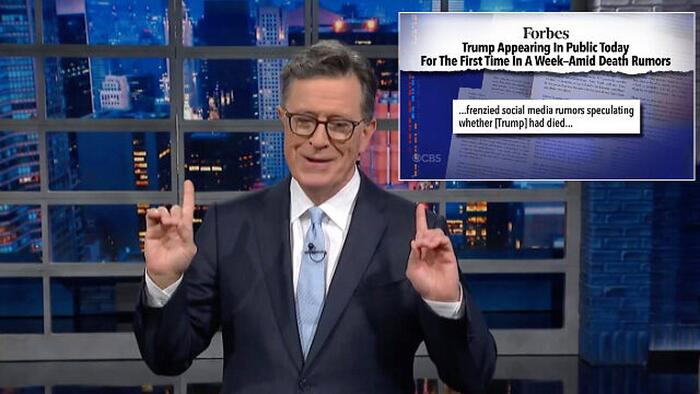
Canned talk show host Stephen Colbert’s leftist audience proved how demented and sick they are by loudly booing when Colbert addressed stupid online rumours of President Trump’s demise and lamented that the President “is very much alive.”
Colbert stated “It’s great to be back with all of you. We were on vacation for three weeks, but I want you to know I take this job seriously, and while we were gone, I still closely followed all the news that was on any cocktail napkin.”
“When I came back in the office, I was shocked to learn that this weekend, the biggest story was, ‘Frenzied social media rumors speculating whether Donald Trump had died,’” The Late Show host continued, prompting the lunatics in the audience to cheer.
Colbert has to rein in his audience after they start booing news that Trump is still alive: “No! We like our presidents alive.” pic.twitter.com/ICyhzLOIc3
“For the record, Donald Trump is very much alive,” Colbert announced, sending the twisted audience into loud boos.
“No, we like our presidents a lot,” Colbert responded, adding, “Donald Trump is very much alive, and this whole crazy rumour started simply because Trump has zero events on his schedule Wednesday, Thursday, or Friday.”
The host then did a ‘comedy’ bit that wasn’t at all funny as usual.
“And one of the only signs that he might still be around was ‘music in the Rose Garden, which the White House confirmed was the president’s music, which I gotta say, is not the strongest proof of life,” Colbert further blathered.
Colbert then mimicked a White House staffer, stating “Yes, nurse, I do see that flatline, but the patient is clearly alive, because his iPhone is playing ‘Papa Loves Mambo.’”
HA HA HA. Sooooo hilarious.
Exhibit #2,567,432 on why he’s being canceled. It’s a shame it’s a prolonged cancel…
I know two wrongs do not make a right, yet when a political person on the left dies, dont expect kind words from the right. These people are insufferable.
As we highlighted yesterday, Vice Presidential loser Tim Walz appeared excited at the prospect of Trump being ill or dying, telling a crowd “You get up in the morning – the last few days, you woke up thinking there might be news! Just saying…There WILL be news, some time!”
Walz’s remarks prompted CNN’s Scott Jennings to go nuclear on the Democratic Governor, labelling him a “complete piece of shit.”
* * *
Your support is crucial in helping us defeat mass censorship. Please consider donating via Locals or check out our unique merch. Follow us on X @ModernityNews.