Tag: leading

  • ‘Temporary reprieve’: Why is Arctic Sea ice melting more slowly despite global warming?

    ‘Temporary reprieve’: Why is Arctic Sea ice melting more slowly despite global warming?

    Experts say this pause shouldn’t be mistaken for recovery, as Arctic sea ice coverage is still much lower than it was in the 1980s.

    ADVERTISEMENT

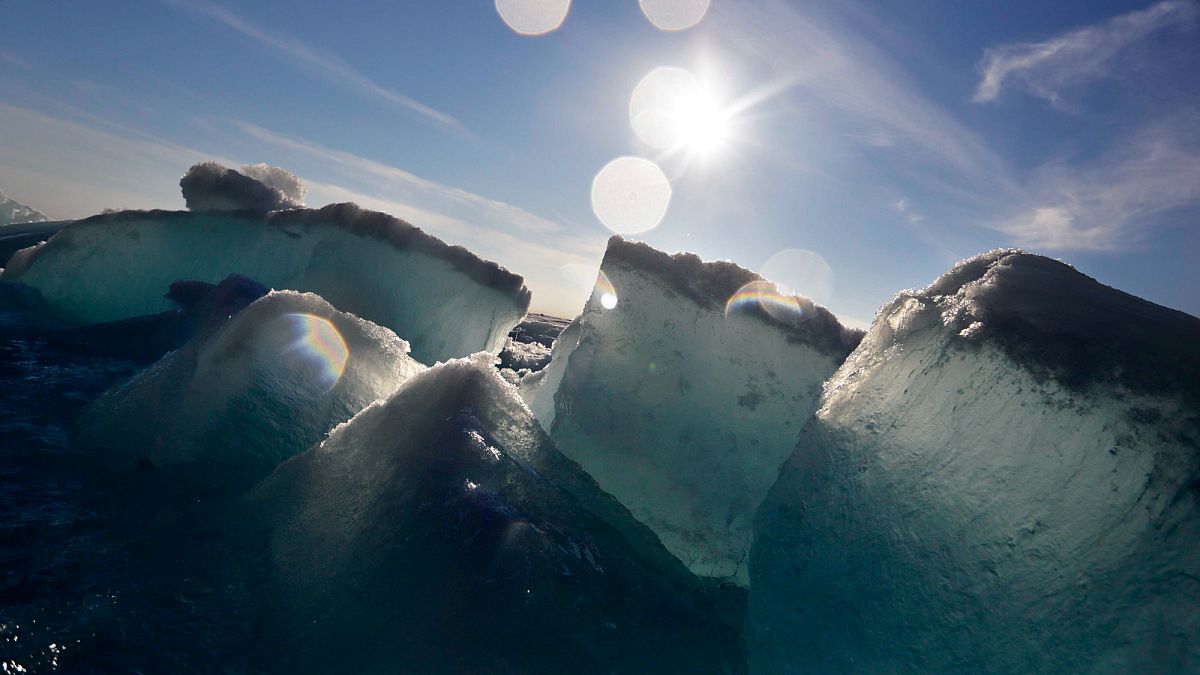
    Arctic sea ice has been melting at a slower rate over the last 20 years, despite human-caused global warming, new research has found.
    Since satellite records began in the late 1970s, sea ice coverage at the end of summer has halved. Global warming has been shown to be responsible for up to two-thirds of this melting, and the remaining third is down to natural fluctuations in the Earth’s climate systems.

    With the Arctic warming at nearly four times the global average, more than 10,000 cubic kilometres of sea ice have been lost since the 1980s – an amount that would fill four billion Olympic swimming pools. In September 2012, Arctic sea ice shrank to its smallest ever extent at just 3.41 million square kilometres, leading to speculation about when the Arctic might see its first ‘ice-free’ summer.
    New research shows, however, that the pace of Arctic sea ice loss has slowed markedly since the late 2000s, with no statistically significant decline for the last 20 years.
    Scientists say this is a temporary slowdown that may continue for a further five to 10 years. When it ends, it is likely to be followed by faster-than-average sea ice decline.

    Related

    Italy’s Ventina glacier has melted so much geologists now can only monitor it remotely‘Climate change hasn’t stopped,’ warns EU climate monitor as global heat record streak ends

    Dr Mark England, who led the study while at the University of Exeter in the UK, says it may seem “surprising” to find a temporary slowdown in sea ice decline given human-caused climate change.

    “It is, however, entirely consistent with climate model simulations and is likely due to natural climate variability superimposed on the human-driven long-term trend,” he explains.
    “This is only a ‘temporary reprieve’ and before long the rate of sea ice decline will catch up with the longer term rate of sea ice loss.”

    The slowest rate of sea ice loss since records began

    The study, published this month in the journal Geophysical Research Letters by researchers from the University of Exeter, looked at Arctic sea ice cover using two different datasets of satellite measurements from 1979 to the present.
    Focusing on September, when Arctic sea ice cover is at its lowest during the year, they found that between 2005 and 2024, the ice declined by 0.35 million square kilometres during the first decade and 0.29 million square kilometres during the second.

    This makes the rate of loss over the last two decades the slowest for any 20-year period since the start of satellite records in 1979. It was four to five times slower than the peak 20-year period between 1993 and 2012.
    Compared to the longer-term rate of decline since 1979, which is 0.78 to 0.79 million square kilometres per decade, that marked a 55 to 63 per cent slowdown.
    “It’s a ‘pause’ in the rate of loss of sea ice. Arctic sea ice is still far lower than it was in the 1980s, and the decline has overall slowed down for the study period 2005-2024,” says Dr Gaëlle Veyssière, sea ice and snow physicist at the British Antarctic Survey, who wasn’t involved in the study.
    “This pause should not be confused with a sign of recovery. It doesn’t indicate that Arctic sea ice is improving or that we are seeing reversing climate trends.”

    Will sea ice loss in the Arctic continue to slow?

    The researchers say the slowdown in sea ice melt has a one in two chance of lasting for another five years and a one in four chance of lasting for another 10. But, they clarify, it won’t last forever.
    Climate models indicate that when the current slowdown ends, the pace of Arctic sea loss could be 0.6 million square kilometres per decade faster than the average long-term decline.

    Related

    Marine heatwaves may have driven the world’s oceans to a critical tipping point, scientists warnConspiracies about extreme weather spread faster than life-saving alerts on social media, says study

    The study suggests that the current temporary pause is likely due to ‘internal climate variability’ – or the naturally occurring variations in climate due to interactions between parts of Earth’s systems.
    Rather than being an expected or rare event, it says we should expect periods like this to occur relatively frequently due to natural fluctuations in the climate system. Without human-caused warming, the study indicates that sea ice likely would have increased over this period.
    Dr England invokes an analogy from climate scientist and creator of the iconic warming stripes visualisation, Professor Ed Hawkins. He says the slowdown is like a “ball bouncing down a hill where the hill is climate change”.
    “The ball continues going down the hill, but as it meets obstacles in its path, the ball can temporarily fly upwards or sideways and not seem to be travelling down at all, ”England says.
    While the trajectory isn’t always smooth, he adds, at some point, the ball will still reach the bottom of the hill.

  • Reinhart’s 4‑Goal Slam Fires Panthers to Back‑to‑Back Stanley Cups, Shut‑out Oilers 5‑1

    Reinhart’s 4‑Goal Slam Fires Panthers to Back‑to‑Back Stanley Cups, Shut‑out Oilers 5‑1

    Full Game Recap: Panthers vs. Oilers – Game 6 Showdown

    Hey hockey fans, grab your popcorn! After 82 minutes of puck‑ing, the Panthers and Oilers left it all on the ice.

    Key Moments in Rapid‑Fire Recap

    • Goal 1: Panthers lead early 2‑0, blasting a swift shot into the net.
    • Goal 2: Oilers tie it up 2‑2 with a slick power‑play heroics.
    • Goal 3: Panthers snatch back 3‑2, slick pass from a veteran.
    • Goal 4: Oilers snap back 3‑3, unstoppable streak!
    • Goal 5: Panthers erupt 4‑3, many a slap‑shot in the tunnel.
    • Goal 6: Oilers push back to 4‑4, a montage of blocks.
    • Goal 7: Panthers win 5‑4, clutch penalty‑shot that sealed victory.

    What Makes This Game Unforgettable

    Thrilling back‑and‑forth action; no one could predict the outcome.
    Alexis’s devastating penalty‑shot gaslighted the crowd.
    Relentless energy from both teams demonstrated why playoffs are insane.

    Did you catch the behind‑the‑scenes moments?

    Check out the behind‑the‑scenes bloopers – from frozen players to my empty chair at the broadcast! Don’t miss these gold‑mines.

    Ready for the next challenge?

    Tell us your
    favorite moment in the comments and share the video if you’re feeling heroic!

    Florida Panthers: Double Trouble and a Dazzling Dunk!

    The Florida Panthers are back in the spotlight, snatching the Stanley Cup for the second year straight. Picture a sunny night, fans roaring, and a scoreboard that reads 5‑1. Game 6 of the Finals had more drama than a soap opera—especially when Sam Reinhart scored four goals, a feat only one player before him had pulled off in a decisive Cup game.

    Key Moments to Remember

    • Reinhart’s 4‑goal magic: He didn’t just score; he rewrote the record books. The first hat‑trick and four‑goal game in Panthers’ playoff history!
    • Carter Verhaeghe: Three assists to sweeten the victory.
    • Aleksander Barkov & Matthew Tkachuk: Two assists each, plus a goal from Tkachuk.
    • Goalie heroism: Sergei Bobrovsky made 28 saves, shutting down Edmonton’s high‑powered offense and star shooter Connor McDavid.
    • Vasily Podkolzin: The lone Oilers goal, a chilly reminder that defense matters.

    Game Breakdown

    Reinhart opened the scoring just 4:36 into the first period with a slick solo move—snagging a pass near the blue line and finishing while falling to the ice. As the first frame waned, Tkachuk slammed the score to 2-0 with a shot through a screen that capitalized on a turnover. Bobrovsky kept Edmonton at bay with 10 saves in both of the first two periods, including clutch stops on Evan Bouchard and Ryan Nugent‑Hopkins.

    During the second period, Reinhart didn’t let up—he scored his second goal late by redirecting a rebound off his skate. In the third, he sealed the deal with two empty‑net goals, pushing the lead to a comfortable 5-0.

    Despite Podkolzin’s goal at 15:18 of the third period, it was too late to spark a comeback. Bobrovsky’s heroic 28 saves kept the Oilers’ hopes in check.

    Celebrating the Crown

    • Back‑to‑back champions: The Panthers become the first NHL team since 2020‑21’s Tampa Bay Lightning to win consecutive titles.
    • Historical significance: The clubs now share a rare distinction with the 1977‑78 Montreal Canadiens for defeating the same opponent in successive Finals.

    Fan Reaction & MVP Spotlight

    Sam Bennett swoops into the spotlight as the Conn Smythe Trophy winner, having led all players with 15 goals in 23 postseason games. Fans erupted as the Panthers chalked up another triumph, riding the high that comes from beating their rivals—without ever having to go to a do‑over in a Game 7.

    So here’s to the Panthers, who turned October Sunday into a triumph, the fans, and all the players who put on a show that’ll be replayed anytime you feel a little need for loud heads‑crashing, four‑goal magic.

  • Copper, Aluminum, and Steel: The Unexpected Pillars of Trump’s MAGA Vision

    Trump’s Big‑League Tariff Shuffle: A Rally for the American Dream

    When the former president slapped a 50% tax on steel, copper, and aluminium, it wasn’t just about the bottom line. It was a declaration: the United States wants its factories back on the map, and it’s rallying the MAGA crew to keep the fire burning.

    Why the Tariffs Matter

    • Reclaiming Jobs: Trump’s strategy is aimed at getting supply chains and production back home.
    • Fan Power: Each tariff twist feeds the energy of the core supporters who love strong leadership.
    • Economic Shock Therapy: The sudden 50% hit jolts the markets—forcing big changes fast.

    What’s the Real Deal?

    While economists might argue about trade balances and export prices, the Trump administration sees it as the ultimate “take that” to global competitors— a bold, if controversial, move to remind the world that America still packs a punch.

    “Come On, America” in Plain English

    Think of it as shouting, “Hey, we’re still here, and we’re not backing down!” The goal is to give American manufacturers something to rally around, even if it means hitting trade buddies hard. In short, the tariffs are both a financial hit and a political rallying cry, proving that behind every number is a pulse racing through the nation’s heart.

    Trump’s Metal‑Hammering Saga: 50% Tariffs, Boisterous Rhetoric, & Real‑World Ripples

    What’s All the Fuss About?

    When President Trump slapped a 50% tariff on steel, aluminium, and copper imports, it felt less like a trade policy tweak and more like a triumphant shout for the “lost American industrial glory.” While the numbers are hard‑to‑ignore, the real story lives in its political motive.

    • Trump’s anger: “We used to be the world’s top producer of copper back in the ’80s, now it’s Chile.”
    • He deliberately frames these metals as the backbone of national security—“If you don’t have steel, you don’t have a country.”
    • Sharply — the tariffs hit until August 1st, with stock markets even tightening its teeth on copper futures.

    Copper’s Tightening Circle

    US copper imports are about 50% of its demand, largely drawn from Chile and Canada. A week before the August 1 deadline, copper futures nosedived 20%, pulling back from July’s record highs. The president then clarified that raw copper (concentrate and cathodes) would stay exempt—though wire, pipes, and sheeting’ll feel the pain.

    Implications

    • Although precautions limit supply squeezes, the cost drop on finished copper products is a silver lining for some tech firms.
    • Yet, the higher production costs still reverberate across the supply chain.

    Steel & Aluminium: A 50% Law‑Storm

    Twice the earlier 25% duty? This change raked up domestic metal prices, effectively stopping foreign competitors from getting under the U.S. cost advantage. Manufacturers are left with freeze‑frame photos of:

    • Sharper input costs.
    • Re‑shoring projects for critical components.
    • New supply‑chain labyrinths.

    Will It Spur Production?

    History tends to disagree. By 2024, U.S. steel output had dipped 1% from 2017 levels, while aluminium production slid nearly 10%. The tariffs of Trump’s first term didn’t create a booming domestic boom.

    Nascent Market Jitters

    New analyses suggest that manufacturing could bump up by almost 4.5%—squeezing low‑margin sectors like EVs, appliances, and delaying investments in regional hubs. If you’re a small company, brace yourself: the extra cost of steel and aluminium might keep you on the sidelines of production upgrades.

    Bottom Line

    With tariffs pegged hard at 50%, the U.S. steel and aluminium sectors are either flexing or floundering—much like a heavyweight fighter debating whether he’s losing weight or gaining new strength. The policy, perched atop political ambition, remains to be a show‑stopper or a faux pas. Until the next election cycle, the metal markets are on a roller‑coaster with a hefty catch‑phrase: “Get your steel, get your courage!”

    Industries ‘snatched away’ from the US

    Who’s Hot‑Metal? A Throw‑back to the U.S. Copper & Steel Era

    1⃣ Copper: The Golden Dynasty that slipped through the cracks

    • For most of the 20th century the U.S. was the copper king, dominating production worldwide.
    • In the early 2000s Chile slid onto the throne, robbing America of its reign and sealing the nation’s copper sunset.
    • Avoiding the headline, Chile still sits at the top of the global copper leaderboard.

    2⃣ Steel: From Peaks to Plaques, a saga of the Rust Belt

    • The U.S. hit its steel zenith in the early 1970s.
    • Afterward, the industry spent the next three decades in a downward spiral, hammering at the bottom with recessions yet again and again.
    • Higher education now? No, lower cost, higher efficiency in Japan, South Korea and European rivals out‑paced U.S. giants, squeezing them from above.
    • A mighty dollar turned foreign steel into sweet and cheap candy, while U.S. plants grappled with aging machines, high‑pay labour contracts and mounting environmental bills.
    • The “Rust Belt” – a nickname that sticks like an antique gasket – views these once‑glorious mills as twisted relics of a days gone by.

    3⃣ Aluminum: Biden vs. China in the “Hot‑Metal” battle

    • For decades “Blow‑this‑metal” folks argued that the U.S. led aluminum output, thanks to plentiful cheap electric power and a strong army‑industry demand.
    • Then the China effect hit: by the early 2000s, Chinese furnaces were beating their American counterparts to the headline of world aluminium production.
    • “All thanks to offshoring,” comment the cool commentator, “Blue‑Collar guys are feeling the sting as jobs drift farther from home.”

    The near‑future of Rust‑Belt rehabs

    • Trump’s “revive industries” mantra drags forward years of economic decay, but the “old mills” still groan in the quiet of their abandoned corridors.
    • While the dollar’s pull remains, it’s historical boom & bust patterns that will determine whether America can regain its title as the world’s “metal‑king.”

    Increasing costs, especially in green-adjacent industries

    Trump’s Tariff Tussle: Copper, Steel, Aluminium & the Heavy Hitters

    Overview

    With a jaw‑dropping 50% tax on copper, steel, and aluminium, the U.S. is handing a serious kick to any sector that needs these metals hard. Think of it like adding a surcharge to every part of a punch‑line—it ripples through the economy from construction to defence, and even the green‑energy boom.

    Which Industries Get the Pinch?

    • Construction – Building new walls, roofs and infrastructure? Those metal beams and cables suddenly cost twice as much.
    • Defence – From armor plating to ship hulls, the expensive metals mean higher armament budgets.
    • Renewable Energy – Solar panels, wind turbines, and battery packs all rely heavily on copper, steel, and aluminium. The price hike can slow the whole green‑tech revolution.

    EVs and Renewable Tech: The Wet‑Spots

    Electric‑vehicle makers and renewable‑energy startups already grapple with tight profit margins. Throw in a steep tariff and you’ll see the cracks widen.

    According to Stritch, the current 5% average profit margin in the EV industry is already stretched. With the new tariffs, the cost of crucial inputs spikes, and the tough market conditions could spell trouble for most EV producers.

    Bottom Line
    • Higher Prices – Every component that uses copper, steel or aluminium goes up in cost.
    • Cost‑Creep – Manufacturers must absorb the extra cost or pass it on to consumers.
    • Industry Strain – Low‑margin sectors, especially EVs and renewables, will feel the most pressure.

    In short, this tariff surge is set to shuffle the deck in a way that could front‑load new costs across the economy, with the electric‑vehicle industry likely facing the sharpest blow.

  • Intel's chief executive of products departs among other leadership changes

    Intel's chief executive of products departs among other leadership changes

    Semiconductor giant Intel continues to shake up its senior leadership since Lip-Bu Tan took the helm as CEO in March.

    Intel announced Monday that Michelle Johnston Holthaus will depart the company after more than three decades. Johnston Holthhaus was most recently chief executive officer of Intel products and will remain a strategic adviser.

    The company also announced the creation of a central engineering group that will build a new custom silicon business for outside customers, according to Intel. This group will be helmed by Srinivasan “Srini” Iyengar who joined Intel from Cadence Design Systems in July.

    Intel also said that Kevok Kechichian, formerly of ARM, will join the company as head of its data center group. Jim Johnson has been appointed senior vice president and general manager of Intel’s client computing group. Naga Chandrasekaran, the chief technology and operations officer of Intel Foundry, the company’s business unit that builds custom chips for outside customers, is also taking on an expanded role.

    “With Srini leading Central Engineering, we’re aligning innovation and execution more tightly in service to customers,” Tan said in a company press release. “We are laser-focused on delivering world-class products and empowering our engineering teams to move faster and execute with excellence. Kevork, Jim, and Srini are exceptional leaders whose deep technical acumen and industry relationships will be instrumental as we continue building a new Intel.”

    This news comes just a few weeks after the U.S. government announced a plan to convert existing government grants into a 10% stake in Intel. The deal was structured to penalize Intel if the company dropped below 50% ownership of its foundry unit.

    These weren’t the only leadership changes at Intel this year.

    Techcrunch event

    Join 10k+ tech and VC leaders for growth and connections at Disrupt 2025

    Netflix, Box, a16z, ElevenLabs, Wayve, Sequoia Capital, Elad Gil — just some of the 250+ heavy hitters leading 200+ sessions designed to deliver the insights that fuel startup growth and sharpen your edge. Don’t miss the 20th anniversary of TechCrunch, and a chance to learn from the top voices in tech. Grab your ticket before Sept 26 to save up to $668.

    Join 10k+ tech and VC leaders for growth and connections at Disrupt 2025

    Netflix, Box, a16z, ElevenLabs, Wayve, Sequoia Capital, Elad Gil — just some of the 250+ heavy hitters leading 200+ sessions designed to deliver the insights that fuel startup growth and sharpen your edge. Don’t miss the 20th anniversary of TechCrunch, and a chance to learn from the top voices in tech. Grab your ticket before Sept 26 to save up to $668.

    San Francisco
    |
    October 27-29, 2025

    REGISTER NOW

    Tan taking over as CEO in March is a notable one. In July the company announced that it hired four new people for sales and engineering roles including Greg Ernst to serve as Intel’s chief revenue officer.

    Intel declined to comment.

  • Thousands flee Tehran as conflict with Israel continues to escalate

    Thousands flee Tehran as conflict with Israel continues to escalate

    Israel Issues Partial Evacuation Alert for 330,000 Tehran Residents

    On Monday morning, the Israeli military handed out a tired, longing evacuation notice to roughly 330,000 people squatting in the bustling heart of Iran’s capital. Even the pigeons in the streets seemed to pause for a second, as if to ask, “What’s this all about?”

    What’s the Deal?

    • When: Early Monday, before the first coffee sip
    • Where: Central neighborhoods of Tehran, the city that never stops humming
    • Who: A quick 330,000 people, from office workers to street food choppers
    • Why: The Israeli military thinks it’s safest if everyone takes a short detour away from the spotlight

    Feelings in the Air

    It’s a mix of nerves, flustered street vendors scrambling for their empty trash cans, and the faint scent of kebabs still lingering in the cross‑fire of uncertainty. Many are politely asking, “How long will the trip take?” – and nobody knows, but hopeful is the universal response.

    What Happens Next?

    Residents might find themselves planning a spontaneous road‑trip or perhaps just finding a new spot for their beloved Persian tea. Nevertheless, the message from the Israeli side remains a stern piece of advice: “Stay away from the center, keep your cool, and we’ll have you back in the sweet, chaotic circle soon.”

    Tehran’s Sudden Road Trip: When a City Goes Empty

    Picture a bustling downtown that suddenly feels like a deserted museum—every shop shuttered, the famous Grand Bazaar’s doors closed for the first time in the pandemic‑age era, and streets that used to hum with locals a little smoother than a coffee shop at rush‑hour. That’s the scene, early Tuesday, as Tehran—home to roughly ten million souls—plunges into a nationwide evacuation cable.

    How the Evacuation Decision Hit the People’s Conscience

    • On Monday morning, the Israeli military issued a partial evacuation for 330,000 residents in Tehran’s hot‑spot zone.
    • But the wind was already blowing—many packed up before the orders arrived after last weekend’s skirmishes.
    • Traffic jam stories have become meth‑lab‑level epic: highways to the west dribble out of the city, and men and women queue for gas like they’re signing up for a marathon.
    • Gas stations now enforce a 25‑litre cap. The “fill up” frenzy turns the usual dash into a frantic dodge‑and‑rush to get on the number one “quick‑stop” line.

    It’s Not Just a Car Problem, It’s a Dash for Safety

    On Monday, Donald Trump’s Truth Social sparked a spark, reminding millions, “Everybody should immediately evacuate Tehran. I just want people to be safe.” Turns out, he didn’t want a nation of smooth‑speakers, but a nation of safe‑feet.

    The Official Twist: “We’ve Got It Under Control”

    While roads were a sight to see, Tehran’s official line? Calm. Authorities calmly dictated that the situation is under control—though no GPS or roadmap was handed out for the collective escape. That’s a class act, folks.

    How the Locals Dealing With the Roadstorm

    1. Epic gas station line: people pulling in, waiting for their turn like they’re queuing for a pizza delivery.
    2. Distribution of spare keycards: that’s the new “what happens when you lose your keys?” card that Google Maps would love.
    3. In thanks, everyone shared memes about “the ultimate carstop” and a trending hashtag #TehranTurnOff.

    Undeniably, the city feels like a snapshot of a giant ritual: a city that went out of its way to negotiate the flavourless calm even under a gigantic infrastructure crisis. That is if you want emotive optimism besides the jokes.

    European countries and others evacuate their citizens

    Evacuation Rush: From Israel to Slovakia, Poland, India and Beyond

    With Israel’s airport closed for good, folks are flying out like it’s the newest TikTok challenge. The first runway‑free flight flew in Slovakia and the Czech Republic like a surprise party, landing on Monday with a handful of Slovaks that had become vacationers turned beach‑to‑bliss evacuees.

    Slovakia’s Grand Arrival

    • 73 passengers disembarked from the first flight.
    • 25 were Slovak tourists feasting on Israeli sun before suddenly becoming international travelers.
    • 5 were the family members of Slovak diplomats who had been posted in Tel Aviv.

    Poland’s Countdown

    Polish officials are gearing up to send their citizens out on Wednesday and Thursday. The plan? Holler at the Gate, cherry‑pick your squad, and hop on a plane before the next sunset.

    India’s Quick‑Escape Mission

    The Indian Embassy announced a discreet evacuation of students from Tehran. Those stranded are told to cross the line into Armenia for the very quickest exit. University no-jammers urge everyone else to book a ticket ASAP.

    Israelis on the Hunt

    Sources estimate that somewhere between 50,000 and 100,000 Israelis are stuck abroad. The reason? Tel Aviv’s Ben Gurion Airport became a “closed‑for‑ever” zone after Israel’s drone‑based war earlier this week. The airport, the humming hub of international flights, has gone on mute until more info drops.

    Flying? Not Likely

    Through the haze of this tense situation, Israeli officials have bluntly warned that Larnaca and Athens are not the new “quick‑fly‑out” spots. The airspace remains closed, so hopping a plane to those ports is off‑limits.

    Road‑Travel Warning
    • Both Jordan and Egypt’s Sinai stretch receive a Level 4 travel warning.
    • Those already in the region are urged to leave immediately.
    • Backbone National Security Council has issued a stern caution against attempting to sneak in via land routes.
    Scorching Tehran

    Then, in Tehran’s early Tuesday afternoon, flaring explosions rattled the city. Blackish smoke clung to the northern skyline, near the spot where state TV and the government papers hang. Authorities have yet to come out with an explanation, leaving everyone in a state of uneasy anticipation.

    In a world that feels like a chess game, every nation is resetting the board. As the dust settles, the final checkmate remains: when will the skies clear for the next round of jet‑setters ready to return home?

  • Unfair Dismissal: How to Keep Your Business Racing Ahead

    Unfair Dismissal: How to Keep Your Business Racing Ahead

    Got A New Unfair Dismissal Law? Here’s What You (Not) Should Do

    Hey business owners! The UK government’s latest employment amendments have hit the headlines, and they’re less about the economy and more about your employee‑costs. If your office is run by a handful of people (or a single person) the new rules could be a real bite‑size challenge.

    What’s the new deal?

    • Unfair dismissal claims are climbing 44 % this quarter—15,300 claims versus 10,600 a few months back.
    • Average compensation per claim? Roughly £4,560. Big companies may shrug, but for SMEs that’s a headline‑making expense.

    Tribunal Fees—Who’s Paying?

    • Employees now need to shell out a fee before they lodge a claim. The price depends on the claim type.
    • Simple cases (like wage deductions or redundancy) sit in Level 1 and cost less.
    • Harder cases—unfair dismissal, discrimination, equal pay, whistleblowing—go to Level 2 and carry a heftier fee.

    New Procedure: One “Pre‑Lump” Instead of Two

    • What used to be separate case‑management talks and pre‑hearing review is now called a preliminary hearing.
    • Tribunals will do a tighter paper sift to filter out weak claims.
    • They’ll push everyone toward mediation—think of it as a group therapy where the goal is to save everyone money.

    Interest & Compensation Caps

    • Unpaid tribunal awards accrue interest from the day after the judgment is sent—unless you pay within 14 days.
    • Discrimination awards will see a jump to 8 % interest from the previous 0.5 % (say hello to the new “8‑percent club”).
    • If you win a claim, payouts stop at the lower of one year’s salary or £74,200. This ceiling ignores pension contributions, in‑kind benefits, and discretionary bonuses.

    Pre‑Termination Negotiations—Your Safety‑Net

    • You can start a termination chat any time—even before an official dispute arises.
    • Claims can’t hop on those early chats as evidence—so you have a cleaner slate.

    Settlement Agreements—Same as Before, With a New Name

    • “Compromise agreements” now appear as settlement agreements.
    • They’re still legally binding, and once an employee signs, they’re barred from raising a claim.
    • Even discussions or offers that aren’t signed out of the box won’t tempt an unfair‑dismissal claim later.

    Quick Takeaway: Stay Ahead of the Game

    Consistency and transparency are your new best friends. Be up‑to‑date on evolving employment law, especially the tweaks around employee‑shareholders and Equality Act changes. Nobody likes surprises—2023 only shows the value of staying ahead.

  • Global Hospital and Health City: A New Era in Healthcare – Health Cages

    Global Hospital and Health City: A New Era in Healthcare – Health Cages

    Introduction to Global Hospital and Health City

    Healthcare is evolving, and the Global Hospital and Health City stands at the leading edge of this modification. This ambitious venture is redefining what cutting-edge healthcare ought to seem like. It’s now not just a hospital; it is a comprehensive health atmosphere designed to cater to sufferers from all walks of life.

    (adsbygoogle=window.adsbygoogle||[]).push({})

    Imagine an area wherein the current generation meets compassionate care, in which innovation drives affected person effects, and affordability does not compromise nice. The Global Hospital and Health City‘s objectives are to make that imaginative and prescient truth. As we delve into its modern facilities, world-magnificence medical group, and low-priced options, you will discover how this landmark initiative is putting new standards in healthcare both regionally and across the world. Prepare to explore the way it’s ushering in a new technology for patients everywhere!

    (adsbygoogle=window.adsbygoogle||[]).push({})

    Innovative Facilities and Technology

    Global Hospital and Health City units a new benchmark in scientific infrastructure. Its contemporary centers are designed with patient consolation and care at the forefront. From superior diagnostic labs to high-tech surgical theaters, each nook reflects innovation. The integration of robot-assisted surgical procedures enhances precision, ensuring better effects for sufferers.

    (adsbygoogle=window.adsbygoogle||[]).push({})

    Telemedicine abilities permit healthcare experts to attain sufferers past conventional limitations. This means getting admission to expert consultations is just a click away. Smart medical institution designs comprise IoT gadgets that display health metrics in actual time. These improvements streamline methods, making affected persons care more green than ever before.

    (adsbygoogle=window.adsbygoogle||[]).push({})

    Sustainability additionally plays a vital position right here. Eco-pleasant technology lessens waste while enhancing electricity efficiency at some point on the campus. At Global Hospital and Health City, the modern generation meets compassionate care seamlessly, paving the way for modern-day healthcare solutions that prioritize health certainly else.

    Enhanced Patient Experience

    At Global Hospital and Health City, the affected person revels in is a top precedence. From the instant you step through the doorways, a warm and inviting environment awaits. The layout of the facility promotes comfort and ease. Natural, mild floods, flood-ready regions, growing surroundings that feel less medical and more like home. Technology plays a massive function in enhancing your adventure. Digital test-ins lessen wait times, allowing patients to pay attention to simple topics—their fitness.

    (adsbygoogle=window.adsbygoogle||[]).push({})

    Personalized care guarantees every character receives interest tailor-made to their specific wishes. Healthcare carriers make the effort to concentrate, making sure issues are addressed promptly. Moreover, amenities, including guided excursions and health packages, make a contribution extensively to average pride. Patients feel empowered at some stage in their healthcare adventure at this innovative organization.

    World-Class Medical Team

    At the coronary heart of Global Hospital and Health City lies its global-elegance clinical group. This various organization of healthcare experts brings together know-how from numerous fields. Their credentials are surprising, with many maintaining advanced stages and certifications. Doctors at this facility aren’t the simplest professionals; however, they are additionally dedicated to continuous learning. They stay abreast of cutting-edge research and technological advancements, making sure that sufferers receive modern-day care.

    Collaboration is key in these surroundings. Specialists paint carefully across disciplines to provide tailored remedy plans for every patient. This teamwork complements both prognosis accuracy and healing effectiveness. Patients gain immensely from their compassionate method. Each member knows the importance of empathy in healing, making each attempt to make certain consolation for the duration of visits. The commitment to excellence is evident in each interaction within Global Hospital and Health City, creating reassuring surroundings for those seeking clinical interest.

    Affordable Healthcare Options

    Global Hospital and Health City is redefining the idea of lower-priced healthcare. By leveraging superior generation and revolutionary practices, it offers a number of offerings without breaking the financial institution. Patients can get admission to splendid remedies at competitive costs. This approach guarantees that everyone, regardless of financial heritage, has a threat to receive top-notch hospital treatment.

    Insurance partnerships also play a critical function in making healthcare reachable. They provide numerous plans tailor-made to personal desires, easing the burden on families and people alike. Transparent pricing models similarly beautify affordability. Patients recognize what to expect before receiving remedy, decreasing anxiety over sudden charges.

    This dedication to handy healthcare transforms lives by prioritizing sufferers’ well-being while ensuring they do not face financial strain. In an era where the best often comes with a hefty price tag, Global Hospital and Health City stands as a beacon for those in search of both excellence and affordability in fitness offerings.

    Impact on Local and International Healthcare Industry

    The status quo of Global Hospital and Health City is a sport changer for both neighborhood and international healthcare sectors. Its present-day facilities appeal to not just sufferers but also clinical specialists keen to collaborate and innovate. Local hospitals can study from the first-class practices hired here. The consciousness of studies and development encourages knowledge switch, enhancing typical care requirements in nearby establishments.

    Internationally, it creates a benchmark for great healthcare delivery. This inspires different countries to raise their medical infrastructures. Moreover, it positions the region as a hub for international fitness tourism. Patients from various countries are attracted to its advanced remedy options at aggressive expenses. The ripple impact is profound; higher entry to specialized remedies means improved health results worldwide. It fosters partnerships that transcend borders, promoting mutual increase in clinical excellence across diverse populations.

    Conclusion: The Future of Healthcare at Global Hospital and Health City

    The Global Hospital and Health City is gaining brand new popularity for healthcare internationally. It combines the modern-day era with compassionate care, developing an environment in which patients can feel secure and supported. As it continues to evolve, the focus stays on innovation. New remedies and technologies will maintain improving patient consequences. The emphasis on collaboration amongst specialists fosters a culture of non-stop improvement.

    Moreover, the dedication to affordability guarantees that pleasant healthcare is offered to all people. This technique not only blesses nearby communities but also attracts global sufferers looking for international-class scientific services. With its fantastic facilities, wonderful medical group, and determination to patient-focused care, Global Hospital and Health City is poised to lead the manner in reworking healthcare transport for years to come. The destiny appears vibrant as it strives in the direction of excellence in each remedy and experience for every individual who walks through its doors.

  • 2025 Cocoa Beach Powerboat Fury: Thrilling Offshore Race May 15‑18!

    2025 Cocoa Beach Powerboat Fury: Thrilling Offshore Race May 15‑18!

    Cocoa Beach’s Premier Powerboat Event Gets Supercharged by Leading Firearm Innovator

    KelTec Scores the Title Sponsor Spot at Thunder on Cocoa Beach 2025

    Get ready to rev up the engines and turn up the fun!
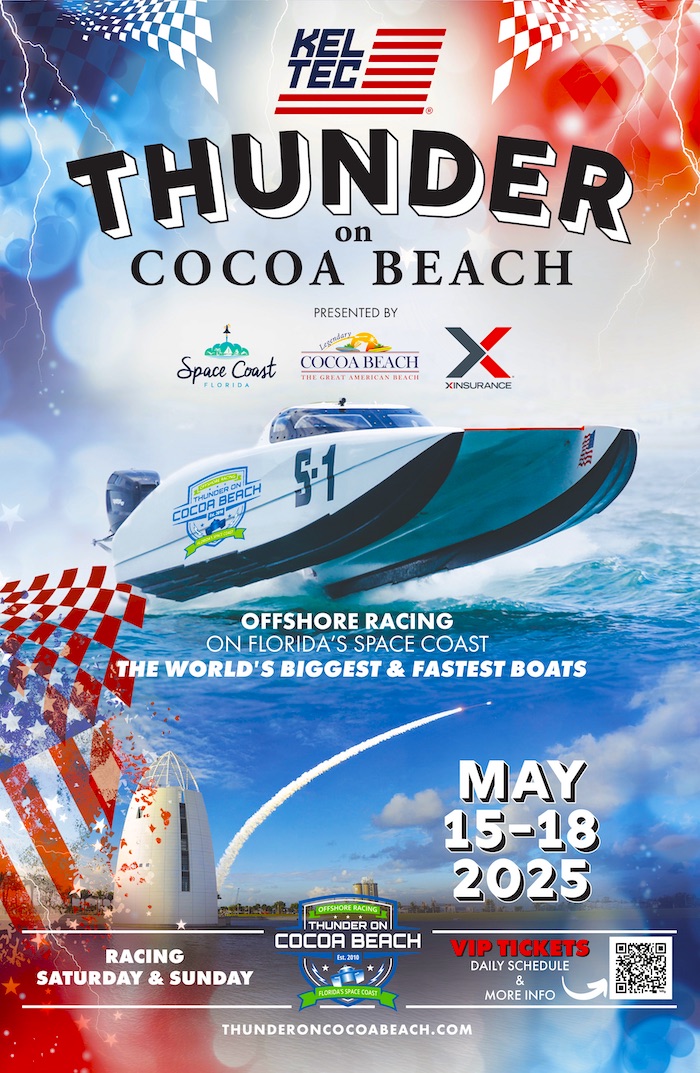
    The KelTec Thunder on Cocoa Beach is hitting the Florida Space Coast from May 15‑18 this year, blending high‑octane boat races with a community celebration that’s as electric as a thunderstorm.

    What’s the Buzz About?

    • Four days of thunder‑some racing and the kind of party vibes that keep the whole family excited.
    • The Space Coast Super Boat Grand Prix – one of Central Florida’s biggest and most beloved attractions.
    • World‑class teams compete in multiple classes, with Class 1 boats reaching speeds that make the wind feel like a blur (yeah, it’s over 175 mph).
    • KelTec, a name that’s synonymous with top‑tier firearm engineering, steps up as the official title sponsor, boosting the experience for teams, fans, and the local scene.

    Why KelTec Is the Perfect Match

    “Partnering with KelTec feels like a match made in high‑performance heaven,” says Kerry Bartlett, Executive Director of Thunder on Cocoa Beach.
    “Both offshore racing and KelTec are built on American ingenuity, avant‑garde tech, and an unwavering drive for excellence. We’re stoked to have them on board as the title sponsor and kick off what promises to be our biggest year yet.”

    Meet the Powerhouse

    Founded in 1991 by George Kellgren in Cocoa, Florida, KelTec has grown into a powerhouse and one of the top five handgun makers in the United States. With a strong commitment to the Second Amendment, the company shines as a brand that balances cutting‑edge innovation with a passion for freedom and precision.

    Save the Date &Join the Adventure

    Whether you’re a seasoned fan of offshore powerboats or just looking for a weekend of roaring engines and community spirit, the 2025 Thunder on Cocoa Beach promises:

    • Non‑stop racing action that will keep your heart racing.
    • An exciting, inclusive atmosphere where families and friends can unite over speed, camaraderie, and celebration.
    • A chance to witness the newest technologies and the masters of the sport in action.
    • Access to an exclusive partnership that elevates the event for everyone involved.

    Mark your calendar, pack your enthusiasm, and let the thunder roll on the Space Coast. See you at the KelTec Thunder on Cocoa Beach 2025—where speed meets spirit!

    KelTec Takes the Helm at Thunder on Cocoa Beach

    KelTec, a homegrown champion from Cocoa, Florida, is turning the spotlight onto Cocoa Beach and the Thunder on Cocoa Beach event. With a storied history in boosting the local economy and backing community projects, KelTec’s partnership revs up the June excitement with a splash of American manufacturing pride.

    What the Boss Says

    “We’re proud to back an event that makes Cocoa Beach a national stage,” beams Derek Kellgren, Managing Director at KelTec. “Thunder on Cocoa Beach pulls thrill‑seekers, families, and racing fans from every corner of the country—many of them sharing our values and interests. This is a huge chance to give back big and connect with our community in a memorable way.”

    What’s on the Line?

    For four power‑packed days, the KelTec‑sponsored Thunder brings world‑class racing, fan fiestas, meet‑and‑greets with racing teams, and beachside bonanza—giving 2025 the potential to be the most unforgettable offshore racing season yet.

    Schedule Snapshot

    • May 15 (Thu) – 6–10 p.m.: High Octane Kick‑Off Party behind Sandbar. 10 p.m.: After Party.
    • May 16 (Fri) – 9 a.m.–5 p.m.: Race Village registration/inspection. 4:30–5:30 p.m.: Boats transitioning from Port Canaveral to downtown. 6–10 p.m.: Downtown Street Party. 10 p.m.: After Party.
    • May 17 (Sat) – 10 a.m.–4 p.m.: VIP experience at Lori Wilson Park. 10 a.m.–5 p.m.: Power Boats dry‑pit session. 10 p.m.: After Party.
    • May 18 (Sun) – 9 a.m.–4 p.m.: Launching at Scorpion Marine. 10 a.m.–4 p.m.: Power Boats dry‑pit session and VIP experience. 10 a.m.: First race kickoff. 6 p.m.: Awards ceremony.
    Get Your Deets

    Don’t miss out—grab race schedules, VIP tickets, and everything you need to fuel an epic weekend at Thunder on Cocoa Beach (no link tag, just give us a shout or hit us up on socials).

    HOT OFF THE PRESS! April 14, 2025 Space Coast Daily News – Brevard County’s Best Newspaper

    Just Dropped: The Space Coast Daily Is on Fire!

    April 14, 2025 – Brevard County’s go-to news source is making headlines in more ways than one.

    Why this matters

    • Fresh, spicy content straight from the newsroom.
    • Readers are glued to the screen like it’s black‑hole bait.
    • Local scoop that feels like a warm hug from the coast.

    Spotlight on Our Stars

    Meet the journalists who turn coffee into headline gold: from sky‑high reporters to moonlit editors, they’re the real MVPs.

    Get Your Daily Dose
    1. Grab a cup of coffee.
    2. Open the Space Coast Daily.
    3. Let the sun glow through the headline and fill your day.

    Stay tuned – the next edition will blow tourists’ minds and keep locals laughing.

  • Micro1, a competitor to Scale AI, raises funds at 0M valuation

    Micro1, a competitor to Scale AI, raises funds at $500M valuation

    Micro1, a three-year-old startup that helps AI companies find and manage human contractors for data labeling and training, has raised a $35 million Series A funding round that values the company at $500 million. The round was led by 01 Advisors, a venture capital firm co-founded by Dick Costolo and Adam Bain, the former CEO and COO of Twitter.

    The startup is one of many companies looking to fill the gap in the data market created by recent changes involving Scale AI. After Meta invested $14 billion in Scale AI and hired its CEO, AI labs, including OpenAI and Google, said they planned to cut ties with the startup, presumably over concerns that their research could end up in Meta’s hands. (Scale AI denies that it shares confidential information with Meta as part of its partnership.)

    However, AI labs still need these data services, and startups like Micro1 aim to pick up the slack.

    Micro1 CEO Ali Ansari — who is just 24 years old — tells TechCrunch that his company has been working with leading AI labs, including Microsoft, as well as several Fortune 100 companies. Ansari said Micro1 is now generating $50 million in annual recurring revenue (ARR), up from $7 million at the start of 2025.

    That’s still a far cry from larger competitors like Mercor, which is generating more than $450 million in ARR, and Surge, which reportedly brought in $1.2 billion in 2024. However, Micro1’s growth and adoption among AI labs seems to be growing at a healthy rate.

    As part of the new funding, Micro1 is also adding Bain to its board of directors, alongside Joshua Browder, founder and CEO of the AI legal assistant DoNotPay.

    “Really the only way models are now learning is through net new human data. Micro1 is at the core of providing that data to all frontier labs, while moving at speeds I’ve never seen before,” Bain said in a statement to TechCrunch.

    Techcrunch event

    Join 10k+ tech and VC leaders for growth and connections at Disrupt 2025

    Netflix, Box, a16z, ElevenLabs, Wayve, Sequoia Capital, Elad Gil — just some of the 250+ heavy hitters leading 200+ sessions designed to deliver the insights that fuel startup growth and sharpen your edge. Don’t miss the 20th anniversary of TechCrunch, and a chance to learn from the top voices in tech. Grab your ticket before Sept 26 to save up to $668.

    Join 10k+ tech and VC leaders for growth and connections at Disrupt 2025

    Netflix, Box, a16z, ElevenLabs, Wayve, Sequoia Capital, Elad Gil — just some of the 250+ heavy hitters leading 200+ sessions designed to deliver the insights that fuel startup growth and sharpen your edge. Don’t miss the 20th anniversary of TechCrunch, and a chance to learn from the top voices in tech. Grab your ticket before Sept 26 to save up to $668.

    San Francisco
    |
    October 27-29, 2025

    REGISTER NOW

    Reuters previously reported details of Micro1’s fundraising efforts.

    All these companies — Micro1, Surge, Mercor, and Scale AI — supply AI labs with access to a large base of human contractors who can label and generate data for AI training. It’s become a crucial service that companies like OpenAI, Anthropic, Meta, and Google need to build cutting-edge AI models.

    Scale AI was first to dominate this space, with the initial insight that it could pay relatively little for low-skilled contractors around the world to help label data for AI model training. However, Ansari says that the demands of AI labs have shifted in recent years and that companies now need high-quality data labeling from domain experts — such as senior software engineers, doctors, and professional writers — to improve their AI models. The hard part became recruiting these types of folks.

    This led Micro1 to build its AI recruiter, Zara, which interviews and vets candidates who apply to work as one of the company’s contractors, or as Ansari calls them, experts. Micro1 says Zara has recruited thousands of experts — including professors from Stanford and Harvard — and that the company plans to add hundreds more every week.

    The market for AI training data appears to be changing yet again. Now, many AI labs are interested in working with startups to develop “environments” — virtual workspaces that can be used to train AI agents on simulated tasks. Ansari says Micro1 is building new offerings in the environments space to meet this demand.

    Luckily for startups like Micro1, AI labs seem to be working with multiple training data providers. The nature of the business is such that it’s difficult for any one company to handle all of one AI lab’s data needs. That means there’s plenty of business to go around, at least for now.