Tag: money

  • How good is the quality of your firm’s turnover?

    How good is the quality of your firm’s turnover?

    Business owners consider turnover as a fundamental metric for the growth of their firm. However, beyond this surface-level figure lies a deeper narrative that distinguishes one company from another.

    While two firms within the same industry may show similar turnover figures, the underlying dynamics of their revenue streams can be vastly different. The quality of turnover is an important differentiator between companies that might look similar at first sight.
    Shaped by many different factors that go beyond mere numerical elements quality turnover also embodies elements of sustainable growth, customer loyalty, innovation capabilities and strategic decisions of the firm’s leadership. Let us list a number of dimensions that have an influence on the overall revenue quality of a business.
    First, the origin of turnover shows crucial insights into a company’s customer acquisition strategies. Turnover derived from extensive marketing campaigns may lead to immediate results but could lack the longevity that is typically the result when you have sales by organic customer referrals. When lots of marketing money is spent to acquire new customers, the customer acquisition cost (CAC) is high. Newly acquired customers will boost turnover in a given year, but the question remains how long those customers will remain a client. In other words, will the marketing dollars lead to a higher turnover in the long run? A lot will depend on the repeat purchases of those new clients which are dependent on the ‘value for money’ that one gets from buying the product or service.
    Second, the composition of turnover also reflects the innovation capabilities and product diversification power of a company. Revenue derived from cutting-edge products signals market relevance and adaptability, whereas reliance on outdated offerings can render a company vulnerable to obsolescence. Striking a balance between innovation and legacy products is crucial, ensuring sustained revenue streams. A simple question to answer is what percentage of turnover comes from products that the company did not offer five years ago. A percentage of approximately 20% typically shows a healthy balance where the firm knows how to balance selling older cash cows and new high-potential products.
    Next to this, the distribution of turnover across high-margin and low-margin products will affect the profitability of a company. Ideally, the firm is selling only the products with the highest margin. Reality, however, is not so straightforward. Sometimes, a mix between ‘razors’ and ‘blades’ is needed. Some firms have products with a low margin (the ‘razors’) that they need to sell in order to sell complementary products with high margins (the ‘blades’). Think of Pepsico with Sodastream. Selling the Sodastream water maker will be a low-margin sale, but they need to do this to take high margins on the flavors and CO2 cilinders.
    Also, the number of products contributing to turnover is a factor to take into account. A high product count may lead to operational complexity, potentially impeding agility, and efficiency. However, a very low product count might create concentration risk, exposing the company to vulnerabilities arising from market disruptions or competitor innovations. Finding the right balance between diversity of products and simplicity in the operations is crucial. The number of products that make up the total turnover is to some extent industry dependent, but it is still a factor to consider. Less products will typically increase the operational efficiency, leading to a better overall margin per product.
    Besides, firms should measure which part of turnover comes from ‘easy-to-serve’ and ‘difficult-to-serve’ customers as it determines the scalability of the turnover. If turnover grows with 20 percent, but all growth comes from customers that need a lot of aftersales attention, you can raise the question if this is a positive thing as it will require extra resources such as potentially more FTEs at the customer success team.
    Lastly, there is the predictability of turnover to consider. Do we serve clients that will come back next year or are these one-off sales? Ideally, you have a high rate of recurring revenue as the cost to serve those clients is likely to decrease the year after.
    A high-quality turnover will be the result of the relationship between many different factors such as strategic choices, innovation efforts, the quality of the firm’s processes, and the efforts to be highly customer focused. As companies strive for sustainable growth, they should not merely have turnover as a KPI but also look at its building blocks that determine the overall quality of a company’s turnover.

  • While US stalls, Australia and Anduril move to put XL undersea vehicle into service

    While US stalls, Australia and Anduril move to put XL undersea vehicle into service

    With Anduril’s help, Australia has done what the U.S. Navy has struggled to accomplish: transition an extra-large undersea drone from white board to under contract in just three years.

    Anduril announced Tuesday that a fleet of its XL uncrewed undersea vehicle (XLUUV) “Ghost Shark” will begin operations in Australian waters next year under a massive AUS$1.7 billion (US$1.1 billion) contract.

    The five-year award structure is the defense-startup holy grail; it’s a program of record that essentially locks in recurring revenue by becoming a line item in the country’s defense budget. The contract for the platform, which provides long-range, stealthy surveillance and strike operations, covers delivery, maintenance, and continued development.

    It also reflects political urgency in Australia to field new capabilities in the Indo-Pacific to deter the rising threat from China.

    “At the end of the day, this comes down to having seriousness, having imagination, and having will to conceive a new idea and bring it to fruition. And that’s what the Australian government has done,” Anduril President Chris Brose said in an interview. “Australia has fewer people, a lot less money, and many of the same bureaucratic challenges that our Pentagon has, and they have been able to accomplish this.”

    The contrast with the United States is stark.

    The only XLUUV under development, Boeing’s Orca, is years behind schedule. By comparison, Anduril and Australia co-developed and jointly funded Ghost Shark in 2022, each putting in $50 million. The first prototype was delivered in April 2024, twelve months ahead of schedule, and production has already begun.

    Techcrunch event

    Join 10k+ tech and VC leaders for growth and connections at Disrupt 2025

    Netflix, Box, a16z, ElevenLabs, Wayve, Sequoia Capital, Elad Gil — just some of the 250+ heavy hitters leading 200+ sessions designed to deliver the insights that fuel startup growth and sharpen your edge. Don’t miss the 20th anniversary of TechCrunch, and a chance to learn from the top voices in tech. Grab your ticket before Sept 26 to save up to $668.

    Join 10k+ tech and VC leaders for growth and connections at Disrupt 2025

    Netflix, Box, a16z, ElevenLabs, Wayve, Sequoia Capital, Elad Gil — just some of the 250+ heavy hitters leading 200+ sessions designed to deliver the insights that fuel startup growth and sharpen your edge. Don’t miss the 20th anniversary of TechCrunch, and a chance to learn from the top voices in tech. Grab your ticket before Sept 26 to save up to $668.

    San Francisco
    |
    October 27-29, 2025

    REGISTER NOW

    The program presents a new model for defense procurement. Anduril put some of its own capital on the line to derisk Australia’s otherwise rapid acquisition timeline.

    Anduril isn’t stopping with Australia.

    SVP Of Maritime, Shane Arnott, said Ghost Shark can be rapidly “missionized in country,” meaning that governments can plug in their own payload modules as needed. Anduril has already produced a U.S. payload that is being tested off the California coast, and it has stood up a 150,000-square-foot factory in Rhode Island to produce Ghost Sharks in the U.S. if a contract materializes.

    “The United States has had an XLUUV program that has been struggling for the better part of a decade,” Brose said. “It has spent a significantly greater amount of money on that program than the Australian Government and Anduril have spent developing the Ghost Shark capability, and it’s further behind. We have spent more time in, on, and under the water. We have an ability to work across more missions. We are more ready to go. We are more ready to deliver at scale, and we will do all of that at a lower price.”

    For Australia, the urgency is clear. It is the largest island nation with a small population and proximity to Western adversaries. Chief among them is China, which has rapidly expanded its navy and pushed its ships deeper into the Pacific, including conducting provocative drills off the coast of Australia. That pressure has made Ghost Shark a compelling solution.  

  • Achieving the Perfect Harmony in Digital Marketing

    Achieving the Perfect Harmony in Digital Marketing

    You have your website in place. Your SEO is in order. You’ve got blogs written and published – about all the right topics.

    Ready to Roll Out Your Social Media Super‑Plan?

    You’ve hustled hard, built a decent following, and your accounts are now live. The next step? Unleash a digital marketing campaign that actually makes clicks turn into customers.

    Getting the Balance Right … Not Overloading Your Wallet

    Jumping straight in and trying everything at once is like buying a whole toolbox when you only need a screwdriver. Before you dive in, keep a few things in mind:

    • Feasible Goals – Know what you can realistically achieve with the time and money you have.
    • Customer‑First Mindset – Every action should answer a question your audience is asking.
    • Deliverables Within Limits – Plan something you can actually pull off without burning out.

    When you focus on what matters most, the results will follow.

    Which Channels Will Hook Your Customers?

    • Your best foot on social: The platform where your audience is already hanging out.
    • Past success test runs: What worked before, and why.
    • Competitors’ moves: Take a quick peek at their playbook.
    • Broader business strategy: Ensure your social rhythm aligns with the whole marketing chorus.

    Stick to a Winning Formula – Not a Scattergun

    Rather than trolling every single feed, choose five complementary tactics and give one element a full sprint. For example,

    • SEO & Blogging
    • Social Media Posts
    • Targeted Email Kicks (not generic blasts)
    • Press Releases (when they matter)
    • Influencer Partnerships (if that’s your audience’s vibe)

    Not all of these will be a fit for every brand, so test a handful that resonate with your niche.

    Quality Over Quantity – The Email Debacle

    Those “mass e‑shots” that slide straight into inbox trash cans? They’re a real waste if you’re hoping to convert. Instead, treat your email list like a precious deck of cards:

    • Focus on existing customers and those who know you.
    • Send nothing more than a hand‑picked message that feels personal.
    • Skip buying random contacts; it’s a money‑mismatch recipe.

    When you nurture the right people, you’ll see less spam complaints and more sales.

    Need a Hand?

    If the next step feels like fog, give us a shout. We’re ready with a quick coffee chat and a no‑obligation discussion about how to build a strategy that works for you. At Gravity, our combined 60 years of digital marketing know‑how is just a call away.

  • Your Complete Guide to Punta Cana Transportation

    Your Complete Guide to Punta Cana Transportation

    Start Your Vacation Stress-Free

    When you land in Punta Cana, the last thing you want is to waste precious vacation time figuring out how to get to your hotel or resort. Reliable Punta Cana transportation is the key to starting your trip smoothly. Whether you’re arriving at Punta Cana International Airport or traveling from Santo Domingo, choosing the right airport transportation Punta Cana service will save you time, stress, and money.

    Types of Transportation Available in Punta Cana

    1. Private Transportation Punta Cana

    • Ideal for travelers who value comfort, privacy, and speed.
    • Direct service from the airport to your hotel or resort.
    • Air-conditioned vehicles, professional drivers, and flexible schedules.
    • No waiting for other passengers.

    2. Shared Shuttle Services

    • Budget-friendly option for solo travelers or couples.
    • Runs on fixed schedules and may include stops at multiple hotels.
    • There is a slightly longer travel time due to multiple drop-offs.

    3. Taxis

    • Available 24/7 at the airport.
    • Fixed rates to most areas, but it’s best to confirm the price before starting the trip.
    • Convenient for short distances, but not always the most cost-effective for resorts far from the airport.

    Booking Transportation from Punta Cana Airport to Hotels or Resorts

    When booking Punta Cana airport transportation to a hotel or Punta Cana transportation from the airport to a resort, follow these tips:

    • Book online in advance: This guarantees your spot and a fixed rate.
    • Provide flight details so the driver can track delays.
    • Confirm your pickup location inside the airport.
    • Look for your driver holding a sign with your name.

    Traveling Between Santo Domingo and Punta Cana

    If you’re flying into Santo Domingo instead of Punta Cana:

  • Buffett Announces Exit as Berkshire CEO as Cash Hoard Tops 8 Billion

    Buffett Announces Exit as Berkshire CEO as Cash Hoard Tops $348 Billion

    Buckingham Palace’s Big Farewell: Buffett’s Big Exit & Greg’s New Crown

    All Eyes on Omaha

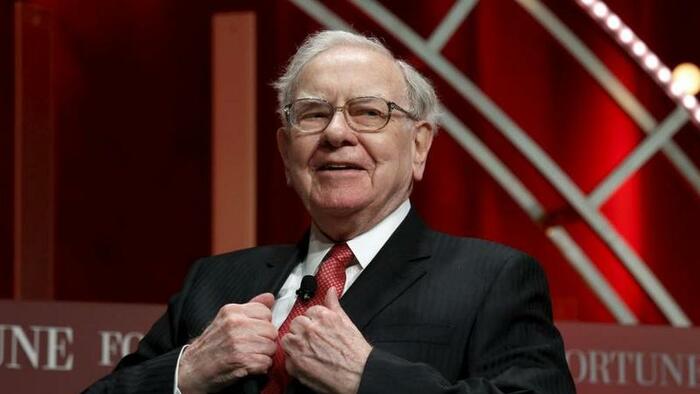
    When Warren Buffett announced at Berkshire’s yearly pilgrimage that he’s stepping down as CEO, the crowd in Omaha’s Convention Center erupted into cheers. Imagine a room full of shareholders bursting into applause for the man whose investment savvy turned a picture‑book company into a $1.16 trillion giant.

    Who’s Taking the Helm?

    Enter Greg Abel: the vice‑chairman of Berkshire’s non‑insurance arm, who’s been in the “future‑boss” program for ten years. He’s now the torch‑bearer for the conglomerate’s next chapter.

    The Legacy

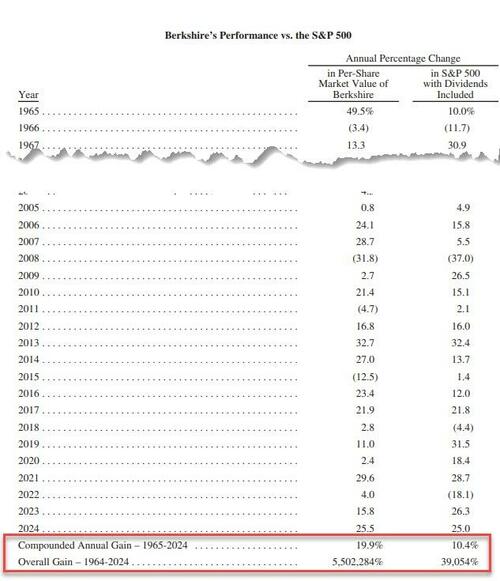
    • Golden Years – Since 1965, the firm’s compounded annual returns have outshone the S&P by a factor of two (19.9% vs. 10.4%).
    • Stellar Gains – BRK stock grew an eye‑popping 5,502,482% since 1964, whereas the S&P ticked up only 39,054%.
    • Strategic Power – Buffett’s prowess let him maneuver during crises, striking deals with heavyweights like Goldman Sachs and General Electric.

    Why the Standing Ovation?

    It’s not just the headline that caught everyone’s attention. Berkshire Hathaway is more than a hedge fund or private‑equity juggernaut—it’s a living legend with a portfolio so diverse it could get a PhD in “Business.” The shareholders knew the “end of an era” was a huge moment: it’s a big deal to hand off the reins of an empire built on wit, wisdom, and unwavering patience.

    So What’s Next?

    Greg Abel is not a rookie—he’s known for steering the company’s non‑insurance gears. With his seasoned experience, he’s poised to keep the momentum, continuing Buffett’s tradition of building long‑term value while staying nimble enough to navigate the ever‑shifting market.

    Takeaway

    Buffett’s departure marks not a decline but a new adventure for Berkshire. Thanks to the collaborative genius of the team, the empire is set to thrive even beyond the “Ole Style” of the past. Buckle up, investors: the next part of the Berkshire story is just getting underway.

    Warren Buffett’s Latest Gambit: Cash, Casualty, and a Call for Trading Fairness

    Picture this: the boardroom lights dim, a hush settles, and even long‑time heir Abel is a little blindsided by the buzz. Buffett, the “oracle of Omaha,” drops the bomb that shareholders are chilling with more cash than the world’s richest guys in the kingdom—yet the company’s earnings are taking an unplanned tumble.

    What’s the Bunch About: Berkshire’s Wild Hits & Misses

    • Operating earnings slump – Down 14% to $9.64 bn in Q1 (versus $11.22 bn a year earlier).
    • Insurance under‑writing losses – A 48.6% fall to $1.34 bn, wiping out a $1.1 bn hit from the California wildfires.
    • FX headache – About $713 m loss on currency moves; last year it was a $597 m gain.
    • Net profit drop – Roughly 64% year‑over‑year slowdown – the biggest hit so far in this “re‑entry” of 2025.

    Why It Isn’t a Crisis (For Buffett’s School of Thought)

    Berkshire always reminds investors, “Quarterly swings are like weather changes – you don’t read the forecast for your vacation.” Portfolios in the stock market can burst or bloom in a single quarter; it’s a short‑term quirk, not the long‑term vibe.

    Trade Talk in Omaha: Buffett’s Take on Tariffs

    When asked about Trump’s “war‑like” tariffs, Buffett shot back: “Trade is supposed to be a nice handshake, not a clash of swords. Balanced trade means everybody scores.” He rolled his eyes at the idea that tariffs are weapons, emphasizing that America should trade on everybody’s terms, not its own.

    Back to Reality: The Growing Cash Hoard

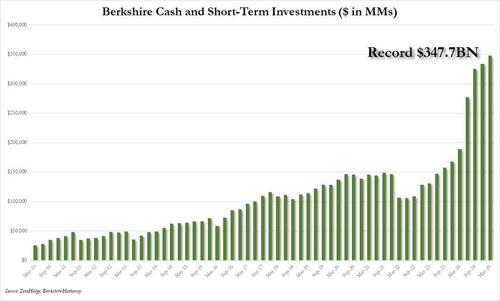
    Berkshire’s cash stash is now a record high: $347 bn (up from ~$334 bn by the end of the previous year). The firm holds a whopping $305.5 bn in Treasury Bills, proving Buffett didn’t ice the money for a quick market dip—in fact, the stock slump came after the cash blew up.

    What’s Buffett Doing With This Big Bunch?

    • Shared share buybacks during the pandemic when deal opportunities were scarce.
    • Snapped up Alleghany Corp. for $11.6 bn in 2022.
    • Reduced stakes in Apple and Bank of America to keep the portfolio nimble.

    Geeky Takeaway: “A Snowball of Cash” & The Myth of the “Deal Machine”

    Buffett’s strategy shows a real manager: Use the cash for what matters, be it buying back shares or grabbing strategic acquisitions when the deals line up. He told investors, “If I can’t find a deal that delivers a big smile, I’ll keep the money cozy and wait.” It’s like having a savings corner in a game of Monopoly—plenty of funds, but you need the right property to make the most of it.

    All Set? Final Word

    In a market jungle with wildfires and currency swings, Buffett’s calm, cash‑heavy approach feels like a steady lighthouse guiding Berkshire through the fog. The annual meeting was filled with chuckles and some lessons on the importance of balanced trade – because if you keep storming around, you’ll eventually run out of the ground to stand on. Meanwhile, the cash barrels keep filling; the next leap will depend on the right deal hitting the market’s radar.

    The Great Stock Sale Shuffle

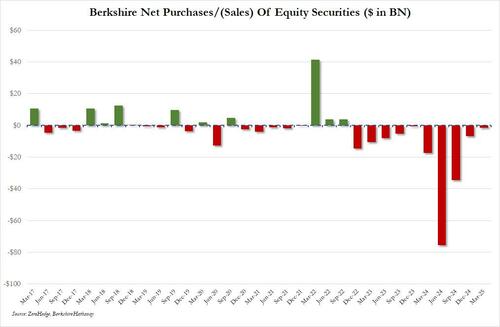
    Ever heard of a billionaire doing the opposite of a stock‑market merchant? That’s Berkshire Hathaway for you. For the tenth consecutive quarter, the company has been a net seller of stocks—yes, it’s been thumbing its finger at the market.

    What the Numbers Say

    • Q10: Sold a net $1.5 billion—a tiny fraction compared to the $6.7 billion in Q4.
    • Comparatively, the $75.5 billion tag in Q2 2024 was the high water mark.
    • Speed? Down the drain—its selling pace slowed noticeably.

    Why the Slowdown?

    Think of it as an over‑caffeinated shopper deciding to pace themselves. Berkshire’s portfolio tactics are settling into a more measured rhythm, trading out heavyweights at a leisurely pace.

    Big Picture Move

    Even as the selling throttle is eased, Berkshire remains a dominant stock‑market player, proving that sometimes less is more when it comes to portfolio play.

    Bottom Line

    From a massive $75.5 billion in Q2 2024 to a modest $1.5 billion now, the shift is clear: the Buffett‑led juggernaut has changed gears, trading its teeth out at a more relaxed tempo.

    Berkshire Hathaway’s Stock Is on a Hot Trail in 2025

    While the S&P 500 coughs up a 3.3% drop due to tariff worries that are tightening the tech belt and other sectors, Berkshire’s Class‑A shares are dancing a 19% joy‑jig.

    Why the Market is Chill‑ish

    • The S&P 500 has been feeling the turkey‑told tariff tension.
    • Tech and other sectors are stumble‑stuck behind the economic buzz.
    • Investors are just waiting for the signal signaling stability.

    What’s Up With Berkshire?

    • Class‑A shares shot up nearly 19% so far this year.
    • The stock peaked to a brand‑new all‑time high—yes, that’s a new record.
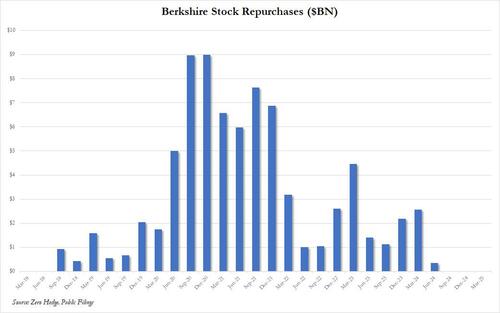
    • Despite this surge, Berkshire didn’t buy back any of its own shares in the third quarter.

    Guess What: It’s Not a Samething

    Because the stock is already on fire, Warren Buffett decided not to stir the pot—no share‑buy‑backs this quarter. Maybe he’s playing the “let things burn” card, or maybe he just wants to save the cash for the next big swing. Either way, the market will definitely want to hear his next move.

    Warren Buffett’s Zen of Business

    Even with a massive fan‑base, Buffett kept his day‑to‑day operations at Berkshire Hathaway as simple as a well‑cut hamburger. He was all about decentralization, letting the heads of each unit run their domes with the freedom they felt was right and dropping by just enough to stay in the loop.

    Capital Allocation: The Big Sweet Spot

    Buffett’s real calling card? Putting money where it mattered most. He spent hours and hours pouring over numbers in his Omaha office, which as of last year had a mere 27 people on the payroll.

    “A Lollapalooza” of Focus

    • He limited himself to a few core pursuits.
    • He gave those pursuits his undivided attention.
    • He stuck to that game plan for half a century.

    As Munger quipped in his annual letter, “Buffett succeeded for the same reason Roger Federer became great at tennis.”