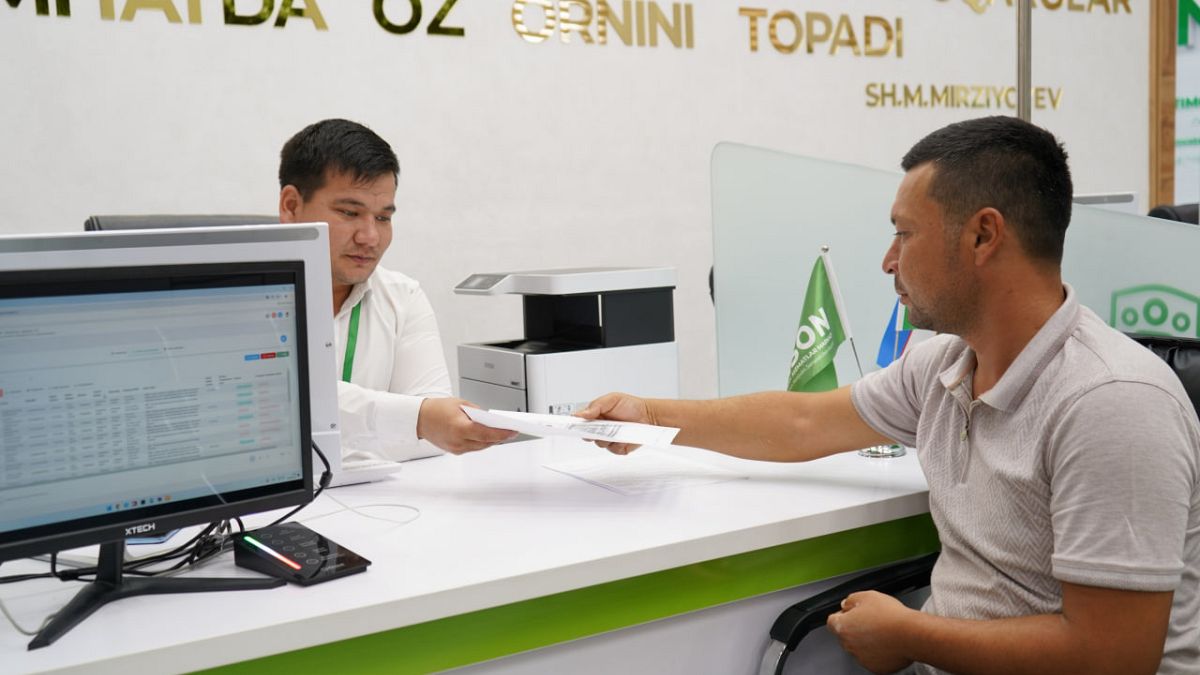
Reforms are ongoing, but new tools are helping Uzbekistan reach people in need of health and social support faster and with fewer barriers.
 ADVERTISEMENT
Uzbekistan is moving fast to modernise how it supports its most vulnerable citizens, with a two‑year overhaul that is already reshaping daily life for tens of thousands of families.
Since 2023, the Central Asian country has pulled dozens of previously scattered welfare, disability, and anti‑poverty schemes into a single structure under the National Agency for Social Protection (NASP). Officials say that merging services under one digital backbone is starting to deliver faster help, clearer accountability, and a focus on outcomes rather than paperwork.
Officials and aid workers alike stress that reforms are not yet complete. Yet early results suggest that the shift to a digital, integrated system has helped more than 92,000 disabled people find jobs and about 10,000 people become more independent.
One of the new initiatives is the national Registry of Persons Requiring Care, which launched in early 2023 and now includes 17,800 profiles of people unable to manage daily life alone.
Each quarter, a local triad of family doctors, social workers, and neighbourhood representatives reviews every record, removing names when they no longer need support.
Related
Can nature, art, and sport heal? Inside Europe’s growing social prescribing movement
More than 10,000 names have been removed to date, including 2,100 people who regained independence and 5,900 who re‑entered work, volunteering, or family networks. Even among those still receiving help, almost 14,000 have reduced their level of dependency.
Through the programme, subsidised medicines now reach patients before their chronic conditions worsen, home adaptations are installed before accidents occur, and relatives receive counselling to rebuild family ties.
In 2024 alone, 14,800 subsidised medicine packages were delivered, people got 10,800 full medical check‑ups, and there were 3,000 home adaptations.
“When we found out about my wife’s diagnosis, I immediately turned to our local mahalla committee and the district clinic,” Vladimir Khan, whose wife is certified as a first‑degree disability beneficiary, told Euronews.
“The social worker handled everything: he quite literally took us by the hand and guided us through each step. He came in person, saw our situation, and truly understood what we needed,” Khan said.
After his wife was officially granted disability status, she received a wheelchair, began receiving her medication through a clinic, and started going to regular medical check-ups. The couple also received some money.
Related
Why some countries get their money’s worth on healthcare and others are more wasteful
While they are still facing financial problems, Khan said the social worker’s efficiency and personal touch have been crucial.
“Now I know we’re not alone, and that the system can work when it reaches the people who need it,” Khan said.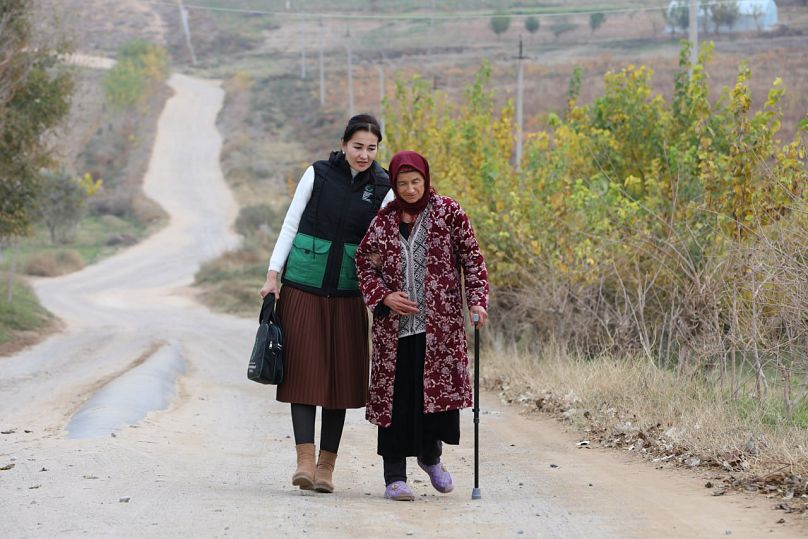 Social workers walk long distances to support elderly residents in rural regions.
Courtesy of the National Agency for Social Protection of Uzbekistan
Disability rights on the forefront
Uzbekistan has also dismantled an outdated certification process that once forced people with disabilities into lengthy hospital stays and provincial queues.
A new “functionality scale” focuses on daily abilities rather than diagnoses. District level teams, including paediatricians, now carry out assessments closer to home, sparing more than 150,000 people an exhausting journey to regional medical commissions each year.
The catalogue of assistive devices has doubled to 38 items, from child wheelchairs to bionic hands. Delivery times have shrunk four‑fold and the number of certified suppliers has grown five times over.
About 104,000 devices were delivered in 2024. Thousands of people with disabilities have enrolled in school, joined sports clubs, or secured jobs.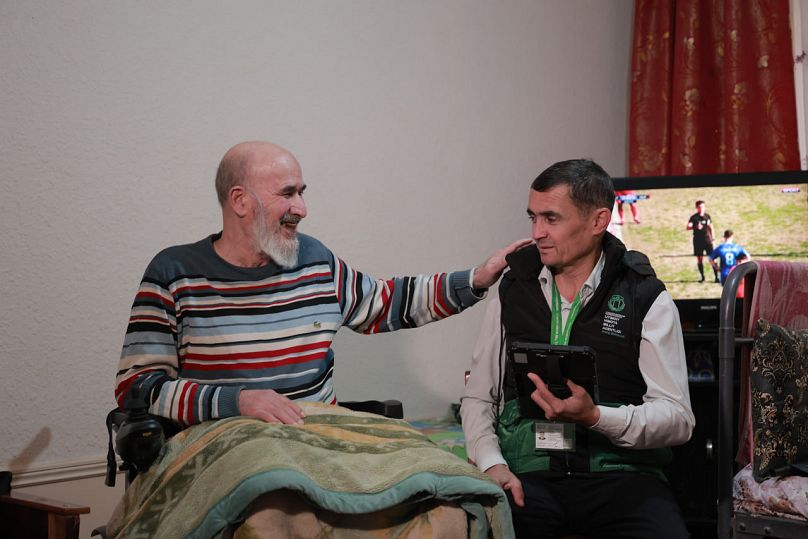 Home visits ensure direct support for people with limited mobility.
Courtesy of the National Agency for Social Protection of Uzbekistan
A safety net for low-income families
A National Registry of Low-Income Families, switched on in 2024, has identified 621,000 households living below the poverty line. Each now has an Individual Service Plan designed by local professionals, combining cash benefits with job placements, schooling support and health care.
To date, those plans have delivered nearly two million health services, close to one million employment services and hundreds of thousands of educational and legal interventions.
Dildora Ismoilova, a social worker in Tashkent, described the case of a man who had been living on the streets for years. The programme helped him access full medical treatment, a disability pension, and new documents, and he will soon secure permanent housing.
“Seeing that level of transformation from isolation to reintegration, is why we do this work,” Ismoilova said.
Related
Wealthy countries pay more for essential medicines, but the cost burden is far lower, study finds
Groups that work with low-income families said the creation of the National Agency for Social Protection was long overdue.
“Now we finally have a central institution that brings together areas of social support that were previously fragmented – from disability services to elderly care,” said Gulnoza Gafurova, co-founder of the nongovernmental group Kapalak Bolalar, which provides medical and social assistance to people with rare genetic skin disorders.
“The very existence of the agency is already a major step toward building an effective social environment in Uzbekistan,” Gafurova added, noting that previous projects helped show that private charities and public services can work together to boost efficiency, fundraising, and transparency.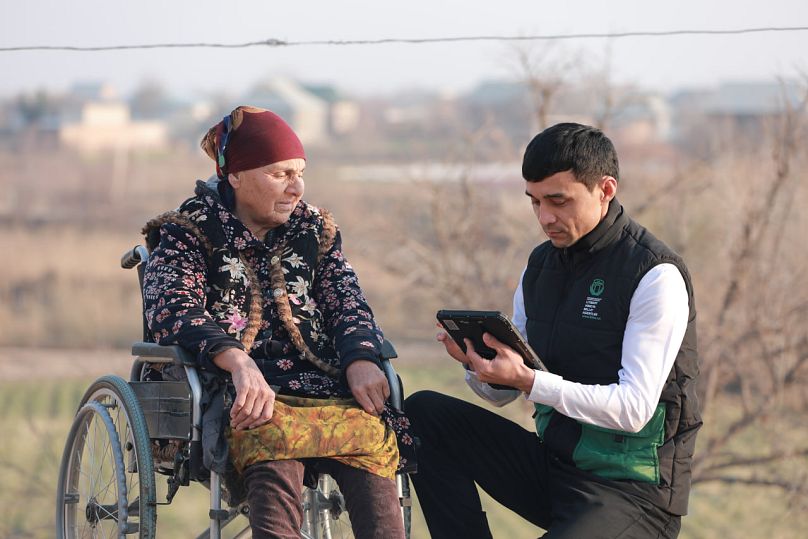 Digital tools help reach elderly citizens in remote areas for on-site assessments.
Courtesy of the National Agency for Social Protection of Uzbekistan
Reaching citizens in need
Mansur Olloyorov, director of the National Agency for Social Protection, said citizens can apply for services using the mobile app Mylhma, and local social workers can also register them digitally so they do not have to travel to fill out paperwork.
Hotlines remain an essential part of the system as well, with lines for general support, benefit applications, and women and children facing violence, he said
“We wanted to make sure that social services reach people not only in cities but also in the most remote areas,” Olloyorov said.
Looking ahead, the agency is expanding its digital reach with an “AI-powered upgrade” to the general support call centre, including voice assistants in Uzbek, Russian, and Karakalpak and additional help for callers with speech impairments, Olloyorov said.
Still, challenges remain.
“The biggest one is ensuring that our digital infrastructure keeps pace with growing demand”, Olloyorov said. “That means strengthening cybersecurity, improving data integration, and ensuring updates happen in real time”.