Tag: operations

  • Google is shutting down Tables, its Airtable rival

    Google is shutting down Tables, its Airtable rival

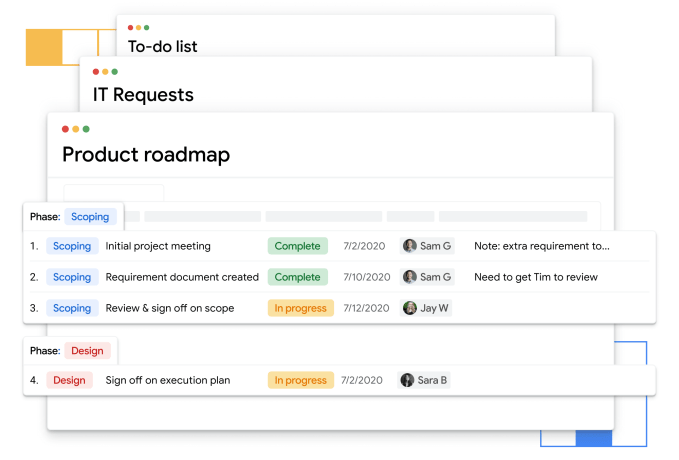
    Google Tables, a work-tracking tool and competitor to the popular spreadsheet-database hybrid Airtable, is shutting down.

    In an email sent to Tables users this week, Google said the app will not be supported after December 16, 2025, and advised that users export or migrate their data to either Google Sheets or AppSheet instead, depending on their needs.

    Launched in 2020, Tables focused on making project tracking more efficient with automation. It was one of the many projects to emerge from Google’s in-house app incubator, Area 120, which at the time was devoted to cranking out a number of experimental projects. Some of these projects later graduated to become a part of Google’s core offerings across Cloud, Search, Shopping, and more.

    Tables was one of those early successes: Google said in 2021 that the service was moving from a beta test to become an official Google Cloud product. At the time, the company said it saw Tables as a potential solution for a variety of use cases, including project management, IT operations, customer service tracking, CRM, recruiting, product development and more.

    The app was created by Google employee Tim Gleason, who had spent over a decade at the company. Gleason later moved on to become a tech lead manager for NotebookLM before announcing that he would retire beginning September 2024.Image Credits:Google
    Area 120, meanwhile, was the victim of a Google re-org in 2022, when the company canceled half its projects and informed staff that a reduction in force would cut the in-house R&D division to half its size. The division that remained would focus on AI projects, Google said.

    The following year, Area 120 was wound down amid broader layoffs, and a small handful of projects would move on to core Google product areas. (One of those was Aloud, which was building tools that let creators quickly dub their videos. YouTube announced an auto-dubbing feature in 2023 that became more broadly available this year.)

    Tables had survived these changes, as it was a part of Google Workspace’s team under Google Cloud. Unfortunately for Tables users, the service now has its own end-of-life date, too.

    In the email, Google advises Tables admins to export their data either directly to Google Sheets, then continue to manage their workflow in Sheets using tables and conditional notifications, or take advantage of a new migration tool to import their data to Google’s no-code platform, AppSheet. The latter solution preserves formatting like column types and relationships, and the workflow can then be managed with automations, fine-grained permissions, and Workspace integrations, Google says.

    The company earlier this month announced the coming closure on Table’s website and directed users to an FAQ, which noted that the team behind Tables had created a new data experience to power automated apps and workflows directly inside AppSheet. This alternative, launched in June 2023, lets users build data models for custom apps and workflows directly within AppSheet, the company said.
  • Next Round In The Northvolt Drama: EU Subsidy Trap And A New Californian Rescue

    Next Round In The Northvolt Drama: EU Subsidy Trap And A New Californian Rescue

    Submitted by Thomas Kolbe

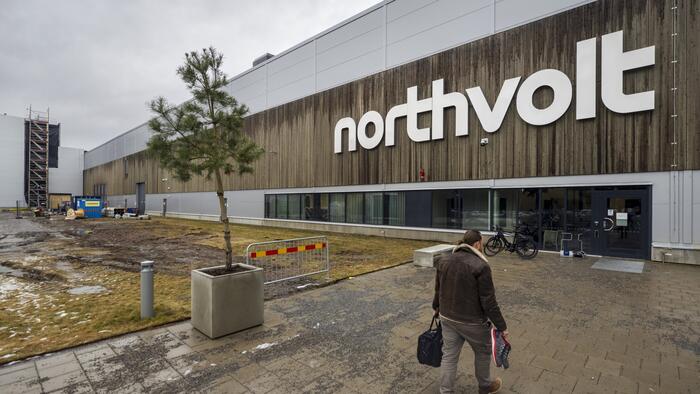
    After Northvolt’s spectacular collapse, a Californian start-up is now poised to buy the Swedish battery manufacturer. Brussels is already dangling new subsidies. No lessons appear to have been learned.

    Lyten is the new ace up the sleeve of the Brussels eco-central planners. The California-based battery manufacturer, founded in 2015, is supposed to clean up the mess left behind by former Economy Minister Robert Habeck in perfect coordination with the EU Commission and the state of Schleswig-Holstein after Northvolt’s failure.

    Just before Habeck left his ministerial post for Denmark (he will, of course, continue to hold his Bundestag seat), taxpayers were presented with the bill for the green subsidy debacle: roughly €900 million, of which the federal government covers €600 million of the loss via the KfW (Kreditanstalt für Wiederaufbau), while Schleswig-Holstein had issued a €300 million guarantee.

    In the end, Northvolt collapsed under €5.8 billion in debt—an unsurprising result when subsidy-dependent companies operate completely detached from market demand.

    Enter Lyten
    Now, the California company Lyten is supposed to fix it. Investors include, among others, Stellantis, the parent company of Opel, and the logistics firm FedEx. The U.S. government is also listed with an investment of about $4 million. The Californians plan to acquire all remaining Northvolt sites, including the main factory in Skellefteå (Sweden), the expansion plant, the research center in Västerås, and the “Northvolt Three” project in Heide, Schleswig-Holstein.

    The acquisition still requires approval from the relevant regulatory authorities in Sweden, Germany, and at the EU level. The deal is expected to close in Q4 2025. Lyten plans to resume operations at the acquired sites quickly and expand them gradually.

    Lyten CEO Dan Cook stated that the company aims to supply the North American and European battery markets with cleanly produced energy storage systems, thereby contributing to energy and supply security.

    These are ambitious goals—especially as green subsidy companies are failing across Europe at an alarming pace. One must therefore ask whether the Americans realize at what stage the EU’s green transformation currently stands. Even before Northvolt’s collapse, numerous similar subsidy projects had failed, including Britishvolt, AMTE Power (also in the UK), and Freyr in Norway. These cases show that there is neither a market for this technology in Europe nor any way to artificially create one with subsidies.

    Cook cannot have missed the fact that the EU has thoroughly trapped itself with its Green Deal and is running a subsidy “perpetuum mobile,” passing the costs squarely onto taxpayers.

    A Sinister Suspicion
    Moreover, Lyten plans to produce lithium-sulfur batteries—a technology Northvolt never had.

    When these facts are combined, a dark suspicion emerges: Are the Americans merely trying to gain access to Northvolt’s intellectual property cheaply? Is this yet another case of subsidy hunters, aware worldwide that European money flows freely as long as a project shows even the slightest green sheen?

    Indeed, as Der Spiegel reports, Cook has already approached the European Union requesting additional subsidies. He told the paper that there is no doubt the EU wants battery production on the continent. There are several programs Lyten could access through this deal, he added.

    Clearly, Cook referred to the EU’s seemingly endless subsidy resources, which reportedly include another €700 million for Northvolt under the “Temporary Crisis and Transition Framework” (TCTF)—officially aimed at promoting climate neutrality, but in practice mainly funneling taxpayer money into risky transformation projects. A German Northvolt subsidiary had already received a legally binding grant, which could be transferred to a new Northvolt owner.

    Germany’s Doors Are Wide Open
    The Federal Ministry for Economic Affairs confirmed to Spiegel that while there is no automatic transfer, it is indeed possible “under certain conditions.” That’s the kind of German bureaucratic prose that gives any potential buyer the impression they’re not just getting machines, halls, and personnel—but a sack of taxpayer money on top. One only has to ask nicely; evaluation hardly matters, as PricewaterhouseCoopers (PwC) had warned.

    In June 2023, auditors explicitly cautioned against federal involvement in Northvolt, pointing to the lack of market potential.

    At Northvolt’s Stockholm headquarters, staff are more cautious. The new owner does not want Sweden’s help for the time being, said Cook to Dagens Industri.

    What he meant exactly is unclear—was it the migration chaos in Scandinavia, the economic downturn, or Northvolt’s collapse specifically? Ultimately, it hardly matters. Germany, in Cook’s eyes, has apparently not suffered enough yet; here, one can ask for taxpayer money without scruples. In the best Germany of all time, anyone can hope for subsidies or other forms of state support, as long as they ask politely.

    * * *

    About the author: Thomas Kolbe, a German graduate economist, has worked for over 25 years, he has worked as a journalist and media producer for clients from various industries and business associations. As a publicist, he focuses on economic processes and observes geopolitical events from the perspective of the capital markets. His publications follow a philosophy that focuses on the individual and their right to self-determination.

    Loading recommendations…