Tag: opinions

  • Supreme Court Allows Trump Admin To Revoke DEI-Related NIH Grants

    Supreme Court Allows Trump Admin To Revoke DEI-Related NIH Grants

    By Matthew Vadum of Epoch Times,

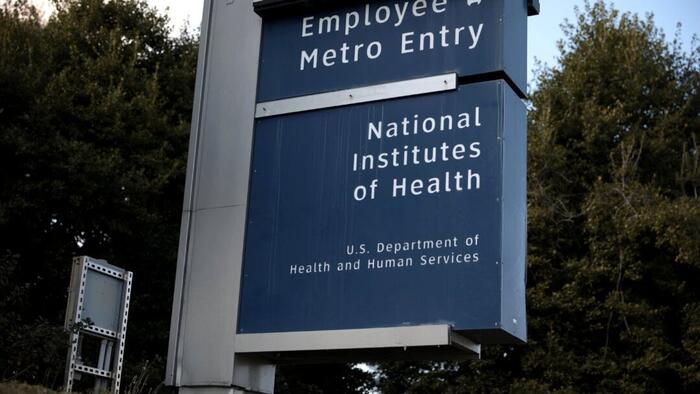
    The Supreme Court voted 5–4 on Aug. 21 to allow the National Institutes of Health (NIH) to cancel hundreds of millions of dollars in research grants linked to diversity, equity, and inclusion (DEI) initiatives.

    The new ruling clears the way for the funding reductions while litigation over the grants continues in the lower courts.

    The justices filed five separate opinions explaining their votes.

    Justices Clarence Thomas, Samuel Alito, Neil Gorsuch, Brett Kavanaugh, and Amy Coney Barrett voted to allow the grants to be cut.

    Justices Sonia Sotomayor, Elena Kagan, Ketanji Brown Jackson, and Chief Justice John Roberts voted to deny the government’s request to rescind the funding.

    The high court said it acted because the federal government faces the possibility that the grant monies, once paid out, may not be recovered.

    Moreover, “the plaintiffs do not state that they will repay grant money if the Government ultimately prevails.”

    The case is known as National Institutes of Health v. American Public Health Association.

    The Department of Justice filed an emergency application with the nation’s highest court late last month, asking the justices to block a ruling by Boston-based U.S. District Judge William Young, who found the cancellation was unlawful and ordered the government to restore the funding.

    NIH began taking steps in February to end the grants that conflict with President Donald Trump’s policy priorities.

    The NIH is the world’s largest government funder of biomedical research.

    The emergency application stemmed from two lawsuits challenging the cuts to grants involving DEI, “transgender issues,” “vaccine hesitancy,” and other issues.

    The American Public Health Association described the cuts as an “ongoing ideological purge” of projects with a purported connection to gender identity, DEI, or “other vague, now-forbidden language.” A coalition of 16 attorneys general, largely Democrats, alleged their public research institutions are facing harm because of the funding delays and cuts.

    The district court directed the NIH “to continue paying $783 million in federal grants that are undisputedly counter to the Administration’s priorities,” the department said in its filing.

    “Following the change in Administration, the NIH identified, explained, and pursued new funding priorities. That is democracy at work, not, as the district court thought, proof of inappropriate ‘partisan[ship]’—let alone a permissible basis for setting agency action aside.”

    In his written opinion, Gorsuch said the district court’s ruling upholding the grants conflicted with the Supreme Court’s decision in Department of Education v. California in April that let the Trump administration withdraw education-related grants.

    “Lower court judges may sometimes disagree with this Court’s decisions, but they are never free to defy them,” Gorsuch said.

    Unless we want anarchy to take over the federal judicial system, “a precedent of this Court must be followed by the lower federal courts no matter how misguided the judges of those courts may think it to be,” Gorsuch said, quoting a prior Supreme Court ruling.

    In his dissenting opinion, Roberts said the district court ruling was justified.

    “This relief—which has prospective and generally applicable implications beyond the reinstatement of specific grants—falls well within the scope of the District Court’s jurisdiction under the [federal] Administrative Procedure Act.”

    Sotomayor, Kagan, and Jackson joined the dissent in part.

    In her dissenting opinion, Jackson said the high court’s new ruling is “Calvinball jurisprudence with a twist,” a reference to a fictional game featured in the comic strip, “Calvin and Hobbes.”

    “Calvinball has only one rule: There are no fixed rules. We seem to have two: that one, and this Administration always wins,” she said.
    Loading recommendations…
  • Appeals Court Strikes Down Boasberg\’s Contempt Order in Trump Administration Deportations Case

    Appeals Court Strikes Down Boasberg\’s Contempt Order in Trump Administration Deportations Case

    Big Shake‑Up in the D.C. Legal Scene

    Judge Boasberg, the “Activist” on the Bench, Gets a Back‑Stab

    Picture this: a heated showdown between a U.S. District Judge and the Trump administration. The judge, known for his outspoken style, had a plan up his sleeve that could’ve tossed the White House right into a contempt case. But guess what? The higher‑up appeals court decided to pull the plug on that order.

    Why It Matters

    • The stop‑gap move meant the administration risked getting a nasty contempt judgment.
    • Now, with the order removed, that nightmare remains on its way out of the court file.
    • It’s a classic “who will win” scenario where the court’s decisions keep steering the politics.
    Takeaway

    In a nutshell, Judge Boasberg’s bold move has been smoothed over by the appeals court. The Trump team’s potential contempt claim? It’s still pending, but the legal tide has shifted. Time will tell if this reshuffling is just the beginning of a longer legal saga.

    Judge Katsas Drops the Contempt Bomb—And Keeps the Court’s Balance

    For a quick peek into the world where law meets high‑stakes politics, this week’s 2‑to‑1 split at the Washington Court of Appeals kept everyone on the edge of their seats. The case? Judge Daphne Boasberg’s stern order to halt the immigration‑related deportations, a move that had ignited the halls of the White House and the feeds of every Trump‑debating columnist.

    What the Court Taught Us About Balancing Urgency and Clarity

    • “Emergency, not panic”—Katsas admits the district court arrived on the scene amid a ticking timer.
    • The original order carried a “slight ambiguity” that left room for the administration to argue.
    • The appeal counter‑tracks the first order, saying it was wrong to leap the fence without a proper walk‑through.

    Picture the court as a referee who, in the heat of a ball game, calls a foul that some fans interpret as a first‑down. Katsas’ ruling reasserted that, in rushed emergencies, the final whistle might not be crystal clear all the time, but the main point is that the “foul” was called out loud enough to be heard.

    Trump’s Deportation Demo: A Legal Back‑and‑Forth

    The Kash of politics? 250 Venezuelan nationals were moved to CEDOT, the big leather‑bound, high‑security penitentiary in El Salvador, under the 1798 “Alien Enemies” law. Whether that move was legal or a political stunt was, and still is, a hot argument. Katsas makes it crystal: the decision doesn’t sit on the lawfulness of that move, it sits on the nature of the court’s power.

    He points out that the original suppression order had already been vacated by the Supreme Court in April, so the toolbox (or “contempt” power) was no longer a tool for coercing the White House. This is a reminder that judicial influence wavers as the legal system waves its own certification ribbons.

    Critiques and Defenders – The Judge’s Two‑Sided Stance

    • Behold Judge Neomi Rao’s blunt, “egregious abuse” comment and her call for a “loss of authority” explanation—no political trumps here, just a straight‑up judicial check.
    • Judge Cornelia Pillard upholds Boasberg’s defense, warning the administration that sneaking past court orders without a proper challenge is as illegal as riding a roller coaster to dodge the speed limit.
    • “Our system of courts cannot long endure if disappointed litigants defy court orders with impunity,” Pillard says—essentially,
      you can’t just ignore the manual and expect everything to stay smooth.

    How the Precedent Will Play Out

    Will mainstream commentators slide back and call the Trump administration “lawful” again? The answer hinges on future court rulings. The judicial system has now sharpened its tools, and it looks ready to check any bold, unnecessary aggressive moves with a properly measured respect for the law, without just flipping the script on the executive branch.

    In the end, while the controversy continues to spark outcry and hot takes in every glossy front page, the court stands firm that the original juxtaposition between emergency, the lack of clarity, and the judicial approach was, objectively, a bit too bold. The court’s decision—to hold Boasberg’s order at the right place—means that next time the White House wants to deploy a policy that whistles through the law, it will probably pick up the phone and call for a consultation.

    Bottom line: the appeal’s 2‑to‑1 outcome is a temporary curtain call that reminds all — executives, lawmakers, and litigants — that while policy can be quick, it can never backslide on rulebook without stubbing an exoné.

    And that concludes our recap—ready to surface like a splash of the justice system’s pulse to your news feed. The judge’s voice is a reminder that the legal wind is a once‑yelling story that keeps on going.