Tag: opportunity

  • Why is nobody already selling my idea?

    Why is nobody already selling my idea?

    Starting a business often begins with a spark of inspiration. There are some of us who naturally find new opportunities in everything we see, we think, “What if there was a solution to this problem?” or “How could this be easier for people?” This curiosity then leads us to innovative ideas and potential business ventures.

    A lot of the time when we have new ideas, our natural first step is jumping on Google to see whether there’s already a business out there providing the consumers with the product or service. We want to see whether it’s worth further investment before taking any steps forward. The initial Google search then leads to questions like what to do if there is a business out there, or if there isn’t, what your next step should be. What if someone had previously failed at it? Does that mean you give it up too?
    When you’re trying something new it’s quite common to have intrusive thoughts and I think we all know what that feels like. They can distract you and hugely impact the decisions you make, it’s important not to let them prevent you from moving forward.
    So, what if your idea is something that isn’t already a product and never has been?
    If you find yourself with a brand-new idea it can be both exciting and daunting. You could ask questions like, “Why is nobody selling my idea already? Is there a reason? Will anyone understand it?”
    If the product isn’t already on the market, it could simply be that no one had the idea for it, or more likely it could be that someone did and they saw the same problem that you’re seeing, but they didn’t do anything about it. Some people have the idea but never act on it and leave the opportunity out there for someone else.
    Your first step is going to be conducting thorough market research. Even if you can’t find a direct competitor, there may be indirect competitors or similar products on the market. You want to look at what solution they are providing their customers with. Market research is going to help you understand the potential demand and gaps in the market that your idea can fill.
    Sharing your ideas can be daunting, especially when thinking about whether anyone is going to understand what you’re talking about. You want to share with people who support you, but know that they might not tell you if they think the idea is going to fail.
    Something you do need to remember is that you don’t want to give your idea away if it’s not been protected, either by a non-disclosure agreement being signed, trademarking, patenting or copyrighting your idea, designs and names. If initially, these things haven’t been done, try and give a rough outline of the idea but nothing too detailed.
    You’ll need to research and find a similar product to yours so you can find an estimated price point to determine whether people would pay that amount for this product. You’d also want to know what a similar product is selling for in another country if you wanted to take your idea global.
    No matter what the idea is, bringing a non-existent product to market is a challenging but rewarding journey and you should persevere with it.
    But what if your idea has already existed and previously failed, what do you do next?
    If someone already tried your idea and it failed, it doesn’t necessarily mean your idea is doomed from the start. If you find out your idea had previously failed, you need to do your research and find out what caused the idea to fail.
    Conducting market research is going to be the starting point for you. You want to be thorough with this to find out why the idea failed, what the market was like when they launched the idea, what their marketing strategies were, and whether the product simply didn’t get the momentum it needed to launch.  Once you’ve got this research you can use it to see how you could avoid the same mistakes and improve your approach.
    Whether the idea is new or not you need to perform your own market research to validate the demand for your product or service, making sure the idea is useful and fulfils a purpose. An easy way of getting market research is going to be for you to engage directly with your potential customers through surveys, interviews, or focus groups.
    Focus groups can be particularly useful for gathering detailed feedback and suggestions as these groups will be filled with strangers, asking family or friends for their opinions sounds like a good idea although, they usually won’t be completely honest with you which is what you need.
    You need to use your research to define demographics, preferences, and buying behaviours to tailor your product and marketing strategies effectively. Once you know who you’re selling to you need to make sure your idea is clear and easily understandable, ensure your idea addresses a specific pain point or problem that potential customers are facing. The more pressing the problem, the higher the demand will be for your solution.
    By validating your idea, protecting it, developing a solid business plan, and staying focused and resilient, you can turn your innovative concept into a successful business venture. Richard Branson said, “There is no greater thing you can with your life and your work than follow your passions.” If you have passion for what you’re doing, it will help drive you and your ideas.
  • Trump Tariffs Could Spark Resurgence in Middle East Economies

    Trump Tariffs Could Spark Resurgence in Middle East Economies

    Middle Eastern Economies: From Stuck to Thriving… or Just Stuck

    Stuck in a Time Warp

    The poor nations of the Middle East have been doing a dance with their economies for decades—turn around, spin around, and almost forget the steps. Meanwhile, folks in Southeast Asia were building factories, creating jobs, and pulling millions out of poverty. Not so much in our neighborhood, though, where governments have grown into giant bureaucratic sharks, bureaucracy piling up like a tower of pancakes, and a handful of elites just hunting for rent.

    Trump’s Tariff Take‑out

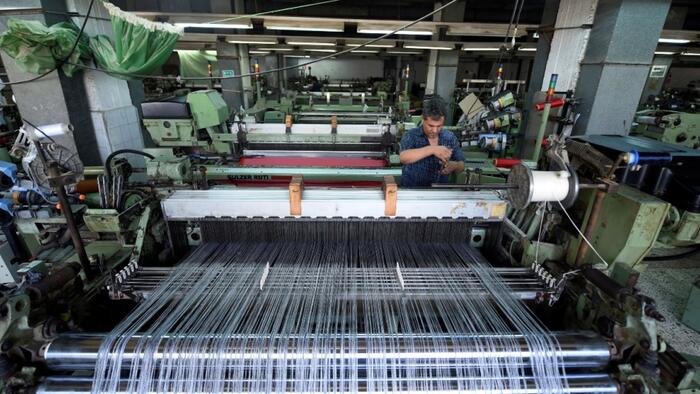
    When President Trump decided to tear up the global trading system with a whirlwind of tariffs, the reaction here was anything but one‑size‑fits‑all. “We’ve been through this circus before,” an Egyptian paper plant worker, stepping back from the spotlight, told Middle East Eye. “It’s no surprise. We’re already in the same boat as always.”

    But there’s a twist—

    • More Costly Everywhere Else – Because most other places just got pricier, we might actually have a sliver of advantage.
    • Trap of the Elites – The “rent‑seeking” class is still vogue, resembling a circus ringmaster lining up pit bulls for a high‑pay league.
    • Red Tape Redefined – Every new regulation feels like a giant maze through which the public is forced to wander.

    Why It Matters

    For someone in a small paper mill, these tariffs feel less like a threat and more like a chance. The world’s trade is a giant market—if the rest of the globe ups their prices, then a place like Egypt can have a little room to breathe and trade at a fender‑bender. It’s a bit like being in a dramatic soap‑opera, yet feeling like you’re finally flipping the script.

    In Summary

    Middle Eastern countries are no strangers to economic upheaval. Their experiences, a constant reminder of how bureaucratic layers and rent‑seeking elites can stall progress, are now intersected with a global tariff wave. While some see it as another storm, insiders wonder if this could somehow be their lucky break—though they are still hoping the paper industry doesn’t run out of modern machinery.

    Trump’s Tariff Tornado: Middle East’s Unexpected Game Plan

    When President Trump rolled out those bold 46‑% and 49‑% tariffs on Vietnam and Cambodia, it felt a bit like a slap on the wallet—but not everyone was wearing an expensive sword. For a handful of Middle Eastern economies, the move opened a lane that could lead to a brand‑new turf war in low‑skill manufacturing.

    Egypt: From Inflation Woes to a Slim Chance

    • Low Tariff Badge: Egypt landed a modest 10 % tariff—the lowest bracket of all.
    • Strip‑Down Economy: A decade of inflation and currency devaluation has turned raw‑material imports into a pain‑staking restaurant bill.
    • Power Cuts: Frequent electricity rationing has left factories humming on extra batteries.
    • Export Mix: 51 % of its US exports are garments and textiles; iron & steel lags at a fraction.
    • Opportunity Roadmap: If Egypt can underprice Southeast Asia on simple, low‑investment jobs like tailor‑made clothing, Trump’s tariffs might just open a window.

    “Trump has just made it easier for Egypt, with all our corruption and more expensive labor costs to compete with Asia,” one savvy paper manufacturer told Middle East Eye. It’s a gamble, but when the global supply chain rechecks its agenda, maybe the old minting of cotton and leather could shine again.

    Jordan: A Tiny Pocket The Big Scoop

    • FTA With the US: Jordan’s $5.4 bn trade footprint is minuscule for Wall Street but huge for the local market.
    • 5‑Year Growth: The UK’s consumer tax play might lean Jordan’s imports higher by 15 % in 2024.
    • Potash Power: Amid Ukraine’s drought, Jordan squeezes a niche selling fertiliser to America.
    • Victory at the Flex: Petra Engineering—think HVAC wonders—has carved out a niche.

    “For the US, Jordanian exports are meaningless, but if these tariffs continue, we will be affected,” CFO Nael al‑Husami explained.

    Morocco: The New Car‑Catcher of Africa

    Alas, Morocco is itching to swivel supply chains toward the Middle East. The country is already Africa’s best car‑maker, and a 10 % tariff might have European businesses looking over its shoulder.

    What’s Behind This Tariff Shuffle?

    Trump’s approach felt like a club slamming a coin into a beam—he gauged the tariff based on the gap between the US’s import bills and export receipts. Low‑cost producers in Southeast Asia, who have chased the numbers like a true hustler, got the broadest brunt of the hit.

    The Middle East now stocks a 10 % baseline tariff on exports, rising to 41 % for Syria or 39 % for Iraq. Adding the reciprocal angles, the net effect is perplexing. Yet for small economies, the key notion is: control the price, even if the rhythm changes.

    Bottom Line: A New “Storm” is Brewing—Will You Ride the Wave?

    With ordinary manufacturing adjusted by modern technology, this could be the region’s best chance to leapfrog design and export requirements that once drew massive bills. The question isn’t whether tariffs will be an outright disaster, but whether tapping the shifting water will bring a tide above the usual drag.

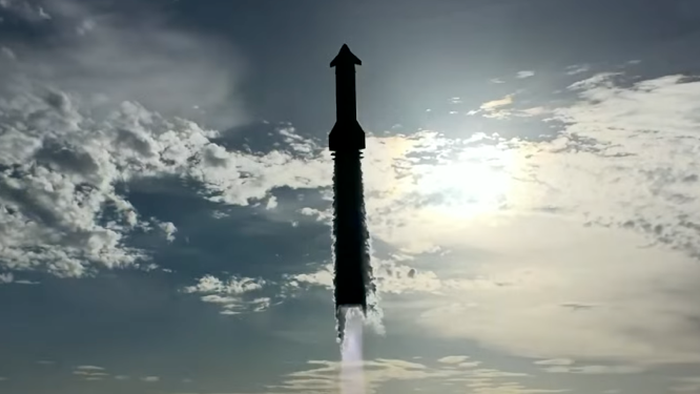
  • Third Time's The Charm: SpaceX Starship Megarocket Blasts Off From Starbase

    Third Time's The Charm: SpaceX Starship Megarocket Blasts Off From Starbase

    Watch Live


    .  .  . 

    Update (Tuesday):

    After three attempts, finally liftoff! 

    .  .  . 


    Update (Monday): 

    Scrubbed. 

    .  .  . 

    Update (Monday): 

    Just one day after the tenth Starship flight was delayed due to a ground-systems troubleshooting issue, the countdown clock is now at T-minus 12 minutes and ticking down.

    Weather conditions are currently 55% favorable.

    Watch Live:

    .  .  . 


    Update (0715ET): 

    “Standing down from today’s tenth flight of Starship to allow time to troubleshoot an issue with ground systems,” SpaceX wrote on X.

    No timeframe was given for when the test flight would be rescheduled.

    .  .  . 


    The tenth flight test of SpaceX’s Starship megarocket is scheduled for 7:30 p.m. Eastern at the company’s Starbase launch site in southern Texas, just outside Brownsville. The stakes are high for Elon Musk and the SpaceX team after investigations into the Flight 9 loss found a static fire anomaly that led engineers to push for hardware fixes and operational upgrades. That’s the entire point of these test flights, pushing reliability higher in preparation for future missions to the Moon and eventually Mars. 

    Here are the goals of today’s flight test of Starship:

    Super Heavy Booster Objectives:

    • Conduct multiple landing burn experiments, including disabling one central engine to test backup performance.

    • Transition to a two-engine hover before shutting down and dropping into the Gulf of America (no return attempt).

    • Continue testing new flight profiles and off-nominal scenarios to refine reusability.

    Starship Upper Stage Objectives:

    • Attempt first payload deployment with eight Starlink simulators (expected to burn up on reentry).

    • Perform a Raptor engine relight in space.

    Conduct reentry stress tests, including:

    • Removing heat shield tiles to probe vulnerable areas.

    • Testing metallic tiles, including one with active cooling.

    • Evaluating catch fittings and new tile edge designs.

    • Forcing structural stress on rear flaps during peak reentry pressure. 

    Roadmap of test flight:

    Watch the 400-foot-tall megarocket with 33 engines, known as the Super Heavy, blast Starship into space and back: 

    .   .   . 

    Loading recommendations…
  • With India's corporate banking lagging decades behind consumer fintech, TransBnk raises M to bridge the gap

    With India's corporate banking lagging decades behind consumer fintech, TransBnk raises $25M to bridge the gap

    While digitization has transformed banking for Indian consumers, corporate banking has been left in the slow lane — still relying heavily on clunky infrastructure, paper trails, and spreadsheet-heavy workflows. TransBnk wants to address that gap, and Bessemer Venture Partners has invested in the 3-year-old startup in a $25 million round to accelerate its progress.

    Over the past decade, India has experienced a significant boom in consumer fintech, driven by transformative shifts such as the rise of digital payments through the government-backed Unified Payments Interface (UPI) and the proliferation of payment aggregators.

    However, these innovations have done little to enhance the experience for businesses, especially in transaction banking, where payments, collections, and even account statements still rely on manual processes. Business customers often juggle multiple internet banking portals and rely on spreadsheets for reconciliation. This gap persists despite India being the world’s largest small and medium enterprise (SME) market, with nearly 75 million SMEs — all of which would benefit from more modern financial infrastructure.

    The untapped potential in corporate banking represents a lucrative opportunity. India’s B2B fintech industry is projected to reach a market size of $20 billion by 2030, according to a February 2024 report by Chiratae Ventures and The Digital Fifth. The country is already home to 26 fintech unicorns with a combined market value of $90 billion, per data analyzed by JM Financial last year. However, most of these startups have focused primarily on innovations in payments and lending rather than core banking infrastructure.

    Mumbai-based TransBnk, co-founded by former bankers Vaibhav Tambe, Lavin Kotian, Pulak Jain, and Sachin Gupta, positions itself in this space with what it calls a “common operating system” — a single window through which businesses can access the banking ecosystem. It offers a foundational layer of microservices, enabling use cases such as treasury, liquidity, and escrow management to be built upon.

    “During our banking days, we always got a lot of customers asking us for a single, consolidated platform for transaction banking or corporate banking on a single particular stack,” said Tambe, co-founder and CEO, in an interview. “And we thought, let’s take up this challenge … The idea was that can we consolidate and integrate with multiple banks and then create a single platform, be it in the form factors, like the web interface or mobile app, or maybe SDKs, or API?”

    Founded in 2022, the startup says it right now works with 60 banks, with 40 fully integrated into its platform to process transactions, payments, and even the core functionality reconciliation. It also has 220 customers, of which 80% are merchants, including lenders, fintechs, and nonbank financial companies (NBFCs), while the remaining 20% are banks that have white-labeled its software to provide corporate banking services to their customers.

    Techcrunch event

    Tech and VC heavyweights join the Disrupt 2025 agenda

    Netflix, ElevenLabs, Wayve, Sequoia Capital, Elad Gil — just a few of the heavy hitters joining the Disrupt 2025 agenda. They’re here to deliver the insights that fuel startup growth and sharpen your edge. Don’t miss the 20th anniversary of TechCrunch Disrupt, and a chance to learn from the top voices in tech — grab your ticket now and save up to $600+ before prices rise.

    Tech and VC heavyweights join the Disrupt 2025 agenda

    Netflix, ElevenLabs, Wayve, Sequoia Capital — just a few of the heavy hitters joining the Disrupt 2025 agenda. They’re here to deliver the insights that fuel startup growth and sharpen your edge. Don’t miss the 20th anniversary of TechCrunch Disrupt, and a chance to learn from the top voices in tech — grab your ticket now and save up to $675 before prices rise.

    San Francisco
    |
    October 27-29, 2025

    REGISTER NOW

    Globally, companies like Finastra, Temenos, and Infosys’ Finacle are helping modernize banking through software platforms. In the U.S., players like Treasury Prime offer embedded banking solutions for enterprise customers. But in India, startups in this domain remain few and far between.

    Building for this space requires deep expertise in banking infrastructure — integrating with legacy core banking systems and connecting them to enterprise stacks, such as ERPs and treasury platforms. It also requires close relationships with banks to access and build upon their data and workflows.

    Over the past year, TransBnk says that it has grown its revenue more than 12x, reaching around $12 million in annual recurring revenue. The startup says it turned profitable after taxes in February and what it describes as healthy gross margins of roughly 80%. The company states that it enables around 110 million transactions monthly, covering 11,000 bank accounts and utilizing over 1,500 APIs.

    The Series B funding round, which includes $4 million in secondary, also saw participation from Fundamentum, Arkam Ventures, 8i Ventures, Accion, and Japan’s GMO Venture Partners. The startup plans to expand beyond India and enter markets such as Southeast Asia and the Middle East, continuing to build its infrastructure platform layer. It also intends to expand its reach to sectors such as real estate, pharma, and renewable energy, Tambe told TechCrunch.

    With the latest funding, TransBnk has raised around $26 million in total. Its valuation grew 7x from the last round, Tambe said, without providing specifics.