Tag: orders

  • Nepal blocks Facebook, Instagram, YouTube, X over rule breach, amid censorship concerns

    Nepal blocks Facebook, Instagram, YouTube, X over rule breach, amid censorship concerns

    Nepal has ordered internet service providers to block access to major social media platforms, including Facebook, Instagram, YouTube, and X, after the companies failed to comply with local registration rules — drawing criticism from media rights groups and raising concerns over censorship and free expression.

    On Thursday, Nepal’s Ministry of Communication and Information Technology directed the Nepal Telecommunications Authority to instruct internet service providers to restrict access to 26 social media platforms altogether. The move followed a meeting of ministry officials earlier in the day.

    Nepal has an internet penetration rate of over 90%, according to data from the Nepal Telecommunications Authority. Among social media users in the country, 87% use Facebook, followed by 6% on X and 5% on YouTube, the latest figures from web analytics firm Statcounter suggest.

    The list of affected platforms includes Discord, Facebook, Instagram, Messenger, WeChat, Reddit, Snapchat, YouTube, and X. The decision follows an August 25 directive that gave foreign social media companies just seven days to register their operations in Nepal and assign a local contact person.

    Media advocacy groups and civil society organizations have criticized the move. The decision would “seriously hinder journalists’ work and people’s access to news and information,” said the Committee to Protect Journalists, a New York-based nonprofit. The Federation of Nepali Journalists also condemned the measure, saying it “undermines press freedom and citizens’ right to information.”

    Thursday’s decision comes weeks after Nepal’s Supreme Court upheld the government’s local registration requirement last month, ruling that it was aimed at curbing misinformation. However, the court did not explicitly order the government to ban platforms that failed to register, instead directing officials to “make appropriate legal arrangements immediately, within the framework of the law.”

    Notably, TikTok and Japan’s Rakuten Group-owned Viber are among the social media apps not affected by the latest order; the government said these platforms have already followed the rules and registered themselves in the country.

    Techcrunch event

    Join 10k+ tech and VC leaders for growth and connections at Disrupt 2025

    Netflix, Box, a16z, ElevenLabs, Wayve, Sequoia Capital, Elad Gil — just some of the 250+ heavy hitters leading 200+ sessions designed to deliver the insights that fuel startup growth and sharpen your edge. Don’t miss the 20th anniversary of TechCrunch, and a chance to learn from the top voices in tech. Grab your ticket before Sept 26 to save up to $668.

    Join 10k+ tech and VC leaders for growth and connections at Disrupt 2025

    Netflix, Box, a16z, ElevenLabs, Wayve, Sequoia Capital, Elad Gil — just some of the 250+ heavy hitters leading 200+ sessions designed to deliver the insights that fuel startup growth and sharpen your edge. Don’t miss the 20th anniversary of TechCrunch, and a chance to learn from the top voices in tech. Grab your ticket before Sept 26 to save up to $668.

    San Francisco
    |
    October 27-29, 2025

    REGISTER NOW

    “It is extremely troubling that Nepal has chosen to block access to entire social media and web services simply because they have not registered with the government,” said Raman Jit Singh Chima, Asia Pacific Policy director and Global Cybersecurity lead at Access Now. He compared the approach to “the architecture of censorship seen in the People’s Republic of China’s Great Firewall model of digital authoritarianism — a path wholly at odds with Nepal’s democratic aspirations and constitutional guarantees.”

    Communication and Information Technology Minister Prithvi Subba Gurung told reporters that the government had given platforms ample time to register in Nepal and had made repeated requests, including to Meta, but they did not comply.

    Meta, as well as Google and Snap, did not immediately respond to requests for comment.

    Access to the platforms would be restored once they register in the country, according to a public notice (PDF) issued by the Ministry of Communication and Information Technology.

    Chima argued that “Nepal should publish all blocking orders, restore access, and shift to a legislative process that narrows vague prohibitions and builds in due process, transparency and meaningful consultation.”

    He added that without clear appeal or independent oversight, the directive gives the government “sweeping powers to suspend services, order removals, and deputise local ‘grievance’ and ‘self-regulation’ officers inside companies.”

    “That invites over-blocking and pressure on companies to take down lawful content,” he continued.

    Earlier this year, Nepal’s government faced public backlash over a proposed social media bill that is still pending approval. The legislation includes provisions for imprisonment and fines for posts “deemed against national sovereignty or interest.” The proposal “threatens to severely undermine press freedom and digital expression,” the International Federation of Journalists said.

    Responding to early criticism of the proposed legislation, Minister Gurung said the government had “no intention of curtailing freedom of expression.”

    However, the bill would also authorize the government to order social media platforms to remove certain posts, with noncompliance potentially resulting in fines.

    A spokesperson for Nepal’s Ministry of Communication and Information Technology did not respond to a request for comment about the blocking decision.

  • Travel Alerts: Navigating Russia’s Earthquake & Tsunami Amid Hawaii and Japan Flight Cancellations

    Earthquake Sends a Tsunami Alert Tidal Wave Across Japan and the US

    Imagine one tremor in the Pacific corner turning into a middle‑class “tide of fear”. A recent quake has rattled the earth so hard that tsunami warnings are now on the playing cards for several countries – most notably Japan and certain juiced‑up U.S. states.

    Which Nations Are Reloading Their Safety Gear?

    • Japan: The government has officially blasted a full tsunami alert after the quake’s epicenter best hit the Boso Peninsula.
    • United States: Key states along the Pacific Coast – California, Oregon, Washington – have been moved to high‑alert mode, while the Gulf Coast has also gotten a “let’s keep it on the Cape” shout.
    • Surprise!: Evacuation routes, local broadcasts, and emergency services are now rewired to handle any rolling wave that might decide to make a cameo.

    In short, if you live in one of those zones, strap in, listen up, and remember: in the world of earthquakes and tsunamis, nobody gets to skip the safety dance. Stay warm, stay safe, and let’s hope the waves won’t outdo the drama.

    Massive 8.8‑Magnitude Earthquake Rattles Russia’s Far‑East

    On Wednesday morning, a colossal 8.8‑magnitude quake jolted the east coast of Russia, sending shockwaves that rippled across the Pacific. Even the most distant shores—Japan, Hawaii, and the U.S. coastline—felt the tremor.

    Global Tsunami Alerts: From Panic to Chill

    Initially, emergency services raised tsunami warnings that could trigger evacuations. But as the swell receded, most alerts were downgraded to mere advisories or forecasts. The frantic “all‑hands-on-deck” mood gradually shifted to a more relaxed “keep an eye out” stance.

    Evacuation in Japan: 2 Million in the Line

    • Nearly 2 million residents were ordered to evacuate, underscoring how seriously authorities dealt with the threat.
    • The evacuation plan was rolled out across multiple prefectures, from the bustling Tokyo area to remote islands.

    Other Affected Regions

    Beyond Japan, tsunami alerts—initially strong—were issued to:

    • Pacific islands (e.g., Fiji, Tonga)
    • Parts of China and Indonesia
    • New Zealand, Peru, Mexico
    • The Galapagos Islands off Ecuador

    Most of these states have since either downgraded or cancelled their alerts.

    Volcanic Sidekick: Klyuchevskoy Gets Fired Up!

    In a dramatic twist, the Klyuchevskoy volcano—one of the trio of active volcanoes on Russia’s Kamchatka Peninsula—commenced an eruption shortly after the quake. The state news agency RIA reports the volcano has begun spewing ash and lava, adding another layer of volcanic drama to the seismic spectacle.

    Travellers urged to heed local authority evacuation orders

    Travel Alerts Updated – Let’s Keep it Real

    Hey travelers, the UK Foreign Office just rolled out fresh advisories for 15 countries. If you find yourself in a spot where the authorities have raised an alert, buckle up and stay tuned to local guidance.

    Tsunami Ripple Effects

    Recent seismic shenanigans sent waves across the Pacific, and the ripple felt everywhere.

    • Hawaii – a 1.2‑metre swell off Oahu, 1.74 m at Kahului (Maui), and a 1.5 m smack‑in‑the‑face wave in Hilo.
    • Governor Josh Green wants everyone to heed evacuation orders and keep calm (yes, that’s the official power‑up mantra).
    • Good news: the tsunami warning is now downgraded, so folks can safely head back home.
    • Japan – a 1.3‑m wave hit Iwate, with Fukushima and Miyagi feeling the throb too.
    • California – the US National Weather Service recorded the swell along the coast.

    Indonesia’s Coastal Caution

    Heads up for residents and tourists in these regions:

    • Papua
    • North Sulawesi
    • North Maluku
    • Gorontalo

    They’re urged to steer clear of coastal zones. Not to mention, the ocean’s in a good mood and not the best for a beach day.

    So whether you’re jetting across the globe or exploring nearby shores, keep your eyes peeled and follow the local updates. Stay safe, stay savvy, and keep your sense of adventure alive!

    Tsunami alert complicates travel in Japan

    Japan’s Wild Ride: From Ferry Chaos to Flight Fumbles

    In a whirlwind of weather woes, the tiny islands and bustling cities of Japan have taken a tumble. A sudden storm rolled in, turning the smooth-sailing ferries between Hokkaido and Aomori into a soggy stand‑by list. Those good‑old ferries that usually carry commuters and tourists off to the northern tip of Honshu have been put on hold—no smooth crossing for now.

    Train Becomes a Ticket to Staying Put

    Local trains were not spared either: a handful of services halted and some ran late. Operators are working hard to keep passengers on track—sometimes literally.

    Sendai Airport’s Runway Blessing (or Curse?)

    • Runway closed—Only two domestic flights, one ditching from Fukuoka and another from Osaka, had to head for alternate skies.

    • Both Japan Airlines and All Nippon Airways took the plunge and canceled every flight to Sendai.

    Other J‑Airports Getting Their Dips and Dives

    • Delays spill over: Narita, Tokyo Haneda, Kansai, and Fukuoka airports all logged hundreds of postponed flights.

    • Travelers scrambling for new routes, making a trip to the Tokyo area feel more like a detour detective story.

    While the rainbow of airlines and ferries line up for a graceful glide, the reality is a bit of a chaotic comedy. but don’t worry: once the skies clear, the ships will resume their smoothed waters and the rails will again bring you to your destination—just a little later than expected.

    Flights diverted away from Hawaii

    Hawaii Flight Chaos: Tsunami Warnings Send Flights on a Wild Detour

    It’s been a wild ride for travelers headed to the Aloha State. Recent tsunami alerts have turned the skies into a rubber-duck‑high waterway—flights from Los Angeles, Vancouver, San Francisco, and San Diego either paused or rerouted before even touching Hawaiian airspace.

    Airport Update

    Honolulu International is still open but is nudging everyone to trip to their airline’s website for the freshest scoop. The advisory crest has been packed down, so flights are gradually easing back to normal, but the day’s schedule is still a bit of a pothole.

    Cancelled Flights (This Afternoon)

    • American Airlines from Dallas‑Fort Worth
    • United Airlines out of San Francisco
    • Delta Air Lines out of Seattle
    • Delta Air Lines out of Los Angeles
    • Delta flight to Minneapolis (departure)
    • American flight to Dallas‑Fort Worth (departure)
    • United flights to Houston and Denver (departure)

    Airline Hoo‑Bah‑Focus

    Alaska Airlines and Hawaiian Airlines have hit pause on operations to, from, or around the islands. Alaska’s plan? Let any mid‑flight passengers sling their planes back home or hop off the boat if the wave is too heavy.

    Heads up! If you’re jetting on or off the islands, double‑check your flight status before you hit the gate. We’re keeping an eye on the weather with government partners, and if the conditions wrench things, we’ll let you know. A flexible waiver gives folks the leeway to shuffle their plans as needed, says the carrier.

    Bottom Line

    So if your sunset vibes are on hold, breathing a little easier might be the best plan. Keep that itinerary handy, stay connected to your flights‑app, and remember: a little turbulence rarely spoils the ultimate beach trip—just a little shift in timing.

    Cruise ships in Hawaii forced to depart ahead of schedule

    Hawaii’s Ports Pull the Plug and Cruise Ships Turn on the Road

    In a surreal mix of drama and “what‑in‑the‑world‑is‑happening?”, the U.S. Coast Guard announced that all commercial vessels must clear Hawaiian ports. The result? Every harbor’s doors slammed shut for inbound traffic. It’s as though the sea whispered, “Everyone, in your boats, we’re on a… on a beach trip alert” and the Coast Guard was the loudspeaker that made every traveller hear it.

    “Tsunami Alert” – The Moon‑lit Merchant of 8‑th Street

    Norwegian Cruise Line’s Pride of America turned the tide on schedule—less than a full week and a half before its planned departure. Passengers were handed a polite nudge:

    • “Due to a tsunami warning issued by the State of Hawaii, Pride of America will be departing Hilo immediately as directed by the Department of Transportation.”
    • “If you’re not near the port, seek higher ground and follow local authorities for your safety.”

    For the folks on the island, it felt like the ship was saying, “You’re all fired – nope, not really. Just, you know, go up!” Meanwhile, the crew’s on‑board boot‑camp got a surprise lesson in “Ship‑to‑Stars” because many of their colleagues who had stepped out for a beach tour couldn’t find their way back to the decks in time. The result? A handful of stranded travelers stuck on the sand as the Pride of America slipped out into the salty horizon.

    Why the Early Exit?

    Picture a tsunami as a gigantic, invisible wave. When it rains down on the shallow shoreline, it’s lethal. But if it’s riding the deep trenches, it’s like a slow, foot‑long drumbeat nobody feels.

    Hence the oldyard rule: When the tsunami is forecasted, cruise vessels drop anchor at sea where it won’t notice the throbbing rabid waters below. This protocol not only saves the ship but also lets passengers, who are typically a whale’s worth of distance from the beach, escape a chart‑topping danger.

    More City‑Starters Went for the Grand Bus‑Away

    Oceania Cruises’ Oceania Regatta joined the flotilla, pulling off an early departure from Kailua‑Kona. According to Cruise Hive’s backstage intel, the ship decided that stopping for the occlusion of an under‑sea lever was not worth the risk.

    So in the grand Hawaiian saga, the Coast Guard sounded the “all in the air.” The ports shut down, the yachts roared, and the crew got to prove that the ocean’s might can be respected by even the most suave sailors.

    What are my traveller rights to compensation in the event of a natural disaster?

    Deal With Earthquake & Tsunami Worries While Traveling

    Got caught in an earthquake or tsunami scare? Don’t just sit there, check your travel insurance right away—this could be your lifeline.

    What Happens If Your Trip Gets Scratched

    • Cancelled hotels, flights, or activities – Most policies that say they cover “natural disasters” will refund those costs.
    • Emergency medical care – If you need urgent treatment, your insurer usually pays.
    • Evacuation – In severe cases, the policy may fund a safe exit from the affected area.

    Airlines: They’re Not Always in Your Corner

    Thanks to international rules, airlines might not offer compensation for delays or cancellations caused by earthquakes, tsunamis, or other disasters. However, they must provide food, drinks, and accommodations if your flight is delayed beyond a certain time.

    When Insurance Might Break Down
    • Seeing a forecast of extreme weather before you book and still going ahead—your insurer may not cover the fallout.
    • If you’re unsure, read the fine print: Check the “extraordinary circumstances” clause.

    Bottom line: Keep those policy docs handy, watch the skies, and ride out any disruptions with a grin—because seats back in 2025 are for the brave!

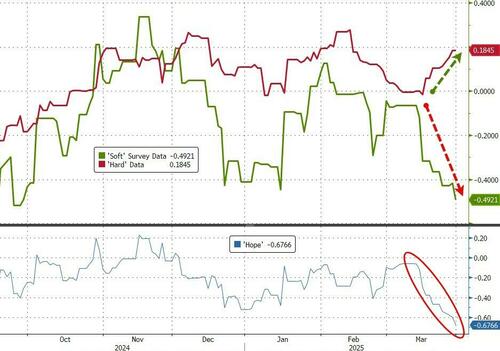
  • Deceptive Soft Survey Data Continues to Confuse Amid Growing Tariff Fear

    Deceptive Soft Survey Data Continues to Confuse Amid Growing Tariff Fear

    Macro Data Goes Full‑Mix‑mime: A Roller‑Coaster of Signals

    We’ve all learned to get used to a little yellow‑balloon feeling each time the latest soft‑survey figures roll in. Today’s update? A bouquet of mixed messages that’ll have you second‑guessing whether the economy is moving forward or just wiggling around in place.

    What the Numbers Actually Say

    • Employment Growth: Slight uptick – looks promising at first glance.
    • Consumer Confidence: Up, but not enough to ignite a full-blown spending spree.
    • Business Outlook: Mixed – some optimism in tech, but traditional manufacturing sticks to the old hat.
    • Inflation Pulse: Still lingering, but at a lower rate than expected.

    Why the Confusion?

    The soft survey data often reflects a snapshot of many moving parts, and each sector may feel a different article of the news. Think of it like a mixtape with tracks that jump from upbeat dance to mellower ballads – leaving you on an emotional carousel.

    Quick Take‑Away (with a Smile)

    In short, the macro looks like a tug‑of‑war between optimism and caution. No winner is declared yet, so stay tuned and keep your coffee ready – it’s going to be a wild ride.

    What the Numbers Are Saying (and Why It Matters)

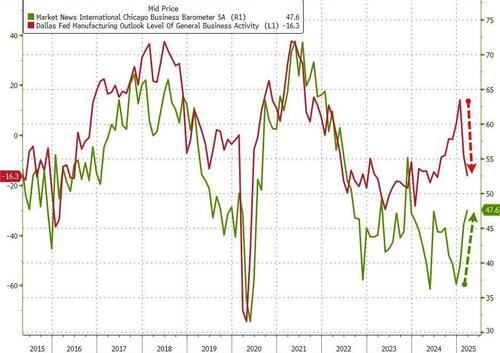
    It’s a mixed bag from the US manufacturing front this week.

    Bright Side: Chicago Keeps the Momentum Going

    • PMI for July leapt to 47.6 — a solid bump above what analysts were bracing for.
    • Still below the 50‑point line that marks expansion, but it’s the best reading since December 2023 for this region.
    • What this means: A bit of a rebound in Chicago’s factories, but economic growth remains on thin ice.

    Not‑So‑Bright Side: Texas Takes a Dip

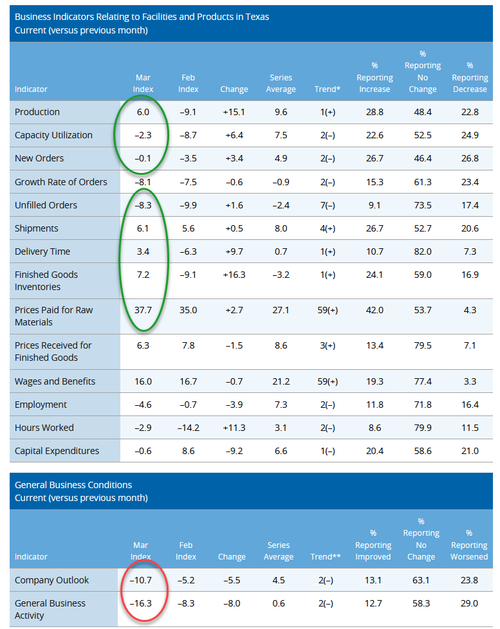
    • Dallas Fed’s Manufacturing PMI slid to a punitive -16.3.
    • This mark is the lowest since July 2024— a real slam‑down in production activity.
    • Why it matters: A serious contraction in Texas’ steel, metal, and high‑tech sectors, and a warning bell for policymakers.

    Bottom Line

    Chicago’s PMI is nudging upward, giving a glimmer of hope, while Dallas’s numbers are a stark reminder that manufacturing health is uneven across the country. Keep an eye on both – they’re like the weather forecast: a sunny patch might just be a hurricane waiting to roll in.

    City‑by‑City Real Estate Pulse

    Let’s break it down in plain talk, no jargon—just the gist of what’s happening across two key metros.

    Chicago: The Slow‑Roller (No Sweat)

    • Prices Paid – Tipping the scales a bit: slower than last month.
    • New Orders – The buzz has dimmed; fewer folks signing up.
    • Inventories – Libraries are shrinking, so fewer homes to choose from.

    Bottom line: Chicago’s market is tempering, but things are still moving—just not as fast.

    Dallas: The Hot‑Spot (Ye-eh!)

    • Prices Paid – Going up, pushing that golden “price tag” higher.
    • New Orders – The rush? It’s still strong—more folks are inked in.
    • Inventories – A surplus’s on the grow; more options for buyers.

    Dallas keeps the heat on—buyers are clamoring, and sellers are feeling the pressure.

    What Does This Mean?

    Chicago’s slowing trends might signal buyers have more breathing room. Dallas, on the flip‑side, suggests a competitive arena where staying alert is key. Either way, the real estate landscape is shifting—so keep your eyes peeled.

    The Dallas Fed’s Turbocharged Turbulence

    Why the Fed’s Forecasts Are Now and Then…

    The Dallas Federal Reserve’s outlook just took a nosedive—thanks to a flood of “tariff‑tiring” chatter from industry folks. The atmosphere on the trading floor smells of copper, and every analyst says, “Tariffs are the nightmare, and the future is fuzzy.”

    Key Takeaways

    • Immediate Cost Surge – Equipment and piping prices are climbing faster than a microwave‑toast—every project is sweating up the cost sheet.
    • Tariff‑Driven Fear – Buyers and suppliers can’t gauge how much a new trade ban will push up prices. Who’s going to pay? Which markets will refuse? The unknowns outweigh the possibilities.
    • Uncertain Market Shifts – A new tariff might open doors for foreign firms in the U.S., but the risk‑reward equation leans toward caution.
    • Corporate Existential Angst – With Trump’s “ever‑changing” policy, planning feels like trying to predict the weather with a broken thermometer.

    The Sweet Spot of Economic Possibility

    Despite the “tremendous noise” about trade restrictions, the baseline economic engine keeps rolling. The cyclical rebound looks steady, but the unpredictable macro‑canvas—especially from the U.S. import taxes—casts a giant shadow over price forecasts.

    What Businesses Are Tuning Into

    • Import taxes from Mexico and Canada are raising costs at a rate that outpaces the official tariff numbers.
    • Raw material prices are inflation‑inflated. In some loops, the price jump feels like riding a freight train that’s gone off the rails.
    • Nonetheless, sales orders remain surprisingly steady. Tenacity in investing over the past year is finally paying off.

    “We’re Not Losing Orders” – The Warm‑Button Counter‑Narrative

    Even in a potential mild recession triggered by reduced government spending, a firm can do the math: expanding capacity now gives a net positive for the medium term. The mantra is simple – “Focus on the business, forget the policy theatre” – and it’s time to work again.

    Final Closing Thought

    In a world flooded with doom‑scrolling predictions, the real story is clear: tariffs are a heavy but not forgotten operand. While uncertainty stalks every strategy, the business model—rooted in fresh capital and a careful eye on cost curves—remains resilient.