Tag: pdf

  • FTC Sues Gym Chain For Making It 'Exceedingly Difficult' To Cancel Memberships

    FTC Sues Gym Chain For Making It 'Exceedingly Difficult' To Cancel Memberships

    Authored by Naveen Athrappully via The Epoch Times (emphasis ours),

    The Federal Trade Commission (FTC) filed a lawsuit against the operators of LA Fitness and other gyms over allegations that they make it “exceedingly difficult” for subscribers to cancel recurring gym memberships and related services, according to a statement issued by the agency on Aug. 20.

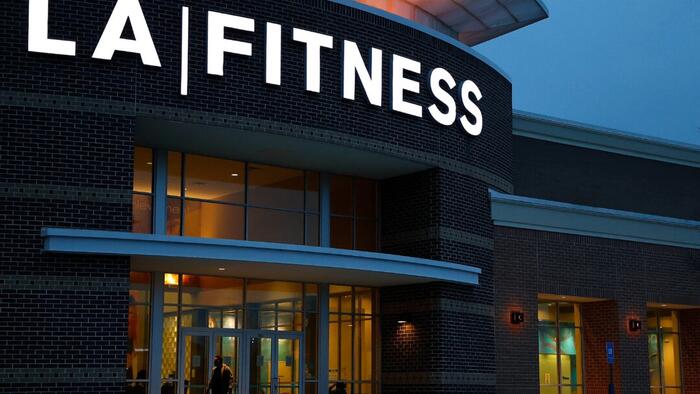
    An LA Fitness location, in this file photo. Kevin C. Cox/Getty Images

    The FTC lawsuit was filed on Aug. 20 against Fitness International LLC and Fitness & Sports Clubs LLC, which together own and operate LA Fitness and other gym chains, including Esporta Fitness, City Sports Club, and Club Studio, which have more than 600 locations and more than 3.7 million members nationwide.

    The lawsuit was filed in the U.S. District Court for the Central District of California for violating the Restore Online Shoppers’ Confidence Act (ROSCA) and seeks monetary relief for consumers harmed by the alleged practices.

    The lawsuit alleges that the defendants use “difficult” cancellation procedures that are found to be time-consuming and inadequately disclosed to consumers when they join up. Members who wish to cancel must generate a cancellation form online and print it. Then, they need to submit the printed forms to the gym during limited hours.

    The forms must be submitted to the “specific manager at the location who is authorized to process the forms,” and not just any gym employee, the complaint states. Another way to cancel is by certified or registered mail, which necessitates a visit to the post office.

    The cancellation processes are “opaque, complicated, and demanding,” the FTC stated, adding that many consumers who have gone through the procedures “nevertheless find that they continue to be billed for their memberships.”

    According to the agency, the gym operators have retained the system despite receiving tens of thousands of reports from consumers complaining about the cancellation procedures.

    The companies offer gym memberships in the range of $30 to $299 per month, depending on additional services such as towel service or child care. The costs incurred by the consumer, while joining, include the first and last month’s dues, monthly recurring dues, and annual fees, the FTC stated.

    The FTC’s complaint describes a scenario that too many Americans have experienced—a gym membership that seems impossible to cancel,” said Christopher Mufarrige, director of the FTC’s Bureau of Consumer Protection.

    The commission voted 3–0 to authorize the filing of the complaint.

    According to ROSCA, an online seller must disclose all material terms before attempting to charge any consumer’s credit card, debit card, or bank account, and provide simple mechanisms to stop recurring charges. The FTC is the enforcer of this Act.

    Gym Response

    Fitness International President Jill Hill expressed disappointment with the FTC complaint in a company statement published on Aug. 20.

    “The allegations are without merit, and the statute the FTC relies upon—the Restore Online Shoppers’ Confidence Act (ROSCA), enacted almost 15 years ago—was designed to address only online retail transactions, does not require any specific method of cancellation, and has never before been applied to the health club industry. We remain confident that we will prevail in court,” Hill said.

    She said most of the gym memberships were done at physical locations and not online. The companies have “launched an online cancellation option for all members, regardless of how they originally signed up,” Hill said.

    “With just a few clicks, members may cancel online—a step we voluntarily implemented well ahead of regulatory deadlines,” she said.

    The companies work to comply with all health club state laws regarding membership cancellations, according to Hill.

    The FTC had announced a “Click-to-Cancel” rule in 2024 under the Biden administration. The rule, which went into effect earlier this year, was postponed by the Trump administration to give businesses additional time to comply.

    The rule mandates that canceling a subscription must be as simple as signing up.

    Loading recommendations…
  • Using AI bots like ChatGPT could be causing cognitive decline, new study shows

    A new study shows that using ChatGPT could mean “a likely decrease” in learning skills and could internalise “shallow or biased perspectives”.

    ADVERTISEMENT

    A new pre-print study from the US-based Massachusetts Institute of Technology (MIT) found that using OpenAI’s ChatGPT could lead to cognitive decline. 
    Researchers with the MIT Media Lab broke participants into three groups and asked them to write essays only using ChatGPT, a search engine, or no tools. 

    Brain scans were taken during the essay writing with an electroencephalogram (EEG) during the task. Then, the essays were evaluated by both humans and artificial intelligence (AI) tools. 
    The study showed that the ChatGPT-only group had the lowest neural activation in parts of the brain and had a hard time recalling or recognising their writing. The brain-only group that used no technology was the most engaged, showing both cognitive engagement and memory retention. 

    Related

    Can ChatGPT be an alternative to psychotherapy and help with emotional growth?

    The researchers then did a second session where the ChatGPT group were asked to do the task without assistance. In that session, those who used ChatGPT in the first group performed worse than their peers with writing that was “biased and superficial”.

    A ‘likely decrease’ in learning skills

    The study found that repeated GPT use can come with “cognitive debt” that reduces long-term learning performance in independent thinking. 

    In the long run, people with cognitive debt could be more susceptible to “diminished critical inquiry, increased vulnerability to manipulation and decreased creativity,” as well as a “likely decrease” in learning skills. 
    “When participants reproduce suggestions without evaluating their accuracy or relevance, they not only forfeit ownership of the ideas but also risk internalising shallow or biased perspectives,” the study continued. 

    Related

    ‘Our GPUs are melting’: OpenAI puts restrictions on new ChatGPT image generation tool

    The study also found higher rates of satisfaction and brain connectivity in the participants who wrote all essays with just their minds compared to the other groups. 

    Those from the other groups felt less connected to their writing and were not able to provide a quote from their essays when asked to by the researchers. 
    The authors recommend that more studies be done about how any AI tool impacts the brain “before LLMs are recognised as something that is net positive for humans”,

  • San Francisco Judge Forces Trump To Keep Funding Sanctuary Cities

    San Francisco Judge Forces Trump To Keep Funding Sanctuary Cities

    A federal judge in San Francisco ruled on Friday that the Trump administration cannot suspend funding to 34 ‘sanctuary’ cities which limit or refuse cooperation with federal immigration enforcement.

    Immigration and Customs Enforcement officers arrest a illegal immmigrant during an operation in the Bushwick neighborhood of Brooklyn in New York City on April 11, 2018. John Moore/Getty Images

    US District Judge William Orrick  – a rich kid lawyer appointed by former President Barack Obama to the US District Court for the Northern District of California – ordered the extension of a preliminary injunction barring the administration from blocking funding or placing conditions on federal  funding for those jurisdictions. Orrick also prevented the administration from imposing immigration-related conditions on two particular grant programs. 

    The Trump administration initially tried to block funding to dozens of cities and counties over sanctuary city policies – cutting off their Housing and Urban Development (HUD) grants due to noncompliance with federal immigration enforcement. 

    The protected cities include; Boston, Chicago, Denver, Seattle, Los Angeles, Albuquerque, Baltimore, San Jose, San Diego and others – while major counties covered include Multnomah County in Oregon, which encompasses Portland; Allegheny County in Pennsylvania, which encompasses Pittsburgh; and Hennepin County in Minnesota, which encompasses Minneapolis, the Epoch Times reports, nothing further; 

    The Trump administration has ratcheted up pressure on sanctuary communities as it seeks to make good on President Donald Trump’s campaign promise to remove millions of people who are in the country illegally.

    One executive order issued by Trump directs Attorney General Pam Bondi and Homeland Security Secretary Kristi Noem to withhold federal money from sanctuary jurisdictions. Another order directs every federal agency to ensure that payments to state and local governments do not “abet so-called ‘sanctuary’ policies that seek to shield illegal aliens from deportation.”

    In May, the Department of Homeland Security (DHS) released a list of more than 500 “sanctuary jurisdictions” and said that all of those municipalities and counties would be sent a formal notification deeming them to be noncompliant with the Trump administration’s orders. Those officials would also be informed by DHS on whether they were said to be in violation of any federal laws.

    Orrick said in his order that the administration’s decisions to withhold federal funding in those jurisdictions are a “coercive threat” that he deemed to be “unconstitutional.”

    US District Judge William Orrick III

    I determined that the Cities and Counties are likely to succeed on the merits of their claims that defendants’ actions with respect to the enjoined executive orders and related agency directives were unconstitutional violations of the separation of powers and spending clause doctrines and violated the Fifth Amendment, Tenth Amendment and Administrative Procedure Act,” he wrote.

    In recent months, the Justice Department has ramped up pressure on several major cities over such policies. For example, the department filed a lawsuit against New York City and Mayor Eric Adams’s administration challenging the city’s laws on how it handles illegal immigrants.

    “New York City has released thousands of criminals on the streets to commit violent crimes against law-abiding citizens due to sanctuary city policies,” Bondi said in a statement last month in announcing the legal challenge. “If New York City won’t stand up for the safety of its citizens, we will.”

    Her office has also filed similar lawsuits targeting New York state, Colorado, Illinois, Los Angeles, several cities in New Jersey, and Rochester in New York, according to the statement.

    The Associated Press contributed to this report.

    Loading recommendations…
  • Scholars & Schemers: The Left’s Flawed Assault on Higher Learning*

    Scholars & Schemers: The Left’s Flawed Assault on Higher Learning*

    How the Left Is Taking Over Campus

    According to a recent piece by William Anderson of The Mises Institute, the trend of left‑leaning faculty, students, and administrators sweeping U.S. higher education is no mistake—it’s a hard‑to‑ignore reality.

    What’s Really Happening?

    • Faculty hire shifts: More professors are aligning with progressive agendas, reshaping curricula and classroom conversations.
    • Student activism: A growing number of students champion causes that echo leftist ideals, driving campus culture toward progressive politics.
    • Administration moves: University leaders are increasingly favoring policies that support diversity, equity, and inclusion, aligning with leftist goals.

    Historical Context

    Over the past decade, colleges and universities have seen a dramatic transformation. The shift isn’t a recent invention—it’s part of a longer trend that started over the last 50 years, when institutions began to lean more toward liberal social values.

    The Bottom Line

    While critics from the right call it a “capture,” the evidence shows that leftist politics have systematically reshaped academia. Whether that’s good, bad, or somewhere in between, it’s clearly a story worth paying attention to.

    Where Did It All Go Wrong?

    When you think of the last 50 years of college life, you’ll probably remember a castle of “liberal” professors—yes, that’s a term that used to mean the same thing as “combos of chess, economics, and a splash of optimism.” Most of those teachers, blessing the Democratic Party, were known for their scholarly passions, not for a courtroom drama with a political score. In fact, most of my professors at the University of Tennessee fumbled their own cross‑overs, keeping the syllabus strictly academic, even while the world around us was drowning in Watergate.

    Politics: Between the Lines, Not the Notes

    • Graduate the 1970s as a journalism major, among the only “leaning” class, yet no lecture ever smelled of merchandised ideology.
    • Most teachers carried a democratic mindset but hardly bent to influence a student’s personal political heart.
    • The campus language had a little makeover: freshmen became “freshpersons,” for chair transformed into “chairperson.” A little cultural sleight‑of‑hand that nobody thought vocally harmful.

    Shift the Conversation—And the Curriculum

    Fast‑forward to the last decade: the academic playground exploded with a rain of leftist thought that seared every major like a flame. The infection is so prolific now that it’s almost impossible to find every area immune to the coral bleaching of ideological indoctrination. Even if a new generation were to reverse the trend, it will still take decades before the effects are felt have vanished.

    One Thing Blasts the Past:

    While we previously believed professors kept doctrines murky, this isn’t entirely accurate. The buzz has spiraled into an unstoppable disaster where our academic experience is essentially politicized, and you can almost see a campus expo advertising “Scholarly Integrity.”

    To wrap it up: The college sphere, once a place of intellectual rigor, is now running wide open to political narratives. Leaving your superstitious teenage sophomore’s imagination, it’s almost impossible to find any major wise enough to nuance or tame.

    Alleged Racism in Mathematics

    Math, or the Great Equalizer? (And the Not-So-Equal Results)

    Do you remember the first time you tried to solve a derivative or run a quick regression in a spreadsheet? If you’ve gone through a few tiers of calculus or some high‑school statistics, you probably felt that maths was neutral—just numbers, y’all. But apparently, the academic world has discovered a darker side: math might be a little racist.

    Where’s the Bias Coming From?

    Most critics point to the history of blackboards and textbooks, focusing on who actually shaped the syllabus. The main gripe? Racial minorities often score lower on standardized math tests. That tells us the way math is taught could be biased or even outright racist.

    Enter the Politics of Education

    • Left‑wing influence in colleges & school boards has paved the way for a new curriculum.
    • Seattle, for instance, is pushing a math program that will confront students with the fact that “Western Math” was historically a tool of power.
    • Students will learn: Western Math can reinforce oppression, strip opportunities, and deny people of color the knowledge they’ve earned.
    A Bold Experiment

    According to the Seattle plan, the math curriculum will challenge the assumption that numbers are neutral. It’ll ask: Do the methods we use actually limit economic or social mobility for folks already on the wrong side of the scale? Not just a math class; it’s a philosophical awakening.

    Should We Embrace or Reject It?

    Some say it’s a great step toward equity, while others are scratching their heads. Either way, the conversation is growing louder. The takeaway? Math is no longer just about squares and curves; it’s a social tool, too.

    The Left Declares that Science, Too, Is Racist

    Science Rebooted: Is It All About Bias and Misplaced Pride?

    Imagine you’re walking through a corridor full of textbooks and you hit a wall of old, dusty ideas that feel like they were built by a very selective group of people. That’s the vibe many are getting when they read recent headlines claiming that science itself may be steeped in racism.

    The “Math is Racist” Spark

    It all starts with a provocative claim: mathematics appears to be racist because its equations have historically been used to justify prejudice. Fast forward to the modern era, and the conversation jumps: “If math’s got this problem, science—naturally a sibling—must have it too.”

    From Eugenics to Modern Bias

    In the 20th century, some progressives lobbied to brand science as the ally of eugenics. That was a revelation of pseudo-science masquerading as “progress.” Yet the movement that fought against these pseudo-sciences still clings to the same progressive narrative, oblivious to its own irony.

    Nature’s Bold Editorial

    Late last year, the scientific journal Nature put its foot down and called science a “colonialist” and, thus, racist institution. Here’s what the editorial said:

    • “We recognize that Nature is one of the white institutions that is responsible for bias in research and scholarship.”
    • “The enterprise of science has been—and remains—complicit in systemic racism. It must strive harder to correct those injustices and amplify marginalized voices.”

    That was a call to action, not a smear campaign. The intent? Push scientists out of their comfy offices and into a world that’s representative and diverse.

    What Did They Really Want?

    We’re not dealing with a call to abandon all scientific findings. The editors were saying that: when the people doing the research are biased, the conclusions get skewed. The real message is that the science community must open its doors wider and turn its focus to more voices in the field.

    Smithsonian’s Take

    Gold standard Smithsonian adds another layer to the debate. They’re claiming that even everyday concepts—being on time, working hard, and thinking ahead—have the same colonial roots. Even the scientific method’s pillars—linear thinking and cause-and-effects—carry hidden prejudices.

    It sounds like something out of a sci‑fi dystopia, but the point is simple: science can’t separate itself from its creators’ biases.

    Why This Matters

    • We want to keep chasing the half‑truth about the universe.
    • But we also want the science building to be populated by all the minds in the world—not just a handful.
    • That means welcoming fresh perspectives, rethinking foundational assumptions, and openly acknowledging past flaws.

    So, next time you see “race” pop up in a science headline, ask yourself: is it a warning or a rallying cry? The key takeaway? Justice, diversity, and genuine progress aren’t just nice‑to‑have; they are essential foundations for any discovery that hopes to keep our world moving forward.

    How Did It Come to This?

    Academic Academia’s “Shadow” — A Rough‑and‑Real Look

    Only a bit‑of‑the‑sci‑junkie vibe or a campus dean who loves golden‑rules can truly own the claim that “cause‑and‑effect thinking” is a racism‑red flag and that a person’s gender is a random “birth tag”. I’ve chased the drama of the infamous Duke Lacrosse affair, saw how a handful of faculty swayed the narrative, and realized the same nonsense permeates universities worldwide.

    From Duke to the Broader Picture

    • During the “Duke Lacrosse” uproar, a professor named Karla Holloway implied that the accused players’ guilt was irrelevant—just “racism” or politics mattered.
    • Consequent backlash made the whole situation feel like a social construction fest—all truth stripped away.
    • Seeing this, I started pulling back on what “evidence” really means in academic circles.

    How We “Lost” the Search for Truth

    The story goes back to the 1930s when Italian communist Antonio Gramsci observed that the Western academia, especially Christian institutions, wouldn’t let a violent revolution start like it did in Russia.

    Gramsci said we needed a “war of position” instead of a war of movement—this means infiltrating those pillars of civilization, not swinging swords.

    • Think about churches, charities, media, schools and such.
    • Goal: turn them into grounds for spreading the new ideology.

    As the 1970s rolled in, universities began launching “women’s studies” programs. It was a make‑over of the old disciplines (English, History, Economics) into what people later dubbed “identity studies.” Those new departments turned into breeding grounds for radical faculty, many of whom had weak publication credentials but who still Shaped a campus agenda geared hard‑to‑speak political narratives.

    Scholars vs. Schemers

    Above all, the “scholars”—those who love the true grit of research, teaching, and service—contrast sharply with “schemers” who wield committee powers to push syllabi that scream “anti‑racism” or “preferred pronouns.”

    • Scholars come for knowledge; they write white‑board lessons and carry out scientific talks.
    • Schemers want every lecture to be a platform for activism—assignments, grading, all set to a propaganda beat.

    At one of my former schools, the English department declared that marking a grammar error in a Black student’s essay was “racist” because it allegedly reinforced a racist structure. This wasn’t about easing the student’s workload; it was saying that English itself is a tool of bigotry.

    When faculty tried to voice dissent, they quickly got social‑justice mobs on social media. Take the Duke incident: professors who spoke against the pre‑judgment rush were met with angry crowds calling them backstabbers.

    The Future of Higher Education

    Either way, the undercurrent is clear: Scholars are fading, Schemers are rising, and the academic lattice is turning into a political playground. If this trend ends up, we might end up with only a handful of true scholars in the U.S. universities—plenty of stories, few facts.

    It’s time the campus cafeteria stopped ranting about “social constructs” and starts serving up the actual facts.