Tag: producing

  • Iran’s Missiles vs. Israel’s Air Defense: A Tactical Showdown

    Iran’s Missiles vs. Israel’s Air Defense: A Tactical Showdown

    Since the conflict began on Friday, Iran has launched around 370 ballistic missiles at Israel, according to the Israel Defence Forces (IDF). But what kinds of projectiles are being used—and how robust is Israel’s air defence system against potential waves of retaliatory attacks from Tehran?

    ADVERTISEMENT

    US officials estimate that Iran possesses the largest arsenal of ballistic missiles in the Middle East, with over 3,000 units. Some of these high-speed missiles can reach Israeli territory in as little as 15 minutes.  
    However, only medium-range ballistic missiles—those capable of travelling over 1,000 km—can strike Israel from Iran. According to Iran’s semi-official news agency ISNA, the country has nine different missile types with that capability.  

    “Most estimates I have seen put the number of Iranian missiles capable of hitting Israel closer to 2,000,” Dan Caldwell, a former senior adviser to US Defence Secretary Pete Hegseth, posted on X this week.
    While much of Iran’s missile arsenal remains classified, ISNA published a graphic in April last year showcasing some of its key weapons. These included the Sejil, which can reach speeds of over 17,000 km/h and has a range of 2,500 km; the Kheibar, with a 2,000 km range; and the Haj Qasem, with a range of 1,400 km.  
    A recent threat assessment by the US military found that Iran fields a “large quantity” of ballistic missiles, cruise missiles, and drones capable of striking targets across the region. Israel’s Prime Minister Benjamin Netanyahu claimed Iran intends to continue expanding this capacity.  
    In a video statement on Friday, Netanyahu said Iran had accelerated production and was aiming to manufacture 300 ballistic missiles per month—potentially producing 20,000 rockets over the next six years.  

    Israel vs Iran: A military comparison

    According to the latest estimates from SIPRI’s Military Balance, Israel’s defence budget in 2023 was more than double that of Iran—$27.5 billion compared to $10.3 billion.  

    Iran’s missile programme draws heavily from North Korean and Russian designs, and has reportedly benefited from Chinese assistance, according to the Arms Control Association, a Washington-based non-profit. 
    It now has 610,000 active personnel and 350,000 reserves with the addition of the Islamic Revolutionary Guard Corps (IRGC). Iran also has 334 combat-capable aircraft, as well as air defence systems such as the Russian S-300, which has limited capabilities when it comes to defending against ballistic missiles. 
    Israel, for its part, has developed one of the most advanced missile arsenals in the world, combining decades of homegrown innovation with strong support from the US.  FILE - Israeli Iron Dome air defence system fires to intercept a rocket fired from the Gaza Strip, in Ashkelon, 20 October 2023FILE – Israeli Iron Dome air defence system fires to intercept a rocket fired from the Gaza Strip, in Ashkelon, 20 October 2023
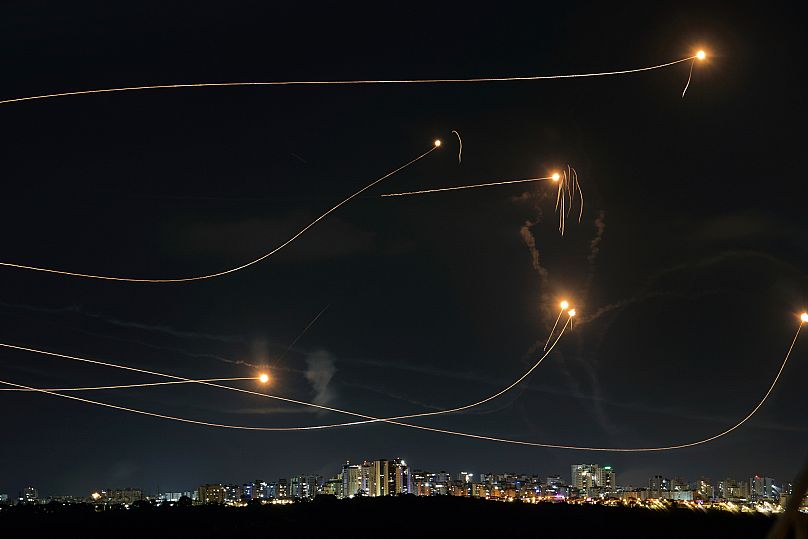
    AP Photo

    At the top end of this arsenal are long-range ballistic missiles such as the Jericho II and Jericho III. While the exact numbers are classified, the Jericho II is believed to be nuclear-capable with a range of around 1,500 kilometres, while the Jericho III may be able to reach targets over 6,000 kilometres away, giving Israel a strategic deterrent that extends far beyond its borders. 
    Alongside these long-range systems, Israel has hundreds of short- and medium-range missiles designed for quick, precise strikes. These include the Predator Hawk, which can hit targets up to 300 kilometres away, and cruise missiles such as the Popeye and the Delilah, which are launched from the air or sea.  
    In practice, each incoming missile usually requires its own interceptor missile to neutralise it. For example, if Iran were to launch 100 missiles, Israel would need to fire almost the same number of interceptors to stop them. 
    “The types of interceptors that are required to shoot down ballistic missiles are expensive and difficult to produce in mass quantities,” Dan Caldwell posted on X this week, adding that he think it likely that Israel and the US “are going to have start rationing their interceptors soon (if they haven’t already) – further increasing the effectiveness of even smaller Iranian barrages.”
    Its multibillion-dollar military arsenal also includes around 340 combat aircraft—among them advanced US-made F-35 stealth fighters—46 helicopters, a combined 634,500 active and reserve personnel, and a multilayered air defence system.   
    Approximately 370 ballistic missiles have been launched by Iran at Israel since the conflict began on Friday, claims the Israel Defence Forces (IDF). On Saturday, an Israeli military official said that the country’s air defence shield had an “80 to 90% success rate”, while stressing that “no system is 100% effective”—implying that some Iranian missiles had breached Israeli air defences, Reuters reported.  
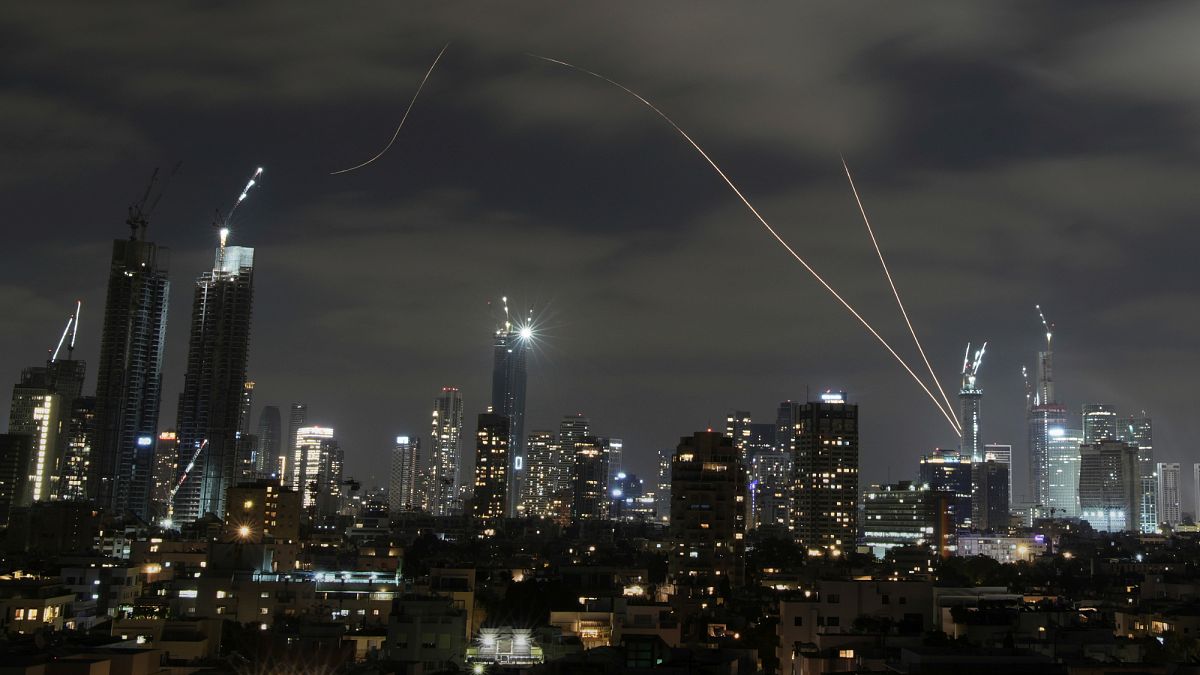
    The Iron Dome, Israel’s well-known air defence system, is just one component of a broader system designed to counter a range of aerial threats, from rockets and missiles to drones and aircraft.  
    The first layer, the Iron Dome, intercepts short-range rockets and artillery shells—typically within 70 kilometres—and is primarily used to protect civilian areas.  
    Next is David’s Sling, which targets medium-range ballistic missiles launched from distances between 100 and 200 kilometres.  
    Finally, the Arrow system—comprising Arrow 2 and Arrow 3—provides long-range defence. Arrow 2 is designed to intercept missiles in the upper atmosphere, roughly 50 kilometres above ground and within a 100-kilometre radius. Arrow 3 pushes that boundary into space, capable of intercepting missiles at distances of up to 2,400 kilometres.  
    Israel’s Iron Dome, David’s Sling and Arrow systems are all missile interceptors. This means that they are not designed to launch attacks, but rather to detect and destroy incoming missiles before they reach their targets. 
    In practice, each incoming missile usually requires its own interceptor missile to neutralise it. For example, if Iran were to launch 100 missiles, Israel would likely need to fire almost 100 interceptors to stop them — one for each threat. 
    However, despite all these protection layers, analysts argue that Israel’s decision to target the heart of the Iranian regime is raising the stakes, as the latter could respond by striking other targets in neighbouring countries, thus escalating the conflict in the region, or by attempting to block trade in the Persian Gulf.  
    “If Israel continues to attack its nuclear and military facilities, Iran has a strong incentive to put together a rudimentary nuclear weapon as quickly as it can to deter any further damage of its facilities and demonstrate that it is capable of defending its sovereignty,” senior research fellow at Chatham House Dr Marion Messmer wrote in an analysis.  

  • Is Ketamine Used For General Anesthesia? – Health Cages

    Is Ketamine Used For General Anesthesia? – Health Cages

    Ketamine is a dissociative anesthetic that dates back to the 1960s; it is best known for producing a trance-like state. It offers sedation, pain relief, and amnesia but preserves respiratory function, distinguishing it from classical anesthetics. While it is well known as an anesthetic, not all surgical procedures apply it. While ketamine’s wide therapeutic index is probably the main reason making it so valuable in all sorts of emergency and resource-poor settings, the same properties are what limit its use in general anesthesia.

    (adsbygoogle=window.adsbygoogle||[]).push({})

    How Does Ketamine Work?

    Ketamine, on the other hand, inhibits NMDA (N-methyl-D-aspartate) receptors that mediate pain signal transduction in the brain. This disruption causes dissociation and anesthesia while maintaining respiratory and cardiovascular stability. The drug’s ability to preserve vital functions makes it well-suited for patients facing the risk of complications during surgery.

    (adsbygoogle=window.adsbygoogle||[]).push({})

    Forms of Ketamine

    Ketamine comes in two forms: racemic ketamine and S-ketamine (esketamine). In addition, racemic ketamine (a mixture of two molecules called enantiomers) is commonly used to induce sedation and relieve pain. In contrast, the FDA-approved version of S-ketamine for depression is not approved for general anesthesia. Don’t all of these distinctions matter when used in the clinic?

    (adsbygoogle=window.adsbygoogle||[]).push({})

    For those considering ketamine treatment or seeking guidance on its use, Isha.health provides expert support to help navigate its benefits and risks. Contact us today to learn how we can assist you in managing your health effectively.

    (adsbygoogle=window.adsbygoogle||[]).push({})

    Ketamine For Emergency Medicine

    In emergency medicine, ketamine is often preferred because of its rapid onset and dissociative properties. It is commonly utilised for trauma surgeries and other acute procedures where rapid sedation and analgesia are necessary. Its maintenance of respiratory function is highly beneficial where many anesthetics may increase risk.

    High-Risk Surgical Patients

    Ketamine’s favorable safety profile also makes it a good option for patients at high risk, particularly those with respiratory complications or unstable cardiovascular status. Because its effect on respiratory function is minimal, it can be effectively used in cases where traditional anesthetics would aggravate existing health problems.

    (adsbygoogle=window.adsbygoogle||[]).push({})

    The Role of Ketamine in Resource-Limited Settings

    Ketamine’s simplicity and reliability make it an ideal solution for resource-limited settings. It needs no complex monitoring equipment, making it a vital tool in developing countries and emergencies. It is stable and easy to administer, making it effective in difficult situations.

    Cardiovascular Effects Of Ketamine

    Ketamine maintains respiratory function but can raise heart rate and blood pressure. This feature can be advantageous in certain emergencies but not for patients with prior cardiovascular disease. Careful patient selection and monitoring are important to minimize these risks during its use.

    Psychological Side Effects

    Ketamine’s dissociative properties, though helpful in anesthesia, can also evoke psychological disturbances. Patients coming out of ketamine anesthesia can have vivid dreams, hallucinations, or confusion. These negative effects highlight the importance of diligent post-surgical care and the use of adjunctive medications in some instances to facilitate recovery.

    Combining Ketamine with Other Anesthetics

    Because of its brief duration of action, ketamine is seldom employed as a standalone agent for general anesthesia. It is frequently co-administered with other drugs to extend its activity and reduce adverse reactions. This latter technique offers some balance to the anesthetic experience and uses ketamine’s unique properties.

    Regulatory Status Of Ketamine

    Racemic ketamine is FDA-approved for pain relief and sedation and is not specifically approved for use as a standalone general anesthetic. S-ketamine, sold for depression under the brand name Spravato, is not approved for use in anesthesia either. Off-label use is common but must follow established medical guidelines.

    Gender Differences in Anesthesia Response

    Ketamine’s effects on the brain are complex, with research indicating potential differences in how male and female brains respond to anesthesia. The female brain exhibits unique hormonal and neurological variations that can influence both the efficacy and side effects of anesthetic agents.

    Benefits Of Ketamine In Anesthesia

    Ketamine’s ability to preserve respiratory and cardiovascular stability mainly distinguishes it from other anesthetics. It is preferred in critical situations due to its fast onset and effectiveness in pain management. Moreover, its dissociative properties provide deep sedation, especially useful in emergency surgeries and trauma medicine.

    Challenges In Using Ketamine

    Nonetheless, ketamine’s propensity to cause side effects has limited its applicability for use in general anesthesia. Its dissociative properties can lead to psychological discomfort during recovery, and its cardiovascular effects may make it unsuitable for some patients. These problems also must be considered carefully and often require adjunctive medications.

    Advances In Ketamine Research

    Research continues to examine ketamine’s wider applications in anesthesia and pain management. Researchers are exploring how to sharpen its use, minimize side effects, and broaden its utility. These advances may further improve ketamine’s utility in medicine and surgery.

    The Future Of Ketamine In Anesthesia

    The unique properties of ketamine have made it a powerful tool in medicine, especially in emergency and high-risk situations. However, its capacity to be improved through continuous research makes it a promising subject for further application. With pharmacological improvements overcoming its limitations, ketamine could become an even more central component of anesthesia protocols.

    Conclusion

    Ketamine remains a vital anesthetic in contemporary medicine due to its rapid onset, analgesic properties,  and sparing  respiratory drive. Specific medical contexts would include emergency settings and those patients at high risk. Its cardiovascular actions and some psychological side effects prevent it from being widely used as a stand-alone general anesthetic. Regulatory differences, such as the F.D.A.’s approval of some but not all forms of ketamine, only reinforce the need for cautious use. With continued investigation, ketamine’s possibilities keep evolving, creating hope for broader and more nuanced applications .