Tag: pushing

  • Johnson, Thune, and Trump On Collision Course Over Approaching Shutdown

    Johnson, Thune, and Trump On Collision Course Over Approaching Shutdown

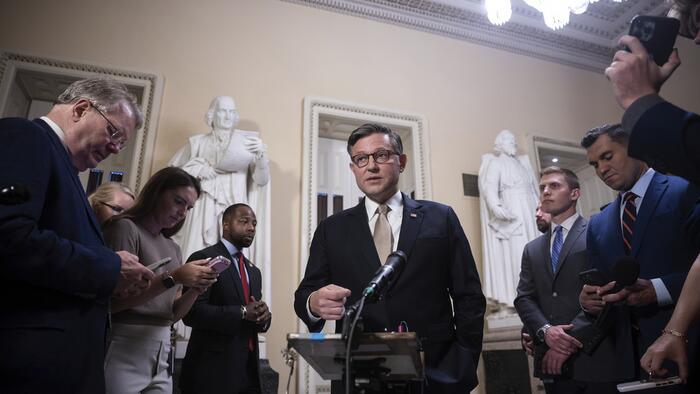
    With just under a month until the next government shutdown (sigh), Republicans are locked in an increasingly messy internal battle over how to keep federal agencies funded, as competing strategies in the House, Senate, and White House collide over spending priorities, foreign aid, and political leverage.

    Congress has until Sept. 30 to pass new legislation to avoid a lapse in funding, but the GOP – which controls the White House, House, and Senate – remains fractured on a path forward. This isn’t just about keeping the lights on, but also the balance of power within the Republican Party itself, as President Donald Trump’s latest move to rescind nearly $5 billion in foreign aid has inflamed tensions within the Senate and complicated delicate negotiations, Punchbowl News reports.

    Three Strategies, One Deadline (and no cup)

    While Republicans control all levers of government, they are far from unified:

    • Senate Republicans, led by Majority Leader John Thune (R-SD), are pushing for bipartisan funding bills that exceed House and White House proposals by tens of billions of dollars. Thune wants to position Senate Republicans as willing partners on funding, betting he can portray Democrats as obstructionists if they refuse to cooperate.

    • House Republicans, under Speaker Mike Johnson (R-LA), are leaning toward a short-term continuing resolution (CR) to keep the government open through mid-November, buying time for broader talks on full-year appropriations.

    • The White House, meanwhile, prefers a longer stopgap that would fund the government until at least the first quarter of 2026 – avoiding repeated shutdown showdowns but angering hard-line conservatives who see it as a capitulation to Democrats.

    This divide sets up a high-stakes battle within the GOP and against Democrats, with each faction maneuvering to avoid taking the blame if the government shutters.

    Trump’s Pocket Rescission Sparks Backlash

    Fueling the chaos is President Trump’s decision to issue a “pocket rescission” canceling nearly $5 billion in congressionally approved foreign aid, a move that has enraged Senate Democrats and rattled some top Republicans. 

    Sen. Susan Collins (R-ME), chair of the Senate Appropriations Committee, called the maneuver ‘flat-out illegal’ and said her counsel is reviewing potential legal challenges. Sen. Mike Rounds (R-SD) warned the move could derail bipartisan negotiations:

    I think it can give Democrats a reason not to work with us on a bipartisan appropriations bill. That’s got me concerned,” Rounds said.

    Making the rescission issue extra spicy; the Senate is preparing to mark up the State Department–Foreign Operations funding bill next week – one of the very accounts targeted by Trump’s cuts. With immigration and border security funding also in the mix, appropriators face an increasingly combustible set of issues.

    Johnson Balances a Razor-Thin Majority

    Speaker Johnson is under pressure from both establishment Republicans and the hard-right Freedom Caucus as he tries to corral votes for any funding deal.

    House Appropriations Chair Tom Cole (R-OK) supports a short-term CR into late November, tied to a handful of full-year funding bills, which would include spending for Veterans Affairs, Agriculture, and the Legislative Branch, leaving continuing negotiations over the remaining appropriations.

    But conservatives are pushing back hard, The Hill notes:

    • Rep. Scott Perry (R-PA), former chair of the Freedom Caucus, insists on a one-year CR with automatic spending cuts:

      “I’m not interested in anything that gets us right before the holidays, because we all know exactly how that’s going to go.”

    • Rep. Andy Harris (R-MD), current Freedom Caucus chair, echoed that sentiment, saying if Congress is going to extend funding into 2026, “I say just go for it and put it into next December.”

    • Rep. Eric Burlison (R-MO) warned he would “probably not” vote for any short-term deal if it’s loaded with community funding projects, aka ‘earmarks,’ while other Republicans want those local funding boosts included.

    For Thune, the goal is to protect the Senate’s bipartisan traditions and keep Democrats at the table. He believes moving regular appropriations bills, even at higher spending levels than Trump’s budget — will put political pressure on Senate Majority Leader Chuck Schumer (D-NY) and his caucus.

    “If the Democrats are interested in funding the government, we’re going to give them every opportunity to do that,” Thune told Punchbowl, promising to bring more funding bills to the floor this month.

    However, the rescission fight threatens to blow up that strategy. Collins’ criticism signals a rare Republican split in the Senate, while Democrats, furious over Trump’s foreign aid cuts, may be less inclined to cooperate on Thune’s bipartisan path.

    Democrats Hold Their Fire – For Now

    Despite frustration with Trump’s rescission, some Democrats are signaling support for pairing a short-term CR with several full-year appropriations bills to avoid a shutdown.

    Sen. Patty Murray (D-WA), top Democrat on the Appropriations Committee, said she supports attaching three bipartisan bills; for Veterans Affairs, Agriculture, and the Legislative Branch, to a short-term deal:

    As part of a bipartisan, short-term CR, I support conferencing those three bills and passing them with a short-term CR for the remaining nine bills,” Murray said.

    The White House has also struck a cautiously conciliatory tone, acknowledging that a short-term CR is “increasing in likelihood” but continuing to press for a longer solution that avoids repeated deadlines.
    Loading recommendations…
  • Embrace the Future: Revamp Your Life with Driverless Cars

    Embrace the Future: Revamp Your Life with Driverless Cars

    Cold‑Hard Reality: Silicon Wheels Rolling Into Northern California

    Hey folks, ever stop and think about what the roads in Northern California might look like in a few years? Let’s paint a picture quickly and keep it real.

    What’s on the Horizon?

    • Driverless cars are the new traffic star: They’ll be cruising in every lane of major streets.
    • Commuters, be ready: Whether you’re heading to the city or just touring the suburbs, most of you will either hop in or know someone who does.
    • Small towns, big impact: Even if your town feels far from the “big league,” the autonomous rides are set to touch your everyday life.

    Why It Matters

    The shift isn’t just about tech; it’s a cultural pivot. Imagine swapping the stress of manual driving for the ease of a smart car that almost rides itself. It’s trending, and—more importantly—coming fast.

    Bottom line

    So if you’re living in Northern California, buckle up (maybe in a more literal sense). In a few years, the only driver you’ll see might be… a software program. And that’s pretty cool, if you’re into it.

    Waymo’s Wild Ride: From 10,000 to 250,000 Trips in Less Than a Year

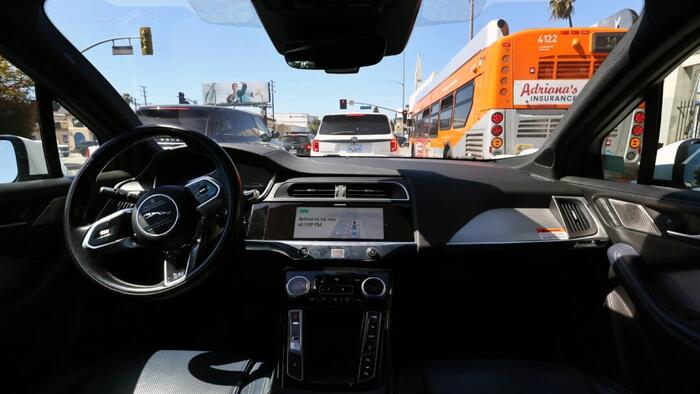
    Picture this: Waymo, the self‑driving arm of Google, was making 10,000 trips a week back in August 2023. Today, that number has skyrocketed past 250,000. That’s a 25‑fold surge—and with more than 10 million successful journeys under its belt, those autonomous shuttles are now a ubiquitous sight on San Francisco streets.

    They’re spreading to the likes of Austin, Atlanta, Miami, and Washington, D.C.—and the competition is heating up. Uber and Tesla are both trying to stake their own claim on the future of the freeway. But for riders who’ve tried a driverless ride, the biggest relief is being freed from the nagging chatter of human drivers and the danger of reckless maneuvers. You can work, chat, or simply relax knowing that a super‑safe AI is steering you—no tailgating, no risky shoulder-checks, no missed turns.

    And that’s the future we’re headed toward, because safety—yes, that long‑standing headache of autonomous tech—is now the main beat of the story.

    The Road to Self‑Safety: A Personal Journey

    When I was a teenager behind the wheel, I believed every boy above 16 had the right to conquer the road. I thought the highway was mine and that I could drive as fast or far as I pleased. I imagined I’d never crash—because it was all about me and my destination.

    Fast‑forward to adulthood, I once found myself on an interstate where speeds hovered around 85 mph. Cars hugged their neighbors, weaving in and out of lanes at a frantic pace. Off‑ramps and on‑ramps jacked vehicles into this frantic dance every few miles. The chaos was bewildering.

    It made me think. In a culture that worships safety—sleeping easy over playgrounds, feeling uneasy around strangers—our society was practically the wildest experiment in the universe. We were handed the keys to monsters of steel and asked to drive them on asphalt with only paint lines to guide us.

    We accelerated until we could, followed whatever rules we felt like, and the only enforcement was a police car randomly popping up. The math puzzle here isn’t the 6.1 million yearly car crashes in the United States; it’s why there aren’t 61 million or more. The relative safety is a marvel of self‑interested, self‑organizing systems.

    That realization changed me. I became a super‑safe driver—avoiding crowded lanes, quickly backing away from erratic vehicles, never getting into a fight, never raising my voice. My sole mission: arrive home safely.

    A Glimpse at the Interstate Highway System

    The highway system came into being just after World War II, when the country’s elite were suddenly giddy about automotive feats. It was meant to embody freedom and individualism.

    President Eisenhower rolled out the world’s largest infrastructure program, which reshaped America over four decades. It involved taking land vast enough to fill the entire state of Delaware and moving enough dirt to be knee‑deep in all of Connecticut. All that, with barely any political pushback—or at least that’s what it looks like today.

    The U.S. had dominated passenger trains for a century; suddenly, ignoring those rails became the trend. Towns with beautiful train stations were abandoned or turned into breweries, antique shops, or left to decay. Suburbs sprouted, bringing with them franchise chains that catered to these new communities.

    The system promised convenience, but many of us lived a little farther from work and city centers, earning longer commutes. The family homestead whispered into oblivion as we became wrapped up in auto debt, repair costs, sprawling highways, and cookie‑cutter neighbourhoods.

    In hindsight, it’s remarkable that this massive project moved forward without much debate. On the real ground, national security during the Cold War—evacuation routes, military logistics—gave the program a deeper motive.

    Amid all the chaos, there were undeniable benefits, but also costs: >42 000 traffic fatalities each year. The daily traffic scenes across the country are frightening—a glaring omission of criticism, one would think.

    The Safety Story in Autonomous Driving

    Autonomous vehicles have turned fear into a solved problem. If you squint, a driverless car is little more than a train, a disciplined traveller that goes forward along one route—and blunders are a distant memory.

    Perhaps we misstepped in ’57. Maybe we should have kept the passenger train system. Perhaps those highway deaths were avoidable, and perhaps suburban sprawl was an over‑expansion. Yet we’re consistent with our preference for innovation over correction. We create new tech to patch the old, instead of re‑introducing comprehensive transport.

    Sure, I’ll call a robotaxi sometimes. But I’d rather see a humane, reliable, efficient passenger train that opens the back‑door to cities rather than hopping into a car that is part of itself. That trains the entire journey from station to your door.

    One irony: driverless cars are still not allowed on highways because of local regulations that’ve survived. Authorities keep insisting that everyday, you risk your life on these technological fossils, spending taxes. The mistakes stack up.

    Maybe there’s a doom‑spun future we can’t foresee. On other hand, perhaps the robotaxis will flourish just for urban tech nerds and fade into a fashion statement.