Authored by Jonathan Turley,Mayor Brandon Johnson has long been as popular as Ebola in Chicago, a politician who has continued to spend wildly while virtually chasing businesses from the city. Johnson was brought to power with the support of the Chicago Teacher’s Union (CTU) and proceeded to approve bloated contracts and pensions demanded by the CTU. Now, both Johnson and CTU have lost a fight to secure a $200 million loan to avoid the need to reduce the budget or staff.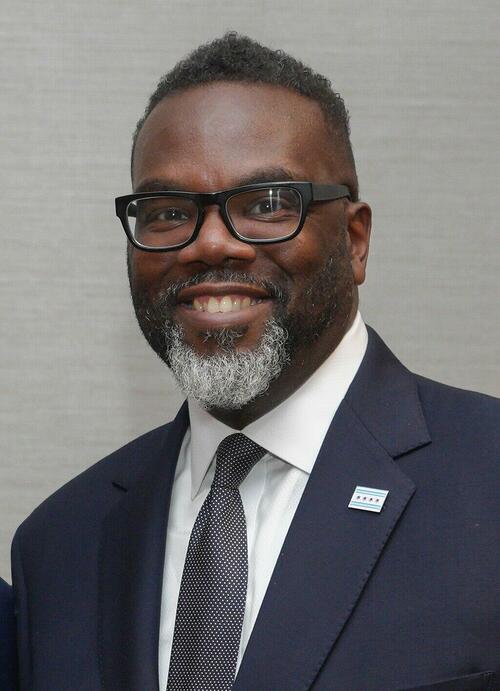 A bill has come due, and Johnson is claiming that the criticism by some of his closest allies is due to racism.Johnson fired the head of the school board and packed the board with his allies in order to secure the loan. However, in the end, his allies could not sign off on what would be a disastrous short-term, high-rate loan to plug the hole in the budget.Chicago politicians have repeatedly yielded to the CTU on massive pension deals to secure the union’s support and contributions in elections. The pensions have triggered financial crises for years. Johnson’s solution was familiar: just borrow more money at ruinous rates to kick the can down the road. In the meantime, the public schools (despite a $10.2 billion budget) continue to fail students, particularly minority and poor students, in a system producing dismal performance and proficiency levels.The $10.2 billion budget, approved by 12 of 20 board members, closes a $734 million deficit but does not include a loan, which the mayor’s office sought to cover the pension payment and other unexpected shortfalls.After the pandemic, money from the Biden Administration ran out, and Johnson actually had to balance the books. That would have involved confronting the CPS staff and the powerful union. Instead, Johnson wanted to sign off on another loan. When the former head of the board floated cutting back on the budget and staff, Johnson and the CTU forced him out.Even the CPS staff was raising alarms over Johnson’s new math approach to loans. They noted that this loan would be signed without any promise of future revenue. In other words, it would just push the CPS and city closer to insolvency through “crisis borrowing.” The result would be a cascading failure, with expected credit downgrades, despite the fact that CPS bonds are already rated at junk status due to past overborrowing to plug budget gaps.Johnson, however, thinks that money magically appears with loans and that he can simply continue to borrow his way out of any budget shortfall.It was too much even for the city council, which has approved overspending for years.Johnson responded in signature fashion and accused his own allies, many of whom are minorities, of effective racism: “When you put a Black man in charge of a city, all of a sudden everybody wants to be an accountant.”Of course, one does not have to be an accountant to see that borrowing almost a quarter of a billion dollars for a system near bankruptcy is irrational, especially when it involves a high-rate loan with no revenue stream to support the added burden. It is like a citizen spending wildly on a credit card without any means to pay the principal, let alone the interest.The difference is that Johnson is risking insolvency for an entire city, suppressing creditworthiness and increasing the costs of future loans.CPS itself teaches personal finance subjects to students, though it is so heavily laden with jargon that it is hard to tell it from a social studies class. The course description on “educating for equity” seems geared more to balancing societal shortcomings than personal budgets:“Financial Education begins with students’ identities and memberships in our communities, extends into disciplinary inquiry-based, culturally sustaining instruction that educates for broad economic inclusion, mobility, critical examination of existing systems, and financially secure individuals and communities.”In the meantime, Chicago is now facing a $1.15 billion shortfall and Johnson is calling for increasing taxes on the wealthy and businesses despite the fact that Chicago is losing both businesses and residents. The incoming citizens are largely immigrants, including undocumented immigrants, in the sanctuary city. That has driven expenditures even higher for the city while it loses businesses and residents needed for its tax base.As a Chicagoan, I have no illusions about the city politics. There has never been reasonable fiscal policies in the city in my lifetime. However, Johnson has moved from the dismissive to delusional in ignoring the economic realities growing in the city.Loading recommendations…
Tag: rate
-
A Bill Comes Due: Chicago's Johnson And Teachers' Union Lose Fight For Loan To Sustain Bloated Budget
-

"We Haven't Heard Her Say She Didn't Do It": Bessent Burns Cook Over Mortgage Fraud Fiasco
On Monday, President Trump fired Federal Reserve Governor Lisa Cook – after Federal Housing Finance Agency Director Bill Pulte asked the DOJ to investigate her for suspected mortgage fraud. Pulte has been dropping receipts for over a week showing that Cook claimed two properties as her ‘primary’ residence – allowing her to benefit by double-dipping on tax and mortgage advantages.

Cook, an ‘autopen-appointed’ (we assume) DEI hire who was overwhelmingly unqualified for the job, and ‘wholeheartedly’ supported the Fed’s decision to help former President Biden by dropping interest rates in the home stretch of the 2024 election (with inflation soaring), has yet to actually deny the allegations – which Treasury Secretary Scott Bessent pointed out today during an appearance on Fox Business.
“She keeps saying Trump doesn’t have the authority to fire her, but we haven’t heard her say that she didn’t do it,” he told host Maria Bartiromo – calling for Cook to be investigated and prosecuted if true.
🚨 JUST NOW: Treasury Secretary Scott Besset calls for the prosecution of Fed Governor Lisa Cook
“She keeps saying Trump doesn’t have the authority to fire her, but we haven’t heard her say that she didn’t do it.” pic.twitter.com/HnLFuPSsU8
— The Patriot Oasis™ (@ThePatriotOasis) August 27, 2025
Meanwhile, White House top economic adviser Kevin Hassett said on Wednesday that Cook should go on leave while her status is litigated.
“If I were her, in her circumstance, I would take leave right now,” said Hassett, director of the National Economic Council, adding that it would be the “honorable thing to do.”
Meanwhile, the talking points have gone out…
The NPCs are doing the script thing again. pic.twitter.com/Lpp81zxBKi
— Bad Hombre (@joma_gc) August 27, 2025
Sen. Elizabeth Warren (D-MA) – who committed fraud masquerading as a Native American to reap manifold benefits, took to CNBC to insist that Cook’s alleged mortgage fraud doesn’t matter because it wasn’t ‘related to her job’ – and therefore not ‘for cause.’
“What I care most about is that we follow the law here and the law is pretty clear that firing for cause means job related… like someone who has been inefficient or someone who’s been corrupt in doing the job,” Warren said.
We’d show you the clip, but nobody thought Warren’s comments warren-ted clipping and sharing. That said, we should point out that Warren demanded an investigation into Dallas Fed President Kaplan’s “ethically questionable” stock trades.
Last night Warren appeared on CNN to criticize Bill Pulte for exposing the fraud!
Pocahontas is crusading against @pulte. After melting down on MSNBC, she ran to CNN and used the same script.
Why doesn’t Warren want blatant fraud exposed? Especially by someone working at the Federal Reserve?
Weird, I think this reaction warrants a closer look into her past. https://t.co/RSYGS8ymSA pic.twitter.com/A7dS8EHQap
— Gunther Eagleman™ (@GuntherEagleman) August 27, 2025
And of course, Cook is a ‘special case’ when it comes to Fed officials exiting stage right amid financial fuckery…
2021: Dallas Fed president Kaplan busted for suspicious stock trades, resigns
2021: Boston Fed president Rosengren busted for suspicious stock trades, resigns
2022: Fed vice chair Richard Clarida busted for suspicious trades, resigns
2025: Lisa Cook vows to stay on
— zerohedge (@zerohedge) August 26, 2025
And while the Fed claims to be ‘apolitical,’ in 2020 Cook said that Donald Trump was “definitely a fascist.”
Flashback: Fired Federal Reserve Governor Lisa Cook said in 2020 that Donald Trump was “definitely a fascist.”
This is who was in charge of our nation’s monetary policypic.twitter.com/iWawkhF31d
— Greg Price (@greg_price11) August 26, 2025
So it appears Cook will continue to dig in. It’ll be interesting when ‘indicted pre-trial Cook’ insists on remaining in her role until the very last possible second.
Loading recommendations… -
Is Your Beach Getaway Really Eco-Friendly?
Why the Coast is Calling and How to Spot the Real Green Deals
Picture this: you’re soaking up the sun on a beach that feels like a slice of paradise, yet every breath you take feels a little heavy. Coastal tourism is booming, but with the surge in green labels and “eco‑friendly” buzzwords, travellers are left wondering: Is this place actually green, or is it just a clever marketing trick?
Heat‑wave 2025 – The Summer To Beat
- Record‑breaking temperatures. Europe’s forecast says 2025 could be the hottest summer ever.
- Millions on the move. People are flocking to the coast again; say hello to the Mediterranean’s biggest crowd.
- Greedy tourism. The same industry that feeds the economy is also chipping away at ecosystems.
Tourism 2023 – Numbers You’ll Want to Remember
Last year, the EU logged 1.1 billion tourist nights. Italy and Spain were top dogs, but first‑class vibes don’t mean they’re eco‑friendly.
Sea‑Side Grins – The Bathing Water Bonanza
Thanks to the EU’s 2024 bathing‑water assessment, over 85 % of Europe’s coastal waters received an “excellent” rating. Highlights:
- Cyprus, Bulgaria, Greece. These spots topped the chart for water clarity.
- Clean plays. Visiting a beach with pristine water can be a dream, but it doesn’t automatically mean the entire area is guilt‑free.
When We Return, We Leave a Mess
Here’s the kicker: tourists often give the environment a green thumbs down in the end. Nature issued a 2024 study that made headlines:
- Carbon traffic. Tourism’s carbon firepower is growing twice as fast as the global economy.
- Emissions love. Now, tourism accounts for a whopping 8.8 % of the world’s greenhouse gas emissions.
How to Spot the Real Deal – Some Quick‑Fire Tips
Tip 1: Ask for concrete evidence. Green certifications like LEED or Marine Stewardship Council (MSC) are a great start, but dig deeper – how often are they updated?
Tip 2: Practical proofs. Do a local check: disposable plastic should be absent, recycle bins plentiful, and the company should maintain accurate records of waste.
Tip 3: Be skeptical of hyper‑bolic marketing. Words like “completely sustainable” or “100 % green” are usually a red flag.Bottom Line – Go Green, but Don’t Get Greased
Coastal adventures are still the ultimate escape. Just remember: the real health of a beach can’t be measured by a water‑quality sticker alone. Keep the questioning alive, stay aware, and enjoy a trip that leaves a lighter footprint.
Coastal tourists leave a trace of pollution behind
Summer’s Sneaky Scrap
“Ever notice how the beach turns into a landfill in July?” says Chloé Martin, the sustainable‑tourism whiz at Plan Bleu, the French powerhouse inside UN’s Mediterranean Action Plan.
She drops the hot‑take that roughly 75% of the yearly waste in the hottest spots pops up during the sunshine season. From sky‑high jet lag down to the bottom of the sea, every tourist tacks on a tiny eco‑blot.
Main Culprits on the Coast
- Air Travel – the sky tour that brings more CO₂ than the ocean can breathe.
- Accommodation – every hotel lobby, kitchen and choir of lights adds to the waste stack.
- Plastic Waste – the endless parade of straws, bags, and single‑use bottles.
As tourism adapts to climate change, how can travellers make more sustainable choices?
Ocean Frontiers: Why Your Beach Getaway Might Melt Before You Even Check In
According to the EU Blue Economy Report 2025, climate change is throwing a splash of chaos into the world of beach tourism. Rising tides, scorching summers, and a party of extreme weather events are turning our coastlines into something of a living nightmare. The consequences? It’s not just the sand that’s getting hotter—it’s the whole package—ecosystems, amenities, and even the reputation of your favourite seaside spots.
Green Claims: The Good, The Bad, and the I‑Dont‑Know‑What‑It‑Means‑Well‑I’ll‑get‑hyped‑Saying
- Statistics from the European Commission say 53% of green claims in the EU are either vague or downright misleading.
- Patricia Puig, marine conservation guru and founder of Oceanogami, warns that “These green labels are so common people are starting to think they’re just a marketing fluff.”
- Bot‑boxed promos can be real bait. Here’s how to pull the worm away:
- Look at the issuer—is it a private corp or an independent public body?
- Check if the requirements are crystal clear and publicly available.
- Make sure it’s backed by international standards that get regularly audited.
What to Do When Choosing Your Next Shiny New Beach Stay
Adaptability and sustainability are no longer optional—they’re survival skills for seaside travel companies. If you’re a vacationer, here’s a quick yet decisive cheat sheet:
- Verify the label’s credibility—google it, research the issuing body, read past audits.
- Ask for proof—did the accommodation get a real “green” rating, or is it just a flashy poster?
- Watch for greenwashing red flags:
- Unclear, vague terms (e.g., “environmentally friendly” without specifics).
- Lack of transparent data or third‑party verification.
In the end, tourists and businesses alike need to be savvy—leap out of the “green” hype and look at the actual impact. Climate change is rewriting the rules of beach tourism, and the only way to stay ahead is to keep an eye on the truth behind every shiny label.
What to look out for on whale or dolphin watching tours?
Choosing a Wildlife‑Watching Experience—A Quick Guide
Ready to spot some sea creatures but want to keep things eco‑friendly? Read this before you book!
The importance of pre‑booking research
Jumping into any wildlife‑watching tour without a bit of homework is like signing up for a mystery movie—you never know if the heroes are actually heroic.
Look beyond the glossy flyers. If a company’s promo show fans swiping the tail of a dolphin or hugging a seal, step back. That’s a red flag for irresponsible practices (thanks, Puig!).
Anchoring etiquette: keep the seabed safe
When the boat settles, a thoughtful crew swings to a buoy — it’s like putting on a seatbelt in the water. Anchoring directly on the sand? That’s basically a direct hit on the fragile seafloor. Always opt for the buoy whenever possible.
A word on distance
- Give the animals space—think less “photographer” and more “silent admirer.”
- Respect their routine; you’re the guest, not the zookeeper.
- Remember: a friendly, distant watch is the safest watch.
In short, look for tours that care for the planet as much as the animals. When in doubt, double‑check.
How to snorkel and dive responsibly?
Living Among Sea Creatures: A Friendly Planet‑Friendly Guide
“We’re just visitors in the ocean’s realm,” says environmental advocate Puig.
He reminds everyone that a little touch—whether it’s a sting‑ray, a sea‑urchin, or a coral fragment—can carry germs that ripple through marine ecosystems.Why Every Action Matters
It might seem harmless to pluck a tiny coral piece as a keepsake, but that single act can set off a chain reaction of damage that lasts for generations. If you’re looking to promote a green tourism vibe, don’t let this temptation sneak in.
How to Make Your Dive Both Fun & Responsible
- Stick with certified guides. Look for operators that partner with marine biologists. These teams know the delicate balance of the reefs and help keep the charge low.
- Keep it small. Opt for tours that limit the number of participants. Fewer people mean less disturbance for the sea‑life and clearer, safer waters.
- Choose reef‑safe sunscreen. Traditional sunscreens can harm coral and plankton when they wash off. The eco‑friendly formulas are safe for underwater worlds—and just as effective to keep you glowing.
With a blend of curiosity, respect, and a dash of mindfulness, you can explore the ocean’s wonders without leaving a mark that lasts longer than your vacation photos.
And jet skiing?
Wave‑Control: Why Your Jet Ski Adventure Might Be Hurting More Than Just the Beach
Take a breath, coast‑goer! Before you rev the engine and dive into the turquoise, consider that those splash‑y moves are louder than a rock concert and twice as damaging to marine life.
Secret Soundwaves of the Sea
- Underwater Noise: It’s like a worst‑nightmare for all sea creatures— from tiny shrimp to giant whales.
- Air pollutants from fuel engines can clog up coral reefs and starve fish of clean waters.
- Invertebrates and coral, amazing as they are, can’t work the same way when their “home theater” turns into a rave.
What The Experts Say
Grab your headphones—there’s a reason marine biologist Puig said that “underwater noise is very impactful for any organism, including invertebrates, corals, and fish.”
“If we chill the speed or, better yet, leave the engines off, we can keep the tides calm,” Puig explains, underscoring that a slower ride means a less harmful splash.
Glowing Flags: Environmental What‑Ifs
- Greece and Italy have already taken a stand—banning or restricting motorized watercraft near their cliffs.
- They’re hoping to protect delicate ecosystems and keep local communities safe from run‑off and soot.
- Other coastal regions are starting to think about similar measures.
Ready to Keep Your Beach Trip “Green”?
Want to know if you’re dozing off the wrong way on your next vacation? Check out the video below — it breaks down how you can stay afloat without steering the planet toward a reef‑bleached nightmare.
Remember: It’s all about balance — a splash that’s friendly to eyes and fauna alike.
-

Databricks confirms new $100B valuation on $4B ARR
Just nine months after raising a whopping $10 billion (plus $5 billion in debt) in January, Databricks has confirmed another $1 billion raise at a $100 billion-plus valuation.
When rumors of the raise first broke last month, Databricks CEO Ali Ghodsi told TechCrunch that the company is using the funds to invest in its Supabase-competitor database for AI agents.
“A year ago, we saw in the data that 30% of the databases were not created by humans,” said Ghodsi. “For the first time, they were created by AI agents. And this year, the statistic is 80%.”
The round was co-led by Thrive (Ghodsi counts Thrive’s founder Joshua Kushner as a personal friend) and one of Databricks’ early investors, Insight Partners. The firms co-led the previous $10 billion, too.
Insight Partners managing director John Wolff tells TechCrunch in an emailed statement that it has seen firsthand how Databricks marched to $4 billion in annual recurring revenue.
“We have seen many of our portfolio companies adopt Databricks,” Wolff said.
