Tag: related__article

  • Paris residents fight overtourism and ‘Disneyfication' of beloved Montmartre neighbourhood

    Paris residents fight overtourism and ‘Disneyfication' of beloved Montmartre neighbourhood

    Paris welcomed 48,7 million tourists in 2024 and residents say visitor numbers are taking their toll.

    ADVERTISEMENT

    When Olivier Baroin moved into an apartment in Montmartre about 15 years ago, it felt like he was living in a village in the heart of Paris. Not anymore.
    Stores for residents are disappearing, along with the friendly atmosphere, he says. In their place are hordes of people taking selfies, shops selling tourist trinkets, and cafés whose seating spills into the narrow, cobbled streets as overtourism takes its toll.

    Baroin has had enough. He put his apartment up for sale after local streets were designated pedestrian-only while accommodating the growing number of visitors.
    “I told myself that I had no other choice but to leave since, as I have a disability, it’s even more complicated when you can no longer take your car, when you have to call a taxi from morning to night,” he told The Associated Press.

    Overtourism in European cities

    From Venice to Barcelona to Amsterdam, European cities are struggling to absorb surging numbers of tourists.
    Some residents in one of Paris’ most popular tourist neighbourhoods are now pushing back. A black banner strung between two balconies in Montmartre reads, in English: “Behind the postcard: locals mistreated by the Mayor.” Another, in French, says: “Montmartre residents resisting.”

    Related

    France is the world’s most visited country. So why hasn’t it turned on tourism?Amid blistering heatwaves, Italians are abandoning their beloved beach holidays for the mountains

    Atop the hill where the Basilica of Sacré-Cœur crowns the city’s skyline, residents lament what they call the “Disneyfication” of the once-bohemian slice of Paris. The basilica says it now attracts up to 11 million people a year, even more than the Eiffel Tower, while daily life in the neighbourhood has been overtaken by tuk-tuks, tour groups, photo queues and short-term rentals.A banner reading "The City Hall despises us" hangs from a balcony in the Montmartre district in Paris, France.A banner reading “The City Hall despises us” hangs from a balcony in the Montmartre district in Paris, France.
    AP Photo/Aurelien Morissard

    “Now, there are no more shops at all, there are no more food shops, so everything must be delivered,” said 56-year-old Baroin, a member of a residents’ protest group called Vivre a Montmartre, or Living in Montmartre.
    The unrest echoes tensions across town at the Louvre Museum, where staff in June staged a brief wildcat strike over chronic overcrowding, understaffing and deteriorating conditions. The Louvre logged 8.7 million visitors in 2024, more than double what its infrastructure was designed to handle.

    A postcard under pressure

    Paris, a city of just over 2 million residents if you count its sprawling suburbs, welcomed 48.7 million tourists in 2024, a 2 per cent increase from the previous year.
    Sacré-Cœur, the most visited monument in France in 2024, and the surrounding Montmartre neighbourhood have turned into what some locals call an open-air theme park.
    Local staples like butchers, bakeries and grocers are vanishing, replaced by ice-cream stalls, bubble-tea vendors and souvenir T-shirt stands.
    Paris authorities did not immediately respond to requests for comment.Tourists stroll in the Montmartre district in Paris, France.Tourists stroll in the Montmartre district in Paris, France.
    AP Photo/Aurelien Morissard

    Visitors seemed largely to be enjoying the packed streets on a sunny Tuesday this week.
    “For the most part, all of Paris has been pretty busy, but full of life, for sure,” said American tourist Adam Davidson. “Coming from Washington, D.C., which is a lively city as well, I would say this is definitely full of life to a different degree for sure.”

    Europe’s breaking point

    In Barcelona, thousands have taken to the streets this year, some wielding water pistols, demanding limits on cruise ships and short-term tourist rentals. Venice now charges an entry fee for day-trippers and caps visitor numbers. And in Athens, authorities are imposing a daily limit on visitors to the Acropolis, to protect the ancient monument from record-breaking tourist crowds.
    Urban planners warn that historic neighbourhoods risk becoming what some critics call “zombie cities” – picturesque but lifeless with their residents displaced by short-term visitors.

    Related

    From Naxos to Lake Garda: US travellers are embracing Europe’s local favourites this summerKazakhstan’s Katon Karagay weighs an ecotourism boom against losing its soul and serenity

    Paris is trying to mitigate the problems by cracking down on short-term rentals and unlicensed properties.
    But tourism pressures are growing. By 2050, the world’s population is projected to reach nearly 10 billion, according to United Nations estimates. With the global middle class expanding, low-cost flights booming and digital platforms guiding travellers to the same viral landmarks, many more visitors are expected in iconic cities like Paris.
    The question now, residents say, is whether any space is left for those who call it home.

  • NATO summit: The defence ‘tech race’ is on — this is how NATO aims to get ahead

    NATO summit: The defence ‘tech race’ is on — this is how NATO aims to get ahead

    Euronews Next learned about NATO’s plans to better integrate new technologies and the defence tech to watch in the future, ahead of the summit at The Hague.

    ADVERTISEMENT

    As defence technologies and the geopolitical climate rapidly evolve, NATO has formally launched a plan to speed the adoption of new tech products.
    World leaders gathered at the NATO summit at the Hague on Tuesday, with the organisation’s new secretary general Mark Rutte and many allies ready to sign on to raising core defence spending to 3.5 per cent of gross domestic product (GDP) by 2035.

    One of the main points to be decided is the Rapid Adoption Action plan. As its name suggests, it aims to speed up how NATO and its allies can integrate technologies from companies so it can use the latest tech products within a maximum of 24 months.
    “We are in what we call a tech race,” Jean-Charles Ellermann-Kingombe, NATO assistant secretary general for innovation, hybrid, and cyber, said in a press briefing which Euronews Next attended.

    Related

    When it comes to defence tech, Europe could learn lessons on speed from Ukraine

    He said that in Russia’s war against Ukraine, Russia has reduced the product development cycle to as short as two to 12 weeks.
    Meanwhile, he said China has “a serious integration of their defence industry and their defence forces”.

    “We have a defence industry that has been struggling to keep up pace. We’ve seen it following the war in Ukraine as we’ve been emptying our stocks. Production lines have had difficulties to keeping up the pace,’ Ellermann-Kingombe said. 

    Lessons from Ukraine

    Ellermann-Kingombe also said that the first starting point for NATO will be looking at what tech has to offer. 
    He said the speed of artificial intelligence (AI) advancements and the rapid development of drones during the war in Ukraine show that “tech today is ready and able to actually fill some of the gaps”.A JAS 39 Gripen C/D takes off during military exercise Nordic Response at Luleå-Kallax Airport, near Luleå, Sweden, Monday, March 4, 2024. NATO exerciseA JAS 39 Gripen C/D takes off during military exercise Nordic Response at Luleå-Kallax Airport, near Luleå, Sweden, Monday, March 4, 2024. NATO exercise
    Anders Wiklund/TT News Agency via AP

    AI, for example, has helped NATO by enabling precision strikes and reducing decision time by 90 per cent. But the organisation said it needs to adapt to working with start-ups and tech companies.
    “The new ecosystems work in a different way than we’re used to,” said Ellermann-Kingombe, referring to procurement requirements.
    “So if we want to exploit what that ecosystem has to offer, we also need to adapt to the way that they work,” he added.

    Related

    NATO explores new drone technology as ‘Pandora’s box’ opened in Russia’s war in Ukraine

    The Rapid Adoption Action plan aims to bridge this divide by sharing market research on a voluntary basis among allies and increasing testing to lower risks from new tech, among other measures.
    But access to governments or defence ministries is lucrative, and it is difficult for start-ups to get a foot in the door, Euronews Next previously reported. A tech company working with NATO said the organisation’s “stamp of approval” helped it work with governments. 
    NATO said in the press conference that it aims to provide a so-called badge of approval to companies that show their solutions to the military, either through a NATO programme or another way. The badge would work as a form of recognition from NATO that the companies could then use. 

    Related

    Inside NATO’s Cyber Range: How armies prepare against attack and why nations must work together

    NATO has test centres in 29 allied nations and innovators from 20 countries, said John Ridge, chief adoption officer at the NATO Innovation Fund (NIF).
    The NIF Fund is a deep tech venture capital fund that is supported by 24 of NATO’s 32 nations. It focuses on deep tech dual-use investments that support defence, security and resilience. 
    It works with NATO’s Defence Innovation Accelerator for the North Atlantic
    (DIANA), a NATO body that aims to find and accelerate dual-use innovation capacity. However, NIF does not have to invest in technologies identified by DIANA. 

    What tech is NATO interested in?

    DIANA innovators are now working on a range of new tech, including power generation on the high seas and advanced passive exoskeletons that give soldiers more strength on the battlefield and people with disabilities more mobility at home, said Tom McSorley, general counsel of NATO DIANA, at the press conference attended by Euronews Next.
    Some of the technologies NATO has invested in include Portuguese drone company Tekever and Germany’s robotics company ARX Robotics GmbH, both of which are used in Ukraine.
    NATO has looked at more than 2,000 start-ups and has invested in 12, said Ridge.

    Related

    AI cyber attacks are a ‘critical threat’. This is how NATO is countering them

    The organisation is looking into autonomy and keeping soldiers out of risk as it considers the future of defence.
    “It seems to me as if that’s a sort of a direction which all militaries are going to go. The way you can remove human beings from harm’s way, why wouldn’t you? So that’s one of the trends that we’re all ready to see, and I suspect we’ll double down onto that,” said Ellermann-Kingombe.
    Ridge also wants to make industrial bases more resilient so they can operate in war time, for example, by investing in semiconductor companies to make them more scalable. 
    “One of the lessons we should be drawing out of Ukraine is how you’re able to mobilise your industry base at time of [war] to really ramp up production,” Ellermann-Kingombe said.
    “That’s not a new lesson. That’s a World War I lesson. That’s a World War II lesson”.
    This article has been updated to correctly attribute the quotes.

  • Spain overtakes Japan in GDP per capita – what is behind the numbers?

    Spain’s Economic Resurgence: A Tourists’ Tale of Triumph

    Picture a sunny Mediterranean coast where buses are buzzing, tapas are sizzling, and the economy is soaring— that’s the story behind Spain’s recent boom. While Japan’s economy has been stuck in a slow‑motion groove over the past decade, Spain’s services sector, especially tourism, is giving it a run for its money.

    Why the Heat Is Burning in Spain

    • Global Service Surge: The worldwide upswing in services—think travel, hospitality, and leisure—has poured millions of euros into Spanish pockets.
    • Tourist Tides: Every new tourist is a wallet opening, a hotel occupancy up by 3% more, and a local economy humming.
    • Roaring Recovery: From the bustling markets of Barcelona to the sunny beaches of Valencia, Spain has turned the tide from a sluggish slump to a profitable pull.

    Japan’s Lagging—What Went Wrong?

    Meanwhile, off in the Far East, Japan has been feeling the drag. Stale innovation and a slow‑moving workforce have meant its services aren’t keeping up with the global rhythm. No wonder Spain’s economic fireworks are outshining the Japanese glow.

    Bottom Line

    Spain is riding the wave of global services, with tourism leading the pack, while Japan lags behind. It’s a classic case of “beach vibes win”—and who can argue?

    Spain overtakes Japan in GDP per capita - what is behind the numbers?This same figure was already slightly higher in the Southern European economy than in the Asian tech-oriented economy in 2024.
    “There is a real story behind this, but also a big caveat,” pointed out Ángel Talavera, Head of Europe Economics at Oxford Economics. 
    While the Spanish economy has been one of the fastest-growing, “this figure is also driven by a statistical artifact,” he told Euronews Business.

    “The Japanese yen has depreciated 40% since 2021, which means that even if Japanese GDP per capita in local currency remains unchanged, it is 40% lower when measured in US dollars,” he said.
    This means that a large amount of Japanese economic data has deteriorated significantly in recent years when measured in US dollars needed for international comparisons. 

    Related

    Spanish economy bucks the trend as it continues to show growthThe Spanish economy grew 3.2% in 2024: Why is it outperforming peers?

    What drove Spanish growth over the past few years?

    Spain, which emerged from the financial crisis a little over ten years ago, expanded its economy by 3.2% in 2024, outperforming France, Germany and Italy, the three biggest economies in the eurozone. The German economy, Europe’s biggest, contracted by 0.2%.

    Spain’s GDP was driven up by strong domestic demand, robust tourism, and other services.
    The service sector provides a little over two-thirds of the country’s economic output, and improvement on this front is one of the key reasons behind Spain’s success. 
    “Global tourism has benefited this economy more strongly than it has benefited Japan,” said Mathieu Savary, Chief European Strategist at BCA Research.
    In Spain, growth was also strengthened by strong government support and lower energy prices than in other European countries. Significant population growth also contributed to improved output.
    Savary added that Spain’s strong economic performance in the last decade has been supported by “brutal reforms and a major adjustment in labour costs in the wake of the European Sovereign Debt Crisis last decade, that have boosted its competitiveness”.
    During the financial crisis, unemployment in Spain was around 25%, one of the highest in the EU. There was a tendency for struggling businesses to favour temporary staff contracts, and in response, Spain approved reforms to soften employee protection in permanent contracts. Reducing firing costs and workers rights, among other reforms, improved labour mobility, helping to match positions with skilled workers, leading to improved productivity.

    What is constricting Japan’s economy?

    Meanwhile, Japan’s “ossified labour market means that its labour productivity remains poor,” Savary added. 
    Japan, the fourth-largest economy in the world, has been struggling to maintain its leading role in the global economy, losing its spot as the third biggest economy to Germany last year. IMF data suggests that in 2025, Japan is expected to be overtaken by India as well, falling to fifth position in terms of GDP.
    The technology-driven Japanese economy has barely grown in the last three decades, and it was hit hard by the COVID-19 pandemic. Its GDP collapsed by 4.2% in 2020.
    Japanese research firm Nikko Research Center said in a recent report that the country has been struggling due to the lack of innovation. 
    The report also noted that in the year 2000, Japan’s GDP per capita was ranked globally the second highest after Luxembourg. It is now the 38th. 

    Related

    Japan’s Prime Minister urges Trump to choose investment over tariffsGermany now world’s third largest economy as Japan loses its spot

    Japan’s current economic performance doesn’t point to a quick turnaround. The economy shrank in the first quarter, driven by weak exports. This is coupled with a sluggish domestic demand, rising inflation and slow production. US tariffs and tariff threats are damaging exports and industrial production, fuelling fears that Japan’s economy could go into recession in the second quarter. 
    The Japanese economy is sustained by a lot of fiscal stimulus, focusing on energy subsidies, wage support, and digital infrastructure.
    The continuing lethargy in the Japanese economy is also fuelled by its ageing population, resulting in acute labour shortages and mounting social security costs.

    Is this a short-lived success for the Spanish economy?

    Spain Takes the Spotlight in the Service‑Star‑Shaped Future

    Let’s face it, the ebullient wave of service economies is surging worldwide, and Spain is riding it straight to the top.

    Why Services Are the New Kings of GDP

    • From 1970 to 2021, the service sector’s share of global GDP leapt from 53% to a whopping 67% — according to the World Trade Organization.
    • Retail, hospitality, tech support, even digital nomads, now rake in more dough than ever.

    Spain vs. Japan: GDP Per Capita Showdown

    • IMF forecasts that by 2030, Spain’s GDP per capita will hover around $42,300, comfortably nudging ahead of Japan’s $41,700.
    • Sticking to current trends, Spain’s per‑person earnings are on a sweet upward slide, while Japan’s are staying relatively plate‑au.

    What Makes Spain a Service‑Superstar?

    • Vibrant tourism that keeps the cafes buzzing.
    • Cutting‑edge tech hubs giving birth to “Spain Tech” vibes.
    • A sunny climate that packs a punch—think people walking ships, no literal ships though.
    Bottom Line: Services inflate!

    In short, as global consumer habits trudge toward the free‑flowing world of services, Spain is set to lead the parade. Get ready to see the Spanish flag waving higher than ever in the world’s economic tapestry.

  • Can lab-grown oils offer a sustainable alternative to ingredients linked to deforestation?

    Can lab-grown oils offer a sustainable alternative to ingredients linked to deforestation?

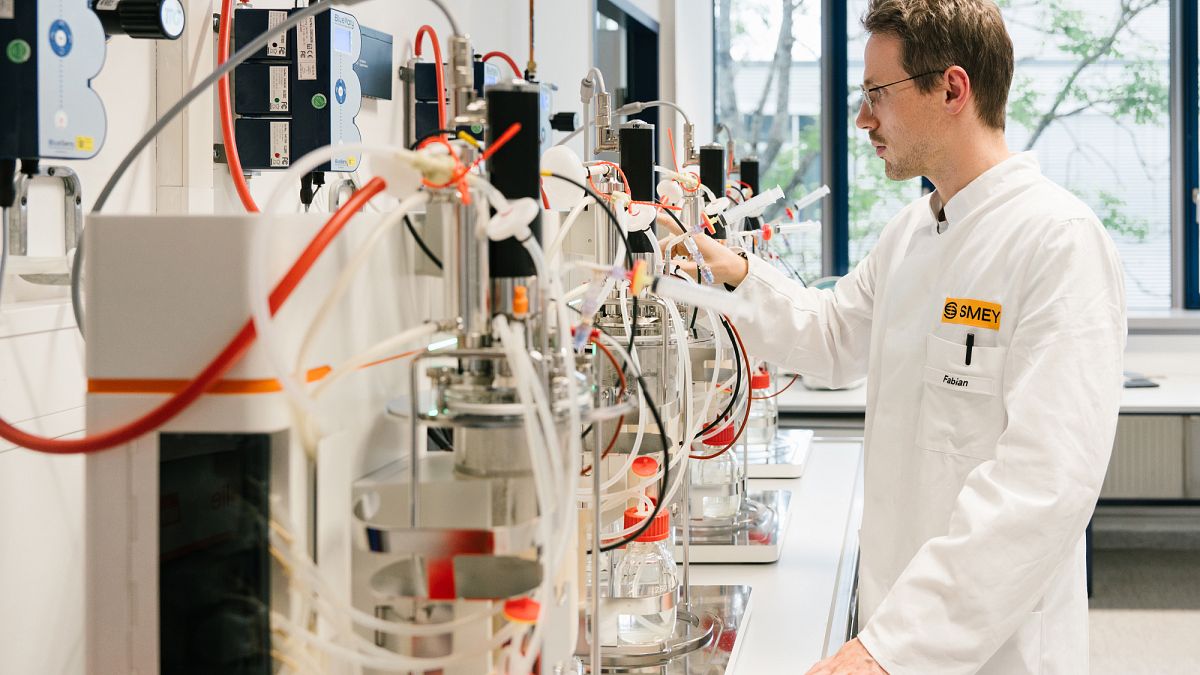
    Traditional palm and cocoa butter supply chains can take months. SMEY’s lab-grown oils cut that down to only 30 days.

    ADVERTISEMENT

    As concerns about opaque supply chains and unethically harvested cosmetics ingredients grow, consumers are increasingly calling for sustainable, environmentally-friendly products which cause minimal damage to local ecosystems and communities. 
    With the EU’s upcoming Deforestation Regulation coming into effect this December, companies importing non-compliant products linked to deforestation could be fined up to 4 per cent of their global turnover. It has prompted some to explore alternative options. 

    This has led to the rise of companies like SMEY, a Paris-based biotech firm, which is producing the world’s first lab-grown cocoa buter, palm and shea oils, with artificial intelligence (AI). They are hoping to provide beauty and food manufacturers with deforestation-free, sustainable oils. 

    Natural harvesting can cause deforestation and ecosystem damage

    Traditional harvesting methods for widely used ingredients like cocoa butter, palm oil and shea oil can lead to significant biodiversity loss, habitat destruction, negative social impacts and accelerate climate change. 
    Palm oil plantations, especially, cause considerable deforestation as they replace large areas of tropical rainforest in places like Indonesia and Malaysia. This can also threaten species such as tigers, elephants, orangutans and rhinos. 
    A large amount of fertiliser and water is also needed for palm oil production, which contributes to soil erosion and water pollution. Forced and child labour are other concerns, as well as displaced local communities due to land disputes revolving around palm oil plantations. 
    Similarly, cocoa butter harvesting can lead to biodiversity loss through widespread deforestation, to create space for cocoa farms. Soil degradation from unsustainable farming practices is also common.

    Related

    Green kiwis earn EU’s first-ever fruit health claim for keeping you regularI tried lab-grown chicken for the first time and was surprised by the taste

    Deforestation releases vast amounts of carbon dioxide into the atmosphere, which can contribute to climate change. Harmful pollutants are also released when forests are burned to clear land. 
    While shea oil harvesting has less direct impact on the environment, processing shea nuts into butter requires large amounts of wood for fuel.  Cutting too much wood to fuel this processing can cause biodiversity decline, habitat loss and land degradation, especially in areas with fewer forest resources. 
    Certain shea processing sites can also generate vast amounts of waste, such as wastewater and shea cake, which can harm the environment if not managed and disposed of properly. 

    Artificial oil companies like SMEY could help solve a number of these environmental and supply chain issues.
    “Lab-produced oils are a promising step toward sustainability, especially for high-impact ingredients like palm or rare plant oils,” Marc Mazodier, Professor of Marketing at ESSEC Business School, tells Euronews Green in an email.  
    “They can reduce environmental impact, with less deforestation and land use, a lower carbon footprint if powered by renewable energy, improved production precision and efficiency.” 
    “They don’t use pesticides or fertilisers and pose no threat to the ecosystem. These oils avoid labour issues associated with traditional oil harvesting in some regions. They can be vegan and cruelty-free,” Mazodier adds. 

    Related

    Will Europe feel the effects of Hurricane Erin? Here’s what forecasters are sayingAdaptation efforts like early warnings and preparedness have cut Europe’s flood deaths and losses

    How SMEY is making lab-grown oils

    SMEY uses AI and a library of more than 1,000 yeast strains, known as the Neobank of Yeasts (NOY), to make traceable cocoa butter, shea and palm oils in only 30 days. 
    This is significantly quicker than the industry’s usual two-year cycle for natural oils and harvesting methods. NOY is the world’s first digital database of its kind.
    “Our approach combines fermentation and machine learning into a single, integrated system. We work with non-GMO yeast strains sourced from nature, using fermentation technology to produce oils with precise lipid profiles for specific client needs,” SMEY’s founder Viktor Sartakov-Korzhov tells Euronews Green. 
    This process is powered by NOY, in which each yeast strain is mapped for its natural lipid profile. SMEY.AI then analyses metabolic, genomic and fermentation data to predict which strains will yield the needed fatty acid composition, stability and texture of oil. 
    “From there, we apply adaptive laboratory evolution and process optimisation to scale production without genetic modification,” Sartakov-Korzhov explains.  
    “This combination shortens the R&D (research and development) cycle from 18-24 months to about 30 days for strain shortlisting, allowing us to develop oils that are consistent, traceable, and tailored to each application.”
    The company says this allows them to create entirely new oils, as well as replace traditional oils such as cocoa butter. 

    Related

    Despite the EU deforestation regulation, companies are investing more in palm oil. Why?

    How can artificial oils make cosmetic supply chains more sustainable?

    Lab-grown oils could change the production and competition landscape in Europe, according to Sartakov-Korzhov.  
    “Our goal is to add value and to strengthen resilience without displacing existing players. In cosmetics and pharmaceuticals, this means enabling the local production of oils that previously had to be imported. A particular example can be making a cosmetic-grade camellia oil used by luxury beauty brands in Europe instead of sourcing it only from Asia,” he explains. 
    Producers can also create new ingredients and oils in labs with much better shelf lives, stability and performance than natural oils. 
    “At the same time, we reduce dependency on GMO-derived oils, which sets us apart from most competitors. By offering high-purity oils from non-GMO sources that can be produced locally, we also make supply chains less vulnerable to geopolitical or economic shocks,” Sartakov-Korzhov adds. 
    Professor Mazodier highlighted that lab-produced oils could also significantly improve supply chain resilience by supporting climate-proof production and inventory flexibility. 
    At present, SMEY is focusing on marketing its Noyl Silk product to haircare, skincare and makeup brands. Noyl Silk, previously named cHOB (Cultivated High Oleic Butter) is an artificial oil for cosmetics, developed through the NOY platform. 
    The company is also targeting the lubricants market and the oleochemicals industry. In the longer term, it will focus on the food sector, with products such as Noyl Cocoa, its cultivated cocoa butter alternative. 
    Currently, SMEY’s focus is on North America and Europe, where the majority of its potential clients are based. However, from there, the company plans to expand globally with regional production hubs worldwide. 
    SMEY plans to lease the NOY database to other fermentation-based companies by the end of October 2025. This will let them speed up their own strain discovery and optimisation. 

    Related

    Will Europe feel the effects of Hurricane Erin? Here’s what forecasters are sayingGreen Man Festival 2025 round-up: An eclectic weekend in the Welsh countryside

    Performance challenges and long regulatory approvals

    Although lab-grown oils can be much more sustainable and quicker to reach the market, challenges still remain. A key hurdle is making sure that the performance, such as taste, feel, composition and behaviour, matches natural oils as closely as possible. 
    “Oils must deliver the same or better results than the ingredients they replace. Regulatory approval is another major factor, and timelines vary depending on the application and region,” says Sartakov-Korzhov.
    “For example, cocoa butter alternatives for food use have an estimated approval path of around two and a half years in Europe, while palm oil replacements for products like chocolate spread could take about three years.”
    Another challenge is scaling up production enough to match the cost competitiveness of traditional oil manufacturing. 
    “Some lab processes require significant energy, which may offset sustainability gains if not powered by renewables,” Mazodier says. 
    “Lab-produced oils are often more expensive than conventional oils, though costs are expected to drop as technology advances. Many consumers prefer plant-based or “natural” ingredients, even if lab-produced oils are scientifically identical or superior.”

    Related

    Bioengineers are using fat made from pig cells to make lab-grown meat taste more appealingThese lab-grown hearts made from human stem cells are used to train AI to detect heart diseases

    He also points out that lab-grown oils usually need sugars or other carbon sources, often from industrial agriculture, like sugarcane or corn. If the supply of these crops is disrupted, there may be ripple effects for artificial oil companies. 
    Similarly, not all lab-grown oils are easily biodegradable. 
    “Brands must ensure their products break down safely to avoid contributing to pollution or microplastic issues. Even if the oil itself is sustainable, its packaging and transportation may still have environmental impacts if not managed responsibly,” Mazodier said. 
    With stricter regulations, like the EU’s Deforestation regulation, set to take effect, companies are increasingly exploring alternative sources. Lab-grown options like those developed by SMEY are being positioned as a promising fix to sustainability and ethical concerns. 
    But while the technology offers traceability and speed, it isn’t without limitations. Questions remain over scalability, affordability and whether lab-grown oils can really match up to the natural counterparts. 
    “Lab-grown oils could make cosmetic supply chains far less exposed to fragile agriculture by diversifying production, stabilising supply, and enabling substitution. But they introduce new dependencies- especially on feedstock sourcing, energy, and industrial infrastructure- which means they complement rather than fully replace agricultural oils in the near term,” Mazodier concluded.