Tag: reports

  • Peter Thiel's Secretive 'Tech Bilderberg' Group Eyes Global Expansion

    Peter Thiel's Secretive 'Tech Bilderberg' Group Eyes Global Expansion

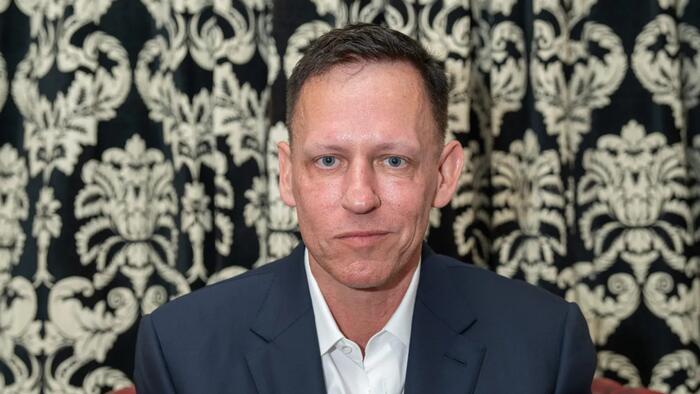
    Dialog, the exclusive forum co-founded by billionaire Peter Thiel and entrepreneur Auren Hoffman, is planning a permanent Washington headquarters as the PayPal co-founder’s investment portfolio gains deeper federal government ties through companies like Palantir.

    The invitation-only network is scouting real estate to build a “campus in the D.C. suburbs,” according to reports, marking a strategic expansion into the nation’s political center.

    Dialog, often compared to a tech-era Bilderberg, has quietly become one of the most elite, and mysterious, gatherings for CEOs, elected officials, and intellectual heavyweights,” Axios reports.

    The move comes as Thiel’s influence in government circles has grown substantially, driven by lucrative federal contracts secured by his portfolio companies. Palantir, the data analytics firm he co-founded, has become a key supplier to U.S. intelligence and defense agencies.

    A source with ties to Dialog told Axios that the permanent facility reflects “rising demand for quieter reflection in an always-on world. Dialog bills itself as offering global elites the chance to talk candidly across ideological lines, away from their phones and the pressures of social media, the news media, and their stakeholders.”

    The forum’s secretive nature appears to be a selling point. “Given declining trust in institutions and anti-establishment fervor,” the source added, “the group actively keeps its inner workings secretive and hidden from public scrutiny.” The network’s “secretive nature allows participants to share controversial and concerning ideas that they would not be comfortable sharing elsewhere.”

    Dialog has hosted events in the U.S. and Italy and is planning satellite gatherings in the Middle East and other locations, signaling global ambitions beyond its Washington expansion.

    The forum attracts a bipartisan roster of power players, including Tesla CEO Elon Musk, Treasury Secretary Scott Bessent, former Treasury Secretary Larry Summers, venture capitalist Chamath Palihapitiya, KKR & Co. co-founder Henry Kravis, and Maryland Governor Wes Moore. Other participants include Senator Cory Booker, former White House senior adviser Jared Kushner, Director of National Intelligence Tulsi Gabbard, and Sen. Ted Cruz (R-TX).

    As the late, great comedian George Carlin once famously said: It’s a big club and you ain’t in it.

    *  *   *

    10 of these just showed up… Grab yours now by clicking on the pic!

    Loading recommendations…
  • Commerce Department Dares to Seize Harvard Patents

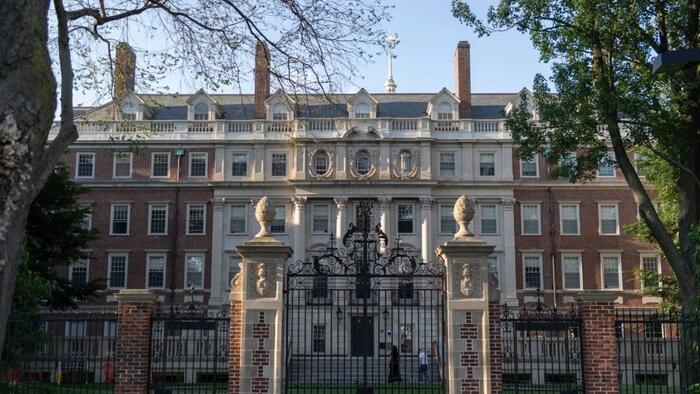
    Commerce Department Dares to Seize Harvard Patents

    Federal Government Tackles Harvard’s Patent Puzzle

    The U.S. Department of Commerce has opened a fresh investigation into how Harvard University manages its patents, after Commerce Secretary Howard Lutnick sent an August 8 letter to President Alan Garber. The letter warns that Harvard might be falling short of its duties to the taxpayers and breaching the rules tied to federally funded research.

    What’s the Bayh‑Dole Act Got to Do With It?

    The Bayh‑Dole Act gives institutions the right to keep patents on inventions they create with federal money. But the same law also allows the government to step in—known as a march‑in—if those inventions aren’t being developed or used in a way that benefits the public.

    Key Points from Lutnick’s Letter

    • Harvard allegedly failed to honor obligations to the American taxpayer.
    • The university is said to be in breach of statutory, regulatory, and contractual requirements connected to its federally funded research and the resulting intellectual property.
    • The letters advise that the Department may granted licenses to third parties under the march‑in provisions if needed.

    Why This Matters

    Think of it like the government being the referee in a high‑stakes game. If Harvard isn’t playing fair—by not turning inventive breakthroughs into products or services that serve the public—then the Commerce Department may have every right to call a timeout and let someone else take the ball.

    Looking Ahead

    This move underscores that public funds come with expectations: research breakthroughs should not just sit in a vault but should roll out into real‑world solutions. The federal watchdog is ready to roll up its sleeves and ensure Harvard delivers on that promise.

    Harvard in the Crosshairs: The Government’s Latest Move

    When the Department of Commerce says it’s making a thorough audit of Harvard’s patent game, you might instinctively think they’re just checking the books. But there’s a bigger plot twist— they’re ready to trigger the Bayh‑Dole Act’s “march‑in” powers, which could hand federal patents back to the government.

    What the Letter Says (in Plain English)

    • March‑In Rights: The U.S. is set to license Harvard’s patents to third parties.
    • Unprecedented Action: No federal agency has exercised the march‑in powers in the past 40 years.
    • Harvard’s Reply: “We’re defending our rights and freedom, and the tech we produce is life‑saving and changing industries.”
    • Commitment to the Act: Harvard claims it’s fully compliant, aiming to let the public access the innovations birthed from taxpayer money.

    Why This Rocks

    This isn’t a one‑off snatch. It’s the latest of a string of heavy‑handed steps the federal government has taken against Harvard—starting with Trump’s administration. Accusations range from anti‑Semitic rhetoric to hiding foreign funds and slamming race‑based discrimination.

    The Numbers Behind the Drama

    • Harvard was announced to hold 5,800 patents as of July 1, 2024.
    • It opened 900+ active tech licenses with 650+ industry partners.

    The Letter’s Hardline Demand

    Below are the key points the Commerce Department is demanding to see:

    1. Give an exhaustive list of all federally funded patents by Sept. 5.
    2. Show evidence that Harvard wrote every line required by the Bayh‑Dole Act.
    3. Prove that they’re giving the U.S. industry a fair chance to reap the benefits.

    The Paradox of Praise and Criticism

    On the one hand, the government acknowledges the “ground‑breaking science” funded by taxpayer money. On the other, it’s grilling Harvard for supposedly mishandling intellectual property, missing disclosure obligations, and falling short on giving the domestic market an edge.

    Harvard’s Counter‑Arguments

    Despite the blowback, the university frames its positions with an emotional flourish: “These patents are not just blueprints; they’re lifesavers.” They vow, “We’ll play by the rules, put the public first, and keep these inventions in the hands of the people.”

    The Final Countdown

    With a single message from the U.S. general counsel, Julie Lutnick, on Aug. 8, the stakes are crystal clear: If Harvard can’t show compliance, the U.S. will swoop in to take the reins. The clock starts ticking.

    Bottom Line?

    As the state moves from threat to action, all eyes are on Harvard to prove that keeping science in the hands of the public is not just aspirational— it’s legally required. And the question remains: will the University roll up its sleeves and act fast, or will it face a very literal “march‑in” from the government?

    Trump-Harvard Tensions

    Harvard’s Funding Freeze: A Tale of Dollars, Demons, and Legal Drama

    When the Piggy Bank Signals “Stop!”

    So far, the federal government has pulled the plug on a whopping $2.6 billion in funding for Harvard. That includes a hard cut of $2.2 billion in federal grants after the Department of Homeland Security (DHS) accused the university of not doing enough to tackle anti‑Semitic vibes on campus.
    According to DHS’s May 22 statement:

    • Harvard’s leadership supposedly let anti‑American, pro‑terrorist agitators roam free.
    • These folks allegedly harassed and attacked students, many of them Jewish.
    • Most of these troublemakers were foreign students.

    Legal Showdown: Harvard vs. the Government

    Just a day after the freeze hit, Harvard slapped the federal government with a lawsuit. They’re fighting over a July 21 court hearing, and the case is still in the books. The lawsuit claims the funding stomp is a clear violation of:

    • Due Process Clause
    • First Amendment
    • Administrative Procedure Act

    Harvard argues that the freeze is a political payback for its right to manage its own curriculum and faculty ideology. They say the government wants to dictate what the university can teach and who sits in the classroom.

    Harvard’s Defense: “We’re on the Beat!”

    The university also reminded everyone that it’s been working hard to stop anti‑Semitic bullying. They admitted that Jewish and Israeli students were victims of nasty attacks following the Oct. 7th Hamas strike on Israel. In response, Harvard says it’s taken huge steps to make campus feel safe, fair, and welcoming for all:

    • Implemented new accountability procedures.
    • Clarified policies and enforced disciplinary actions.
    • Boosted programs that tackle bias, promote ideological diversity, and spark civil debate.
    • Hired staff to support these initiatives and help affected students.
    • Upgraded safety and security on campus.

    Meeting the Govt or Going the Other Way?

    Meanwhile, Harvard seems to be wobbling between defiance and compliance. On July 29, the institution said it would hand over employment forms for thousands of its staff after a DHS request. These Employment Eligibility Verification forms confirm each employee’s identity and authorization to work in the U.S., and the DHS’s Citizenship and Immigration Services manages them.

    So, is Harvard going to keep it in the black books, or is it about to hand over its workforce paper trail? Only time will tell.

    Takeaway

    Between massive funding cuts and a high‑stakes lawsuit, Harvard’s story is turning into one of the most talked‑about university‑government battles of the year. Will the Ivy League hold its ground, or will it buckle under federal pressure? Brace yourselves – because the drama has only just begun.
  • Russian transport minister found dead hours after being fired by Putin

    Russian Transport Minister Roman Starovoit was found dead near Moscow mere hours after being fired by President Putin. Domestic media reported that he died in an apparent suicide.

    ADVERTISEMENT

    Russian Transport Minister Roman Starovoit was found dead near Moscow on Monday, just hours after President Vladimir Putin fired him following massive disruptions of Russian civilian airspace caused by Ukrainian drone raids.
    According to Russian media reports, a gun was found near Starovoit’s body. Reports also claim he died in an apparent suicide. However, no official information on the cause of death has been released at this time.

    Earlier on Monday, the Kremlin provided no specific details or reasons for the dismissal of Starovoit, who had served as the governor of Russia’s Kursk region before being reappointed transport minister in May 2024.
    However, his firing came after almost 300 flights were grounded at major airports over the past weekend due to the latest Ukrainian drone raid.
    On Saturday and Sunday, 485 fights ended up getting cancelled, according to the Russian federal aviation agency, Rosaviatsiya.
    In total, from early morning on Saturday until Monday morning, some 1,900 flights were delayed due to what the agency referred to as “airspace restrictions imposed on airports in central Russia.”
    Kremlin-controlled outlet Komersant reported that the disruptions cost the airlines over 200,000 euros.

    Ukraine’s drone raids on Russia

    While Russia has intensified its aerial attacks against Ukrainian civilians and residential and energy infrastructure, Kyiv is targeting Russia’s military sites and war infrastructure.
    On Saturday, Ukraine’s military general staff said that Ukrainian forces struck the Borisoglebsk air base in Russia’s Voronezh region.
    Borisoglebsk is believed to be the home base of Russia’s Su-34, Su-35S and Su-30SM fighter jets.
    The Kremlin reported that Russian air defence shot down eight Ukrainian drones headed for Moscow late on Sunday, out of a total of 90 UAVs overnight over Russian territory, the Black Sea and Russia-annexed Crimea.

    Most of them were downed over the border regions near Ukraine, but three were also destroyed over the Leningrad region, including the regional capital of St Petersburg, the ministry said on Telegram on Monday.
    Kyiv’s drone campaign has already disrupted civilian air travel in Russia several times.
    At the beginning of May, just days before Moscow’s Victory Day parade, Ukrainian drones caused massive disruption at Moscow’s airports, with 350 flights affected.

  • Apple Pulls Back in China: Shuts Long-Standing Store Amid iPhone Decline

    Apple Pulls Back in China: Shuts Long-Standing Store Amid iPhone Decline

    Apple’s Big Leap Into Chinese Market Roughness

    Apple has been feeling the pressure from all sides in China—think rising Chinese rivals like Huawei, Xiaomi, and Vivo, a deepening deflation wave, waning consumer enthusiasm, and the bubbling tensions between China and the United States. The nearest example of this squeeze is the latest move last month: Apple is finally closing one of its own brick‑and‑mortar stores in the homeland of billions.

    Why the Closure Matters

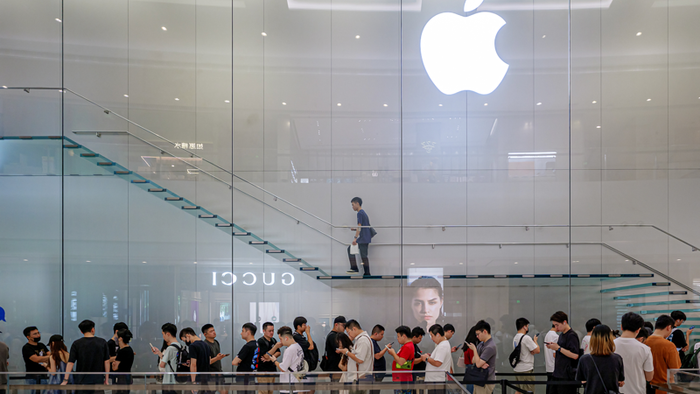
    Back then, back in 2008, Apple opened its first outlet in Beijing’s Sanlitun district, looking bright and brilliant. Fast‑forward to July 29th, the Apple website announced that the Dalian Centennial City Shopping Center store would shut its doors at 8 p.m. on August 9th. This closure marks a historic first for Apple in China—closing a directly‑operated shop for the first time since it opened.

    The Triggers Behind the Move

    • Chinese Competition – The tough business landscape with the likes of Huawei, Xiaomi, and Vivo has Apple’s market share under constant strain.
    • Economic Downturn – China’s slowdown and deflation mean fewer people are willing to splurge on an Apple device.
    • Trade Tensions – The rocky relationship between China and the U.S. adds extra headaches for Apple’s strategy.
    What the Media Is Saying

    State‑run outlet Securities Times (abbreviated ST) called the move “highly unusual.” Their article highlighted that this was the first instance of Apple pulling the plug on an in‑country shop that it operated directly, underscoring how much the situation has shifted since those “first‑ever” days in 2008.

    Looking Ahead

    With Apple stepping back from a physical location, the company will have to rethink how it connects with consumers in a market where palms are moving toward online sales and local competitors are popping up at every corner. It’s a big test for the tech giant’s adaptability—will they keep crushing it or will the competition finally overtake the premium brand?

    Apple’s Shanghai Retreat: The Real Reason Behind the Store Closure

    Apple’s spokesperson cut the red carpet for the closure of one of its Dalian Centennial City lobbies by citing the sudden exodus of local retailers from the area. “We’re just scaling back where not all partners can stay,” the company said.

    Why This Matters in a Giant Hotspot

    Apple keeps 41 outlets in China, a modest 10% slice of its 530-plus stores across the globe. Yet the latest numbers from IDC paint a stark picture: China’s smartphone market shrank in Q2, with four of the top five brands reporting fewer shipments as buyers grew more cautious. Apple found itself the fifth-ranked brand, trailing behind domestic giants like Huawei, Xiaomi, and Vivo.

    A Shift In Production—and It’s Not a Pity Party

    Canalys data for the quarter ending June shows Apple’s friendshoring strategy taking shape: production is pulling away from China and toward India. In a surprising first, India became the largest exporter of smartphones to the U.S. with 44% of all shipments. Vietnam followed closely as the second‑largest exporter.

    ST’s take: “The Chinese smartphone market is expecting more pressure down the road.”

    Is This a Red Flag for Tim Cook?

    One thing’s clear: the shutdown is not a sign of triumph. It reflects the relentless erosion of iPhone market share in China by local players. The change is best interpreted as Apple tightening its belts in a market that’s been turning frigid.

    In Short…
    • Apple’s Dalian store closed due to partner withdrawals.
    • China’s smartphone sales are down; Apple ranks fifth.
    • Apple is shifting production to India; Indian exports hit 44% to the U.S.
    • The store exit signals a cautious retreat from a contested territory.

    It’s a reminder that even the most polished brands must adapt—or risk being left behind by local competition and shifting supply chains.

  • France Launches Criminal Probe Into X Over Alleged Algorithmic Manipulation

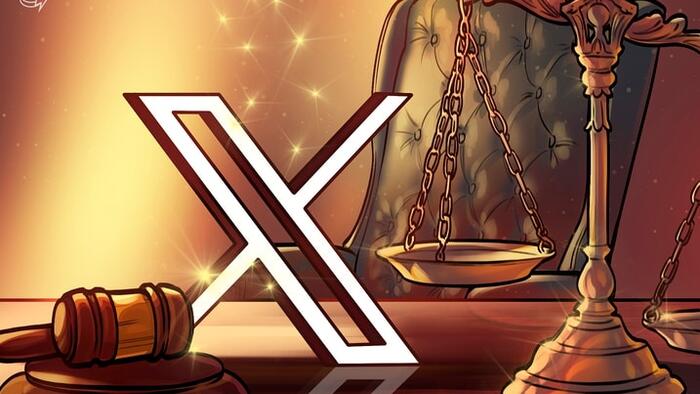
    France Launches Criminal Probe Into X Over Alleged Algorithmic Manipulation

    French Prosecutors Zoom In on X – Alleged Algorithm Misadventures

    In a plot twist that feels straight out of a sci‑fi thriller, the French Public Prosecutor’s Office has turned its investigative broom over to X. The charge? The platform’s slick algorithm may have been smuggling in foreign interference behind a curtain of data.

    What’s the Shook‑Up?

    • Alleged Algorithm – Experts argue that X’s recommendation engine could be designed to push certain content that aligns with foreign objectives.
    • Foreign Interference – Claims suggest that the algorithm might have helped shape public opinion in ways that favor covert geopolitical goals.
    • Legal Scrutiny – The French Public Prosecutor’s Office has opened a formal investigation, demanding X answer questions about its internal processes.

    Why It’s a Big Deal

    This isn’t just another “algorithm scrutiny” headline. It’s a high‑stakes legal drama that could set a precedent for how tech giants are held accountable when their code plays political roles.

    Next Steps

    Stay tuned—our front‑row seat will follow X’s response, the prosecutor’s findings, and whether this could lead to broader regulations for AI-powered platforms worldwide.

    France Swoops in: Is X Playing Dirty With Data?

    The Scoop

    Yesterday, Magistrate Laure Beccuau announced that a full investigation has kicked off against tech giant X (formerly Twitter). The question is whether X has been fiddling with its algorithms to line up data from users in a super sneaky way that violates French law.

    How the Drama Unfolded

    Two whistle‑blowers sealed the fate:

    • MP Éric Bothorel – a Member of Parliament from President Macron’s Ensemble Pour La République party – filed the first complaint on Jan. 12.
    • A mysterious senior government official (identity redacted) sent a follow‑up report to the Paris Public Prosecutor’s Office’s cybercrime wing.

    Bothorel’s Bold Post

    Bothorel hit the headlines by claiming that X’s algorithms had become a tactical weapon for unscrupulous political agendas, specifically to push Elon Musk’s views. “I’m thrilled the French justice system is finally stepping up to fight foreign meddling,” he posted on X.

    What the Investigation Covers

    The Justice Ministry has turned over the case to the General Directorate of the National Gendarmerie, officially launching an inquiry that focuses on two key points:

    1. Tampering with automated data‑processing systems by a coordinated group.
    2. Fraudulent extraction of user data from those systems by the same organized crew.

    Who’s Leading the Charge

    France’s esteemed J3 cybercrime unit is at the helm. Just last year, J3 busted Pavel Durov, the Telegram founder, leading to his arrest. They’re not messing around when it comes to digital espionage.

    The Bigger Picture

    While X remains silent, the French investigation signals a broader battle: safeguarding digital citizens against algorithmic manipulation that could sway political narratives. Whether X will bend to the law or double‑down remains to be seen.

    Stay tuned for more updates on this legal showdown.

    X faces growing scrutiny across Europe

    When Musk’s X Gets Caught in a European Mire

    Picture this: In 2022, Elon Musk buys the platform that was once Twitter, rename it X, and the world expects a nocturnal revolution. But soon enough, two German NGOs, not your average Slack group, win a battle at the Berlin Regional Court. The verdict? X must hand over all publicly available engagement data. Why? To help researchers dig into the sneaky ways that election interference might peek through the digital lens.

    X Faces the EU’s New Digital Service Act

    • Trust Terms – The act demands that platforms topple illicit content and clear their algorithmic decks.
    • Transparency – If you’re hiding behind opaque code, you’re in hot water.

    The Crypto Crunch

    Elon’s big idea? Turn X into a swiss‑army knife of finance, thickening the bedrock with crypto at its core. The catch: European regulators are tightening the screws on everything from banking to personal data. If Musk can’t convince them that X ticks the boxes for financial services, the whole plan may just be a wishful symphony.

    Putting It Simply

    So, while the world watches Elon try to make X the next fintech beast, the EU’s new rules could dog‑track him—removing trust like a bad taste in a new coffee blend. Will Musk chalk it up to a learning curve or a bolt during his grand show? Time, regulators, and a dash of crypto have the final word.

  • IceBlock: Thousands flock to app that tracks US immigration agents after White House backlash

    “I really just wanted to do something to help fight back,” the app’s developer said.

    IceBlock: The App That’s Turning the Sheriff’s Circle into a Front‑Facing Battlefield

    It all began in April when a free app called IceBlock hit the Apple Store and shot straight up the rankings. The idea? Let folks anonymously pin down where Immigration and Customs Enforcement (ICE) agents are doing their “fieldwork.” Think of it as a modern-day version of a game‑of‑hide‑and‑seek, but instead of hiding from friends, you’re hiding from law‑enforcement.

    How It Works (and Why Nobody’s Tracking You)

    • Users can report their sightings of ICE officers within a five‑mile radius.
    • The app doesn’t store personal data, so the reports can’t be traced back to the person who posted them.
    • All you need is a phone and a bit of curiosity about what’s going on in your neighborhood.

    IceBlock’s creators assure you that the tool is purely for civic awareness. “We’re not about turning people into target lists,” they say, but the tech is indeed a double‑edged sword.

    The Immigration Slump and the Trump Era

    Since President Donald Trump took office, ICE’s numbers have exploded. In the heat of the moment, the White House demanded that ICE arrest 3,000 people per day—a figure that feels more like a superhero cap than a policy plan. The Deportation Data Project reports that at least 56,000 immigrants are currently held in ICE facilities, half of whom have no criminal records. A handful of detainees have tragically lost their lives while locked up.

    Behind the App: The Story of Joshua Aaron

    Joshua Aaron, the tech veteran behind IceBlock, shared his motivation this week with NBC:

    “When I saw what was happening in this country, I just felt I had to do something to help fight back,” he said.
    “I grew up in a Jewish household, met Holocaust survivors, and it hit me how history echoes its own nightmares. The parallels between this country’s trumpet-and-immigration saga and Hitler’s rise are undeniable.”

    In short, Aaron paints the app as a tool for community resilience—an “information super‑highway” that keeps people in the know.

    Trump Administration’s Concerns (and the Fire‑faced Response)

    In a twist only politics could inspire, the Trump camp raised alarms about the app’s potential to “target” ICE agents. White House Press Secretary Karoline Leavitt and ICE Acting Director Todd M. Lyons voiced worries about officer safety, citing a staggering 500% rise in assaults on agents tackling immigration cases.

    Meanwhile, Kristi Noem, the acting head of the US Department of Homeland Security (DHS), slammed CNN for news coverage. “They’re actively encouraging people to snub law‑enforcement operations,” she declared, hinting at possible legal backlash against the media. Aaron dismissed the alarm as “another right‑wing fear‑mongering scare tactic.”

    What the DHS Is Cooking In the Background

    Beyond the app, the DHS has been busy building a nationwide citizenship database. If you’re wondering what’s that for? It’s supposedly to verify that only citizens vote. But “an election expert said it could be used for other things, and well, who knows?”

    Word on the Street

    • IceBlock tops the Apple Store, proving its appeal—and amplified curiosity.
    • ICE data show a troubling spike in detentions; half the people detained are innocent of crimes.
    • The Trump administration’s approach is to protect agents—but that may be a slippery slope.
    • Joshua Aaron sees the app as a shield for the community.
    • There’s a broader conversation about what a census database can do when it’s interwoven with immigration data.

    In a nutshell, IceBlock is the new sheriff’s roundtable—one that lets you share, but also raises the question of whether openness is a weapon or a shield. Will it help workers stay safe, or does it invite more danger? Only time—and perhaps, more apps—will tell.

  • YouTube Using AI To Secretly Alter Creators' Videos Without Their Knowledge

    YouTube Using AI To Secretly Alter Creators' Videos Without Their Knowledge

    YouTube took the liberty to make so-called “enhancements” to videos without notifying or seeking permission from creators, according to a report.

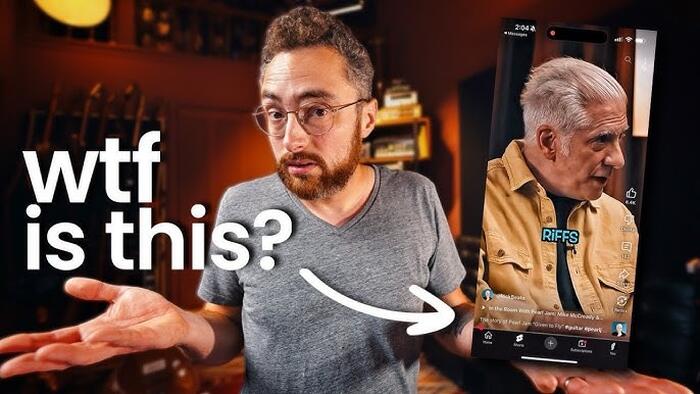
    Among the creators who had content altered was musician Rick Beato, who told the BBC that he first noticed the changes when he watched his own videos.

    I was like ‘man, my hair looks strange’, Beato recalled. “And the closer I looked it almost seemed like I was wearing makeup.” said Beato, whose channel does deep dives into the music industry and boasts over 5 million subscribers. “I thought, ‘am just I imagining things?’”

    BBC reports:

    It turns out, he wasn’t. In recent months, YouTube has secretly used artificial intelligence (AI) to tweak people’s videos without letting them know or asking permission. Wrinkles in shirts seem more defined. Skin is sharper in some places and smoother in others. Pay close attention to ears, and you may notice them warp. These changes are small, barely visible without a side-by-side comparison. Yet some disturbed YouTubers say it gives their content a subtle and unwelcome AI-generated feeling.

    There’s a larger trend at play. A growing share of reality is pre-processed by AI before it reaches us. Eventually, the question won’t be whether you can tell the difference, but whether it’s eroding our ties to the world around us.

    Beato’s colleagues, including fellow music YouTuber Rhett Shul, also noticed that his content had been tweaked by the Google-owned video platform.

    The more I looked at it, the more upset I got,” Shull said. “If I wanted this terrible over-sharpening I would have done it myself. But the bigger thing is it looks AI-generated. I think that deeply misrepresents me and what I do and my voice on the internet. It could potentially erode the trust I have with my audience in a small way. It just bothers me.”

    Shull was so furious about the issue that he posted a video on the subject.

    In response to the controversy, YouTube came (somewhat) clean in a post on X.

    We’re running an experiment on select YouTube Shorts that uses traditional machine learning technology to unblur, denoise and improve clarity in videos during processing (similar to what a modern smartphone does when you record a video),” admitted Rene Ritchie, who lead’s YouTube’s editorial and creator liaison division. “YouTube is always working on ways to provide the best video quality and experience possible, and will continue to take creator and viewer feedback into consideration as we iterate and improve on these features.”

    Eh, really?

    Some researchers fear that this type of technology could have widespread dystopian effects.

    “You can make decisions about what you want your phone to do, and whether to turn on certain features. What we have here is a company manipulating content from leading users that is then being distributed to a public audience without the consent of the people who produce the videos,” Samuel Woolley of University of Pittsburgh said. “I think using the term ‘machine learning’ is an attempt to obscure the fact that they used AI because of concerns surrounding the technology. Machine learning is in fact a subfield of artificial intelligence.”

    Loading recommendations…
  • The Dark Side of Social Media: Girls’ Sleep and Mental Health at Risk

    The Dark Side of Social Media: Girls’ Sleep and Mental Health at Risk

    World Social Media Day: The Teenage Dream‑in‑Which Your Sleep Takes a Hit

    Did you know that on June 30 the entire internet waltzed to celebrate World Social Media Day? Turns out, celebrating our digital lives is also a full‑time affair for many teens.

    Sleep Thief 2.0: The Numbers That Will Make You Check Your Phone Settings

    A recent survey—spun out between September and October 2025—revealed some startling facts:

    • Half of teenage girls (13‑17) reported that scrolling, liking, and DMing keeps them wide‑awake.
    • Only 40 % of boys admit that social media is doing the same harm.

    In other words, if your friend is a teen girl, chances are her insomnia is powered by emojis and stories.

    Beyond the Blue Light: Mental Health, Confidence, and Productivity

    According to the Pew Research Center—validated by Statista’s Anna Fleck—social media is a multipurpose magician for teens: it’s not just a sleep saboteur.

    • Confidence can take a dip when the highlight reels go on repeat.
    • Trying to buckle down for studies becomes harder when a new Instagram filter is just a tap away.
    • Well‑being, in general, sees a worrisome decline the more time is spent glued to screens.
    Why the Gender Gap? A Quick Brain‑Dump

    Why are girls more likely to feel the social media sting? Experts say it’s a mix of:

    • Social expectations that push for perfection—lots of pressure to look flawless.
    • Constant comparison in a visual medium; anyone can show their best selfie.
    • Higher engagement rates—girls check their feeds more often and deeply.

    Bottom line: The digital world is a double‑edged sword, and the teenage girl slice of life is the most—well‑ironically—sensitive to its edge.

    Wrap‑Up and Take‑away

    So next time you’re scrolling through TikTok or adding a filter, just remember that somewhere, a 15‑year‑old is tapping away at midnight, hoping the next post will magically make her sleep better.

    Drive home the point: let’s keep our scrolling sweet, but not at the expense of a good night’s rest.

    Infographic: Social Media Especially Harms Girls’ Sleep and Mental Health | Statista

    Teen Life: Social Media & Mind, Grades, and Friendships

    Peek into the teenage mindset — and let’s break it down with a dash of humor and heart.

    The Mental Health Mix‑up

    • Girls: 25 % feel the buzz, boredom or anxiety.
    • Boys: 14 % are in the same boat.
    • Brunch and selfies? Not much help or harm reported by the majority.

    Grades: The Digital Dilemma

    One in five teens (both boys and girls) say their school marks get a hit from scrolling sessions.

    Friendships: The Good, The Bad, and the Cool

    • 30 %: Social media boosts friendships — from a sprinkle to a splash.
    • 9 % of girls think it messes up friendships, compared to 5 % of boys.
    • Overall, no strong gender split when it comes to the perks listed in the study.

    Little Take‑away

    It turns out most teens see social media as a neutral sidekick: it’s neither a lifesaver nor a disaster—just the side hustle of modern growth. Stay mindful, stay social, and keep your grades in check!