Tag: responsibly

  • Ice cream for breakfast? These European destinations serve sweet local treats worth travelling

    Whether you’re wandering the streets of Palermo or exploring Istanbul, there’s ice cream worth seeking out.

    ADVERTISEMENT

    Europe may be home to creamy Italian gelato and elegant French parfaits, but the continent’s best ice cream isn’t always the most obvious.
    From Lapland to the lowlands, local traditions come to life across Europe in unexpected ice cream creations. Think pasta-shaped sundaes, chewy, goat’s milk cones that don’t melt in the sun and a very special treat for breakfast – yes, breakfast.

    Here are five scoops of ice cream worth travelling for in Europe.

    Germany’s spaghettieis surprise

    Don’t be fooled: this isn’t pasta. Spaghettieis is a playful German invention that mimics a plate of spaghetti. 
    It’s made with vanilla ice cream squeezed through a press to resemble noodles, then topped with strawberry sauce “marinara” and white chocolate “Parmesan.”
    The German treat was invented in 1969 by Dario Fontanella in Mannheim. While purists might want to visit his Eis Fontanella for the original version, the dish today has become a beloved classic and can be found across Germany.
    In Munich, locals still line up at family-run Eiscafé Sarcletti – a fixture in the city since 1879 – where you can order the nostalgic dish in a dozen creative variations.

    Sicily’s brioche con gelato breakfast

    In Sicily, ice cream isn’t just for dessert. Locals like to beat the summer heat with a brioche con gelato. For breakfast.
    A split, slightly sweet brioche bun comes stuffed with scoops of creamy gelato – or with granita on the side, if you prefer – and is often topped with whipped cream or nuts. The pairing may sound indulgent, but it’s as common as espresso on the island.

    Related

    From volcanic winemaking to lemon-scented hikes: Travel to these winning Italian villagesFrom Italy’s Dolomites to Norway’s Fjords: Walking routes soar in popularity as Europe swelters

    The tradition dates to the 1800s and reflects the Sicilian love of contrasts – hot and cold, soft and firm, rich and refreshing. Classic flavours like pistachio, almond and stracciatella (vanilla gelato with chocolate swirled through it) are perennial favourites.Brioche con gelato comes stuffed with scoops of creamy gelato.Brioche con gelato comes stuffed with scoops of creamy gelato.
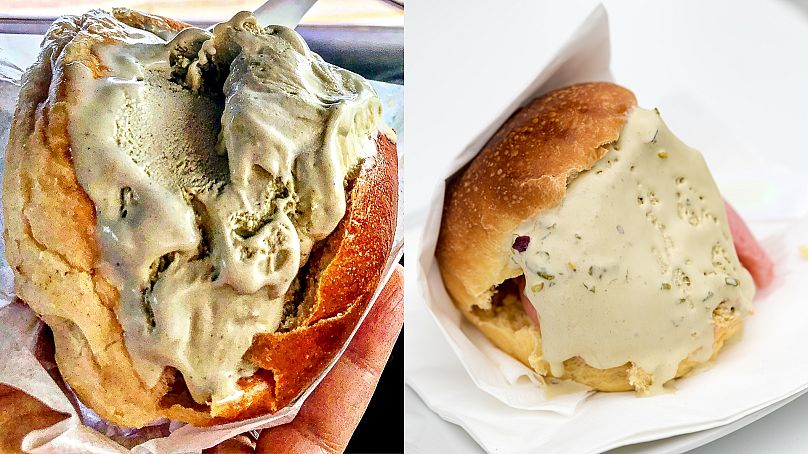
    Getty via Canva

    Brioche con gelato is usually served with a spoon, but you can eat it like a sandwich, too. You’ll find it everywhere in Palermo or along the coast in towns like Taormina and Noto. For a classic, try Don Peppinu in Catania, where the pistachio brioche is legendary.

    Türkiye’s chewy, resiny delight

    Dondurma isn’t your average scoop of ice cream. Typically made with goat’s milk, salep (orchid root flour), mastic (resin) and sugar, Türkiye’s traditional ice cream is elastic, chewy and slow to melt. So much so that it’s often eaten with a knife and fork.
    The treat dates back centuries to the Kahramanmaraş region in the southeast, but it’s now ubiquitous across Türkiye, from village fairs to Istanbul’s promenades.
    Vendors often put on a show, flipping cones upside down or pulling the ice cream like taffy to amuse customers. Some will even play a cat-and-mouse game with you, but rest assured that it’s all for fun.
    Popular flavours include pistachio, chocolate and cherry, but you can get more adventurous with variations such as saffron almond, clotted cream and piney mastic.
    In Istanbul, head to Mado, a national chain that originated in the dondurma heartland and now serves up the classic Turkish treat in historic locations like Beyoğlu.

    France’s frozen tribute to wartime loyalty

    Despite its name, café liégeois has nothing to do with the Belgian city of Liège. Originally known as café viennois, France renamed the dessert during World War I to honour the people of Liège for resisting German occupation.
    The drink-dessert hybrid features scoops of coffee-flavoured ice cream layered with chilled coffee and topped with a swirl of Chantilly cream – a fluffy, high-fat dairy cream often laced with vanilla. It’s a decadent and refreshingly bittersweet pick-me-up.

    Related

    Coolcations: Why more people are flocking to destinations in Norway, Finland and Iceland this summerExplore châteaux, gardens and vineyards in France’s UNESCO-listed Loire Valley

    For a taste of the classic in a setting steeped in history, visit Café de la Paix. Located in what is now the Intercontinental hotel, the 19th-century institution overlooks the Palais Garnier opera house and is pure Parisian grandeur.

    Lapland’s golden berry treat

    Sweet, tart and impossible to cultivate commercially at scale, cloudberries are one of the Arctic’s most elusive treasures.
    These golden-orange fruits, found in the wild marshes and bogs in Sweden, Norway and Finland, are foraged in late summer and have long been a staple of Indigenous Sami traditions. Their fleeting season and remote habitat make them a prized ingredient for everything from jam to liqueur. But the real indulgence is cloudberry ice cream.Sweet, tart and impossible to cultivate commercially at scale, cloudberries are one of the Arctic’s most elusive treasures.Sweet, tart and impossible to cultivate commercially at scale, cloudberries are one of the Arctic’s most elusive treasures.
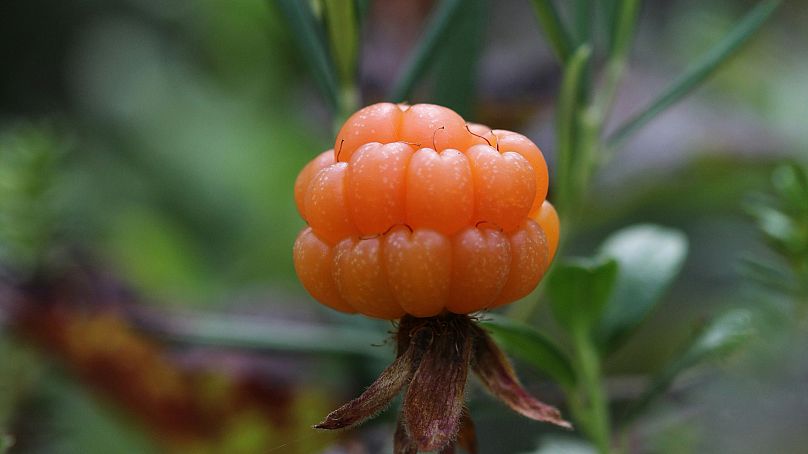
    Unsplash

    In Finland’s north, the Arctic Ice Cream Factory swirls the berries into creamy scoops best enjoyed after a trek across the tundra or under the midnight sun. 
    Across the border in Sweden, the Brandon Lodge in coastal Luleå and the Grand-Hotel Stockholm have each created decadent scoops of the seasonal treat – the latter with the help of local ice cream makers Otto & Glassfabriken.
  • Why Are Good Farmers Being Wronged?

    Why Are Good Farmers Being Wronged?

    Why Are Organic Apples the “Special Edition” While Regular Apples Are Just “Apple”?

    Picture this: you glide past a grocery aisle and spot two apples side‑by‑side. One is the ordinary, 20‑cent “just an apple”, and the other is the superstar labeled Certified Organic, with a tight little tag that says “No chemicals, pure bliss”. The tip‑spotting part? The organic apple has to pay a certification fee, wear a label like a couture‑dress, and paddle up the price sheet—while the chemical‑rich sibling slides in all unmarked and unbilled.

    The “Right‑Stuff” Fair Play Dilemma

    • Label Love — Organic growers have to go through hoops: inspections, paperwork, and a wobble in their wallet.
    • The Cheap Trick — Conventional farms skip the fuss, taking a win‑win of cheaper inputs and a cheaper price tag.
    • The Mis‑Count — Consumers see an “organic” label and think they’re buying a health miracle, while the purely chemical apple evades the flag.

    What Would It Look Like With the Roles Swapped?

    If we reversed the script, a “Chem‑Grow” apple would have to stamp its pint with stickers and pay extra. The organic apple would just be “Apple” — plain, simple, and, frankly, dollar‑friendly. That would flip the narrative and level the playing field.

    Why the Current System Gives the “Right Thing” a Leg Up?

    It seems the system expects the people who decide to go green to pay (think, “Well, I didn’t cheat, let me pay for that”), while the mainstream growers get to wear the generic “Apple” badge with zero weight in the eye of the consumer.

    In short: The same apple that gets a star‑as‑second honor keeps the money; the plain apple slips by with none. Making the two as equal in label and cost could open the door for a fairer, less vending‑house vibe — but for now, we’re still stuck in the “off‑white label” conundrum.

    Why Are “Eco‑Friendly” Farmers Paying the Price While Chemical Guys Get a Free Pass?

    Picture this: the farmer who’s actually doing the hard work of keeping our water clean, our soil healthy, and feeding the community, gets slapped with extra taxes. Meanwhile, the farmer spraying chemicals can keep doing it without paying a cent. Some folks write the logic in legalese: chemical farms can spray right up to their fence line, but organic ones must give up 25‑foot buffer zones all around and then sell that space as “non‑organic.” It feels like a parking ticket for the smart garden and a speeding fine for the quick‑sand driver.

    The Rules Are the Problem

    We talk about cleaner food, cleaner water, a healthier planet. Yet the rules do the exact opposite. They punish the ones that are actually doing good for everyone and reward the ones that leave long‑term damage behind. Meanwhile, foreign companies—some with sketchy histories overseas—get into the U.S. market, while our hardworking local farmers drown in the paperwork. The whole system is rigged to push farmers toward chemical dependence.

    The Green Tax Trap

    Annual fees, a slice of sales from the green label, and endless paperwork make organic farming a financial and emotional roller‑coaster. Conventional growers, on the other hand, enjoy a free pass to pollute. Wouldn’t it be fair if the chemical guys paid for that privilege? If the costs were moved to where the actual harm occurs, we’d be protecting humans, pollinators, soil, and future generations.

    Safety Isn’t the Only Issue

    Scientists have found that living within a mile of a golf course increases your risk of Parkinson’s—likely due to a herbicide banned in other countries but still sold here by foreign firms. Yet we’ll still call it safe when it’s sold in the U.S. Without taxes or warning labels, this is a red flag that’s conveniently ignored.

    Why Social Justice Metrics Make It Harder

    Certification programs now require equity audits, salary parity checks, and even racial equity metrics. While the intention is good—creating fairer farms—these extra hoops make the road to chemical‑free farming longer for those who already face economic hurdles.

    There’s a subtle irony: The employee who’s the only white person on a farm might be the only one who has to pay the necessary fees while not earning a wage. “Is that equity?” some might chuckle. It underlines how our “fairness” is more theoretical than practical.

    Trusting Who? Domestic or Bureaucracy?

    We’ve trained ourselves into believing that federal regulations are the guardian of safety, but it often ends up protecting themselves. “Too much regulation,” the pundits say, so that farms not only grow your food, but also your taxes. That bureaucratic labyrinth pushes the cost far beyond the farmers and trains the public into a society where food feels distant, and intentions feel disconnected from reality.

    The Call for Decentralization

    It’s time to go back to the basics of a constitutional republic: Put power into communities, give farmers the knowledge that you’re a farmer, hear real‑world concerns, build a robust hub‑and‑spoke food system that says: “We’re all connected.” We must

    • Decrease the bureaucratic load that erodes farmers’ ability to thrive.
    • Embrace farmer‑to‑consumer connections so that you know who’s growing your food.
    • Support local, regional and national networks that highlight the will to feed the community rather than just packaging a commodity.
    • Stop rewarding polluters and stop punishing protectors.

    Why Is Raw Milk Out of Reach? Potential Answer

    Raw milk is illegal in many states, yet processed, ultra‑processed foods, linked to chronic disease, pass through the market without a single warning. We marvel at boardroom “regulation” that protects “pre‑substance.” Meanwhile the “colon” that provides four parts of life remains infinitely “protective” under a hack of an “Economics Policy” that guarantees a “home‑grown good” for a political corner of a consortium.

    It is time to reclaim a food system that supports health, freedom and regeneration. Stop rewarding the polluters, and stop punishing the protectors. The system can be made to work. The world is a different place when it gives the farmer who works with nature more incentives to do the things that make us all better, not just the “garden‑in‑the‐farm.”