Tag: Services

  • Top Common Medical Billing Mistakes and How to Avoid Them – Health Cages

    Top Common Medical Billing Mistakes and How to Avoid Them – Health Cages

    Medical billing is a critical process in healthcare administration, ensuring that providers are paid for their services while keeping the revenue cycle intact. However, mistakes in medical billing are common and can lead to delayed payments, claim denials, or even legal issues. These errors can disrupt cash flow and hinder the financial health of a practice. Understanding the most common billing mistakes and how to avoid them is essential for medical practitioners and billing professionals alike.

    (adsbygoogle=window.adsbygoogle||[]).push({})
    1. Incorrect Patient Information

    One of the most common medical billing errors involves incorrect or incomplete patient information. This can include incorrect names, dates of birth, insurance details, or addresses. Such errors can cause delays or denials, as the insurance company may not be able to verify the patient’s eligibility or process the claim accurately.

    (adsbygoogle=window.adsbygoogle||[]).push({})

    How to Avoid It: Always verify patient information at every stage. This includes double-checking the patient’s insurance card, personal details, and diagnosis codes. Make it standard practice to confirm details with patients at each visit.

    (adsbygoogle=window.adsbygoogle||[]).push({})
    1. Coding Errors

    Medical codes are the foundation of the billing process. Inaccurate coding, whether through errors in diagnosis codes (ICD-10), procedure codes (CPT), or unbundling services, can lead to significant issues with insurance claims. This may result in underpayment, overpayment, or outright claim denials.

    (adsbygoogle=window.adsbygoogle||[]).push({})

    How to Avoid It: Ensure that coders are well-trained and stay updated with the latest coding guidelines. Double-check codes for accuracy and completeness. Utilize coding software and electronic health record (EHR) systems that help ensure accuracy. Regular audits can also help identify and prevent recurring errors.

    1. Failure to Obtain Preauthorization

    Certain procedures or treatments require prior approval from insurance companies before they can be performed. Failing to obtain preauthorization for services that require it is a common mistake that can result in claim denials.

    (adsbygoogle=window.adsbygoogle||[]).push({})

    How to Avoid It: Familiarize yourself with the policies of each insurer you work with. Verify if preauthorization is necessary before scheduling services. Implement a system that tracks preauthorization requests and approvals to ensure compliance.

    1. Misunderstanding Insurance Policies

    Each insurance plan has its own set of rules, requirements, and restrictions. A common mistake is misunderstanding or not fully understanding the terms of a patient’s policy. This can lead to submitting incorrect claims or missing out on possible reimbursements.

    How to Avoid It: Take the time to understand each insurance policy and communicate with insurers when needed. Training staff to understand the details of insurance plans will ensure accurate billing. Always check eligibility and coverage before services are rendered to avoid surprises.

    1. Late Submissions

    Submitting claims late is a frequent mistake that can result in denials or reduced payments. Insurance companies often have strict deadlines for claim submission, and failing to meet these deadlines can hinder payment processing.

    How to Avoid It: Establish a system for timely claim submissions. Automate the submission process as much as possible and set reminders for deadlines. Monitor the claim status regularly and follow up on any pending claims to ensure they are processed within the required timeframes.

    1. Duplicate Billing

    Duplicate billing occurs when a provider submits the same claim multiple times for the same service, often by mistake. This can result in an overpayment, which the insurance company may later recover.

    How to Avoid It: Implement checks and balances in your billing process. Keep track of submitted claims and their statuses. Make sure that once a claim has been submitted, no duplicate submissions are made.

    1. Upcoding and Down coding

    Upcoding involves submitting a claim with a code that reflects a more expensive service than what was actually provided, while downcoding is the opposite, where a service is billed with a lower-cost code than it should be. Both are forms of fraud and can lead to severe penalties.

    How to Avoid It: Train billing staff to accurately code services. Regular audits and checks for accuracy should be conducted to prevent intentional or unintentional manipulation of codes. Always ensure that the coding reflects the true nature of the services provided.

    1. Not Following the Correct Order of Services

    Some medical procedures require a specific order for services to be billed correctly. For example, certain services must be billed before others, and failing to follow this sequence can result in denials.

    How to Avoid It: Follow the correct order for billing services, as determined by insurance companies and healthcare regulations. Ensure that your billing staff is well-trained in the correct sequence for service orders and claims submission.

    1. Incomplete or Incorrect Documentation

    Inadequate documentation of patient services is one of the top causes of claim denials. If the documentation doesn’t match the services rendered, insurance companies may reject the claim, asking for further clarification or a detailed explanation.

    How to Avoid It: Ensure that all services rendered are properly documented, including the reason for the visit, treatment provided, and any follow-up care. Encourage providers to document thoroughly and accurately, and consider implementing an EHR system that integrates billing and clinical notes seamlessly.

    1. Not Following Up on Denied Claims

    After a claim is denied, many practices fail to follow up, resulting in lost revenue. It is important to track and resolve denied claims in a timely manner to ensure full reimbursement.

    How to Avoid It: Develop a systematic approach to follow up on denied claims. Set aside time weekly or monthly to review denied claims and address the reasons for the denials. Ensure that you submit corrected claims or appeal decisions promptly to recover lost revenue.

    Conclusion

    The accuracy and efficiency of your medical billing process are essential to the financial well-being of your practice. Common billing mistakes like incorrect coding, improper documentation, and failure to verify patient information can lead to significant delays or denials. By adopting best practices, providing staff with adequate training, and implementing automated tools, you can minimize the risk of errors and ensure a smoother, more effective revenue cycle.

    By avoiding these common pitfalls, healthcare providers can improve their chances of timely payments and reduce the stress associated with medical billing. A proactive approach to billing will not only help maintain your practice’s financial health but also improve patient satisfaction by reducing billing-related errors and confusion.

  • My data protection predictions for 2021

    My data protection predictions for 2021

    In my last column, I looked back at 2020 from an information law perspective. It’s safe to say that no-one would have predicted a year like 2020. And so it’s with some trepidation that I look forward to what we might expect in the year to come.

    Inevitably, some of the trends that we saw in 2020 will continue. Despite positive news about the development of several vaccines, COVID will be with us for the foreseeable future. And as vaccines are rolled out, and testing improves, we may see novel information challenges. Will businesses start asking customers to provide proof of vaccination as a condition of service? Will the Government choose to issue the lucky ones with vaccination certificates? These scenarios will continue to test our data laws in 2021.
    But if 2020 was all about COVID, we can’t look ahead to 2021 without talking about Brexit. For the second time in a little under three years, the UK’s data protection laws are being re-written. From 1 January 2021, the UK will no longer be required to follow EU law. The GDPR, as a European regulation, will no longer automatically apply in the UK. Instead, we’ll all need to get used to talking about its successor, the UK GDPR. This will be especially challenging for UK-based businesses which offer goods or services directly to consumers in the EU, as they will need to continue complying with the EU GDPR for their EU-based customers while adapting to the new UK GDPR for UK customers.
    The good news is that the UK GDPR looks a lot like the EU GDPR. In fact, it’s largely a cut-and-paste job, with minor changes to replace references to the EU with the UK and to remove the requirements around international co-operation and the ICO’s international role. The one exception to this is around international data transfers. In my last column, I mentioned the judgment in the Schrems II case, published last July, which led to the demise of the EU-US Privacy Shield. Unfortunately, things are going to get a lot more complicated in 2021. UK-based businesses that have customers in the EU, or which use service providers based within the EU, will need to get to grips with the new rules on international transfers. As the UK will no longer be part of the EU, data transfers from the UK to the EU, and from the EU to the UK will be subject to new restrictions, the former contained within the UK GDPR and the latter in the EU’s GDPR. And this could be subject to last-minute changes should there be a trade deal between the UK and the EU.
    Looking a little further ahead, the two sets of laws will inevitably drift apart. We had a small taste of how that might work in December when the UK Government announced its Online Harms Bill and then a day later the European Commission announced plans for a Digital Services Act. These two very different legislative plans share a similar objective of regulating the US big tech giants. Expect to see more of this type of duplication.
    In addition, we have a Brexit government. One of the stated purposes of Brexit, if you can remember back to 2016, was to take back control of our laws. And many of our information laws are heavily influenced by European law – not only data protection but also the Environmental Information Regulations and the Re-use of Public Sector Information Regulations. So what might the UK Government do when it is no longer constrained by EU law? We don’t know but don’t expect to see a significant shakeup, at least in the short term. I don’t sense any big appetite for change, and there will be a lot of competing priorities in 2021.
    Nevertheless, as a data protection lawyer, I would be the first to welcome improvements to our data protection laws. As they stand, they are overly complex, difficult to interpret and largely impenetrable for the majority of people. Businesses struggle to apply them to everyday situations and are often at the mercy of bad advice, which does nothing to improve compliance but can cost a fortune. There’s a lot of room for improvement, without necessarily reducing the rights for individuals or security of data. But perhaps that’s a topic for another column.
    Lastly, we will see a change of Information Commissioner in 2021. Elizabeth Denham’s five-year term in the post comes to an end in July 2021. The ICO is now a big and powerful regulator, but it remains on one level the personal office of the post-holder, with the ICO’s priorities and approaches a reflection of the incumbent Commissioner. While we don’t know precisely in which direction the new Commissioner may choose to take his or her office, we can expect a change of emphasis as the new appointee seeks to make their personal mark in 2021.
    Of course, if it’s anything like 2020, you should expect the unexpected in 2021!

  • Dr. Brian Egg at Oak Street Health AZ: Revolutionizing Healthcare for Underserved Communities – Health Cages

    Dr. Brian Egg at Oak Street Health AZ: Revolutionizing Healthcare for Underserved Communities – Health Cages

    Introduction

    Healthcare is an ever-evolving enterprise. The need for available, less expensive, and wonderful healthcare services is more vital than ever. In this context, Dr. Brian Egg at Oak Street Health in Arizona is important in remodeling how healthcare is introduced, particularly for underserved populations. But what makes Dr. Egg’s method so impactful? How does Oak Street Health set itself aside inside the healthcare panorama? In this text, we will look closer at Dr. Brian Egg, his management at Oak Street Health, and how the organization is converting the healthcare revel for patients in Arizona and beyond.

    (adsbygoogle=window.adsbygoogle||[]).push({})

    Who is Dr. Brian Egg?

    Dr. Brian Egg is a seasoned healthcare expert who imparts first-rate care to underserved groups. He holds tremendous clinical qualifications and has won a reputation for his willpower to enhance patient outcomes, mainly within number-one care. Dr. Egg’s profession spans several years in the healthcare sector, focusing on holistic, affected person-targeted care.

    (adsbygoogle=window.adsbygoogle||[]).push({})

    Before joining Oak Street Health, Dr. Egg worked in diverse healthcare settings, gaining a wealth of experience in handling affected person care and main healthcare teams. His passion for healthcare leadership and service to the network finally led him to Oak Street Health, where he continues to make a massive impact.

    (adsbygoogle=window.adsbygoogle||[]).push({})

    Oak Street Health: A Snapshot

    Oak Street Health is a healthcare provider devoted to serving underserved groups, specializing in Medicare sufferers. With locations throughout America, Oak Street Health offers a wide range of healthcare services, from primary care to preventive health, and specializes in enhancing fitness outcomes for older adults.

    (adsbygoogle=window.adsbygoogle||[]).push({})

    The enterprise is built on the idea that healthcare needs to be handy to all, especially for folks who may, in any other case, have been constrained to get admission to excellent care. Oak Street Health’s network-primarily based approach has been instrumental in reshaping how healthcare can be delivered to individuals who need it most.

    Dr. Brian Egg’s Role at Oak Street Health

    Dr. Egg serves as an crucial part of Oak Street Health, bringing his leadership abilties, scientific information, and passion for patient care to the agency. As a health practitioner, Dr. Egg is deeply involved in patient care, but his management goes past that—he performs a key role in shaping the route of the organisation in Arizona and helping its task to offer notable care to underserved populations.

    (adsbygoogle=window.adsbygoogle||[]).push({})

    His contributions encompass no longer only enhancing healthcare outcomes for sufferers but also fostering a collaborative environment inside the Oak Street Health group. Dr. Egg works closely with a team of workers, patients, and different stakeholders to make sure that the organization’s services are constantly evolving and meeting the desires of the community.

    Oak Street Health’s Approach to Patient Care

    Oak Street Health is known for its patient-first philosophy, which makes it a specialty of the entire character instead of simply treating men’s or women’s illnesses. This method is critical for older adults who regularly face complex fitness challenges. Dr. Egg’s recognition of preventive care aligns perfectly with Oak Street’s task of helping patients stay healthier and have longer lives.

    Patients at Oak Street Health benefit from a full range of services, including regular wellness checkups, continual illness control, and behavioral fitness services. This holistic technique is designed to keep patients healthier and reduce the need for expensive emergency care, which is not unusual in underserved groups.

    Why Oak Street Health Stands Out

    What makes Oak Street Health exclusive from other healthcare carriers? For one, the agency specializes in accessibility and affordability. By accepting Medicare and Medicaid, Oak Street Health is capable of serving seniors and low-profit sufferers who might, in any other case, face obstacles to care.

    Additionally, Oak Street Health provides same-day appointments, extended hours, and a no-ready policy, ensuring that sufferers receive timely care after they need it maximum. Their clinics are designed to be welcoming and patient-friendly, with an emphasis on building long-term relationships between sufferers and vendors.

    Dr. Egg’s Leadership in Healthcare

    Dr. Egg’s leadership has been instrumental in growing a tradition of excellence at Oak Street Health. He is known for his proactive method of healthcare, continuously in search of ways to enhance patient studies and health consequences. His leadership isn’t always pretty much overseeing operations; it’s approximately fostering compassionate, affected, person-focused surroundings where the focal point is usually the well-being of the patient.

    One of Dr. Egg’s key strengths is his capacity to lead by means of example. He is deeply worried about affected person care, regularly interacting with sufferers, and supplying them with the aid they need to make knowledgeable decisions regarding their fitness.

    Health Services Offered by means of Oak Street Health

    Oak Street Health gives a comprehensive suite of healthcare offerings designed to fulfill the needs of its sufferers. These consist of:

    • Primary Care Services: Routine check-ups, physical tests, and persistent disorder management.
    • Preventive Care: Screenings, vaccinations, and fitness schooling aimed toward stopping contamination before it occurs.
    • Behavioral Health: Mental health help, counseling, and addiction restoration services.
    • Specialty Care: Referrals and coordination with specialists for extra complex fitness situations.

    For seniors, Oak Street Health offers coordinated care that helps control the demanding situations of aging, including mobility issues, cognitive decline, and more.

    Oak Street Health’s Use of Technology in Healthcare

    Oak Street Health isn’t pretty much in-man or woman care. The organization has embraced technology to enhance affected person care and improve the overall healthcare experience. With telehealth services, sufferers can talk with medical doctors remotely, making healthcare extra available, particularly for people with mobility challenges.

    Additionally, Oak Street Health uses revolutionary health management equipment that permit sufferers to track their fitness and communicate with vendors between visits. This mixture of in-person and digital care facilitates make sure that sufferers receive continuous, tremendous help.

    What Patients Are Saying About Dr. Brian Egg and Oak Street Health

    The comments from sufferers speak volumes about the quality of care they acquire at Oak Street Health. Many patients praise Dr. Egg’s compassionate approach, noting that he listens cautiously to their worries and takes the time to explain their remedy alternatives in clear, understandable terms.

    Patients additionally appreciate the benefit of accessing care at Oak Street Health, with minimal wait times and a welcoming environment that makes them comfortable.

    The Importance of Preventive Care in Dr. Egg’s Philosophy

    Dr. Egg firmly believes in the power of preventive care. By specializing in early intervention, patients can keep away from many of the fitness problems that have a tendency to stand up with age. Regular take-a-look-ups, fitness screenings, and lifestyle control are all part of Dr. Egg’s approach to preserving patients’ health.

    For seniors, preventive care is crucial in dealing with chronic situations and preventing hospitalization. Oak Street Health locations a robust emphasis on this proactive technique in healthcare.

    Expanding Healthcare Access in Arizona

    Oak Street Health has been increasing its footprint throughout the United States, with a selected recognition in Arizona, where access to healthcare is regularly confined to rural regions. Dr. Egg’s work in Arizona has been crucial to this expansion, as he works to ensure that more seniors in the country have access to wonderful care.

    Dr. Brian Egg’s Community Involvement

    Outside of his paintings at Oak Street Health, Dr. Egg is deeply involved in community tasks aimed at enhancing public health. Whether through nearby fitness schooling packages or partnerships with other agencies, Dr. Egg continues to return to the network with significant approaches.

    The Future of Oak Street Health in Arizona

    With the fulfillment of Oak Street Health in Arizona, the future seems vivid. The enterprise plans to expand its services even similarly, achieving more groups and making healthcare available to even more patients. Dr. Egg’s leadership will continue to play a key position in shaping the destiny of healthcare in Arizona.

    Conclusion

    Dr. Brian Egg and Oak Street Health are creating a giant effect on the healthcare panorama in Arizona, providing vital offerings to those who want them most. With a focus on patient-focused care, preventive measures, and network involvement, Oak Street Health is setting a brand new standard for healthcare in underserved areas.

    As healthcare continues to conform, leaders like Dr. Egg are showing that available, amazing care may be delivered with a dedication to compassion, innovation, and network engagement.

    FAQs

    1. What makes Oak Street Health unique from different healthcare companies?

    Oak Street Health is unique in its attention on serving underserved communities, specially seniors on Medicare, and supplying on hand, less expensive care with an emphasis on preventive health.

    2. How does Dr. Brian Egg make a contribution to Oak Street Health?

    Dr. Egg performs a key role in affected person care and leadership, supporting the shaping of the corporation’s technique to healthcare in Arizona and ensuring that offerings meet the community’s needs.

    3. What services does Oak Street Health offer?

    Oak Street Health offers a wide variety of services, including primary care, preventive care, behavioral fitness, continual sickness control, and forte care coordination.

    4. Is Oak Street Health to be had in Arizona?

    Yes, Oak Street Health has locations in Arizona and is increasing to make healthcare extra accessible to seniors and underserved communities throughout the country.

    5. What are sufferers pronouncing approximately Oak Street Health?

    Patients admire Oak Street Health for its compassionate care, accessibility, and the potential to see medical doctors speedy with out lengthy ready times. Dr. Egg, specially, is praised for his attentive and affected person-targeted approach.

  • Google Outage Disrupts Services, Leaves Users Facing Intermittent Failures

    Google Outage Disrupts Services, Leaves Users Facing Intermittent Failures

    Google Cloud Hits a Rough Patch

    Big news this afternoon: Google Cloud has gone down for the majority of users, and the rest of the Google ecosystem isn’t doing too well either. The glitch has been picking up steam on X, with people complaining about hiccups across a litany of services.

    What’s Going Offline?

    • Google Search – nothing to search for.
    • Google Gemini – AI’s speaking in singe‑speak mode.
    • Gmail – emails stuck in the void.
    • YouTube – videos camped out in the editing war.
    • Google Maps – lost the way to your nearest coffee shop.
    • Google Drive – files in a no‑mission zone.
    • Google Nest – smart home is feeling dumb.
    • Google Meet – video calls stuck in a time‑warp.
    • Google Cloud – the grand party that’s not happening.

    Other Side‑Effect Denizens

    The chaos has spilled into more clouds, too:

    • Amazon Web Services
    • Discord – voice chat is all dead air.
    • Snapchat – not much fun for the filter folks.
    • Cloudflare – even the shield is wobbling.
    • OpenAI and Anthropic – the AI heavyweights feeling the lag.

    Cloudflare’s Take

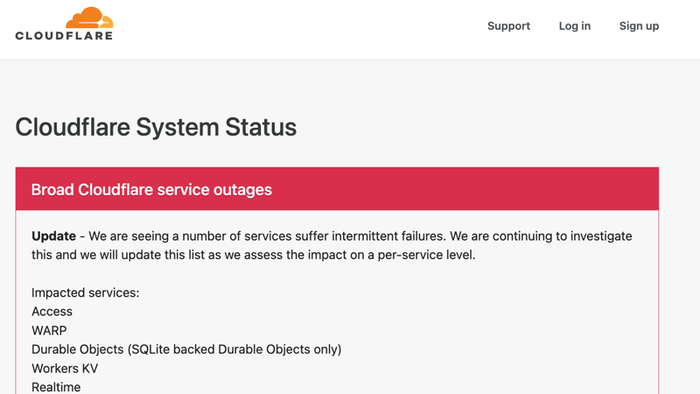
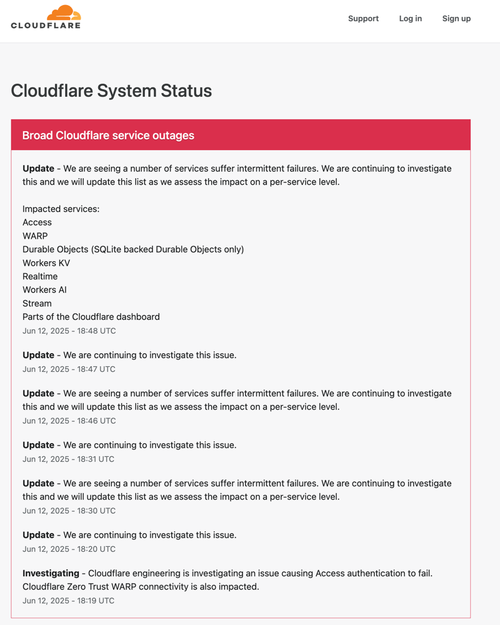
    The official Cloudflare status page, which usually provides an uptight newsletter, issued a soothing line: “We’re seeing intermittent failures across several services. We’re still digging into it and will keep you posted per‑service.”

    What Users Are Saying on X

    “There appears to be a massive outage going on…— Dark Web Informer,” posted a user skeptical about whether any part of the internet is still functional. The tweet sparked a frenzy of “what’s happening?” replies, all with a dash of early‑morning memes about servers hating coffee.

    In Short

    Google Cloud is down, the rest of Google’s chest is bleeding, and a few other big names are not immune. Stay tuned for updates, and maybe bring a backup charger for your phone – you never know when the internet might decide to take a nap.

    Could you share the article you’d like me to rewrite?

  • Kraft Heinz Drops Artificial Colors From Its US Product Launches

    Kraft Heinz Drops Artificial Colors From Its US Product Launches

    Big News from Kraft Heinz

    Yesterday, Kraft Heinz dropped a big announcement: they’re pulling the plug on any new products that use artificial colors in the U.S.

    • No more new flavors with synthetic dyes. That’s a clean cut promise.
    • Existing products will be purged of those additives by the end of 2027. They’re going full-on “natural” mode.

    So if you’re a fan of that bright green ketchup or the lavender sodas, stay tuned—just remember the company’s taking a serious step toward healthier choices.

    Breaking the Color Code: A Clean Slate for American Food

    In a bold move that’s breathing fresh air into our plates, Kraft Heinz announced on June 17 that nearly 90% of its U.S. products are already free from the plastic‑like dyes we’ve long relied on. For the few that still use them, the company vows to ditch non‑essential colors, swap them out for nature‑friendly alternatives, or craft brand‑new shades if no substitute exists.

    Why the Fuss About Dyes?

    The Department of Health and Human Services (HHS), joined by the Food and Drug Administration (FDA), has called for the gradual elimination of petroleum‑based synthetic dyes in the U.S. food supply. “For too long, some food producers have been feeding Americans petroleum‑based chemicals without their knowledge or consent,” declared HHS Secretary Robert F. Kennedy Jr. in April. He warned that these “poisonous compounds” do more harm than good, especially to kids, then called on industry partners to clean up the color shelf.

    Industry Response

    • Kraft Heinz – Francisco says it’s no secret the company has gone dye‑free with classics like Kraft Mac & Cheese since 2016, and the iconic Heinz Tomato Ketchup relies purely on tomatoes.
    • Kellogg – The cereal giant pledges the same cuts, ditching artificial hues in its lines.
    • Tyson Foods – The meatpacker is stepping away from synthetic colors, aiming for cleaner labels.
    • Walmart’s Sam’s Club – The retail power house has announced plans to purge dyed products too.

    What’s Happening Behind the Scenes?

    When you ask the Kraft Heinz North America President, Pedro Navio, he emphasizes that the brand’s natural or zero colors philosophy is already deep-rooted: “We’re dedicated to giving Americans food that’s nutritious, affordable, and delicious. You don’t see any artificial dyes in our ketchup – it’s just the meat of the tomato.”

    Why It Matters

    FDA Commissioner Marty Makary mentioned the push toward natural ingredients precisely because “kids in America are seeing a spike in diabetes, obesity, depression, and ADHD.” The hope? By swapping out toxic dyes, we might curb some of these concerns.

    Looking Forward

    With HHS’s call for change, the food industry is taking it seriously. Whether it’s a soda, a snack bar, or a meat roll, companies are planning to offer dye‑free options. It’s a step toward health and honesty—now that’s something to tweet about (without a fake clickbait title).

    Dye Ban Opposition

    Food Dyes: The Great Color Debate

    When you scroll through your grocery aisles, you’re not just picking up a loaf of bread or a bag of chips – you’re also snagging the splash of color that makes food look picture‑perfect. But lately, those vibrant hues have become the talk of the town.

    Consumer Brands Association (CBA) – “We’ve Got the Science, Folks!”

    • Main Claim: “All ingredients in American food are rigorously studied. They’re safe.”
    • They’re pushy about keeping the status quo and encouraging alternative additives without sacrificing safety.
    • “Throwing in a patchwork of state laws? That’s confusing for consumers, hinders innovation, and hikes grocery bills.”

    International Association of Color Manufacturers (IACM) – “Colors Still Reign Supreme”

    • Rebutting myths: “Synthetic (FD&C) colors are approved worldwide, including Europe.”
    • Fast Green No. 3 is allowed in the U.S. but not permitted for food use in the EU or U.K.
    • Some European colors (Red No. 40, Yellow No. 5, etc.) carry warnings on labels.
    • They warn that the 2026 reformulation push is overly optimistic, ignores science, and could lead to supply chaos.

    HHS – The Big Shake-Up

    • Soon to revoke Citrus Red No. 2 and Orange B.
    • Expect a mass removal of six dyes (Green No. 3, Red No. 40, Yellow No. 5 & 6, Blue No. 1 & 2) by next year.
    • FD&C Red No. 3 will also get the boot.
    • On the upside: Four new natural dyes are coming in, and the agency is partnering with NIH to study child health impacts.
    • Officials say they’ve not sealed a deal with corporations yet, but they’re “open for friendly talks.”

    What’s the Bottom Line?

    Food dyes are turning heads, sparking heated debates and stirring pot (pun intended). Regulators are fine-tuning the palette, while industry groups try to keep the colors flowing. Stay tuned – the foray into “natural” hues might color (or colorless) our future food.