Tag: shift

  • US and China to talk in Stockholm as trade truce expiration nears

    US and China to talk in Stockholm as trade truce expiration nears

    The talks are a precursor to a potential autumn meeting between US President Donald Trump and Chinese leader Xi Jinping.

    ADVERTISEMENT

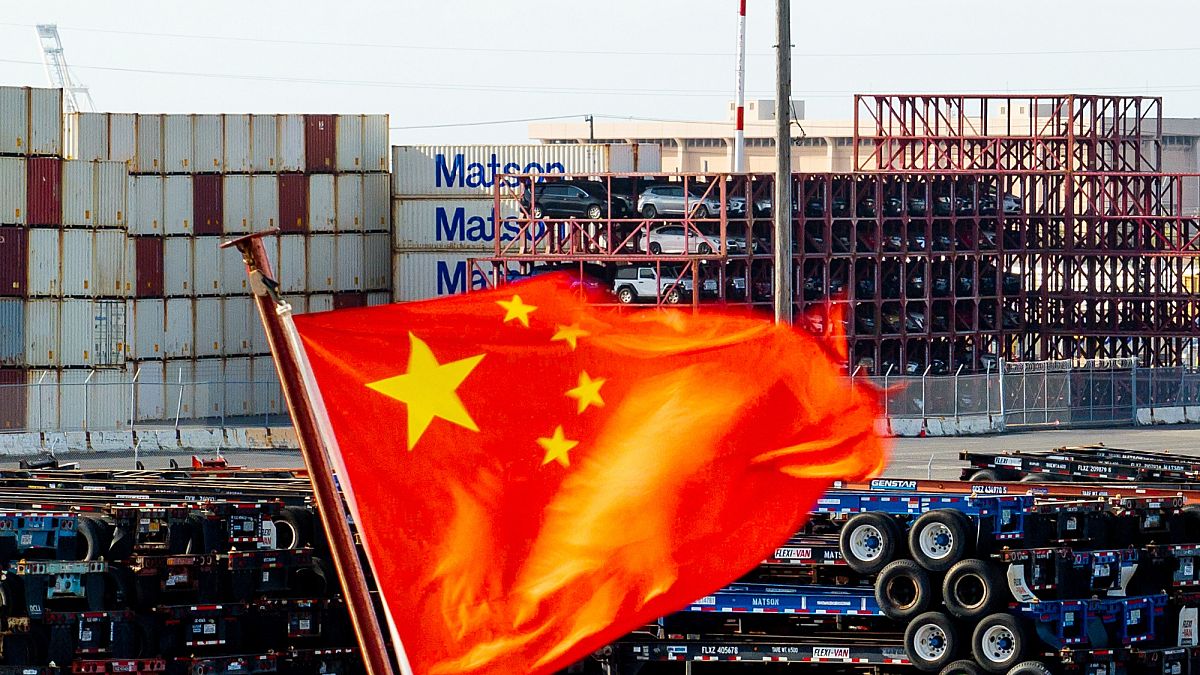
    When top US and Chinese officials meet in Stockholm on Monday, it’s likely that they will agree to leave tariffs at the current levels, if they don’t secure a more favourable framework. Analysts say the two sides are working to secure a more lasting trade deal ahead of a meeting between their presidents later this year.
    Treasury Secretary Scott Bessent and Chinese Vice Premier He Lifeng are holding talks on Monday for the third time this year. This round of discussions is taking place in the Swedish capital, nearly four months after President Donald Trump upset global trade with his sweeping tariff proposal, including an import tax that shot up to 145% on Chinese goods.

    “We have the confines of a deal with China,” Trump said on Friday.
    Bessent told MSNBC on Wednesday that the two countries had reached a “status quo” after talks in Geneva and London, with the US taxing imported goods from China at 30% and China responding with a 10% tariff, on top of tariffs prior to the start of Trump’s second term in office.
    “Now we can move on to discussing other matters in terms of bringing the economic relationship into balance,” Bessent said. He was referring to the US running a $295.5 billion (€253.1bn) trade deficit last year. Washington is seeking an agreement that would enable it to export more to China and shift the Chinese economy more toward domestic consumer spending.
    The Chinese embassy in Washington said Beijing hopes “there will be more consensus and cooperation and less misperception” coming out of the talks.
    With an eye on a possible leaders’ summit, Stockholm could provide some answers as to the timeline and viability of that particular goal ahead of a possible meeting between Trump and Chinese leader Xi Jinping.

    “The meeting will be important in starting to set the stage for a fall meeting between Trump and Xi,” said Wendy Cutler, a former US trade negotiator and now vice president at the Asia Society Policy Institute. “Beijing will likely insist on detailed preparations before they agree to a leaders’ meeting.”
    In Stockholm, the two sides are likely to focus on commercial announcements to be made at a leaders’ summit as well as agreements to address “major irritants”, such as China’s industrial overcapacity and its lack of control over chemicals used to make fentanyl, also to be announced when Xi and Trump should meet, Cutler said.
    Sean Stein, president of the US-China Business Council, said Stockholm could be the first real opportunity for the two governments to address structural reform issues including market access in China for US companies.
    What businesses will be seeking coming out of Stockholm would largely be “the atmosphere” — how the two sides characterise the discussions. They will also look for clues about a possible leaders’ summit, as any real deal will hinge on the two presidents meeting each other, he said.

    Fentanyl-related tariffs are likely a focus for China

    In Stockholm, Beijing will likely demand the removal of the 20% fentanyl-related tariff that Trump imposed earlier this year, said Sun Yun, director of the China program at the Washington-based Stimson Center.
    This round of the US-China trade dispute began with fentanyl, when Trump in February imposed a 10% tariff on Chinese goods, citing that China failed to curb the outflow of the chemicals used to make the drug. The following month, Trump added another 10% tax for the same reason. Beijing retaliated with extra duties on some US goods, including coal, liquefied natural gas, and farm products such as beef, chicken, pork and soy.
    In Geneva, both sides climbed down from three-digit tariffs rolled out following Trump’s “Liberation Day” tariffs in April, but the US kept the 20% “fentanyl” tariffs, in addition to the 10% baseline rate — to which China responded by keeping the same 10% rate on US products. These across-the-board duties were unchanged when the two sides met in London a month later to negotiate over non-tariff measures such as export controls on critical products.

    Related

    Beijing confirms that it has signed a trade agreement with the USVolvo Cars CEO: dual tech for China and the West is new trade reality

    The Chinese government has long protested that American politicians blame China for the fentanyl crisis in the US but argued the root problem lies with the US itself. Washington says Beijing is not doing enough to regulate precursor chemicals that flow out of China into the hands of drug dealers.
    In July, China placed two fentanyl ingredients under enhanced control, a move seen as in response to US pressure and signalling goodwill.
    Gabriel Wildau, managing director at the consultancy Teneo, said he doesn’t expect any tariff to go away in Stockholm but that tariff relief could be part of a final trade deal.
    “It’s possible that Trump would cancel the 20% tariff that he has explicitly linked with fentanyl, but I would expect the final tariff level on China to be at least as high as the 15-20% rate contained in the recent deals with Japan, Indonesia, Vietnam,” Wildau said.

    US wants China to dump less, buy less oil from Russia and Iran

    China’s industrial overcapacity is as much a headache for the United States as it is for the European Union. Even Beijing has acknowledged the problem but suggested it might be difficult to address.
    America’s trade imbalance with China has decreased from a peak of $418bn (€358bn) in 2018, according to the Census Bureau. But China has found new markets for its goods; the world’s dominant manufacturer ran a global trade surplus approaching $1 trillion last year — somewhat larger than the size of the US overall trade deficit in 2024. And China’s emergence as a manufacturer of electric vehicles and other emerging technologies has suddenly made it more of a financial and geopolitical threat for those same industries based in the US, Europe, Japan and South Korea.
    “Some enterprises, especially manufacturing enterprises, feel more deeply that China’s manufacturing capabilities are too strong, and Chinese people are too hardworking. Factories run 24 hours a day,” Chinese Premier Li Qiang said on Thursday when hosting European Commission President Ursula von der Leyen in Beijing. “Some people think this will cause some new problems in the balance of supply and demand in world production.” Li added: “We see this problem too.”
    Bessent also said the Stockholm talks could address Chinese purchases of Russian and Iranian oil. However, Wildau of Teneo said China could demand some US security concessions in exchange, such as a reduced US military presence in East Asia and scaled-back diplomatic support for Taiwan and the Philippines. This would likely face political pushback in Washington.
    The Stockholm talks will be “geared towards building a trade agreement based around Chinese purchase commitments and pledges of investment in the US in exchange for partial relief from U.S. tariffs and export controls,” Wildau said.
    He doubts there will be a grand deal. Instead, he predicts “a more limited agreement based around fentanyl”.
    “That,” he said, “is probably the preferred outcome for China hawks in the Trump administration, who worry that an overeager Trump might offer too much to Xi.”

  • What is the Cost of Inpatient Mental Health Treatment? – Health Cages

    What is the Cost of Inpatient Mental Health Treatment? – Health Cages

    The expense of long-term psychological wellness treatment can shift generally contingent upon a few elements, including the kind of office, the degree of care required, the area, and the span of the treatment. For instance, inpatient mental health treatment can cost anywhere from a few thousand dollars to tens of thousands of dollars per week in the United States.

    (adsbygoogle=window.adsbygoogle||[]).push({})

    We will discuss the following topics in this blog:

    (adsbygoogle=window.adsbygoogle||[]).push({})

    With and Without Insurance

    Without Insurance

    Inpatient Care

    (adsbygoogle=window.adsbygoogle||[]).push({})

    Treatment in an Inpatient Setting Depending on the facility and the required level of care, the daily cost of inpatient mental health treatment without insurance can range from thousands to tens of thousands of dollars.

    (adsbygoogle=window.adsbygoogle||[]).push({})

    Outpatient Care

    Compared to inpatient care, outpatient mental health services typically cost less. Expenses can fluctuate; however, they are normally founded on individual treatment meetings or gathering meetings.

    (adsbygoogle=window.adsbygoogle||[]).push({})

    With Insurance

    Inpatient Treatment

    With protection inclusion, the personal costs of ongoing emotional wellness treatment will rely on the particular terms of the protection plan. Copayments, deductibles, and restrictions on the number of covered days are all examples of this.

    Outpatient treatment

    Outpatient mental health treatment is frequently covered by insurance, but the insured person is responsible for copayments or coinsurance. Inclusion might incorporate treatment meetings, drug therapy, and other short-term administrations.

    Video Credit:@fox43

    Differences Between Inpatient and Outpatient Care and Cost

    Level of Care

    Inpatient care involves round-the-clock supervision and support, often in a hospital setting.

    Outpatient care allows individuals to attend scheduled therapy sessions while continuing with their daily lives.

    Duration of treatment

    Inpatient treatment is generally shorter in duration, focusing on crisis stabilization.

    Outpatient treatment may involve longer-term therapy and support.

    What You’ll Be Paying For

    Inpatient Treatment

    Food and lodging, clinical oversight, treatment meetings, prescription administration, and other related administrations.

    Outpatient Treatment

    Treatment Outside of the Hospital Individual or group therapy, psychiatric evaluations, medication management, and other outpatient services are available.

    The Importance of Mental Health Treatment

    Timely Intervention

    Early mediation in psychological well-being issues can forestall demolishing conditions and work on general results.

    Quality of Life

    Emotional wellness treatment adds to superior personal satisfaction, upgraded survival techniques, and better general prosperity.

    Covered Services Under Parity Laws

    Mental Health Parity Laws

    Mental Health Parity Laws These laws require insurance plans to provide mental health coverage at a level comparable to that for physical health conditions. Covered Services Under Parity Laws

    Covered Services

    In conclusion, seeking treatment for mental health issues is important for one’s overall health, and costs can vary depending on things like insurance coverage, the type of treatment, and the facility chosen. Coming to informed conclusions about psychological wellness treatment requires a comprehension of the distinctions between long-term and short-term care, as well as protection inclusion and psychological wellness equality regulations.

    FAQ’s

    Q1. What country has the highest rate of mental illness?

    A1. The United States, Colombia, the Netherlands, and Ukraine

    Q2. What is the most successful depression medicine?

    • Amitriptyline.
    • Effexor (venlafaxine)
    • Lexapro (escitalopram)

    Q3. How many sessions does a psychiatrist diagnose?

    A3. Psychiatrists can make a diagnosis and treatment plan quickly, often within one 60-minute session.

    Q4. Is it OK to take depression pills?

    A4. These medications may help in some situations but not in others.

  • Eyebot gets M Series A to expand eye care access

    Eyebot gets $20M Series A to expand eye care access

    Eyebot, a startup offering a 90-second vision test kiosk that delivers doctor-verified glasses prescriptions, has secured $20 million in Series A funding.

    The Boston-based startup, founded in 2021, streamlines how people access vision care by eliminating traditional obstacles, such as appointment delays, limited accessibility, complex insurance requirements, and cost.

    Its kiosks, already found in malls, universities, retail stores, pharmacies, grocery chains, schools, and airports, deliver a free, 90-second vision test. According to the company, each test generates a prescription that is then reviewed and approved by licensed eye doctors, ensuring fast, convenient, and reliable prescriptions.

    The new funding, which brings Eyebot’s total funding to more than $30 million, comes roughly a year after the startup raised its seed round in June 2024. Since then, the startup has conducted more than 45,000 free vision tests and is on track to deliver over half a million annually, it says.

    “Since our seed round, the shift has been dramatic. We’ve gone from piloting to partnering with some of the largest companies in the U.S., launching kiosks all over the country, and delivering tens of thousands of vision tests,” Matthias Hofmann, co-founder and CEO of Eyebot, told TechCrunch. “Revenue is scaling and our team has doubled in size. Most importantly, we’ve proven the model works: People are using Eyebot, doctors are validating the results, and retailers are excited about the traffic it drives.”

    What sets Eyebot apart, Hofmann said, is its combination of convenience and medical assurance. Every test is reviewed by a doctor, and all prescriptions are issued under clinical supervision. If test results indicate anything unusual, patients are referred for in-person, comprehensive exams. That balance of speed plus clinical oversight earns trust, he says.

    “At our mall locations, we’ve seen surprising uptake from parents with kids,” Hofmann said. “They’ll stop between stores, try Eyebot — sometimes even while holding their kids’ hands — and leave with a prescription in just a couple of minutes.”

    Techcrunch event

    Tech and VC heavyweights join the Disrupt 2025 agenda

    Netflix, ElevenLabs, Wayve, Sequoia Capital, Elad Gil — just a few of the heavy hitters joining the Disrupt 2025 agenda. They’re here to deliver the insights that fuel startup growth and sharpen your edge. Don’t miss the 20th anniversary of TechCrunch Disrupt, and a chance to learn from the top voices in tech — grab your ticket now and save up to $600+ before prices rise.

    Tech and VC heavyweights join the Disrupt 2025 agenda

    Netflix, ElevenLabs, Wayve, Sequoia Capital — just a few of the heavy hitters joining the Disrupt 2025 agenda. They’re here to deliver the insights that fuel startup growth and sharpen your edge. Don’t miss the 20th anniversary of TechCrunch Disrupt, and a chance to learn from the top voices in tech — grab your ticket now and save up to $675 before prices rise.

    San Francisco
    |
    October 27-29, 2025

    REGISTER NOW

    Convincing traditional eye care providers to embrace a tech-first approach has proven difficult. Early skepticism ran deep: Doctors worried about accuracy, while patients questioned whether a process so fast could be reliable, according to Hofmann. He says that hesitancy eased once providers learned that experienced doctors review every result, many with more than a decade of experience.

    Eyebot is in the early phases of commercialization. Its vision test is offered free to consumers, and if a prescription is needed, one of the company’s doctors verifies it for a fee. Additionally, the company leases its kiosks to optical retailers, eyewear brands, and independent practices.

    With the Series A, the company plans to scale kiosk deployment and expand its team across product, clinical operations, and commercial growth, the CEO said.

    The latest round was led by General Catalyst and included participation from returning investors AlleyCorp, Baukunst, Village Global, Humba Venture, Ravelin, and Ubiquity Ventures.

  • Top 5 Benefits of Using a Tahoe Concierge Service With Your Vacation Rental

    Top 5 Benefits of Using a Tahoe Concierge Service With Your Vacation Rental

    By most financial metrics, short-term rental investing in Lake Tahoe has been a winning trade over the last decade. Rising asset prices, remote work demand, and lifestyle arbitrage have turned second homes into revenue streams. But as competition in the vacation rental market matures — especially in premium destinations like Tahoe — the real edge isn’t in owning the asset. It’s in managing the experience.

    This shift is reshaping the definition of value in luxury Tahoe real estate. No longer is it just about the square footage, lake views, or ski-in/ski-out access. The true differentiator is how seamlessly a property delivers comfort, exclusivity, and curated local experiences. In a market where guests expect five-star hotel quality with the intimacy of a private home, investors who master service — not just property acquisition — are the ones positioned to thrive.

    Historically, the data shows that homes offering a more seamless, high-touch guest experience see higher occupancy, better reviews, and elevated nightly rates. Enter the Tahoe concierge service — a white-glove operational layer that removes friction for guests and owners alike.