Tag: thinking

  • The art of leadership in business

    The art of leadership in business

    “If your team doesn’t know what good looks like, then it’s unlikely they are going to achieve it.”

    COMMENTS made by one of the country’s most influential business experts towards the end of last year put the issue of leadership firmly in the spotlight.
    Anne Francke, the chief executive of the CMI, told the Financial Times how the need for more skilled managers across the UK was being “dangerously overlooked”.
    Ms Francke added in her FT interview a call to arms for the government to step up its support for better preparing leaders of the future.
    Her comments followed the results of a survey last year by 101 cross-party MPs, which found that just one in four (24 percent) respondents said improving the quality of management and leadership in UK businesses, public services and other organisations should be a high priority for the government in the next year.
    Ms Francke is right to put this issue in the spotlight, and businesses can certainly benefit by thinking more about it.
    So, what makes a good leader?

    Creating a vision:

    “The first thing that I think is important, is to create a clear and strategic vision of what it is that you as a team are trying to achieve.”
    “That vision needs to be consistent and understood across the organisation.”
    “Quite often there will be a vision that is created at the board level but by the time you get down to the troops on the ground in the office or in the organisation, it’s a meaningless memo that has no explanation.”

    Work hard to embed it:

    “Once you’ve created a vision you need to work hard to embed it. There is no point in just creating a paragraph or some words, you’ve got to bring it to life, you’ve got to actually embed it so that there is a clear culture and a clear vision of what you are trying to achieve.”
    “So, I think first and foremost the important thing is actually setting out your stall. Who are you and what are you? What makes you different as a team and an organisation and what are you trying to achieve together?”

    Be clear:

    “Having a vision and embedding it is fine. But it means nothing if you don’t communicate it effectively. The next part about this is making sure everybody is very clear in terms of their roles, responsibilities and expectations. If your team doesn’t know what good looks like, then it’s unlikely they are going to achieve it.”
    “Trying to clearly set out what you are responsible for, this is the way in which you expect you to conduct yourself to get there, these are the types of results and levels we are expecting. All of those things are about setting the framework.”

    Empower others:

    “The next thing is creating empowerment across the team. One of the problems in setting up a clear and rigid framework is that sometimes that can be limiting on the talent that is available within the team.”
    “The clear thing for me is setting up a tangible set of expectations as far as approach, method, and results. But then, trying to give enough scope to the individual or to the team or sub-team, to say how you get there is up to you as a group.”
    “It’s important to try and not put any limitation on the team’s output or success.”
    “Aim to set a framework and objectives but don’t make the framework limiting in any way, because often that can stifle performance and stifle the ability to deliver.”
    “Instead, create something that is robust in its order and structure but lenient enough to allow freedom or growth of the individuals that are in the delivery piece.”

    Create a safety net:

    “I think also creating some form of environment of a safety net is key. Again, it’s about giving the freedom of ‘try and fail, try and fail’. Let that individual have a go and make sure you give them an environment where there is an ability to be independent in the role.”
    “I would also say a key lesson in leadership is to create a robust feedback loop.”
    “I passionately believe that learning is best by doing but there needs to be the ability to do and fail.”
    “When you create that environment of a debrief, learning, application; it fast tracks performance and growth.”

    Put training in place:

    “Next it’s vital to consider training and motivation, there should be a clear structure of growth and what the next level looks like, so you always have a step ahead you’re striving for.”
    “The true goal for all leadership is to create a meritocracy and in order to do that you have to have the ability for everyone to be open and honest. You want a diverse and inclusive team of individuals as no team will perform very well if they are the same.”

    And finally, remember:

    “The reality is that no team functions when they are all the same type. You need a team that is based on merit not bias, and is made up of a broader spectrum of individual types as possible.”
    “What should bind you together is your agreement with the culture and your aspiration to deliver the vision. The thing that binds the team is that you all want the same output but come at it from a different perspective. That’s when you get greatness in a team.”

  • When God Places Someone in Your Thoughts – Health Cages

    When God Places Someone in Your Thoughts – Health Cages

    When God Puts Someone on Your Mind: Understanding Divine Guidance

    Have you ever found yourself thinking about someone out of the blue, wondering why they suddenly occupy your thoughts? When God puts someone on your mind, it’s a sign of His active presence in your life, guiding you toward meaningful actions and connections. Let’s dive into this concept and explore how to recognize and respond to these spiritual nudges.

    (adsbygoogle=window.adsbygoogle||[]).push({})

    Signs God Is Putting Someone on Your Heart

    When someone repeatedly comes to mind, it might be God putting them on your heart for a reason. This could be an invitation to pray for them, reach out to offer support, or just to check in and show you care. Pay attention to these gentle nudges—they’re often God drawing you into a conversation with Him.

    (adsbygoogle=window.adsbygoogle||[]).push({})

    God Put Someone in Your Life for a Reason

    Every person we encounter has the potential to impact our lives significantly. When God puts someone in your life, it might be to teach you a lesson, offer you support, or help you grow in your faith. Recognizing that these encounters are purposeful can change how you view your relationships and interactions.

    (adsbygoogle=window.adsbygoogle||[]).push({})

    Why Is God Always on My Mind?

    If you find yourself constantly thinking about God, it could be a sign of a deepening relationship with Him. This constant awareness can be a call to spend more time in prayer, reading scripture, or reflecting on His presence in your life. Embrace this divine connection and seek to grow closer to God through it.

    (adsbygoogle=window.adsbygoogle||[]).push({})

    Can God Put Thoughts in Your Head?

    Many believe that God can indeed put thoughts in our heads, guiding us towards His will. These thoughts often come as gentle whispers or sudden insights, urging us to take specific actions or make certain decisions. It’s important to discern these thoughts through prayer and reflection, seeking confirmation from scripture and trusted spiritual advisors.

    God Can Hear Your Thoughts

    One comforting aspect of faith is knowing that God can hear your thoughts. He understands your deepest desires, fears, and prayers, even those left unspoken. Trusting in His omniscience can bring peace, knowing that you are never alone in your struggles and joys.

    (adsbygoogle=window.adsbygoogle||[]).push({})

    Bible Verses About God Putting Someone in Your Life

    The Bible offers numerous verses that speak to God’s intentionality in our relationships. Proverbs 16:9 reminds us, “In their hearts, humans plan their course, but the Lord establishes their steps.” Similarly, Jeremiah 29:11 assures us, “For I know the plans I have for you, declares the Lord, plans to prosper you and not to harm you, plans to give you hope and a future.”

    Can You Pray to God in Your Head?

    Absolutely! Prayer doesn’t always need to be spoken aloud. God can hear the prayers in your heart and mind. Silent prayers are a powerful way to maintain a constant dialogue with God, especially in moments when speaking aloud isn’t possible.

    Does God Know My Thoughts?

    Yes, God knows your thoughts. Psalm 139:2 says, “You know when I sit and when I rise; you perceive my thoughts from afar.” This profound knowledge is a testament to His intimate relationship with us, understanding our innermost being.

    When You Pray for Someone, Can They Feel It?

    While there’s no scientific evidence to prove that someone can physically feel when you pray for them, many people believe in the spiritual connection that prayer fosters. Your prayers can bring comfort, strength, and peace to those you lift up, even if they’re unaware of your intercession.

    The Holy Spirit Knows the Mind of God

    The Holy Spirit plays a crucial role in guiding and comforting believers. According to 1 Corinthians 2:11, “For who knows a person’s thoughts except their spirit within them? In the same way, no one knows the thoughts of God except the Spirit of God.” Trusting in the Holy Spirit’s guidance can help you navigate life’s challenges with divine wisdom.

    Faq’s 

    Q1. Why would God put someone on my mind?

    A1. It’s pretty cool because when that happens (like a picture of someone popping into your mind, or you’re reminded of them, or you have them in your heart), it’s usually God reminding you of that person for a reason. He might also be drawing you into a conversation with Him, like through prophecy or prayer.

    Q2. How do you know when God puts something in your heart?

    A2. You can’t know if it’s God’s will until you hear from Him. The more time you spend reading the Bible, the quicker you’ll recognize His voice and understand His guidance about your heart’s desires. If your heart’s desires are aligned with God’s will, you’ll need to depend on Him.

    Q3. How do you know when God sends someone into your life?

    A3. The easiest way to find out if it’s God’s will is by asking Him directly. God will give you a sense of peace and certainty about it. The Holy Spirit speaks to our hearts, but we have to be open and willing to listen. No one knows what’s best for you more than God.

    Q4. How do you know when God is leading you to someone?

    A4. It’s not just about having common interests or hobbies. When God aligns you with someone, you’ll find that you share deeper values and principles, like beliefs about what’s important in life, your approach to morality, and attitudes towards honesty, commitment, and respect.

    Q5. Can you spiritually feel when someone is thinking about you?

    A5. Sometimes, people have felt unusual sensations like sudden warmth, tingling, or a gentle touch when they believe someone is thinking about them. These feelings can be a sign of a spiritual or energetic connection with that person, even if they’re far away.

    Q6. Is it true that God has made someone for you?

    A6. The Bible doesn’t say that God has set aside one specific person for us. Instead, we have the freedom to choose whom to marry. Through the Bible, prayer, and the help of our community, God gives us the wisdom to decide if someone would make a good life partner (James 1:5).

    Expand your mental health knowledge. Start reading.

  • Trump Warns Canada, Mexico: No Room Left to Avoid Tariffs, Hours Before Rollout

    Trump Warns Canada, Mexico: No Room Left to Avoid Tariffs, Hours Before Rollout

    Trump Trumps the North American Trade Game

    TL;DR: Snap! The former president has put the brakes on any chance of a deal with Canada and Mexico, unleashing a truckload of tariffs that could ignite a continental trade war. He’s also upping the hit on China for fentanyl, while steel and aluminum are next in line.

    What’s the New Deal?

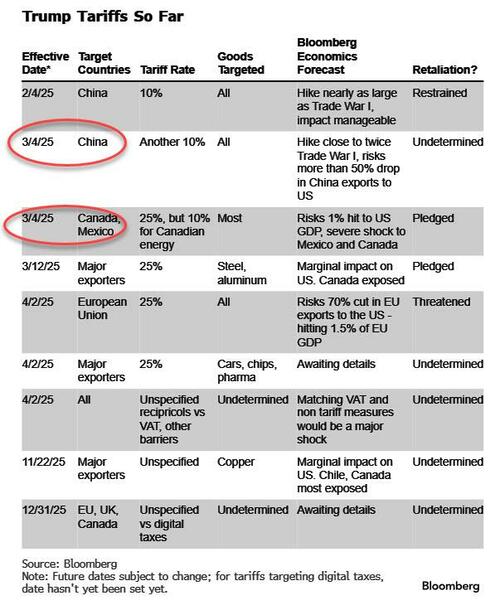
    • From Tuesday onward, 25% of every Canadian or Mexican import (except Canadian energy) will face a tariff hit.
    • Canadian energy gets a gentler 10% rate.
    • China’s tariff is now 20% – a double-up that kicks in shortly after midnight.
    • Steel and aluminum: next week’s “happy” list.

    Trump told reporters that the move is “no‑chance for Canada or Mexico” to dodge the duties, a promise that rolls out like a factory line. Canada is already scrambling to pull its own retaliatory measures close by.

    Market Reaction

    Stocks took a quick dive: the S&P 500 slipped 1.76% that day. The Canadian dollar and Mexican peso both tumbled, confirming traders had no faith that the taxes would be postponed.

    Expert Take

    “We’re on the brink of a North American trade war,” said Josh Lipsky from the Atlantic Council. “The markets know Trump means business with tariffs.”

    Quick Overview of Trump Tariffs
    • USD$1.5 trillion worth of imports will feel the sting of the 25% rate.
    • Canada, Mexico, China, steel, and aluminum are the key players.

    So, if you thought trade wars were a thing of the past, grab your popcorn. This is a full‑blown showdown, and everyone’s watching closely.

    Trump’s Next Trade‑Wars Heat‑Up: Canada, Mexico, China on the Spot

    What’s Coming in March

    • Canada & Mexico: A blanket 25% tariff on almost everything, except Canadian energy (10%). This is the biggest hit to imports since the 2010s.
    • China: Trump plans to double that tariff to 20%, piling even more pressure on the Belt‑and‑Road partner.
    • Timing: The changes are scheduled to kick in at midnight on Tuesday, but a delay is still possible.

    Why Trump Is Actively Re‑branding

    The president sees tariffs as a tool to make North American neighbors tighten their borders and get a grip on the fentanyl problem. “They’ve done a fair job,” Trump’s Commerce Secretary, Howard Lutnick, told Fox News. “We’re leaving the exact rates in the President’s hands, but the picture is clear.”

    Border PSA

    • Canada has set up a “fentanyl czar” and rolled out fresh security measures.
    • Mexico has seized 29 suspects, aiming to smooth the road to trade talks.
    • Despite these steps, Trump’s “metrics”—fentanyl deaths in the U.S.—remain stubbornly high.

    Ripples on the Other Side

    Canadian consumers already feel the heat—tourists are steering clear of U.S. goods. Canada intends to hit back with retaliatory duties on C$30 billion in U.S. products now, and another C$125 billion in three weeks.

    China’s Response

    Beijing isn’t staying silent. The Chinese press hints at retaliation against U.S. food and agri‑outlets, and the National People’s Congress has a backlog of tariffs that could hit American markets soon.

    The Snowball Effect

    • US stocks wobble as traders fear a “last‑minute” delay from Trump.
    • Chinese market dip the following day, as investors weigh the new taxes.
    • Gold soars on the back of the uncertainty, while Asian currencies take a hit.

    Beyond the Tariffs

    In the coming weeks, Trump is planning a one‑to‑one “reciprocal” tariff scheme based on each country’s trade profile. And there’s a line of sector‑specific levies: steel & aluminum (25% from March 12), autos, semiconductors, pharma – slated for April 2 and beyond.

    Policy Impact Study

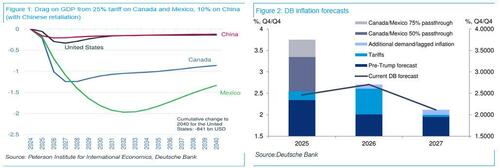
    US economists predict a 0.4–0.7% drag on 2025 GDP from the Canada‑Mexico tariffs, yet the extra revenue could cushion the tax‑cut bite. Still, the uncertainty might kill off some consumer confidence.

    Where’s the Bottom Line?

    Trump’s moves look like a bid to revive U.S. manufacturing, rope in more hard‑cash, and tilt trade balances. Whether Canada and Mexico will nod, or call it a bluff, remains unclear. The clock is ticking, and the world is watching for the next headline.

    Tariff Talk: China, Mexico, Canada – What We’re Watching

    1⃣ China’s Tariff Standoff

    In a nutshell, the chances of China easing those trade taxes feel pretty slim right now. Think of it as that stubborn friend who just won’t back down in a debate – no matter how many arguments you spin, the percentage stays stubbornly stubborn.

    2⃣ Mexico & Canada: Maybe Some Relief?

    On the flip side, the digression from Lutnick hinted at a possible dip below the 25% mark for Mexico and Canada. If the hints from yesterday hold water, we could see a fresh wave of lower tariffs for those two countries.

    • Mexico: Potential reduction – but check the numbers.
    • Canada: Same idea – could be under 25% soon.

    3⃣ What’s Next?

    We’re all holding our breath till the latest revelations drop. After yesterday’s clue, the telling moment is today – and the line-up is ready for the next round of tariff negotiations.

    Bottom Line

    While China’s rates might keep their firmly set stance, Mexico and Canada may have an opportunity to lighten the load. Stay tuned, because the numbers are about to reveal the real story.

  • Mastering the Secret Sauce: Start‑up Wisdom for Corporate Giants

    Mastering the Secret Sauce: Start‑up Wisdom for Corporate Giants

    Why Start‑ups are the Recipe for Brilliance

    Picture an entrepreneur treating every breath as a chance to level up the business.
    Corporate managers often separate “life goals” from “work goals,” but these visionaries blend the two into one passionate whole. Their heads always run on startup code – watching a movie? Their subconscious is still plotting the next product. This, as I see it, is the secret sauce of start‑ups, and it’s a lesson for any big company.

    Ownership: The Game‑Changing Ingredient

    • Ownership reshapes how you see yourself, how others see you, and how you act.
    • A corporate salesman pitches, a business owner talks. The groove is different.
    • Customers flock to businesses that feel alive, full of values and bold vision – traits that owners naturally radiate.
    • Big firms that keep small‑company spirit (think Apple, Southwest) enjoy the payoff.

    Building Passion with Wages That Speak to Ownership

    Corporate dashboards box in how much you can earn, stifling motivation. Start‑ups break that rule: pay in a way that aligns with success. An owner knows their ideas move the company toward an exit that could change a life – that fires them up. That “fear factor” – the knowledge that any lack of value hurts personal income – further spurs effort.

    Imagine carving a corporate pay plan that mirrors that vibe: executives share risk, own profit and equity, and feel the thrill of the company’s growth.

    Fluid Teams vs. Rigid Ranks

    Start‑ups thrive on fluid, unstructured teams, letting ideas ripple freely. In corporations you’re locked into a grade: graduate, associate, director. The pay is set, the path is clear. An entrepreneur, however, looks at the chart differently. New hires might invest in the firm, become division MDs, or snag equity. The envelope is customizable – a time for mass‑customisation.

    Frugal Innovation: How Constraints Spark Creativity

    Without R&D budgets, start‑ups let imagination roam. The culture is trial‑and‑error, wild projects tested, great ones kept. Skype, Spotify, Halo, Wonga—all born from that freedom. Corporates, with tight KPIs, often mute these off‑the‑cuff ideas. The lesson: give teams space to experiment, and weed out bad ideas swiftly.

    Hiring the Unconventional

    Start‑ups attract other entrepreneurs, unlike the linear “MBA‑to‑senior‑manager” pipeline in large firms. They give chances to the creative rebels who corporate might label “unemployable.”

    My own journey reflects that. Five years ago, I was called “unemployable” at Oxford. Today I lead a vibrant platform of entrepreneurs, scaling fast while keeping the small‑business spirit alive. I recruit people who bring that secret sauce, offering them stakes to align their success with the company’s.

    What Big Bosses Can Learn

    • Create an owner mindset: link compensation to performance.
    • Hire entrepreneurial talent and let them lead.
    • Foster innovation through rapid experimentation.

    In essence, the secret sauce isn’t a mystery. It’s about how we set up people, align incentives, and let folks dare to innovate. The recipe’s on you – mix, taste, and serve with excitement!

    About the Author – Faisal Butt

    Faisal Butt, Co‑Founder & Manager of Hamilton Bradshaw Real Estate, is a serial entrepreneur who invests in property ventures. With accolades from Shell Livewire and the Skoll Scholarship, plus an Oxford MBA, he championed a partnership‑driven business ethos that thrives on entrepreneurial networks.

  • Astronomers Capture Stunning Birth of Planets Around New Baby Star, Far from Our Solar System

    Stellar Sneak Peek: First Look at Baby Planet in the Making

    Hold onto your hats, space enthusiasts! In a mind‑blowing cosmic first, astronomers have spotted hints that a brand‑new planet is shaping up in the swirling gas disk around a fledgling star—way out beyond our own solar neighborhood.

    What’s Happening Out There?

    • Baby Stars, Big Surprises: Even a young star, barely older than a toddler in human years, can be a cosmic forge for planets.
    • Gas Disk Drama: Think of the star’s surroundings as a gigantic, swirling soup of gas. Tiny pockets of material start sticking together, potentially giving birth to a new planet.
    • First‑Ever Glimpse!: This is the first time scientists have caught visual evidence of a planet in its very early creative phase, before it smokes out into a full‑fledged planet.

    Why This Is a Game‑Changer

    Decoding how planets form isn’t just about star‑studying; it’s a window into our own Solar System’s past. These preliminary findings could help us understand why Earth ended up in the right place and how other worlds might look.

    Cool Takeaway

    So, keep an eye out! The universe just handed us a “look‑inside” snapshot of one of its future residents, and that’s something even the most seasoned stargazers find pretty amazing.

    First‑Ever “Planet Birth Video” From a Baby‑Sun Star

    Hold onto your telescope glasses, folks! Scientists have finally opened a window on how rocky planets like Earth snag their first moments of existence. They did it by peeking deep into the hot, swirling gas around a brand‑new star that feels a lot like our own Sun.

    What’s Happening Inside That Cosmic Nursery?

    • Hot‑spot of planet birth – The team stared into the region where dust and gas start sticking together, forming the first tiny building blocks of a planet.
    • “Time Zero” captured – For the first time, we’ve seen the very instant when those tiny clumps begin to clump.
    • No more guessing – Researchers can now say for sure that planet formation is happening right now, instead of just being a theory.
    • Rare view – Only a handful of telescopes can pick up these details, making the discovery feel like catching a fleeting comet in slow motion.

    Why Should We Be Excited?

    Leiden Observatory’s Melissa McClure, the brain behind the project, says “It’s a direct snapshot of the hot zone where rocky worlds are born.” And even scientists who weren’t part of the study, like Fred Ciesla from the University of Chicago, are clapping from afar: “We’ve been waiting for this moment. It opens up a whole new playground for research.”

    What This Means for the Future of Astronomy

    With this breakthrough, astronomers now have a real‑time laboratory to study how planets assemble over time. We can finally answer questions about:

    • How quickly do rocky cores grow?
    • What role does the star’s heat play in shaping planet birth?
    • Why do some stars produce lush planetary systems while others don’t?

    In short, the universe is throwing us a roadmap for our own cosmic backyard. It’s like looking at the blueprints for a brand‑new house before the paint has even dried.

    Behind the Scenes

    Thanks to powerful telescopes and a tight-knit international team, the findings were published in Nature this Wednesday. The next step? Watching these seeds grow into fully fledged planets—and maybe spotting a future Earth‑like neighbor in the making.

    How astronomers caught a glimpse

    NASA + ESO: Milestone for Planet‑Building

    The James Webb Space Telescope and the European Southern Observatory (ESO) in Chile just dropped a shiny new piece of the cosmic puzzle. They spotted the first hints of bodies forming around a shiny, still‑baby star, HOPS‑315.

    What’s the buzz about?

    • Star‑stud: This is a yellow dwarf that could become our future Sun. It’s only 100,000–200,000 years old and sits a cool 1,370 light‑years away (that’s about 6 trillion miles, so close‑in cosmic terms).
    • First‑ever detection of planet‑seeds in a gas disk around a live star.
    • Because of a friendly roll‑over (the disk is tilted just right), the team could peer inside a mysterious empty patch in the outer rim.
    • They spotted silicon monoxide gas and crystalline silicates—the very stuff that, billions of years ago, likely spun up our own solar system’s early “rocks.”
    • The area matches the stand‑in for our solar system’s asteroid belt—the leftover fragments from planet creation.

    Why it matters

    Imagine watching your GPS “app” as it nudges your planet straight into orbit. That’s basically what the Webb and ESO teams did: trace the tiny dust grains turning into planet‑building blocks. This is the first concrete snapshot of how planets actually start their lifelong dance around a star.

    And the best part?

    It’s not just science; it’s a reminder that the universe is still magic‑full of surprises. Keep your lenses—both literal and metaphorical—tuned; the cosmos has more sizzling stories up its sleeve.

    This image from the European Southern Observatory on July 15, 2025, shows jets of silicon monoxide blowing away from the baby star HOPS-315.

    Silicon Sparks from the Baby Star HOPS‑315

    On July 15, 2025, the European Southern Observatory captured a stunning peek at the young star HOPS‑315. Picture jets—blazing streams of silicon monoxide—launching straight out from its surface, a sight that’s as eye‑catching as it is scientifically thrilling.

    Why It Matters

    • These silicon jets are a first of their kind around any young star, giving us a fresh lens on how planets might ignite.
    • Before this, we didn’t even know if this “silicon condensation” was a universal trick the universe plays or just a quirky side‑effect of our own solar system.
    • McClure’s team is excited: “Our study shows that it could be a common process during the earliest stage of planet formation.”

    What’s the Story?

    The condensation of hot minerals—especially silicon—has been a mystery. Scientists used to assume planet‑building only pulling from stuff we could see, but the jets from HOPS‑315 show that the universe’s recipe includes a dash of silicon spray.

    Next Steps
    1. Further observations are on the way to confirm whether this is a standard element of protoplanetary evolution.
    2. The team will also hunt for similar jets in other baby stars, hoping to fill out the grand cosmic cookbook.

    In short: HOPS‑315 is not just a baby star—it’s a neon‑lit laboratory where the universe demonstrates that silicon isn’t just for chips and wafers—it’s also the building block of realms that might one day harbor worlds!

    First evidence of planetary origins

    Planet‑to‑Planet: The First Glimpse of Cosmic Birth

    Revealed by a Super‑Glimmering New View

    While most folks in the field have been busy hunting younger gas‑rich disks or older, buffet‑ready discs that might μunch new worlds, this breakthrough is like finding the first spark of a planet‑forming firework. As McClure puts it, we finally have concrete evidence that the big celestial construction started.

    In a jaw‑dropping shot from ESO’s ALMA telescope network, the nascent planetary system lights up the cosmic dark like a firefly lighting up a space‑y night. Imagine a bright, small glow zipping across the void – that’s what astronomers are staring at.

    What could HOPS‑315 become?

    It’s hard to count the future planets in HOPS‑315’s mixed‑bag of gas. If its disk was as hefty as our Sun’s might have been, it could fill its own orbit with around eight planets a million years from now – a long road ahead, literally. McClure hints that this tally could shift as time rolls on.

    Big Plans from Purdue’s Merel van ’t Hoff

    Assistant professor Merel van ’t Hoff is giddy about finding more planet‑nurseries. By casting a bigger net, researchers hope to spot recurring patterns and tease out the secret sauce that makes Earth‑like worlds emerge. Her quest is to answer this burning question:

    “Are there Earth‑like planets out there or are we so special that we’re the only ones who can do it?”

    Related Interests

    • Behind the scenes on launch day for Biomass, ESA’s latest mission (Euronews Tech Talks)