Tag: transaction

  • Stamp duty land tax: claiming multiple dwellings relief before physical works begin

    Stamp duty land tax: claiming multiple dwellings relief before physical works begin

    A tribunal case decision released in July 2021 held that multiple dwellings relief was not available in two lead appeals where developers had bought sites for new homes.

    The First-Tier Tribunal Tax Chamber released a decision on 7 July 2021 in the combined appeals of Ladson Preston Ltd and AKA Developments Greenview Ltd v HMRC concerning multiple dwellings relief (“MDR”). MDR is a valuable relief from stamp duty land tax (“SDLT”) where several “dwellings” are acquired. The effect of the relief is to reduce the SDLT by giving multiple use of the lower tiers of the rates of SDLT.
    The decision centred on the extended definition of “dwelling” for MDR purposes which includes a building “in the process of being constructed” on the effective date of the transaction (“EDT”).
    The cases were lead appeals for two groups of cases:

    For the first group physical works had not begun.  The taxpayer argued that “in the process of being constructed” has a wide meaning so as to give effect to an intention of the legislation to encourage the construction of new homes.  They argued that even early steps, such as obtaining planning consent or preparing architects plans before the completion of a purchase, meant that the property counted as a number of dwellings.
    For the second group, some physical works had been carried out before the completion of the purchase.  The taxpayer argued that this strengthened the position.

    The Tribunal held that planning permission is not part of the property being acquired and so would not make the property count as “dwellings”.  They considered the definition of the “subject matter of the transaction” and decided that:
    “A buyer’s own plans and arrangements made before the EDT for constructing dwellings on a property (such as obtaining architect’s plans, or concluding contracts with suppliers or sub-contractors for the construction project, or securing finance for the project) similarly are not something that is acquired from the seller by the purchaser as part of the subject matter of the transaction that is subject to SDLT.”  The Ladson Preston appeal failed on that ground.
    The Tribunal decided that the claim for MDR also failed in the AKA case, where some works had been done by the buyer before the EDT; they had made some boreholes on the property.
    The Tribunal did not in its decision refer to HMRC guidance at SDLTM00400 where HMRC say “Relevant properties that are in the process of being constructed will be treated as dwellings at the point where building works on top of the foundations have begun.”
    The Tribunal did refer in the decision to the “golden brick” principles for VAT where an HMRC Manual says “It is accepted that a building is being constructed when work has progressed above foundation level. This is usually when walls begin to be constructed upon the foundations.”  However, the Tribunal said it did not need to consider this further, as it was able to decide the matter on another ground.
    The reasoning for this other ground is unexpected though!  The Tribunal said the works done by the buyer (making the boreholes) were “not something title to which the seller transferred“.  This is surprising as the works affected the physical nature of the land at the EDT.  The usual principle is that one looks at the nature of the property as it is on the EDT.  The reasoning of the Tribunal would cause concerns in a case where a buyer has taken control of part of a site and got building work beyond the foundation stage before the EDT.  On usual principles and in accordance with the HMRC guidance, one would expect this to count as buildings in the process of construction and so qualify for MDR.
    The Tribunal also mentioned a point I have written about before on whether the 3% surcharge applies to the element of the price paid for “dwellings” in a mixed use transaction, where multiple dwellings relief is claimed.  The Tribunal said they did not need to decide the issue, once it was established that multiple dwellings relief was not available.  I am told that the representatives for HMRC did not in the hearing seek to resile from the guidance on this point in the HMRC manual at SDLTM09740.
    I am told that leave to appeal the decision is being sought as HMRC have identified a number of cases where MDR has been sought for properties where physical works had not started at the time of the purchase, or where works had not got above foundation level.  In the meantime developers buying sites with planning permission would do well to budget for SDLT without the relief and treat with caution confident claims that the relief is available.  Particular care should be taken with any suggestion that the buyer do some work to the property before completion so as to secure the relief.

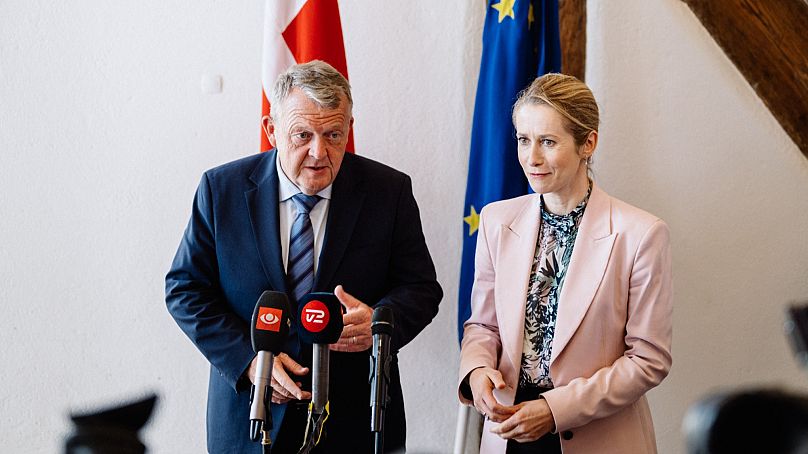
  • Donald Trump’s Greenland threat still stirs tension, warns Danish foreign minister

    Greenland Talks: Annexation Is Off‑Limits, Says Lars Løkke Rasmussen

    Lars Løkke Rasmussen, Denmark’s Foreign Minister, kicked off a fresh wave of comments on the future of Greenland—this time with a solid stance: “The conversation around Greenland can never be about annexation.”

    Why the statement matters

    • It signals Denmark’s commitment to Greenland’s autonomy.
    • It keeps the debate focused on cooperation, not takeover.
    • It reassures Greenlandic leaders that their self‑determination is respected.

    What the comments reveal

    Rasmussen’s words come as a gentle but firm reminder that, no matter how tempting it might be, “taking over” is not on the agenda. Instead, the focus should stay on:

    • Economic partnership
    • Environmental stewardship
    • Building stronger cultural ties
    Bottom line

    In short, Denmark’s playbook stays: collaboration, not conquest. So the next time you hear about Greenland, think of partnership—and not a status‑quo changing annexation plan.

    Trump’s Greenland Gambit: Denmark Says “Hold My Beer, We’ve Got This!”

    TL;DR: Donald Trump’s new “Greenland takeover” joke is still on the table, but Denmark’s foreign cabinet refuses to roll over. They’re beefing up Arctic defenses, keeping the US far from annexation, and starring on their own political stage as EU Council President.

    Why the Flaming Cold‑Weather Drama?

    • Everything’s about minerals and ice. The Arctic is a goldmine for tech companies, and as climate change melts more ice, every country wants a piece of the action.
    • Trump’s second-term shift. He moved from a “property–deal” mindset in his first term to branding Greenland as national security essential for the U.S.
    • Denmark’s firm stand. “We’re not going to agree to a military annexation,” says Lars Løkke Rasmussen. “Nothing’s solved yet, and we’re not handing over the island without a fight.”

    Speech Back‑Boil in Aarhus

    During a press briefing in Aarhus, Rasmussen delivered a mixed‑feel memo: “We don’t see an annexation happening, but it’s not written off either.” He noted that Trump’s comments should be taken seriously—not literally—but that “the situation is pressing.”

    What the United States Says (And Says He Says)

    • “I’ll take Greenland if it makes the global free world safer.” Trump’s recent tweets paint it as an inevitable U.S. acquisition.
    • Re‑defining the island as a strategic imperative. The U.S. no longer sees Greenland as a simple real estate fling but a crucial defense asset.
    • Greenland’s 56,000 voters are not on board. Polls show a clear “no” to joining the U.S., and the four‑party coalition government is protecting local autonomy.

    Denmark’s Defensive Surge

    Denmark is throwing a whopping 14.6 billion kroner (€1.95 billion) into a military upsizing project aimed at the Arctic and North Atlantic. The plan includes:

    • New bases and supplies along the Greenlandic coast.
    • Strengthening the 1951 defense pact with the U.S. (but no annexation, a stern reminder).
    • Ongoing monitoring of foreign interference campaigns—could be anything from subtle whispers to big‑data snoops.

    Rasmussen’s Bottom Line

    “We’re kidding with the Americans on how to tackle security in the Arctic, but not the annexation,” he said. “I feel this is still a live issue. It may attach to attempts to manipulate Greenlandic society, but that’s not necessarily the US.”

    Bottom Takeaway

    In short, Denmark’s foreign ministry is staying on guard: the joke about the U.S. taking Greenland might still be in the air, but the official line is clear—no annexation, yes partnership, and the Bloc’s EU Council presidency is making the country the play-by-play commentator for future Arctic politics.

    Lars Løkke Rasmussen has welcomed the display of European solidarity towards Greenland.

    Big Cheers from Lars Løkke Rasmussen!

    In a spirited statement released in 2025, Denmark’s former prime minister Lars Løkke Rasmussen expressed his heartfelt approval of the European Union’s recent show of solidarity with Greenland.

    Why It Matters

    • The EU’s backing reflects a growing commitment to support Greenland’s unique economic and environmental challenges.
    • Løkke Rasmussen’s warm endorsement signals a strengthening partnership between Denmark, Greenland, and the wider European community.
    • These fresh diplomatic vibes bode well for future climate initiatives and sustainable development projects in the Faroe islands region.

    Key Takeaways

    When big names like Løkke Rasmussen nod in approval, it doesn’t just boost morale—it also sets a clear tone for international cooperation. Europe’s enthusiasm for Greenland’s progress is more than a friendly gesture; it’s a robust show of unity and shared purpose.

    Looking Ahead

    Expect more collaborative efforts as the EU reaffirms its support for Greenland’s aspirations. With leaders like Løkke Rasmussen rallying behind the cause, the future looks bright—and a bit more sparklingly green.

    European solidarity

    Europe Tightens the Arctic Grip on Trump’s Wild Card

    The White House has been dreaming of turning Greenland into America’s next backyard paradise, but the continent’s neighbours are not letting this idea see the light of day. European leaders, led by Ursula von der Leyen and António Costa, have thrown their weight behind Denmark’s sovereignty, and because Greenland is a territory of Denmark, it sits nicely under the EU’s collective defence umbrella.

    “Time to Focus on the Arctic” – Ursula Speaks

    During a quick stop in Denmark, Ursula told reporters that the Arctic is now the “hot new trend” in European politics. “We’ve got to put more eyeballs on the polar region,” she said, hinting that any U.S. infringement would get a prompt Viking‑style response.

    Macron’s Surprise Island Hopping

    • French President Emmanuel Macron flew straight to Greenland ahead of a G7 summit.
    • He met Mette Frederiksen (Danish PM) and Jens‑Frederik Nielsen (Greenlandic PM).
    • While shaking Greenland’s flag, Macron called Trump’s rhetoric a “wake‑up call for Europe” and calmly assured the U.S. that any aggression against an ally would be met with a united front.

    “You’re not on your own,” Macron said in a press conference, adding that the flag on the ice is a shared symbol for all of us.

    Rasmussen’s Bottom‑Line Reality Check

    Denmark’s foreign minister Rasmus Rasmussen keeps the mood realistic. He reminded everyone that Denmark is a small country with a tiny army—no room for an American war machine to sneak past. The key is a collective European boost.

    Rasmussen praised Macron’s visit as a “solidarity play” that could rally other European leaders to Greenland. “We’ll play this carefully,” he said, hinting at a diplomatic juggle that stars everyone in the same camp.

    The Trump Dilemma

    Despite his unpredictable moves, the Danish diplomat stays cool. “We’re still not exactly sure what Trump’s endgame is,” Rasmussen said, but he’s optimistic. “Let’s tackle this calmly and see if we can resolve it peacefully.”

  • Trump’s Greenland Threat Persists, Danish Foreign Minister Says

    Greenland’s Future: No Annexation in the Picture

    The Danish Foreign Minister, Lars Løkke Rasmussen, made a clear and firm statement about the direction of discussions concerning Greenland: “The conversation on Greenland can never be about annexation.” This declaration comes at a time when some voices outside Denmark’s borders buzz about the island’s autonomy and its potential ties to other Nordic nations.

    Why the Topic Matters

    Greenland, the world’s largest island, has been navigating its own path toward self-determination while benefiting from its special relationship with Denmark. However, the notion of annexation—bringing the island fully under Danish control—has always been a sticking point. By stating that annexation is off the table, Rasmussen is not only protecting Greenland’s agency but also reassuring allies and residents that the future is about partnership, not possession.

    Key Takeaways

    • Reaffirmed Autonomy: Greenland remains confident in its right to decide its own political and economic future.
    • Strong Danish Relations: The island’s partnership with Denmark will continue but through cooperation, not takeover.
    • No Annexation Plans: Direct annexation is ruled out, keeping the focus on mutual benefit.
    What This Means for the Community

    For the people living in Greenland, this assurance means that local decision‑making will stay in their hands, and the community can squarely aim at the exciting possibilities of resource development and cultural preservation—without the looming shadow of foreign annexation.

    A Humorous Last Word

    In a world where some headlines keep asking, “Can Greenland become part of Denmark?” Lars Løkke grew up strong on the answer: No, we’re not annexing the ark—just building our own lakes of partnership!

    Denmark Holds Ground as Trump’s Greenland Gambit Heats Up

    Not a Game of “Take or Never Take”

    Denmark’s foreign affairs minister, Lars Løkke Rasmussen, is waving a calm flag over Trump’s latest puff about the icy island of Greenland. In a chat with reporters in Aarhus, he made it clear: a U.S. takeover looks unlikely, but the debate is far from over.

    EU Presidency and Arctic Stakes

    With Denmark now steering the EU Council, Copenhagen is taking its seat at the table a little more seriously. “We don’t see a military annexation happening,” Rasmussen said. “But we’re not wrapping this up either.”

    Trump’s Two‑Shot Committee

    • First period: “Let’s buy Greenland like a fancy real estate deal.” Copenhagen shot back with a firm “no.”
    • Now: “It’s a security move, or it’s not.” The U.S. puts a smart move on the deck, framing Greenland as a keystone for advanced tech and Arctic dominance.

    Trump’s rhetoric—“I don’t know what Denmark’s claim is, but we need it for the free world”—has sparked a frenzy across Europe. Yet millions of Greenlandian folks are not buying the U.S. humiliation pitch.

    Populist Pressure on Greenlandic Pop

    The island’s 56,000 residents largely see themselves as independent, holding a recent four‑party coalition government in lockstep. Opinion polls show a strong “no” to being swallowed by Washington.

    Denmark’s Power‑Up Plan

    Denmark rolled out a hefty 14.6 billion kroner ($1.95 billion) plan to beef up military chatter in the Arctic and North Atlantic. The goal: to keep the region sticking to its Danish‑American treaty of 1951 while keeping an eye on potential “unfriendly” moves.

    Rasmussen’s Final Take

    “We’re ready to team up with the U.S. to tackle Arctic security, but damn, this is never about annexation.” He added that it could be a case of external meddling rather than a direct U.S. invasion—no surprise there, given all the political intrigue going on.

    Bottom line: the U.S. might fell off the table, but the conversation is still alive, and Denmark’s cautious but keen stance is exactly what the Arctic needs.

    Lars Løkke Rasmussen has welcomed the display of European solidarity towards Greenland.

    Greenland Gets a Warm European Hug in 2025

    “It’s like a giant group hug,” says Lars Løkke Rasmussen

    When the European Union rolled out a string of gestures of support for Greenland, Lars Løkke Rasmussen couldn’t help but beam with pride. “This is exactly the kind of unity we were hoping for,” he said, highlighting the EU’s effort to bring Greenland into Europe’s broader conversation.

    Here’s what makes the EU’s solidarity stand out:

    • Climate Cooperation: Joint research to tackle permafrost thawing.
    • Economic Boost: Grants for sustainable fisheries and green energy projects.
    • Cultural Exchange: Funding for Inuit arts festivals across EU cities.
    • Policy Inclusion: Greenland’s representatives in key EU working groups.

    Rasmussen wryly noted, “It’s great to see that even in a climate‑challenged world, we’re preventing Greenland from becoming a lone wolf. Together, we’re hunting for solutions, not just hashtags.”

    In short, the EU’s refreshed commitment to Greenland is more than just a diplomatic gesture—it’s a solid and heartening partnership that promises to keep the icy winds of change blowing in the right direction.

    European solidarity

    European Allies Rally Behind Denmark & Greenland

    Why Greenland Matters

    • The tiny island is a strategic treasure in the polar wilderness, and its status sparks a polar debate.
    • Europe’s unity on this issue is less about politics and more about preserving the Rule of Law in the UN Charter.
    • Even though Greenland isn’t an EU member, Brussels believes it falls under the collective‑defence clause.

    Key Voices in the Containment Mission

    Ursula von der Leyen’s Arctic Call

    During a trip to Denmark, the Commission President declared it’s high time to “focus more on the Arctic.” She was ready to give the island a fresh spotlight and, as she put it, “this flag you have here is our common flag.”

    Macron’s Diplomatic Turn on the Ice

    French President Emmanuel Macron drove across the Atlantic, arriving in Greenland to meet Danish PM Mette Frederiksen and Greenlandic PM Jens‑Frederik Nielsen. While acknowledging Trump’s “wake‑up call,” he insisted the US would not storm into another ally’s territory. “It’s time for unity, darling,” Macron told a press conference. “You’re not alone.”

    Denmark’s Resolute Response

    Foreign Minister Rasmussen, who likes to keep an eye on global rumblings, pointed out that smaller nations like Denmark are worth a collective shout‑out. He underlined that the courage in a small army (under six million strong) is not to be underestimated. “Is it something that could collapse? We are preparing for possible surprises.” He still feels uncertain about Trump’s “territorial ambitions,” but he remains optimistic—“We should figure out exactly what the problem is, or maybe not.”

    Why the Pan‑European Stand Might Win the Play

    By uniting, Europe exchanges more than freedom-flag solidarity; a real sense of protection is built. Even with some uncertainty about Trump’s next move, Denmark and allies know that diplomacy over aggression will lead to a more stable world. So we stay hopeful, keep our toes in the ice, and remember: “We can over, in a peaceful, chilled way.”