Tag: wage

  • The UK’s weak economic growth and Brexit: Is the worst over?

    The UK’s weak economic growth and Brexit: Is the worst over?

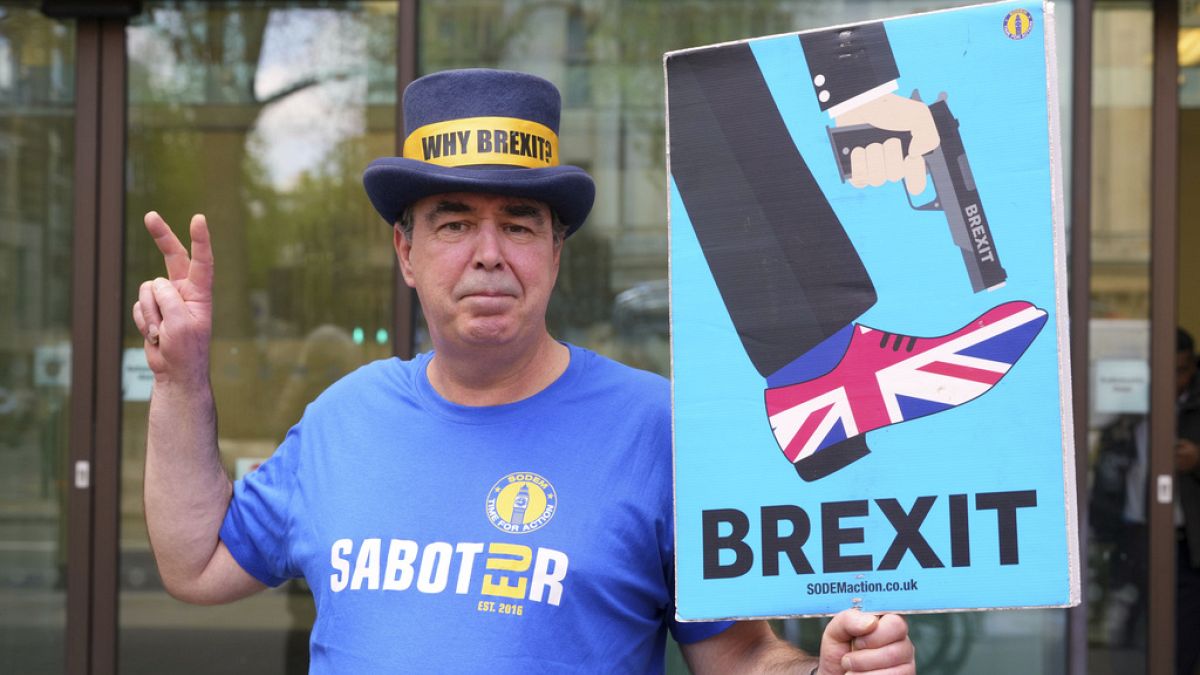
    The UK’s decision to leave the European Union has left lasting impacts on the country’s economy. While many of the repercussions appear to be longstanding, including low productivity, Euronews Business asked experts whether they think the worst is over.

    The UK’s weak economic growth and Brexit: Is the worst over?Some hope that the UK will be able to boost its GDP through exports, supported by trade agreements, including the latest with the US.

    However, exports alone might not be enough to fix a fundamental problem: the UK is contending with cripplingly low productivity.
    According to Amiot, productivity woes partially stem from Brexit. “It has contributed to reducing the UK’s labour supply and pulled the brakes on investment on the back of uncertainty in the years following the referendum,” she said.
    She added that sluggishness in the key financial services sector has also been playing a role: “Productivity growth in the UK has been particularly weak since the Great Financial Crisis, especially in the financial sector.”
    UK labour statistics are also signalling a difficult path ahead for the economy. The number of job vacancies has been falling since April 2022. Unemployment in the country has been on the rise since August 2024, and sat at 4.7% in May, the highest level in four years. 

    Related

    Brexit impact keeps getting worse, economists warnWhat would a UK-EU thaw mean for financial services?

    As poor productivity limits wage growth, this is expected to slow inflation. 
    “Wage growth has slowed, and unemployment has risen again. For the Bank of England, this is a sign of growing slack in the labour market, which is likely to ease inflationary pressures, and means it can cut rates sooner rather than later,” said Sarah Coles, head of personal finance at Hargreaves Lansdown.
    Job vacancies have also been falling due to higher costs, partially attributed to the UK government’s decision to increase national insurance contributions, a cost that employers pay for every person on the payroll.

    What Brexit really cost the UK

    Nine years after the referendum, the Office for Budget Responsibility (OBR) assessed the economic impact of Brexit. Researchers came to the conclusion that — since 2020 — withdrawal from the EU has led to reduced productivity, lowering GDP by 4%, and trade by about 15%, in both goods and services, compared to a ‘remain scenario’. Brexit has also had a sizeable impact on shrinking investments.
    According to John Springford, an associate fellow at the London-based think-tank Centre for European Reform, Brexit has cost the state £40 billion (€46.1bn) since 2019.
    “The 2019-2024 parliament raised taxes by around £100 billion, and if we take the OBR’s 4% loss of productivity to be the true figure, £40 billion of those tax rises were needed because of EU withdrawal,” he wrote in a recent study.

    Is the worst over?

    “Brexit is going to have a long-term impact on UK growth beyond the initial fallout seen in trade,” said Amiot, adding that “with a smaller pool of workers and weaker competition leading to lower productivity, the capacity of the UK to grow will remain durably lower”. 
    She clarified: “That being said, most of the large impacts are likely behind us.”
    The years following Brexit came with an increased uncertainty for businesses, and left a sizeable impact on investment, which stagnated for five years, before it returned to growth. Investment is now rising again and has surpassed its pre-Brexit referendum levels. According to the Office for National Statistics (ONS), gross fixed capital formation (GFCF) and business investment both increased to record levels in the first quarter of 2025.

    Trade with the EU also struggled, but that could have been partially attributed to a range of other factors, including the impacts of the COVID-19 pandemic and the global slowdown of trade in goods.
    “Although much of the initial economic disruption has likely faded as firms adjusted, Brexit still appears to be weighing on export levels and GDP,” Andrew Hunter, Associate Director at Moody’s Analytics, told Euronews Business. 

    He added that goods exports to the EU are still 16% lower in real terms, compared to the end of 2019 (before the pandemic and before the UK began leaving the EU).
    “And goods exports to non-EU countries have actually performed even worse,” Hunter said. He added that the UK has significantly lagged behind other advanced economies in this respect, due to a “broader hit to the export sector from Brexit-related trade barriers (with many firms choosing to stop exporting altogether due to the added costs and paperwork).”
    Many hope the recent trade deal with the US will improve the economy by attracting investment into the country. 
    And the US-UK trade deal provides relief for certain industries in particular. While the EU is finalising its potential countermeasures, including a tariff on US aircraft imports, almost certain to attract a retaliation, the UK has secured free trade for its aerospace sector. 
    Yet, experts are sceptical about the overall contribution of the trade deal to the UK economy. S&P Global Ratings estimates “that US tariffs are going to represent a direct drag on UK GDP of around 0.1 percentage point this year and next,” partly due to weaker global demand. 
    And other trade deals are also unlikely to boost exports too much. “The UK government’s recent ‘reset’ deal with the EU has eased some trade barriers, particularly for food and agriculture, but further progress is expected to be slow,” said Hunter, adding that he doesn’t expect a strong export rebound in light of global trade uncertainty. 
    According to Springford, Free Trade Agreements (FTAs) signed since Brexit have had a very limited impact. 
    “The macroeconomic benefit of the new FTAs the UK has signed is very small, only offsetting the 4% loss from Brexit by about 0.2%. Even if a full FTA were signed with the US, that would rise to about 0.35%.”

    Related

    UK decision to leave EU a ‘disaster’ costing thousands of jobs – Lord Mayor

    A clouded UK economic outlook

    In the short term, the currently ailing economic output has been fuelling expectations that the government will have to make up for the missing tax revenue by hiking tax rates in the second half of the year, further constricting GDP growth. 
    In the long run, experts agree that the UK’s growth will be slower than if it had stayed in the EU. This is due to the fact that the structural changes associated with losing access to the EU market have meant that the UK is missing out on workers, investment and trade opportunities.
    Looking ahead, the primary source of uncertainty and risk remains productivity, according to the Chief UK Economist at S&P Global Ratings.
    “While most forecasts anticipate a rebound in productivity that could support stronger growth, the outlook is clouded by uncertainty around the implementation of government growth policies and the pace at which AI technologies will be adopted,” Amiot said.

  • Keynesians’ Big Misstep: Why Their Theory Still Misses the Mark on America’s Economy

    Keynesians’ Big Misstep: Why Their Theory Still Misses the Mark on America’s Economy

    What the Analysts Are Saying—and What the Numbers Actually Tell Us

    Imagine a bustling newsroom where every analyst is shouting, “The US economy’s about to collapse!” Over the past six months, that chorus grew louder: high prices, sky‑high interest rates, and swelling deficits were the supposed recipe for a recession.

    Why Everyone Was Worried

    Those forecasts picked up on three big worries:

    • Inflation that feels like a never‑ending price tag.
    • Interest rates so high people might need a calculator just to keep a cup of coffee $.
    • A deficit that’s piling up faster than a toddler’s snack crumbs.

    But the Data Do Not Agree

    Turns out, the United States is holding its own. The truth? The economy is still strong, the budget’s in control, and folks are less frantic about future price hikes. Here’s what the numbers actually say:

    Economic Strength

    GDP growth continues to push forward, with no sign of an abrupt stop. Businesses are hiring, and consumer confidence is still better than a Monday morning.

    Fiscal Discipline

    The government has been tightening its belts. While debt remains a concern, spending cuts and tax policies are moving in the right direction.

    Better Inflation Expectations

    People think prices won’t skyrocket tomorrow. Surveys show that the fear of runaway inflation is easing—like a kid who finally learns to calm down after a tantrum.

    Takeaway

    So yes, analysts threw a lot of warnings into the air, but the actual story from the data is a bit more optimistic. The US economy may not be on the brink of collapse after all—at least for now. Let’s keep an eye on the numbers and stay ready for any twists, but for now, breathe easy, folks. The future looks less gloomy than we imagined.

    Rising Growth Estimates Defy the Pessimists

    2025’s Economic Rollercoaster: From Gloom to Glitz

    Early 2025 hit the headlines with a corny, bruised headline: the U.S. economy shrunk by 0.5% in Q1. Most of the blame? Lower government spending and an uptick in imports. But before you’d sprint to the clinic, the private sector was actually putting a buck in its pockets, giving the downturn a surprisingly solid backbone.

    Mid‑Year Turn‑Around

    By mid‑season, the narrative flipped faster than a pancake on a Sunday brunch. The Atlanta Fed’s GDPNow model & Trading Economics were on a different track, projecting robust gains for Q2.

    • Trading Economics: 3.5% GDP growth for Q2—way past the earlier “pessimism” coast.
    • GDPNow (July 9): 2.6% growth anticipated for the same quarter.
    • Consensus estimates: a jump from 1.3% to 2.1% confidence, with inflation expectations in the down‑trend.

    What Sparked the Surge?

    There’s a song, “You’ve got to spend it while you can.” That’s what American households were doing. Wages outpaced inflation, so the buying power was solid. A few other bright spots added the sparkle:

    • Fixed investment: Up 7.6% in early 2025—best jog since mid‑2023.
    • Front‑loaded imports: Firms lured goods ahead of new tariffs, providing an extra thrust.
    • Positive revisions: Export stats brightened, imports normalized.

    Shock Factor

    Many economists had their brows knitted together, believing the bleak forecast. But the actual turn‑around rewrote the page, leaving the market in a state of “Wait, what?” They had to pull a new research folder on economic optimism.

    Bottom line: 2025 figured it out—despite a rough start, the market pulled itself together, making Q2 feel like a fireworks show rather than a rain‑storm.

    Inflation Expectations Are Falling

    Inflation Unleashes a Fresh Surprise

    When policymakers and pundits pegged the economy, they wrote down a mind‑boggling expectation: inflation would stay sticky. Instead, the latest data have taken a sharp turn, letting the market breathe a sigh of relief.

    Consumer Numbers Drop, Expectations Drop Too

    • Year‑ahead inflation expectations slid to 3 % in June from 3.2 % in May—hit the lowest level in five months.
    • Three‑year forecasts fell to 3.0 % and five‑year to 2.6 %, a subtle but clear nudge toward stability.

    Energy Take‑off

    Gasoline chased a 12 % year‑on‑year plunge in May, while fuel oil slipped by 8.6 %. The price of your morning cup of coffee isn’t hurting the economy as badly as it once did.

    Shelter Stocking Down

    Housing costs, often the biggest driver of CPI, eased to a 3.9 % rate in May from 4.0 % in April—just enough of a drop to shift the whole gear.

    Month‑to‑Month: A Quiet Pulse
    • May’s CPI climbed a modest 0.1 %.
    • June’s forecast sits at 0.23 %, keeping inflation feel the sharpest low in five years.
    • Truflation shows a 1.7 % annualized rate for June.

    Why This Drop Happened

    • Robust U.S. supply chains keep goods moving faster than a coffee cup can cool.
    • Housing market softens, putting a brake on rent and mortgage hikes.
    • Essential food prices, which once tanked, are stabilizing—thanks to better logistics and a drop in global bad weather.

    All in all, the numbers suggest the economy’s inflation worry is finally a thing of the past—at least for now. Analysts may have been out of sync, but the data are humming a calmer tune.

    The June Budget Surplus: A Fiscal Surprise

    June Surprises: The Unexpected Budget Boom

    When the federal budget swung from a deficit to a surplus of over $27 billion in June, the market had its head in the clouds. This was the first monthly surplus the U.S. had tossed out since 2017, and it sent analysts packing.

    The Key Drivers

    • Sharp Spending Cuts
      • Government outlays dropped by $187 billion in June.
      • Cost‑cutting went hard—staff numbers fell, and the Treasury made a clean sweep of unnecessary programs.
    • Customs Duties on the Rise
      • Duties climbed to $27 billion in June, up from $23 billion the previous month.
      • That’s over four times the amount seen a year ago—definitely a win for tax‑payers!
    • Revenue Soars
      • Receipts jumped 13% compared to the same month a year earlier.
      • Meanwhile, expenditures slipped 7%, sealing the win.

    What This Means for You

    In short, the U.S. economy leaped out of the red, and it did it faster than anyone expected. This could mean lower interest rates, more spending flexibility, or even sunshine on your wallet. Stay tuned—there’s more to uncover in the next fiscal chapter.

    Spending Cuts and Fiscal Restraint

    A Fiscal Shake‑Up That’s Less Tax‑Panic Than You Thought

    Guess what? The money story just got a bit more exciting, thanks to a dramatic cut in the kinds of spending that aren’t linked to defence.

    Trump’s 2026 Budget: The Big Cut

    • Outlays knocked down by a whopping $163 billion – that’s about a 23% drop from last year.
    • Spending dipped to the lowest point since 2017.
    • Think of it as trimming the government’s budget haircut to just the essentials.

    Deficits: Still Riding the High‑Waves?

    Even though the deficit is still a sizeable $1.34 trillion this year, the bulk of that is inherited from previous policies. The good news? Experts expect a sizable shrink in the coming months.

    Why It Matters

    • May’s lower deficit plus robust surpluses in April and June have opened up some breathing room.
    • This mix challenges the whole “fiscal irresponsibility” headline.
    • In short: the numbers are looking less like fiscal chaos and more like a steady, star‑cruising budget.
    Takeaway

    The budget’s makeover is making headlines for a good reason—it’s not just a list of numbers, but a sign of smarter spending that could help the economy run smoother.

    A Lesson in Humility

    The 2025 Crash Course in Economic Forecasting

    Think back to 2025 and remember that it was a litmus test for every economist’s favorite tools. The whole Keynesian playbook—betting that government spending sparks a cascade of growth—cracked open and revealed a glaring flaw: the ceteris paribus assumption is about as reliable as a chain mail on a bouncy castle.

    Why the Numbers Did a Houdini Act

    • Growth estimates kept spinning up: They were way higher than the reality‑check in plain sight.
    • Inflation expectations crashed: Forecasts were too calm, while the market was actually buzzing.
    • Budget controls hit a sweet spot: The administration nailed spending cuts without throwing the economy into chaos.
    • Dumped fearmongering: The old “collapse is inevitable” talks were largely politically driven.

    What the US Economy Really Is Doing

    Despite the early warning signs, the U.S. market showed that resilience can outshine fear. The private sector is riding a wave driven by:

    • Tax cuts that unclog the implant‑like potholes holding back investment.
    • Deregulation that gives businesses the freedom to grow and hire.
    • Government spending that is more measured, sparing the economy from overheat.

    Takeaway: Read Forecasts Like a Skeptic

    When the government changes course—whether adding or pulling back on fiscal policy—those old Keynesian numbers can swing wildly. Think late‑night thrill shows rather than nightly news. The lesson: keep your skepticism at the ready, and always expect a curveball.

    Final Thought

    Our experience in 2025 convinces us that the U.S. economy, together with a forward‑leaning private sector, can outsmart the storm. Let’s keep the forecasts tight, the spending lean, and the imagination louder.

  • From Dreams to Disaster: Marx’s 150‑Year Economic Forecast Failures

    From Dreams to Disaster: Marx’s 150‑Year Economic Forecast Failures

    Revisiting Marx’s Predictions

    Picture this: Karl Marx, fresh off a philosophy degree that had taught him the Labor Theory of Value, decided to call out capitalism like a futurist predicting the end of the world. He was convinced that the capitalist machine would grind people into rags, choke the economy with endless surplus, spark global megalomaniacs, and let a handful of big bosses take the wheel. Fast forward to today, and we realize those warnings flew off metaphorical cliffs.

    Key Takeaways from Marx’s Forecasts

    • Mass Poverty & Capital Accumulation – Marx believed more capital would equal more misery for the masses. In reality, global wealth has leaped, and folks now enjoy better living standards than he envisioned.
    • Chronic Overproduction – He predicted factories would churn out so much that labor became useless. Today, overproduction is largely countered by technology, outsourcing, and fluctuating consumer demand.
    • Imperialism Spurred by Capitalist Agendas – Marx thought businesses would push for empire. While corporate interest has sparked conflict, today’s geopolitics are more multifaceted and often driven by state politics, not just corporate hunger.
    • Monopolies Rising Naturally – He claimed monopolies were the inevitable outcome. While some industries have big players, regulatory checks, antitrust laws, and market competition keep the alternative pathways alive.

    Why the Predictions Missed the Mark

    Simply put, Marx overestimated the power of capital and neglected the role of innovation, regulation, and human ingenuity. The world has seen technological breakthroughs that increase productivity; policy interventions that curb monopolies; and consumers who demand quality, driving companies to adapt rather than choke.

    A Humorous Reality Check

    Imagine a grandiose barometer predicting eternal gloom, and then the actual weather is sunny, with a chance of patents and patents booming. That’s capitalism giving us a run for its money—unexpectedly, it often delivers more than a grim prophecy.

    Bottom Line

    Marx’s warnings were a poignant reminder of capitalism’s potential pitfalls. Yet history has shown we can outsmart, adapt, and—yes even laugh about it—overcome those very tropes he so passionately warned against. The world isn’t a gloomy postcard he painted; it spins with surprising resilience and occasional humor.

    Immiseration

    Capitalism: The Unexpected Hero of Workers

    Think about it: back when Karl Marx was still a pup in the world of ideas, the folks who were actually working in factories were already noticing a brightening of their everyday lives. Capitalism was on a growth spurt long before the term “underclass” hit the press.

    The Industrial Revolution – A Super‑Speedy Boost

    • New machines meant more production in less time.
    • Tech breakthroughs made even the most routine jobs a breeze.
    • Low‑skill workers found a path to comfort that seemed pure fantasy for the wealthy.

    What Marx Dreamed for the Working Class

    Marx mapped out a golden future where the laboring masses enjoyed prosperity, leisure, and a culture that feeds the soul. And guess what? That vision leapt into reality—not with a socialist boom, but with a capitalist boom.

    Today’s Reality vs. 19th Century Aspirations

    • Wages: The average worker’s paycheck is higher today than it was at any point in history.
    • Work Hours: More people now rock a six‑day or even five‑day workweek.
    • Health & Education: From free clinics to university tuition, the safety net is stronger.

    The Luxe List

    Remember the good old days when indoor plumbing was a luxury, a fridge meant you were a VIP, and a phone call took days? Those were the perks of early industrial progress—early luxury that we “now” take for granted. The same march that once elevated the underpaid has become a reality for millions worldwide.

    Bottom Line

    Capitalism has delivered on the promises that socialism once dreamt about, turning worker futures from which reads like a fairy tale into a living, breathing fact. That’s the kind of progress that keeps the everyday hustle turning into a chance for a better tomorrow.

    Capital Equipment

    How Technology Changed the Worker Tale

    Back in Marx’s day, machines were the villains—robbing jobs and sending folks into line‑up for low‑pay gigs.

    Marx’s Worry List

    • Job Loss: Every new gadget meant another worker on the chopping block.
    • “Industrial Reserve Army”: A permanent pool of people waiting for the next big bang.
    • Shifts stretched, breaks shrunk—all to squeeze out more profits.
    • Manual labor up for grabs, skills got stashed like canned ham.

    Reality Check (A Much Better One)

    Turns out the tech story isn’t that bleak. In fact, it’s more like a career makeover.

    • Workers didn’t become mere robot‑pushers; they became machine maestros—programmers, troubleshooters, keepers of the automated playground.
    • Except for the old “bored” tasks, most jobs now demand higher skill—think CNC coding or robotic oversight.
    • Hours on the job? Way down. Most countries now bang the 35‑40‑hour mark, with vacation, sick days, pension plans.
    • And the nasty, hazardous jobs? Automation whisked them away, leaving a safer working environment.

    What About Money?

    Instead of a zero‑sum battle where the big shot wins and the worker loses, tech multiplied the pie.

    • New industries sprouted—think AI chips, green energy, digital platforms.
    • Higher wages flow in to keep the best talents from hopping ship.
    • And work conditions are flexier and more human‑friendly.
    Bottom Line

    Marx’s tech nightmare has been largely flipped into a tech success story—fewer drudgery hours, more purposeful work, and richer handouts for the workforce.

    Overproduction

    Mr. Marx and the Shoe Stall: Why Wage Suppression Isn’t the Endgame

    Marx warned that letting bosses keep wages thin would push workers to the brink of poverty—so they couldn’t buy what they made, leaving factories full of unsold goods and the economy in a tailspin. But that’s a bit of a “what if” story, because in reality, workers never do the job of all consumers in any economy.

    Think About a Medieval Cobbler

    • A cobbler in 12th‑century Europe could churn out around 30 pairs of shoes a month.
    • He couldn’t afford to hoard them—thirst for taxes, food, clothes, and new leather meant selling them.
    • The market didn’t implode. Other folks—ranchers, scholars, merchants—needed shoes too.

    What About Today’s Gig‑Economies?

    • Modern firms don’t depend on a single type of buyer. They tap a star‑spangled mix of domestic and international shoppers.
    • When the supply side gets a curveball, firms use price jumps, new markets, and tech hacks to balance the load.
    • Supply‑demand mismatches? They’re weathered by market forces—no catastrophic collapse in sight.

    Bottom Line: Capitalism Isn’t a One‑Ticket‑to‑Fire

    Wage squeezing may tighten pockets, but the economy’s not a single‑engine drive. It’s a multi‑car, multi‑passenger train—each with their own rails—so it keeps moving, even when a few stations feel a bit jammed. And that is why the grand sale of shoes—and the economy—never actually goes out of business.

    Imperialism

    When Capitalism’s Crystal Ball Misses the Mark

    Marx once sketched a neat and tidy picture: capitalism would grind workers down by stealing the “surplus value” they helped create. He warned that as machines got smarter and rivals got leaner, the rich would squeeze wages, stretch hours, and even drag armies over new frontiers just to keep the cash flowing.

    Reality Check #1 – Workers Are Not Let‑Going!

    In the real world, people can hop from one gig to another, negotiate a better paycheck, or even launch their own start‑up. Because of this mobility, bosses can’t just slash wages into the money pit. (Happy note: this doesn’t apply to those Marx‑Lenin brain‑cells who believe the state is the only boss.)

    Reality Check #2 – Trade Wins, Wars Lose

    • Trade acts like a global marketplace: people swap what they need and it boosts everyone’s pockets.
    • War, on the other hand, is like buying a broken watch—costly and unproductive.
    • Why are wars still linked to capitalism? Because the government, backed by friendly old‑timers, pumps cash from the markets into campaigns.

    Reality Check #3 – Innovation Holds the Sweet Spot

    Capitalism hates stagnation. New tech, fresh job roles, and novel business models keep the wheel turning. The biggest gains on the ledger? Not pushing armies into new lands but inventing the next iPhone, the shift from coal to cloud, or simply finding smarter ways to do chores.

    Bottom Line

    Marx’s alarm bell rang loud, but the world spun on a different rhythm. Workers move, trade hugs, and innovation roars—there’s no need to march to the drum of conquest for capitalism to stay profitable.

    Monopoly

    Monopolies: The Myth and the Reality

    Ever hear the business adage that the market’s hungry competition will swallow the small fry and leave a handful of big‑bad monopolies ruling the roost? That’s what Marx was bet‑ting on. He imagined a world where a few titans could squash wages, set prices, and put a stop to fresh ideas.

    Reality Check – Proving the Hype Wrong

    • Temporary Kings – When a bold entrepreneur drops a new product, they can snag a dominant spot for a while. But if the government isn’t playing gatekeeper, the next wave of challengers will pop up. That’s why these so‑called “dominants” aren’t real monopolies—real monopolies thrive on state‑granted favors.
    • Big Size, Low Performance – Growth can bring diseconomies of scale. Think clogged office coffee machines, endless paperwork, and decision paralysis. The bigger a company gets, the trickier it becomes to stay nimble. Who else can seize that gap? Smaller, wily competitors.
    • Gatekeepers are the Real Usurpers – It turns out it’s not the market’s engine that breeds lasting monopolies; it’s the regulator’s toolbox. Think red‑tape, subsidies, and licensing hurdles that shield cousins who’re already entrenched.

    Bottom Line

    Major monopolies aren’t a market-born inevitability—they’re usually born when the government rolls out the red carpet. Until then, the market landscape stays ready for the next disruption. So keep the gates open, stay sharp, and maybe you’ll be the next industry disruptor… or at least the one who beats the monopoly’s laugh at lunch.

    Conclusion

    Why Marx’s Forecasts Missed the Mark (and Capitalism Won the Race)

    Picture this: capitalist economists ran through the streets with bouncy sneakers, while Karl Marx was stuck in a rain‑storm of odds and pessimisms. The result? Richer pockets, brighter futures, and a world that rarely stalls at the point of no return.

    1. Living Standards: The “No-Immiseration” Trailblazers

    • Better Pay, Better Health, Better Homes. What Marx called “feeling the crushing weight of poverty” is now a thing of the distant past, thanks to skyrocketing wages and access to everyday tech.
    • Consumer Choices. The market’s buffet of goods—from three‑D printers to craft coffee—keeps life exciting, a far cry from a stagnant socialist menu.

    2. Jobs: A Tech‑Driven Renaissance

    • New Hires, New Roles. Robots may replace some tasks, but they also create whole new industries—think autonomous drones, AI‑in‑teaching, and zero‑gravity travel.
    • Remote Freedom. Telecommuting, freelance gigs, and platform economies give people flexibility that was unimaginable in Marx’s time.

    3. Production: No “Over‑Supply Glut” Panic

    • Global Distribution. Off‑shoring and blockchain-backed supply chains keep excess goods from rotting in warehouses, turning surplus into surplus value.
    • Just‑In‑Time Logistics. The “just‑in‑time” approach means products are delivered precisely when and where they’re needed, turning what would be waste into wealth.

    4. Interaction: Voluntary Exchanges, Not Conquest

    • Ethical Trading. Consumers now demand social responsibility, green practices, and ethical sourcing—promoting trade that respects the planet, not only profit.
    • Digital Platforms. E‑commerce giants connect buyers and sellers worldwide, offering instant, low‑cost communication while still keeping local businesses afloat.

    5. Monopolies: The “Competition of Innovation” Showdown

    • Breakups & Startups. Big tech giants face strict regulatory scrutiny and market releases, fostering a level playing field that allows nimble, inventive startups to thrive.
    • Open‑Source & Crowdsourced Innovation. Community‑driven projects such as open‑source software democratize innovation, making “monopolies” a thing of the past.

    Bottom Line: Marx Was Wrong – Capitalism Keeps Winning

    Capitalism, with all its glitches, still triumphs over Marx’s bleak predictions. It lifts millions out of poverty, builds extraordinary industries, and keeps the world moving forward—one gadget, one gig, one great idea at a time.