Tag: widgetImage__image

  • Taliban tortured and threatened Afghans expelled from Pakistan and Iran, UN says

    Afghan authorities have urged nationals to return, pledging amnesty for anyone who left after the Taliban returned to power in 2021.

    ADVERTISEMENT

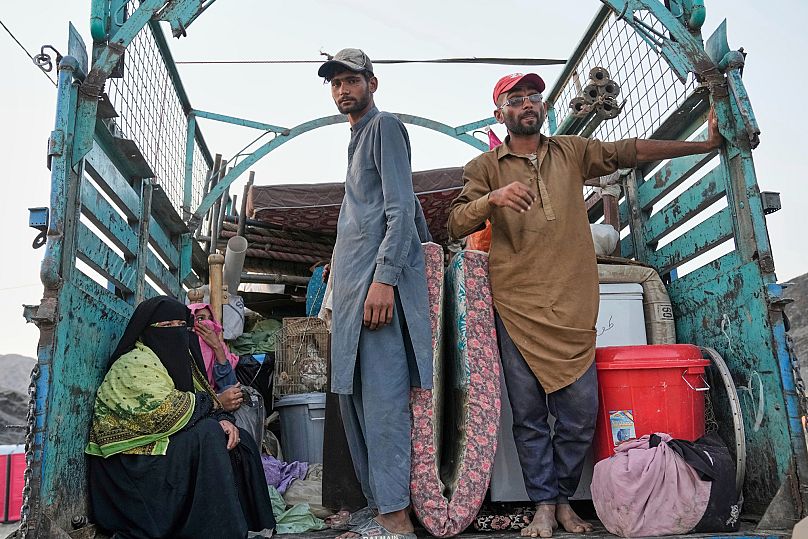
    The Taliban have tortured and threatened Afghan nationals who were forcibly returned from Iran and Pakistan because of their identity or personal history, a UN report said on Thursday.
    Pakistan and Iran are expelling millions of Afghans who they say are living in their countries illegally.

    Afghan authorities have urged nationals to return, pledging amnesty for anyone who left after the Taliban returned to power in 2021.
    But rights groups and the UN have repeatedly warned that some of those returning are at risk of persecution because of their gender, profession or links to the former Western-backed administration.
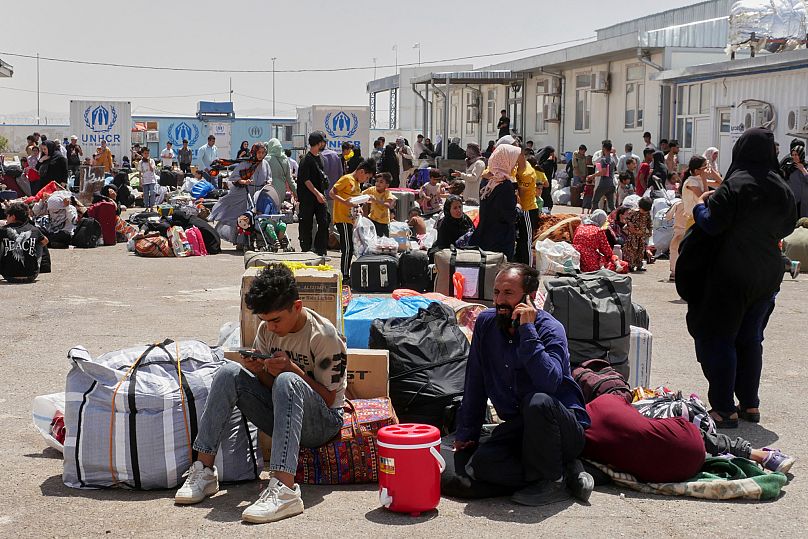
    Thursday’s report from the UN mission in Afghanistan said some people have experienced serious human rights violations, while others have gone into hiding or relocated for fear of Taliban reprisal.Afghan refugees who returned after fleeing Iran to escape deportation gather at a UNHCR facility near the Islam Qala crossing in western Herat province, 20 June, 2025Afghan refugees who returned after fleeing Iran to escape deportation gather at a UNHCR facility near the Islam Qala crossing in western Herat province, 20 June, 2025
    AP Photo

    The violations include torture, ill-treatment, arbitrary arrest and threats to personal security at the hands of the Taliban, according to the report.

    A former government official told the UN mission that, after his return to Afghanistan in 2023, he was detained and severely tortured with sticks and cables. He was waterboarded and subjected to a mock execution.
    A non-binary person said they were beaten severely, including with the back of a gun.
    Volker Türk, the UN high commissioner for human rights, said nobody should be sent back to a country where they face the risk of persecution on account of their identity or personal history.
    This was even more pronounced for Afghan women and girls, who were subjected to a range of measures “amounting to persecution based on their gender alone,” he added.Repatriated Afghan refugees arrive at a camp after crossing the Pakistan-Afghanistan border in Torkham, 31 May, 2025Repatriated Afghan refugees arrive at a camp after crossing the Pakistan-Afghanistan border in Torkham, 31 May, 2025
    AP Photo

    The Taliban have imposed severe restrictions on Afghan girls and women, cutting off access to education beyond the age of 12, most employment and access to many public spaces.
    Responding to the report, Taliban authorities denied mistreating Afghan returnees and rejected allegations of arrest, violence, intimidation or retaliation against people because of their identity or personal history.
    Afghans returning from neighbouring countries were provided with facilities related to documentation, transportation, resettlement, and other legal support, they said, while the Interior Ministry provides a “warm welcome.”
    They called on the UN mission to prevent forced deportations, adding the United Nations as a whole “should not hesitate” in providing basic needs to refugees, such as food, medicine, shelter and education.

    An uncertain future

    Afghans who left their homeland in the millions over the decades are either being pushed out in expulsion campaigns, like those in Iran and Pakistan, or face an uncertain future because of reduced support for refugees.
    On Monday, thousands of Afghans in the US lost protection from deportation after a federal appeals court refused to postpone US President Donald Trump administration’s decision to end their legal status.

    Related

    Germany seeks agreement with Taliban to take back convicted Afghan migrants, interior minister saysUN concerned by Taliban’s arrest of Afghan women and girls for dress code violations

    US Homeland Security officials said in their decision to end the Temporary Protected Status for Afghans that the situation in their home country was getting better.
    But groups helping Afghans with this status say the country is still extremely dangerous.
    The Trump administration’s suspension of a refugee programme in January has left thousands of Afghans stranded, particularly in Pakistan, and a travel ban on Afghans has further diminished their hopes of resettlement in the US.

  • Europe’s Cultural Hotlist: Top Experiences, Sounds, Views, and Shows This Week

    This Week’s Must‑See Beats, Brains, and Bites

    Van Gogh Meets Anselm Kiefer: Art Gets a Throw‑Back Remix

    Picture this: the buttery yellow swirl of The Starry Night rubbing shoulders with the gritty, earthy textures of Necron. That’s the scoop—Van Gogh and Kiefer have joined forces in a first‑of‑its‑kind exhibition that feels like a paint‑pot symphony. If you’ve ever day‑dreamed about seeing a painter’s “Sunflowers” whispering about climate change, this is your ticket.

    Dinosaurs Return in “Jurassic World: Rebirth” (Cloned, Naturally!)

    Hold onto your safari hats—Jurassic World: Rebirth is back in the spotlight with a full‑blast return of cloned dinos. The film’s fresh take on prehistoric charm (and a couple of frantic velociraptors) is set to make family road‑trips extra “thrilling.” It’s the cinematic resurrection we never asked for but probably should have.

    Kesha Goes Rogue: The First Solo Album Under Her Own Label

    Genre‑shufflers, get ready. Kesha just dropped her debut album under her own label, turning the music industry’s script into a personal diary. The soundtrack is a mash‑up of pop, reggae, and a dash of rebellious soul. It’s the perfect reminder that the music road is paved with both autotune and raw authenticity.

    Quick Take‑away List

    • Art lovers—don’t miss the Van Gogh + Kiefer showcase.
    • Movie buffs—grab popcorn for the dino‑heavy blockbuster.
    • Playlist curators—Kesha’s new album is a fresh voice that deserves a spot.

    That’s the lowdown for the week—swipe through the highlights, and let the world’s art, cinema, and music delight open up a window to next‑level vibes. Enjoy the ride!

    Hey there, pop‑culture warriors!

    Glad you’re back to tackle the latest buzz without turning into a “FOMO‑fiend.” Let’s dive right into the week’s must‑know.

    1⃣ Big screen thrill & binge alert

    • Jurassic World: Rebirth – Forget that shaking water glass; it’s just a whole herd of cloned dinosaurs on their way to the theater.
    • Squid Game – Netflix’s ultimate dystopia is streaming its final season. No spoilers, we’re just here for the drama.

    2⃣ Stepping out? Check these out.

    • Paris Exhibition – Dive into the legacy of Art Deco master Paul Poiret.
    • London Showcase – See how Vincent van Gogh inspired the gritty touch of Anselm Kiefer.

    3⃣ Music vibes this week

    • Kesha’s “Period” – The new pop anthem hitting the charts.
    • We’ve already hit the halfway point of 2025, so we’ve rounded up the top albums so far.

    4⃣ What’s next?

    We’ll be dropping film & TV rankings in the coming weeks, so keep an eye out. Drop your favourites in the comments to see how they stack up against yours!

    Until next time…

    Stay cool, keep rocking, and remember — it’s all about being wonderfully rawrsome!

    Exhibitions

    Fashion Is a Celebration: The Legacy of Paul Poiret

    Paul Poiret was the guy who turned dressing up from a snooze‑fest into a party. Born in 1879, he cooked up a style that made every outfit feel like a runway stroll through Versailles.

    His Fashion Philosophy

    • Say Goodbye to Boy‑ish Bureaucracy – He ripped those stiff corsets and long sleeves, freeing women from the stuffy shackles of the 19th century.
    • Men, Take That Theatrics – Poiret insisted men wear shortcuts and straight cuts, calling them “undifferentiated” for the sake of confidence.
    • Celebrate Life, Not Rules – He dubbed his collection “La Mode est une fête” (Fashion is a celebration), and he made sure the ethos felt reflected in every outfit.

    Key Innovations

    • Colourful and Classic – Poiret introduced striking combinations, like exotic prints that made the runway feel like a splash in a blue lagoon.
    • Custom-Made Beauty – Every piece was crafted to fit the wearer, so you couldn’t just wear it, you were it.
    • Actor As Designer – He envisioned designers as directors, with each garment a star that tells a story.

    Why We Still Love Him

    Even after a century, Poiret’s influence lives on. From the modern, relaxed cut, to the bold flair that keeps us all walking, he reminded us that style is more than fabric—it’s a fun, joyful celebration of everyday life.

    Takeaway

    So next time you queue up for a new look, remember that you’re not just dressing up—you’re part of a grand party, and that’s a mess that we’re all happy to get a taste.

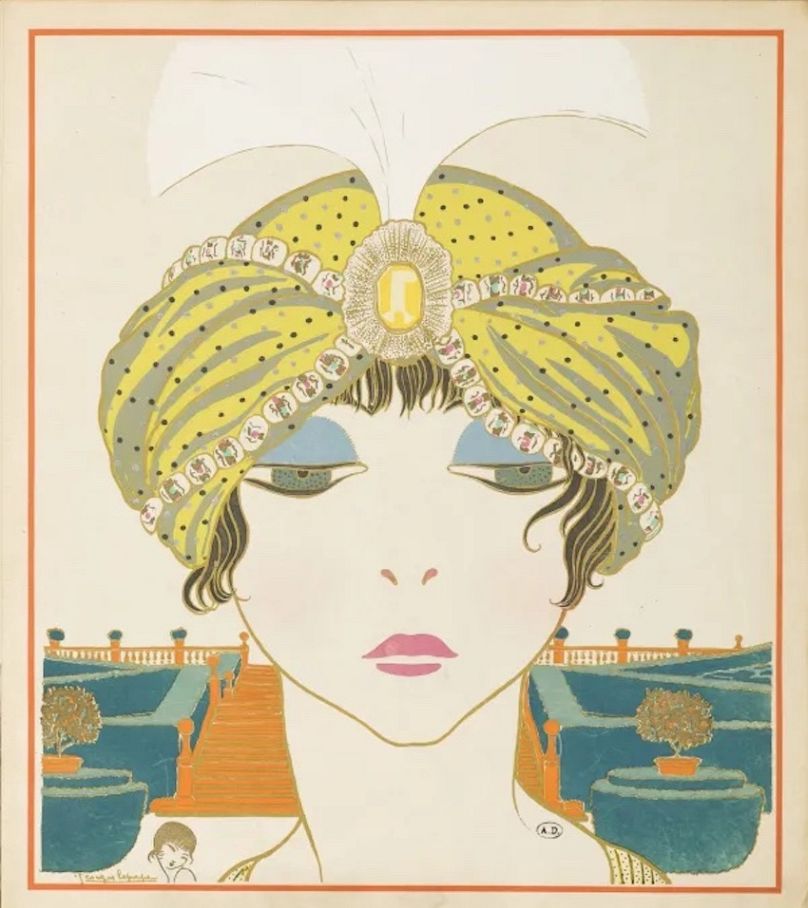
    The Things of Paul Poiret as Seen by Georges Lepape, Paris, Paul Poiret, 1911

    Paul Poiret’s Glittering Wonderland

    Where: the Museum of Decorative Arts in the heart of Paris, France
    When: up until 11 January 2026

    Meet “The King of Fashion”

    Paul Poiret (1879‑1934) wasn’t just a designer who fluffed up the silhouette of society; he was the original trend‑setter for the Art Deco era. Think of him as the Guy Fieri of couture – with a dash of perfume, a sprinkling of haute cuisine, and a pinch of exclusive soirées. He turned every outfit into a lifestyle, a drama, a party in itself.

    The Exhibition Journey

    • All‑star lineup: 550 pieces of Poiret’s genius on display, from bolts of silk to scent‑filled vials.
    • Each work doubles as a time machine: a peek into a whirlwind in which style met substance.
    • Visitors to the Musée des Arts décoratifs can wander through a room full of brilliance – and maybe get a sense of how chic 1910s Paris was.
    Why It Matters

    Poiret didn’t just make clothes; he rewrote the meaning of living flamboyantly. His ideas about the intermingling of art, perfume, gastronomy, and celebrations sparked a cultural shift that still echoes through runway displays and fashion houses today. The exhibition serves as a testament to his lasting hype‑factor – a living museum of his legacy that invites us to live a bit more extravagant.

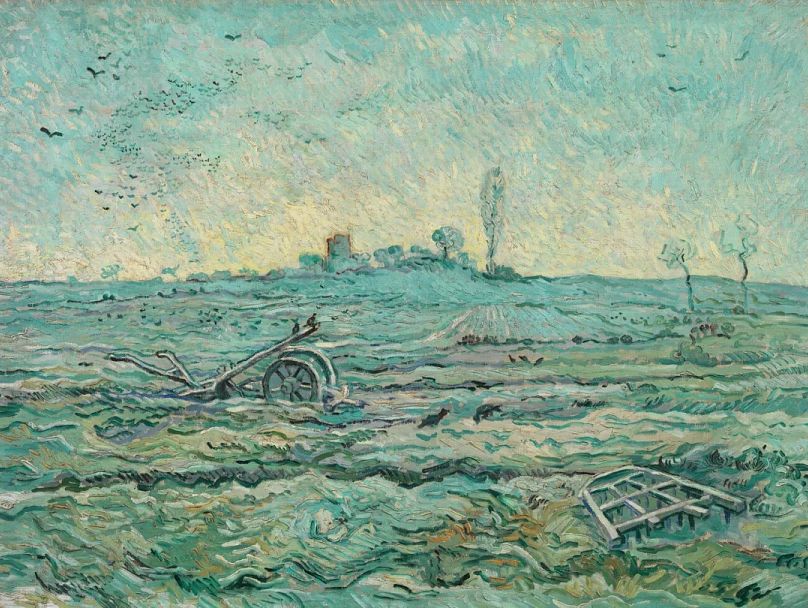
    'Snow-Covered Field with a Harrow' by Vincent van Gogh.

    Van Gogh Meets Anselm Kiefer: Art‑Alchemy at the Royal Academy

    Set your calendars: the Royal Academy in London will be the hub of a mesmerizing art swap until 2 October 2025.

    Why This Combo Feels Like a Cosmic Hang‑Out

    • Van Gogh’s “Snow‑Covered Field with a Harrow”—the iconic, heli­light‑streaked canvas that keeps folks swooning.
    • Meet Anselm Kiefer, the German paint‑slinger who’s been doodling his soul for nearly sixty years.
    • Turn over the page of art history and Kiefer’s teenage obsession with the old Dutch master is revealed.

    Picture this: a young Kiefer, eyes wide, tipping over a tube of Van Gogh yellow, dreaming of fields far beyond his sleek German landscapes. Decades later, their worlds collide on a gallery floor, choreographing a duet between master and modern.

    What You’ll See (And Why It’s Genuinely Inspiring)

    • Van Gogh’s bright, lyrical brushwork sandwiched beside Kiefer’s dense, earthy textures.
    • Feel the warmth of “Sunflowers” next to the raw, almost volcanic dread of Kiefer.
    • Witness how the past reverberates into the present, creating something that’s both nostalgic and startlingly fresh.

    Bonus: A Spicy Add‑On at the Courtauld Institute

    The Abstract Erotic showcase to the left of the main exhibition features:

    • Louise Bourgeois—silken webs of desire.
    • Eva Hesse—minimalist curves that hug the edge of the unknown.
    • Alice Adams—bold, unapologetic power in the form of bold strokes.

    Pair that with the Van Gogh/Kiefer festival, you’ve got a full-on, mind‑bending art fiesta.

    Bring your friends, your followers, or just your imagination, and dive into a day where two giants of painting swap brushes, backstories, and the creative sparks that keep the world turning.

    Movies

    Jurassic World: Rebirth – The Next Dinosaur Adventure

    When & Where

    Release Date: 4 July 2024
    Location: European cinemas, everywhere you can catch a blockbuster.

    Plot in a Nutshell

    It’s five years after the wild events of Jurassic World: Dominion. Only the hardiest prehistoric beasts are left on a forbidden island – a perfect spot for a pharma company’s hush‑hush scheme. They’re hoping to grab the DNA of these creatures to create a life‑saving drug. Enter Zora Bennett (Scarlett Johansson), a covert‑ops maestro who can snag a team of scientists to dive deep into this secret mission.

    Everything goes sideways when a stranded family drops by. Suddenly, familiar Jell‑O‑eated chaos (yes, the dinosaurs go wild again) starts its charge. The film’s directed by Gareth Edwards, the mind behind The Creator and Rogue One: A Star Wars Story, and it features a heart‑stopping CGI T‑rex of epic proportions.

    Key Players

    • Scarlett Johansson – Zora Bennett, the boss in the shadows
    • Jonathan Bailey – The resourceful field scientist
    • Mahershala Ali – The go‑to tech wizard
    • Epic CG creatures – The T‑rex, other dinos, and a host of surprises

    Bonus Highlight

    Don’t miss Reflection in a Dead Diamond, now streaming in France. It’s another thrilling addition to our rowdy dinosaur universe.

    TV series

    Squid Game – Season 3 is Finally Here!

    Where? Netflix

    When? Out Now

    It’s a bit of a party until a gigantic mechanical doll—think your oversized stuffed animal with creepy, motion‑sensitive death eyes—drops in. Yeah, it’s been six months (and probably a mind‑bending span of reality TV time) since we watched Young‑hee’s skin‑chilling antics in Season 2. The hype clock has ticked, and the world is ready to jump back into those cliff‑hanger games… with a new twist.

    We’re picking up right where we left off: Seong Gi‑hun (the legend behind player 456) is out for retribution. He’s got a vendetta against the shadowy Front Man, whose slick corporate façade and cunning surprises last season put a lid on his plans. Now, the front guy’s got a fresh scoop—an ominous robotic doppelgänger that’s going to test no one’s survival skills.

    • Same brutal logic, new stakes: the games are more insane than ever.
    • Mechanical menace: nothing feels more haunting than a life‑size doll that’s ready to crunch numbers and brains.
    • Mystery deepens: who’s truly behind the curtain, and why the front man keeps outsmarting our hero?
    • Bonus highlight: that iconic bear logo is back—some lizards even call it the “Bear” for good measure.

    So gear up for another round of heart‑pounding drama—this time with gadgets that could probably out‑smart you in a board‑game session alone. The question remains: will Gi‑hun finally dismantle the sinister organization, or will the mechanical doll add another layer of doom? Grab your popcorn, because you’re about to find out.

    Music

    Kesha Returns: Her Own Liberation Album

    On July 4th, the pop legend re‑sounded the world—this time on her own terms. After a headline‑sprinting battle with former producer Dr. Luke, Kesha is dropping her debut record under her freshly launched independent label.

    What Changed?

    • Voice control – She’s the sole author of her melody.
    • Likeness ownership – Every visual is now 100% hers.
    • Mind & body freedom – No more imposed expectations.
    • Spiritual reset – The energy is raw, unfiltered.

    Feel the Bratty Energy

    The album pulses with a bold, unapologetic vibe—like a pop anthem screaming, “This is my life, my rules. Period.” Fans can expect a DIY swagger that turns every track into a rebellious celebration.

    Bonus Highlight: Lorde’s “Virgin”

    Alongside Kesha’s powerhouse release, Lorde’s “Virgin” adds a fresh angle, hinting at a new wave of fearless pop for 2025.

  • Europe partly to blame for Iran-Israel conflict, Iran's UN ambassador tells Euronews

    Europe partly to blame for Iran-Israel conflict, Iran's UN ambassador tells Euronews

    In an interview with Euronews, Ali Bahreini said the diplomacy does still have a chance if Israel stops its strikes but also warned that Iran would target the United States if it chooses to come into the conflict.

    ADVERTISEMENT

    “We believe that the minimum thing Europeans can do is to very explicitly condemn Israel and stop their support for Israel,” Iran’s ambassador and permanent representative to the United Nations in Geneva Ali Bahreini said in an interview for Euronews.
    Bahreini said Europe’s reluctance to condemn Israel’s aggression and its inability to keep the nuclear deal (JCPOA) afloat have all contributed to the current intensifying hostilities between Iran and Israel, now in their seventh day.

    “The impunity which has been given to Israel is something which encourages that entity to continue committing new crimes. And this impunity is because of inaction by Europeans. By the United States and the Security Council,” Bahreini explained.
    “We request and we ask Europe to push Israel to stop the aggression. Europe should play its responsibility to put an end to the impunity that Israel is enjoying. Europe should stop helping or assisting Israel financially, militarily, or by intelligence. And Europe should play a strong role in explaining for the United States and for Israel that Iranian nuclear technology is not something which they can destroy.”
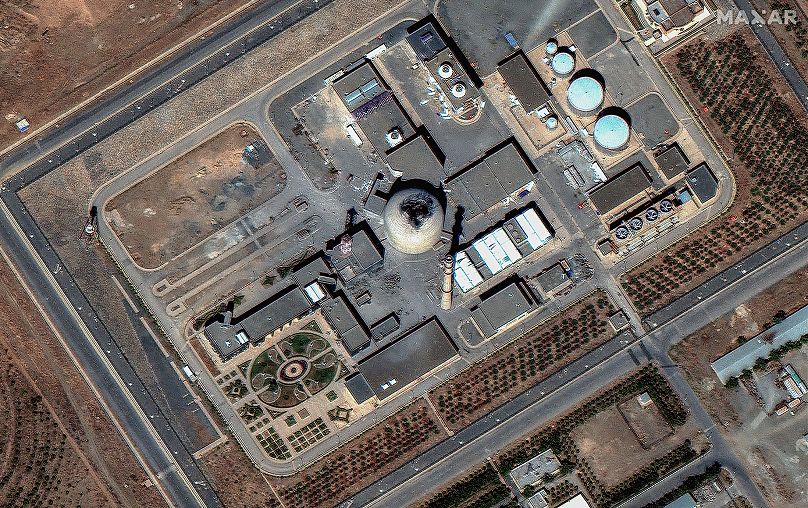
    Bahreini said that what he called Europe’s “failures” would be presented to the foreign ministers of France, Germany and the United Kingdom – known collectively as the E3 – at talks in Geneva on Friday.This satellite image provided by Maxar shows Iran's Arak heavy water reactor building after Israel launched air strikes on the reactor, 18 June, 2025This satellite image provided by Maxar shows Iran’s Arak heavy water reactor building after Israel launched air strikes on the reactor, 18 June, 2025
    AP Photo

    They are meeting in Switzerland to discuss Iran’s nuclear programme, which is at the heart of the current conflict with Israel.

    Iran was previously subject to an international nuclear deal known as the Joint Comprehensive Plan of Action (JCPOA), which saw the country receive sanctions relief in exchange for strict limits on its nuclear activities.
    During his first term in office, President Donald Trump withdrew the US from the pact in 2018, slamming it as “the worst deal ever negotiated” and slapping new sanctions on Iran.
    Since then, the other signatories to the deal have scrambled to keep Iran in compliance, but Tehran considers the deal void and has continued with uranium enrichment, which at current levels sits at 60%.
    That’s still technically below the weapons-grade levels of 90%, but still far above the 3.67% permitted under the JCPOA.

    Iran maintains that its nuclear programme is peaceful and purely for civilian purposes. Israel, on the other hand, says Tehran is working towards the construction of a nuclear weapon, which could be used against Israel.
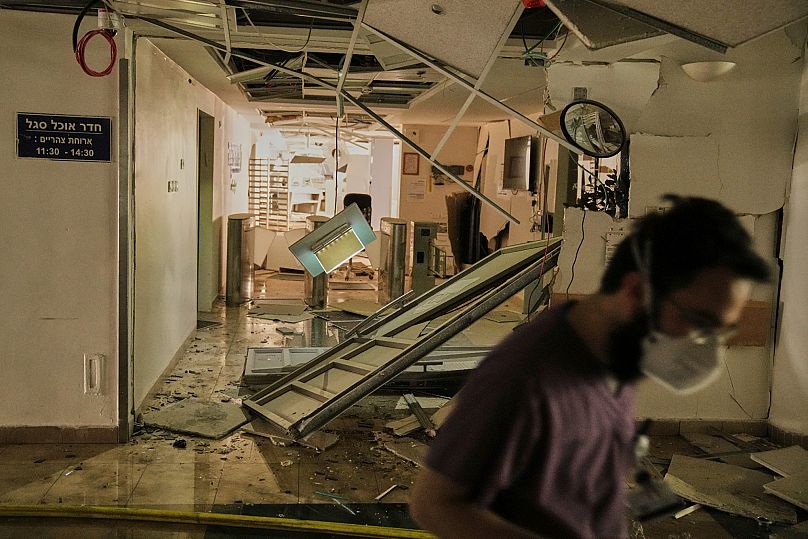
    Bahreini told Euronews that there is still a window for diplomacy to reach a new nuclear deal, but first, the fighting with Israel has to stop.A medical staffer walks in a damaged area of the Soroka hospital complex in Beersheba in Israel, 19 June, 2025A medical staffer walks in a damaged area of the Soroka hospital complex in Beersheba in Israel, 19 June, 2025
    AP Photo

    “For our people and for our country, now the first priority is to stop aggression, to stop attacks,” he told Euronews.
    “I personally cannot imagine there would be a strong probability at the moment for a kind of diplomatic idea or initiative because for us it would be inappropriate if we think or talk at the moment about anything rather than stopping the aggressors,” Bahreini pointed out.
    Parallel to the daily exchanges of missile and drone strikes that have taken place since last Friday, the conflict has also led to an escalating war of words, particularly between Trump and some senior figures in Iran.
    When asked by reporters on Wednesday whether he intended to bring the US military into the conflict to strike Iran alongside Israel, Trump said, “I may do it, I may not do it. Nobody knows what I’m going to do.”
    While Trump appeared to avoid a direct commitment to military action, Israel’s Prime Minister Benjamin Netanyahu interpreted his comments as a show of support and, in a television address later on Wednesday evening, thanked Trump for “standing by us”.
    Into that mix came Iran’s mission to the United Nations, which said no officials from the country would “grovel at the gates of the White House” to reach a nuclear deal with the United States.
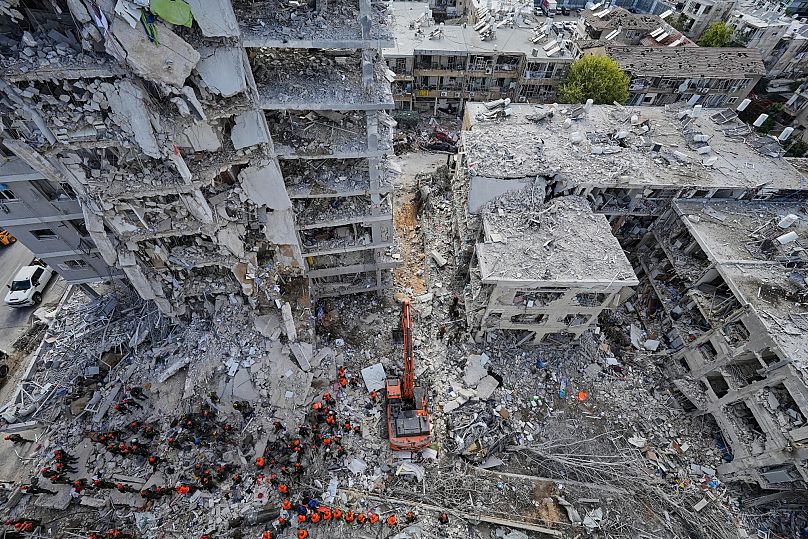
    Bahreini said it was clear to him that “the United States has been complicit to what Israel is doing now.”Israeli soldiers search through the rubble of residential buildings destroyed by an Iranian missile strike in Bat Yam, 15 June, 2025Israeli soldiers search through the rubble of residential buildings destroyed by an Iranian missile strike in Bat Yam, 15 June, 2025
    AP Photo

    Strikes on the United States

    He said Iran would respond very firmly if the United States “crosses the red lines” and said that strikes on the country had not been ruled out.
    “Our military forces are monitoring the situation. It is their domain to decide how to react,” he said.
    “What can I tell you for sure is that our military forces have a strong dominance on the situation, they have a very precise assessment and calculation about the movements of the United States. And they know where the United States should be attacked,” Bahreini warned.
    Bahreini also said that Iran has not requested any international support and is protecting itself independently.
    Iran funds a string of militant groups around the region, including Hamas in Gaza, Hezbollah in Lebanon, and the Houthis in Yemen, and while they all have different aims and objectives, often the ideology that binds them is their anti-Israel position.

    Related

    Iran is also a threat to Europe, Israel’s EU and NATO ambassador tells EuronewsEU to influence Iran nuclear talks from sidelines in Geneva

    When fighting with Israel broke out last week, there were concerns that Iran might demand these groups step up and fight alongside it, in return for the funding and training they have received from Tehran.
    So far, that has not happened.  
    “At this stage, we are confident that we can defeat Israel independently and we can stop aggression without needing any request of help by anybody,” Bahreini explained.
    “I personally believe that Israel is not an entity with which somebody can negotiate. The thing we have to do is to stop aggression, and we have to show Israel that it is not able to cross the red lines against Iran.”
    “Israel is accustomed to committing crimes, and we think that we have stop it somewhere. We have to tell Israel that there is a red line,” he concluded.

  • Celebrating 80 Years: Fans Gather in Finland to Honor the Legendary Moomins

    Celebrating the Classic Moomins: a 40‑Year Birthday Bash

    After eight decades of whiskering off into our hearts, the Moomins still stand as Finland’s literary superstar. Picture this: fans of all ages, from grandparents to toddlers with a need for hug‑worthy creatures, flocked to the official Moomin Museum to celebrate the sheer magic they’ve brought into our lives.

    What Makes the Moomins Irresistible?

    • They’re timeless—no matter how old you are, the gentle mischief of Little My never wears off.
    • They’re a family affair—stories that sorted out the drama between parents and kids while teaching lessons with a side of giggles.
    • They’re visually charming—the artist’s quirky linework turns a simple picture book into a clickable adventure.

    Why the Museum Is a Must‑Visit

    Heading indoors isn’t just about checking out exhibits; it’s about stepping into a living, breathing Moomintown. Visitors can:

    • Take a photo with the giant Humpy’s plush official plush, perfect for the ‘Gram.
    • Walk through the interactive Moominhouse tech installation.
    • Sample the berkelian Pinched Whelps cookies that’ve made the Moomins a culinary legend.

    The Heartbeats of Finland’s Own

    With every laugh, tear, and shared story, the Moomins prove that the best literary exports are the ones that turn ordinary days into a fairy‑tale adventure. Whether you’re a lifelong fan or just discovering them, the Moomin Museum keeps the charm alive—exactly how it should.”

    80 Years Later, the Moomins Still Charm the World

    It’s their birthday party, and Finland’s favourite fairy‑tale family is throwing a bash in Tampere, the only city that can brag about hosting the world’s sole Moomin Museum. The hippo‑shaped, eternally cheerful characters created by Tove Jansson have been winning readers since 1945, when their first adventure, The Moomins and the Great Flood, introduced the curious little Moomintroll and his doting Moominmamma to the world.

    How the Moomins Became a Global Phenomenon

    • Eight Books: From the original tales to modern re‑interpretations, each page is a journey through Moominvalley.
    • TV Shows: From the animated classics to clever new shows, the Moomins keep entertaining generations.
    • Two Theme Parks: Visitors can live out their love of the Moomins in parks that let them step inside the stories.
    • Countless Mugs: Coffee lovers never have to miss the Moomins, thanks to mugs that bear their unmistakable smile.

    So whether you’re a lifelong fan or a newcomer just discovering the Moomins’ vibe, this 80th‑anniversary celebration is a heart‑warming reminder that these lovable hippopotamus‑like characters are still holding our attention—and our mugs—full to the brim. Celebrate along with them in Tampere, and let the magic of Moominvalley touch your heart just once again.
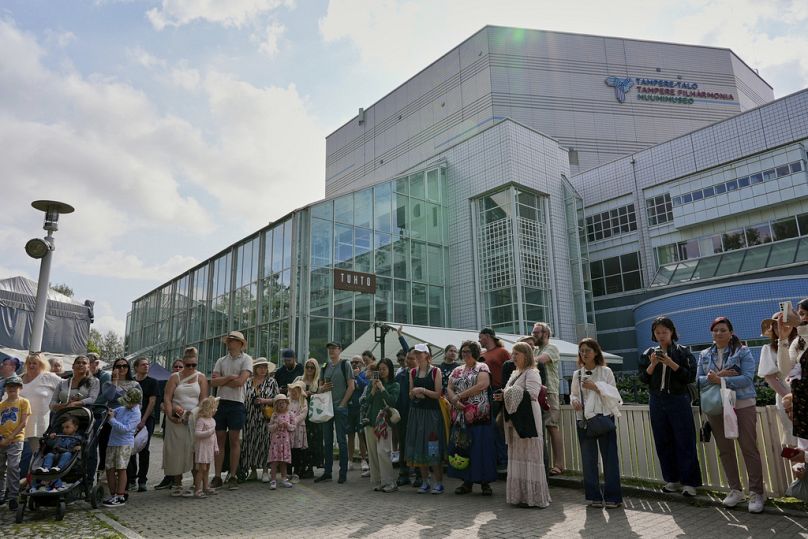
    Fans celebrated the 80th anniversary of  "The Moomins and The Great Flood" and the birthday of the author Tove Jansson.

    Celebrating 80 Years of the Moomins and a Birthday Bash

    Fans marked two special events over the weekend: the 80th anniversary of The Moomins and the Great Flood and the birthday of the legendary author Tove Jansson. It wasn’t just a dry, calendar‑marking affair for everyone; for some, it felt like a homecoming.

    Rosa Senn’s Moomin Milestone

    Rosa Senn and her wife Lizzie trekked across the sea from the UK for this jubilation. “It felt like I was back in a place I’d left behind,” Rosa confided. The journey was more than a trip; it was a full‑circle moment in their love story.

    Moomins – A Lifelong Hug

    • When Rosa was a kid, her Norwegian mother read Moomin tales over breakfast, setting the tone for a lifelong affection.
    • During the early days of their long‑distance romance, a little Moomintroll plush acted as the perfect wingman – not just keeping them cute but also bridging the miles.
    • They even let that same plush be the ring‑bearer at their wedding, because why not?
    Social Media Fame for a Couple

    Rosa and Lizzie run a dedicated Instagram account where they document all things Moomin, from book‑reading sessions to quirky Moomin‑style décor. Their pictures have turned them into minor fable‑stars in the fandom. They’ve even crossed paths with other Moomin fans, including Stefanie and Michael Geutebrück from Germany, whose apartment is a living Moomin shop, according to Stefanie.

    So, while the world celebrated the anniversary of a beloved children’s book, Rosa and many others celebrated that these stories didn’t just sit on shelves—they lived in hearts, homes, and wedding rings.
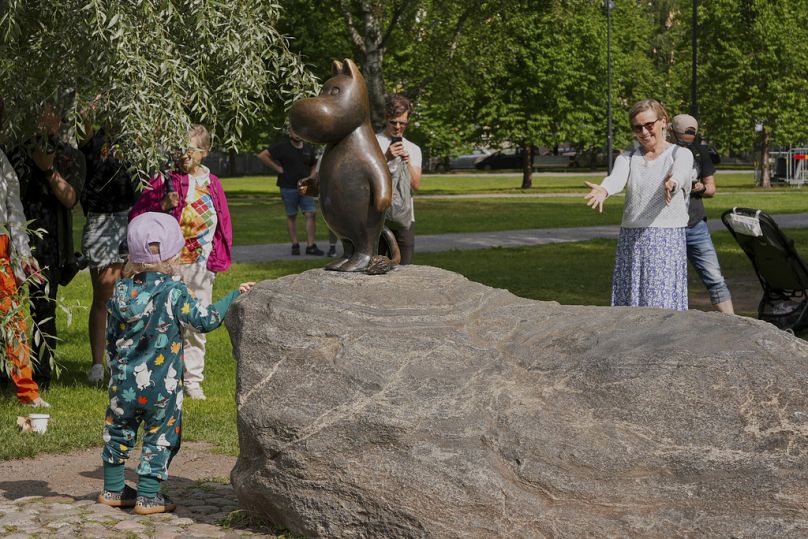
    'The Moomins and the Great Flood' was Tove Jansson's first Moomin story, published in 1945.

    The Moomins: From 1945‑Era Pages to Mega‑Cool Merch

    Did you know that “The Moomins and the Great Flood” was the very first Moomin story Tove Jansson wrote back in 1945? Tommi Ojala, in his 2025 AP writeup, reminds us that the original tale still lives on.

    Moomin Merch: More Than Just Cute Characters

    People aren’t just nibbling on nostalgic memories; they’re buying mugs, plushies, stationery, and even the ultra‑rare collectibles that make collectors sweat. According to Selma Green, the director of the Moomin Museum: “The Moomin mug is one of the best‑known collector items worldwide.
    That’s a short‑stop nod to the timeless appeal of these fuzzy little folks.

    Behind the Cuddles: Jansson’s Post‑War Treasure

    • After World War II, Tove Jansson wove love, resilience, and safety into each page.
    • She didn’t shy away from the darker side of life; her stories balanced hope with realism.
    • In the turbulent era of Finland’s recovery, the Moomins became a comforting blanket, a balm for a nation still healing.
    Why the Moomins Still Matter

    Modern fans feel a palpable connection to the characters, which is why the Moomin brand never stops evolving. Whether you’re scrolling through Instagram posts or grabbing the latest limited‑edition pendant, there’s always a new way to say “I’m a fan.”

    The Moral of the Story

    Tove Jansson didn’t just slip in sweetness; she added a twist of courage. The Moomins remind us that even after the biggest floods or the gravest storms, there’s always a path back to safety—maybe paved with a comfy mug and a warm hug.
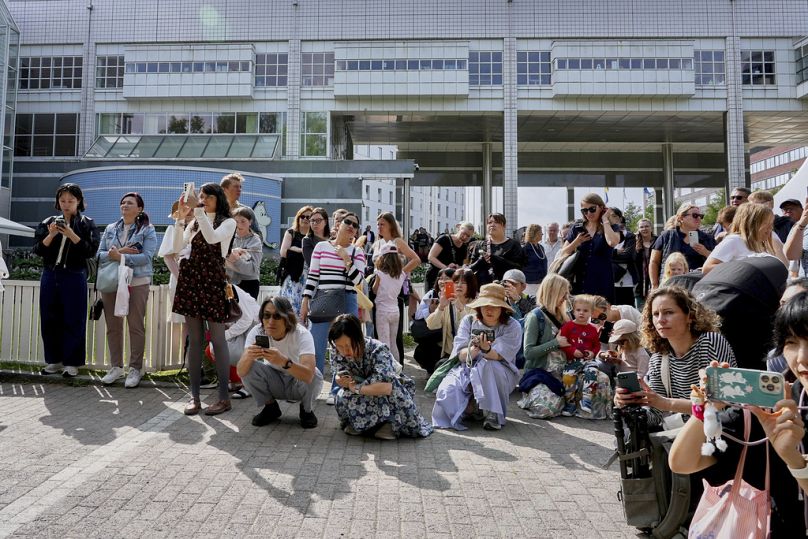
    Fans travelled from far and wide for the celebration.

    Fans Trek from Every Corner for the Moomin Fest

    Epic journey alert: People crossed oceans, traversed deserts, and even climbed a few mountains just to attend the biggest celebration of the beloved Moomin world. Tommi Ojala, 2025 The AP, captures the vibe—fans wandering, laughing, and swearing their stop‑over at the last crumb of popcorn.

    Why Moomins Still Bring the Crowd

    • It’s nostalgia. The first Moomin book dropped during a “dark era.” Imagine trying to paint in the grim days of early 20th‑century Finland—challenging, no joke.
    • Grief turned magic. Faced with a hard palette, Tove Jansson penned a fairy tale instead, creating a world where friendship shines brighter than any studio light.
    • Contrast lovers unite. Tove adored contrast: the bleak past vs. the bright, love‑filled Moominvalley. Where else do you get a queen turning a gloomy chapter into a holographic love story?

    Personal Touches in the Pages

    Jansson’s own life spills into her stories, almost like a secret café conversation. Her long‑time partner, the talented Dutch artist Tuulikki Pietilä, got a starring role as “Too‑ticky,” the no‑nonsense, practical hero.

    The Quietly Radical Moominvalley
    • Queer themes? Check. Smooth assortments of gender fluidity mingle in full combust.
    • Whimsy meets activism. Moominvalley keeps the heart from turning cold—yet it quietly flips the script on everyday norms.
    Takeaway

    For a fan who’s tired of the same old yarn, Moomins offer a new epic—one that turns difficult intrusions into charming tales, and allows your hearts to spin like a turban blow‑through. The celebration? A journey that merges personal tribute, environmental positivity, and a healthy dose of sweet irony.
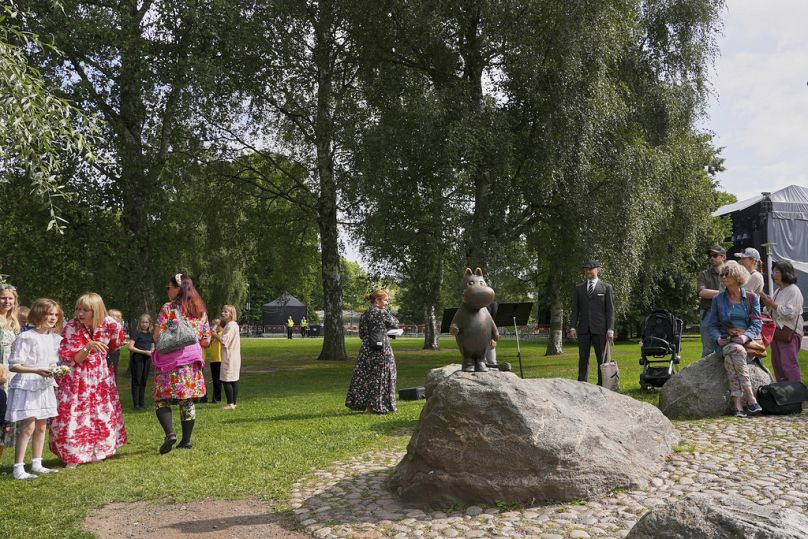
    There is a strong community of Moomin fans, many of whom travelled to Tampere for the anniversary celebration.

    June’s Moomin Milestone and a Mural Mishap

    “It feels like a family reunion” was the buzz among Moomin lovers who packed their bags and headed over to Tampere to celebrate the beloved characters’ 80th birthday. The city buzzed with toy‑like enthusiasm, luring fans from all corners of the globe.

    Who’s Who at the Celebration

    • A sea of bright scarves and oversized sweaters fluted in the streets.
    • Local cafés playing Moomin tunes for the crowd.
    • Treasure‑hunters digging for fresh prints and exclusive merch.

    Nevertheless, even fans who’re practically born with one of the floating crypt shapes can’t escape the lingering modern debate that’s surfaced this summer.

    The “Stinky” Controversy

    In New York City, an artist who had kindly painted an enormous mural of the mischievous, fuzzy Stinky was forced to temporarily shred up the piece. The reason? On the surface, people were worried Stinky’s design could be seen as a caricature that resembled a stereotype that hurts certain communities. The mural in Manhattan mysteriously vanished, leaving a small, quiet void in its place.

    “It surprised me, big time,” said director Happonen. “I’d always pictured Stinky as a kindhearted mole, or maybe just a vol‑like creature full of mischief.” He reiterated that no offense was intended, but the creative choice had been reviewed thoroughly.

    Why the Fans Keep Dancing

    The core of the Moomin fan base isn’t about a particular character or a single mural; it’s about a joyous, mischievous community that shares a sense of wonder. Even as your favorite funflower encounters some bureaucratic roller‑coasters, the collective heart remains unbroken. The march to 80 years of Mikko Niksi the Mile‑Home™ stays as vibrant as ever.

    When it comes down to it, the fans remain unfazed: “It’s all about the moment,” says an enthusiastic supporter in the crowd. “We’re happy to gather, to dance around the old legends, to talk about our little creatures – all that keeps us alive, there is no mention of anything that could crash it.”

    Hence, the Moomins are making memories in Tampere, climbing a new year of fondness, and regardless of the occasional debate tryst, the community’s light keeps glowing brighter.
  • Why Slovenia Stands Out as The Only EU Nation Cutting The Israeli Arms Trade

    Slovenia Throws a Shut‑Down on Arms to Israel

    billion-dollar deals? No thank you. Slovenia’s government has officially banned the export, import, and transit of military gear to and from Israel. This move marks a sharp turn from the usual European “arms‑for‑peace” rhetoric.

    What the Ban Means

    • Export of tanks, drones, and any military equipment to Israel is off the table.
    • All imports of military tech from Israel suddenly get a hard pass.
    • Transit: vehicles and shipments can’t cross Slovenia carrying any weaponry destined for Israel.

    Other European Players Taper Off Tricks

    While Slovenia goes all in on a hard stop, neighbors are dialing the volume down a notch rather than hitting the full silence. Germany, France, and the UK are all cutting back on the sale of new weapons to Israel, leaving the market limping rather than stopping altogether.

    Why It Matters

    With the gibe the region keeps escalating, the ban is a bold statement about Slovenia’s stance on the regional conflict. It’s a clear message: we’re not part of the arms race chapter today. But the rest of Europe is still pacing—turning a few keys, but not leaving the doors unlocked.

    Feel the Vibes

    If you’re prying no more on the battlefield, Slovenia says it’s a good time for other nations to match the tone, keep the conversation alive, and maybe pop a… nono—a craft beer to toast the new peace contract? Or maybe just a beer—internal ones.

    Slovenia’s Bold Move: Cutting All Arms Ties with Israel

    When the EU feels like a traffic jam stuck in a slow lane, Slovenia decided to get out of the car and point a ruler at the highway. On Thursday, it became the first European nation to drag the brakes on every kind of weapons trade with Israel—a total stop, from transit to imports. Sounds dramatic? It’s all about pressuring the world to stop a horrible war in Gaza.

    What’s the Backstory?

    • People are terrified in Gaza. The humanitarian mess is real.
    • The EU is stuck in a debate that feels like a tangled spaghetti of opinions.
    • Slovenia wasted no time: no arms export permits for Israel since the conflict started in October 2023.

    Official Statements

    “All measures are on the table,” said Tanja Fajon, Slovenia’s Foreign Minister, in Brussels on July 15. She’s pointing at:

    1. Suspension of the accession agreement with Israel.
    2. Trade sanctions.
    3. An arms embargo.
    4. Sanctions on certain settlers, ministers, and the Israeli government that’s “backing violence.”

    “We need to do this quickly until there’s a ceasefire, until the violence stops, and until the two sides actually find a solution,” she added, sounding like a call to action at a winter party—except the party is about ending war.

    Why Does It Matter?

    This isn’t just a bureaucratic slap on a policy paper. Slovenia’s statement is a shockwave hoping to make Israel mince. Think of it as a weighted toy car rolling down a slope: the sum of small pushes (sanctions, embargoes, halted agreements) can cause a big shift in the road’s direction. Slovenia’s aim? To fly an SOS flag high enough that the EU can’t ignore the humanitarian crying from Gaza.

    Humorous Side Note

    At a press conference, a spokesperson joked, “If you think our economy would survive a major weapons embargo, we’re still in business selling salads. The political bravery, though—like a lion in a paper coat—is not something you see every day.”

    With this bold stand, Slovenia shows that a single country can decide to walk in a different lane, hoping to inspire the rest of Europe to take the same road—or at least give it a thought.

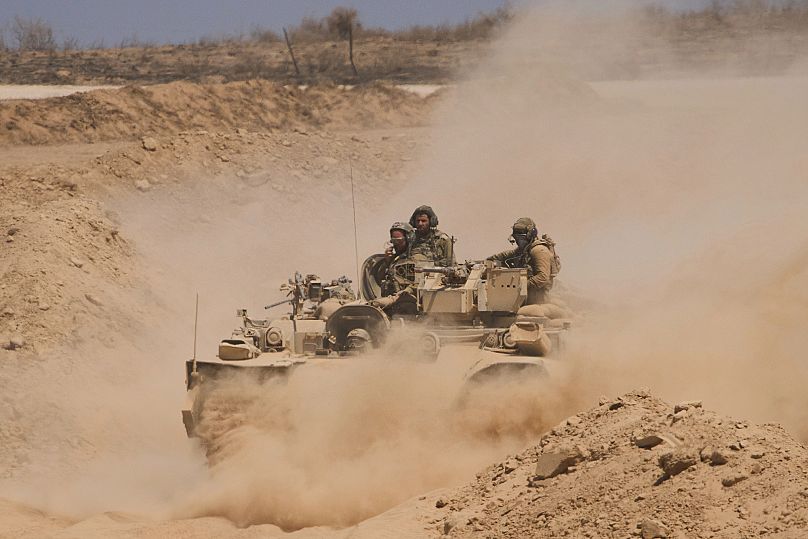
    Israeli soldiers drive on their armoured personnel carrier back from inside the northern Gaza Strip into southern Israel, 29 July, 2025

    Picture‑Perfect Journey: From Gaza to the Heart of Israel

    On September 29th, 2025, a convoy of Israeli soldiers loaded onto an armoured personnel carrier (APC) made a strategic hop from the northern Gaza Strip all the way back into southern Israel.

    What the photo shows

    • Intrepid soldiers in full gear, riding the tough‑denied terrain.
    • The APC—rock‑solid, no‑frills, and ready to roll through any rough patch.
    • A clear line of sight: the desert landscape stretching from Gaza to the southern front.

    Why it matters

    This snapshot captures a crucial moment in the military choreography, reminding everyone that moving from conflict zones back to secured territories is both a tactical necessity and an almost cinematic feat.

    Falling sales

    European Nations Tighten Their Grip on Arms Sales to Israel

    While countries like Belgium, Italy and the Netherlands haven’t gone as far as Slovenia in cutting off weapons flow to Israel, they’ve still taken meaningful steps to curb the trade.

    Country‑by‑Country Snapshot

    • Belgium: After the 2008‑2009 Gaza war, Belgium officially banned all arms exports to Israel. It’s a pretty firm stance that’s been on the books for years now.
    • Netherlands: The Court of Appeal in The Hague blocked a deal in February 2024 that would have shipped F‑35 spare parts to Israel. A court win that keeps the Dutch flag higher when it comes to weapon exports.
    • Italy: Though less dramatic, Italy’s restrictions reflect a broader European push to limit arms going to the region.

    The Legal Framework That Keeps the Knuckles Locked Down

    Two big international agreements give us a clear blueprint:

    1. 2013 Arms Trade Treaty – says you can’t transfer weapons that will be used to commit genocide or crimes against humanity. It’s a moral & legal red line.
    2. 2008 EU Covenant – commits European states to refuse tech and gear that could help extend armed conflicts. Think of it as a “no‑Gaza‑spare parts” guarantee.
    On the Floor – A Quick Audio‑Clip from a European Think‑Tank

    Samuel Longuet (researcher, GRIP) told Euronews that European governments have a duty not just to block any gear that could fuel crimes, but also to thwart the tools that underpin Israel’s occupation of Palestinian territories. “When you look at it, it’s almost the entire arsenal the Israeli army might use,” he explained.

    Bottom Line – It’s a Whole‑New Reality for European Arms Exporters

    Across the board, European states are tightening their export cabinets, ensuring that weapons no longer serve as a silent accomplice in conflicts where international law is bent to the point of rawer complexity.

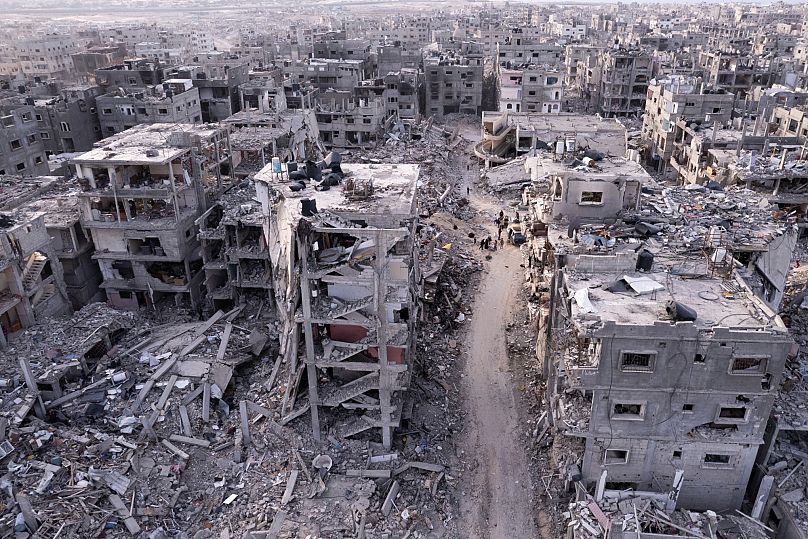
    An aerial photograph taken by a drone shows the destruction caused by the Israeli air and ground offensive in Rafah, 24 January, 2025

    Rafah Aftermath: A Drone’s Survival Story

    On the morning of 24 January 2025, a tiny, agile drone buzzed over the chaotic streets of Rafah, capturing the eye‑poking devastation that followed the combined air and ground assault. The photo, snapped by an all‑seeing aerial eye, gives a haunting snapshot of broken buildings, smoldering rubble, and the eerie quiet that lingers after the thunder of war.

    What the Lens Sees

    • Destroyed structures – once‑proud homes now look like card‑board forts.
    • Streaks of smoke – a hint of hope that fire has long since lost its rhyme.
    • Silent corners – empty streets that buzz only with the wind.

    Behind the Scene

    While the drone did its job, the townsfolk whisper that the real photographer is destiny, scribbling stories in dust and ash. AP Photo captured this dramatic moment, reminding us that every headline has a backdrop of human resilience.

    Continued exports

    European Arms Glow-up Continues

    In a twist that feels like a plot from a geopolitical sitcom, Europe keeps shipping military gear to Israel—and it’s a rollercoaster.

    Breaking the Curtain: Where Are These Parts Going?

    • Some nations claim the parts are merely assembled in Israel or used for flight training, not for combat in Gaza. It’s like saying the recipe is for soup when it’s actually for steak.
    • Italian human‑rights NGOs and investigative journalists have unearthed a secret overtime—the Italian government halted new export licenses, but all pre‑10/7 shipments keep rolling into Israel.
    • In particular, they’re shipping training aircraft parts—the kind of bits that look great on a plane but could become weapons if someone gets, well, creative.

    The Dual‑Use Dilemma

    When a gadget can be used as a toaster and a turbine, it’s safe to say it’s a dual‑use tango. The line blurs between “civilian” and “military,” and that’s a slippery slope for international relations.

    Why It Matters

    Even if you think it’s harmless, the potential misuse of dual‑use tech is a ticking bomb. It’s a reminder that geopolitical decisions aren’t just paper‑trail headaches—they’re real‑world realities.

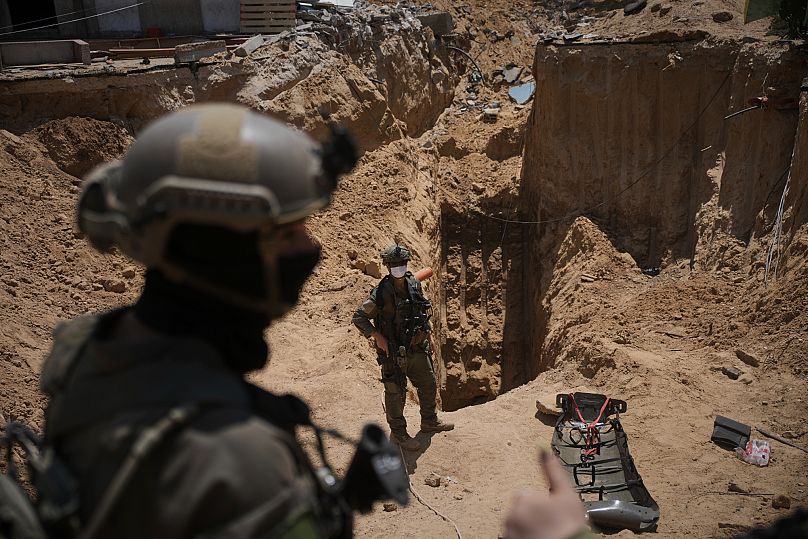
    Israeli soldiers stand next to an entrance of a tunnel under the European Hospital in Khan Younis in southern Gaza, 8 June, 2025

    Belgium’s “Screen‑Swap” Sparks a Scrutiny Storm

    Picture this: a little Belgian factory hand‑crafting glossy panels that, a few months ago, slipped into Israeli drone control cabins—and later, helped fire a humanitarian convoy. In March 2023, the Flemish government sighed, “It’s just a generic screen, not a tank‑drive, so no export licence needed.”

    Why It’s the “Not‑So‑Secret” Tech

    • Generic, you see: The screens can fit in a drone or even a toaster—if you’re into tech foolery.
    • No licence required: Since it’s “just a screen,” the shipping paperwork was waived.

    Fast‑forward to October 2025: the world—especially the U.S.; which hijacks roughly two‑thirds of Israel’s arms haul—starts to stir. Germany and Italy A.F.—shifting from frigates to training jets—also stack into the pot.

    “We Export Everything” – the German Voice

    Longuet from the German Ministry of Defence summed it up: “We ship parts for naval systems AND training aircraft. Think of it as a walk‑and‑talk break in the supply chain.” One more fancy note: Italy exports parts for the M‑346 aircraft that trains future Israeli dogfliers.

    Could the EU Throw a Full Blown Embargo?

    Uncertain. The EU would need a unanimous vote from its Council. Yet, a few pro‑Israel allies—Germany, Hungary, the Czech Republic—might hold a veto.

    Bottom Line

    What started as a “generic screen” story blooms into a complex web of defense exports, international politics, and a sprinkle of unintentional hilarity. The key takeaway: sometimes, the most mundane tech gets tangled in global drama.

  • Egypt offers free train rides to help Sudanese refugees return to Khartoum

    Sudan has been mired in civil war since April 2023 with the power struggle between the army and the RSF causing an almost nationwide humanitarian crisis.

    ADVERTISEMENT

    Hundreds of people displaced by fighting in Sudan gathered at the central train station in Cairo on Monday to begin a free journey home.
    The Egyptian government is funding train rides to Khartoum, Sudan’s capital, which was recently recaptured by the Sudanese Armed Forces from its rival, the paramilitary Rapid Support Forces (RSF).

    Sudan has been mired in civil war since April 2023 with the power struggle between the army and the RSF causing an almost nationwide humanitarian crisis.
    Over 40,000 people have been killed and the war has caused one of the world’s largest displacement emergencies.
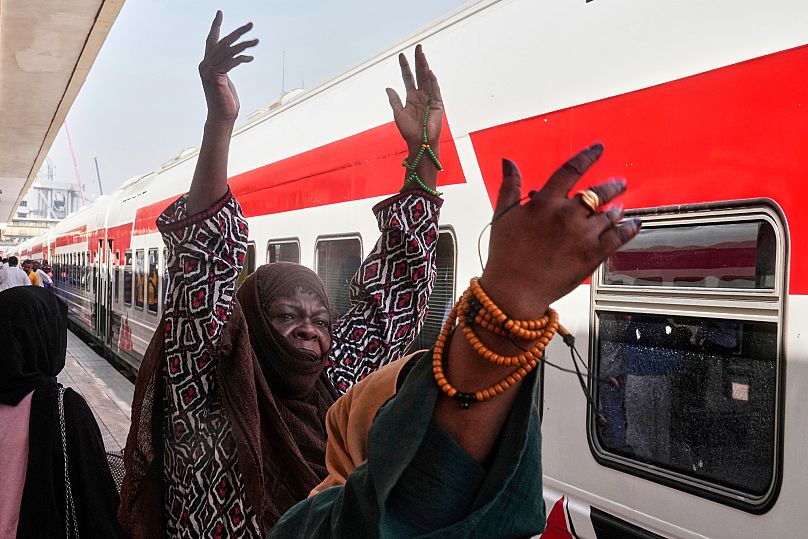
    Egypt hosts the largest number of Sudanese refugees from the war with over 1.5 million people who fled north across the border.Sudanese people who were driven from their homes celebrate as they enter their train to Aswan at Cairo's Ramses railway station, 21 July, 2025Sudanese people who were driven from their homes celebrate as they enter their train to Aswan at Cairo’s Ramses railway station, 21 July, 2025
    AP Photo

    Over 7 million have been displaced internally as the war engulfed much of the country.

    The RSF took control of Khartoum at the start of the fighting in 2023 and held the capital until the government declared its  full recapture on 20 May.
    Khartoum was largely destroyed, including the presidential palace and the airport, but is experiencing a slow rebirth as residents return and markets reopen.
    Electricity and basic services are not fully operational around the city.
    The journey from Cairo to Khartoum is about 2,080 kilometres and will include a train ride of about 12 hours to the southern Egyptian city of Aswan, where riders will change to ferries and buses to cross into Sudan.

    Related

    US says it will impose sanctions on Sudan after alleged use of chemical weaponsSudan’s army chief appoints first prime minister since war’s start

    People packed their lives in small suitcases as they as they filled the train Monday.
    Some cried with “overwhelming emotions” including sadness and joy about leaving Egypt and returning home, said Sudanese journalist Asem al-Taieb, one of the train travellers.
    “I am happy because I am finally going back to my family and my children,” said Awatef al Hassan, originally from Omdurman, who is returning with her daughter.

    Humanitarian crisis

    The head of the UN children’s agency, UNICEF, has previously said that the conflict in Sudan has created the world’s largest humanitarian crisis.
    The United Nations and other aid agencies had previously been using the figure of 20,000 confirmed deaths, but some officials say the death toll could be as high as 150,000.
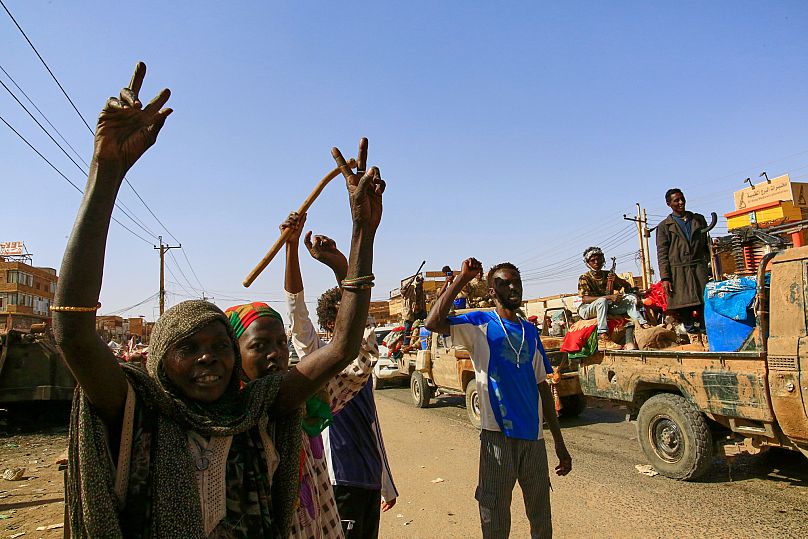
    Millions have been forced from their homes and famine is sweeping parts of the country.Local residents cheer as soldiers arrive to the Allafah market in an area recently recaptured by the army from the RSF south of Khartoum, 27 March, 2025Local residents cheer as soldiers arrive to the Allafah market in an area recently recaptured by the army from the RSF south of Khartoum, 27 March, 2025
    AP

    Years of instability

    Sudan, a nation in northeastern Africa, has been unstable since a popular uprising forced the removal of longtime autocratic President Omar al-Bashir in 2019.
    A short-lived transition to democracy was derailed when army chief General Abdel-Fattah Burhan and head of the RSF, General Mohammed Hamdan Dagalo, also known as Hemedti, teamed up to lead a military coup in 2021.
    But the military outfits they command started fighting each other in 2023 as each struggled to seize power.
    Since the war began, both the military and the RSF have faced allegations of human rights abuses, with both sides denying the claims.