Justice Dept.‑Drops a Red‑Flag Letter on 23andMe’s Potential Sale
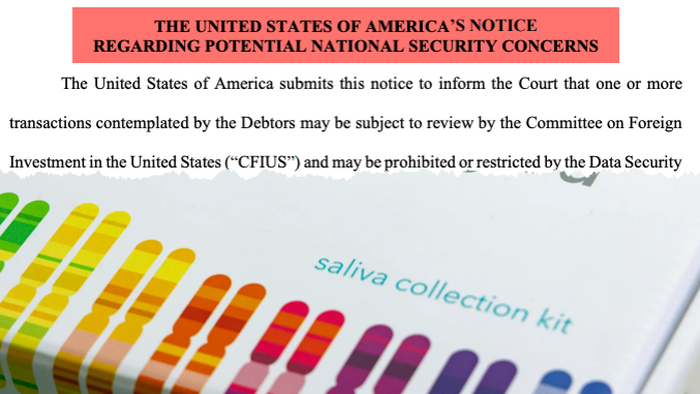
The U.S. Department of Justice has just turned up the heat on the doomed 23andMe Holding Co.
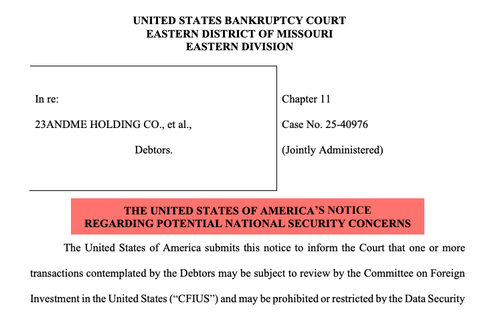
It filed a formal notice with the Bankruptcy Court of the Eastern District of Missouri, which is chewing over the former DNA company’s Chapter 11 filing (Case No. 25‑40976).
Why Does this Matter?
- Millions of genome records on the line. Picture a giant digital vault holding the genetic blueprints of countless American citizens. That’s what 23andMe’s assets could turn into.
- Possible foreign takeover alert. The DOJ is signaling that if anyone wants to acquire those assets, the deal could spark a national‑security showdown.
- Enter CFIUS. The Committee on Foreign Investment in the United States (CFIUS) would get in the middle, scrutinizing who’s buying the DNA “hot property.”
What’s CFIUS and Why Does It Care?
CFIUS is the sharp‑eyed watchdog that keeps a close eye on foreign investments in U.S. companies, especially when national security could be at stake. Think of it as the security guard that checks the background of anyone trying to move a piece of the American DNA puzzle.
Bottom Line
In a nutshell, the DOJ isn’t giving the green light for a quick sale of 23andMe’s assets. They’re essentially saying, “Hold your horses. If this ends up in foreign hands, we’ll make sure it’s safe.”
Stay tuned—this saga is bound to keep unfolding, and we’ll be ready to rewind every twist with a dash of humor and heart.
Law Strikes Back: 23andMe Can’t Sell Your DNA to “Covered” Companies
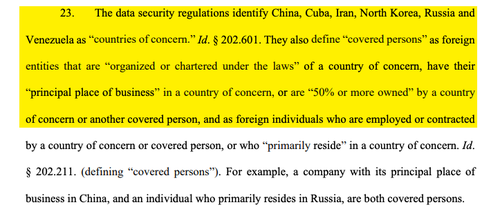
It’s a no‑go zone for the genetic data of 15 million+ U.S. customers. The U.S. Attorney’s Office, led by Sayler Fleming, has issued a sharp warning that 23andMe is barred from passing on genetic info to any company that meets the “covered person” criteria.
Who Are These “Covered” Guys?
- Foreign entities with ≥ 50 % ownership by firms from places like China, Russia, or North Korea.
- Anything that ticks the box of a foreign‑owned corporation is off‑limits.
Why the Hot‑Take?
Agents say it’s all about security. Keeping our DNA out of the hands of the next big data broker is the main line of defense.
What It Means for You
If you’re a 23andMe user, you can rest easy knowing the company’s not going to sell your genetic profile to those heavy‑handed foreign entities. That’s the latest legal seal of safety.
Federal Face‑Off: CFIUS, 23andMe, and the Great Genetic Arms Race
Forget the courtroom drama – the 23andMe saga is now a high‑stakes cyber‑supply‑chain thriller. The U.S. Treasury isn’t asking Judge Walsh to swoop in for a knockout; instead, it’s waving a big red flag at CFIUS, asking the agency to check every potential sale of DNA data for sneaky foreign backers.
Why DNA Is a National Security Issue (and Why That Makes It Hard to Sleep At Night)
- Precision bioweapons could be built to target specific genetic traits or ethnic groups. Think a microscopic cocktail that’s “just for the family that has that red hair gene.”
- Any little misstep could let a hostile actor or rogue group – say someone wobbling on IE – tap into genomic gold and engineer trouble that hits exactly the right “species.”
Picture this: a shadowy guru from the “Iranian VIP squad” or a slick exec from the Chinese Communist Party unlocks a treasure trove of DNA. The result? A pathogen that’s deadlier to those with certain gene markers. Yikes.
James O’Keefe’s Shocking Reveal (and Why It’s Like a Reality‑TV Pilot)
Last month, James O’Keefe from O’Keefe Media Group turned the mic on a U.S. Treasury policy advisor, Nathaniel Johnson. In a grainy video that feels like a late‑night talk show, Johnson claimed:
“Do not give your information to those people [23andMe]… they sell it to other people.”
“There’s a clause in their contract that basically says we can give your info to our shareholders. These shareholders are fancy pharmaceutical firms, some of which are based in other countries – and some are tied to entities like the Ministry of Defense of Russia or owned by China.”
According to Johnson, 23andMe has been shuffling consumer data to “pharmaceutical companies” that may actually be proxies for foreign ministers. Imagine your grandma’s birth chart being handed to a Russian defense minister for… whatever. Now that’s a plot twist.
The Trump Administration’s Quandary
As the great power competition with China ramps up toward the 2030s, the Trump administration needs to wrestle with a bigger baloney than just financial instability: the potential weaponization of genetic data. If they don’t act, the next biological weapon might be personalized… and terrifying.
In short, the next big headline is likely not about Berkshire Hathaway buying a small coffee shop. It’s going to involve the U.S. Treasury, CFIUS, and a coalition of data brokers that might as well be the villains in a sci‑fi blockbuster.
Read the filing here:
I’m ready to help rewrite the article for you! Could you please share the text you’d like to be transformed?