Tag: companies

  • Embracing the pivot: a growing trend on the business landscape

    Embracing the pivot: a growing trend on the business landscape

    The ability to adapt and change course can be the difference between thriving and merely surviving in today’s fast-evolving economy.

    In turn, ‘pivot’ has become an increasingly common term in the corporate lexicon, especially over recent years, as companies face unprecedented challenges and opportunities.

    What is a pivot?

    A pivot is a strategic shift in a company’s direction, involving fundamental changes to its business model, product offering or target market.
    Organisations pivot for many reasons, driven by the need to respond to market shifts, technological advancesand evolving customer expectations. It is a recognition that the current path may not lead to the desired destination and a significant change is necessary to open new growth avenues.
    Famous examples include Slack’s move from gaming to collaboration software and Nokia’s journey from a paper mill to telecommunications powerhouse, illustrating that pivots can come from the most surprising of places and lead to extraordinary success.
    Indeed, even Play-Doh started life as a wallpaper cleaning product.

    The increasing prominence of pivots

    The business landscape is developing faster than ever – and with it, the desire and necessity to pivot has increased. Digital transformation, the rise of hybrid work models and an increasing focus on ESG (Environmental, Social and Governance) principles are all forcing companies to radically rethink what they do, why and who for.
    Companies are finding that to stay relevant and competitive, they must be agile, embracing change not just to grow, but to survive. The shift towards subscription-based models, the integration of technology in traditional sectors and the need to embed sustainability are just a few factors prompting businesses to reconsider their trajectories.

    Thriving through a pivot

    We know all about the pivot at fulfilmentcrowd. We have lived the process, transforming from a niche ERP software developer to a market-leading third-party fulfilment services provider in the aftermath of the global financial crisis.
    Our transition to tech-led logistics emerged from a combination of customer demand and the need for growth beyond existing capabilities. Sparked by an enquiry from an ecommerce client, we saw an opportunity to expand our value proposition beyond just software solutions, which were profitable but had reached a plateau in terms of future potential.
    We initially provided services from our own warehouse but expanded capacity by applying sharing economy principles and adapting the fulfilmentcrowd software platform, securing agreements with partners in the UK before spreading our wings into the USA, Germany and Netherlands before the pandemic in 2019.
    Today, we operate a unique model that is protected from imitation due to the technological complexities that have been overcome; the business has its software development origins to thank for that. It is also sustainable by design – rather than building our own fulfilment centres we utilise the millions of square feet of existing underused warehousing globally.
    Our pivot therefore was not about adding services; it was a strategic realignment that has propelled us to international growth and leadership in fulfilment solutions. Today, we operate a global footprint of 1.57 million square feet across 15 fulfilment centres which is powering profitable growth, evidenced by a 17% increase in year-on-year revenue and 83% EBITDA rise in H1 of FY24.

    Recognising when to pivot

    We have learnt a lot about pivoting along the way. First and foremost, it is a decision that should not be taken lightly. It requires a deep understanding of your market, a clear vision for the future and the agility to change course when necessary.
    Key indicators that a pivot might be needed could include persistent challenges in catching up with the market, excessive competition, hitting a growth plateau or finding that only part of your business is thriving. For us, it was all about pushing through the barriers to growth and creating a model that could generate revenue as we slept.

    Top tips for a successful pivot

    If I was asked what the most important things are in order to successfully pivot, I would recommend focusing on the following:

    Assess your current position: As a first step, take a hard, honest look at where your business stands and its current potential. Back in the noughties, we knew that there was little growth potential in our market and competition was driving out margin. Thinking long-term, the need for change was existential.
    Listen to your customers: Often, the market will signal the need for a change. For us, customer feedback was crucial in kickstarting our evolution.
    Embrace agility: Pivoting requires flexibility and a ‘test and learn’ mentality. We quickly adapted how we used our warehouses and evolved relationships with partners to successfully move into a new market.
    Focus on your strengths: Identify what you do best and consider how these strengths can be applied in a new direction. For us, we had strong expertise in developing ERP-class software and we utilised that to provide an unrivalled 3PL service offering.
    Communicate clearly: Ensure your team is on board and understands the vision behind the pivot. This was key for us and I am proud of how many of the team have stuck with us through the journey.

    The central point

    Pivots are increasingly becoming a part of the strategic toolkit for businesses aiming to stay relevant and meet new opportunities in today’s market landscape.
    It is not a cure-all solution, but a well-executed pivot can redefine a company’s future, opening new pathways for growth and innovation. At fulfilmentcrowd, our transformation journey is a testament to the power of strategic pivoting, driven by customer needs, market insights and the relentless pursuit of doing things better.


  • Find the people that are right for your business

    Find the people that are right for your business

    In his latest article, John Ritchie, Chief Executive Officer at Ellipse emphasises why this is particularly the case for SMEs and why, even though finding the ‘right’ people isn’t easy, you can’t afford to recruit anyone who doesn’t pull their weight.

    Before you can even start searching, you need to consider what your aims are for your business. What is the extent of your ambitions? Even if you have only just set up your business, what is your exit strategy? What is needed to take your business from where it is now to where you want it to be in five years’ time?

    If you can answer these questions, you will know if you need to find someone who will ultimately succeed you, or someone with the skills and experience you lack that are needed to help the business develop – or perhaps someone with the potential to become one or the other.

    Once you have identified a particular set of skills or experience that your ideal recruit might have, the obvious people to look for might seem to be those who have been in a similar role at another company. My own experience is that however logical this might seem, it doesn’t necessarily follow that such a person will deliver what your own business needs.

    They may have a brilliant track record at a big, well-known company, but that doesn’t mean they will be able to repeat the trick for yours. They might have benefited from having a great team around them. They could simply have been lucky in that the circumstances in which they operated at the time might have made it hard to fail. Above all, they may simply be the sort of people who thrive in large corporations but find it hard to succeed working for smaller companies, particularly if they lack the entrepreneurial outlook that those working in small outfits need to have.

    I have friends in business who have been looking to grow their companies and brought in people who seem to be the right types to take their companies up to the next level. All too soon, they bitterly regretted it as their company got bogged down in the sort of big company processes that undermine the agility which gives many small businesses their edge.

    For me, attitude is more important than skills or experience. People can develop skills and gain experience. Although attitudes can change, they tend to only slowly, if at all. If someone takes the view that their role is to do X and they can’t be expected to do Y, they are less useful to me than someone who might not know all the ropes but is willing to learn and not afraid to make a few mistakes along the way. I would rather take on someone inexperienced but with these attributes:

    • bright, so they will learn quickly
    • passionate, so they will work hard to get results
    • willing to help others, so that as they develop they will in turn develop the people around them
    • optimistic realism, so that they will try to find ways in which things can be done rather than reasons why they can’t

    When it comes to finding such people, beware relying on interviews alone. It could be that your interviewees seem to have the attributes you are after but when it comes to business it turns out that their greatest talent is in being good at interviews! Use strategies that will give you a real insight into how useful – or not – they might be.

    Why not set them a problem to solve before you meet up with them and tell them you’ll expect them to give a presentation of their solution? If numeracy or literacy is vital in the role you are looking to fill, set a task that will demonstrate whether or not they have sufficient abilities in these areas. Ideally, ask someone whose judgement you trust to interview them as well.

    While ‘The Apprentice’ may ultimately be a bit of a circus for the cameras, the idea of setting tasks to assess ability is sound, and the episode in every series where Lord Sugar asks some of his business associates to grill the remaining candidates always reveals a wealth of interesting new information.

    Psychometric and other personality tests are worth the small investment when compared to the potential cost and aggravation of a wrong hire – like so many services, they can now be accessed online at a cost that makes them accessible for all businesses. Try a few different providers’ tests out on yourself, ask other people you know well to do likewise, and pick the one that delivers the most accurate and insightful results. If the tests reflect true pictures of people you know well, you can trust them to deliver the same for job applicants.

    In short, don’t rely on one method or another to screen recruits – aim for a mix that gives you objective as well as subjective information.

    However good your recruitment process is, you can still sometimes end up with taking someone on who just isn’t right for your business. When this is the case, don’t delay and let it damage your business – say goodbye to them. And this naturally means that you need to set up contracts that give you and your recruits the opportunity to change your minds if things just don’t work out. At my own company, we have taken on some excellent people – and offloaded some who didn’t fit in – by adopting a ‘temp to permanent’ model as our standard one for new recruits.


  • Trump Announces Tariff Relief for U.S. Carmakers – Report Says

    Trump Announces Tariff Relief for U.S. Carmakers – Report Says

    Trump Sweetens the Deal for Carmakers—But Prices Still Stay Wonky

    Just two weeks after hitting the pause button on most non‑China tariffs, and a week after letting China’s gadget exporters slip past the wall, the Financial Times is reporting a new win for American and European steering wheels.

    What’s Really Happening?

    In a blockbuster move that reeks of political acrobatics, the president is cracking the whip down for car parts. This means the hefty tariffs aimed at curbing fentanyl production (and iron & aluminium) will no longer lace up alongside foreign cars. In short, the auto sector gets a “destacking” of duties.

    • “Destacking” = Freeneedling the tariffs that keep cars out of U.S. as cheap as their own.
    • Right now, 25% still hits every non‑US vehicle.
    • A 25% levy on parts stays in place, kicking off May 3.

    Why the Shake‑Up?

    Auto execs, especially Stellantis’s John Elkann, have been grousing like a herd of impatient tigers. “American & European car industries are being put at risk,” Elkann warned, while other executives begged the administration not to hit them with “all the other tariffs” that could jack up prices and destabilise supply chains.

    Under this new arrangement, the Ministry of the Motor industry gets a breather, marking a triumph for the sector. Plus, it’s a clear sign Trump is willing to hand out carve‑outs to “favored” industries.

    The Road Ahead

    The administration has previously hit “reciprocal” tariffs up to 50% on almost every US trading partner. The next morning it cut those down to 10% for 90 days, swatting away market volatility.

    Meanwhile, Trump opened a reciprocal loophole for consumer electronics – laptops and phones, for example – sparing them from the reciprocal slap but threatening other levies later this year.

    There’s also talk of “help” for autos, with better terms for cars made in Mexico and Canada—provided they stay within the 2020 USMCA rules. Vehicles that meet USMCA requirements will only face the 25% tariff on their non‑US content.

    Stocks, Smiles, and a Bit of Hubris

    GM and Ford stocks got a quick lift after the FT report, but the momentum fizzled fast. It remains to be seen how much of a lasting impact these fresh exemptions will have on the bottom line of carmakers. One thing’s clear: Trump is still the master of the tariff game, but the auto industry is playing its cards wisely.

    Sure thing! Could you please share the article you’d like me to rewrite? Once I’ve got it, I’ll transform it into a fresh, engaging story—complete with conversational flair, emojis, and a tidy HTML structure. Looking forward to it!

  • Ireland\’s Privacy Watchdog Demands More Funds to Expand Its Reach

    The Irish data protection authority has already involved in questions related to the lawfulness of AI apps such as Meta AI and X’s Grok.

    ADVERTISEMENT

    The Irish Data Protection Commission (DPC) has said it needs more money to carry out additional tasks it now handles, including oversight of the EU AI Act.
    The AI Act – which regulates the technology according to the risk it poses to society – has already entered into force, but as of 2 August all member states need to appoint an oversight authority to ensure companies’ compliance with the rules. 

    In its annual report published Thursday, the DPC said that “in light of new responsibilities and a significantly additional workload for the DPC as a result of the AI Act and other digital regulations […] it is critical that we continue to receive funding increases enabling the expansion of our workforce.”
    “The Government’s continuing support will be critical to the DPC’s ability to meet its EU wide responsibilities and the delivery of effective regulation in support of the digital economy,” it added.
    This year, the Irish already dealt with several AI questions, stemming from the launch of chatbot tools such as X’s Grok and Meta AI. As the lead authority for Meta, it ordered the company to halt the tool last year due to concerns about the use of personal data of users of Facebook and Instagram to train its large language models (LLMs).
    Euronews reported in May that – with months to go until the deadline – in at least half of the 27 member states, it remains unclear which authority will be nominated as AI oversight body.  In addition, countries need to adopt an implementing law that sets out penalties and that empower their watchdogs. Not all of them have yet done so.
    The Irish watchdog is currently overseeing the implementation of the General Data Protection Regulation (GDPR) in Ireland, including those of the global big tech companies that registered their EU headquarters in Dublin.

    It received some 11,091 new cases and resolved 10,510 ones, the report said. It gathered a total of €652 million in fines.
    Its staff increased from 213 in early 2024 to 251 as of 1 January. 

  • Cracking the Code: How to Value Your SME During Turbulent Times

    Cracking the Code: How to Value Your SME During Turbulent Times

    Most SME owners who were planning on selling their business in early 2020 were forced to put their plans on ice when the pandemic hit.

    Is It Time to Sell Your Business in a Volatile Market?

    Since the markets have been as bumpy as a rollercoaster, some small‑enterprise owners have felt the chill in their pockets, while others have been riding the high tide. If you’ve watched the numbers and feel the wind shifting beneath your feet, you might be asking yourself: should I now grab the opportunity and take the plunge?

    Why You Should Get the Numbers Early

    • Don’t Wait Until the Chaos Escalates. The sooner you know what your shop is worth, the better you can strategise.
    • Keep It Simple. Most owners think the valuation process costs an arm and a leg, but that’s simply a myth. With a clear, straight‑forward approach, it’s more like a walk in the park than a hike on a mountain.
    • Get Real About the Value. Knowing your business’s worth means you can negotiate with confidence instead of guessing in the dark.

    Pricelessness of the Business: The Financial Reality

    Your venture’s worth is basically the current value of the future cash that its operations will generate. For small businesses, the go‑to yardstick is EBITDA – that’s earnings before interest, taxes, depreciation, and amortisation. In layman’s terms, think of it as the clean, real earnings that the company actually brings in.

    Why EBITDA?

    • More Trusted. It strips out the noise (interest, tax, depreciation) so you see the pure profit.
    • Cash Flow Indicator. Revenue equals the cash that flows into your business, which matters most when you’re looking to monetize.
    • Widespread Use. Dealmakers and investors love it because it gives a comparable, universal snapshot of a business’s financial health.

    How It Works

    Think of it like a weather forecast: you use yesterday’s data to predict tomorrow’s clouds. Similarly, most valuations multiply a company’s past EBITDA or projected future EBITDA by a market‑derived factor. That factor is a way of saying, “if a similar shop sells for ten times this amount of earnings, that’s what yours should fetch.”

    Key Takeaway

    If you feel the wind of uncertainty nudging you toward a sale, it’s worth aiming to keep the process straight and simple. Get the numbers early, understand what your EBITDA tells you, and you’ll be set up to strike the right deal – no juggling flaming swords involved.

    Calculating EBITDA multiples

    How to Nail Your Company’s Value Using EBITDA

    First, you’ll need a solid EBITDA figure – that’s earning before interest, taxes, depreciation, and amortization. Think of it like the gross mood rating of your business.

    Step 1: Hunt Down the Market Multiples

    Put on your detective hat and poke around the public exchanges tuned to your industry. Look at what salespeople are offering for companies just like yours – usually expressed as a “x‑time” multiple of EBITDA. For a quick peek, you can also tap into Pomanda, the handy platform I chair.

    While you’re at it, maybe give an accountant a shout or chat with a finance guru for that extra “yes‑you’re right” vibe. But first, get your own research in order – it’s empowering and makes negotiations less guesswork.

    Step 2: Apply the Multiple

    Once you know the range—say peer firms are trading at 7‑12x—plug your numbers into that range. This will spit out a valuation window for your own company.

    Three Things That Move the Needle

    • Confidence in Your EBITDA: If you’re shopping the historic data, be crystal‑clear about every cost and justify dropping any one‑off expenses. For future forecasts, the closer you are to hitting those numbers—and keeping your budgets in line—the more buyers will trust you. Remember, a retailer’s Christmas bump isn’t just a ticker. Show that the holiday sales actually show up before you claim the forecast.*
    • Growth Rate: High growth wins higher multiples. Look at your competitors’ projected growth. If they’re shouting 10% yearly growth at a 7x multiple, and you’re brand‑new at 15% growth, you’ve got a good case for a heftier multiple. Think of it like showing up to a dance party with a fresh footwork style—others will pay for that.
    • Liquidity: Public companies whose shares are easy to buy and sell enjoy higher multiples. Private SMEs are trickier, and that’s where the “liquidity discount” comes into play—usually 20‑30% off the market rate. So if peers are at 10x EBITDA, you might realistically land in the 7‑8x territory after the discount. It’s not a loss; it’s an honest reflection of the market’s appetite for ownership.

    Bottom Line: Do Your Homework, Show Your Credibility, and Keep It Real

    By selecting the right multiple, dressing up your EBITDA with confidence, highlighting faster growth, and accounting for liquidity, you’ll set a realistic yet aspirational valuation. Then you’ll be ready to sit down, negotiate, and walk away with a deal that reflects your business’s true worth—and maybe a few laughs along the way.*

    Calculating your Net Debt level

    Bootstrapping a Pink Widget Empire

    Picture this: your pop‑pink widget startup has a tidy £2 million in EBITDA, and analysts are chanting the same magic number for every serially‑successful tech venture—7× EBITDA. Multiply that and you’re staring at a sweet £14 million Enterprise Value. That’s your business’s worth before you bring in outside cash.

    Putting the Pieces Together: Net Debt, Equity, and Storytelling

    Now let’s slice to the core. Net debt is basically a quick subtraction:

    • Short‑term bank debt + finance leases
    • + long‑term bank debt + finance leases
    • – cash & cash equivalents

    So if your net debt sits at £1 million, your equity value—what the final buyer actually pays—falls to £13 million. That’s the figure every potential acquirer will look at, head‑on.

    When Competing Buyers Show Up

    Now, a real thrill is when two or three suitors start curting each other’s toes. In that case, don’t be shy about demanding a kicker. A motivated buyer will often throw in a premium, because if you’re thinking along the fair‑market line, you’re putting the ball in their pocket. But here’s the catch: if you set the opening price too high, those very buyers might scramble and call it quits before you even meet for lunch.

    The “Sweet Spot” Advice

    Keep it simple, keep it honest, and keep your numbers crystal clear. Let your process be as transparent as a clear glass crate so that friends, family, and rivals can see your true value proposition. Pick a realistic base and let the bids climb from there; that way you’ll avoid a scornful scramble and end up with a genuinely competitive price.

  • Feeling Like a Fraud? Turn Imposter Syndrome into Turbocharged Business Confidence

    Feeling Like a Fraud? Turn Imposter Syndrome into Turbocharged Business Confidence

    Learn both how to recognise if you have these negative thoughts and how to banish them so you can perform better in your role.

    Outwitting the “Imposter” in Your Own Mind

    Peter Ryding—known as the CEO coach and turnaround whiz—recently dropped a brain‑boosting lesson for small‑business owners. In a chat with Managing Editor Richard Alvin in our podcast, he unpacked how the private bully we call imposter syndrome can choke growth and how to shut it down for good.

    The “I’m Not Really Here” Mindset

    Ironically, the grandest of self‑doubt shows up where you least expect it: at the top of the ladder. Senior leaders often shrug, “I just got lucky,” or “I don’t have the full playbook yet, but I’m winging it—gives me confidence.” They’re so used to the role that the inner critic mutters, “You’re not truly qualified.”

    First Step: Own It

    Recognition is the starting line. Imposter syndrome can weigh a career, derail a company, and sabotage success. A subtle hint that you’re stuck in the cycle is when someone walks up to you after a meeting and says:

    • “Great job—You nailed those three key points.”
    • “But next time, maybe work on… yeah, that’s a place to improve.”

    If you feel like your ego gears are stuck on the ‘critic’ side, you’re probably letting the inner voice dominate. Most of us handle self‑talk like a task queue—pushing important stuff to the back while the nitpicking critic stays front‑and‑center, taking a direct toll on confidence.

    Make Your Inner Best Friend

    Start treating yourself as you would a supportive teammate or confidant. Smile at your achievements, give yourself props, and let the feedback do its job—without derailing your momentum. The trick? Shift from “I’m a fraud” to “I’m learning, growing, and getting stronger.”

    Want to Keep the Good Vibes Going?

    Listen to the full conversation with Peter Ryding on our podcast—just strum down that set of earbuds, and you’ll walk away with the tools to ditch the negative loops and keep building the business you’ve envisioned.

    Treat yourself the way you would treat a best friend. You’d want them to focus on the positives.

    Unmasking the CEO Within

    Stop the self‑doubt drama

    Ever spent hours getting to know a chief executive? I do, because the trick is to see past the façade and learn who the real person is. The moment you get that coaching insight, the brain‑generated myths—“I’m not cut out for the top spot” or “I’ll never cut my own teeth”—start to look like bad reruns.

    You’re already a winner

    Running a company puts you in the top 1 % of the crowd. Think of it like being on a private island with a secret clubhouse. That alone says you’ve got a combo of skill, grit, and a dash of sparkle that most people only dream of. So why let those random voices win?

    Ask the tough questions

    • What values are non‑negotiable for you? Imagine a list of your core principles. If a deal threatens any of them for a few extra dollars, say nope, thanks.
    • Who is your future self? Picture yourself in your ideal role—maybe the visionary, the mentor, or the relentless problem‑solver. Who wants to sit at this table?

    Never stop polishing the diamond

    Every day offers another chance to sharpen your edge. Ask yourself: “What can I improve right now?” Even a small tweak can slide you closer to that top‑1 % status. And remember, growth isn’t a one‑time sprint; it’s a marathon filled with milestones and occasional detours.

    Bottom line? You’re already on a winning track. Keep the stories that boost you, ditch the ones that undermine, and let the best version of you lead the way.

    One really interesting question which often my clients take a few goes to come up with answer is: who must you stop being so that you can become the person that you want to be?

    Letting Go: A Quick Guide to Shaping the Future You

    We’re all juggling a handful of roles—kiddo, boss, couch‑potato, and the ever‑inspiring one that we’re dreaming of becoming. The problem?

    There simply aren’t enough hours, energy, or brain‑space to be both the person we were and the one we’re trying to grow into.

    Step 1: Spot the “sticky” items that’re holding you back

    The hardest part is often not knowing what’s stopping me. Those nagging habits and old habits can feel like invisible boulders in a marathon.

    Step 2: Ask the hard questions—facts, not feelings

    • What’s the one skill I’ve been procrastinating on and why?
    • Which daily routine keeps me stuck in a loop?
    • When was the last time I truly felt alive at work?
    • What’s the realistic budget of time and effort I can dedicate to becoming my future self?

    Write down the answers. Let’s keep them data‑driven and not wishful.

    Step 3: Draft a “realistic CV” of yourself

    Instead of a fancy résumé, jot down:

    • Current job titles and responsibilities
    • Key strengths (e.g., hammering deadlines, crafting killer emails)
    • Weak spots (like “I can’t hold a meeting under 10 minutes”)
    • Things you’d do if you had no constraints

    Step 4: Map the transformation

    Look at that CV and ask: “Who am I, and who do I need to stop being to get to who I want to be?”

    Maybe you’re the “drid‑d” who always says “yes.” To become the “bold” in leadership, you may have to learn to say “no” with confidence.

    Final Thought

    It’s all about shedding the clutter. Once you know what you’re handing over to your future self, the rest is just a game of choosing the new wardrobe.

    As a coach I know that there are various things called scripts, imposters, rules and values which get in the way.

    Rewriting Your Life’s Script: From Disney to Street‑Wise

    Picture yourself as a film‑star—you’re handed a script, read every line, and deliver your performance exactly like the director wrote it. The first big moral: when you’re 18‑21, you’re drafting your own personal playbook. It tells you what sparks joy, what triggers irritation, and when you’ll hit the “meh” zone. But just like a blockbuster needs a fresh twist, your life’s playbook needs regular rewrites.

    The Hilarious “No Beard” Rule

    • Think about this guy who ran an IT startup. He had a hard‑to‑shake belief: bearded people are liars. So he refused to hire anyone with a whisker.
    • The origin? A childhood scare—his uncle with a big beard tried messing around with him. Naturally, trust eroded.
    • Fast forward 30 years: the big beard rule is still in play, yet it’s hampering growth.
    • Result? The office stayed barely diverse until the consultant stepped in and rewired the rule.

    Turning Toxic Rules into Empowering New Scripts

    • Identify the negative belief (e.g., “Bearded folks are shifty”) and note its origin.
    • Replace it with a new belief that opens doors (e.g., “A beard doesn’t dictate trustworthiness”).
    • Implement the new rule: welcome a range of looks, spices, genius.
    • Outcome? A more dynamic, innovative workplace, and the entrepreneur finally hires a bearded superstar coder.

    Coach calls it rewriting your script. The take‑away: whenever you feel the need to cut a line—be it a belief or rule—pause, cut, and rewrite. Your life screenplay gets as exciting as you want it to be.

    Deal with imposter syndrome right now

    Conquering Imposter Syndrome

    Ever feel like you’re just passing through your career instead of living it? That’s imposter syndrome for you—an invisible teacher that tells you you’re not good enough. The good news? You can outsmart it in a few simple steps.

    1. Accept It’s a Thing

    First thing first: acknowledge that this feeling exists. It’s like spotting a sneaky shape in the corner of your eye—you don’t dismiss it, you look at it.

    2. Treat Yourself Like a Friend

    Imagine you’re giving a pep talk to your best buddy. You’d say, “You’ve got this.” Then say the same to yourself. Drop the self‑deprecation and replace it with genuine kudos.

    3. Define Reality With Real Facts

    Write down three wins you’ve truly earned (no fluff). These are your facts—your evidence that you’re not just overthinking. Keep them handy like a good cheat sheet.

    4. The 80/20 Rule Cheat Sheet

    Picture two buckets: 80% of your happiness in the big bucket, 20% of your success in the small one. Spend most of your time boosting that 20%—the epic wins that carry you forward. When those big successes pile up, the imposter voice fades into silence.

    5. Get a Coach—Your Secret Weapon

    • Why? A coach is like a bodyguard for your confidence—he spots the hidden traps in your mindset.
    • What does he do? He keeps the conversation confidential, challenges your self‑limiting beliefs, and reminds you that you’re a star, not a ghost.
    • Result? You discover those early-life “rules.” Once spotted, those doubts get knocked out of the lineup.

    Wrap‑Up

    So, next time you feel that impostor ghost creeping around, remember: accept it, champion yourself, back it up with facts, hone your top wins, and bring a coach on board. With a little practice, the ghost fades, and you start celebrating your real self.

  • Jaguar Land Rover Warns of Legal Action Over National Rail’s Use of Rover and Ranger Ticket Names

    Jaguar Land Rover Warns of Legal Action Over National Rail’s Use of Rover and Ranger Ticket Names

    Jaguar Land Rover (JLR) has threatened legal action against National Rail in a dispute over its use of the terms “rover” and “ranger” for rail tickets, claiming they infringe on its Range Rover trademark.

    Jaguar Land Rover Walks Away from “Ranger” & “Rover” on National Rail

    When J&L were notified that the train‑ticket names Ranger and Rover were wearing their trademark on rail sites, the company decided it was time to put the brakes on the sponsorship. A stop‑and‑go notice was sent to the Rail Delivery Group (RDG), the brain behind the National Rail website.

    What the RDG Called Their Middle‑Finger

    • RDG told operators to ditch any mention of the word “ranger” or “rover” from their pages.
    • At the same time, the group gave a green light to keep selling “ranger tickets” and “rover tickets” – just give them a new tag line.
    • J&L confirmed it would chill on any legal action against retailers who switch gears.

    Rover – A Classic, Not a New Toy

    The original “Rover” ticket? It predates the SUV that lives in every car showroom by more than ten years. Back in the 1950s, British Rail launched the All-Line Rail Rover, a week‑long pass for second‑class passengers that cost only £15 (about £304 today). Fast forward to now – the price for a similar eight‑day pass tops out at £650.

    Chronology Tidbit
    • First “Rover” pass: 1950s
    • First Range Rover SUV: 1970

    RDG Says It’s All Savvy, Not Snubbed

    One RDG spokesperson told us, “We’re confident our practices have always followed intellectual property rules. After learning about J&L’s trademark concerns, we worked with them to tweak how we refer to our Ranger and Rover tickets – a minor change, no big deal.”

    J&L’s Day‑to‑Day Circus

    A few other things are shaking things up for the motor giant: Trump was fired up earlier this month, slamming J&L’s recent ad and calling it a “woke disaster.” Meanwhile, CEO Adrian Mardell announced he will step down later this year after an impressive 30‑year tenure. On top of that, the UK arm is trimming 500 management roles through a voluntary redundancy scheme.

    Forward March

    Looking ahead, J&L is planning to turn Jaguar into an electric‑only luxury brand by 2026 – a pivot that could be the biggest game‑changer in the company’s history.

  • Trump family business joins forces with Crypto.com

    Trump family business joins forces with Crypto.com

    President Donald Trump’s personal crypto ventures are expanding again, this time with plans for a digital asset treasury company that holds an alternative cryptocurrency.

    ADVERTISEMENT

    Trump Media and Technology Group, which operates the Truth Social platform, announced on Tuesday that it was partnering with the cryptocurrency exchange Crypto.com to form a company that holds CRO, a token created by Crypto.com.
    A blank-check company tied to Yorkville Advisors is another co-founder of the new firm, called Trump Media CRO Strategy.

    Trump Media said it plans to purchase $105 million (€90.5mn) worth of CRO.
    Yorkville said the total expected funding for the company’s treasury will be $1 billion (€860m) worth of CRO, or about 19% of the token’s market cap, plus $420m (€362m) in cash and equivalents and a $5bn (€4.3bn) line of credit.
    The announcement is part of the hottest trend in crypto, in which a wide variety of companies, many with no obvious ties to the world of digital assets, have made buying and holding cryptocurrency a primary part of their business plan. The model is based on MicroStrategy, a tech firm that first started buying bitcoin in 2020 and has seen its stock price soar.
    “Companies of all sizes and sectors are strategically planning for the future by establishing digital asset treasuries anchored by assets that have created a comprehensive value proposition and are poised for even greater utility,” Devin Nunes, the chairman and CEO of Trump Media, said in a statement.

    🚨 Breaking News: Today is a historic day for $CROTrump Media Group CRO Strategy has announced $6.4B in funds to build America’s Cronos Treasury.At closing, Trump Media Group CRO Strategy is expected to be the world’s largest holder of CRO.Read the press release for more… pic.twitter.com/QQrSZLlKu4— Crypto.com (@cryptocom) August 26, 2025

    Trump Media said it plans to introduce a “rewards system” on Truth Social that uses Crypto.com digital wallet infrastructure. CRO saw its price jump Tuesday morning by about 30% to 21 cents a token. It’s still well below its all-time high of nearly 97 cents a token that it hit in 2021.

    How Trump is involved in the crypto business

    Since taking office, the Trump administration has pushed for crypto-friendly regulations and laws, while the Trump family has aggressively sought to expand its crypto-related businesses.
    That unprecedented dynamic has led to allegations of corruption from Democrats, though the president says he has entrusted the management of his business dealings to his sons.

    Related

    Win for the crypto industry: US passed the first major bill to regulate digital assetsMega crypto exchange Binance partners with Spain’s BBVA in a bid to restore investor confidence

    In May, Trump rewarded top investors in his meme coin with a swanky dinner. Trump launched the coin just days before taking office. Fans of the president have also been able to buy crypto-themed Trump merchandise, including $100,000 (€86,209) watches and pricey sneakers.
    Trump Media previously announced plans to hold a significant amount of bitcoin on its books as well as to create an exchange-traded fund tied to the prices of five popular cryptocurrencies.
    World Liberty Financial, a cryptocurrency company launched by Trump and his sons last year, has received significant boosts from an investment fund in the United Arab Emirates and Justin Sun, a China-born crypto entrepreneur.
    The Securities and Exchange Commission has paused a lawsuit it filed against Sun in 2023, alleging his company engaged in market manipulation and paid celebrities for undisclosed promotions.
    A little-known firm called ALT5 Sigma recently announced it was planning to raise $1.5bn (€1.29bn)to buy the digital coins created by World Liberty Financial and that Eric Trump, the president’s son, is joining the company’s board.
    Also on Tuesday, a firm called Canary Capital filed paperwork with the SEC seeking to sell an exchange-traded fund that will track the price of the president’s meme coin.

  • Star‑Making Events This Week: Light Data Brilliance, Heavy Earnings Explosion

    Star‑Making Events This Week: Light Data Brilliance, Heavy Earnings Explosion

    What’s Happening This Week in the Money World

    The economic calendar is flat as a pancake—no big, blatant headline events are on the horizon. That said, chaos keeps creeping in all the time, so while it’s quiet on paper, the universe is probably refusing to stay still.

    Key Highlights

    • Global Flash PMIs – Thursday, a sneak‑peek into how manufacturing worldwide is feeling.
    • ECB Holds – No policy changes, just a “no‑action‑packed” meeting that the crowd expects.
    • Fed’s Radio Silence – Preparing for next week’s FOMC, they’re keeping the press off the hook.
    • Potent Trump – He’s going to keep harping on Powell every day, so expect some side street noise.
    • Powell’s Regulatory Talk – Tomorrow, but no word on money policy (blackout rules).

    US Market Sensors for the Next Few Days

    • Regional Manufacturing Surveys – Tomorrow: see how factories on different coasts are doing.
    • Existing Home Sales – Wednesday brings the latest on houses already on the market.
    • New Home Sales – Fresh listings going up for grabs.
    • Jobless Claims – Weekly count of people filing for unemployment.
    • Chicago Fed’s Chicago Board of Trade Survey – Thursday’s uptick on futures and rolls.
    • Durable Goods Orders – Friday shows the latest on big-ticket purchases.

    In short: keep your eyes on the global PMIs, the ECB’s “hold” status, the Trump‑Powell roast, and the US auto‑updates from manufacturing to housing. That’s the low‑key soundscape for the coming days.

    ECB Focuses on the Great Pause Mystery

    On Thursday, Europeans will tune in to see how long the European Central Bank might hold its breath—because the real question is whether they’re going to pause the rate hikes or keep the ball rolling.

    What’s on the Envy Calendar?

    • ECB publishes its tantalising bank‑lending survey tomorrow.
    • Next week, banks armed themselves with fresh data: French, German, Israeli, and the other European hot spots.

    Economic Mood‑Check Updates

    • Thursday – German consumer confidence is coming out. Yes, we’re all rooting for a spike.
    • Friday – UK, France, and Italy are set to spill the beans on sentiment.
    • Friday – a German Ifo survey will drop its latest business insight.

    Corporate Earnings – The Party’s Over, Now What?

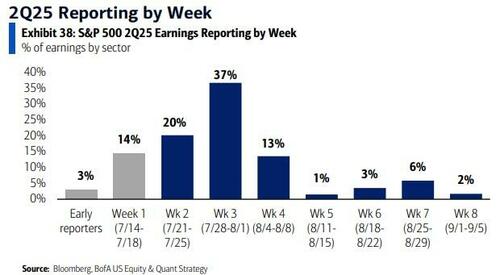
    Quarter‑two is finally letting loose, with 135 S&P 500 firms and 189 Stoxx 600 players chipping in their numbers.

    • Wednesday – the tech giants Alphabet and Tesla will drop their quarterly show flags.
    • Other tech stars this week: IBM, ServiceNow, and Intel are all ready to perform.
    • Defense powerhouses like RTX, Lockheed Martin, and Northrop Grumman will also bring their numbers to the table.

    Stick around—whether the ECB is pausing, rolling, or racing to the next number, the markets are buzzing with activity and a little bit of caffeine‑driven curiosity.

    Catch the European Earnings Wave – July 22‑25

    Fasten your seatbelts, finance fanatics – the European market is gearing up for a packed week of shares, stats, and a smattering of brass‑finched central‑bank chatter. Below is the low‑down for the stars of the show, broken day by day. Grab your coffee, because the charts are rolling in!

    Monday, July 21 – Zero‑Headline‑Hype

    Nothing big on the data front. But keep your eyes peeled: three powerhouses of the European roster are about to drop earnings bulletins that could shift the market’s mood.

    • Biggest name on the stage: SAP – the software giant that practically lives in the cloud.
    • Also on the docket: LVMH, Roche and Nestlé – the new holdouts of the “Top‑10” club.
    • And don’t forget the banks; their quarterly earnings have us all hoping for smooth sailing.

    Tuesday, July 22 – Oil Fires & Earnings Bonanza

    Data has been quiet – performances are loud.

    • Data Highlights:
      • U.S. Philly Fed’s payroll‑satir start (non‑manufacturing)
      • Richmond Fed’s manufacturing stance sticking?
      • Number crunching of the UK’s public finances and France’s retail scene.
    • Central‑Bank Chatter:
      • Powell’s tweet‑worthy remarks on U.S. Fed policy.
      • ECB’s labour‑in‑lending survey – will banks feel the buzz?
      • BoE’s Bailey diving into monetary policy (yes, still hot!).
      • RBA’s July minutes – jo’ jo’ it.
    • Earnings Hype:
      • Legendary SAP (carry the flag!)
      • Happy CFO’s report from Coca‑Cola.
      • Welcome to the big tech club: RTX, TEXAS Instruments, Intuitive Surgical.
      • Financial fairy tales: Capital One, Chubb, Lockheed Martin.
      • Outfit-champ: Sherwin‑Williams and Northrop Grumman.

    Wednesday, July 23 – Press‑Ups & Home Sales

    Inside the UK’s PMI nerd‑arena & the U.S. housing market.

    • Data:
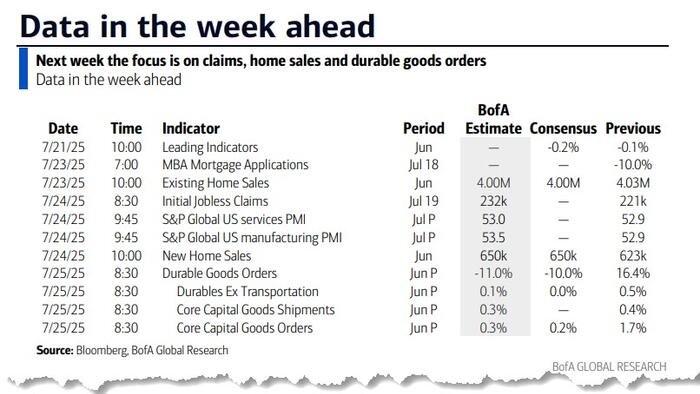
      • U.S. existing home sales for June – the numbers might paint a rosy skyline.
      • Eurozone consumer confidence for July – love that over‑the‑counter portal.
    • Central‑Bank Whisper:
      • The BoJ’s Ochida telling us whether the yen will keep flirting.
    • Earnings Parade (Next‑Gen Goldmine):
      • Alphabet, Tesla – feel the electric buzz.
      • IBM’s secrets, T‑Mobile’s deals, IBM, AT&T’s Q4 reveal.
      • Biotech bragging: Thermo Fisher, NextEra Energy ‘s solar rockets.
      • Health & Hospitality: Boston Scientific, GE Vernova.
      • And a full lineup of intangibles: banking, food, and zero‑emission power companies.
    • Auction Flash:
      • U.S. 20‑yr bonds re‑open for $13 bn – the tick‑tock is real.

    Thursday, July 24 – Market Milestone Money‑Sweets

    All eyes on the EU’s fledgling PMI spree.

    • Data:
      • PMIs across U.S., UK, Japan, Germany, France, Eurozone.
      • Chicago and Kansas City Fed quips about activity and manufacturing.
      • Jobless claims to keep us laughing over the 221k, 232k numbers.
      • Germany’s GfK consumer confidence – in September or not? It may rock that.
    • Central‑Bank Booms:
      • ECB’s decision – will the euro survive the tremors?
    • Earnings Extravaganza:
      • From LVMH luxe to Blackstone bank deals.
      • Tech titans: SK Hynix, TotalEnergies.
      • Transportation vibes: Union Pacific, Intel, Newmont.
      • List of bank & insurance names to keep your portfolio glued to the board.
    • Auction Warm‑ups:
      • U.S. 10‑yr TIPS at $21 bn – the rate‑tracking calendar!

    Friday, July 25 – Durable Goods & Consumer Cheers

    Durable goods are the main event of today’s data docket.

    • Data:
      • Durable goods orders for June – an initial 9% slip painting a picture of resurgence.
      • Core capital goods insights: a 0.2% drop in orders and a 0.3% rise in shipments.
      • Other favorites: PPI, consumer confidence and professional forecasts.
    • Central‑Bank Voice:
      • ECB’s survey of professional forecasters – the “market wizard” graphic.
    • Earnings Collectibles:
      • HCA Healthcare’s wellness analysis.
      • Charter Communications shares – find your internet bandwidth.
      • Volkswagen’s car‑finance insights, NatWest’s banking backstage.
      • And we’re wrapping up the big round of industry names: Eni, oil and gas, lending, and more.

    Heads up – the U.S. gets the biggest data push this week with durable goods orders on Friday. No Fed monetary haggling this week (the blackout pre‑FOMC), so focus on the numbers. Tune in, trade nicely, and keep your portfolio humming – we’re all in this financial rave together.

  • NeoLogic wants to build more energy-efficient CPUs for AI data centers

    When NeoLogic started building its more energy-efficient CPUs for AI servers, folks in the industry told its founders Avi Messica and Ziv Leshem that their idea wasn’t viable.

    “Most of the people that we have met say it’s impossible,” Messica told TechCrunch. “Some of them told us, at the time, that the innovation is impossible because you cannot innovate in logic synthesis. You can’t innovate in circuit design. It’s too mature.”

    Israel-based NeoLogic nevertheless set out to prove them wrong, and the fabless semiconductor startup has been building a server CPU that uses more simplified logic — how a chip processes information — with fewer transistors and logic gates to run faster while requiring less power.

    NeoLogic was founded in 2021 by Messica, CEO, and Leshem, CTO, who together have 50 years of experience in the semiconductor industry. Leshem spent decades working on chip design at companies like Intel and Synopsis, while Messica focused on circuit design and the manufacturing side.

    “We co-founded this company more than four years ago because Moore’s law was dead,” Messica said, referring to the 1960s observation that the number of transistors on microchips doubles every two years.

    Around a decade ago, Messica said, companies stopped trying to scale transistors down in size, because transistors had gotten so small, there wasn’t much more progress to be made there.

    But, he says, NeoLogic wasn’t convinced. The startup is working with two hyperscaler partners on the design of the server CPUs, but Messica would not disclose their names. The company plans to have a single-core test chip by the end of the year and hopes to get its server CPUs into data centers by 2027.

    Techcrunch event

    Tech and VC heavyweights join the Disrupt 2025 agenda

    Netflix, ElevenLabs, Wayve, Sequoia Capital, Elad Gil — just a few of the heavy hitters joining the Disrupt 2025 agenda. They’re here to deliver the insights that fuel startup growth and sharpen your edge. Don’t miss the 20th anniversary of TechCrunch Disrupt, and a chance to learn from the top voices in tech — grab your ticket now and save up to $600+ before prices rise.

    Tech and VC heavyweights join the Disrupt 2025 agenda

    Netflix, ElevenLabs, Wayve, Sequoia Capital — just a few of the heavy hitters joining the Disrupt 2025 agenda. They’re here to deliver the insights that fuel startup growth and sharpen your edge. Don’t miss the 20th anniversary of TechCrunch Disrupt, and a chance to learn from the top voices in tech — grab your ticket now and save up to $675 before prices rise.

    San Francisco
    |
    October 27-29, 2025

    REGISTER NOW

    NeoLogic recently raised a $10 million Series A round led by KOMPAS VC with participation from M Ventures, Maniv Mobility, and lool Ventures. The company will use the funds to expand its engineering team and continue developing its CPUs.

    The funding round comes as data centers are straining existing energy resources with no relief in sight. The ongoing AI boom has data center power usage expected to double in just the next four years.

    Messica hopes that NeoLogic’s energy-saving potential will help make its server CPUs too attractive for the market to ignore.

    “It affects everything,” Messica said of the potential energy savings. “If you talk about next-generation data centers, it affects the construction costs; it affects the amount of capital that you’ll invest because you can shave off roughly 30% of the cost. And it affects the water usage. It has an impact on society, and basically that was our vision roughly five years ago.”