Tag: exports

  • Britain's Car Industry: From World Leader To Net Zero Casualty

    Britain's Car Industry: From World Leader To Net Zero Casualty

    Authored by Jake Scott via the Foundation for Economic Education (FEE),

    Britain was once a giant of car manufacturing. In the 1950s, we were the second-largest producer in the world and the biggest exporter. Coventry, Birmingham, and Oxford built not just cars, but the reputation of an industrial nation; to this day, it is a source of great pride that Jaguar–Land Rover, a global automotive icon, still stands between Coventry and Birmingham. By the 1970s, we were producing more than 1.6 million vehicles a year.

    Today? We have fallen back to 1950s levels. Last year, Britain built fewer than half our peak output—800,000 cars, and the lowest outside the pandemic since 1954. Half a year later, by mid-2025, production has slumped a further 12 percent. The country that once led the automotive revolution is now struggling to stay afloat, and fighting to remain relevant.

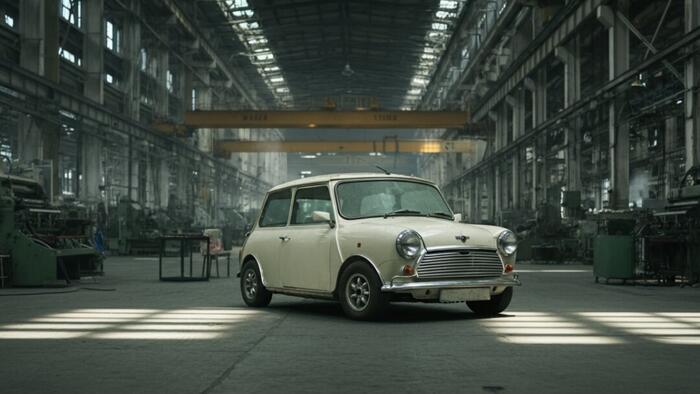
    This is why the news that BMW will end car production at Oxford’s Mini plant, shifting work to China, is so damning, bringing this decline into sharp focus. The Mini is not only a classic British car; Alec Issigonis’s original design made it an international icon. For decades, the Mini has been the bridge between British design flair and foreign investment. Its departure leaves 1,500 jobs at risk at a time when the government is desperate to fuel growth and convince a wavering consumer market that there is no tension between industrial production and Net Zero goals.

    It’s a bitter reminder that we in Britain have been here before: letting an industrial crown jewel slip away.

    The usual explanations will be offered: global competition, exchange rates, supply chains. All true, in the midst of a global trade war that is heating up and damaging major British exports. But such a diagnosis is incomplete. The truth is that Britain’s car industry is being squeezed by a mix of geopolitical realignment and government missteps.

    The car industry has become the frontline of a new trade war. Washington has already moved aggressively to shield its own firms: the Inflation Reduction Act offers vast subsidies for US-made EVs and batteries, an unapologetic attempt to onshore production, and something that became a flashpoint of tension in Trump’s negotiation with the EU in the latest trade deal. On the production side, the Act has poured billions into US manufacturing: investment in EV and battery plants hit around $11 billion per quarter in 2024.

    Ripples have been sent across the world in the US’s wake: Europe, faced with a flood of cheap Chinese EVs, has imposed tariffs of up to 35 percent after an anti-subsidy investigation. Talks have even turned to a system of minimum import prices instead of tariffs. Unsurprisingly, China has threatened retaliation against European luxury marques, while experts warn the tariffs may slow the EU’s green transition by raising prices.

    This is no longer a free market: cars are treated as strategic assets, the 21st-century equivalent of shipbuilding or steel. Whoever controls the supply chains, particularly for EV batteries and the mining of lithium, controls not only the future of the industry but an important lever of national power.

    The results are visible. In July 2025, Tesla’s UK sales collapsed nearly 60 percent, while Chinese giant BYD’s deliveries quadrupled. Europe responded by talking up new tariffs. Britain did nothing. In this asymmetric contest, our market risks becoming a showroom for foreign producers—subsidizing both sides of the trade war without defending our own.

    The real danger is not simply that Britain loses factories—that would be lamentable, but new industries crop up all the time. The danger comes if Britain misreads the geopolitics of the moment. Policymakers assume that globalization still works on liberal lines, when in reality industrial competition has become nakedly political.

    If the government continues to approach this as a morality play about “green obligations” rather than a contest of state-backed strategies, Britain will find itself outmaneuvered by rivals who are willing to fight dirty. The naivety of this government in the geopolitical realm is already on show—all it takes is an unscrupulous actor to take advantage.

    Meanwhile, Britain’s car industry is being crushed under the weight of its own government’s Net Zero agenda.

    The most obvious domestic distortion comes from the government’s own Net Zero policies. Ministers have decreed that petrol and diesel cars must disappear by 2035, with quotas forcing manufacturers to sell ever-higher proportions of electric vehicles long before customers are ready—a decision enforced by the current government, but made by its predecessor.

    On paper, it looks like progress. Nearly one in five new cars sold in Britain last year was electric. In June 2025, the figure briefly touched 25 percent. But strip out fleet purchases and subsidies, and private demand is anemic. Only about one in ten EVs was bought by a private household.

    For manufacturers, the economics are even tougher. Retooling factories for EVs requires billions in investment. Yet the batteries—the heart of the new supply chain—are overwhelmingly produced abroad. China commands over 70 percent of global output, Europe is building dozens of gigafactories, and Britain has just one small facility. No wonder BMW decided that Oxford was not the place to build the future Mini, forced out by the pressures its own government applied.

    The intention may be laudable, but the execution is not. Policy is not aligning with either consumer demand or industrial capacity.

    Meanwhile, there are very few actual incentives for consumers to switch over: charging network coverage remains patchy; electric models cost £35,000 or more; and consumers already pay the highest energy bills in Europe. The market is being pulled one way by ministers, another by reality.

    We’ve been here before. After the war until the end of the 1970s, in the mislabeled “Post-war consensus,” governments tried to micromanage the car industry’s future through subsidies, planning boards and nationalization. The outcome was not at all surprising: British cars and their manufacturers were known for poor quality, collapsing output, and eventual irrelevance.

    The risk now is that Net Zero becomes another form of overreach, with governments trying to enforce an industrial transformation without the underlying conditions in place.

    Cleaner technologies may be necessary, and the automotive industry has already made huge strides in progress. The irony is that Britain has the engineering talent and know-how to deliver them, but when the state insists on timelines and quotas while failing to invest in the supply chain or shield producers from unfair competition, the result is predictable: decline.

    Britain could chart a smarter course. That means lowering energy costs for industry, reforming planning so that battery plants can be built at speed, and ensuring that rules are competitive rather than punitive. Before all of this, it means recognizing that the route to prosperity is getting the government out of the way.

    Most importantly, though, it requires recognizing that the car industry is now a geopolitical contest. The US, EU, and China all understand this.

    The decline of British car making is not just about economics. These plants are part of our cultural DNA. The Mini isn’t just a car; it’s a symbol of Britain itself. Small, ingenious, stylish, and stubbornly practical. To lose it to Net Zero dogma is an act of national self-harm and a loss of prestige.

    Oxford’s closure is not an isolated blow. It is a warning. We can either learn from our own history and build policy around industrial reality, or we can keep writing the obituary of British manufacturing.

    Because if Britain continues down the current path, the story of the Mini may become the story of the entire industry: once world-leading, now outsourced, and soon extinct.


    Loading recommendations…
  • Volvo CEO Announces Dual‑Tech Approach Linking China and the West, Shaping Tomorrow’s Trade Landscape

    Tech Restrictions and Tariffs: A Signal of a More Region‑Focused Future

    “Tech restrictions and tariffs show we’re going into a more regional world,” the head of the Swedish automaker told reporters earlier this week. The comment already sparked a buzz—people are now speculating that the big players in the automotive world might start building their cars a bit closer to home.

    Why This Matters So Much

    When a major player pops an eyebrow on the market’s new flavor of trade policy, it’s a signal that the whole game might tune its rhythm. Rather than chasing every global supply chain like a racehorse, manufacturers are beginning to lean on the “regional” tutu that keeps them grounded and less vulnerable to sudden policy hits.

    What Could Be Changing?

    • Reduced reliance on rare earth suppliers from distant lands
    • More local sourcing of motors and batteries
    • Potentially faster turnaround for innovation cycles
    • Lower exposure to unexpected tariffs that could spoil the rollout of new models

    So, Should We Get Ready for “In‑Country” Cars?

    Sure enough, if the tech restrictions and tariff spikes keep creeping along the horizon, more vehicles may sprout from nearby workshops rather than from the once‑scattered global supply web. It’ll be a touch less shiny—maybe, but it could also mean more reliable roads, and why not?

    In the end, the Swedish automaker’s words point to a softer, fewer‑lift hands‑on approach—which could be a breath of fresh air for a market that’s been a little too high‑flying lately.

    Volvo’s Double‑Track Strategy: Adapting Cars for China & the West

    At the EVS38 symposium in Gothenburg, Volvo’s CEO Håkan Samuelsson revealed a bold plan: the same luxury car will ship with two distinct brains, one for China and one for the rest of the world.

    Why split the software?

    • China’s tech rules are tighter than a jazz drummer’s fingers.
    • The Biden office just slapped a ban on “smart cars” from China and Russia.
    • Volvo wants to keep its European wheels spinning smoothly while avoiding any “foreign data drama” in the U.S.

    Geely’s ownership in the mix

    Since 2010, Geely Holding Group has been steering Volvo from the shadows. It’s a delicate dance: Russian, American, and Chinese intelligence alike might stare at a car’s dashboard. Samu­elsson reassures: “No worries. The Chinese parts stay home—no risk of leaking tech back to the U.S.”

    What this means for you
    • Buy a Volvo and you’ll get a version that matches your region’s tech etiquette.
    • The car’s “computer” will be as simple or sophisticated as your local regulations allow.
    • Future drivers can enjoy a smoother ride—less paperwork, more peace of mind.

    So, with Volvo’s two‑tier approach, the company is clearly “living with” new trade realities, and you’ll likely never have to ask whether your car’s software is “Chinese” or “Western.” It’s all part of the brand’s promise of safety and innovation—no matter where you park the keys.

    A focus on China and the US

    Volvo Cars Sees a Downtime—And It’s Not Just the Big Stuff

    When the first-quarter earnings dropped, Volvo didn’t just shrug—it pointed its finger at the worldwide economic whirlwind still swirling around. “Yeah, the market’s a bit of a mess right now,” said CEO Samuelsson, basically flipping the switch from “profit” to “problem.”

    Tariff Trouble: The US Hit Hard

    • New US tariffs: 25 % on foreign cars and parts—I’m sure you’re wondering *what’s that’? Picture a giant price tag that’s suddenly slapped onto every Volvo in America.
    • Result? Slower buying habits and higher import costs. Monty Python said it best: “It’s the big trouble.”

    Blueprint for Brighter Futures

    Volvo’s playbook includes a strategic spotlight on two hot markets: the US and China. Think of it as a twin‑prism targeting the “sweet spots” where their machines can shine again.

    Samuelsson called out a Chinese‑centric shift, noting it’s time to “listen more to local people in the region and adapt to local habits and tastes.” Imagine tailoring a car to a people’s preferences, like customizing the dress code for a cultural party.

    New Models, New Tricks

    Enter the XC70, a new plug‑in hybrid specifically designed for China. It’s meant to swipe market share from competitors like BYD—imagine a chess game where Volvo has just landed a queen on the board.

    Sales Snapshot
    • China: Sales fell 12 % year‑on‑year, with electric and plug‑in hybrids making up only 10 % of that dip. So, the numbers are down, but that one big seat? Still can be contested.
    • US: Sales shoot up by 8 %, maybe thanks to tariff frontloading, with electric and plug‑in hybrids owning 28 % of that uptick. Talk about a bang‑for‑the‑buck.

    Volvo’s take? A sharper focus on the markets that matter, an embrace of local gusto, and a lineup that tells the story of how cars can keep hitting the road. It’s all about turning the noise of tariffs into a chorus of opportunity.

    Tech restrictions in Europe

    Volvo Cars Still Loves Europe, Even While Eyeing the U S &

    Think Volvo is all talk about expanding to the U S and China? Think again. Europe isn’t just a side‑kick; it’s the heart of the brand.

    Sales Snapshot

    • 2024: ~50 % of all sales came from the European market.
    • Q1 2025: That same half‑share stays steady.

    The Factory Dance

    Picture this: on the left, Belgian and Swedish plants line up seamstress‑like precision. On the right, Mandarin‑flavored factories produce a chunk of vehicles that then hop over to Europe.

    And here’s the plot twist: some of those Chinese‑made cars might pick up EU duties, thanks to tariffs slapped on in 2023 for alleged “unfair subsidies” from Beijing.

    Voices from the Boardroom

    Samuelsson? He’s not buying into a tariff‑based heroism. “Tariffs won’t push the European industry to shine long‑term,” he says. “Real freedom of trade? Hardly happening. We’re moving toward a more regional vibe.”

    Regulatory Hints From Brussels

    The European Commission just dropped a new plan: Chinese automakers in the EU may need to partner up with local firms or hand over some of their tech. Curious how that shakes Volvo? According to Samuelsson, the company is practically untouchable. “A lot of development still happens right here in Europe,” he nudges. “The software in our cars? It’s largely built and tweaked by Volvo.”

    So, while Volvo’s eyeing U S and Chinese markets, it’s still deeply rooted in European soil—both in sales and tech. That’s the story, wrapped in a bit of humor and a dash of heart.

  • India Poised to Secure Groundbreaking Trade Pact with the US – Why It Matters

    India Poised to Secure Groundbreaking Trade Pact with the US – Why It Matters

    Big‑Game Trade Talk: Trump, India, and the Commercial Air Show

    What’s the Deal?

    During a buzzing CNBC interview, Commerce Secretary Howard Lutnick dropped a hint: a trade deal is on the table with an unnamed country, just waiting for the green light from its prime minister and parliament. Guess who’s in the spotlight? India. Yup, with Apple shifting iPhone production to the sub‑continent and India stepping up as the world’s most populous nation, the stage is set.

    Why India? Why Now?

    • Apple’s pivot to Indian production.
    • India’s sprint to overtake China’s GDP in the next 20 years.
    • The country’s buzzing pipeline of Boeing orders.
    • Trade deficit woes – a major complaint of former President Donald Trump.

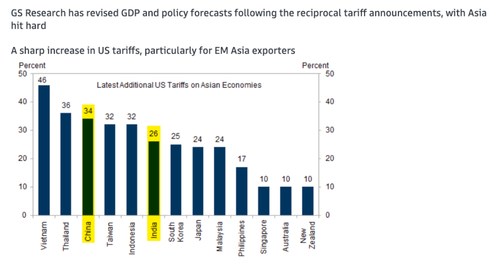
    In the absence of a deal, US tariffs could hit Indian exports up to 26% after Trump’s 90‑day pause ends in July. That’s a massive hike, so India’s bargaining chips include the big “airplane” plays.

    Airplane Power Play

    India is throwing diplomatic firepower by touting its Boeing orders: Air India, Akasa Air, and SpiceJet collectively placed a staggering $67 billion order for 590 planes. Think of it as India saying, “We’re practically buying your planes, so how about we lower those tariffs?”

    While Air India has been pecking into the Android of Asian aviation, IndiGo – the India commuter king – has largely stuck with Airbus models. But that’s changing; the airline is eyeing Boeing 787s for select routes.

    Even Vietnam is DLC-ing similar deals to sweeten its US relationship. It’s a classic “let’s buy your tech—now let’s lower my tariffs” dance.

    Oil, Not Just Air

    India’s not stopping at planes. The nation is also buying more US crude oil, trading its Russians at a time when China’s appetite dipped. In June, a record 11.2 million barrels imported, the biggest since August last year.

    It’s a smart move: by buying more US oil, India hopes to use the commodity as a bargaining chip, nudging Trump to ease those 26% tariffs.

    Market Conditions

    Trade deficit widened in March: oil imports jumped >60%. The US paused the proposed tariff, waiting for negotiations. Meanwhile, Indian refiners (Indian Oil, Bharat Petroleum) acquired millions of barrels during tender processes.

    Bottom Line

    With Trump’s tariffs on their front burner, India appears primed to strike a sweet deal. Airplane orders and oil purchases are not just transactions—they’re the footnotes in a bigger story about power, population, and a recipe for a trade win.

    What’s Next?

    Negotiations are slated to kick off in mid‑May, post‑Tariff pause. Stay tuned—because if this feels like a high‑stakes golf match, we’re looking at some serious swings.

  • Apple\’s iPhone Blitz: Five Air Freighters Rush to U.S. Following Trump’s Tariff Storm

    Apple\’s iPhone Blitz: Five Air Freighters Rush to U.S. Following Trump’s Tariff Storm

    Apple’s Emergency Phone Stocks: A Low-Cost Kickflip to Avoid Tariffs

    After President Trump fired up his tariff firecracker last Wednesday, Apple was on the back foot. The company pulled a quick‑fire stunt, stuffing at least five emergency air freight shipments—full of iPhones, AirPods, and other goodies—from India and China straight into the U.S. cargo bays.

    Why the rush?

    • Tariff shockwaves: New U.S. duties were looming, and Apple wanted to keep its price tags steady.
    • Pre‑emptive stockpiling: Factories in India and China were already sending off shipments to dodge the spike.
    • Demand for swift action: The plan was a short‑term safety net, allowing Apple to cheat the higher rates of the revamped tax regime.

    Destination and Impact

    Air freight means the phones hit U.S. ports faster than a tweet can go viral. Once the cargo arrives under the “lower duty” flag, Apple can temporarily shield itself from shooting prices.

    Crucial Numbers
    • India: 26% tariff per shipment.
    • China: 54% tariff per shipment.
    • Trump’s ultimatum: Potentially double tariffs on China—up to 50%.

    By front‑loading its inventory, Apple gets a temporary reprieve. The company can keep up its current U.S. pricing while it waits for the incursion of higher costs that new shipments will inherit.

    Bottom Line

    Apple’s move is less about steering profits and more about playing the tariff chess game smartly. If you’re wondering whether all this drama will affect your pocketbook, stay tuned—this still‑ongoing saga means that the real cost may rise when the next wave comes in.

    Foxconn India: The Unexpected Power Player Behind Apple’s Nike‑Cord

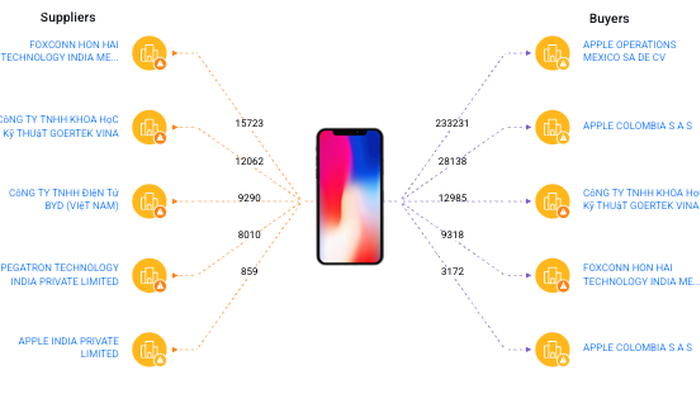
    Did you know that somewhere in a bustling Indian sub‑continent factory line, Foxconn India is quietly pulling the strings that keep CEO Tim Cook‘s iPhone dreams humming? Yep, supply‑chain data from the Sayari platform reveals that this regional arm isn’t just a “just another contractor” – it’s a major supplier feeding the lion’s pantry.

    Why Foxconn India Matters

    • Scale: Think of a mini‑assembly plant that’s got enough output to satisfy the world’s appetite for a single phone model.
    • Speed: They pre‑assemble key components in a flash, ensuring that the final product is ready before the next launch buzz hits the market.
    • Reliability: With meticulous quality checks, the “Indian Edition” sticks to the high standards Apple has set.

    Tim Cook’s Secret Sauce?

    While we all imagine the image of the Apple CEO strolling around a shimmering campus in Cupertino, there’s actually a whole world of supply‑chain symphonies happening elsewhere. Foxconn India’s prolific output means that Cook can keep his finger on the pulse and his head full of innovation, all while knowing that the hardware backbone is solidly in place.

    What’s Next?

    As Apple continues to chase faster tech and smarter designs, the partnership with Foxconn India will likely become the engine driving future wave after wave of gadgets. Keep an eye on this duo — they’re powering more than just phones; they’re fueling the next wave of digital dreams.

    Apple’s Tax‑Trapper: Navigating a Worldwide Tariff Circus

    Picture this: Apple’s global supply chain is having a field day in Asia—yes, the very region that saw Trump unleash a tariff bazooka. Here’s the latest line‑up of where the tech giant’s gadgets are crashing through tariffs:

    India – The IPhone House

    • Apple’s expanding iPhone and AirPods production here will face a 26% tariff.

    Vietnam – The AirPods & More

    • AirPods, iPads, Apple Watches and Macs are all manufacturing in Vietnam.
    • They’re under a 46% levy—talk about paying the full price!

    Malaysia – The Mac Spot

    • More Macs, more trouble:
    • Apple’s Mac production in Malaysia will hit a 24% tariff.

    Thailand – Macland

    • Another Mac hub with a 37% levy.

    Ireland – The EU Chill

    • Within the European Union, Apple manufactures iMacs in Ireland.
    • They’ll bear a 20% tariff—less than Asia, but still a bite.

    Indonesia – Future AirTags

    • Upcoming AirTags and mesh for AirPods Max will roll out here.
    • Expect a hefty 32% tariff.

    China – The Big Hitting

    • China’s newest iPhone tariff at 34% brings the total to a staggering 54%.

    All in all, Apple’s diversification strategy might not feel as lucrative as it promised, especially when you factor in the hefty hit slots: iPhones in India, AirPods in Vietnam, and Macs across Asian shores.

    Executive Steve Cook’s team is scrambling to keep that $999 psychological pricing point intact for the next iPhone generation—can they pull it off? Only time will tell, but right now it looks like they may need to hustle harder to make that magic number stick. Enjoy the drama; Apple’s supply chain saga is anything but slow.