Tag: inline_image_mobile

  • These Are The World's Most Powerful Cars

    These Are The World's Most Powerful Cars

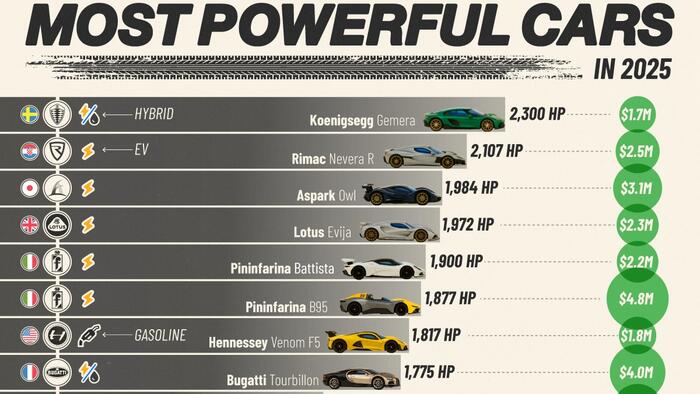
    From hybrid hypercars to high-output EVs, the amount of horsepower that today’s cars can generate is truly impressive.

    In this infographic, Visual Capitalist’s Marcus Lu ranks the 20 most powerful cars of 2025, spanning gasoline, hybrid, and fully electric powertrains.

    Data & Discussion

    The data for this ranking comes from Motor1. It details the horsepower, pricing, and origins of the most extreme production vehicles available in 2025.

    While price tags often run into the millions, some surprising entries challenge the notion that power always comes with exclusivity.

    Koenigsegg and Sweden’s Role in Hypercar Engineering

    Koenigsegg remains a standout in this ranking as the only Swedish manufacturer on the list. Its flagship Gemera produces 2,300 hp, not only topping the global leaderboard but also defying convention by being a four-seater hybrid.

    While the standard Gemera pairs a 3-cylinder twin-turbo engine with three electric motors for 1,700 hp, the upgraded 2,300 hp version utilizes a V8 engine and a single electric motor.

    Sweden’s engineering reputation has traditionally leaned toward safety and practicality, but Koenigsegg has carved out a unique niche in the hypercar market. All of its cars are highly exclusive and cost upwards of $1 million.

    Big EV Power from Accessible Brands

    Electric vehicles are present throughout this ranking, with models from Tesla, Rivian, and Lucid appearing alongside million-dollar hypercars.

    The Tesla Model S Plaid and Rivian R1T Quad Motor both cross the 1,000-horsepower threshold while staying somewhat closer to consumer budgets (The R1T Quad is expected to start at $115,990).

    If you enjoyed today’s post, check out America’s Favorite Car Brand by Generation on Voronoi, the new app from Visual Capitalist.

    Loading recommendations…
  • Department of Transportation Revamps EV Charging Funding Rules to Drive Greater Diversity, Equity, and Inclusion

    Department of Transportation Revamps EV Charging Funding Rules to Drive Greater Diversity, Equity, and Inclusion

    Why the Secret Policy Shift is Giving EV Owners a New Kind of Surprise

    Picture this: you’re in a hurry, your electric car is low on juice, and you’re chasing one of the new “super‑fast” chargers that should have popped up all over the country, thanks to the National Electric Vehicle Infrastructure (NEVI) Formula Program. The whole plan was built on a hefty $5 billion boost from the Department of Transportation. That’s a lot of cash earmarked for a cleaner, faster, and more inclusive America that’s aiming for net‑zero emissions by 2050.

    Now, Transportation Secretary Sean Duffy just dropped a fresh directive that throws a wrench into the mix—killing several Diversity, Equity, and Inclusion (DEI) stipulations that were tucked into the project guidelines. It’s like being handed a recipe for a cake that, momentarily, doesn’t include “flavouring,” only to realize you’re supposed to add it later.

    What the Shake‑Up Means for States

    • Less Red Tape: States no longer have to submit painstakingly detailed DEI plans with every grant request.
    • More Flexibility: The federal money can now be directed more fluidly toward states’ own priorities, lower bureaucratic hurdles.
    • Ongoing Debate: While some applaud the simplification, others worry it’ll sideline the very communities the program was designed to help.

    In short, the guidance rolled out on Monday brings knob‑control adjustments that echo in the entire transportation ecosystem. It’s a reminder that the road to net‑zero is a bit bumpy—one that might still need a few extra turns in the future.

    What the DOT Just Dropped from the EV Charging Playbook

    Yo, folks—buckle up because the Department of Transportation just tossed out a bundle of requirements that were piling on the paperwork for states building EV chargers. Here’s the lowdown.

    Key Requirements That Vanished

    • Equitable Distribution – No more mandate to make sure charging stations spread benefits fairly across all communities.
    • Disadvantaged Communities Focus – The 40 % benefit target for minority and low‑income groups? Gone.
    • Small Business Boost – States no longer must set up doors for black‑owned or women‑owned firms.
    • Consumer Protections & Safety – No requirement to cover consumer safeguards, evacuation plans, or environmental siting.
    • Grid & Renewable Energy – Cleaned up the need to factor in electric‑grid integration or renewable energy plans.

    Why the Shake‑Up?

    • DOT says the new guidance just nets it all simpler: states can get the green light faster and actually put charging spots on the map.
    • It’s backing the Goal of “fewer barriers, more real‑world construction.”

    Even the GAO Was Blowing a Wind‑up

    The Government Accountability Office noted that although $7.5 B was reserved for I‑VE and the CFI, as of April 2025 only 384 ports had materialized nationwide.

    DOT’s Take on the Trump & Biden Legacy

    DOT claims the tweak lines up with President Trump’s 2022 “Unleashing American Energy” order, cutting through “ideologically motivated” regulations that slowed progress. They’re pitching the move as a return to the Trump Administration’s focus on safety, efficiency, and real innovation.

    The Bottom Line—Less Paperwork, More Apps

    “Biden and Buttigieg wasted time, money, and public trust with hard‑to‑grasp rules,” the DOT’s Aug. 11 statement says. The new guidance now slashes red tape and gives states the flexibility they need to keep charging stations rolling. Happy times!

    Legality of Funding Cancelation

    DOT Drops the H-Drop on NEVI Money

    Remember when the Transportation Department quietly said, “Hold it!” on the NEVI money in February? That caused a stir, and the legal eagles were already lining up their arguments.

    Feb. 6: A “Snoozey” Letter

    Back on Feb. 6, the Federal Highway Administration (FHWA) sent a note to every state DPH — the Department of Transportation — and declared a pause on the funneling of NEVI funds. It was a move that rubbed a few people the wrong way.

    May 22: GAO Shakes the Boat

    The Government Accountability Office (GAO) didn’t take the silence for granted. In a May report, it slammed the cancellation, claiming that DOT had “violated regulations.” The GAO made it crystal clear:

    • “DOT is not authorized to withhold these funds from expenditure.”
    • “DOT must continue to carry out the statutory requirements of the program.”

    July: States & DC Throw Down the Legal Hardy

    Six states plus the District of Columbia (think Washington, DC) got fed up. They filed a lawsuit against the Trump administration, arguing that the funding halt hit a wall of regulations, including the Administrative Procedure Act and the Separation of Powers Doctrine.

    June 24: Judge Tana Lin Gives a Clear “No”

    On June 24, District Judge Tana Lin from the Western District of Washington released a preliminary injunction demanding that DOT hand the money back to the states. Her verdict was blunt:

    “DOT attempted to override the express will of Congress.”

    She also pointed out that the agency was stepping beyond its constitutional limits by holding onto the already-approved cash. The result? NEVI funds were to be released to 14 states.

    Aug. 11: The DOT’s New Playbook

    Fast forward to August with a statement from DOT’s top dog:

    “When Duffy and FHWA launched a review of NEVI earlier this year, 84 percent of the program’s funds were still unobligated, which we see as a clear signal of the initiative’s failure.”

    Speaking with a mixture of frustration and new optimism, Duffy declared:

    • “If Congress needs us to pump in charging stations, let’s cut the wonky and get it right.”
    • “The Biden–Buttigieg Administration dropped the ball on the EV chargers promise. Our squeezed-down NEVI guidance is about ditching red tape and letting states do the heavy lifting.”
    • “While I’m not buying into subsidizing green energy, we’re going to honor Congress’s vote and ensure the program uses federal resources efficiently.”

    So, the big takeaway? DOT’s been recalibrated: no more haphazard freezes, no more wastey oversight, and a sharper focus on getting high‑speed, nationwide charging infrastructure rolling. The aim? Get the green future out quickly before anyone feels it is still a concept rather than a reality.

  • US Manufacturing Surveys Surged In August As New Orders Jumped

    US Manufacturing Surveys Surged In August As New Orders Jumped

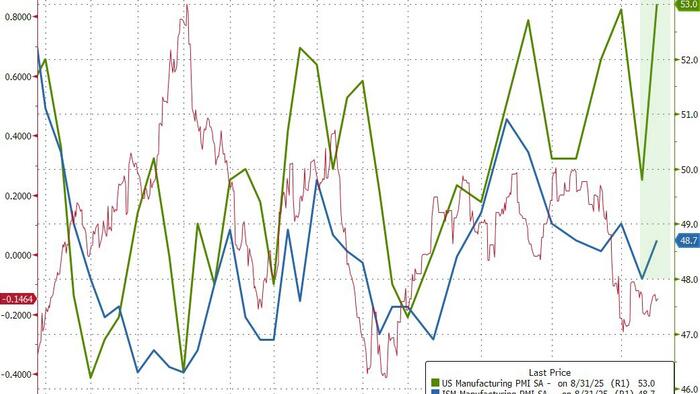
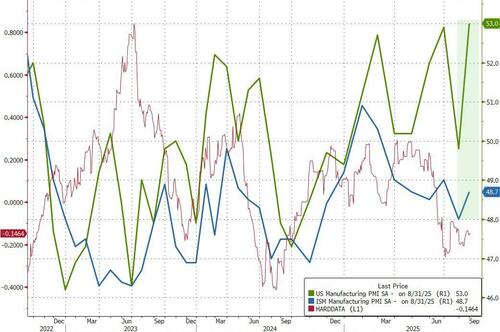
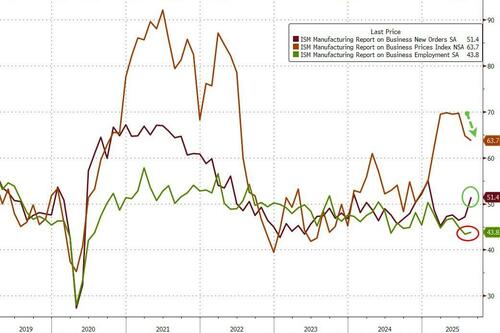
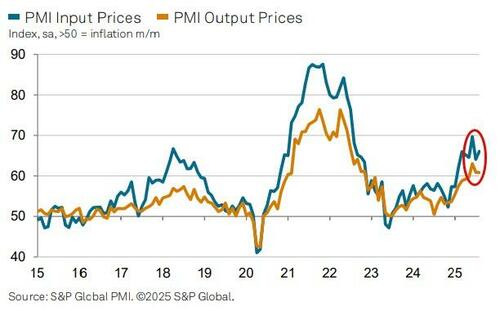
    After tumbling in July, expectations for August’s US Manufacturing surveys were optimistic (with both ISM and S&P Global both expected to tick higher, though the former expected to remain in contraction).S&P Global’s US Manufacturing PMI rose dramatically from 49.8 in July to 53.0 in August (down very marginally from its preliminary print of 53.3) – the strongest in over three yearsISM’s US Manufacturing PMI rose from 48.0 in July to 48.7 in August (below the 49.0 expected)And both of these increases in ‘soft’ survey data come as hard data has disappointed…Source: BloombergUnder the hood of the ISM data, we see prices falling significantly, nmew orders jumping, but employment remaining significantly weaker (as we suggested will happen)…Source: Bloomberg“Purchasing managers reported that the US manufacturing was running hot over the summer,” according to Chris Williamson, Chief Business Economist at S&P Global Market Intelligence.“The past three months have seen the strongest expansion of production since the first half of 2022, with the upturn gathering pace in August amid rising sales. Hiring also picked up again in August as factories took on more staff to meet an influx of new orders and an accumulation of uncompleted work for waiting customers.”“The manufacturing sector is therefore on course to provide a boost to the US economy in the third quarter. But inflationary fears loom…“The upturn is in part being fueled by inventory building, with factories reporting a further jump in warehouse holdings in August due to concerns over future price rises and potential supply constraints. These concerns are being stoked by uncertainty over the impact of tariffs, fears which were underpinned by a further jump in prices paid for inputs by factories, linked overwhelmingly by purchasing managers to these tariffs.“Cost increases are being passed on to customers via widespread hikes to factory gate prices. The big question is the degree to which these price rises will then feed through to higher consumer price inflation in the coming months.”So S&P Global sees prices higher and hiring improving while ISM sees prices falling and employment still badly lagging… take your pick!!Loading recommendations…

  • Intel Shares Surge 5% as CEO Visits White House Amid Trump Resignation Demand

    Intel Shares Surge 5% as CEO Visits White House Amid Trump Resignation Demand

    Update 0900EST: Shares of Intel are up about 5% at the cash open on Monday following the announcement that the company’s CEO will head to the White House to speak with President Trump today.

    Regardless of the outcome of Intel CEO Lip-Bu Tan’s meeting with President Trump today, the stock remains one to watch as Trump pushes to keep American companies—particularly in strategic sectors like semiconductors and rare earth minerals—closely aligned with the government.

    Just last week, we asked whether Intel could be the next MP Materials, in which the government took a private stake last month. With Intel standing as the only truly critical U.S.-based semiconductor manufacturer, the company appears poised to benefit from a potential policy tailwind, no matter who sits in the CEO’s chair.

    Intel CEO Lip-Bu Tan is headed to the White House today, just days after President Trump publicly demanded his resignation over alleged ties to China. Sources close to The Wall Street Journal say Tan will discuss his personal and professional background with the president, emphasize his allegiance to America, and advocate for closer government and Intel cooperation. 

    Tan is a Malaysian-born/American citizen and has worked in the tech industry for years. He recently took over as CEO of the struggling chip company to revive it and position it for a turnaround. 

    But his tenure has already seen turmoil and political scrutiny.

    Concerns stem from Cadence Design Systems, where Tan was CEO until 2021. Last month, Cadence agreed to pay $140 million to settle DOJ charges for selling chip-design tools to a Chinese military university.

    Optics so far are unfavorable for Tan, especially against the backdrop of the “America First” movement.

    Here’s more from the sources about Tan’s upcoming meeting with Trump:

    Tan is expected to have a wide-ranging conversation with Trump, with the intent of explaining his personal and professional background, the people said. He could also propose ways that the government and Intel could work together, they said.

    Tan hopes to win Trump’s approval by showing his commitment to the country and pledging the importance of keeping Intel’s manufacturing capabilities as a national security issue, one of the people said.

    The controversy surrounding Tan began last Thursday after President Trump read U.S. Republican Senator Tom Cotton’s letter sent one day earlier to Intel’s Board about the CEO’s ties to Chinese firms.

    This led to Trump firing off a Truth Social post: “The CEO of INTEL is highly CONFLICTED and must resign, immediately.”

    After today’s meeting, it’s likely only a matter of time before the White House announces “golden shares” in Intel – just as it did in the U.S. Steel-Nippon deal.

    High teens appear to be the floor. 

    . . .

    Loading recommendations…
  • The 30 Most Common Passwords Worldwide Revealed

    The 30 Most Common Passwords Worldwide Revealed

    Why Your Password Is Practically a DIY Birthday Cake

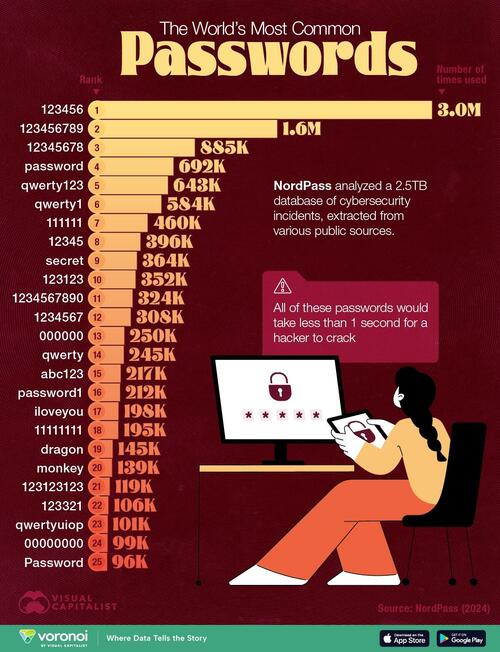
    Everyone’s got a naughty secret: that their login credential is the “world’s best defense against hackers”—the kind of password that even a toddler could guess. But just how many of us publicly brag (or overplay) with the same set of ten‑digit clichés? A slick Visual Capitalist infographic by Marcus Lu pulls back the curtain and shows the 25 most common passwords worldwide.

    Top 25 Passwords: A Tiny Roster of Digital Disasters

    • 1. 123456 – The “super‑secret” that’s been stuttering out since…well, forever.
    • 2. password – Because life isn’t difficult when you’re at the level of a plain café snack.
    • 3. 12345678 – A glorious, safer little number vibe, if you’re the type who’s worried about length but not security.
    • 4. qwerty – The keyboard‑greased hero for keyboard warriors.
    • 5. abc123 – A perfect—if not brilliant—pick for coders who prefer simplicity.
    • 6. 123456789 – A finger‑friendly extension folks enjoy working through.
    • 7. 111111 – Because one is definitely the most reliable number.
    • 8. 12345 – A shorter, lightning‑fast method to get in.
    • 9. 1234567 – A 7‑digit version that feels somewhat more sophisticated.
    • 10. 1234 – The minimum viable password, just two characters away from being pure guesswork.
    • 11. monkey – Because a primate is cute, let’s face it.
    • 12. 123321 – Mirror‑image style to impress that symmetrical aesthetic.
    • 13. 131313 – A quirky repetition that keeps the pattern rolling.
    • 14. 123654 – A scrambled approach that doesn’t add much security either.
    • 15. 999999 – Easy as pie…or the number that gods use for doom.
    • 16. 00000 – Because zeros are so environmentally friendly.
    • 17. 123123 – Another repeating pattern that feels incredibly safe.
    • 18. 777777 – Lucky number—if you’re a genius.
    • 19. 987654 – The reverse of a perfectly normal sequence.
    • 20. 1234567890 – All digits: a million‑no‑hassle approach.
    • 21. asdfghjkl – Stalked alphabet, for those who want to be full keyboard‑wranglers.
    • 22. 146152 – The randomish sequence that’s actually just the same numbers posted on a calculator.
    • 23. test – Because you definitively need a test password.
    • 24. 123456789a – A sprinkle of character at the end? Try that if you’re feeling reckless.
    • 25. password1 – The classic bravery of “password”with a digit.

    So there you have it. If your password is on this list, congratulations – you’re officially a member of the “contagious password club.” The next step? Pick something that really keeps the fish out of your personal inbox and your bank account. Trust us, it’s worth it, and the jokes about “you’re still using 123456” will be a thing of the past.

    Data & Discussion

    What NordPass Uncovered About Your Passwords

    Ever wondered what the most common passwords are? NordPass has the inside scoop, having sifted through a massive 2.5 TB database of exposed credentials pulled from data breaches. Here’s what they found:

    • Everyone loves a simple “123456” – it’s still the #1 pick.
    • Celebrity names and emoji combos keep popping up, because we all want to feel cool.
    • Remember: the more generic, the safer your chances of getting hacked.

    So next time you set up a password, think beyond the obvious. This data reminds us that being creative might just save your digital life.

    Numbers Still Reign Supreme

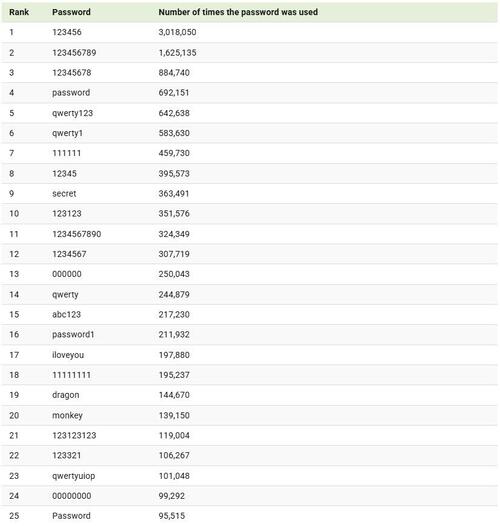
    In the wild world of passwords, the number “123456” sits on the throne as the most common contender, having been used over 3 million times in the latest NordPass survey. Six of the top ten passwords are nothing but straight digits, proving that predictability is still the king of the cyberspan.

    Why Numbers Are a Hackers’ Playground

    • Instant brute‑force victory – A mere few seconds is all it takes a hacker to crack a simple numeric sequence.
    • Human comfort zone – Numbers feel safe, but that safety is an illusion.
    • Plain as paper – The fewer the twists, the faster the bots can swoop in.

    Keyboard Patterns and Easy Words: The “Can’t Remember, But I Used It!” Club

    Besides digits, many people handpick keyboard rows like “qwerty” or ubiquitous terms such as “password” and “secret”. Even when tweaked—think “Password” or “password1”—the security improvement is about as tiny as a snowflake on the sidewalk.

    • “qwerty” — the keyboard’s VIP lounge for lazy folks.
    • “password” — the most popular word to call a password.
    • “secret” — literally a motion‑to‑leak the year‑old Netflix password.

    These choices might seem harmless, but they are as welcome to cyber‑thieves as a kindergarten playground to bullies: easily guessable, easily stolen, and surprisingly low‑effort to hack.

    How to Create a Strong Password

    Think Your Password Is Strong? Think Again!

    Picture this: you’ve sprinted through eight hoops for a party plan because you think your password is iron‑clad. The truth? If you’re still using the same old “Password123”, you’re basically giving strangers a free ticket into your digital club.

    NordPass’s Hard‑Hit Rules (Yes, You’re Not Escaping That 20‑Character Limbo)

    • Length: At least 20 characters. If “Password123” is your brand, slap on some extra random letters to give it a workout.
    • Mixed Case: Uppercase and lowercase letters. Throw in a surprise “A” or “b” so it’s not all elbows and knees.
    • Numbers: Mix in 0‑9. Numbers help make that password untangle from a string of vowels.
    • Special Symbols: Think @, #, or $. These are the secret sauce that makes a password hard to guess.

    Chrome’s Secret Password Coach

    Google Chrome doesn’t just store it; it offers a high‑strength password when you sign up for new sites. Accept the suggestion, and you’ve just turned your password into a fortress.

    Never Reuse Passwords – One Compromise, Two Danger Zones

    If one account falls, all the others that share the same garbled string can crash the whole digital dam. Think of it like sharing a single key for all your doors: as soon as one lock breaks, the rest are compromised.

    Feeling Safe? Get More Tips Here!

    Enjoyed this password pep talk? Dive into The Five Most Common Cybersecurity Mistakes on Voronoi, the new app from Visual Capitalist. No password may be safe, but a handful of best practices can keep it good enough to close the door, not just flood it.

  • Cricket for MAGA: Trump Mobile Drops America First Phone & Service

    Cricket for MAGA: Trump Mobile Drops America First Phone & Service

    When Democrats Pick a Fight Against Trump’s New Smartphone

    After a weekend full of color‑swapping and nonstop calling out “No Kings,” the left is gearing up for the next showdown. The plan? Ridiculous, but oh so funny: let the newly sprouted Trump Corporation smartphone become the rallying point for a fresh wave of outrage.

    What’s the Deal with the Trump Phone?

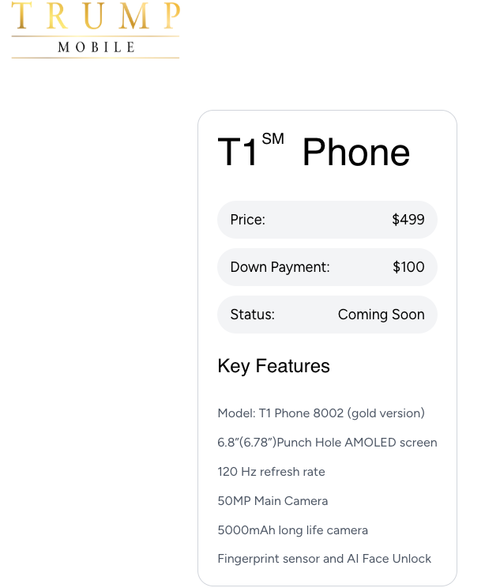
    • The phone is slated to hit the market for roughly $499.
    • The full package comes with a monthly subscription of $47.45.
    • What’s in that subscription? Unlimited calls, texts, data, roadside help, plus a “Telehealth and Pharmacy Benefit” that turns a device into a medical assistant.

    Why the Democrats are All Fired Up

    The big picture: Democrats –– that’s the whole spectrum – are not about to let this go unnoticed. They’re planning a new wave of protest, but this time they’ll be shouting on BlueSky instead of running around ICE facilities. The plan is to turn the Trump phone into the new symbol of federal overreach. The idea is: “We’ll get even with that business that thinks it can put phones in every pocket and make everybody who’s an older boomer an activist.”

    Who’s on the Front Lines?

    There’s a bit of humor in seeing those retired Americans who once spent their days watching the news instead of planning to pick up phones and perform civic activism. The image is a parade of boomers with pocket‑sized phones, marching through city streets and making an existential statement: the smartphone era is here, and they’re not backing down.

    Stay Tuned for Monday!

    By Monday, expect a flurry of heated social media posts, more order to the protests and a whole lot of meme culture. The dragging of the elderly boomers into the protest is going to have a twist that could be either chilling or chuckle‑worthy, depending on your taste for satire.

    T1 Mobile: The New Phone Revolution

    Forget Cricket—the Trump Organization is rolling out its own brand‑name T1 Mobile.
    Designed for the nation’s finest workers, this new service promises unbeatable value, top‑tier connectivity and an unmistakably all‑American vibe.

    What’s Inside the $47.45‑a‑Month Plan?

    • Unlimited talk, text, data—no more scary overages.
    • Device protection that’s always on guard.
    • 24/7 roadside assistance through Drive America—Because even your phone deserves a push‑up.
    • Telehealth services: virtual doctors, mental‑health chat, and hassle‑free prescription ordering.
    • Free international calling to 100+ countries—including many military bases—so families back home can talk without an extra fee.
    • No contracts, no credit checks—straightforward, no‑fuss economics.

    Trump Jr. Speaks the Truth (and the Promise)

    Donald Trump Jr. says, “We’re changing the game with Trump Mobile. Built right here in the U.S., we’re putting America first while delivering the best service and quality our customers deserve.”

    BREAKING: Eric Trump has officially announced the launch.
    Phones will be made in the USA, because it’s about time we bring back products to our great country.

    Celebrating 10 Years of the 2016 Campaign

    In a tweet from June 16, 2025, Eric Daugherty noted the 10‑year anniversary of the 2016 campaign launch, hinting at more bold moves coming your way.

    T1 Phone: Sleek, Gold, and 100% American Made

    The Trump Organization says the new T1 Phone is a gold‑finery device, engineered for performance and proudly built within U.S. borders. It’s a smartphone for customers who expect premium quality from their carrier.

    Trump’s New Phone Plan: A Midwest Makeover

    St. Louis, Missouri is the unlikely home of the Trump mobile revolution, as Eric Trump proudly announced on Fox News.

    Why the Heartland?

    • A call center that’s in the US instead of overseas.
    • Marketing the T1 brand as a direct competition with Apple and Samsung.
    • Targeting 50‑percent U.S. consumers who want the “homegrown” buzz.

    Tariff Tactics & Apple Antics

    President Trump has unleashed a 25% tariff threat against iPhones that aren’t built stateside.

    Apple CEO Tim Cook, who’s slowly moving production to India, might see a hefty bump if it remains foreign.

    Truth Social had Trump say:

    “If iPhones sold in America aren’t built in America, Apple must pay a tariff of at least 25%.”

    The Duel Begins

    Apple’s race to US assembly is in chapter 5, while the Trump Org’s phone call is in chapter 1.

    What’s Next?
    • No concrete plans yet for U.S. manufacturing sites.
    • Expect political fireworks from Democrats, who will accuse the family of playing the “family business” game.
    • Read the buzz on Bluesky for more out‑of‑the‑box opinions.
    Bottom Line

    Trump’s mobile venture is making a bold play—leveraging domestic production to dodge import duties. Whether it will actually set up shop in St. Louis or become an elaborate marketing stunt remains to be seen. Stay tuned!

  • Bill Maher urges Democrats to choose common sense over wokeness

    Bill Maher urges Democrats to choose common sense over wokeness

    Bill Maher: The Left’s Outlier Braving the Woke Wave

    Matt Margolis from PJMedia.com keeps pointing out that Bill Maher is not your typical left‑wing commentator. He’s the comedian‑turned‑talk‑show host who’s willing to get in the trenches of his own party to call out the woke faction that’s been seeping in.

    • Leftist? Absolutely.
    • Woke‑left? It’s a habit he’s openly attacking.
    • Goal? Keep the Democratic Party from spiralling into the kind of “crazy” culture some fear.

    Maher’s rants are sharp, relentless, and—just maybe— a breath of fresh air for those of us who’ve noticed the Democratic Party wobbling on the edge. He doesn’t shy away from pointing out destructive elements that are taking hold in certain segments of the party.

    What It Means for the Party

    • His critiques serve as a stern wake‑up call to the woke guards who might be turning the party insane.
    • He’s the only left‑leaning voice willing to vent from inside the clubhouse.
    • While change feels slow right now, it’s a hopeful note that the party can stop being “crazy”—a dream worth chasing.

    Bill Maher Goes on a Woke‑Free Rant

    Bill Maher isn’t just poking fun at the left’s “woke” nonsense—he’s on a mission to patch up a party that’s tripping over its own progressive swagger. That’s the story he’s telling on his national TV spot, and it’s got a flavor that drops the pedestal and drops the mic.

    The Problem in a Nutshell

    Maher’s vibe is clear: the Democratic Party is stuck in a rabbit hole of identity politics and calling each other “terrorists” over historic baggage. It’s a recipe for collapse. He’s not merely making jokes; he’s calling for a hard reality check.

    His biggest buzz? “Do you support the values of Western civilization?” He’s pushing Democrats to decide: stand with the legacy of liberty or be caught up in the same outrage that made the Sydney Sweeney ad headlines disappear.

    Intersectionality: The First Bite of the Infection

    According to Maher, intersectionality is the vaccine for waking up the party, not the disease. He says:

    • It takes the old grievances and turns them into racial hierarchy anthems.
    • It unfairly pins guilt on white folks while ignoring the same wrongs by everyone else.
    • And it leaves Democrats looking like they’re playing with a gun while the world is skittish.

    Maher’s Radical Call

    He lays down the law in plain talk: “It’s either the values that built the West or the ghosts of terror.” He warns that many Democrats might just be one step away from echoing the extremist rhetoric of groups like Hamas.

    What the Party’s Doing

    With approval ratings falling below 33%, Maher is not holding back on national TV. He calls out the specific slide toward the left that will send the party erupting into its own “identity crisis.” He even points a microphone at the crowd with the dramatic caption: “The world… pic.twitter.com/gcfBHnbz04” (but the tweet is no longer relevant; it’s just a punchline!).

    Bold Conclusion

    The takeaway is simple: the Democratic Party won’t survive unless it picks a side. Buckle up for a political showdown where sanity stands against a runaway frenzy. Bill Maher’s out loud—and he’s calling on Democrats to slow the madness before it’s too late.

  • Trump Reinstates FBI Whistleblowers Punished By Biden, Grants Back Pay

    Trump Reinstates FBI Whistleblowers Punished By Biden, Grants Back Pay

    Authored by Luis Cornelio via Headline USA,

    FBI Director Kashyap Patel claimed on Thursday that nearly a dozen whistleblowers punished by the Biden administration would be reinstated with back pay.

    Patel said that 10 FBI agents would be impacted and added that their security clearances would also be restored.

    The move will likely come in the form of settlements with the assistance of Senate Judiciary Committee Chairman Chuck Grassley.

    “We greatly appreciate @realDonaldTrump commitment to transparency and accountability,” Patel wrote on X.

    While Patel did not specify which agents would benefit, the Biden-era FBI faced countless accusations of bias and weaponization.

    Whistleblower testimony exposed how the FBI sought to tie President Donald Trump to the Jan. 6 protests of the 2020 election.

    Other testimony revealed that the bureau justified surveillance and other powers by citing distorted data about “domestic violent extremists,” all based on the single events of Jan. 6.

    Patel’s move followed Trump’s purge of the FBI and DOJ, removing corrupt and biased officials tied to whistleblower accusations. There has been some debate over whether Patel’s move came later than expected.

    Loading recommendations…
  • U.S. Electric Vehicle Adoption Takes a Tumble

    U.S. Electric Vehicle Adoption Takes a Tumble

    Electric Vehicle Buzz Slumps in the U.S.: 16% Only Think They’re Worth It

    According to AAA’s latest survey, only 16% of American drivers are eyeing an electric vehicle (EV) as their next car—its lowest level since 2019. It seems the dream of zipping around in a silent, zero‑emission ride is hitting a snag.

    What’s Turning People Off?

    • High Up‑Front Costs – EVs can be pricey, and cash‑hungry drivers are often short‑sighted about savings that might show up years later.
    • Charging Hassle – Outlets are still far from ubiquitous. Those logistics headaches leave many feeling too busy to worry about plugging in.
    • Long‑Distance Concerns – Without adequate range, you’re basically stuck in a grandpa’s garage, especially for cross‑country trips.

    Enter the Hybrid Hero

    While EVs are on the backburner, hybrid and plug‑in hybrid models are stepping up as the “real‑world” alternatives. They combine the best of both worlds—fuel savings and the occasional electric‑powered zip—minus the dramatic upfront price tag and the fear of hitting a dead battery on a road trip.

    Why the Shift Makes Sense
    1. They’re budget‑friendly—no need to upend your finances to jump on the electric train.
    2. They offer flexibility—you can keep using gasoline during long trips, sparing you the worry of scouting charging stations.
    3. They’re leverage-ready—more car manufacturers are offering hybrids with smoother performance and better tech, making the transition easier.

    The Bottom Line

    America’s cars are gradually drifting away from the electric dream—at least for now. The combination of cost, infrastructure, and practicality is nudging many drivers toward hybrids that provide the best of both worlds. Time will tell whether EV enthusiasm rebounds, but for now, the electric rush appears to have taken a voluntary detour.

    Why Americans Are Staying Quiet About Electric Cars

    Even though the U.S. auto market is buzzing with new electric‑vehicle (EV) models, a recent AAA survey shows that most drivers are still leaning on their old gas‑burning rides. The latest numbers reveal the main reasons behind this reluctance.

    Big‑Oh Barriers Keep Drifting

    • Battery repair costs – 62% say this scares them.
    • Purchase price – 59% can’t justify the up‑front spend.
    • Long‑distance travel worries – 57% think roads are not EV‑friendly.
    • Public charging headaches – 56% doubt finding a plug anywhere.
    • Fear of running out of juice – 55% worry about a dead battery mid‑trip.

    New Complications on the Road

    Three fresh factors jumped onto the drag chart this year:

    • Gas prices dipped to their lowest since 2021, so the “save a bunch of money” buzz is weaker.
    • Uncertainty over tax credits and rebates – fewer folks want to gamble on future savings.
    • Political noise – the future of EV incentives feels like a game of roulette.

    Numbers in a Nutshell

    Back in 2022, when gasoline was $5 a gallon, 25% of U.S. adults were likely to buy an EV. This year that number has fallen to 16%. On the flip side, 63% now say they’re unlikely or very unlikely to make the switch.

    Even though retailers and carmakers are flooding the market with over 75 new EV models, public optimism has slashed. Only 23% of drivers now believe most cars will be electric within the next decade—down from 40% in 2022.

    Maybe a Hybrid is the Sweet Spot?

    AAA suggests that plug‑in hybrids could be the sweet spot for many. They blend the familiarity of gasoline with electric perks, slashing range anxiety while still giving a boost to the planet.

    So, unless oil prices slam back up or incentives get a facelift, the U.S. pedal‑stomper is still tapping the gas pedal with a side glance at the charging station sign in the distance.

  • China Smartphone Sales Plunge in May, Yet Camera Performance Soars

    China Smartphone Sales Plunge in May, Yet Camera Performance Soars

    China’s Smartphone Scene: A 21% YoY Decline, but Small Wins in the Pipe

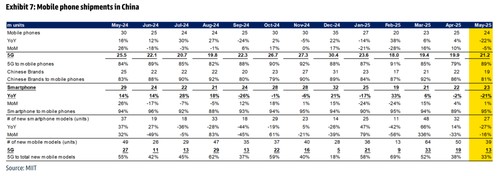
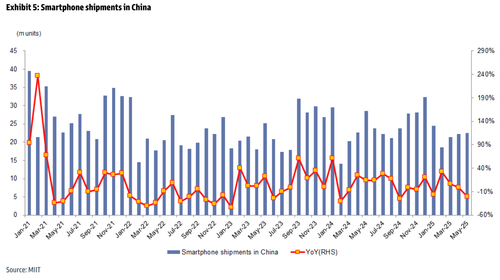
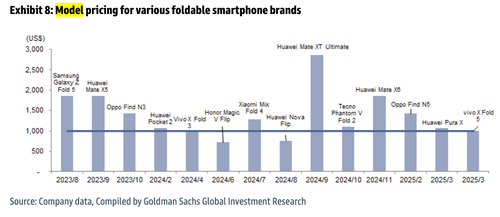
    Goldman Sachs just dropped another bombshell on the tech radar: in May, China shipped a mere 23 million phones—a 21 % drop from last year. That’s a chunky hit compared to the 2024 highs. Still, the monthly lift of 1 % shows a glimmer of keep‑moving‑forward optimism.

    What the Numbers Really Mean

    • YoY slump: 23 m units in May 2025 – down 21 % from May 2024.
    • Monthly trend: A modest 1 % bump from April, meaning sales are holding on a bit.
    • Year‑to‑date: 5 % decline overall through May, a cumulative wipe‑out from the 2024 boom.

    May’s Model Launch Scene

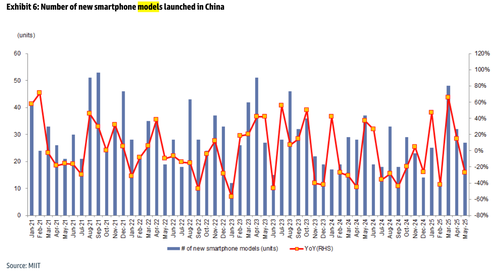
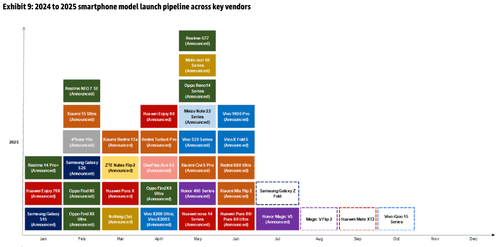
    The model launch pipeline also took a hit: only 27 new models appeared in May 2025—a 27 % YoY drop—versus a 14 % increase to 32 models in April. That’s roughly a one‑third cut in fresh offerings.

    Why It Matters

    For consumers, it means more knobs to turn when searching for deals, a slower stream of shiny new tech, and the industry trying to keep foot traffic alive in a market that’s straining against a leaky bucket.

    Sounding the Alarm… With a Smile

    So, the takeaway? The Chinese smartphone market’s a little toe in the ground, but the after‑shocks aren’t completely flat. Keep your eyes on the price tags and your finger ready for the next discount wave. The tech playground may be shrinking, but the creative fireworks—hive‑beᴃaᴛe of those 27 new models—are still drawing a crowd.

    Less Cameras, More Power: The 2024–25 Smartphone Shoot‑All‑Shoot!

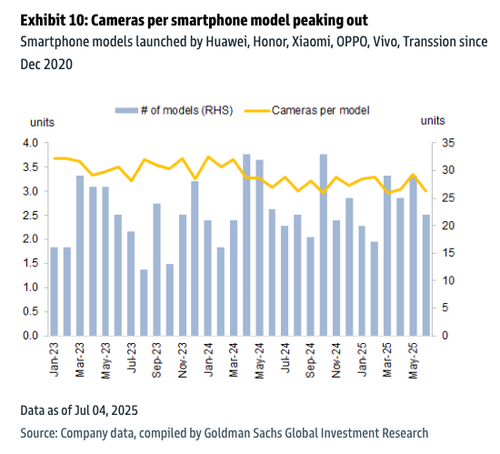
    In a twist that feels a bit like a “fewer thumbs, higher score” moment, our tech sleuths—led by the sharp‑eyed Allen Chang—have spotted a curious trend in China’s phone cameras.

    Camera Count: The Sloping Numbers

    • 2022 peak: 3.8 cameras per handset (that’s practically a tripod).
    • 2024 YTD: down to 3.3 cameras.
    • 2025 YTD: a further drop to 3.1 cameras.

    Bottom line: smartphones aren’t cramming in more lenses. They’re trimming the camera squad, maybe to save space or battery—but the real story is in what those lenses can actually do.

    20 MP+ Power Surge

    • 2023: only 39 % of phones pushed 20 MP+. 2022 saw a lean 31 %.
    • 2024: 52 % of devices hit that milestone.
    • 2025 YTD: 51 %, holding the top‑tier turf very steady.

    Even with fewer cameras, the high‑resolution wave is surging. Analysts say it’s a deliberate upgrade spree—China’s smartphone mappers are riding the “more pixels, less fuss” runway.

    What It Means for You

    • Fewer lenses might feel less fancy, but the result? Crisp, high‑def shots at your fingertips.
    • No more “camera battle” confusion—pick one, hit the magic 20 MP+ threshold, and you’re good to go.
    • Future phones might focus on smarter AI and better sensor tech rather than sheer lens count.

    So strap in—China’s mobile players are trimming the camera flock, but the birds are getting brighter, not bigger. That’s the new photography frontier!

    5G Shines, But New Models… Stutter

    Picture this: the 5G segment is holding its ground like a seasoned champ, with shipments climbing a neat 7% from April to a whopping 21 million units. That’s not just numbers— that’s a record‑breaking 89% of China’s smartphone market already powered by the lightning‑fast network. It’s like everyone finally got the memo that 5G is the new standard.

    New 5G Models – The Kind of Drop That Makes You Pause

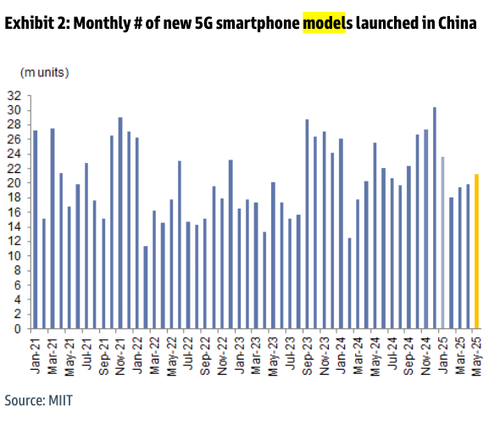
    However, the comedy of it is that the new 5G phone releases have flatlined in a dramatic 52% y‑o‑y slump. April brought 19 fresh faces into the market; this May, only 13. It’s as if every handset manufacturer decided to hit the pause button on innovation.

    Chart‑Talk (no actual charts, but you can imagine them)

    • Shipments Diagram: A rising line arrow from 20.5 million in April to 21 million in May— each step marked with a sparkling star because—well—5G is everywhere.
    • New Models Bar Graph: A classic bar comparison: April’s bar stands tall at 19 units, while May’s bar slants down to 13. The missing bars reveal the sudden pause in fresh releases.
    • Penetration Rate Gauge: Picture a fast‑moving needle that hits 89% in both months— a clear visual of how 5G dominates the skyline.
    Why the Wait?

    From a quick look: cost, supply chain hiccups, or perhaps the industry is piling up on quality over quantity. Or maybe the designers are just tired of pocket‑sizing the same features twice.

    Takeaway

    5G is firmly in place, but fresh models are playing hide‑and‑seek. Let’s hope the next wave brings the buzzback— because a market that’s saturated with the same models is basically a* good-humored 5G who’s gone rusty.

    What’s the Buzz About the Smartphone Pipeline?

    Hey tech fans, ever wondered why the latest phone ships so slowly or why the hype trains track out of the line? Let’s break down the smartphone pipeline—the behind‑the‑screens dance that turns raw parts into sleek gadgets.

    1. From Factory Floor to Your Pocket

    • Raw Materials: The journey starts in Shenzhen, where silicon, glass, and metal are pulled, cut, and sorted.
    • Assembling: Tiny robots, a bit of human hands, and a disciplined schedule put the guts together—think of it like building a Lego house with 10,000 pieces.
    • Quality Control: Every board gets a test run. No bugs, no yelling. It’s all about catching that one glitch before it travels all the way to your doorstep.
    • Packaging & Shipping: Once squeaky‑cleaned and labeled, the phones hop onto cargo ships or rockets of efficient freight.

    2. Bottlenecks & Knee‑Slapping Moments

    Even the smoothest pipeline can hit hiccups. Here are a few rollercoasters in the making:

    • Component Shortages: Picture Bitcoin’s scarcity, but for chips—silicon shortages can stall the entire line.
    • Policy & Tariffs: Trade wars? Door step. A sudden customs fee can mean a five‑day delay.
    • Earthquakes & Fires: Natural disasters remind us that even tech is not immune to the unpredictable.
    3. The After‑Party: Marketing & Launches

    With polished devices in hand, the brand turns up the volume. From teaser trailers to celebrity‑backed events, marketing transforms a newly minted phone into a cultural phenomenon.

    Why It Matters to You

    Faster pipeline = sooner runs on the newest cameras and larger batteries.
    Delays = sometimes it takes the real world and a straight walk to your inbox.
    For the thrifters: A clogged pipeline can inflate prices—grab that deal when you see a splash screen!

    So, next time you eye a brand‑new phone, remember the invisible gears turning behind its glossy façade. That’s the smartphone pipeline—the slow dance of progress that, when finally done, flips your old device off the shelf.


  • A Quick Peek Into the Shipping Forecast – Turns Out, It’s Not All About the Dive

    *

  • Chang’s latest prediction? A 4% dip in shipments for Q2, followed by a modest 2% slump in Q3. Sounds like a sluggish swim, but the crew behind the numbers keeps their eyes on an exciting upgrade bonanza.


  • What’s Heating Up Below the Surface?

    *

    • New hardware specs rolling out to give devices a well‑deserved performance boost.
    • A deliberate pivot toward premium models—the market’s saying “more bang for your buck” and we’re listening.

  • Stakeholders In the Spotlight

    *

  • The fresh “Buy” ratings come from a who’s who of the electronics world:

    • Hon Hai (Foxconn)
    • AAC
    • Largan
    • Luxshare
    • SZS
    • Fositek
    • BYDE
    • Transsion
    • Will Semi
    • MediaTek
    • TSMC

    So, even though the numbers are looking a bit shy, the industry’s still serious about stepping up the game.

  • US Retail Sales Soar, Yet Worries Mount

    US Retail Sales Soar, Yet Worries Mount

    BofA’s Crystal Ball X-Force Says Traders Better Load for Calm

    If BofA’s omniscient analysts are right—yes, they’ve been consistently on the winning side of this data series versus consensus for months—then traders should strap in for a bit of disappointment when the retail sales numbers drop into the night sky this morning.
    In other words, don’t be surprised if the market takes a polite but firm bite away from those rosy forecasts.
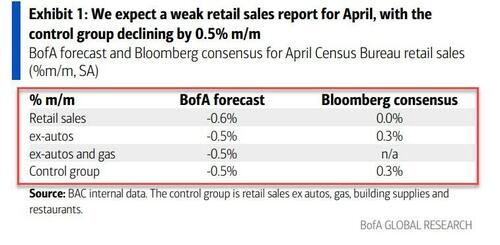
    Whoa, Wall Street Got It Wrong Again!

    Retail Sales Surprise & the BofA Glitch

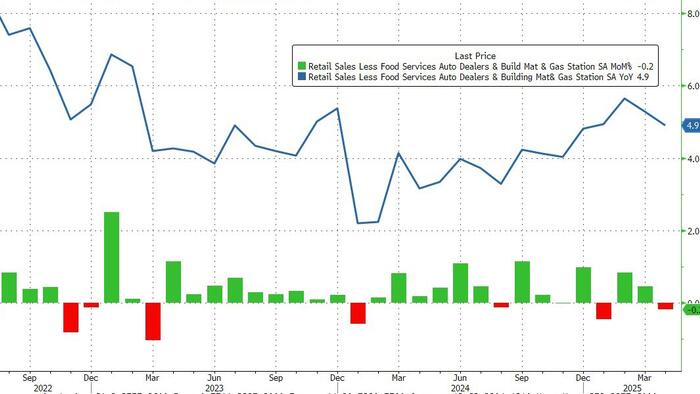
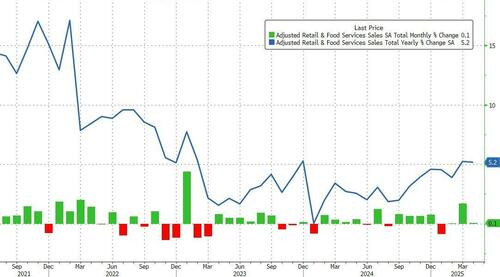
    It turns out the Bank of America analysts missed the mark one more time. The headline retail sales jumped 0.1% month‑over‑month—so close to the market’s 0.0% expectation, but with a bonus tweak from last month’s surprises.

    In March, economists had climbed the chart by +1.7% (instead of the originally projected +1.4%), giving buyers a little extra breathing room. That nudged the yearly figure up to +5.2%—right in the ballpark of the biggest jump since December 2023.

    • 0.1% MoM increase thrilled shoppers and startled analysts.
    • March’s +1.7% revision polishes the forecast.
    • Year‑on‑year +5.2% puts us near the peak from last year’s December.

    So if you’re planning a big shopping spree, remember: even Wall Street can swerve. Just go ahead—those sneakers are now officially better than your analysts predicted!
    Sector Showdown: Sporting Goods Takes a Dip, Building Materials Rise to the Top

    Why the market’s feeling a little sports‑centric and a lot of construction verbs.

    Bloomberg’s latest rundown points to a clear winner and loser in the current trading landscape. Sporting Goods fell the steepest – think of it as a bad day for your favorite football shoes – while Building Materials shot up the loudest, like a new skyscraper hitting the skyline.

    Key Takeaways

    • Sporting Goods: Hit the worst slump of any sector. Investors seemed to have tossed their sports memorabilia into the bin.
    • Building Materials: Experienced the biggest rally. Steel, lumber, and cement turned into the market’s new best friends.
    • Other sectors saw modest moves, but the contrast between these two was hard to miss.

    What’s the Inside Story?

    When the bell rings, traders looked at sales fueling the economy. Sporting Goods—think gyms, outdoor gear, and that pricey new game console—struggled to keep pace. On the flip side, the construction surge suggests homes, businesses, and even new bridges are on the upswing.

    Humor & Emotion: The Crowd’s Reaction

    Picture a sports bar where everyone’s cheer squad is suddenly on sale. The cheers get quiet, and in the corner, someone with a hard hat is raising a toast to the booming building sector. “Let’s build up (the mood)” – you heard that right.

    Bottom Line

    In a nutshell, sporting goods shoppers feel a chill, while the trowel and hammer have a warm, triumphant vibe. Stay tuned for more updates on which sectors will keep their footing or go off the rails!
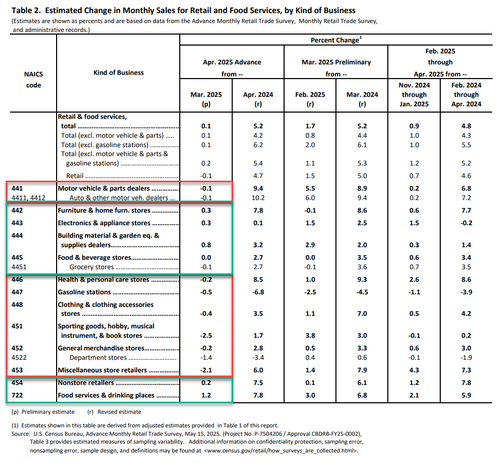
    How Tariff Front‑Running Boosted Car Sales into a Wild Spin

    Last month the motor‑vehicle market didn’t just shift—it sprinted. A so‑called tariff front‑running strategy pushed sales into a frenzy that had everything from bump‑in‑the‑road nutty to body‑shop managers cracking jokes about bumper‑up‑blowing.

    Why the Surge Happened

    • Strategic Price Hikes – When tariffs on imported cars popped, dealers pulled the trigger and lifted prices for a brief window.
    • Consumer Psychology – The fear that “prices will go even higher” sparked a buying frenzy: “Buy now or rejoice later!”
    • Limited Time Offers – “Deal for 48 hours only” slapped over shiny SUVs turned resale markets into arm‑chairs for quick grabs.

    How Dealers Responded

    1. “Front‑running” was the name of the game: buying bulk inventory before tariffs kicked in. It kept the shelves stocked while others were scrambling.
    2. Dealerships stuffed promotional posters in the aisle, each one shouting: “Lowest price in town! Limited stock—grab it!”
    3. Some owners laughed and said, “I got my car at the wrong price in the name of front‑running; it’s like a game of Monopoly, but the house rule is ‘pay less if you rush’.”

    Customer Highlights

    • “I nearly lost my heart to a 2019 sedan – then the dealer convinced me it was the early‑bird special!” – says Emma K.
    • “The reason I bought a used SUV last week was the front‑running craze; I’d never felt such a thrill when picking a car!” – declares Marco D.
    • People are now calling it the “Turbo‑Tax” of the automotive world because those extra dollars are burning in the newest cars.

    What’s Next?

    Car polls say that if the tariffs keep the momentum, the market might just keep looking like a roller‑coaster for the next few months. Dealerships are poised to find the sweet spot between competitive pricing and thriving inventory while customers keep cheering for their next car adventure.

    Bottom Line:

    Tariff front‑running doesn’t just create a sudden spike—it creates a vibrant, emotional rush that basically turns anyone in a dealership into a playful gambler. A perfect mix of daring, drama, and a dash of humor.
    Retail Sales Break Out of the Cold

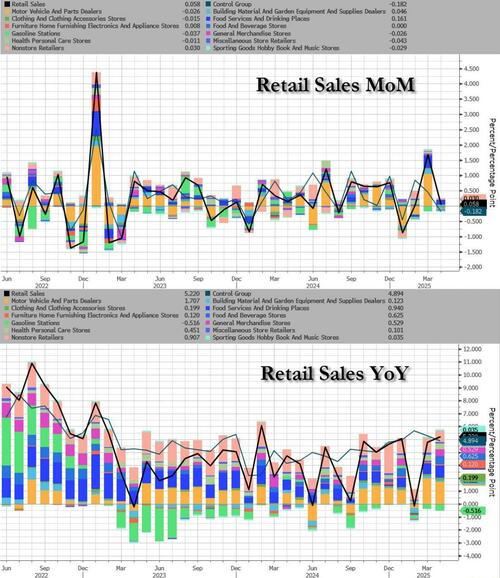
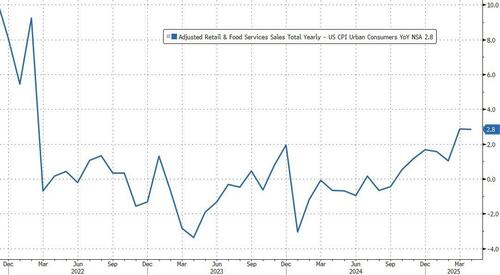
    Picture this: every month people dump their wallets on the shelves—retail sales just sprinkled a generous 2.8 % increase year‑over‑year. That’s not a casual bump; it peaks the entire data stream from February 2022. Sound exciting? Let’s unpack the numbers.

    What’s Really Happening?

    • Nominal Numbers – The figures we see are straight‑line, not tweaked for inflation. Think of it like watching a movie in full color, not through a filter that removes the “real” picture.
    • Rough Inflation Adjustment – A quick, low‑effort recalibration shows the growth remains solid when you factor in the cost of living.
    • Compares to 2022 – The latest climb hits a high that hasn’t been seen since the early part of last year, meaning shoppers are still flustered around discounts and new gadgets.

    Why the Buzz?

    Retail sweet‑spot nudges the economy’s heartbeat. When sales climb, it hints that the crowd’s buying confidence is still open for business. From grocery aisles to flagship stores, this uptick signals “we’re climbing back up, folks.”

    Funny Side‑Note

    Do you think you’re saving? Maybe. If your mall run feels like a mini‑treasure hunt, you’re in the right frame.
    Economic Surprise! The Control Group Takes a Nosedive

    What’s a Control Group Anyway?

    The control group is the part of a survey that feeds directly into GDP calculations. Think of it as the “behind the scenes” crew that compiles the big numbers. If GDP was a movie, the control group would be the backstage crew—making sure everything runs smoothly. But hey, even backstage crews can slip on a banana peel.

    Unexpected Drop – 0.2% vs Expected Gain

    • Reported movement: Down 0.2% month‑over‑month.
    • Expectation: A tidy 0.3% uptick.
    • Result: A disappointment that rattles the market like a faulty elevator.

    Why It Matters

    When the control group missteps, GDP might skimp on its growth estimate. Investors scream, “Where did the money go?” and analysts scramble through spreadsheets faster than a caffeinated squirrel.

    Bottom Line

    Short‑term shock, long‑term questions. Keep your coffee ready—analysts are sprinting to patch the numbers. Meanwhile, you can sit back, breathe, and maybe laugh at the irony: a tiny fall in a tiny group can make a big splash in the economics ocean.

    Americans Are Throwing Cash Into The Economy… But GDP Might Still Be Feeling the Pains

    Let’s cut to the chase: Retail sales, dining‑in, and grocery runs are on the rise. That tasty “bottom‑up” picture shows folks throwing money down the consumer aisle, proving there’s still a lot of enthusiasm for everyday spending.

    What “Bottom‑Up” Means

    In simple terms, “bottom‑up” folks track how every single American is spending money. With more people buying coffee, streaming services, and that designer pair of sneakers, the data is singing a bright note. It’s like a group of friends happily tossing coins into a wishing well.

    But the “Top‑Down” Side…

    By contrast, the GDP company keeps a high‑level scoreboard that includes business investments, government spending, and global trade. Recent figures suggest that while consumer spending is thriving, the big boys—factories, tech firms, and real estate projects—haven’t been as exuberant. That means the overall GDP chart might dip a wee bit.

    Why the Gap Appears

    • Supply Chains: Manufacturers face bottlenecks and higher costs.
    • Labor Market: While wages are rising, there’s still a shortage of skilled workers in certain sectors.
    • Inflation Hiccups: Fluctuating prices make it harder for firms to plan long‑term.

    What It Looks Like Today

    Data from the U.S. Bureau of Economic Analysis (BEA) shows the consumer‑spending indicator by March hitting a new peak, a testament that Americans feel confident enough to splash out. That same month’s GDP, however, experienced a modest contraction thanks to lagging business investments and a lag in the real economy.

    Think of it as having a packed party floor (consumer spending) but a loosely packed backstage (business data). The dance floor is full and livin’, but the stage crew isn’t cutting it.

    Implications for the Economy

    • Consumer Confidence remains high, fueling the retail economy.
    • Business Sentiment is still cautious—companies are holding off on new capital investments.
    • Inflation Pressure could stay at eye‑level, impacting wages and consumer budgets.

    What Should We Do?

    Addressing the mismatch means schools of thought converge:

    • Boost productivity in sectors that lag behind, like manufacturing.
    • Offer incentives for businesses to scale up and invest in new technologies.
    • Implement sound monetary policy to ease the rhythm of inflation.

    Bottom Line: The Economy’s Pulse Is Mixed, But The Beats Are Still Going

    Bottom‑up spending is as vibrant as ever—so great for restaurants, shops, and the folks behind their doors. Top‑down GDP, meanwhile, is a bit more cautious. The key takeaway? The U.S. economy is showing resilience, but like any good dance routine, it needs a little seasoning to make every section move in harmony.
  • Top Market Movers This Week: Fed and BOE Take Center Stage

    Top Market Movers This Week: Fed and BOE Take Center Stage

    Central Banks Grab the Spotlight After a Turbo‑charged Earnings Season

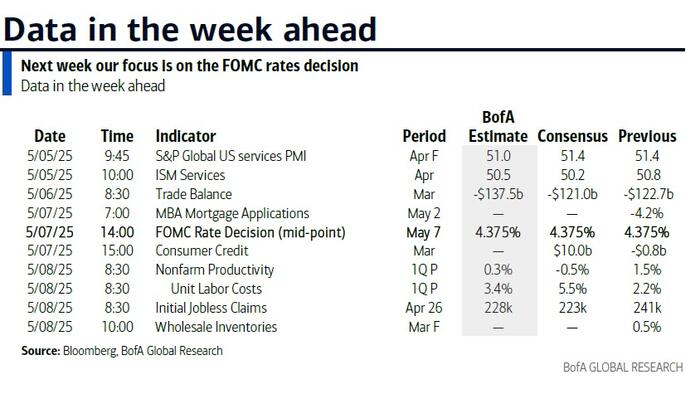
    After a whirlwind first‑quarter profit parade and a macro‑boom that shipped the economy past the “tariff‑turbo” doldrums, we’re rolling into a week that’s all about the lofty leaders of U.S. and U.K. policy. The Federal Reserve will speak on Wednesday, followed by a crisp press conference for Chair Powell, and the Bank of England will drop its voice on Thursday.

    Why the Fed and the BoE are the stars

    • Markets have shrugged off the past weeks’ tariff jitters, thanks to a surprisingly upbeat jobs report and solid U.S. payrolls.
    • That lift pushed the S&P 500 back above its pre‑Liberation Day highs, sparking the longest winning streak since 2004.
    • Not every asset class is partying with the 2004 vibe—think the U.S. dollar, which is down nearly 4% from its April 2 peak.
    • Investors are eyes‑rolling over tariff headlines and watching data like the U.S. April ISM services (today), German factory orders (Wed), and China’s April trade numbers (Fri). Because tariffs aren’t just about trade, they ripple across everything.

    The Fed’s Forecast

    Most economists are leaning toward a steady‑rate outlook. The Fed’s likely to keep rates unchanged, and they won’t drop any “forward guidance” for a while. The general vibe will echo recent speeches: the administration’s policies might tug the economy a bit farther away from the Fed’s dual mandate for a stretch, but the Fed is “well positioned” to respond when the outlook evolves.

    Rate‑cut jawbreakers surged after that strong jobs print, but markets now say the next cut hinges on a weaker labor market—after all, the Fed won’t cut up there until it feels the need.

    • Fed funds futures now price a 37% chance of a cut by the June meeting, and a full 25bp cut by July.

    Europe’s Central‑Bank Spotlight

    Thursday’s agenda over in Europe will see the Bank of England, Norges Bank, and Riksbank in the flashlights:

    • BoE is expected to trim rates by 25bp, making the Bank Rate 4.25%.
    • Both Norges and Riksbank are likely to hold rates steady.

    Meanwhile, the European Central Bank will hold an informal meeting on May 6–7 to talk around its 2025 monetary‑policy strategy.

    Key Economic Data in the U.S.

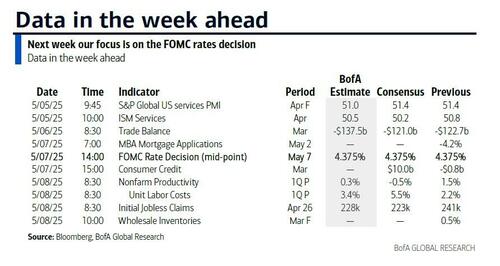
    Today’s main test lies with the April ISM services reading, expected to slide just a touch to 50.3. The current road shows a modest decline from last week’s 50.8—still keeping the image of a dampened but not yet broken economy.

    As we hang on the central banks’ watercooler chats and the economic releases, we’ll keep you updated on the financial waves. Stay tuned!

    Week‑in‑Review: Europe’s Chill & Asia’s Are‑Worried Trade Signal

    It’s gonna be a pretty quiet data week over in Europe—Germany’s factory orders on Wednesday and industrial output on Thursday are the main steak. Across the sea, Asia’s April trade numbers from China on Friday are poised to reveal a pretty significant slowdown as tariff chaos continues to stir the pot.

    Corporate Beat – Pick Me Up

    • US – Palantir, AMD, Walt Disney, Uber, and a gallery of other high‑profile earnings dropping into the spotlight.
    • Europe – Novo Nordisk, Siemens Energy, AP Moller‑Maersk, BMW, AB InBev, Rheinmetall – all neck‑and‑neck in a trades‑tension heated arena.

    Day‑by‑Day Snapshot

    Monday, May 5
    • Data – US April ISM services, Switzerland CPI.
    • Earnings – Vertex, Williams, CRH, Ares, Diamondback Energy, Ford, BioNTech, ON Semiconductor.
    • Auction – $58 bn US 3‑yr Notes.
    Tuesday, May 6
    • Data – US Mar trade balance, China Apr Caixin services PMI, UK April reserve changes, new‑car registrations, France Mar industrial output, Italy Apr services PMI, Eurozone Mar PPI, Canada Mar merchandise trade.
    • Earnings – Palantir, AMD, Arista, Intesa Sanpaolo, Ferrari, Constellation Energy, Zoetis, Marriott, Coupang, Fidelity, EA, Datadog, IQVIA, Rivian, Vestas, Astera Labs, Zalando.
    • Auction – $42 bn US 10‑yr Notes.
    Wednesday, May 7
    • Data – US Mar consumer credit, China Apr reserves, UK Apr construction PMI, Germany Mar factory orders, April construction PMI, France Mar trade balance, current‑account, Q1 wages, private‑sector payrolls, Italy Mar retail sales, Eurozone Mar retail sales, Sweden Apr CPI.
    • Central Bank – Fed decision.
    • Earnings – Teva, Novo Nordisk, Walt Disney, Uber, ARM, MercadoLibre, DoorDash, Fortinet, Siemens Healthineers, BMW, Carvana, Axon, Vistra, Flutter, Occidental, Barrick Gold, Legrand, Rockwell, Vonovia, Ørsted, Pandora, Telecom Italia, Sandisk.
    Thursday, May 8
    • Data – US Q1 non‑farm productivity, Q1 unit labour costs, Mar wholesale trade sales, April NY Fed 1‑yr inflation expectations, initial jobless claims, UK RICS house‑price balance, Germany Mar industrial output, trade balance.
    • Central Banks – BoE, Riksbank, Norges Bank decision; BoJ March minutes; BoE April DMP survey; BoC financial‑stability report.
    • Earnings – Toyota, AB InBev, Shopify, ConocoPhillips, Nintendo, DBS, McKesson, Enel, Rheinmetall, Siemens Energy, Coinbase, Cheniere Energy, Infineon, Kenvue, HubSpot, TKO, Leonardo, AP Moller‑Maersk, Warner Bros Discovery, Toast, Expedia, Pinterest, DraftKings, Affir­mm, Tapestry, Illumina, Banca Monte, Rocket Lab, Paramount, Campari, Crocs, Lyft, Puma, Peloton, Sweetgreen.
    • Auction – $25 bn US 30‑yr Bonds.
    Friday, May 9
    • Data – China Apr trade balance, Q1 BoP current account, Japan Mar labour cash earnings, household spending, leading index, coincident index, Italy Mar industrial output, Canada Apr jobs report, Norway Apr CPI.
    • Central Banks – Fed officials speaking (Williams, Waller, Kugler, Goolsbee, Barr), ECB (Simkus, Rehn), BoE (Bailey, Pill).
    • Earnings – Mitsubishi Heavy Industries, Recruit Holdings, Commerzbank, Cellnex.

    Why This Matters

    While Europe’s data is going to keep things slightly under the radar, Asia’s slowing trade due to tariffs will inevitably ripple across global markets. The US’s ISM services read‑out on Monday gives a first clue into whether commercial conversations are still comfortable or starting to feel the pinch. The FOMC will keep an eye on the lane marked “Rate Cut”—think of it as a laid‑back road trip guided by the latest wage and productivity drops.

    Fed officials and central banks will be on the mic, offering “talk‑to‑the‑public” insights into the great balancing act of stimulating employment vs. curbing inflation. These speeches can tip the scales in the markets, especially if the trade and tariff updates storm the newsroom.

    In short, prepare to catch the high‑wire juggling act between businesses climbing the chart and governments walking the fine line of monetary stability.

  • Man Found Dead At Burning Man Sparks Homicide Investigation

    Man Found Dead At Burning Man Sparks Homicide Investigation

    Tens of thousands of people descended on a dry lakebed in Nevada over the past week, ending this weekend with the burning of a massive wooden sculpture shaped like a man. It was at that point, on Saturday night, that a man was found dead in a pool of blood, with authorities investigating it as a homicide. This is believed to be the first suspected homicide since Burning Man moved to the Black Rock Desert in 1990.

    “The Pershing County Sheriff’s Office is investigating the death of a single white adult male that occurred the night of Saturday, August 30 in Black Rock City,” Burning Man officials wrote in a press release on its website. 

    Sheriff Jerry Allen of the Pershing County Sheriff’s Office said deputies at Burning Man arrived at the scene around 9:14 pm local time Saturday and “found a single white adult male lying on the ground, obviously deceased.” 

    AP News cited local officials who said the man was found “dead in a pool of blood and is being investigated as a homicide.”

    The Pershing County Sheriff’s Office noted that the homicide investigation appears to be a singular case but warned everyone at the festival to be vigilant of their surroundings and acquaintances. 

    There have been several fatalities over the years, including accidents, medical emergencies, and even suicides. However, the incident this past weekend, occurring just as the large wooden effigy of a man began to burn, appears to be the first homicide at the festival.

    In other festival news, Orgy Dome at Burning Man was pounded by a windstorm…

    . . . 

    Loading recommendations…
  • Apple Strikes 0B US Manufacturing Deal Despite Recent Empty Promise

    Apple Strikes $100B US Manufacturing Deal Despite Recent Empty Promise

    Trump Puts Apple on the Edge: $100 B New Promise to Power U.S. Production

    What the White House Wants Us to Hear

    On Wednesday at 4:30 pm Eastern Time, President Donald Trump is set to drop a bombshell: the tech titan Apple will channel another $100 billion into domestic manufacturing. This move is all about dodging those dreaded tariffs that would hit iPhone sales hard.

    Why Apple’s Big‑Spend Has Everyone Talking

    • New Manufacturing Initiative – Apple plans to bring more of its supply chain across the Atlantic, improving its ability to produce key gadgets right in the U.S.
    • Deputy White House officials say the shift is strategic: “We’re looking to push production of the most critical parts straight into American factories.”
    • Reported sources remain anonymous, but the tone is unmistakably hopeful – if only we didn’t see it as a mere gesture.
    What’s at Stake?

    By keeping iPhones in the U.S., Apple can avoid hefty tariffs and, let’s face it, keep its customers happy. But for many, the pledge feels a “meaningless” promise: the numbers line up, but the policy itself remains vague and non‑binding.

    Bottom Line

    Trump’s latest move stirs the tech machine—Apple’s $100 billion pledge to bolster U.S. manufacturing is a bold statement, but one that still needs to punch through the wall of uncertainty. Time will tell if the plan goes from spec sheet to solid production line.

    Trump’s New Deal with Apple: A Tale of Dollars, Dreams, and a Little Bit of Threat

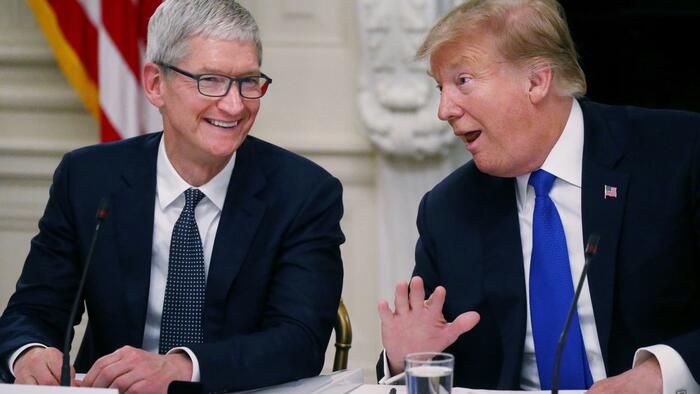
    When the “America First” president buzz‑ed his way into the White House, it wasn’t a row‑dancing anthem—this time it was a cash‑slinging handshake with Apple’s Tim Cook. The gist? The Trump administration will inject trillions of dollars into the U.S. economy, and Apple will finally bring its iPhones back home.

    Why Apple is Suddenly on Trump’s Good List

    • The Threat Lured the Deal – Earlier this year, Trump threatened a 25 % tariff if Apple didn’t relocate iPhone manufacturing to the States.
    • CEO Cook’s New Game Plan – Apple is making a bold push for a “carve‑out” that will let them keep iPhones out of those pesky foreign tariffs.
    • $600 billion of Promise – Apple’s fresh pledge brings its total U.S. investment to $600 billion over the next four years.

    What Does All This Money Really Mean?

    Picture this: a new server factory in Houston, a Supplier Academy in Michigan, and a raft of projects with existing partners right where it matters. It’s all soundbite‑ready, but the real question is whether Apple will actually roll up its sleeves and start building.

    The Real Stakes: Smarter Chips, Less Tariff Trouble

    Showtime’s not just about Apple. Trump’s new tariff plan lines up any product peppered with semiconductor chips for potential tax hikes next week. If Apple can dodge this, it could keep its profit margins healthy—and maybe even outshine rivals like Samsung.

    More Deals on the Table: AI, Chips, and a Jackpot of Subsidies

    • Stargate Investment – A $100 billion push into AI data centers, with the goal of smashing the total to $500 billion. Partners: Oracle, SoftBank, and OpenAI.
    • Chip Partnerships – Nvidia is set to produce as much as $500 billion worth of AI infrastructure in the U.S., a move that could turn the country into the next big tech hub.
    • European & Japanese Agreements – €750 billion in American energy goods and $550 billion in U.S. investment deals that sound great to say but are pretty rainy.

    What Will All This Do?

    Honestly, the headlines paint a picture of an unstoppable financial juggernaut. But history tells us the same cynic: many of these mammoth promises fail to materialize. Will the U.S. finally turn the manufacturing heist into a reality? Only time, and a lot of hard work, will tell.

  • Trump’s Trade War Drives a Historic  Billion Surge in Customs Revenues

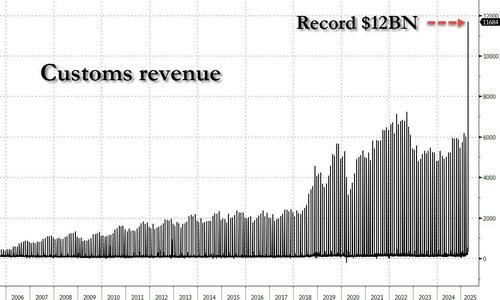
    Trump’s Trade War Drives a Historic $12 Billion Surge in Customs Revenues

    Why Trump’s Trade War Is More Than a Tariff Tango

    When the stock market is in a nose‑bleed slump, bond yields rocket, and the dollar seems ready to wave goodbye to its “gold‑standard” crown, it’s all too easy to forget why the former President pushed a trade war so hard. The real story? A jagged, upward trajectory in U.S. debt.

    The Debt Story

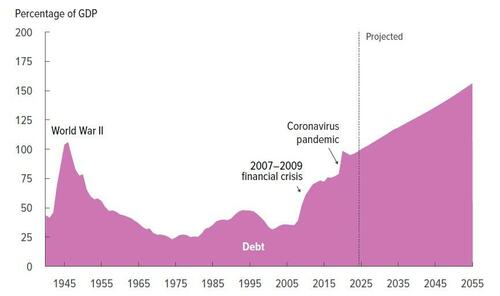
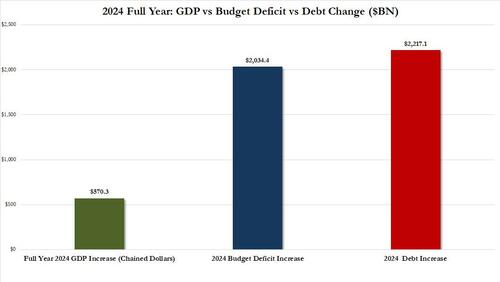
    Picture the U.S. debt at $37 trillion. That’s not just a big number; it’s an unsustainable mountain that’s swelling at a speed so relentless that even the experts who talk about budgets, interest payments, and fiscal policy find themselves sounding alarm bells.

    Who’s Talking About It

    • Bipartisan Congressional Budget Office (CBO)
    • Federal Reserve (Fed)
    • International Monetary Fund (IMF)
    • Elon Musk—yes, even the space‑entrepreneur
    • The local shoeshine boy, who’s been watching the economy go by his storefront window

    All of them—across political lines, market sectors, and even the small cleaning crew—agree on one thing: the growth of U.S. debt is a ticking time bomb. That’s the hidden motive behind the trade war: a desperate tug on the levers of fiscal policy to curb the ever‑expanding debt pile.

    Why the US Debt Problem Was So Hard to Tackle (Until Trump)

    Alright, here’s the skinny. Everyone knew something had to get done to prevent a full‑on economic wipeout. But before the Trump era, nobody wanted to budge the status quo. Why? Because any push to shake up or even tweak the US debt‑backed growth machine was basically a no‑win situation.

    What the Numbers Actually Say

    • $1 trillion of debt turns into less than $200 billion of real output every 100 days
    • That’s like a massive bank account that risks evaporating without a solid plan.

    All the Reasons to Hold Back

    • Historical indecision – Politicians had never tried a bold move; it felt safer to keep things the way they were.
    • Fear of backlash – Massive changes might send ripples that even the most loyal allies wouldn’t want to ride.
    • Techy uncertainty – The tools to mitigate this were still in the “pick‑up‑the‑puzzle” stage.

    Enter Trump

    When Trump stepped into the ring, the whole narrative flipped. Suddenly there was a figure who wasn’t afraid to shuffle the deck, giving the humorless debate of restructuring a dose of urgency that finally nudged people into action.

    Trump’s Bold Gamble: From U.N.’s “Dollar in Crisis” to a Record‑Breaking Tax Jackpot

    What Went Down (and Why it Mattered)

    • Stocks plunged like a roller‑coaster missing its seatbelts.
    • Bond yields shot up as if the market decided to invert the plot.
    • The dollar? It’s doing the Turkish lira’s moonwalk—just slippier.

    In a universe where chaos feels like the new normal, the U.S. needed a BIG KICK‑START. Enter President Trump, armed with a plan that made market analysts scream, “How dare you nail long‑term stability with a short‑term pain attack?” And the mainstream media? They fell right into the carnival of commentary, while the establishment economists—yes, the same folks who kept it calm last year—suddenly shouted, “Something’s gotta change, and not that thing, not now.”

    What Trump Actually Did

    With everything else glued to the sidelines, the miss‑match? Here’s the trick: It was pure, no‑pressure, instant action. He pushed a headline‑making change that, at first glance, felt like a gamble. But guess what? It hit the jackpot—literally.

    The Stunning Outcome: Customs Revenue Rises

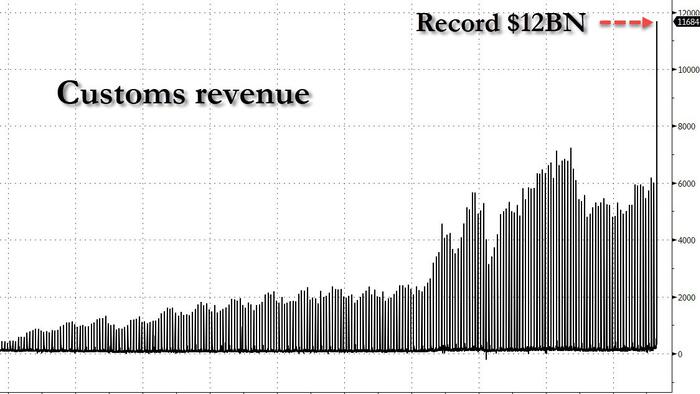
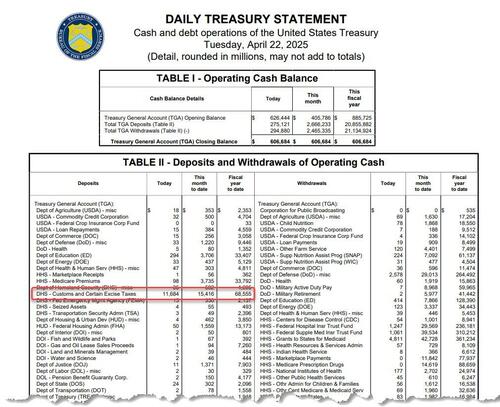
    Thanks to today’s Daily Treasury Statement, the U.S. collected an astronomical $11.7 billion from customs and certain excise taxes on April 22. That number is not just a big “nice” add‑on; it’s a record in the real books. Think of it as the government’s “But this time, you pay for our top‑secret real‑ingred function plan” (with a side of sweet, sweet revenue).

    Why It’s Not Just A Numbers Game

    • Markets get a quick lift, like a splash of hot tea for a cold day.
    • A new fiscal runway opens for potential future policies.
    • And, while no one knows where this will lead, the proof is in the pockets—both for the Treasury and the people who actually sees the pile of fresh cash.

    So, with the U.S. still riding its own wild weather, the surprise answer is that Trump’s bold maneuver was a win—at least for the moment. Whether it’s a lifelong win or just a ‘gospel for the week’ will be the next chapter in the ever‑thrilling story of economic policy in the 21st century.

    The Record-Setting Monthly Loot Storm

    You might think it’s a one‑day circus, but trust me, this isn’t a flash‑in‑the‑pan collection. It’s the big, fat, monthly pile that’s making headlines.

    Key Takeaways

    • That “biggest one‑day haul” headline? A monthly snapshot, not a single day’s frenzy.
    • The real magic is the total haul for the month—around $15.4 billion.
    • Think of it as a monthly treasure chest, slowly filling up over time.

    Why It Matters

    When you break down that $15.4 billion, you’ll see that this isn’t just a fluke. It’s a consistent, growing trend that shows the market is still pulling in huge sums.

    The Bottom Line

    So next time you hear “biggest one‑day haul,” remember: It’s actually a monthly thing—a steady, calendar‑wide ride in the loot wagon.

    Trump’s Tariff Take‑Off: A New Revenue Roller Coaster

    Okay, fam, pull up a seatbelt because the numbers are about to get wild. You’ll be lining up for tea, but it’s all gravy – literally.

    Why It’s a Big Deal

    • Double the Monthly Total – The current dump sits at ~2 B\n, that’s twice what we had before.
    • Six Times the Pre‑Trump Size – Pre‑1.0 months were collecting roughly 0.33 B\n. The new trick? Multiply that, and boom! Now we’re dancing around the 2‑B\n mark.
    • Just the Beginning? – Once those fancy layered tariffs roll out, the revenue could shoot the charts, hitting 25 B\n, 30 B\n, and higher. Spoiler: the game gets serious in the big picture.

    Alright, What’s the Real A–H–A–R–R‑–S?

    Sure, you can usurp‑shit with a side‑comment about Trump’s mean tweets, but here’s the truth‑in‑skin: he’s actually steering the ship away from a “major disaster” that everyone else thinks is looming. It’s a “future problem” instead of today’s pain.

    We’ve all got a front‑row seat to a “next‑gen” ticket that says, Carry the bill now, we’ll pay for that mess later. Or, we can act now – yes, it’ll cost a lot more than just double the customs take, but the chart is spot on: America needs a painful start in the right direction. And it’s sustainable. No snooze‑pill here.