Authored by Jonathan Turley,Some of us have expressed frustration with the ridiculous delay in the appellate court review of the absurd civil judgment against Donald Trump. It appears to have entered some judicial black hole where neither light nor an opinion can escape.Now, the Wall Street Journal claims that it is due to a deeply divided panel in a column titled “Court Split Leaves Trump’s Civil Fraud Appeal Stuck in Slow Lane.”This should not be a close case and certainly should not take this long. The case against Trump was raw lawfare, and the entire trial by Justice Arthur Engoron made a mockery of the court system, particularly his ridiculous half-a-billion-dollar judgment. Yet, weeks turned into months and then into years as the appellate court seemed lost in navel-gazing. There was also a concern over passive-aggressive delays; the long appeal is not only preventing Trump from moving this case toward the Supreme Court but keeps him trapped in an appellate amber.Now the Wall Street Journal is reporting:A five-justice panel has yet to render a decision nearly a year after taking up the case, leaving him and his business in limbo. Behind the scenes, members of the panel have been divided, and three of them have been writing opinions, according to people familiar with the matter. It couldn’t be determined how they are split. Justices do occasionally shift their positions, and the number of opinions could change, the people said.…The panel hearing the Trump appeal includes four judges appointed by Democratic governors and one Republican appointee, David Friedman, who is regarded as among the most conservative of the court’s 21 members. The court’s presiding justice, Renwick, also on the panel, is viewed as a stalwart liberal who has an institutional interest in seeking consensus and guarding the court’s reputation.It is not a good thing to see a leak of this kind from any court. The United States Supreme Court was rocked by the leaking of a draft opinion of the Dobbs decision just a few years ago. No one was ever prosecuted for the leak.It is distressing to hear that some of these judges may be striving to preserve this nonsensical opinion where Trump was hit with half a billion dollars in a case where no one lost money and the banks wanted renewed business with his company. Affirming the decision would be the final nail in the coffin for the New York legal system, which was turned into a farce by New York Attorney General Letitia James and Judge Engoron. Even if it is true that the judges have hopelessly fractured, they could do us all a favor and allow the case to proceed toward more competent jurists and final resolution. There is certainly no rush by these appellate judges to right any wrong done to Trump, who appears, again, to fall into a special category of persona non grata in the New York legal system. This appellate panel appears content to leave Trump twisting in the wind as it contemplates what to do with a defendant who garners little sympathy from its members. Most appeals are measured in months; this seems measured in millennia. Even with the notoriously slow New York legal system, the pendency of this appeal is becoming itself a controversy.It is often said that justice delayed is justice denied.However, delayed and denied justice for Trump appears to be a bedrock principle of the New York justice system.Loading recommendations…
Tag: uuid
-

Justice Delayed: New York Appellate Court Reportedly Split Over Trump Civil Fraud Judgment
-
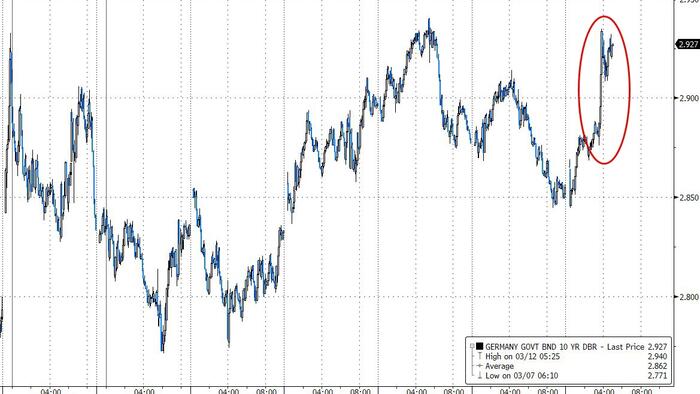
Bund Yields Surge as Germany\’s Merz Secures Debt Accord with Greens, Emphasizing Fiscal Discipline
Merz and the Greens: A Deal to Keep Germany’s Wallet Woke
In a whirlwind of negotiations that could have been straight out of a political drama, Friedrich Merz, the hard‑hitting German conservative, managed to sweeten the pot for the Green Party. The pact hinges on a mammoth, debt‑backed spending spree that’s set to boost Germany’s defence muscle and patch up its crumbling infrastructure.
“These were demanding discussions” – Merz speaks truth
Merz, who’s eyeing the chancellorship after Olaf Scholz, told reporters in Berlin, “We’ve been talking, and we’ve managed to find common ground.” He also noted, sadly, that fiscal discipline remains a priority. The stakes? A supermajority that will light the fuse for sweeping constitutional amendments, freeing defence spending from current debt shackles.
Key Move: €500 billion for roads and bridges
- Infrastructure Allocation: The plan earmarks €500 billion (about $542 billion) for new projects.
- Climate & Transformation Fund: A hefty €100 billion will go straight into the existing climate fund, according to RND.
In other words, Merz offered a “green‑friendly” slice of the pie, and the Greens tipped in, hoping to graft green policy into the agenda for a future and potentially greener Germany.
Why It Matters: The Euro’s New Freshness
Passing this deal means a stronger, steadier euro—at least for now. By lifting the constitutional constraints on defence and funding large infrastructure projects, the German government seeks to keep the currency robust, reassure investors, and do a bit of climate‑correction in the process.
So, all in all, a bit of compromise – a bit of promise – and a dash of Germany’s traditional fiscal prudence. The deal is still awaiting green‑light from party lawmakers, but the path’s set for a euro that hopefully stays strong while Germany takes a leap toward a greener future.
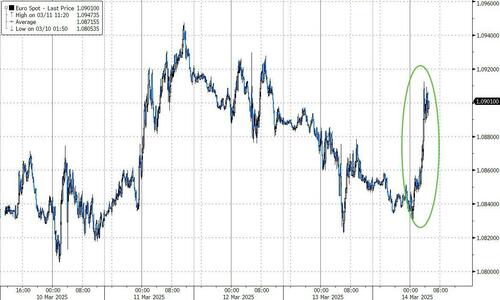
Euro Gets a Fresh Boost Amid the Great Negotiation
Brad Bechtel, the intrepid FX maestro from Jefferies, tossed out a quick kicker: “Game on again for the euro,” he said, hopping on the optimism bandwagon.
The Verdict
- Euro Momentum: The greenback’s on a roll, thanks to whispers that peace talks over Ukraine might be picking up pace.
- Market Mood: Investors are holding onto their seats but feeling hopeful—like a kid waiting for the ice cream truck.
- Bund Yields: Not to be left behind, German bund yields are also leaping toward recent highs, adding a bit of drama to the euro’s story.
In short, the euro’s currently riding a wave of cautious optimism, but those bund yields keep everyone on their toes. Whether this is a game changer or a teaser reel remains to be seen—stay tuned.
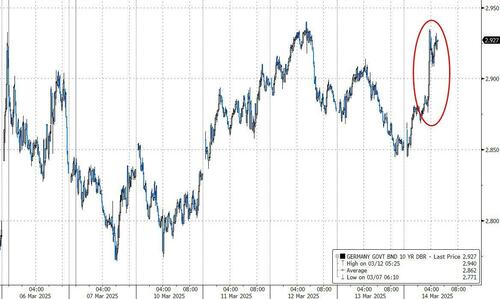
Germany’s Debt‑Storm: The Big Vote and Its After‑Effects
Merz Bravely Faces the Greens
On Thursday, Stefan Merz stood at the podium, feeling “very optimistic” about a new debt‑spending package. He let the political drama unfold when the Greens confronted him like a stand‑up comic. “What more do you want than what we have proposed?” he asked, triggering a chorus of sniggers from the opposition.
Even after the parliamentary showdown, some still feel the package is on track. Evelyne Gomez‑Liechti, a strategist at Mizuho, said, “We’re hoping the headlines show the Greens are on board.” Market watchers wondered if the deal could slip through.
Goldman Sachs Weighs in … with a Twist
- Germany’s now all about expansionary fiscal policy—more spending, more hope.
- Defense & infrastructure spending are expected to spark a big growth turnaround for Germany and the wider bloc.
- Three externalities are on the horizon:
- ECB must stay {calm, not overly restrictive}
- Inflation may soar
- Investment limits—who knows? The sky’s the limit!
Bank of America’s New Trend
Bank of America’s survey from Friday indicated investors are turning underweight on core euro‑area fixed income—their first shift back since 2023.
- Core Europe duration longs collapsed because investors already priced in slower growth and more bond supply.
- Ralf Preusser and the team wrote that this is a sign of changing market expectations.
Where are the Yields? A Quick Glance at the Numbers
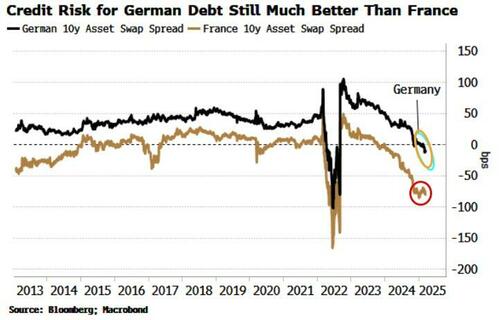
It’s a mixed bag. The new German debt package could drive bond yields up, but Bloomberg’s Simon White notes the fall in the asset‑swap spread has been modest this year, so German credit risk isn’t hitting the panic button.
The asset‑swap spread—sometimes called the “credit risk gauge”—has been falling alongside rising sovereign yields, but it’s mostly staying put.
France: The Sudden Drop in Confidence
Contrast that with France—the spread there has taken a sharper plunge, suggesting investors are less willing to stick with French debt, probably due to its ongoing budget woes.
In short: Germany is feeling the heat, but not as intensely as France. The market’s still watching, waiting for the next big move in everyone’s headlines.
Germany’s Money‑Making Defense Play
So, you’ve heard the headline that Germany’s crisis‑response bill now lets the country keep bolstering its defense machine without worrying about the usual “debt brake” limits. In plain English, if defense spending tops 1% of GDP, the paperwork that normally forces the government to stick to a strict budget panics is thrown out of the window.
Why the numbers matter
- The debt brake is Germany’s built‑in fiscal guardrail that caps total borrowing at roughly 1.5% of GDP, with lower limits for specific categories.
- By giving defense a permanent exemption, officials can keep pumping money into the army, air force, and navies even if it blows the overall cap.
- Think of it as a “special category” that whispers, “You’re allowed to overspend here, just keep gunfire humming.”
From “security” to “stimulus”
Officially, the rationale is the looming threat from Russia. Loosely speaking, “fighting the good guys” has become the front‑line justification for a bigger debt‑funded push to the economy — almost a second wave of the COVID stimulus style spending.
In less bureaucratic terms: Germany is basically saying “we’ll keep our armed forces lean and mean, and we’ll let the rest of the economy grow on borrowed cash.” That’s the sweet spot a lot of finance‑savvy conservatives get a little anxious about.
A quick take‑away
There’s a dual road here. On one side, Germany strengthens its military posture, which certainly pricks the mind of any neighbor who likes low‑risk game. On the other, it’s essentially giving a “zero‑clamp” on the debt brakes for an already‑heavily‑borrowed economy. The final line: “If you want your skill‑based defense to stay in the spotlight, you’ll need some slush money piped in through budget loopholes.”
-
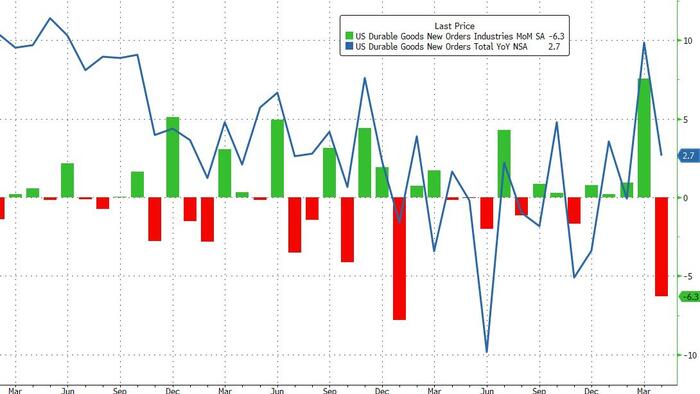
US Durable Goods Orders Plunge in April as Tariff‑Frontrunning Frenzy Wanes
US Durable Goods Orders: April’s Gentle Squeeze
The Numbers in a Quick Bite
- April preliminary: -6.3% month‑on‑month – a touch softer than the projected –7.8%.
- March: +7.6% MoM (updated from an initial +9.2%) – a tariff‑driven bump.
- Year‑over‑Year: still up +2.7%, showing the industry’s steady climb.
Market Mood: Yo‑yo Style
Picture the economy as a vintage yo‑yo: it dips, hits a low, then climbs again. April’s dip was a quiet, almost gentle wobble rather than a hard crash.
Why It Was Less Dramatic
The 6.3% month‑over‑month fall was kinder than the forecasted -7.8%, meaning manufacturers didn’t lose confidence the way some expected.
Takeaway
Even when the monthly trend cools down, the yearly trajectory keeps rising – a sign that the pulse of the economy remains strong.
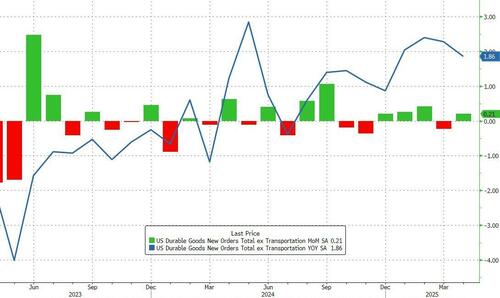
Ex-Transports’ Order Spike: A Glimmer in the Monthly Calamities
Scenario: March had the party in the wrong room—orders dipped least 0.2%, but in April, the tempo flipped, giving a modest 0.2% lift.
Breaking Down the Numbers
- April +0.2% month‑over‑month (MoM) – a cheerfully surprising bump.
- Contrast with March’s –0.2% decline, which was trimmed down by analysts after a redraw.
- Markets had braced for a flat read but got a positive headline instead.
What This Means for the Industry
Even though it’s a handful of points, the uptick signals that the company’s logistics engine is humming a little better than anticipated. For stakeholders, it’s a sigh of relief and a nudge to keep the loaders moving.
Key Takeaway
While the lift is modest, it sends a subtle but encouraging message: Ex-Transports is catching a breath, and the trucks are on the road again.
What the Numbers Actually Mean
When you listen to the official report, it may sound like a dry ledger written by a bored accountant. But here’s the lowdown in plain English—and a dash of wit.
Core Capital Goods Orders Take a Tiny Dip
- “Core capital goods” refers to the machinery and equipment that companies buy to keep the economy humming, excluding fancy planes and military gear.
- This month saw a 1.3% drop in those orders, after a modest change of +0.3% last month.
- Meanwhile, the shipping side of that story—what actually gets moved out of the warehouse—slipped 0.1%.
Why Shipments Matter More Than Orders
- Orders can be slipped back on the table, but shipments regularly reflect actual payments, so the government uses them to paint the GDP picture.
- Because of that, the overall shipments of capital goods jumped by 3.2%—including those elusive defense and aircraft pieces.
- In March, shipments dipped by 1%, but this month bucked that trend.
The Wild Rollercoaster of Commercial Aircraft
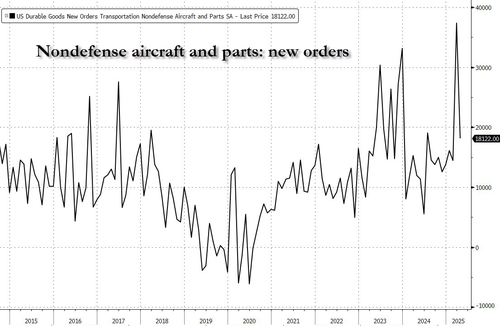
- Commercial planes are a notorious whirlwind: their bookings can change by the second.
- Those bookings had leapt during April, only to plunge 51.5% again a month later.
- Take that as a –cardio‑intense, heart‑stopping reminder of how fickle the aviation industry can be.
Boeing’s Order Rollercoaster: From a March Boom to an April Minimum
The Numbers … Are They Really That Low?
March 2024: Boeing hit a historic peak—192 new orders, the highest since 2023.
April 2024: By contrast, only 8 orders found their way into the inbox— the fewest since May 2024.
What Could Have Caused the Plunge?
- Economic wind‑shear: Rising fuel prices and supply‑chain snags have left airlines pulling the plug on new purchases.
- Competition: Other manufacturers flexing their new models have taken a slice of the market pie.
- Production hiccups: Ongoing delays in the manufacturing process have chilled buyer enthusiasm.
Industry Reactions
While some investors are “puzzled” at the sharp drop, others are “strategically amused”, seeing the dip as a chance to renegotiate contracts.
Looking Ahead: What’s Next for Boeing?
Despite the current lull, experts predict a rebound once supply chains smooth out and airlines re‑evaluate their long‑term fleet plans. In the meantime, the company is focusing on:
- Streamlining production pipelines.
- Boosting marketing efforts with clearer messaging.
- Exploring new revenue streams like retrofitting existing aircraft.
Bottom Line: Hold Your Breath, Not Your Plane
So, dear travelers, the future might hold a lot of surprises—just keep your seat belts fastened (or, at least, your curiosity).
-

DOGE Worker Big Balls Bloodied After DC Attack; Trump Musk Urge Federalization of DC
Trump and Musk Urge Federating Washington, D.C. After Brutal Attack on 19‑Year‑Old
When the brutal attack on 19‑year‑old Edward Coristine – a former user of the Department of Government Efficiency (DOGE) who earned the nickname “Big Balls” on LinkedIn – came to light, two country powerhouses went into full protest mode. President Donald Trump and tech mogul Elon Musk have both called for Washington, D.C. to be turned over to federal control, insisting the city’s crime situation can’t be left to fend for itself.
Trump’s Alarmist Take
- Trump told reporters that “somebody from DOGE was very badly hurt.”
- He added, “A young man was beaten up by a bunch of thugs in D.C., and either they’re gonna straighten their act out in the terms of government and in terms of protection, or we’re gonna have to federalize and run it the way it’s supposed to be run.”
- The president posted an emotional update on his Truth Social account, declaring that Washington “is totally out of control.”
- He highlighted that teenagers as young as 14, 15 and 16 are “randomly attacking, mugging, maiming, and shooting innocent citizens.”
In the post, Trump attached a picture of a “Big Balls” victim lying on the ground, bloodied after a mob attack. He made it clear: “If this continues, I am going to exert my powers and FEDERALIZE this city.”
Musk’s Echo
Elon Musk followed in the same vein, expressing unease about the law and order crisis. He suggested that federal oversight might be the only solution to restore safety and stability in the capital.
What This Means for D.C. Residents
- Potential shift in local governance and enforcement.
- Uncertainty about future regulations and policing.
- Possibility of a federal jurisdiction taking over the city’s core operations.
As these two figures weigh in, the city’s future hangs in the balance. Until a definitive decision is made, residents and officials alike will be watching closely, hoping for clarity in a turbulent time.

When a Doge Hero Saves a City: The Wild Tale of Big Balls and DC’s Dark Night
Picture this: a chill night in Dupont Circle, a bewildered clutch of looters ransacking a car, and in the midst of the chaos, a sky‑rover from the Doge universe swoops in to rescue a young woman. That’s the scene Marko Elez captured and posted on X, turning a routine drone photo into a viral saga of heroism.
Marko Elez & the Photo‑Shooting Aces
- Marko’s Claim: “I snapped the shot of Big Balls (the Doge legend) just after he tackled those eight bad guys.”
- Big Balls, nicknamed as400495, doesn’t just fly around; he’s chomping on crime like a true gangster‑buster.
- “Violence in the heart of DC is completely unacceptable,” Marko tweeted, and he was right.
Elon Musk’s “Federalize DC” Tweet
In a close to the beat‑up, Elon Musk chimed in: “It is time to federalize DC.” He shot a picture of the astounding chaos, with a caption that sparked a flood of comments. Musk’s stance echoed the fear that the city’s politics are faltering, but in a way that screamed out for federal help.
Why Do These Night‑time Skirmishes Keep Happening?
- “For years we’ve seen crime‑plagued corners of the capital,” said a voice with deep concerns,” “and it’s entirely no surprise—far‑left Democrats run the metro areas.”
- Critics argue these politicians are not the wise custodians they’re known as, but rather activists whose agenda misses the mark and leavens society with more problems than solutions.
- From violent child gangs to menacing carjacks, DC’s law system is sputtering.
The Beating Reality: One Hero’s Tale
The true incident: a dozen young men tried to assault a woman in her car under the cover of night. As the chaos erupted, a Doge team member intervened, only to suffer a severe beating—concussion and all. Yet this hero saved the woman’s life.
Urgent Calls for Change
- “It’s time to restore safety,” says the rallying cry, “starting with the capital.”
- Critics say Democrat policies “have massively failed” and the fallout is undeniable, ranging from police backfiring to carjacks, to the need for citywide curfews.
Takeaway
As this story shakes the capital, it reminds us that gates built by some may need reopening—and perhaps that we all could use a bit more heroism from the right corner of the nation’s embassy corridors.

Time to Change the Game in Our City Streets
We’re at a crossroads. The streets we once called our playgrounds are turning into danger zones—crime is stealing the future of our young people. It’s high time we swing the pendulum back toward hope and safety.
Why the Current Political Pulse is Off‑Beat
In the words that haunted our neighborhoods, “Democrats have failed.” The quiet protests and whispered frustration have become louder, demanding new ideas that actually solve the problems at hand.
What’s Missing in Today’s Politics
- Over‑reliance on show‑stopper policies that ignore grassroots realities.
- Slow, bureaucratic responses that make punishment feel like a distant thunderstorm.
- Failing to roll out affordable housing and job creation projects where they’re most needed.
A Call for Real, Ground‑Level Change
There’s no room for lukewarm solutions. We need:
- Immediate street safety initiatives: Helmet‑wielding officers, camera‑backed patrols, and night‑life checks.
- Inclusive community programs: Youth centers that offer mentorship, art classes, and after‑school tutoring.
- Transparent and accountable city budgets: Spend on prevention, not just punishment.
Why This Matters to Us All
When young folks are forced to watch their dreams disappear in shadows, the ripple effect harms the whole city. The future of our neighborhoods, our families, and our shared identity hangs on every streetcorner decision.
Let’s get out of the legislative maze and start crafting the kind of safety net that feels more like a trampoline than a prison. It’s time for a serious course correction, a brighter, more secure tomorrow and a city that welcomes every dreamer with open arms.
-
UBS Survey Reveals Minimal Growth in Smartphone Units Over Coming Years
Apple’s AI Slide & the iPhone Demand Chill — A Quick Take
Last Monday’s Apple DevCon left fans a bit disappointed on the AI front, and a fresh UBS survey confirms that folks are dialing back their enthusiasm for buying new iPhones. Let’s unpack what that means.
Tech Conference Knock‑Knock
- AI Lulls: Apple announced some new intelligence tools, but the buzz was noticeably low‑key.
- Conference Vibe: Attendees looked eager for breakthroughs, but the highlights felt more like incremental tweaks.
UBS Shakes Things Up: Smartphones on a Chill Scale
UBS’s latest study waded into the numbers, and the results are telling:
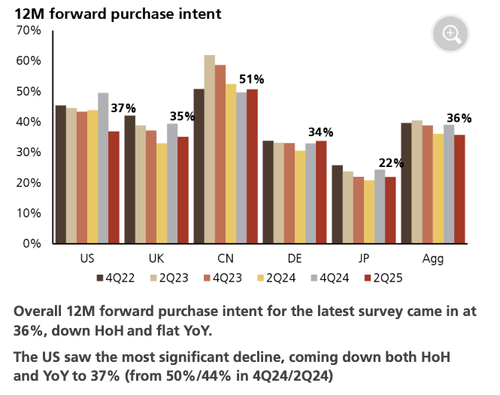
- Overall Trend: Across five major markets—U.S., U.K., Germany, Japan, China—intention to buy a smartphone in the next year dipped to 36% in Q2’25, down from 39% a quarter earlier. Year‑over‑year, it’s flat.
- U.S. Numbers: The Cold Snap
- People willing to buy a new phone 37% now, compared to 50% in Q4’24.
- Even earlier, it was 44% in Q2’24.
What Does This Mean?
- Apple might need to jazz up its AI showcase if it wants to reignite excitement.
- Consumers are becoming selective—they’re waiting for big leaps before pulling out cash.
- Strong sales are still on the horizon if Apple can deliver a compelling reason to upgrade.
Bottom Line
Apple is on notice: the tech wave for smartphones is ebbing, and AI innovation must shout louder or risk fading into the background.
Market Pulse: Forward Buying Goes Down the Drain
UBS’s David Vogt spotlights a major drop in U.S. forward buying intentions. Whoa, that’s a steep slide! The 12‑month outlook has slipped to a flat 37%—a noticeable dip from the 50% surge in 4Q24 and the 44% bump in 2Q24.
What’s Behind the Numbers?
- Front‑loaded frenzy: Buyers are sprinting to lock in deals ahead of expected new U.S. tariffs.
- Strategic caution: The market’s tightening shows traders are wary of potential snags in supply and cost.
Vogt’s take? The trend reflects a community of traders acting early to secure favorable positions before the tariff wave hits. In other words, the market’s already feeling the heat before the big change arrives.
iPhone Buyers Are Slowing Down – And the Competition Is Hanging On
Hey tech nerds, grab a coffee – the numbers are showing a shift in the smartphone game. UBS Research and its Evidence Lab have sniffed out the latest pulse on what folks are planning to buy next.
iPhone Purpose-Packed Intent Is Shutting Down
- Across the board, the 12‑month forward purchase intent share for iPhones dropped to 14% – a noticeable slide from 18% a few months back.
- In the U.S., the drop was even more pronounced: 17% now, down from 24% previously. So Apple fans are taking a pause.
Samsung Stays Steady On The Other Side
- The challenger, Samsung, kept its intent hovering steady at around 9%. That may sound modest, but for a rival with such a loyal base, it’s still a solid showing.
Consumers Are Waiting Longer for an Upgrade
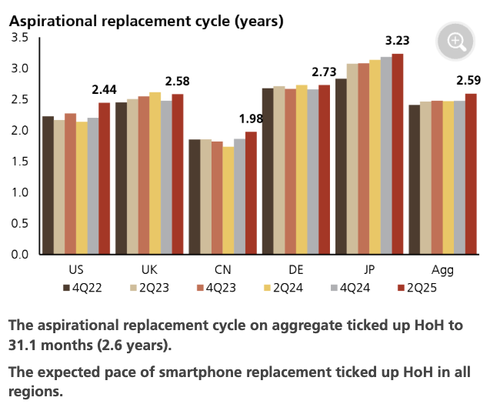
- The “aspirational replacement cycle” – the ideal timeframe folks expect to hold onto a phone before swapping it out – has stretched to 31.1 months (or roughly 2.6 years).
- That’s up from 29.7 months a quarter ago, pointing to slower swap rates, especially in the U.S.
Bottom line: iPhone enthusiasts are hitting pause, competitors are hanging in there, and if you’re wondering when to upgrade, it looks like you might be holding on a bit longer than before.
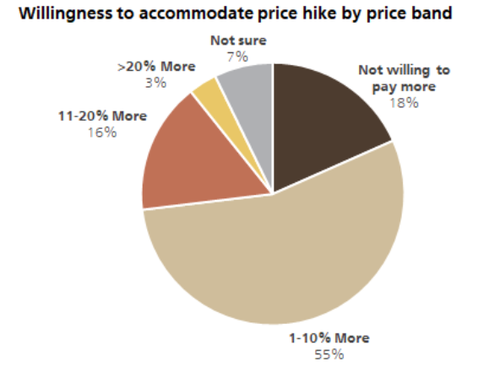
Smartphone Buyers Say They’re Cool With a Price Lift
Vogt’s Take from UBS Research
Vogt points out that according to a study by UBS Research and UBS Evidence Lab, a whopping 82% of respondents who expect to buy a new device in the next year are willing to accept a price increase. This would kick in if smartphone makers decide to bump up their average selling prices to cover the higher bill‑of‑materials costs driven by tariff pressures.
What This Means for the Market
- Consumers are flexible with price changes.
- The smartphone industry can shift some of the cost burden to buyers.
- Tariff‑induced bill‑of‑materials inflation is being met with a willingness from buyers to pay a bit more.
Bottom Line
In short: buyers are surprisingly open to a price bump, easing the financial strain on manufacturers as they navigate ongoing tariff challenges.
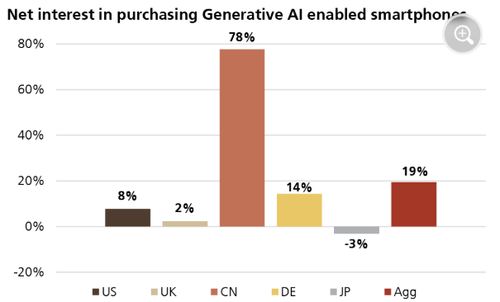
AI‑Powered Phone Boom? Not So Fast!
Remember the buzz from last fall when analysts predicted a gen‑i‑supercycle for Android‑penned iPhones? The sky’s still blue, it turns out.
What’s the Scoop?
- Industry interest in generative‑AI phones climbed a bit: 19% vs 16% in Q4 2024.
- China was the poster child for hype—an eye‑popping 78% mind‑blowing enthusiasm.
- Japan’s reaction? Not a fan: negative net interest. Talk about a failed sales pitch.
- In the U.S., the buzz barely nudged the dial at 8%. Yeah, still a “meh” zone.
Why the Let‑down?
It seems the market’s excitement fizzled out before the wow moment hit the street. Maybe the hype, the tech, or just the “figured‑out” feeling put a wall in front of the AI craze of phones.
Bottom Line
Keep an eye out for the next wave—there may still be a chance that phones will catch on, but for now everyone’s just scratching the surface of what AI can bring to our pockets.
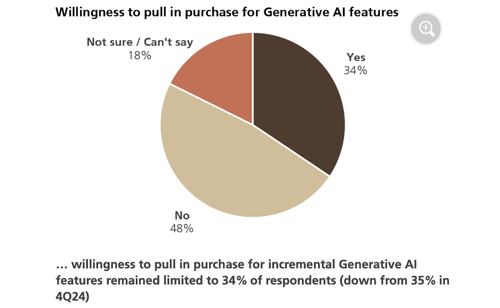
Roughly a Third of Shoppers Ready to Splash Cash on AI Features
According to a fresh UBS Research survey, only 34% of people are willing to push their reservations to a faster pace or cough up extra bucks for those shiny AI perks. That’s less than one out of three saying, “Yeah, I’ll pay more for an AI upgrade.”
What the Numbers Really Mean
- 34% – the wheat‑thick slice that’s ready to invest in AI.
- That leaves 66% sticking with the basics, coffee‑sipping in the usual way.
It looks like the tech‑savvy crowd is still a bit reluctant to pull the trigger on higher prices, even when AI is in the mix. UBS Evidence Lab teased that the “envelope‑size” of AI features might be a deal‑breaker for a lot of folks.
Spotlight: What Happens Next?
Will brands be forced to sweeten the pot with extra perks? Or will customers keep the status quo and grab the standard version for now? The buzz is that the next wave of technology rollout might come with a “you pay, we do magic” tag. It’s a gamble that could reshape the budget tables for fewer folks but potentially bring exciting features to more.
Bottom Line
In short, AI’s allure is not a “free‑for‑all” gesture. Only a modest fraction is willing to dent their wallet for the extra snazz, highlighting a cautious yet curious market that’s still waiting to decide what’s truly worth spending extra on.
Smartphone Sales Forecast: 2025‑2026
UBS Research, backed by UBS Evidence Lab, has stared down the numbers and comes away with a humdrum outlook: just a 1% lift in 2025, followed by a flat trend in 2026. In plain English, phones are expected to grow a hair slower than last year, and then hit a plateau.
Investor Pulse
- Vogt’s Take: “Investors are bracing for barely any new sales. The market is on a maximal wait‑and‑see mode.”
- That megafaün of expectations means the tech beast is less likely to light a fire that could burn Apple’s profitable edge.
- Bottom line: The Apple crowd may need to pivot from mimicking trends to setting them.
Why It Matters for Apple
With only marginal growth on the horizon, Apple’s chance to outpace rivals shrinks to a trickle. The company will have to lean on innovation—not bottom‑line hikes—to keep the applause coming.
Next Moves (Literally)
- Crunch the data—find gaps that matter.
- UX wins: smile-inducing features, not price wars.
- Turn the forecast into a growth playbook.
So, Apple, buckle up. Even a small jump can feel swingy in a market that isn’t buzzing any more. Stay sharp, stay witty, and keep the users talking—because a silent crowd isn’t a bad crowd, just a very dramatic one.
-

Gabbard: Deep State Agents Are Sabotaging US Elections
Via VigilantFox.com
Hannity just asked DNI Tulsi Gabbard whether there are still DEEP STATE actors inside the intel community SOBATAGING elections.

She didn’t even have to think about it, and said “Our national security depends” on exposing them.
BREAKING: Hannity just asked DNI Tulsi Gabbard whether there are still DEEP STATE actors inside the intel community SOBATAGING elections.
She didn’t even have to think about it, and said “Our national security depends” on exposing them.
Hannity: “Do we have deep state actors… pic.twitter.com/Tp7XEEhSNi
— The Vigilant Fox 🦊 (@VigilantFox) August 20, 2025
Hannity: “Do we have deep state actors that are trying to influence our presidential elections? Is that what we are concluding here?”
Gabbard: “Yes.”
She said Brennan, Clapper, Comey, and their allies inside the agencies all worked to manipulate intelligence to serve partisan interests.
“These are bad actors that have to be rooted out.”
“Our national security depends on it. The ability for the American people’s trust to be earned back depends on exposing the bad actors and holding them accountable.”
“And that’s what President Trump is determined to do.”
Loading recommendations… -
Trump To Deploy National Guard To Chicago, Baltimore; Maryland Gov. Caught "Half-Naked" On Clooney's Yacht
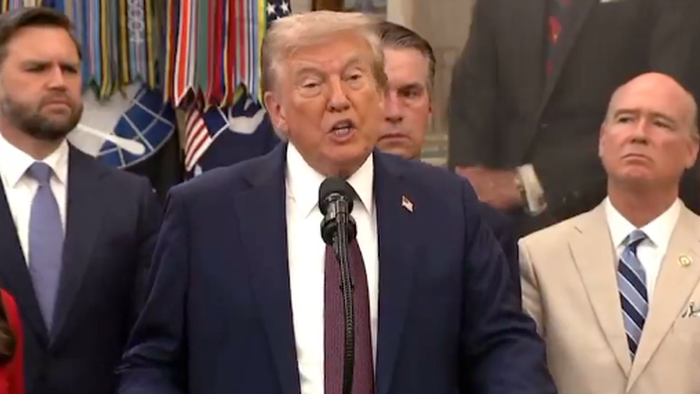
President Trump announced Tuesday afternoon that he will deploy federal law enforcement to crime-ridden, far-left-controlled Chicago and Baltimore to combat violent crime. These progressive utopias of the Democratic Party have imploded into violent crime and chaos after years of failed social justice policies like “defund the police.”
During a press conference in the Oval Office, a reporter asked the president about sending National Guard troops to Chicago. The president responded: “We’re going in,” but added, “I didn’t say when.”

“Chicago is a hellhole right now, Baltimore is a hellhole right now,” Trump said, adding, “I have an obligation …. this is a political thing.”
Trump is definitely sending in the National Guard to Chicago…
Chicago is a HELL HOLE
Baltimore is a HELL HOLEhttps://t.co/uc0MvnUlRy https://t.co/YSI8LWNx0A pic.twitter.com/67qIiygTSa— MJTruthUltra (@MJTruthUltra) September 2, 2025
Just south of Baltimore City, Trump federalized the District of Columbia’s Metropolitan Police Department and deployed the National Guard to clean up crime-ridden streets after years of lawlessness in some parts. Crime statistics so far indicate that the administration’s move is heading in the right direction to restore law and order.
“If the governor of Illinois would call up, call me up, I would love to do it,” Trump said earlier. “Now, we’re going to do it anyway. We have the right to do it.”
Meanwhile, far-left Maryland Gov. Wes Moore was caught “half-naked” on George Clooney’s luxury yacht …
Damning photos burn top Democrat Maryland Gov. Wes Moore’s 2028 plans to the ground as he’s busted half-naked on kingmaker George Clooney’s luxury yacht in ITALY while his ‘hellhole’ state faces crime apocalypse https://t.co/lkQk7yhjo1 pic.twitter.com/kjYYZpVYVM
— Daily Mail US (@Daily_MailUS) September 2, 2025
Local Baltimore media reports.
I am pressing the Lt. Gov.’s office if she was delegated temporary authority to govern in Gov. Wes Moore’s absence as he is abroad in Italy, according to pics published by the Daily Mail.
This comes as @realDonaldTrump says he is sending in federal intervention to Baltimore. pic.twitter.com/UhL2a1XmL6
— Gary M. Collins (@realgarycollins) September 2, 2025
Trump is not wrong about labeling Chicago and Baltimore “hellholes.” These crime-ridden metro areas are the result of a failed progressive experiment. Democrats own these “hellholes.”
Loading recommendations… -
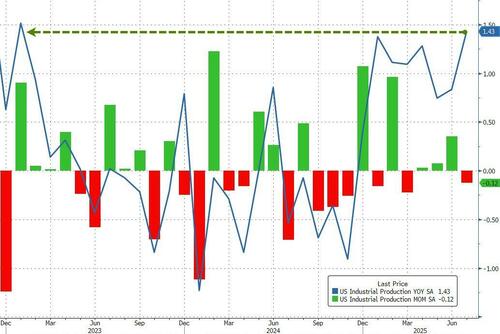
US Industrial Production Rises At Strongest Annual Rate Since Jan 2023
US Industrial Production dipped 0.1% MoM in July, but thanks to an upwardly revised 0.4% MoM rise in June, the YoY rise in Industrial Production was +1.43% – the biggest YoY jump since Jan 2023…
Source: Bloomberg
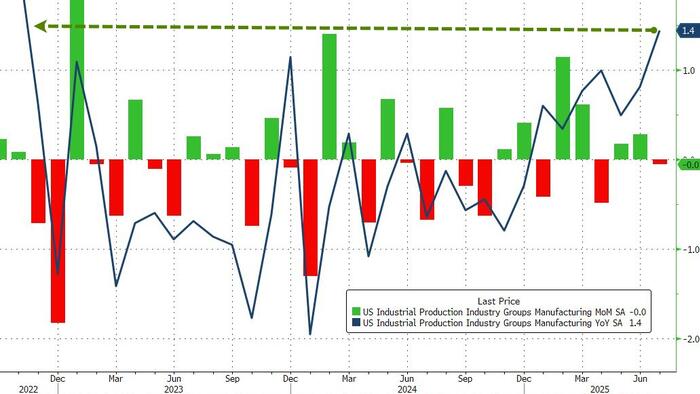
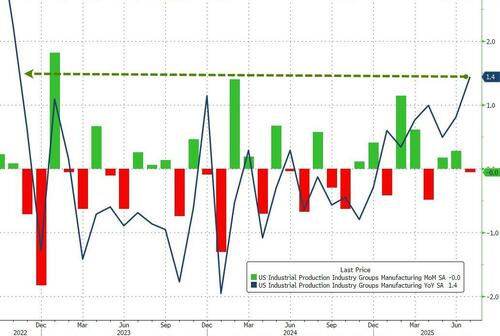
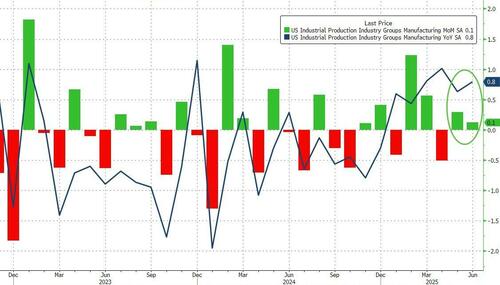
Drilling down, we see Manufacturing was -0.1% MoM in July (slightly weaker than the 0.0% exp), but again thanks to the upward revisions, YoY Manufacturing rose 1.4% – the most since Oct 2022…
Source: Bloomberg
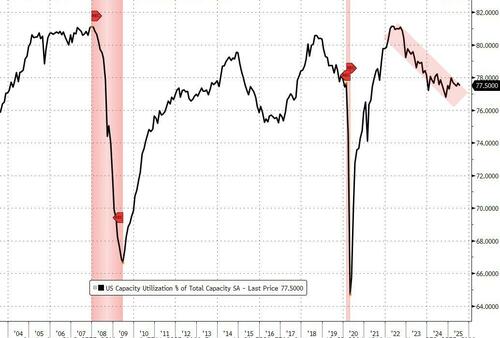
Finally, Capacity Utilization dipped back down in July, back tow its overall trend of the last 3 years
Source: Bloomberg
Given the string annual pace of growth in manufacturing and production, it seems the tariff terror hasn’t struck quite yet…
Loading recommendations… -

Think Tank Urges Dems To Drop These 45 Terms That Turn Off Normies
A left-leaning think tank is urging Democrats to stop repelling normal human beings with the use of a deep grab-bag of woke words and phrases. The road to electoral Hell is paved with good intentions, writes Third Way: “The intent of this language is to include, broaden, empathize, accept, and embrace. The effect of this language is to sound like the extreme, divisive, elitist, and obfuscatory, enforcers of wokeness.”
Third Way is far from the first to warn leftists that their language is off-putting. Bill Maher has repeatedly pummeled them, and Vice President JD Vance has too, telling Laura Ingraham, “I mean, look, the autopsy for the Democrats, some free political advice from the president of the United States is: stop sounding like crazy people.”
However, Third Way’s communique is distinguished by its long and specific list of annoying jargon. “In this memo, we are putting a spotlight on the language we use that puts a wall between us and everyday people of all races, religions, and ethnicities. These are words that people simply do not say, yet they hear them from Democrats,” said Third Way, which describes itself as a group of “passionate moderates” but is, in practice, an organization of center-leftists that evolved out of a gun control group, Americans for Gun Safety, and is led by a career Democratic pol, Jonathan Cowan.

Third Way founder and president Jonathan Cowan and Rep.Nancy Pelosi (Photo: Third Way) Elaborating on the theme with Politico this week, Third Way SVP Lanae Erickson said three potential 2028 Democratic presidential candidates are exemplary communicators: Kentucky Gov. Andy Beshear, former Transportation Secretary Pete Buttigieg and Arizona Sen. Ruben Gallego. She said that Beshear was recently “talking about the fact that ‘justice-involved individuals’ is not a thing that any justice-involved individual would call themselves.”
“Over the years we’ve conducted, read, and analyzed hours upon hours of focus groups, and we’ve yet to hear a voter volunteer any of the phrases below except as a form of derision or parody of Democrats,” said the group. The memo breaks down the long list of offending words and phrases into several categories.

THERAPY SPEAK: According to Third Way, these words tell others “I’m more empathetic than you, and you are callous to hurting other’s feelings.” They also make it “uncomfortable for many people to engage in hard topics,” the DC-based group says.
- Privilege
- Violence (as in “environmental violence”)
- Dialoguing
- Othering
- Triggering
- Microaggression / assault/ invalidation
- Progressive stack
- Centering
- Safe space
- Holding space
- Body shaming
SEMINAR ROOM LANGUAGE: Third Way says these words tell people “I’m smarter and more concerned about important issues than you.” The group warns that “when we use words people don’t understand, studies show that the part of their brain that signals distrust becomes more active.”
- Subverting norms
- Systems of oppression
- Critical theory
- Cultural appropriation
- Postmodernism
- Overton Window
- Heuristic
- Existential threat to [climate, the planet, democracy, the economy]
ORGANIZER JARGON: “These words say “we are beholden to groups, not individuals,” said Third Way.
- Radical transparency
- Small ‘d’ democracy
- Barriers to participation
- Stakeholders
- The unhoused
- Food insecurity
- Housing insecurity
- Person who immigrated
GENDER/ ORIENTATION CORRECTNESS: Third Way says this jargon tells normies, “Your views on traditional genders and gender roles are at best quaint.”
- Birthing person/inseminated person
- Pregnant people
- Chest feeding
- Cisgender
- Deadnaming
- Heteronormative
- Patriarchy
- LGBTQIA+
RACIAL CONSTRUCTS: “These words signal that talking about race is even more of a minefield” with the danger of being called a racist if you fail to use the latest “correct terminology,” said Third Way.
- Latinx
- BIPOC
- Allyship
- Intersectionality
- Minoritized communities
CRIME TALK: Third Way warns that these terms tell normies that “the criminal is the victim. The victim is an afterthought.”
- Justice-involved
- Carceration
- Incarcerated people
- Involuntary confinement
Stop calling them language police. They are people who police language. https://t.co/4WZUbLpvOY
— Keith Humphreys (@KeithNHumphreys) August 22, 2025
* * *
Support independent media. Grab a ZeroHedge hat at the ZH Store, or buy any 2 bags of coffee and receive a free ZeroHedge Tumbler!
 Loading recommendations…
 -
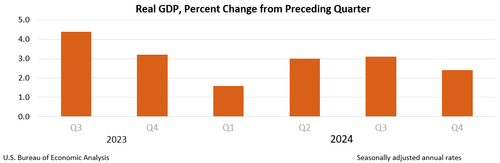
Q4 GDP Surprise: Modest Increase Amid Persistent Uncertainty
GDP’s Second Shake‑Up: Numbers Gone Wild (but not as Wild as Yesterday’s Milk)
Ever feel like economics is stitched together by yesterday’s milk and today’s stale data? That’s how this story starts. Skipping the buttery swirl of wait‑and‑see politics, the Bureau of Labor Statistics just pushed a second revision to Q4 GDP, pushing that figure up to 2.4%. Even though it’s slightly shy of the 2.5% dream we all thought, it still beats the median pick of 2.3% (ath a range +2.2% to +2.6% from 55 sharp‑eyed economists). Let’s cut to the chase and see why the numbers dipped, DNA‑checked, and how the inflation picture comes to the party.
Snapshot of the Revision
- GDP (Second Revision): +2.4% versus the second estimate of +2.3%
- Previous Final Print (Q3): +3.1% — the new 2.4% is noticeably lower.
- Consumer Stuff: Despite the usual consumption squeeze, it dipped from 4.2% to 4.0% — both shy of the expected 4.2%.
- Trade & Imports: The uptick is thanks mostly to a less‑than‑expected cut in imports, pulling the ballast back.
Inflation Storyline (What’s Not Melting Fast)
- GDP Price Index: +2.3% compared to the second estimate of +2.4%. Hot, but not scorching.
- Core PCE Q/Q: +2.6% versus the second estimate of +2.7%. So, the price tag is tidier than we predicted.
Why the Numbers Show a Downward Trend
It’s like a dance floor that’s almost burned out: consumption is stepping back, imports are sliding away, and trade’s not giving us that boost we hoped for. Yet, the GDP stillclimbs because a few imbalances – the slower pull on imports – make the heavier part of the economy feel a little lighter.
Quick Takeaway
We’re not seeing the economic fireworks that a 2.5% headline would promise. Instead, we have a more reserved performance, with inflation whispers and trade dropping the mic. The next big block is the personal income/core PCE numbers tomorrow, so keep your eyes (and your snacks) on the main stage.
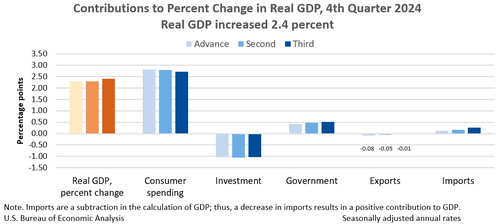
Q4 Real GDP: A Roller‑Coaster of Spending & Imports
Ever wondered what the Bureau of Economic Analysis (BEA) had to say on the latest quarter? Grab a cup of coffee and let’s dive into the story behind the numbers.
What’s Fueling the Upswing?
- Consumer spending – People are treating themselves a little more, which keeps the economy humming.
- Government spending – Public projects and services are pumping cash into the mix.
These two forces pushed GDP up, but there’s a twist:
The Investment Oopsie
Meanwhile, investment dipped a bit. Think of it as the economy saying, “Hold on, I’m still figuring out what I’ll buy next.”
Imports: The Silent Saboteur
Imports, which subtract from GDP, were on a downward trend. The fewer things we’re buying from overseas, the less we’re subtracting from our growth figure.
Chart Highlights (Without the Visuals)
Figure double-check! The latest season’s estimate saw GDP jump 0.1 percentage point from the previous (second) estimate.
Why? It’s mainly a downward revision in imports that freed up some room for the overall GDP figure.
Bottom Line
So, in short: folks are spending more, the government’s injecting funds, investment has taken a breather, and imports have tightened up. Altogether, that’s why we’re seeing a modest uptick in Q4 real GDP. Cheers to a balanced economy—just a bit more balanced than before!
GDP Growth Dissected: A Fourth‑Quarter Breakdown
What Stole the Momentum?
Here’s the low‑down on how each Lego block of the economy chipped into the total. No fancy jargon, just the real numbers that markets chase.
- Personal Consumption: 2.70% – because everyone loves a good coffee buzz.
- Fixed Investment: –0.2% – a tiny hiccup in the “build‑your‑dream‑factory” budget.
- Private Inventories: –0.84% – shelves look a touch thinner than last quarter.
- Exports: –0.01% – barely a drag, but a stub in the planet‑wide trade parade.
- Imports: 0.27% – a mild surrender, not a disaster.
- Government Consumption: 0.52% – a modest nudge from the public‑sector side.
Grand Total: 2.44% – a respectable jump when you add up the whole village.
Why the Drive Was Slower This Quarter
The slowdown in real GDP mainly came from two bad guys: a slump in investment and a dip in exports. The hero of the story—consumer spending—kicked back a little boost, pulling the economy out of a potential wobble.
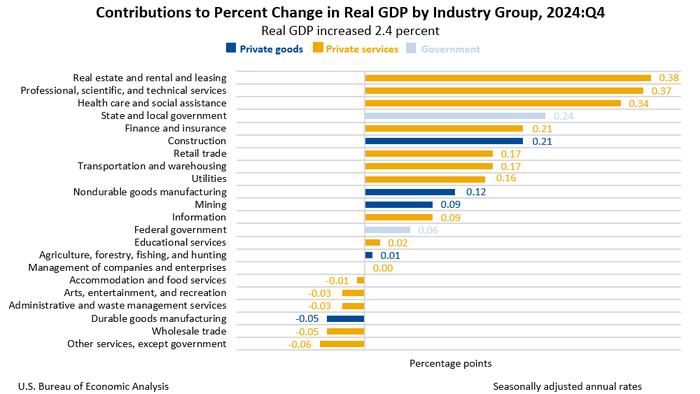
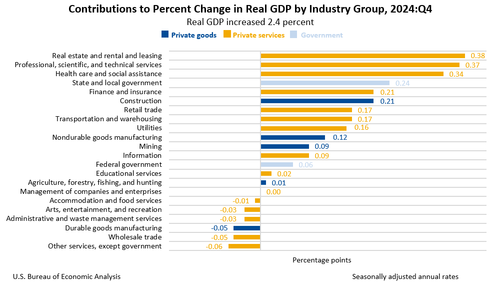
Industry Highlights
- Private goods‑producing sectors saw a 2.3% rise in real value added.
- Private services‑producing industries pulled a 2.4% increase.
- Government’s own contribution jumped 2.7%.
Bottom line? Even when the runners in the marathon feel a bit sluggish, keeping your footfalls steady—especially with those consumer swings—can keep the finish line within reach.
Yo, the Economy’s Still on the Rise!
In Q4, the U.S. real gross output didn’t just lag behind – it sprinted forward by 1.7%. That’s a pretty solid jump, and here’s the low‑down on where the gains came from:
- Private goods‑producing firms nudged up by a modest 0.3% – slow and steady.
- Private services‑producing businesses pumped up by a hearty 2.0%, giving a nice boost.
- Government‑run sectors surged the biggest, a cool 3.1% – talk about a public‑sector party!
Inflation? The Big Picture
The price index for gross domestic purchases slid up 2.2% this quarter, but that’s 0.1 percentage point lower than the earlier forecast. A small dip, but still on the inflation‑track.
Personal Consumption Expenditures (PCE) – No Skipping Nostalgia
The PCE index is up by 2.4%, matching last quarter’s estimate – steady as daisies. If we strip out the fickle food and energy prices, the core PCE climbs even more, hitting 2.6% – again, a quick bump of 0.1% from the previous figure.
Bottom Line
So, even with the usual price tags tightening up, the economy’s still pulling up its socks and looking better than the slump of past weeks. Economic growth seems to be dancing the last half‑step into the next quarter.
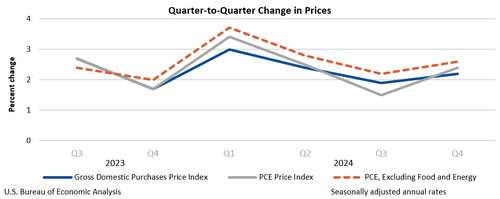
Inflation Numbers: A Warm‑Up, Not a Finale
Bottom Line
It’s just another meaningless print—not really because the data feels so stale that it’s practically a relic, but also because the market is scrambling over the ripple effects of the trade war.
The real deal? A fully updated core PCE version of the numbers drops in exactly 24 hours, and that’s the plot twist everyone’s waiting for.- Stale Data: Think of it as the bread that’s gone flat before you even started baking.
- Trade War Tension: The market’s eyes are on trade-blueprints, not on yesterday’s figures.
- Upcoming Core PCE: Fresh and ready to be “served” in 24 hours—no more stale crumbs.
We’ve Got Your Recommendations Ready!
Stay tuned—once the fresh numbers roll in, we’ll cut the fluff and deliver the insights you need, minus the breakfast‑stale drama.
-
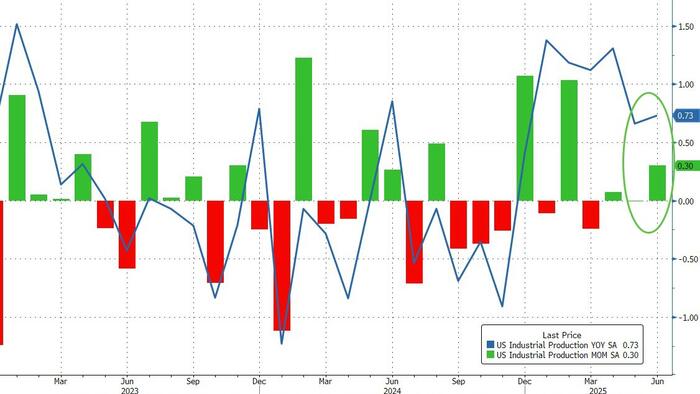
Industrial Production Soars to New Heights in June
Industrial Production Stocks Give the Economy a High‑Five
Who knew the industrial sector could be a little too excited? The data from June shows that factories turned up the heat—recording a +0.3% month‑over‑month jump instead of the anticipated +0.1%. And hold everything, the big news: the May slump of 0.2% was revised to a flat 0.0%.
Quick Take‑away
- June +0.3% MoM beats forecast
- May’s slight dip now looks neutral
- Year‑over‑Year growth nudges up to +0.73%
Why It Matters
When the plants open their gates and jellied the output, it signals that the real economy is picking up steam again. The slightest uptick can tip everything from investment decisions to job‑creation prospects.
Some Fun Facts
- Think Factory Frenzy—projects that were down in May are now steadying out.
- Factories didn’t just keep the lights on; they sparked a 0.73% step-up across the board.
- The latest numbers genuinely melt the winter chill of economic gloom.
Bottom Line
If you’re watching the news, you’ll notice these numbers are the skinny behind the shift from “stagnation” to a gentle, steady climb. Keep your eyes peeled—next month could bring even more surprises!
Manufacturing Output Gets a Little Lift
Bloomberg’s latest data shows a tiny but significant jump in manufacturing output for June, nudging the sector up by +0.1% versus the expected +0.0%. This subtle bump lifts the year‑over‑year growth to a respectable +0.8%, suggesting that factories are finally pulling back from the flatlands.
Key Takeaways
- June’s +0.1% rise is bigger than analysts’ zero‑point‑zero prediction.
- YoY growth climbs from the rock‑solid 0.0% to a promising +0.8%.
- Manufacturing’s modest rebound might inspire the economy to find its groove again.
What This Means
While the hike isn’t a runaway marathon, it indicates production is back on track. If the trend sneaks forward, we could see the industrial sector grow back to its pre‑pandemic pace.
Capacity Utilization: A Gentle Uplift Amid the Downward Spiral
Bloomberg’s latest economic dive shows a modest tick‑up in capacity utilization, a subtle wink of progress in an otherwise downward trend. Think of it as a tiny spark in a room that’s still dimming.
Key Takeaways
- Capacity use nudges slightly higher: not a blockbuster, but a reassuring lift.
- Despite the small boost, the overall line stays below the norm.
- Market watchers say the economy is still sliding, and the slide’s pace looks steady for now.
So if you’re hunting for huge shifts, it might not be the time. Still, that gentle climb signals “maybe, when the next quarter rolls in, we’ll see a real change.” Keep your eyes on that trend line, folks!
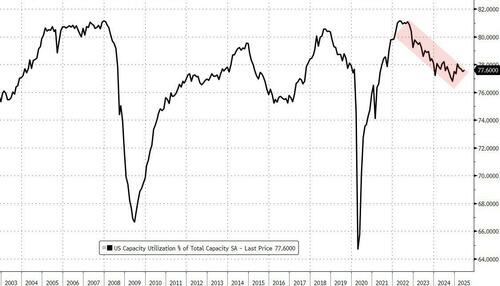
Post‑Tariff Front‑Running Hangover? A Fresh Take on the Market Buzz
So much for the post‑tariff front‑running hangover? The buzz has faded, but the questions linger. Let’s dissect what’s still brewing after the tariff tsunami hit the trading floor.
What’s the Tangle?
- Tariff Waves: Recent trade wars sent tariffs shooting up like a springboard, jolting everything from consumer goods to high‑tech components.
- Front‑Running Fiasco: Investors and firms, ever hungry for a quick edge, capitalized on the market swings – buying ahead of big orders to squeeze profits.
- Regulatory Response: Exchanges and watchdogs beefed up surveillance to curb impropriety, but the ghost of the hit remains.
Why the Hangover Is Still Rushing Around
Even though the market has somewhat steadied, the residue of front‑running is subtle. Analytics show a dip in speculative trades, yet still a few daring actors slip ahead of the rush. Think of it as a lingering cough after a heavy cold – it just hasn’t fully vanished.
A Tale of Two Markets
- US Dollar’s Weakness: When tariffs stirred up trade, the dollar reversed its trend, seducing many vendors offshore.
- Commodity Volatility: Brass, plastic, and silicon all experienced double‑whammy price swings, giving traders a playground to front‑run.
Regulators’ “Playbook” Update
The exchanges rolled out a new compliance toolkit and stricter audit logs. With every trade, the system now flags suspicious patterns; it’s like having a watchful librarian for every bar of gold.
What Traders and Regular Folks Should Mumble About
- Stay informed about tariff news. A flash of change can turn ordinary transactions into gold mines for the greedy.
- Keep a pulse on market dynamics. Even a mild price bump can be a sign of front‑running activity.
- For investors – think ‘long-term thinking’. Quick gains may come at a price.
Bottom Line: The Post‑Tariff Hangover Is Not Gone
Tariffs left an imprint that the market is still learning to dance around. Even if the front‑running drama has dimmed, the echo of it remains. Keep your senses sharp, stay on the news pulse, and remember that even in a bustling market, patience is still the best trick.
-

Unveiling the AI Bots That Accumulate Your Most Sensitive Data
Why AI Chatbots Are Turning Your Data Into Their Snack
Hey there, data‑hungry AI fans!
We all secretly fell in love with ChatGPT—it’s the reigning champion of the digital soup, boasting over 200 million users every week. But if you’re keeping an eye on the “big data” angles, you’ll notice that a handful of other chatbots are also gobbling up our personal info at a staggering rate. Here’s a quick rundown of the top data‑hunters and why their approach matters.
Top Data‑Eater Chatbots (Ordered by “How Hungry?”)
- ChatGPT – The friendly AI that’s collecting text, queries, and even your device’s language settings. It’s got a built‑in privacy policy, but the real conversation starts in the backend.
- Bing Chat – Powered by Microsoft’s search engine, this bot is a full‑stack data collector. If you search, it remembers your search terms, location, and even how long you hovered over a result.
- Claude from Anthropic – The “ethical AI” claim is tempting, but Claude still keeps logs of everything typed in the chat. Developers get a peek into usage stats.
- Google Gemini – Yep, the same team behind Google’s search. Gemini logs your queries, voice button usage, and can even read the style of your writing.
- Baidu Paddle – The Chinese cousin of ChatGPT. It stores all user questions and posts them to a central server for “training” purposes.
Why Does All This Data Collection Matter?
- Privacy Targets – The more data a bot gathers, the higher the chance that sensitive personal info (like addresses, passwords, or even pet names) ends up in the wrong hands.
- Advertising Power – Big data = big ad revenue. Those who own the bots can craft hyper‑targeted ads that feel eerily personal, usually without you knowing exactly how it was compiled.
- Data Science & AI Improvement – A lot of AI growth relies on large text corpora. While useful for improving responses, it can also blur the line between “free” user content and the data used for commercial gain.
- Ethical Gray Zones – Many chatbots claim a “no‑data‑sale” policy, but if logs are retained “indefinitely for training,” it’s a sneak‑peek into internal data policy loops.
Wrap it up—should you stay cautious or just keep chatting?
It’s a fine line between convenience and data curation. If you’re a privacy‑conscious soul, consider using chatbots that make a transparent effort to delete or anonymize logs. Keep your questions to the essentials, and always read the fine print before you hand over your secrets—just in case your favorite chatty AI is eating them while you’re busy binge‑watching your favorite series.
Latest Findings (yep, from our desk)
Update Timestamp
They’re fresh off the press as of February 18, 2025!
- Data pulled straight from the lab on February 18th, 2025
- Everything is up-to-date – no old news here!
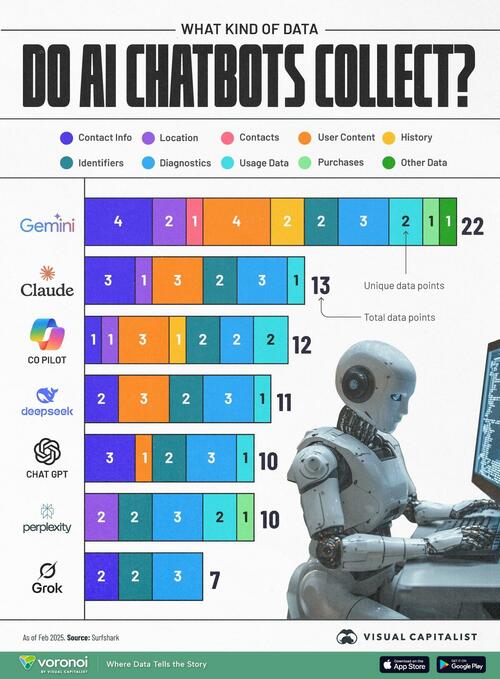
Gemini, the Data Collection King
What Google’s Gemini Is Really Stalking You With
Ever wondered which secrets
Gemini(the AI that popped up in March 2023) decides to peek at? Hold onto your seat: in its maiden voyage, the little bot pried into 22 different details, neatly split into 10 wide‑ranging categories.- Basic Checks: Every chatbot on the block throws a diagnostic selfie wall‑op in the corner. Gemini does the same, keeping tabs on your device performance.
- Friends & Family Feeds: While most bots play safe, Gemini opens the door to your
Contactslist—yes, that exclusive intel nobody else has access to. - Where’s the “Other” Section? From weather tweaks to calendar nudges, the bot grabs a slice of everything in between, often more than you realize.
- Convenience Checks: Think of it as a personal concierge that, with a wink, anticipates your next move.
- Safety Signals: Security scans run like a pit stop—data about safety steps, warnings, and smooth sailing alerts.
Why It Matters
Notice how Gemini goes the extra mile compared to its peers. While most bots stick to the basics, Gemini steps in with a handy bit of counsel—just a bit more data, but it pays off in smart surprises.
Bottom Line
If you’re wiring up a conversational AI to your life, Gemini offers a richer handshake. It’s not just about data; it’s about weaving that sweet touch of personal—like having a digital buddy who knows exactly what you’re about to do.
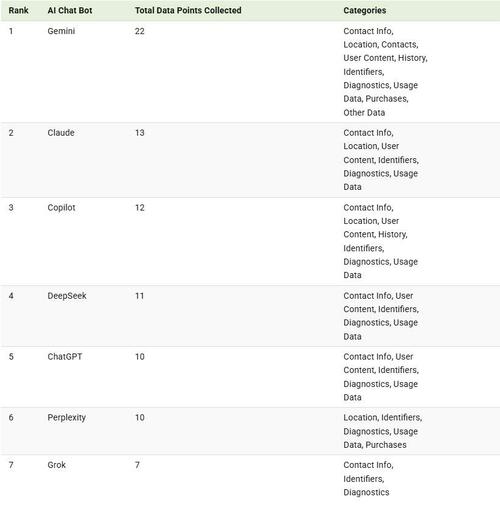
AI Bots Are Scoring Data Points Like a Game of Whack-A-Mole
Did you know that each chatbot is basically a data‑hungry scavenger? The number of unique points it collects can vary wildly – it’s like a game of musical chairs with a pile of sensitive info.
Meet the Gang
- Grok (xAI) – Debuted in November 2023 and is the littlest among the crew, snagging only seven unique data points.
- DeepSeek (China) – Hit the lights in January 2025 and sits smack in the middle of the leaderboard with eleven points.
- Other bots – they’re all about collecting general diagnostics, but only Gemini and Perplexity actually get into the purchase game.
What’s Really Being Tracked?
There’s a common theme: most bots tap into user conversations, the type of stuff that advertisers love to sell to third parties. If we’re honest, every time you chat with a bot, you’re giving it a vault full of personal data.
Why This Matters
Think of it like storing your secrets in a gun‑proof safe. Implicitly, the data lives on those servers, and if they’re breached, oh boy, those secrets get exposed.
Ready to Stay Informed?
Almost at the “breadcrumb” end of this article, if you’re hungry for quick insights about how the AI wave is reshaping the job market, you can check out our Ranked: Jobs Where AI Is Most Used segment. Keep your digital compass pointing right.
-

Judge Blocks Shadow Fundraising By Beto For Runaway Democrats
Stop That Fundraiser! Texas Judge Throws a Timeout
What Just Happened?
A Texas judge has put a hold on Beto O’Rourke’s fundraising push that’s trying to keep a group of state lawmakers—known as the “runaway Democrats”—alive and kicking. These legislators moved out of the state to stall the redistricting process, and now their financial lifeline is under scrutiny.
Why the Red-Flag?
- Funding Flows: Beto’s campaign allegedly funnelled resources to support legislators who ran off the grid.
- Redistricting Ruckus: These lawmakers’ departure was a strategy to disrupt Texas’s map‑making effort.
- Legal Red-Herring: The judge’s decision signals that the “shady” fundraising lines are not crossing the line.
Behind the Scenes
In a nutshell: Beto O’Rourke, a familiar name in Texas politics, is accused of turning his fundraising engine into a turbo‑charged boost for a political stunt. The Texas court, ever vigilant about fair play, has put a pause on any further cash flow to those “runaway” legislators until the legal dust settles.
The Stakes
This isn’t just about bank balances—it’s a showdown over the future shape of Texas. If those lawmakers stayed in place, redistricting could have looked a lot different. Now, with the fundraising halted, the political chessboard is back on the table.
What Comes Next?
Watch the court’s next move. The judge’s temporary block might evolve into a full prohibition, or it might, like a good sitcom twist, lead to a new fundraising strategy (just not the shady kind). Either way, the “runaway” drama keeps Texas on its toes.

Judge Fahey Slams Beto Bribe Buyouts in Texas
What Just Happened?
- Megan Fahey, a Tarrant County District Judge, issued a temporary injunction that freezes any fundraising or expense‑paying for Democrats by O’Rourke and the group Powered by People.
- The move comes after Texas Attorney General Ken Paxton filed a lawsuit alleging that the campaign was a sham – marketed as a political effort but actually a hidden “slush fund” for personal expenses.
- The judge said the case meets the “imminent harm” threshold, meaning the state could suffer irreversible damage if the fundraising continues.
Judge Fahey’s Take
Fahey said, “Because this conduct is unlawful and harms Texas consumers, restraining it is in the public interest.” That’s the kind of pre‑clarion flag you want when the “political” money is really just a parking lot for the party’s personal expenses.
Paxton’s Reaction (A Little Too Cheery)
Paxton rolled out a statement like it was a winner’s lap:
“The Beto Bribe buyouts that were bankrolling the runaway Democrats have been officially stopped.”
“People like Robert believe Texas can be bought. Today, I stopped his deceptive financial influence scheme that attempted to deceive donors and subvert our constitutional process. They told me to ‘come and take it,’ so I did.”What’s Next?
- The next hearing is scheduled for August 19, 2025.
- Until then, the injunction means no more secret money‑pumping under the guise of political support.
In short, Texas has put a clamp on the $Beto Bribe you’ve been hearing about. If you thought the state was just a deal‑making playground, think again – the courts have spoken.
-

Hapag‑Lloyd Reports a 50% Surge in China‑to‑US Container Bookings
Hapag‑Lloyd’s Shipping Surge: A 50 % Daft‑Boost in China‑US Container Bookings
What Just Happened?
Good news for cargo planners, traders, and anyone who likes numbers: Hapag‑Lloyd’s container bookings from China to the United States shot up by a whopping 50 % after the whole tariff drama wore off. Think of it like the freight industry’s version of a “clears‑the‑crowd” moment.
Why the Upswing?
- Tariff tensions eased between the two trading giants, making it cheaper and easier to ship goods.
- Companies started to juggle their logistics once more, filling the blank space carved by the 20‑30 % drop in the previous quarter.
- Rolf Habben Jansen, the CEO, caught the wave on the earnings call and declared that “a surge of over 50 % in recent days” is the talk of the town.
The CEO’s Candid Take
On the earnings call, Rolf had a look‑done expectation of sudden spikes. “Predicting exact growth patterns is tricky,” he said, saying the shipping market is as unpredictable as a cat in a grocery box. He brushed aside the nervousness that having a 20‑30 % dip might cause in the short term, pointing to a bright, swift rebound.
What It Means for the Industry
For freight operators and shippers, this is a reminder that trade policies can move faster than a hummingbird’s wing. It also means more capacity and potentially lower rates for similar goods once the market stabilises. In the meantime, Hapag‑Lloyd is riding a wave that’s Grand Slam‑style for the industry.
In Summary
If you’re in the business of moving stuff across oceans, keep your eyes on Hapag‑Lloyd’s traffic board. A 50 % jump in bookings is a signal that the world’s freight ecosystem is shifting, and the sweet spot for shipping is right now. Adapt, align, and enjoy the smooth flow—your containers will thank you.
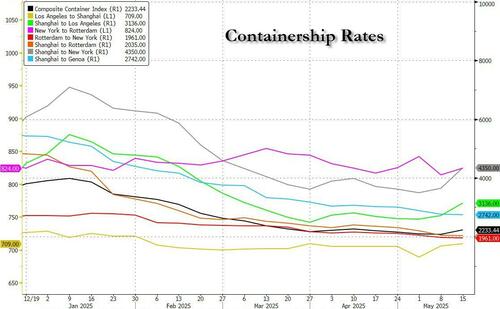
Maersk’s Shipping Wrap: Capacity, Profits, and A Solved Gemini Puzzle
CEO’s Quick‑Turn Strategy
“We’re on the fast‑track to full capacity,” the CEO bragged, “just used the tiny boats for a while instead of calling them cancelled rides—now we’re swapping back to the big ones. In a few weeks we’ll have the hulking liners out again, and some other ships will also step up the game as the quarter rolls on.”
Thanks to the Gemini network (a partnership with Maersk that makes vessel upgrades painless), the ship upsizing won’t blow up the cost structure or mess with container placement.
Money‑Talking Numbers
- Profit jumped 45% to $469 million in Q1.
- Revenue hit $5.3 billion, a 15% year‑over‑year rise.
- Liner shipping volumes grew 9%, hitting the strongest growth seen in a few years.
- Revenue from liners was $5.2 billion on 3.3 million TEU, with an average freight rate of $1,480 per TEU.
- EBITDA climbed 18% to $1.1 billion, and EBIT jumped 25% to $472 million.
Gemini: The Industry’s New 90% Scheduler
Normally the shipping world clocks around 65% reliability, but with the Gemini network Maersk’s schedule hits a stunning 90%. It’s like going from a traffic jam stuck for hours to a smooth highway ride.
Operational Roller‑Coaster
Between rerouting ships away from the Red Sea, steering around the Cape of Good Hope, and dealing with port hiccups, costs spiked and efficiency dipped. However, the crew managed these headaches so they didn’t spill over into the overall performance.
-
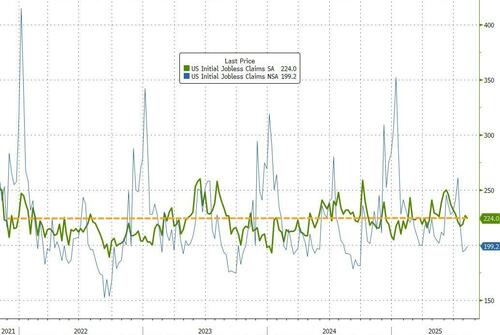
Jobless Claims Stay Steady Since 2021
Jobless Claims: The Same Old Stale Beat
After a whirlwind of economic twists and turns, the initial jobless claims are sticking to the 224,000 mark that we saw back in November 2021. If we’re serious, the numbers have been as quiet as a librarian’s whisper.
What the Numbers Are Really Saying
- Seasonally adjusted attempts: The same 224k buzz, steady as a metronome.
- Non-seasonally adjusted vibes: Hovering near record lows, giving a gentle nudge that the labor market might still be holding its ground.
Why Fans and Analysts Are Watching
The steady numbers hint at a carrying capacity of the job market – not eruptive, not boiling down, just mildly simmering. Economists keep their eyes peeled for any shift that might turn these calm waters into a flurry.
Bottom Line
In a world of fluctuating GDPs and wage blips, a 224k plateau feels like a quirky plot twist – not a headline-maker, but a subtle reminder that the labor market’s rhythm is still playing its quiet tune.
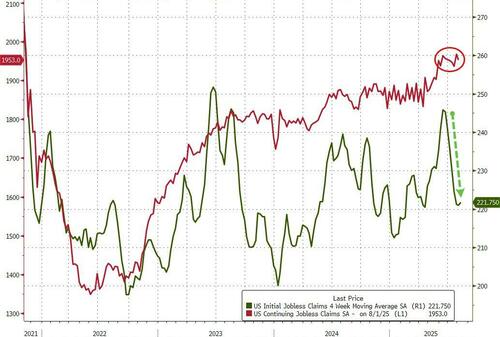
U.S. Jobless Claim Numbers Keep the Beating Heart of Unemployment Pumping—Over 1.9 Million
Everyone’s still waiting for a lifeline—the latest Bloomberg numbers show that the count of people still on the unemployment waiting list is climbing past the 1.9‑million threshold that economists warned could mean trouble for the labor market.
What Exactly Are “Continuing Claims”?
When a worker files for the first time, we call that a first‑time claim. The figure that keeps turning up on the charts is the continuing claim—the number of people still on the dole after that first filing. Think of it as the “waiting list” for the unemployment benefit, a sort of financial queue that gets longer when the job market is slower.
- Higher numbers = a larger group of people still looking for work.
- Lower numbers = a labor market that’s starting to clear‑out fast.
Why the Numbers Matter to You and Me
Imagine the job market as a massive amusement park. When the queue for the biggest roller coaster is full (high continuing claims), everyone’s still in line and the ride’s operators may have nowhere to send new tickets. That’s the same as a labor market where many folks are stuck waiting for the next opportunity.
We’re watching a situation where the magnetic pull of long‑term unemployment is slowly getting stronger—think of it as a modern‑day Maginot Line, but instead of bricks, it’s a wall of people still looking for jobs.
The Political Drumbeat
In Washington, the Treasury and Congress are clearly debating whether a new stimulus package or some tweak in the unemployment system will fire up the economy enough to break that wall. Some lawmakers want a quick surge of hiring, while others are skeptical that a mere policy tweak will cut through the enduring unemployment line.
What the Data Tells Us About the Future of Work
- The labor market is still re‑calibrating from the pandemic’s shocks.
- Inflation and higher rates seem to be making some workers less eager to jump back to work immediately.
Bottom Line: Why You Should Keep Your Eyes on Your Job Search Apps
Unless firms start putting new hiring signs up in a big hurry, the unemployment numbers will stay on the high side for a while. So it’s probably a good time to keep polishing your résumé, take up a side hustle, and always keep a little optimism in your pocket for when the next opportunity slides past the “waiting list” gate.
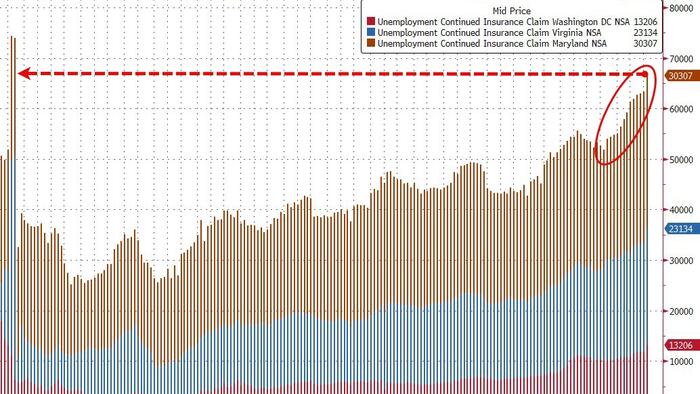
Jobless Claims Keep Rising in the Deep Tri-State Region
In a surprising twist that feels more like a cliffhanger than a headline, unemployment claims are climbing across the Deep Tri-State — that’s New York, New Jersey, and the surrounding neon-soaked heartland. While the news may not tie up nicely to a silver lining, the trend offers a clearer picture than a blurry weather forecast.
Why It Matters
- Economic Pulse: Rising claim numbers hint at a slowing job market; this could affect everything from local coffee shop sales to downtown office rents.
- Political Pulse: Politicians might find themselves juggling late-night debates and the “I don’t want to be a database of jobless folks” policy.
- Tech Pulse: Silicon Valley palates might now taste a taste of a more cautious workforce.
Quick Takeaways
Think of it like this: if the city’s job market were a video game, the claim surge is a level-up to “Hard Mode.” Gamers in their living rooms will notice the indicator lights on the back of their screens flicker a little faster.
More Than Just Numbers
On the ground, this means workers are finding themselves in a bit of an uncanny valley between an urgent job search and a quiet hope‑for‑the‑next‑gig. It’s the same kind of feeling you get when you’re waiting for a pizza to arrive in the middle of the night.
In Retrospect
Historically, these figures are the alarm bells of economic shifts. But this time, the “alarms” may gossip so loudly that the next day’s headlines request coffee and rehearse the inevitable endgame: better help, better pay, or better hiring procedures.
 Could you please share the full article text or the main points you’d like me to rewrite? That’ll help me create the best version for you.
 -

A Republic Overrun By Lawfare
Authored by Loren Kalish via American Greatness,
Democrats are not only the party of enmity but also the enemies of liberty and justice for all. Enmity consumes the Democrat Party, based not on hostility to certain ideas but hatred of certain individuals, chief among them President Trump and his friends and advisers. Among the latter is Peter Navarro, the president’s trade adviser, whose new book, I Went to Prison So You Won’t Have To, details Democrats’ efforts to criminalize politics. Navarro writes from experience and about his experiences as a political prisoner, enjoining us to defend the Constitution.

The book is also a reminder of the precariousness of personal liberty and of the vigilance necessary to sustain it, lest we be the targets of malicious prosecution.
As Navarro shows, malice begets injustice and threatens to destroy our system of self-government.
At stake is the doctrine of separation of powers as outlined in the Constitution. Upon this doctrine rest the respective rights of the legislative, executive, and judicial branches of the federal government.
Because of this doctrine, executive privilege is a reality; without this doctrine, testimonial immunity—the right of a presidential adviser to refuse to abet a congressional witch hunt—is meaningless, which is why Navarro went to prison.
“If I lose, future presidential advisers of either party could face jail for honoring executive privilege and defending the Constitution’s separation of powers,” Navarro said in a statement.
In this scenario, the investigative state grows stronger while the presidency becomes weaker.
The result is an unlawful transfer of power from the White House to Congress.
Abuse of power is also inevitable, what with bureaucrats and hacks in charge of the prison system.
The summary raids, the truncated religious services, the food mixups, the commissary markups, the interminable counts, the brokenness of the facilities themselves—the indignities are manifold.
Despiriting though things are, Navarro does not waver; his spirit, like his faith in the Constitution, is total. He shows his faith by his works, inspiring us to do likewise.
Navarro’s book is itself a work of courage, free of score-settling or recrimination. The emphasis is on fairness, on the balance necessary to establish justice and secure the blessings of liberty.
The words summon us to end lawfare, so executive privilege can endure and testimonial immunity can survive. The words give new meaning to the principle of limited government.
I Want to Prison So You Won’t Have To—the words speak to our innate sense of decency. Because we believe in the dignity of the individual, we loathe all forms of tyranny. We loathe the pettiness of zealots and the capriciousness of ideologues. More importantly, we loathe any attempt to silence dissent. We loathe the anti-democratic actions of those who would bankrupt or imprison us.
Thanks to Peter Navarro, we can learn from his example. Thanks to his book, we can restore the Constitution and save our country. We can do this—and more. And so we shall.
Loading recommendations… -

Bolton Attacks Trump For 'Utterly Incoherent' Ukraine Policy Days After FBI Raid
Former national security adviser John Bolton has gone after President Trump, blasting his Ukraine strategy as “incoherent” in an opinion piece published Monday, just a few days after federal agents raided his Maryland home and D.C. office over the handling of classified documents.
“President Donald Trump’s Ukraine policy is no more coherent today than it was last Friday when his administration executed search warrants against my home and office,” Bolton said in Washington Examiner.
Bolton’s op-ed title went all-in: “Trump’s utterly incoherent Ukraine strategy.” He wrote that “Collapsing in confusion, haste, and the absence of any discernible meeting of the minds among Ukraine, Russia, several European countries, and America, Trump’s negotiations may be in their last throes, along with his Nobel Peace Prize campaign.”

AFP/Getty Images Hoped-for momentum towards an eventual trilateral Putin-Zelensky-Trump summit has indeed been stalled, and Trump said late last week that we could make a major decision if peace isn’t negotiated in two weeks – which likely means more biting sanctions on Russia and its trading partners.
Neither warring side has actually backed off from its position, and Russia has little reason to soften its demands given that it maintains the clear upper-hand on the battlefield. Still, Bolton – as one of the neocon madmen behind the push to invade and overthrow Iraq (and other countries) – is not one to talk about coherent foreign policy.
“The administration has tried to camouflage its disarray behind social media posts, such as Trump comparing his finger-pointing at Russian President Vladimir Putin to then-Vice President Richard Nixon during the famous kitchen debate with Nikita Khrushchev,” Bolton said further in his piece. “Why Trump wants to be compared to the only president who resigned in disgrace is unclear.”
So clearly, Bolton is not backing down or being quiet despite the FBI raid on his home last Friday, which was described as a “court-authorized law enforcement activity.”
The ‘war’ in the op-ed pages has been unleashed, as on Tuesday White House trade adviser Peter Navarro took to The Hill and charged Bolton with “profiteering off of America’s secrets” in relation to his 2020 book, “The Room Where It Happened.”
Navarro’s op-ed said “He was trafficking in Oval Office conversations and national security intelligence that should have stayed secret – either by law or under executive privilege.”
“That isn’t service. That isn’t patriotism. That’s profiteering off of America’s secrets,” Navarro wrote, citing a federal judge who at the time said “seems to be out of the barn” – when Trump officials had tried to stop its publication. Back in 2020, Navarro had slammed the memoir as like “revenge porn”.
Bolton has only issued rare praise of Trump when he bombs another country (as he did Iran this summer)…
John Bolton, who Trump denounced in his first term as a “warmonger” when he fired him, heaps praise on Trump for… being a warmonger. pic.twitter.com/HHdiKgUDam
— jeremy scahill (@jeremyscahill) June 22, 2025
As for the raid on Bolton’s house, Trump has said that he didn’t personally order it or know about it before-hand, amid accusations that it is politically motivated retribution. The president has, however, said that Bolton “could be a very unpatriotic guy. We’re going to find out.”
Loading recommendations… -

UBS Sees iPhone Demand Stall in June, Forecasts Slow Surge Ahead of September Launch
Apple’s Q3 Earnings Loom: What’s the Buzz?
1⃣ iPhone Performance: A Sagging Slide?
Apple is gearing up to drop its Q3 (3Q25) numbers next Thursday. The buzz on the town? iPhone sales are showing a little wobble.
- UBS analysts warn that June demand fizzled following a front‑loaded sales boom.
- That boom was sparked by tariff fears early in the quarter—people were rushing to buy before possible price hikes.
- Result: iPhone sell‑through dipped 18% YoY in June.
2⃣ Services Growth: Still a Strong Wing?
While iPhone sales face a chill, Apple’s Services arm continues to climb.
- Streaming, music, cloud, and the App Store keep pulling in steady revenue.
- Investors will be watching for how well this segment offsets the iPhone dip.
3⃣ Apple Intelligence: A Spark of Progress?
Apple’s foray into AI is still on the radar.
- Analysts are curious about AI-enabled products and services.
- Will it help push the platform forward, or are we still waiting for the big breakthrough?
What to Expect in the Earnings Call
- Clear numbers on iPhone sales and the June decline.
- Updates on how Services revenue is tracking.
- Concrete progress on Apple Intelligence, beyond the hype.
Bottom Line: The Apple story is a mixed bag.
Tech fanatics, investors, and the curious alike have their eyes glued to Thursday’s reveal. Apple’s latest chapter could be a tale of resilience or a cautionary tale—only time will let us know.

Apple’s June iPhone Knock‑Down: 18% Sales Drop, But a Currency Boost Keeps the Ties Tight
Picture an Apple‑Curated June where demand just fell off the runway—an 18% dip from last year’s numbers. That’s the headline. Yet behind the headlines, Apple’s “iPhone army” still climbed 3.4% in the quarter, landing at a solid 45 million units.
What went wrong?
- Early‑day sales—most of it in April and May—were heavy, because folks smelled the “tariff storm” coming. That pushed demand forward, leaving less room to swing in June.
- However, a currency tailwind—that’s the foreign‑exchange boost—helped cushion the blow, nudging Apple’s revenue past expectations.
New Numbers for June
- Revenue: $41.2 B (up 5.4% YoY)
- Earnings Per Share (EPS): $1.46 (was $1.40 in the prior estimate)
Because of the currency lift, we bumped the June outlook a touch but are pulling back for September. That’s where the change‑in‑direction kicks in.
September Forecast: Steep Winter Winds
- Units: 50 M (cut from 52 M)
- Revenue: $46 B (down from $47.7 B)
- EPS: $1.64 (trimmed from $1.68)
Apple’s hard‑to‑predict four‑month “pull‑in” from earlier sales means September will feel the chill of the prior rush. Think of it like a big heat‑wave leaving a lingering post‑breeze.
Looking Further Ahead – FY26 Trends
The early rush from April/May still looms large, dampening demand into the launch of the iPhone 17. In our view, the December‑25 fiscal quarter (Apple’s Q1 FY26) is expected to grind into a muted pace. Seasonal bars won’t be set to rise—just a modest bite in growth.
- We predict a mid‑single‑digit revenue uptick for FY26, but that’s all thanks to a slight lift that fits under the bigger picture.
- Because of the cooled expectation for the new form‑factor, consensus revenue and EPS estimates are likely to trend lower.
Bottom line: Apple’s iPhone unit demand is still on a slide, and the next few quarters might feel the echo of that early 2025 push‑in.
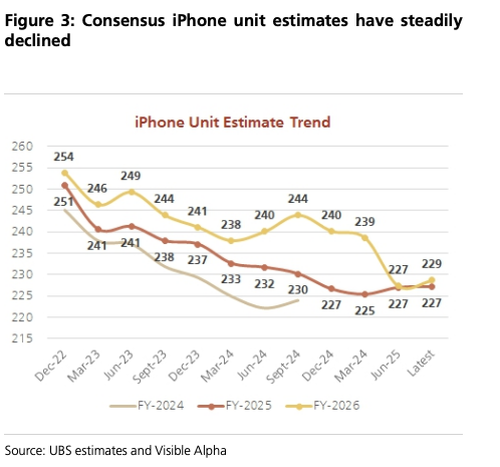
Analysts Stay Staunch About $210 Target
What’s the story?
Even after a week of market chatter, analysts are sticking with their 12‑month price target of $210. Nothing to shake things up for now.
Why the unchanged target?
- Strong earnings forecast: Earnings per share looks solid, enough to keep rockets flying.
- Consistent outlook: No new macro surprises, so the base assumptions remain solid.
- Market confidence: Shares have been steady, showing traders that the business model holds.
- “We’ve got our sights on a target and haven’t lost it in the haze”: Analysts keep a calm tone, reassuring investors.
Bottom line
The take‑away? The $210 target remains the same, and the market’s breathing easy. Just another stable day in the trading world.
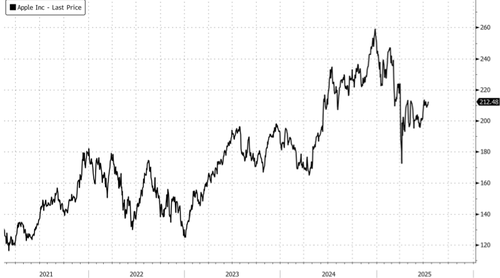
Apple’s iPhone Sales: Summer Slew—or is it a Shar‑Quick Fade?
Let’s break it down in plain speak: UBS, the financial heavy‑hitter, just popped the big news that Apple’s recent iPhone sales are feeling a bit… soft. The big takeaway? There might be a chilly reception for the next August‑junkies‑get‑ready‑for‑launch lineup.
Why UBS Matters
- UBS isn’t just handing out forecasts; they’re crunching numbers that game‑changer managers look at.
- When their radar goes green for “slow sales,” it’s a red signal for investors.
- This isn’t just a headline—it’s a potential brain‑freeze for those racing to the launch.
What the Numbers Say
Apple’s summer dip isn’t a one‑off—both initial sales and post‑launch pulls lean toward the underwhelming zone. Think of it as a summer breeze that blew out the runway rockets.
So, What’s the Forecast for September?
- Expect a benign demand curve, especially if the latest tech sparkle isn’t hitting the crowd.
- Rumors about a sci‑fi, next‑gen camera, and longer battery life could, perhaps, stir the crowd if marketed right.
- Until then, gently tread the “water cooler” conversations—no one likes a loud shout about missing milestones.
Bottom Line: Stay Inspired, Stay Informed
Apple’s next iPhone could either be the splashy big splash or the measured soft rollout. Fans, analysts, and investors alike, keep an eye on the market’s pulse. If you’re watching the tech wave, remember it’s the season’s story—invested, replayed, and often rewound. Keep curious, keep watching, and don’t let a small breeze stop you from zooming forward.
-

Short Seller Dares Jimmy Fallon to a $1M Air‑Taxi Bet Before the 2028 LA Olympics
Los Angeles’ 2028 Olympics: Sky-High Ambitions—and Some Grounded Doubts
Picture the sounds of the Olympic rings alight on a clean, silver screen, but instead of a single spark, imagine dozens of sleek, hovering electric VTOLs—Archer Aviation’s Midnight taking off for the official air taxi service before the Games kick off. Sounds futuristic? A bit. Sounds like a reality check? Definitely.
What Archer Is Trying to Do
- Serve Los Angeles with non‑polluting, airborne transit for athletes, fans, and the 400‑plus crew during 2028.
- Be the flagship brand alongside Mercedes-Benz and Hyundai for the event’s last‑mile transport.
- Boost its public profile by attaching the names of the Olympics and Paralympics to its start‑up banner.
The Big Question: Is It Ready?
Every great sci‑fi movie has that storyline: a groundbreaking invention that promises to change the world, yet the manufacturer slips up somehow. In real life, Archer is facing something eerier—auditors heading aren’t getting the same smooth ride they promised.
Short‑Seller Glares
Culper Research, a name on the short‑seller radar, dropped a fiery report alleging that Archer’s leadership “systematically misled, deceived, or outright lied” about:
- Milestones they had supposedly reached in developing the Midnight eVTOL.
- Testing procedures supposedly proving that the aircraft would launch safely.
- Internal metrics, timelines, and even investor communications.
It’s like when a flashy dream company promises you a golden ticket to a sky palace, only to reveal that the ballista jets are still stuck on the drawing board.
Can Midnight Actually Fly Before the Games?
The 2028 Olympics is set for August 2028, giving Archer only a few short‑rising months to demonstrate flight, safety certifications, and first‑hand operations with the city’s chaotic traffic. A few hiccups could turn the big promise into a “ghost flight” trope.
Where the Stakes Lie
- If Archer can get the Midnight airborne and compliant, it could solidify its market position and become a wind‑sprayer for city mobility.
- If it falters—especially under scrutiny—investors might reconsider their big bets, leading to a falling stock price.
- And, ironically, the public may remain skeptical about air taxis even if they eventually reach the clouds.
Bottom Line: The Sky’s the Limit—Just Make Sure the Wings Are Real
Archer Aviation, stepping onto the biggest event of the decade, is under the spotlight like a propeller on a neon billboard. The next few months will decide whether this start‑up is the next big thing or just a brilliant, albeit shaky, advertisement. Either way, Los Angeles is feeding the hype, and the world is watching, waiting for the first tangible flight of the Midnight. If it takes off, it’ll be a headline—if it falls short, that’s a headline too. The clock’s ticking, and the runway is growing thin.

Archer Aviation’s Wild Ride: Where Truth Meets Trickery
Short‑seller Culper slammed Archer Aviation for chasing marketing hype while hiding a deeper mess: a mishandled “midnight transition flight” and serious instability. According to him, Archer’s push for quick product roll‑outs is not just premature—it’s downright reckless.
What’s Really Going On?
Culper’s report claims:
- Midnight isn’t flying. “It’s nowhere close to operating,” the researcher says.
- Head honcho Adam Goldstein is busy “sprucing up social media” instead of fixing actual flight tech.
- Goldstein even took a slot on Jimmy Fallon’s Tonight Show last Thursday—thanks to a hefty sponsorship fee.
- Sources say Archer pays millions for that airtime and even backed Fallon’s recent NYC promo event.
- When the writer asked Fallon’s agent about a potential appearance at an Archer event, the rep quoted a price around $600,000 plus travel.
Culper didn’t hold back on the Twitter phase‑out:
“We’re short Archer Aviation, and we’re betting a cool $1 million that Jimmy Fallon will finally prove he actually believes in Archer.”
#ShortAndStubbornMarket Reaction
Archer shares slipped just over 1% by late afternoon on Tuesday. Around 17% of the float is now short, per data from S3 Partners.
With the buzz on the flight’s reliability and the flashy celebrity endorsements, the story has ignited a swirl of skepticism—yet some still find the smiles and big‑mouth talk captivating.
Why It Matters
When a company leans heavily on New Year hype and a famous talk‑show host while brushing off operational hiccups, investors get wary. The question isn’t just “Will the plane fly?” but “Can Archer keep the hype supply without crashing?”
One thing’s clear: If Archer wants to come out of the headlines, its aim must be solid engineering, not just showbiz.
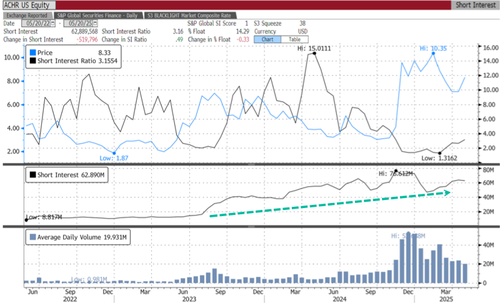
Ark’s Big Deal with the Startup
Cathie Wood’s Ark Investment Management is one of the biggest players in the new venture. When you look at the shareholder ladder, Ark’s name tops the chart, showing how much faith the firm has in this game‑changing startup.
Why Ark’s Involvement Matters
- Confidence Boost: Ark’s confidence signals to the market that the company has serious upside.
- Liquidity Magnet: With Ark’s hefty investment, the startup’s shares become more attractive for other investors.
- Strategic Allies: Beyond money, Ark brings expertise and a global network that can fast‑track growth.
In Short
Ark’s heavy backing isn’t just a headline—it’s a big nod from one of the industry’s most influential managers. When someone like Cathie Wood puts her money where her mouth is, it often means the next big thing is on the horizon.
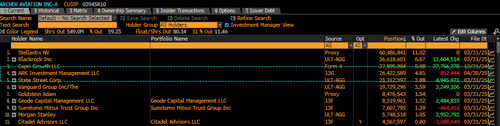
Midnight Takes the Skies – First Touch Down on the Flight Deck
Midnight’s debut in the air doesn’t just look like a simple hop—it’s a full-on transition to flight. The aircraft “has achieved transition flight”, which means it can now go from taxi to forward‑speed lift and stay there, at least for now.
What’s Next on the Horizon?
- Speed & endurance stretch – The team is pushing Midnight to cover more miles and fly faster, building the long‑haul capability that stakeholders crave.
- Commercial flight roll‑out – They’re planning real‑world missions to prove the plane is ready to carry passengers and cargo, not just show‑off.
Attr? The full, uncensored video of Midnight’s first flight can be found in the tweet here. If you’ve only seen the teaser, this is the real deal – no edits, no surprises.
Who’s Going to Take the Stand?
Meanwhile, the drama escalates. Will Cathie Wood step in to defend Archer against Culper’s harsh accusations? Only time will tell.
-

NY State Trying To Restore Welfare Access For Illegal Immigrants
Authored by José Niño via Headline USA,
The Federation for American Immigration Reform (FAIR) recently submitted a federal court brief challenging New York‘s request to restore Trump Administration funding, which was suspended after the state refused to say whether it was still providing public benefits to illegal aliens.

The Personal Responsibility and Work Opportunity Reconciliation Act of 1996 (PRWORA) restricts public benefits to “qualified aliens” exclusively—a category that excludes illegal aliens. PRWORA additionally mandates that states verify they aren’t distributing public benefits to unqualified non-citizens.
Following PRWORA’s passage, then-Attorney General Janet Reno under the Clinton administration issued state waivers exempting them from this verification mandate.
The Trump administration revoked these waivers and currently withholds federal funds from states like New York that decline to verify they aren’t providing public benefits to undocumented immigrants.
FAIR’s legal filing argues the state’s injunction request must be rejected because the federal court lacks jurisdiction to grant such relief.
According to statute, Congress has removed federal court authority to review executive actions where Congress hasn’t established review standards, instead leaving such decisions to executive discretion.
PRWORA grants the Attorney General unreviewable authority to approve or revoke verification requirement waivers.
“For our immigration laws to be enforced effectively, it is essential that the magnet of public benefits be turned off,” declared Dale L. Wilcox, FAIR’s executive director and general counsel.
“Illegal aliens should not receive a pay-off for breaking our laws. Congress understood that very well when it passed PRWORA, and New York’s plea that it be allowed to go on flouting the law is without any legal basis. We hope the court sees that it doesn’t even have jurisdiction to enter an injunction, and denies relief.”
According to Pew Research, there are 825,000 illegal aliens residing in New York.
The litigation is identified as State of New York v. U.S. Department of Justice, No. 1:25-cv-00345 (D.R.I.).
Loading recommendations…


